

We use cookies to ensure our website works properly and to personalise your experience. Cookies policy
Surya School of Pharmacy.
Background: Antimicrobial resistance (AMR) is a major global public health challenge, and inappropriate antibiotic use is an important modifiable contributor. Pharmacy students are future medicine users and are expected to contribute to antimicrobial stewardship (AMS). However, evidence describing their knowledge, awareness, attitudes, practices, and familiarity with AMS has been reported using diverse methods and populations.Objective: To systematically map and synthesise global evidence on antibiotic and AMR knowledge, awareness, attitudes, self reported practices, and familiarity with AMS among pharmacy students and student populations that include pharmacy learners.Methods: PubMed, Scopus, Web of Science, ResearchGate, and Google Scholar were searched from database inception. Screening and reporting followed the PRISMA 2020 framework. Eligible studies included cross-sectional surveys, mixed-methods studies with quantitative findings, and educational pre-post surveys that assessed antibiotic-related KAP or AMS-related outcomes among pharmacy or pharmacy-inclusive student populations. Risk of bias was assessed using the Joanna Briggs Institute Critical Appraisal Checklist for analytical Cross-Sectional Studies. Because the included studies used heterogeneous instruments, scoring systems, outcome definitions, and populations, findings were synthesised narratively rather than pooled statistically. Results: Forty-eight studies conducted in 33 countries and representing all six WHO regions were included. The studies involved 19,509 reported participants, after accounting for 466 participants from an identified overlapping cohort, the non-duplicated participant count was 19,043. Knowledge was assessed in 43 studies (89.6%), attitudes in 36 (75.0%), practices in 25(52.1%), general antibiotic related awareness in 22(45.8%), and stewardship specific familiarity in 17(35.4%). Students.generally demonstrated stronger understanding of basic antibiotic and AMR concepts than of applied clinical and stewardship related issues. Positive attitudes toward AMS were common, but these attitudes did not consistently translate into stewardship consistent behaviour. Self medication and other inappropriate antibiotic use practices were reported in several settings. The evidence was geographically uneven, with particularly limited representation from the region of the Americas. Conclusion: Pharmacy and pharmacy inclusive students generally possess basic knowledge of antibiotics and AMR and tend to express favourable attitudes toward stewardship. However, applied AMS competence and stewardship consistent practices remain inconsistent, while AMS specific familiarity is less frequently assessed. Pharmacy curricula should incorporate structured, clinically oriented AMS education, and future research should use validated and more consistent assessment instruments and expand evidence from underrepresented regions
Antimicrobial resistance (AMR) represents one of the most important threats to effective infectious disease management [1]. A global analysis estimated that bacterial AMR was directly responsible for approximately 1.27 million deaths in 2019 and was associated with approximately 4.95 million deaths overall [2]. Subsequent modelling has projected a continued increase in the burden of AMR, emphasizing the need for sustained preventive and stewardship measures [3]. The World Health Assembly has also identified AMR as a strategic global priority, reinforcing the need for coordinated action across health systems [4].
Inappropriate antibiotic use contributes substantially to the development and spread of resistance. Important drivers include unnecessary prescribing, self medication, access to antibiotics without a prescription, poor adherence to treatment, use of leftover medicines, use of expired products, limited access to appropriate clinical care economic constraints, and misunderstanding of when antibiotics are indicated [5,6]. These behaviours occur across different healthcare settings and are particularly relevant in low- and middle-income countries, where regulatory and access related factors may influence antibiotic use [7,8].
The problem extends beyond prescribing volume. Incorrect antibiotic selection, inadequate dosing, premature discontinuation, and use of antibiotics for conditions that do not require antibacterial therapy may also contribute to inappropriate exposure and resistance. Because behaviours and professional attitudes can develop during undergraduate education, pharmacy training provides an important opportunity to establish appropriate antibiotic use practices before students enter professional practice [9].
Pharmacists occupy an important position in antimicrobial stewardship [10]. In many healthcare systems, community pharmacists are among the first healthcare professionals consulted by people seeking advice about symptoms or medicines [11]. This position allows pharmacists to support appropriate antibiotic selection, reinforce adherence, identify inappropriate requests, provide counselling, and contribute to antimicrobial stewardship activities. At the same time, pharmacists may face pressure to supply non-prescription antibiotics where regulation is weak and patient demand is high. Effective stewardship therefore requires more than factual knowledge; it also requires clinical reasoning, communication skills, confidence, and an understanding of stewardship principles.
Existing evidence suggests that pharmacy students may have reasonable knowledge of basic antibiotic and AMR concepts but less consistent competence in applying that knowledge to clinical or stewardship decisions [12,13]. Educational interventions have demonstrated that student knowledge and stewardship awareness can be improved. For example, social media based educational intervention among pharmacy, medical, and nursing learners and residents in Lebanon improved quiz scores [14], while pharmacist led educational interventions have improved KAP outcomes among healthcare workers [15]. The findings indicate that education can modify stewardship related knowledge and behaviour, although the content and delivery of such education vary between settings.
The pharmacy curriculum is therefore central to preparing future pharmacists for AMS responsibilities. Previous work has reported that AMS teaching within pharmacy education has been limited, inconsistently structured, and sometimes concentrated in elective courses rather than integrated throughout the core curriculum [16]. Differences in curricular exposure may partly explain the variation observed in students knowledge, attitudes, and practices.
Previous reviews have frequently focused on practising pharmacists, healthcare professionals, or the public rather than specifically examining students before professional qualification. A recent systematic review examined undergraduate AMS education across several health professions, but its focus was on educational interventions and included multiple professional groups [17]. A broader synthesis focused specifically on pharmacy and pharmacy inclusive students across WHO regions can therefore help identify geographical gaps, methodological limitations, and priorities for pharmacy education.
2.Methods
2.1 Protocol and reporting
This systematic review was prepared in accordance with the preferred reporting items for systematic reviews and meta analyse (PRISMA) 2020 statement [18].
2.2 Eligibility criteria
Studies were considered eligible when they reported quantitative findings on antibiotic knowledge, AMR knowledge, awareness, attitudes, self reported antibiotic-use practices, AMS familiarity, training, confidence, or preparedness among pharmacy students or student populations that included pharmacy learners. Studies were eligible when pharmacy-specific findings were available or when the overall sample included pharmacy students and the relevant outcomes could not be separated. Eligible designs were cross-sectional surveys, mixed-methods studies containing clearly extractable quantitative findings, and educational pre-post surveys.
Studies were excluded when they involved an inappropriate population, did not report relevant antibiotic/AMR/AMS outcomes, were reviews, commentaries, protocols without eligible outcome data, conference abstracts, non-human studies, duplicate or retracted publications, or reports from which the required information could not be extracted. Only English language full text publications were ultimately eligible. Two potentially relevant studies published in Vietnamese and French were therefore excluded during the screening process.
2.3 Information sources
PubMed, Scopus, Web of Science, ResearchGate, and Google Scholar were searched from database inception. No date restriction was applied at the identification stage. Language and other eligibility criteria were applied during screening. The search dates, database specific strategies, and record counts were documented in the supplementary search strategy.
2.4 Search strategy
The search strategy combined population, topic, and outcome concepts using Boolean operators. The PubMed strategy included terms related to pharmacy students and undergraduate pharmacy education together with terms for antibiotics, antimicrobials, antibacterials, knowledge, attitudes, practices, awareness, perceptions, and stewardship. Database-specific search strings were adapted as required for each platform.
2.5 Study selection
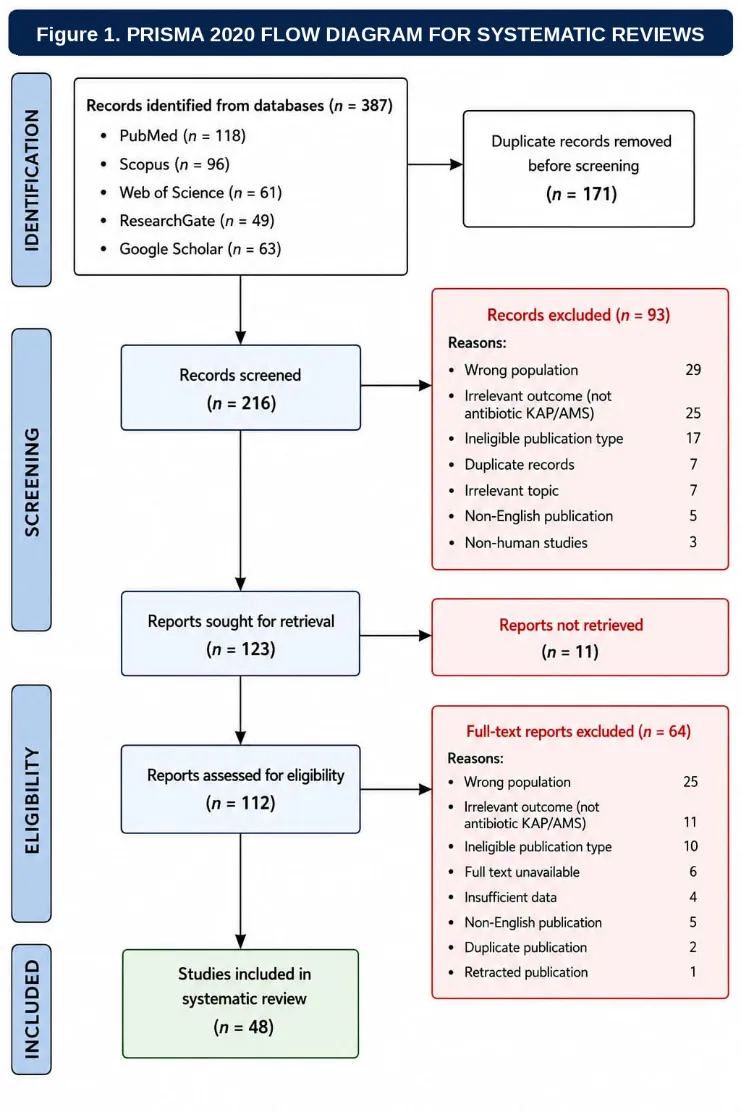
A total of 387 records were identified, of which 171 duplicate records were removed, leaving 216 unique records for title and abstract screening. Records were excluded when the population or outcomes were inappropriate or when publication and study design criteria were not met. Full texts were sought for 123 records; 11 reports could not be retrieved. Of the 112 full text reports assessed, 64 were excluded for prespecified reasons, resulting in 48 studies for the final narrative synthesis, Title abstract and full-text screening were undertaken independently by two reviewers, with disagreements resolved through discussion and, when necessary, adjudication by a third reviewer.
2.6 Data extraction
Data were extracted using a standardised electronic form. Extracted variable included bibliographic information, country, WHO region, World Bank income classification, sample size, sex distribution, study population, study design, response rate, assessment domain, reported results, questionnaire validation procedures, reliability information such as Cronbach’s alpha when available, and risk-of-bias information. One reviewer performed the initial extraction, and a second reviewer independently checked the extracted information against the original articles.
2.7 Risk-of-bias assessment
The Joanna Briggs institute critical appraisal checklist for analytical cross-sectional studies was used to assess methodological quality. The checklist evaluates eight domains relating to participant inclusion, study setting, exposure measurement, identification and management of confounding factors, outcome measurement, and statistical analysis. Each item was classified as Yes, No, unclear, or not applicable.
Because many included studies were descriptive KAP surveys, the absence of reported reliability coefficient was not automatically interpreted as evidence that the questionnaire was invalid or unreliable. Reliability and validity are related but distinct properties, Similarly, the absence of adjusted analyses was not considered a methodological failure when the primary purpose of a study was descriptive rather than analytical. Such characteristic was therefore reported descriptively. Where the source article did not provide enough information to determine whether a criterion was met, the item was classified as unclear.
A potential overlap was identified between two reports based on the same Sri Lankan participant cohort. Both reports were retained because they provided different comparative contributions, but the shared participants were not counted twice in the overall participant total or treated as independent confirmation.
2.8 Data synthesis
Quantitative meta-analysis was not considered appropriate because the included studies used substantially different questionnaires, scoring systems, outcome definitions, participant groups, and thresholds for classifying knowledge or practice. The findings were therefore synthesised narratively by KAP/AMS domain and, where informative, by WHO region and methodological characteristics. The synthesis was guided by principles for reporting systematic reviews without meta-analysis (SWM).
3.RESULTS
3.1 Study selection
The database searches yielded 387 records. After removal of 171 duplicates, 216 unique records underwent title and abstract screening. Ninety-three records were excluded because of inappropriate populations or outcomes, ineligible publication types, duplicate status, non-English publication, non-human design, or an unrelated topic. Full texts were requested for 123 reports, of which 11 could not be retrieved. The remaining 112 reports underwent fulltext assessment, and 64 were excluded according to the predefined criteria. Forty-eight studies were therefore included in the final narrative synthesis. The study selection process is presented in the PRISMA 2020 flow diagram. (Figure 1).
3.2 Characteristics of included studies
Table 1: Characteristics of included studies
|
Author, Year, Country |
Sample Size (N) |
Response Rate |
Study Design, Study Population |
Knowledge (%) |
Attitude (%) |
Awareness (%) |
Practice (%) |
Stewardship (%) |
|
Justo JA, 2014, United States |
579 |
40% (579/1445; range by school 33-51%) |
Cross-sectional, multicenter, electronic survey, Graduating PharmD students |
53% |
96% |
NR |
NR |
NR |
|
Kingston Rajiah, 2015, Malaysia |
346 |
82.8% |
Cross-sectional study, Pharmacy only — final-year undergraduate pharmacy students |
84.4% |
34.1% |
NR |
NR |
NR |
|
Ahmad A, 2015, Trinidad and Tobago |
108 |
83.07% (108/130) |
Cross-sectional questionnaire-based, Year 3 and 4 B.Sc. Pharmacy students |
87.5% |
60% |
NR |
75% |
NR |
|
Akram Ahmad, 2015, India |
137 (BPharm: 87, PharmD: 50) |
76.11% |
Cross-sectional study, Pharmacy only — final year BPharm and PharmD students |
BPharm 50.9%; PharmD 61.8% |
BPharm 55.8%; PharmD 76.3% |
BPharm 32.0%; PharmD 48.3% |
BPharm 36.4%; PharmD 20.0% |
NR |
|
Albina Fejza, 2016, Kosovo |
144 |
Not Reported (144 students recruited) |
Cross-sectional study, Pharmacy only — pharmacy students (Years 1-5) |
44.4% |
56.9% |
NR |
63.2% |
NR |
|
Saleem Z, 2016, Pakistan |
380 (181 pharmacy, 199 non-pharmacy) |
Not Reported |
Cross-sectional, University students (pharmacy and non-pharmacy) |
NRg |
NR |
NR |
NR |
NR |
|
Marisa Burger, 2016, South Africa |
260 |
26.6% (ranging 5.8%-100% across universities) |
Descriptive quantitative study with survey design, Pharmacy only — final (fourth) year BPharm students |
83.5% |
97.7% |
95.8% |
NR |
37.7% |
|
João Inácio, 2017, United Kingdom |
185 |
32% |
Cross-sectional online survey, Pharmacy only — MPharm students (Years 1-4) |
79% |
NR |
98% |
NR |
NR |
|
Shukry Zawahir, 2017, Sri Lanka |
79 |
100% |
Cross-sectional study, Final year pharmacy undergraduates |
86.3% |
Female 70.8%; Male 57.5% |
83.7% |
NR |
NR |
|
Fatimah Ali Albusalih, 2017, Saudi Arabia |
450 |
94.12% (pharmacy 96.8%, medicine 92.81%) |
Cross-sectional study, Pharmacy and medical students |
NR |
NR |
NR |
26.0%f |
NR |
|
Mohamed Hameem Fatima Sakeena, 2018, Sri Lanka |
386 |
69% |
Cross-sectional study, Pharmacy and allied health sciences (AHS) students (nursing, radiography, medical laboratory sciences) |
NR |
NR |
NR |
NR |
NR |
|
Doris Rusic, 2018, Croatia |
161 |
64.4% |
Cross-sectional survey-based study, Final year medical (5th-6th), Medical Studies in English (MSE, 5th-6th), and pharmacy (4th-5th) students |
Pharmacy 71.3%; Medicine 68.0%; MSE 67.5% |
NR |
NR |
36.0% |
NR |
|
M. H. F. Sakeena, 2018, Sri Lanka |
466 |
Above 80% for each university except OUSL (distance learning) |
Cross-sectional study, Undergraduate pharmacy students (all years) |
NR |
NR |
94% |
75% |
NR |
|
Nehad J. Ahmed, 2019, Saudi Arabia |
103 |
Not Reported |
Cross-sectional survey, Pharmacy only — pharmacy students who completed >50% of courses |
24.27% |
94.17% |
93.2% |
NR |
98.05% |
|
M. H. F. Sakeena, 2019, Australia and Sri Lanka (multi-country comparative) |
942 |
Australia: 8.3% (476/5719); Sri Lanka: 63% (466/738) |
Cross-sectional comparative study, Undergraduate pharmacy students (B.Pharm only; M.Pharm excluded) |
NR |
NR |
AU 98%; SL 94% (Antibiotic Resistance term) |
AU 89%; SL 77% (obtained with prescription) |
NR |
|
Ehab Mudher Mikhael, 2019, Iraq |
140 |
94.6% (140/148 distributed) |
Cross-sectional study, Final year (5th stage) pharmacy students |
20% |
NR |
NR |
NR |
NR |
|
M. H. F. Sakeena, 2020, Australia |
525 |
11% (525 completed from 642 who participated; 14 universities) |
Cross-sectional study, Undergraduate (B.Pharm) and graduate-entry (M.Pharm) pharmacy students |
NR |
NR |
85% |
88% |
NR |
|
Kandasamy G, 2020, Saudi Arabia |
212 |
71% (212/300 approached) |
Prospective cross-sectional online survey, Final year B.Pharm and PharmD students |
NR |
51% |
NR |
96% |
NR |
|
Usman Abubakar, 2020, Indonesia, Malaysia, and Pakistan (multi-country) |
211 |
77.8% |
Cross-sectional electronic survey, Pharmacy only — final year pharmacy undergraduate students |
56% |
NR |
23.2% |
NR |
62% |
|
Hayat K, 2021, Pakistan |
296 |
85.8% |
Cross-sectional, Pharmacy only |
59.8% |
53.4% |
80.1% |
NR |
21.6% |
|
Mubarak N, 2021, Pakistan |
948 |
Institutional response rate: 76.5% medical, 70.4% pharmacy |
Cross-sectional multicentre survey, Mixed: medical (526) and pharmacy (422) students |
NR |
NR |
78.4% |
NR |
8.8% |
|
Hussain I, 2021, Pakistan |
496 |
86.5% |
Cross-sectional, Mixed: pharmacy (227, 45.8%), veterinary (131, 26.4%), biological sciences (138, 27.8%) |
71.6% |
NR |
57.9% |
NR |
57.9% |
|
Usman Abubakar, 2021, Malaysia and Nigeria (multi-country) |
150 (Malaysia: 87, Nigeria: 63) |
Malaysia: 76%; Nigeria: 53% |
Cross-sectional study, Pharmacy only — final year BPharm students |
Nigeria 59%; Malaysia 62% (AMR knowledge) |
NR |
Nigeria 47.6%; Malaysia 43.7% (formal AMS training) |
NR |
Nigeria 66%; Malaysia 72% (AMS knowledge) |
|
Mahmoud Hashemzaei, 2021, Iran |
170 |
100% |
Cross-sectional study, Pharmacy and medical students |
30% |
NR |
12.9% |
57.1% |
NR |
|
Lubwama M, 2021, Uganda, Kenya, Tanzania (multi-country) |
328 (medicine n=196, pharmacy n=132) |
Not Reported |
Cross-sectional survey, Final year undergraduate medical and pharmacy students |
58% |
72.9% |
68.2% |
39% |
26.8% |
|
Khan FU, 2021, Pakistan |
414 (quantitative); 20 faculty (qualitative) |
Not Reported |
Mixed-methods (cross-sectional quantitative + qualitative interviews), Undergraduate pharmacy students (UGPS) and pharmacy faculty members |
47% |
NR |
NR |
NR |
NR |
|
Ghada L. Elkbuli, 2021, Libya |
170 |
Not Reported (random sample of 170) |
Cross-sectional study, Pharmacy only — undergraduate pharmacy students |
NR |
58.1% |
NR |
80% |
NR |
|
Azechi T, 2022, Japan |
330 |
61.1% pre-lecture (330/540); 43.3% post-lecture (234/540) |
Cross-sectional pre-post questionnaire survey, Pharmacy only |
27.6% |
NR |
85.5% |
69.7% |
NR |
|
Abdu-Aguye SN, 2022, Nigeria |
164 |
76.3% (164/215) |
Descriptive cross-sectional, Final year Bachelor of Pharmacy students |
NR |
NR |
95.7% |
NR |
48.8% |
|
Steward Mudenda, 2022, Zambia |
172 |
Not Reported (sample size calculated by Yamane's formula from population of 301) |
Cross-sectional study, Undergraduate pharmacy students (2nd-5th year) |
90% |
84% |
NR |
64% |
NR |
|
Buket Baddal, 2022, Northern Cyprus (Cyprus) |
314 |
Not possible to estimate (freely distributed Google Forms link) |
Cross-sectional survey, Students from faculties of Medicine, Pharmacy, and Dentistry (1st-3rd year) |
7.6% |
NR |
NR |
NR |
NR |
|
Walid Al-Qerem, 2022, Jordan |
890 |
Not Reported |
Cross-sectional online study, Pharmacy only — pharmacy students (Bachelor's and PharmD) |
80.1% |
47.0% |
NR |
76.4% |
NR |
|
Zekiye Yilmaz, 2023, Turkey |
183 |
Not Reported (target ≥80 students at 95% CI) |
Cross-sectional study, Pharmacy students (all years: prep to 5th year) |
NR |
NR |
NR |
NR |
NR |
|
Raees I, 2023, Pakistan |
1251 |
84.9% |
Cross-sectional, Mixed: pharmacy (471, 37.6%), nursing (420, 33.6%), medical (360, 28.8%) |
81.8% |
77.5% |
18.9% |
NR |
29.5% |
|
Albalawi L, 2023, Saudi Arabia |
266 (pharmacy n=124, medicine n=87, dentistry n=40, nursing n=15) |
Not Reported |
Cross-sectional descriptive, Pharmacy, medicine, dentistry, and nursing interns from governmental or private Saudi universities |
76.1% |
61.5% |
NR |
84.6% |
NR |
|
Malkawi R, 2023, Jordan |
400 |
88.88% (400/450 valid responses) |
Cross-sectional questionnaire survey, Final year (5th year) pharmacy students |
86.5% |
87.2% |
86.25% |
76.7% |
NR |
|
Sounyo Adebukola, 2024, Nigeria |
196 |
100% (all distributed questionnaires retrieved) |
Descriptive cross-sectional study, Pharmacy only — undergraduate pharmacy students (Years 2-5) |
82.2% |
81.6% |
NR |
51.0% |
NR |
|
Sukmayanti NPR, 2024, Indonesia |
105 |
Not Reported |
Cross-sectional descriptive quantitative, Pharmacy only |
41.9% |
94.3% |
NR |
99.0% |
NR |
|
Abdelkarim OA, 2024, Sudan |
109 (IUA n=56, SIU n=37, UIS n=16) |
36% |
Descriptive cross-sectional, Final-year pharmacy undergraduate students |
56% |
NR |
NR |
NR |
62% |
|
Naser AY, 2024, Egypt, Jordan, Saudi Arabia, Lebanon, UAE, Qatar, Kuwait (multi-country) |
4265 (Egypt n=2249, Jordan n=704, Saudi Arabia n=531, Lebanon n=401, UAE n=130, Qatar n=129, Kuwait n=121) |
Not Reported |
Cross-sectional, Undergraduate pharmacy students from participating universities |
71.4% |
93.5% |
89.2%c |
73.0% |
NR |
|
Velmani V, 2024, India |
190 |
Not Reported |
Cross-sectional study, Pharmacy only (Pharm.D. students and graduates) |
45.19% |
72.48% |
65.13% |
NR |
32.11% |
|
Ioana Ghiga, 2024, Romania |
479 |
Not Reported (ideal sample 3531; 479 received = ~13.6%) |
Cross-sectional study, Final year medical and pharmacy students |
NR |
NR |
NR |
NR |
NR |
|
Alshehri AA, 2025, Saudi Arabia |
197 |
Not Reported (snowball sampling) |
Cross-sectional national survey, Mixed: pharmacy (144, 73.1%), medical (53, 26.9%) |
44.7% |
50.7%d |
28.4% |
NR |
52.8% |
|
Reham Aljalamdeh, 2025, Jordan |
250 |
66.3% |
Cross-sectional study, Pharmacy only — senior (fifth and sixth year) BSc Pharm and PharmD students |
98% |
81.2% |
96.8% |
80.8% |
NR |
|
Homsi SR, 2025, Jordan |
263 (medicine n=56, dentistry n=58, PharmD n=89, pharmacy n=60) |
83.49% (263/315 distributed) |
Cross-sectional survey-based, Final-year medical, dental, PharmD, and pharmacy students |
86.0% |
83.8% |
NR |
79.7%e |
NR |
|
Ohene-Agyei T, 2026, Ghana |
195 |
94.7% (195/206 targeted) |
Cross-sectional, Pharmacy interns who completed mandatory 1-year internship and sat for December 2023 GPPQE |
65.6% |
NR |
92.3% |
NR |
43.1% |
|
Erdoğan E, 2026, Türkiye |
141 |
91.0% (141/155 who received link; 86.4% of total 162 enrolled) |
Cross-sectional, 1st, 2nd, and 3rd year pharmacy students |
82.3% |
NR |
87.9% |
97.2% |
NR |
|
Sarah Salah Alghanem, 2026, Kuwait |
363 |
60.9% (363/596 eligible) |
Cross-sectional survey study, Senior undergraduate students from medicine (years 5-7), dentistry (years 5-7), and pharmacy (years 4-7) |
62.1% |
73.8% |
10.2% |
NR |
50.0% |
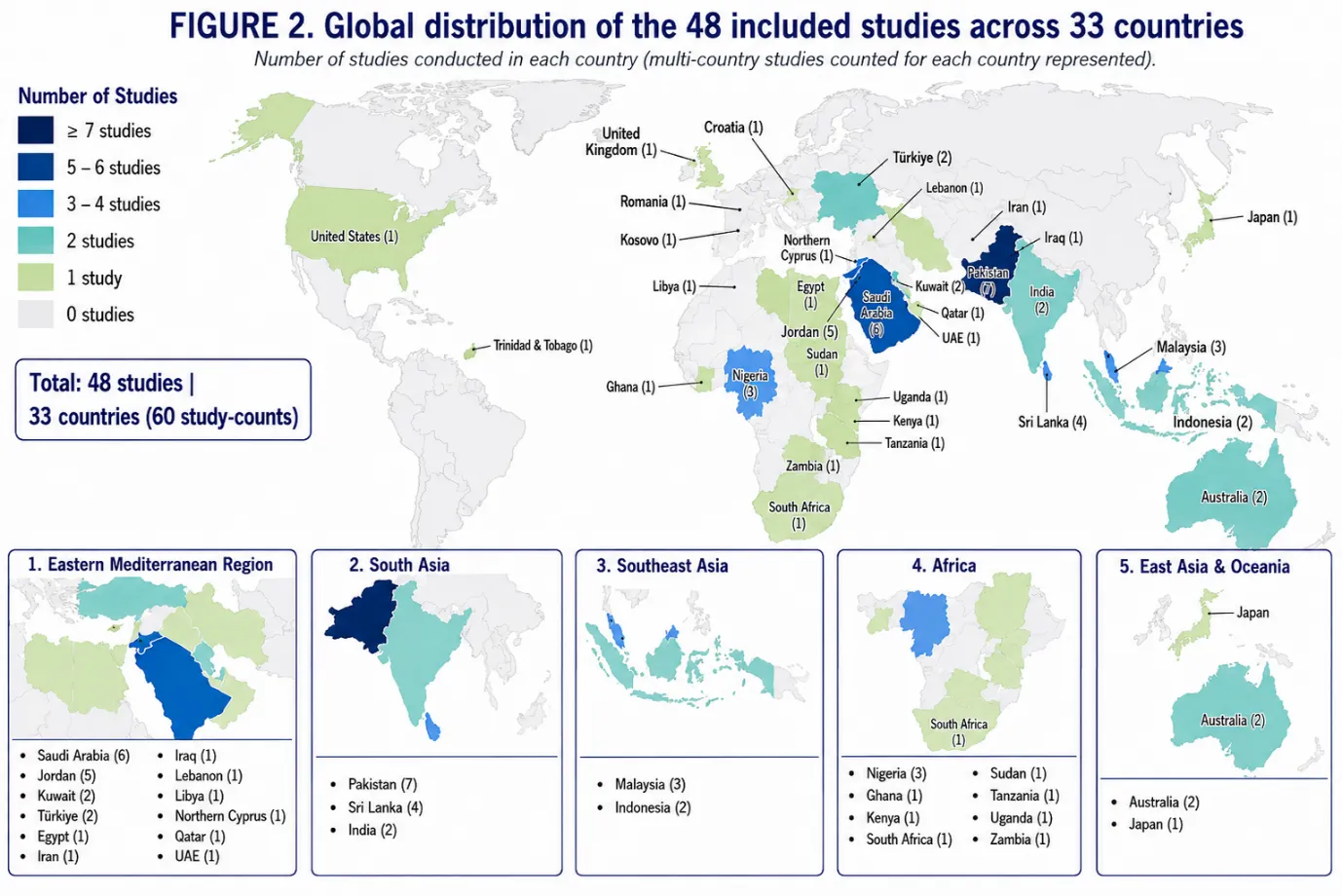
The 48 included studies were published between 2014 and 2026 and represented 33 countries across all six WHO regions. The evidence comprised 43 single country studies and five multi-country studies. Because some studies involved more than one country or WHO region, the number of regional study counts exceeded the total number of included studies.
The Eastern Mediterranean Region contributed the largest number of regional study counts (22), followed by south East Asia (8), Africa (7), Europe (7), and the western pacific (6). Only two regional counts were identified from the Region of the Americas. By country level counting, Pakistan contributed the larger number of study counts seven and followed by Saudi Arabia six within the Eastern Mediterranean evidence base, while Jordan contributed five.
Figure 2 shows the global distribution of the 48 included studies across the 33 represented countries using country level counts. The map groups countries by geography (e.g., Pakistan is shown in the south Asia inset), whereas the regional analysis use WHP regional boundaries, under which Pakistan is classified in the Eastern mediterranean Region.
At the study level,11 studies were conducted in upper middle income countries, 14 in high income countries, 16 in lower middle income countries, and two in low income countries. Five studies included students from more than one income category. Forty seven of the 48 studies were cross sectional surveys, while one included a pre post evaluation component.
Thirty two studies sampled pharmacy students exclusively, whereas 15 used mixed samples that included pharmacy students alongside students from other health professions. One study combined quantitative pharmacy student data with qualitative faculty interviews; only the quantitative student findings were considered in the synthesis. Across the 48 studies, the reported sample size totalled 19,509 participants, with a median of 255 participants, the non-duplicated participant count was 19,043.
Some study level reporting issues identified during data checking require verification against the original publications before journal submission. Pharmacy specific reporting in some mixed-profession studies was unclear, and one Australian study contained a response rate inconsistency between the number of eligible students and the percentage reported in the source article. These items should be reconciled against the primary papers before final submission.
3.3 Risk of bias
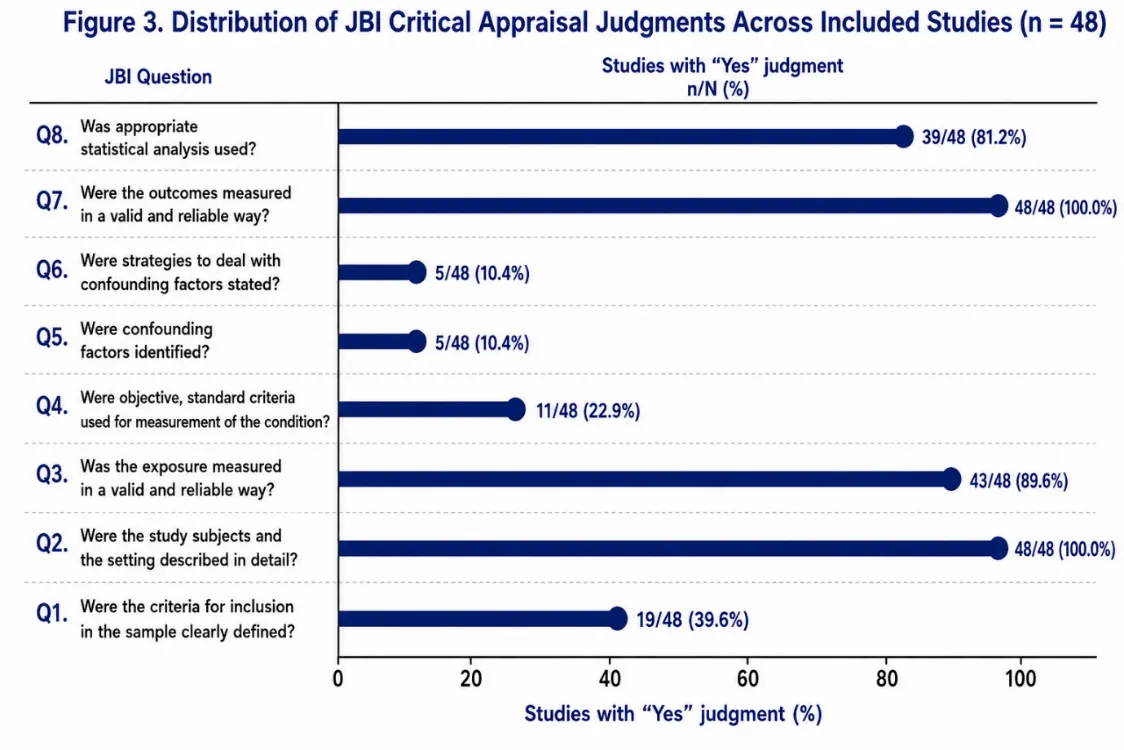
Clearly defined inclusion criteria were reported in 19 of the 48 studies (39.6%). A numerical reliability statistic, such as Cronbach’s alpha, was reported for the survey instrument in 15 studies (31.3%). Five studies reported multivariable regression analyses addressing potential confounding. Statistical methods were described in 47 studies (97.9%), while one study did not clearly specify its statistical approach. Two studies used an instrument that had been adapted and validated in a multi country sample. Overall, the principal methodological limitations were incomplete reporting of questionnaire reliability and limited attention to confounding in predominantly descriptive studies.
Figure 3 summarises the distribution of JBI critical appraisal judgements across the included studies.
3.4 Coverage of KAP and AMS domains
The extent to which the five predefined domains were assessed varied considerably. Knowledge was the most frequently assessed domain, appearing in 43 of 48 studies (89.6%), followed by attitudes in 36 studies (75.0%). Practice was assessed in 25 studies (52.1%), general antibiotic related awareness in 22 studies (45.8%), and stewardship specific familiarity in 17 studies (35.4%). Thus, assessment became progressively less common as the focus moved from general antibiotic knowledge toward more specific AMS constructs.
Table 2 domain coverage of KAP and AMS domains
|
Domain |
Studies assessing (n=48) |
Coverage (%) |
|
Knowledge |
43 |
89.6 |
|
Attitudes |
36 |
75.0 |
|
Practices |
25 |
52.1 |
|
General antibiotic-related awareness |
22 |
45.8 |
|
Stewardship-specific familiarity |
17 |
35.4 |
3.5 Knowledge
Knowledge outcomes varied substantially between studies. In an Iraqi sample, fewer than one quarter of the assessed knowledge items were answered correctly for some domains [19]. Whereas a Zambian study reported an average of approximately 90% correct responses for basic antibiotic resistance concepts [20]. Hussain et al reported good AMR knowledge among 71.6% of students in a Pakistani sample that included pharmacy, veterinary, and biological science students [21]. This difference should be interpreted cautiously because questionnaires differed in difficulty, content, scoring procedures, and definitions of acceptable knowledge.
A consistent pattern was observed across several studies: students generally performed better on basic factual questions, such as recognising that antibiotics do not treat viral infections and understanding that AMR is a global health problem, than on applied clinical questions [22-37]. More difficult areas included antibiotic selection, treatment modification, dosing decisions, and other situations requiring clinical reasoning. This pattern suggests that factual knowledge does not necessarily translate into applied stewardship competence.
Where percentage based knowledge scores were available, performance was generally moderate rather than uniformly high. For example, Justo et al. reported a mean of 5.8 correct answers out of 11 items among US PharmD graduates (52.7%) [23], while Naser et al. reported five correct answers out of seven items (71.4%) in multi-country sample[24].
3.6 Attitudes
Attitudes toward AMR and appropriate antibiotic use were assessed in 36 studies (75.0%). Overall, students commonly recognised AMR as an important public health issues and expressed support for appropriate antibiotic use and stewardship responsibilities [32,36,38-51]. In the United States, 94% of graduation PharmD students considered strong antimicrobial knowledge important to their future professional role [23]. In Türkiye, 97.2% of pharmacy students disagreed with the idea that antibiotics should be prescribed simply because a patient requests them [52].
However, favourable attitudes were not consistently reflected in self reported behaviour. One Jordanian study reported a mean attitudinal score of 4.06/5 alongside an 80.8% prevalence of antibiotic self medication among senior pharmacy students [38]. Another study identified less favourable stewardship related attitudes together with substantial reports of incomplete antibiotic courses [22].
3.7 Practices
Practice-related outcomes were assessed in 25 studies (52.1%), although the definition of practice varied widely. Measures included self medication, obtaining antibiotics without a prescription, use of leftover antibiotics, adherence to treatment, clinical decision making, counselling preparedness, and other indicators of stewardship related behaviour [13,28,29,48,53-56].
Several studies reported inappropriate antibiotic-use practices. In Jordan, 80.8% of senior pharmacy students reported antibiotic self medication despite relatively favourable knowledge and attitude scores [38]. In Libya, 80% of pharmacy students reported using antibiotics without seeking medical advice [40]. In Kosovo, 63% of pharmacy students reported choosing antibiotics without seeking medical advice [57], while 62.4% of pharmacy students in Pakistan reported purchasing antibiotics for home use without a prescription [58].
A comparison between Australia and Sri Lanka showed that 89% of Australian students and 77% of Sri Lankan students reported obtaining antibiotics with a prescription[53]. Such comparisons should be interpreted in the context of differences in regulatory environments, healthcare access, questionnaire wording, and participant characteristics. Overall, the evidence indicates that good knowledge and positive attitudes do not consistently result in stewardship consistent practices.
3.8 Antimicrobial stewardship familiarity
AMS -specific familiarity was the least frequently assessed domain, reported in only 17 of the 48 studies (35.4%). Where assessed, stewardship-specific knowledge and familiarity were often weaker than general antibiotic knowledge [21,26,36,39,41-43,46,47,49,59-63]. In Saudi Arabia, only 24.3% of pharmacy students knew what antimicrobial stewardship is [41], whereas in Pakistan found that only 18.9% of students had heard of AMS programmes [42]. Conversely, another Pakistani study reported that 78.4% pharmacy students were not aware of the term antimicrobial stewardship [59], illustrating substantial variation between study populations and instruments, In South Africa, 83.5% of final year pharmacy students described themselves as knowledgeable about AMS [43], although this was self reported rather than demonstrated through an objective knowledge assessment.
The evidence also suggested gaps in students understanding of the pharmacists role within multidisciplinary AMS teams and in stewardship specific prescribing and monitoring measures. Several studies reported limited formal AMS instruction within pharmacy curricula [16,64]. These findings point to need for more explicit and applied AMS teaching rather than relying on general antibiotic pharmacology alone.
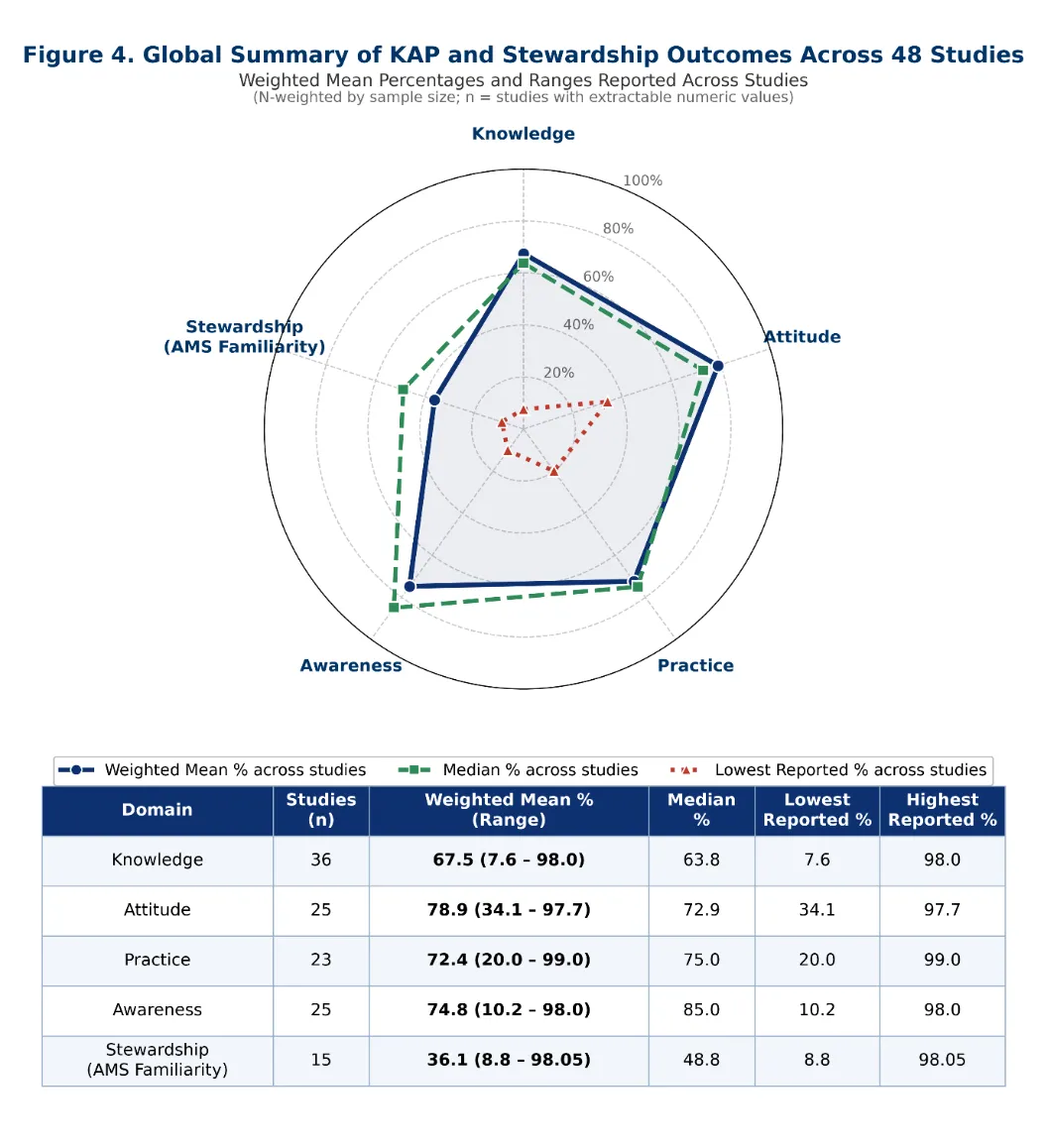
Figure 4 presents a global summary of weighted mean knowledge, attitude, practice, awareness, and stewardship outcomes across the included studies, alongside the number of the contributing studies per domain.
DISCUSSION
This systematic review synthesised evidence from 48 studies conducted in 33 countries and all six WHO regions. Three major findings emerged. First, basic antibiotic and AMR knowledge was the most frequently studied domain and was generally stronger than applied clinical knowledge. Second, AMS specific familiarity was assessed much less often and was frequently weaker than general antibiotic knowledge. Third, positive attitudes and reasonable factual knowledge were not consistently accompanied by appropriate antibiotic-use practices.
The predominance of basic knowledge assessment suggests the pharmacy education has successfully introduced many fundamental antibiotic and AMR concepts. However, knowing that antibiotics are ineffective against viruses or the resistance is a global problem does not necessarily demonstrate the ability to make appropriate therapeutic decisions. The recurring difficulty with applied questions suggests that curricula should place greater emphasis on case-based learning, Clinical decision making, antimicrobial selection, dose optimisation, treatment duration, de-escalation, patient counselling, and interpretation of microbiological information.
The relatively limited assessment of AMS specific familiarity is also important. Only 17 studies assessed these domains, compared with 43 studies assessing general knowledge. In several studies, students had limited familiarity with the term AMS or with the practical responsibilities associated with stewardship. This suggests that antibiotic pharmacology and AMR education may not automatically provide sufficient preparation for stewardship practice.
The observed gap between attitudes and behaviour is another important finding. Several studies reported favourable attitudes toward rational antibiotic use while simultaneously documenting self medication, non prescription acquisition, incomplete courses, or other inappropriate practices [19-24,38-40,52,53,57,58,65]. Self reported behaviour may be affected by recall and social desirability bias, but the consistency of this pattern across settings indicates that educational interventions should address behavioural determinants in addition to factual knowledge
The findings have direct implications for pharmacy curricula. AMS education should be explicit, structured, and linked to real clinical situations. Core curriculum content could include principles of antimicrobial selection, local and international treatment guidelines, antimicrobial susceptibility testing, dose and duration optimization, IV to oral conversion, de-escalation, monitoring for effectiveness and toxicity, patient counselling, infection prevention, and communication with prescribers and other healthcare professionals. Practical training and simulated clinical cases may help students apply knowledge rather than simply recall facts.
The heterogeneity of the evidence base limits direct comparisons between studies. Most investigations were cross sectional and descriptive, questionnaires differed in content and scoring, and many studies did not report formal reliability statistics. The absence of a reported Cronbach's alpha should not be interpreted automatically as evidence of an invalid instrument; however, incomplete reporting makes it difficult to judge measurement quality and compare findings between settings.
The geographical distribution of evidence was also uneven. Only two study counts originated from the Region of the Americas, whereas the Eastern Mediterranean Region accounted for 22 study counts. The limited evidence from some regions reduces confidence in the generalisability of the findings and indicates a need for more research in underrepresented settings, including the Americas and parts of the Western Pacific region [66].
4.1 strengths of the review
The review included evidence from all six WHO regions and used five major information sources. The screening process followed PRISMA 2020 reporting principles [18], and methodological quality was assessed using the JBI critical appraisal framework. Data extraction was independently checked against articles, and an overlapping participant cohort was identified and excluded from the non duplicated participant count.
4.2 Limitations
Several limitations should be considered. Only English language publications were included, which resulted in the exclusion of potentially relevant studies from Vietnam and Senegal [67,68]. Thesis and dissertation databases were not searched. Most included studies were cross sectional, limiting causal interpretation. The substantial heterogeneity in instruments and outcome definitions prevented quantitative pooling. Some mixed professional studies did not report pharmacy specific findings separately, and a small number of study level data points require verification against the original articles before submission.
4.3 Implications for pharmacy education and research
The evidence supports three priorities. First, pharmacy programmes should integrate AMS throughout the curriculum rather than treating it solely as an elective or isolated topic. Second, researchers should develop and validate standardised tools for assessing antibiotic Knowledge, AMR awareness, attitudes, behaviour, and AMS competence in student populations. Third, future studies should move beyond descriptive surveys and evaluate education interventions using stronger designs, validated outcome measure, follow up assessment, and analytical methods capable of identifying factors associated with stewardship competence.
CONCLUSION
Across 48 studies from 33 countries and all six WHO regions, pharmacy and pharmacy inclusive students generally demonstrated reasonable knowledge of basic antibiotic and AMR concepts and expressed favourable attitudes toward appropriate antibiotic use and AMS. In contrast, applied stewardship competence, AMS specific familiarity, and stewardship consistent practices were less consistently demonstrated. The evidence was geographically uneven and methodologically heterogeneous, which limits direct comparison and generalisation.
Pharmacy education should therefore provide structured and clinically applied AMS training that connects antibiotic knowledge with decision making, counselling, behaviour, and multidisciplinary practice. Future research should use validated assessment instruments, include underrepresented regions, report pharmacy specific findings clearly in mixed profession samples, and prioritise well designed education intervention studies with measurable follow up outcomes.
REFERENCES


Dr. I. Balaji, Dr. S. Anbazhagan, M. Premnath, S. Siranjeevi, K. Monalisa, P. Prasanna, Antibiotic Knowledge, Awareness, Antimicrobial Stewardship, And Practice Among Pharmacy and Pharmacy Inclusive Student Populations: A Systematic Review of Global Evidence, Int. J. of Pharm. Sci., 2026, Vol 4, Issue 8, 4560-4583, https://doi.org/10.5281/zenodo.22129439
 10.5281/zenodo.22129439