View Article

  • Antibiotic Resistance

  • Department of Pharmacy Practice, College of Pharmaceutical sciences Government medical college Thiruvananthapuram, Kerala, India.

Abstract

Resistance to anti-microbial agents develops when microbes no longer respond to a drug that previously treated them effectively. Resistance in bacterial pathogens results in high morbidity and mortality rate.

Keywords

Antibiotic resistance, Misuse of antibiotics, self-medication, Environmental pollution.

Introduction

× Popup Image

Resistance to anti-microbial agents develops when microbes no longer respond to a drug that previously treated them effectively. Resistance in bacterial pathogens results in high morbidity and mortality rate. Microorganisms that develop resistance are known as ‘superbugs’1. Resistance to fluoroquinolone antibiotics such as ciprofloxacin in E. coli used for urinary tract infections, widespread now a days. Multi-drug resistance TB a form of tuberculosis that is resistant to the two most powerful anti-TB drugs- rifampicin and isoniazid requires longer treatment and less effective. The emergence of drug-resistance malaria parasite is one of the greatest threats to malaria control and results in increased malaria mortality rate.

Antibiotics

Antibiotics are medicines used for the treatment of various kind of bacterial infections that inhibit the growth or destroy microorganisms. It would be meaningful to use the term antimicrobial agent to specify synthetic as well as naturally obtained drugs that weaken microorganisms.

Types of antibiotics

The antibiotics are of different types bactericidal and bacteriostatic.

  • Bactericidal - These drugs usually interfere with the cell wall formation and thus result in the bacterial death1.
  • Bacteriostatic – This drug usually stops bacteria from multiplying1.

Antibiotics are of different types they are classified according to their mode of action, chemical structure, spectrum of activity, natural source of antibiotics.

Different types of antibiotics

  • β -Lactam antibiotics
  • Cotrimoxazole
  • Sulfonamides
  • Fluoroquinolones quinolones

Misuse and overuse of antibiotics include:

  1. Self-medication:

Self-medication by the patient is known as intaking of medicines on one’s own initiative or another person’s suggestion, who is not a certified medical professional 7. Without consultation of a physician leads to improper diagnosis of disease and eventually development of drug resistances. Self- medication with antibiotics can lead to irritation, drug interactions and difficulties in case of diagnosis of various diseases. Self- medication is commonly used to treat sore throat, vomiting, fever, respiratory disease etc. The increase in the rate of self-medication with antibiotics is mainly due to unsuitable dispensing practices6. Antibiotics can be easily obtained from developing countries as compared to developed countries. As a result, a lesser number of antibiotic resistance cases were reported from developed countries compared to developing countries5. Dispensing without prescription was the major source of self-medication of antibiotics and having leftover drugs when a disease was occurred6. This can be controlled by promoting the dispensing of exact numbers of tablets or by educating the public. Self-medication from other sources should be prevented. In the future, self-medication with antibiotics might increase due to accessibility to internet as a source of buying antibiotics without prescription.

Reasons for self-medications
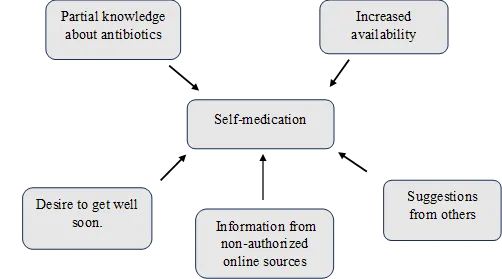
  • Due to the urge of self-care
  • Feelings that illness was mild and doesn’t require a consultation of a physician.
  • Previous experience of treating a similar illness
  • Belief that antibiotics can speed up recovery and eradicate infection.
  • Availability of drugs other than medical shop increases the tendency for self- medications.
  • Lack of knowledge about antibiotic resistance
  • Less expensive

Figure:1: Reason for self-medication

Key factors of self-medications

  • Self-medication in the case of antibiotics is practiced largely in developing countries.
  • More policies and regulations are necessary to prevent the purchase of antibiotics without prescription.
  • Lack of time gave patients the mentality to have self-medication by not consulting a physician.
  • Some findings suggest that 89% of medical students felt self-medication was a good and acceptable method6.

Commonly using antibiotics

  • Amoxicillin
  • Azithromycin
  • Clindamycin
  • Ciprofloxacin
  • Cephalexin
  • Metronidazole etc.

Causes of self-medications

  • Self -medication without sufficient knowledge may results in the irrational use of drugs and may cause serious health issues.
  • Self-medication will take much time to diagnosis the proper disease.
  • This will result in pathogen resistance.
  • Increases morbidity and mortality rate.

Prevention of antibiotics misuse

  • Self-medication of antibiotics can be prevented by providing health education.
  • Avoiding antibiotics that promote spreading of resistant genes.
  • Shortening the course of antibiotics to 3 or 5 days also reduces the administration of leftover drugs.
  • Give awareness to the public of reusing antibiotics without proper diagnosis of disease.

Developing new antibiotics

Discovery of new antibiotics will prevent the drug-resistant pathogens and will minimize the death rate. Antibiotics available till now have lost their efficacy and more of them become resistant to pathogens so there was a rapid decline in safe and highly effective antibiotics. From 1930s to 1960s there were more than 12 classes of newly developed antibiotics. After that period only 2 class of antibiotics were developed. There was no efficient method to determine the bacterial resistance pattern. Discovering and developing an antibiotic is expensive and time-consuming processing it takes approximately10-15 years to develop a antibiotic with high effectiveness.

  1. Environment pollution:

Inappropriate disposal of unused or expired drugs and untreated effluents from pharmaceutical manufacturing industries, hospitals and clinics can expose microbes in the environment to antibiotics and trigger the evolution of resistance. Wastewater treatments don’t remove all antibiotics and resistant bacteria and may serve as a cause for antibiotic resistance. Fecal matter of human can carry traces of previously consumed antibiotics8. This waste can also cause antibiotics resistance and give a negative effect on human health. Antibiotics which have been given to animals to treat infections. Like human waste, animal manure also contains traces of antibiotics and resistant genes while using it in agriculture as fertilizers results in contact of manures with soil and results in spread of resistance. Use of antibiotics and antifungals as pesticides in plants results in close contamination with soil and increases the chance of antibiotic resistance.
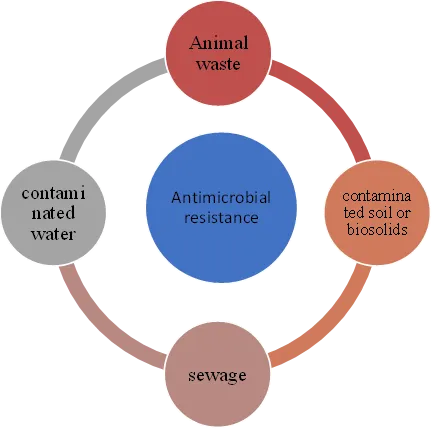
Figure:2 Causes of Antimicrobial Resistance

  1. Food production:

Antibiotics fed for animals which later consumed by humans results in the resistance of antibiotics. Animal waste can carry traces of previously consumed antibiotics and antibiotic resistant germs. Sometimes animal waste is used as fertilizers in farms also results in antibiotic resistance.

  1. Clinical misuse:

Clinical misuse by health care professionals can lead to unnecessary antimicrobial resistance. Increased antibiotic use during covid-19 pandemic as well as use of alcohol-based disinfectants also increased the resistance to antibiotics. Use of incorrect spectrum of antibiotics

Risk in over usage of antibiotics

  • Taking antibiotics when they are not needed accelerates emergence of antibiotic resistance.
  • Overuse of antibiotics can cause bacteria to become resistant, which means current treatments will not work.
  • Antibiotic infectious may lead to longer hospital stays, longer intake of medications and increase in mortality rate.
  • When bacteria become resistant to antibiotics, common infectious will no longer be treatable.

Role of pharmacist in preventing antimicrobial resistance

The pharmacist’s plays an important role in decreasing antibiotic resistance. They are not just a supplier of drugs or else distributers of drugs they are also a team member in health care system9. They are also the main source of information provider should give awareness to public regarding the drug and its side effects, method and frequency of administration give a proper counselling to public.  They should give a brief idea about the medico legal aspects of providing the drug without the prescription. Community pharmacists have an advantage to closely reachable to patients in the community get a role to give advice about the antibiotic resistance and not to use antibiotics for self-limiting infections9.

While further training in infectious disease should be necessary for the pharmacist to prevent antibiotic resistance. Antibiotic stewardship programs have increased rapidly from the past decades. After evidence proved that these programs improve patient care, the infectious society of America and society of health care epidemiology of America published a guideline stating that infectious disease trained clinical pharmacist as an essential core member.

Antibiotic resistance a global crisis

Antibiotic resistance is a worldwide threat that affects human as well as animal health. The over usage of antibiotics in human health, agriculture, aquaculture led to the proliferation of resistance10. Poor sewage and waste management in the environment participates in the rapid dispersion of resistance. These factors on antimicrobial resistance make it a global concern.

How can we stop antimicrobial resistance:

  • Improve labs: countries need medical labs to identify bacteria and choose the right drugs to treat them.
  • Collect and share data: Countries need system to track cases and report results globally to make better policy decisions.
  • Stop overuse of antibiotics: Should be prescribed and taken them correctly.
  • Take measure to prevent infections: Especially in health care settings, good infection control practices are critical to stopping spread of resistant germs.

REFERENCES

  1. Tripathi KD. Essentials of Medical Pharmacology. 8th ed. New Delhi: Jaypee Brothers Medical Publishers; 2019:740-745.
  2. Reygaert WC. An overview of the antimicrobial resistance mechanisms of bacteria. AIMS Microbiology. 2018;4(3):482–501.
  3. Kapoor G, Saigal S, Elongavan A. Action, and Resistance Mechanisms of Antibiotics: A Guide for Clinicians. Journal of Anaesthesiology Clinical Pharmacology. 2017;33(3):300–5. Available from: https://www.ncbi.nlm.nih.gov/pmc/articles/PMC5672523/
  4. Hall-Stoodley L, Costerton JW, Stoodley P. Bacterial biofilms: from the Natural environment to infectious diseases. Nature Reviews Microbiology. 2004;2(2):95–108.
  5. Sunny T, Jacob R, K K, Varghese S. Self-medication: Is a serious challenge to control antibiotic resistance. National Journal of Physiology, Pharmacy and Pharmacology. 2019;9(9):822-824.
  6. Haque M, Rahman NAA, McKimm J, Kibria GM, Azim Majumder MA, Haque SZ, et al. Self-medication of antibiotics: investigating practice among university students at the Malaysian National Defence University. Infection and Drug Resistance. 2019; 12:1333–51. Available from: https://www.dovepress.com/self-medication-of-antibiotics-investigating-practice-among-university-peer-reviewed-fulltext-article-IDR
  7. Sachdev C, Anjankar A, Agrawal J. Self-Medication with Antibiotics: An Element Increasing Resistance. Cureus. 2022;14(10).
  8. Stanton IC, Bethel A, Leonard AFC, Gaze WH, Garside R. Existing evidence on antibiotic resistance exposure and transmission to humans from the environment: a systematic map. Environmental Evidence.2012;11(1).
  9. Mansour O, Rawaa Al-Kayali. Community Pharmacistsꞌ Role in Controlling Bacterial Antibiotic Resistance in Aleppo, Syria. Iranian journal of pharmaceutical research. 2017;16(4):1612–20.
  10. Aslam B, Wang W, Arshad MI, Khurshid M, Muzammil S, Rasool MH, et al. Antibiotic resistance: a Rundown of a Global Crisis. Infection and Drug Resistance. 2018; 11(11):1645–58. Available from: https://www.ncbi.nlm.nih.gov/pmc/articles/PMC6188119/

Reference

  1. Tripathi KD. Essentials of Medical Pharmacology. 8th ed. New Delhi: Jaypee Brothers Medical Publishers; 2019:740-745.
  2. Reygaert WC. An overview of the antimicrobial resistance mechanisms of bacteria. AIMS Microbiology. 2018;4(3):482–501.
  3. Kapoor G, Saigal S, Elongavan A. Action, and Resistance Mechanisms of Antibiotics: A Guide for Clinicians. Journal of Anaesthesiology Clinical Pharmacology. 2017;33(3):300–5. Available from: https://www.ncbi.nlm.nih.gov/pmc/articles/PMC5672523/
  4. Hall-Stoodley L, Costerton JW, Stoodley P. Bacterial biofilms: from the Natural environment to infectious diseases. Nature Reviews Microbiology. 2004;2(2):95–108.
  5. Sunny T, Jacob R, K K, Varghese S. Self-medication: Is a serious challenge to control antibiotic resistance. National Journal of Physiology, Pharmacy and Pharmacology. 2019;9(9):822-824.
  6. Haque M, Rahman NAA, McKimm J, Kibria GM, Azim Majumder MA, Haque SZ, et al. Self-medication of antibiotics: investigating practice among university students at the Malaysian National Defence University. Infection and Drug Resistance. 2019; 12:1333–51. Available from: https://www.dovepress.com/self-medication-of-antibiotics-investigating-practice-among-university-peer-reviewed-fulltext-article-IDR
  7. Sachdev C, Anjankar A, Agrawal J. Self-Medication with Antibiotics: An Element Increasing Resistance. Cureus. 2022;14(10).
  8. Stanton IC, Bethel A, Leonard AFC, Gaze WH, Garside R. Existing evidence on antibiotic resistance exposure and transmission to humans from the environment: a systematic map. Environmental Evidence.2012;11(1).
  9. Mansour O, Rawaa Al-Kayali. Community Pharmacists? Role in Controlling Bacterial Antibiotic Resistance in Aleppo, Syria. Iranian journal of pharmaceutical research. 2017;16(4):1612–20.
  10. Aslam B, Wang W, Arshad MI, Khurshid M, Muzammil S, Rasool MH, et al. Antibiotic resistance: a Rundown of a Global Crisis. Infection and Drug Resistance. 2018; 11(11):1645–58. Available from: https://www.ncbi.nlm.nih.gov/pmc/articles/PMC6188119/

Photo
Nesrin Fathima
Corresponding author

Department of Pharmacy Practice, College of Pharmaceutical sciences Government medical college Thiruvananthapuram, Kerala, India.

Photo
Shamna M. S
Co-author

Department of Pharmacy Practice, College of Pharmaceutical sciences Government medical college Thiruvananthapuram, Kerala, India.

Nesrin Fathima, Shamna M. S, Antibiotic Resistance, Int. J. of Pharm. Sci., 2026, Vol 4, Issue 7, 1818-1823. https://doi.org/10.5281/zenodo.21267434

More related articles
Pharmaceutical Audit and Regulatory Compliance...
Keshav Pawar, Dr. Rajendra Patil, Swati Burungale, Pratiksha Gaik...
A Review Article on Antimicrobial Resistance and C...
Prajwal Kapse, Sharda Kulkarni, Aarti Kangude, Shreyash Kadam, Sh...
RP-HPLC Method Development and Validation of Upadacitnib (UDB) and Tofacitinib (...
Gayatri Maneri, Dr. Nagaraju Potnuri, Wagmode B, Supriya Davkare, Kodalkar V...
Related Articles
SELEX to Clinic: Evolution, Innovations and Applications of Aptamers in Precisio...
Pallavi Desale, Jyotiraditya Fiske, Dimpal Patil, Amol Rakte...
Pharmaceutical Audit and Regulatory Compliance...
Keshav Pawar, Dr. Rajendra Patil, Swati Burungale, Pratiksha Gaikwad, Gayatri Shelake...
More related articles
Pharmaceutical Audit and Regulatory Compliance...
Keshav Pawar, Dr. Rajendra Patil, Swati Burungale, Pratiksha Gaikwad, Gayatri Shelake...
A Review Article on Antimicrobial Resistance and Chemotherapeutics: Mechanisms, ...
Prajwal Kapse, Sharda Kulkarni, Aarti Kangude, Shreyash Kadam, Shivram Kedar, Priya Kale...
Pharmaceutical Audit and Regulatory Compliance...
Keshav Pawar, Dr. Rajendra Patil, Swati Burungale, Pratiksha Gaikwad, Gayatri Shelake...
A Review Article on Antimicrobial Resistance and Chemotherapeutics: Mechanisms, ...
Prajwal Kapse, Sharda Kulkarni, Aarti Kangude, Shreyash Kadam, Shivram Kedar, Priya Kale...