

We use cookies to ensure our website works properly and to personalise your experience. Cookies policy
AISSMS College of Pharmacy, Rb Kennedy Road, Near Rto Pune, Sangamwadi, Pune, Maharashtra, 411001
The present study investigates the antioxidant potential of Lens culinaris (lentil) and its role in mitigating oxidative stress associated with cardiovascular disorders. Oxidative stress, resulting from excessive production of reactive oxygen species (ROS), is a major contributing factor in the progression of diseases such as atherosclerosis and coronary artery disease. Natural plant-based sources rich in antioxidant compounds are gaining attention for their therapeutic potential. Lens culinaris is a nutrient-dense legume containing significant levels of polyphenols, flavonoids, and other bioactive constituents known for their antioxidant activity. In this study, extracts of Lens culinaris were prepared using appropriate extraction techniques to isolate its active components. The antioxidant activity of the extract was evaluated through in vitro assays, along with biochemical analyses to determine its effect on oxidative stress markers and lipid peroxidation. The results demonstrate that Lens culinaris exhibits strong antioxidant properties by effectively scavenging free radicals and reducing oxidative damage. These findings suggest its potential role in protecting against oxidative stress-induced cellular injury and related cardiovascular complications. Overall, Lens culinaris may serve as a promising natural antioxidant source with potential therapeutic applications. Further studies are required to validate its clinical efficacy and underlying mechanisms.
Lens culinaris, or lentil, is a commonly cultivated legume with nutritional as well as medicinal uses. It has been a part of the regular diet worldwide and is associated with the prevention of metabolic and cardiovascular disorders.¹ Being a rich source of nutrients and bioactive compounds such as polyphenols, flavonoids, tannins, and antioxidants, lentils exhibit significant cardioprotective potential.²
The phytochemical composition of Lens culinaris contributes to its antioxidant and anti-inflammatory activities. These compounds play an important role in scavenging reactive oxygen species (ROS), preventing lipid peroxidation, and regulating inflammatory mediators, thereby maintaining vascular integrity.³ Additionally, processing methods such as germination and fermentation enhance the bioavailability of these phytochemicals by reducing antinutritional factors.⁴
Anticoronary activity refers to the protection of coronary arteries against pathological conditions such as atherosclerosis, endothelial dysfunction, oxidative stress, and inflammation. Such activity helps maintain coronary blood flow, reduce plaque formation, and prevent lipid oxidation, ultimately lowering the risk of myocardial ischemia and infarction.⁵
Coronary artery disease (CAD) is one of the leading causes of morbidity and mortality worldwide. It is characterized by progressive narrowing of coronary arteries due to atherosclerotic plaque formation.⁶ The disease involves oxidative modification of low-density lipoproteins, endothelial injury, chronic inflammation, and altered lipid metabolism.⁷
Although conventional therapies such as statins, antiplatelet agents, and thrombolytics are widely used, their long-term use is associated with adverse effects such as bleeding complications and hepatic toxicity.⁸ This has led to increased interest in plant-based natural therapies with better safety profiles and multitarget actions.
Lens culinaris has shown promising effects in reducing oxidative stress, improving lipid profiles, and modulating inflammatory responses, which are key factors in the prevention of CAD.² However, systematic scientific evaluation of its anticoronary activity remains limited.
Therefore, the present study aims to evaluate the anticoronary activity of Lens culinaris extract using appropriate experimental models and to establish its potential as a safe and effective cardioprotective agent.³
MATERIALS AND METHOD :
Extract of Lens culinaris seeds :
This is the compound whose influence on the formation of blood clots is under investigation, and it belongs to the Fabaceae family. The leguminous plants are cultivated for the production of lens-shaped edible seeds referred to as pulses. This is an ethanol extract from Shamantak Enterprises, Pune.
Chemical reagents :
Phosphate buffered saline (pH 7.4) was made and fine-tuned to the right pH with dilute NaOH or HCl as needed. Diclofenac sodium served as the standard anti-inflammatory drug, and we readied the test samples at various concentrations in distilled water—this also acted as both the control and blank.
For the TBARS assay, we dissolved the aqueous extracts in distilled water to make solutions at 5.00, 2.50, 1.25, and 1.00 mg/mL. We freshly homogenized egg yolk, and prepared 20% acetic acid and 0.8% thiobarbituric acid (TBA) solutions. Ascorbic acid (100 μg/mL) was our positive control, with distilled water as the negative control. Butanol handled the extraction step. All chemicals were analytical grade and prepped fresh right before use.
Distilled Water: It is used for different uses like stock solution of Lens culinaris, phosphate buffer solution, TBA solution, ascorbic solution, etc.
Preparation of 1% (w/v) Egg Albumin Solution
The fresh egg whites from the hen's egg was used in preparing the 1% (w/v) egg albumin solution. The egg albumin or egg white was carefully separated from the yolk without any form of contamination by breaking the egg. In this case, 1 mL of the egg albumin is carefully extracted using the pipette and then transferred to a 100 mL volumetric flask, and then cold distilled water is used to make up the solution to the mark in order to obtain 1% (w/v). A constant and gentle stirring is done in order to get a homogeneous solution. It should be noted that heat is one factor that can lead to coagulation of egg albumin, hence, cold solutions are recommended.
Preparation of 10% (v/v) Egg Yolk Suspension
First, extract the yolk from the whole egg and peel off the yolk membrane carefully. Dilute the yolk using 1.15% KCL to prepare a 10% (v/v) suspension; shake well using a homogenizer for 30 seconds. Transfer the egg yolk suspension to the ultrasonic bath for 5 minutes to obtain a homogeneous solution.
Plant Extract
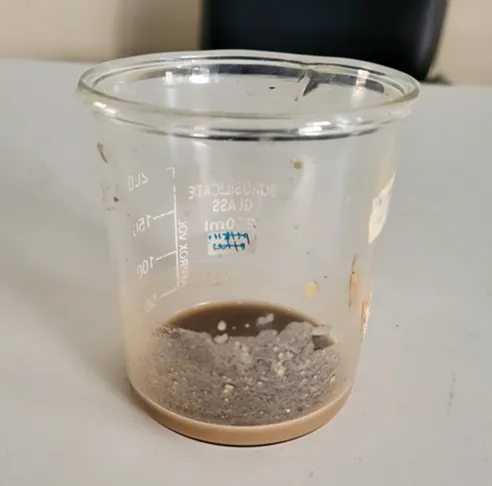
Figure No. 1. Lens culinaris (lentil) seeds extract
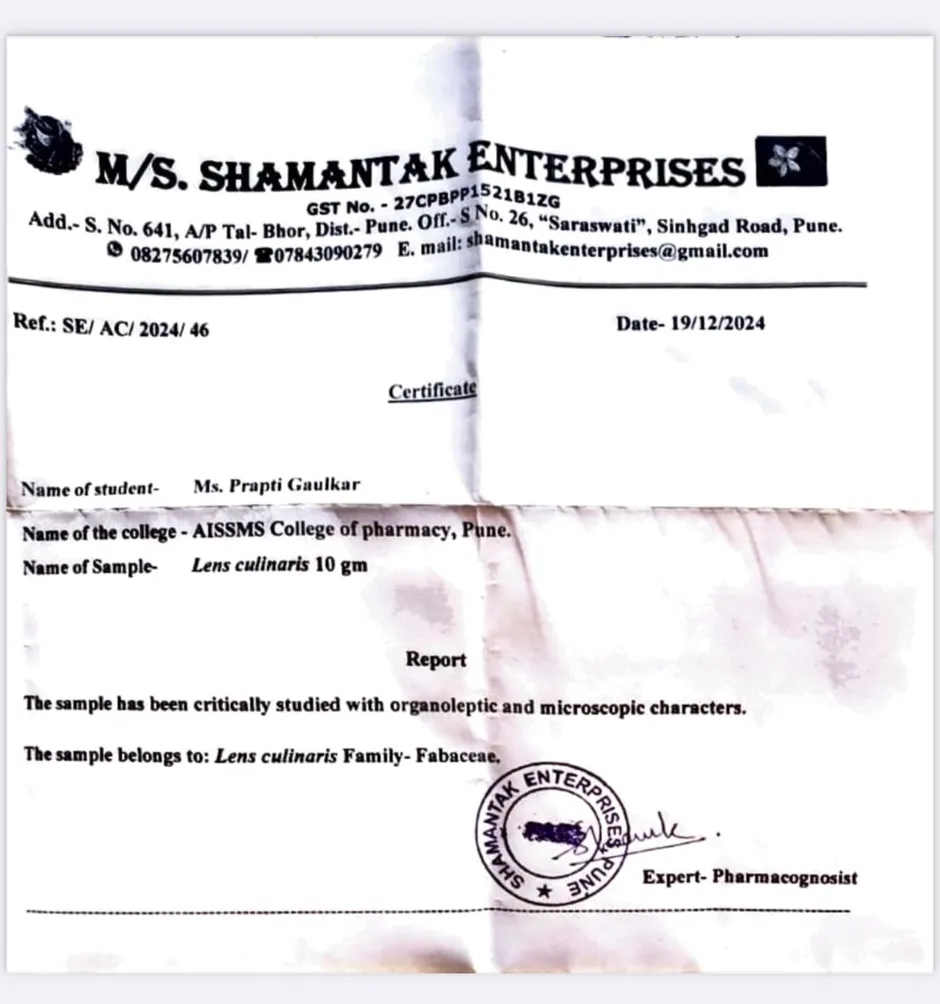
Figure No.2 Certificate of lens culinaris drug extract
A. Procedure:
Egg Albumin Assay
The reaction mixture was created by combining 1 mL of 1% (w/v) egg albumin solution with 1 mL of phosphate buffered saline (pH 7.4) and 1 mL of the test sample at different concentrations. In the control group, distilled water replaced the test sample, while a standard anti-inflammatory medication like diclofenac sodium served as the reference standard. All reaction mixtures were first incubated at 37 °C for 15 minutes to facilitate interaction between the protein and the test substances. Following this, heat-induced denaturation was performed by subjecting the mixtures to a water bath held at 70 °C for 5 minutes. After heating, the samples were allowed to cool to room temperature, and the turbidity resulting from the denaturation process was measured spectrophotometrically at a wavelength of 660 nm, with distilled water as the blank. The degree of inhibition of the protein denaturation process was calculated relative to the control, and the higher the inhibition percentage, the greater the protective effect on the protein against denaturation8.
Four snap-cap tubes contained different amounts of aqueous extract (AE) of 5.00, 2.50, 1.25, and 1.00 mg/mL at a volume of 40 μL. Egg yolk homogenate was added to each of them in an amount of 200 μL. The negative control comprised distilled water (40 μL). On the other hand, the positive control involved ascorbic acid (40 μL) that had been dissolved in distilled water at a concentration of 100 μg/mL. After that, there was a need to add 600 μL of 20% acetic acid and 600 μL of 0.8% thiobarbituric acid (TBA). Thus, the final volume amounted to 1600 μL of distilled water. The mixtures were mixed using vortexer for 5 seconds, after which, they were kept in incubation for 60 minutes inside the water bath of 95 °C.
Separation of the butanol took place by centrifuge with a rate of 1500 g for five minutes. The values of absorbance were obtained with the use of wavelengths at 532 nm.
The antioxidant index (AI) was calculated with the following formula.
AI = (1-T/C) × 100
T = Absorbance of Test Sample
C=Absorbance of fully oxidized control group9
RESULTS
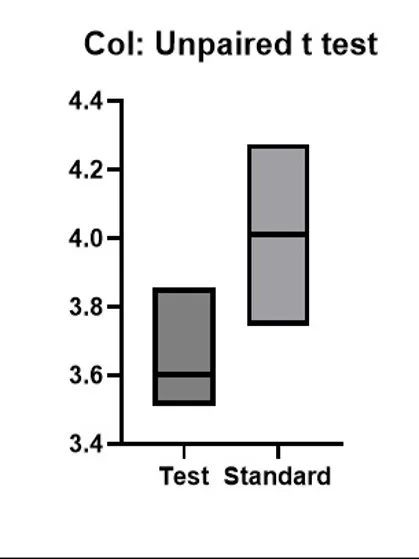
EGG ALBUMIN
|
CONCENTRATION |
ABSORBANCE |
|
1 |
3.6657 |
|
1.25 |
3.8562 |
|
2.5 |
3.5123 |
|
5 |
3.5383 |
|
Positive |
4.2735 |
|
Negative |
3.7456 |
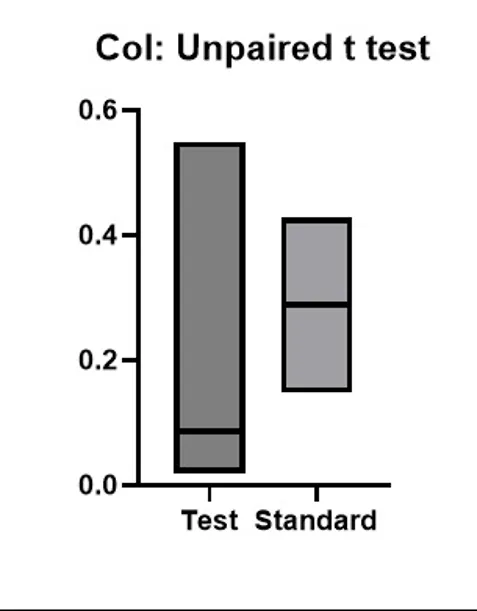
LIPID PEROXIDATION
|
CONCENTRATION |
ABSORBANCE |
|
1.0 |
0.55 |
|
1.25 |
0.099 |
|
2 |
0.073 |
|
5 |
0.019 |
|
Positive |
0.148 |
|
Negative |
0.429 |
CONCLUSION
Extracts of Lens culinaris consistently exhibit notable antioxidant and anti-inflammatory properties, highlighting their potential for drug development. In vitro studies have shown that hydroalcoholic extracts of lentil sprouts significantly reduce malondialdehyde (MDA) levels—a key indicator of lipid peroxidation—thereby demonstrating effective protection against membrane lipid damage. Comparable protective effects were seen with ethanol seed extracts, which significantly reduced lipid peroxidation (LPO) and reinstated antioxidant enzymes such as superoxide dismutase (SOD) and catalase (CAT) in doxorubicin-induced nephrotoxicity models10.
The antioxidant potential of lentil phenolic compounds has also been well documented. Tannin-rich fractions from green lentils showed the greatest overall antioxidant activity and free radical–scavenging ability, which directly corresponded with a reduction in lipid oxidation.
Although specific protein denaturation studies on Lens culinaris are limited, reductions in oxidative stress markers (MDA, LPO) and increased antioxidant enzyme activity indicate its potential to stabilize proteins and exert anti-inflammatory effects. Overall, lentil-derived bioactive compounds may act as multifunctional agents that inhibit protein denaturation and lipid peroxidation, supporting their potential in managing inflammation and oxidative stress–related disorders11.
REFERENCES






Shubhangi Deshpande, Sanika Charthad, Vedanti Sonone, Neha Mangnale, Prajakta Sangale, Nikhil Kunjir, Anticoronary Activity of Lens culinaris (Lentils) Natural Extract, Int. J. of Pharm. Sci., 2026, Vol 4, Issue 6, 988-993. https://doi.org/10.5281/zenodo.20532364
 10.5281/zenodo.20532364