

We use cookies to ensure our website works properly and to personalise your experience. Cookies policy
Krishna School Of Pharmacy & Research, Drs. Kiran & Pallavi Patel Global University(KPGU), Vadodara, Gujarat, India
Artificial intelligence (AI) is emerging as a transformative technology in clinical trials, providing solutions to limitations of traditional research methods. Conventional trials are often costly, time-consuming, and operationally complex, with challenges such as delayed patient recruitment, protocol deviations, inefficient data management, and high attrition rates. AI techniques, including machine learning (ML), deep learning (DL), natural language processing (NLP), and predictive analytics, are increasingly applied in clinical research to improve trial design, participant selection, safety monitoring, data analysis, and outcome prediction. AI integration spans all phases of clinical trials, from preclinical drug discovery to post-marketing surveillance. Automated systems enhance data processing speed, reduce manual errors, and support real-time decision-making. In addition, AI enables adaptive trial designs and supports personalized medicine through patient-specific treatment strategies. However, implementation of AI in clinical trials presents challenges related to data privacy, algorithmic transparency, bias, and regulatory compliance. This review evaluates the role of AI in clinical trials, highlighting its applications, limitations, and future potential. Overall, AI integration can accelerate drug development, reduce research burden, and improve the reliability of clinical research.
Clinical trials are a cornerstone of evidence-based medicine and are essential for evaluating the safety, efficacy, and quality of new therapeutic interventions prior to regulatory approval. However, conventional clinical trial processes are associated with several challenges, including high development costs, extended timelines, complex study protocols, low patient recruitment rates, and inefficient data management systems. It is estimated that the development of a new drug may require 10–15 years and billions of dollars, making clinical research highly resource-intensive. These limitations often delay the availability of innovative therapies and increase the burden on healthcare systems. [1]
Artificial intelligence (AI) is increasingly being integrated into clinical research to address these challenges by improving operational efficiency across multiple trial functions. AI-based approaches such as machine learning (ML), deep learning (DL), and natural language processing (NLP) enable the analysis of large-scale healthcare data from electronic health records (EHRs), genomic databases, wearable devices, and real-world evidence sources.
Rather than relying on repetitive manual processes, AI supports more efficient trial workflows by improving participant selection, optimizing study design, enhancing safety surveillance, and accelerating data processing. This reduces operational delays and supports more adaptive and patient-centered clinical research models.
Recent developments also highlight the expanding role of AI in regulatory science, digital health systems, and in silico clinical trials. Regulatory authorities, including the U.S. Food and Drug Administration (FDA), are actively evaluating AI-enabled frameworks to strengthen clinical trial oversight and improve decision-making processes. [2]
2.Methodology
This review article was conducted using a systematic literature review approach to evaluate the applications of artificial intelligence (AI) in clinical trials and healthcare research. Relevant scientific literature, including original research articles, review papers, and regulatory reports, was retrieved from major electronic databases such as PubMed, Google Scholar, ScienceDirect, Springer, and IEEE Xplore .[3]
The literature search was performed using predefined keywords, including “Artificial Intelligence in Clinical Trials,” “Machine Learning in Drug Development,” “Deep Learning,” “Predictive Analytics,” “AI-based Patient Recruitment,” and “AI in Healthcare Research.” Boolean operators such as “AND” and “OR” were used to refine and optimize search results. Only peer-reviewed English-language publications focusing on the applications of AI in clinical trials, drug development, and healthcare research were included. Duplicate studies, non-relevant articles, conference abstracts with insufficient data, and non-peer-reviewed publications were excluded to ensure data quality and reliability.
The selected studies were systematically analyzed and categorized into key thematic areas, such as applications of AI in clinical trials, benefits, limitations, ethical challenges, regulatory considerations, and future perspectives. Particular attention was given to issues including patient privacy, informed consent, algorithmic transparency, and data protection.
In addition, regulatory guidelines and recommendations from organizations such as the U.S. Food and Drug Administration (FDA), European Medicines Agency (EMA), and International Council for Harmonisation (ICH) were reviewed to understand current regulatory frameworks governing AI-based clinical research [4].
Although this review is based on published literature, the rapidly evolving nature of AI technologies and variations in study designs may influence interpretation. Nevertheless, this methodology provides a structured and comprehensive overview of the role of AI in transforming clinical trials and advancing modern healthcare research.
Literature Search (Databases: PubMed, Scopus, ScienceDirect, IEEE, Springer)
↓
Keyword Identification & Boolean Search (AI in Clinical Trials, ML, DL, etc.
↓
Screening of Titles & Abstracts (Removal of duplicates & irrelevant studies)
↓
Full-Text Eligibility Check (Apply inclusion & exclusion criteria)
↓
Final Study Selection
↓
Data Extraction (methods, AI applications, outcomes)
↓
Thematic Analysis (AI applications, benefits, limitations, ethics, regulation)
↓
Data Synthesis & Conclusion
3.Overview of Artificial Intelligence Technologies
Artificial intelligence (AI) is the ability of computer systems to carry out tasks that typically need human intelligence, like learning, reasoning, decision-making, and pattern recognition. AI technologies are increasingly used in healthcare and clinical trials to improve efficiency, accuracy, and data-driven decision-making. The growth of big data, electronic health records, and digital healthcare systems has accelerated Adoption of AI in medical research and drug development .
3.1 Machine Learning (ML)
Machine learning (ML) is a branch of AI that enables systems to learn from data and make predictions without explicit programming. ML algorithms are widely used in clinical trials for disease prediction, patient classification, treatment response analysis, and biomarker identification. Adoption of AI in medical research methods help improve predictive analytics and personalized medicine approaches [5].
3.2 Deep Learning (DL)
Deep learning is an advanced form of machine learning Artificial neural networks were used. It is highly effective in analyzing medical images, genomic data, and large healthcare datasets. In clinical trials, deep learning supports early disease detection, radiological image analysis, drug discovery, and prediction of treatment outcomes.
3.3 Natural Language Processing (NLP)
Natural language processing (NLP) enables computers to understand and analyze human language. NLP is used to process unstructured healthcare data such as physician notes, clinical reports, and electronic health records. Applications in clinical trials include automated patient recruitment, adverse event reporting, and clinical documentation analysis[6].
3.4 Computer Vision and Predictive Analytics
Computer vision allows AI systems to interpret medical images and visual data for applications such as tumor detection and imaging biomarker analysis. Predictive analytics combines AI and statistical methods to forecast patient responses, identify adverse events, and optimize clinical trial performance. These technologies improve diagnostic accuracy and support data-driven decision-making in healthcare research.
3.5 Explainable AI and Big Data Analytics
Explainable AI (XAI) focuses on making AI decisions transparent and understandable, which is important for regulatory and patient safety compliance. AI is also closely linked with big data analytics, enabling examination of large healthcare datasets from electronic health records, genomic databases, and wearable devices. Together, these technologies support precision medicine and improve clinical research efficiency.[7]
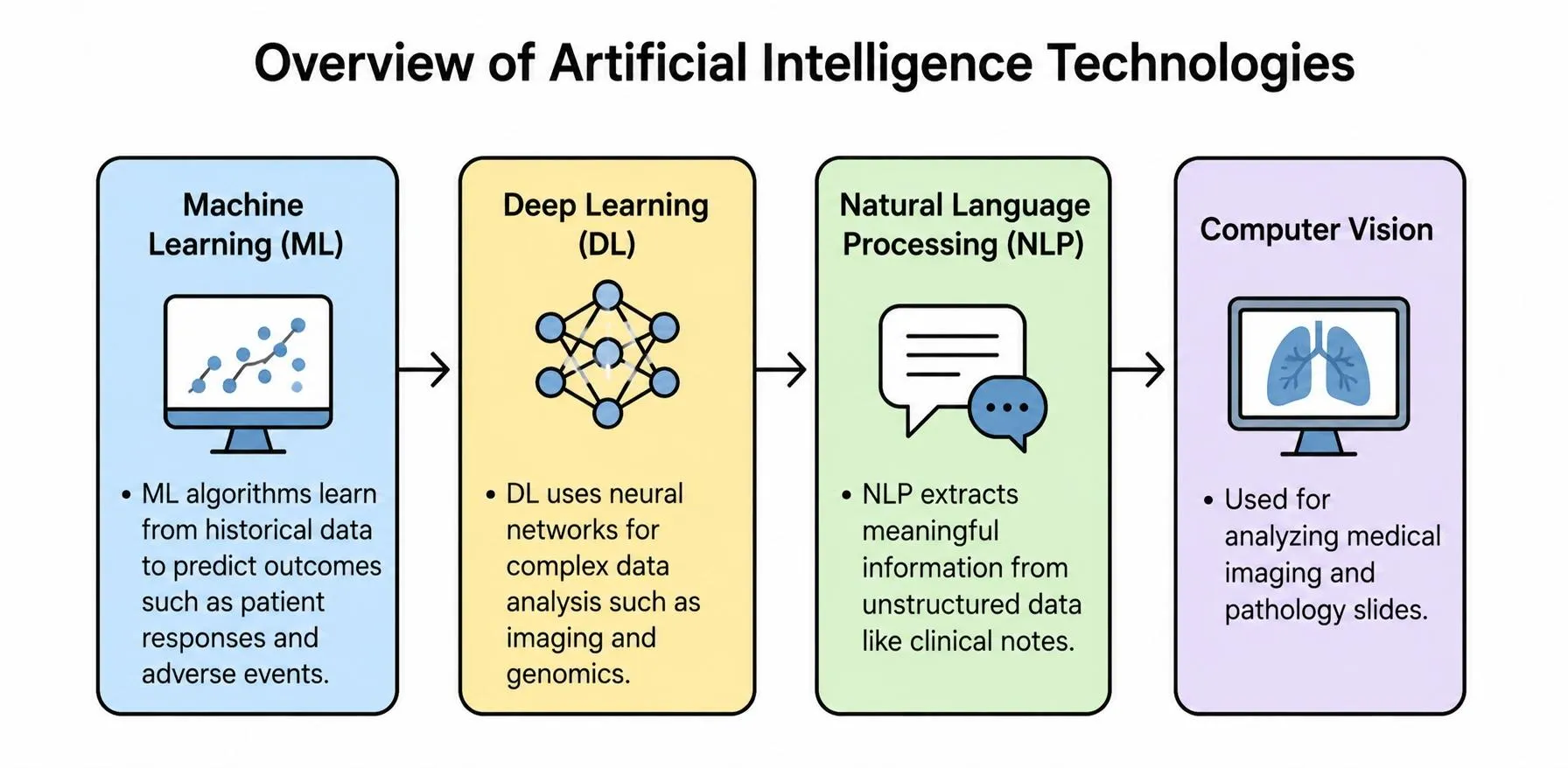
Fig.1 Overview of Artificial Intelligence Technologies. Artificial intelligence technologies such as Machine Learning, Deep Learning, Natural Language Processing, and Computer Vision enhance clinical trials through advanced data analysis, prediction, and medical imaging interpretatio
4. AI Across Clinical Trial Phases
Preclinical Phase
AI accelerates drug discovery by predicting molecular interactions and toxicity profiles.
Phase I Trials
AI helps determine safe dosage levels and identify adverse reactions early.
Phase II Trials
Focus on efficacy; AI predicts patient response and optimizes trial parameters.
Phase III Trials
Large-scale trials benefit from AI-driven recruitment and real-time monitoring.[8]
Phase IV (Post-Marketing)
AI analyzes real-world data to detect long-term safety and effectiveness.
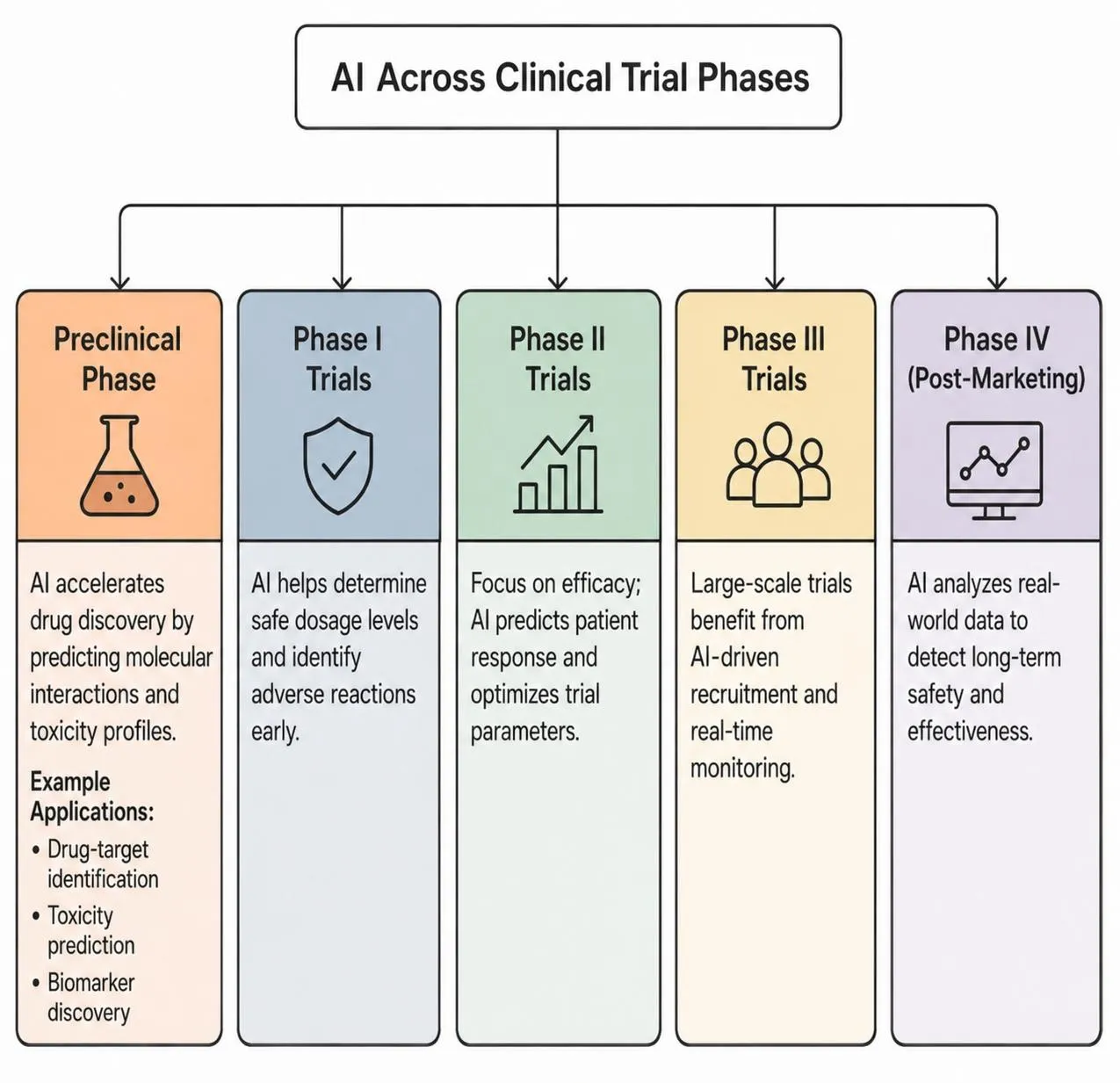
Fig 2.AI Across Clinical Trial Phases. Artificial intelligence enhances all phases of clinical trials by improving drug discovery, patient safety, treatment optimization, recruitment efficiency, and post-marketing surveillance
5. Key Applications of AI in Clinical Trials
Artificial intelligence (AI) is increasingly integrated into clinical research workflows through machine learning (ML), deep learning (DL), predictive analytics, and natural language processing (NLP). These technologies are applied across multiple phases of clinical trials to improve operational efficiency, reduce costs, enhance patient safety, and support faster therapeutic development. The major applications are summarized below.
5.1 Drug Preclinical and Discovery Research
AI supports early-stage drug development by analyzing large-scale biological and chemical datasets to identify potential drug targets and predict toxicity profiles. Machine learning models enable rapid in silico screening of compound libraries, thereby reducing the time and cost associated with preclinical research. Additionally, AI facilitates biomarker identification and assists in prioritizing promising drug candidates for clinical evaluation [9].
5.2 Patient Recruitment and Selection
Patient recruitment is a major bottleneck in clinical trials. AI addresses this challenge by analyzing electronic health records (EHRs), laboratory data, and clinical histories to identify eligible participants. Natural language processing (NLP) techniques extract relevant information from unstructured clinical documents. These approaches improve recruitment efficiency, enhance participant diversity, and reduce selection bias [10].
5.3 Safety and Adverse Event Detection
AI contributes to patient safety by enabling real-time analysis of clinical records, laboratory results, and trial data to detect potential adverse drug reactions. Machine learning algorithms identify complex patterns associated with toxicity and side effects, allowing earlier detection and intervention. AI-based pharmacovigilance systems strengthen continuous safety monitoring throughout clinical trials.
5.4 Data Management and Analysis
Clinical trials generate large volumes of structured and unstructured data. AI improves data management by automating processes such as data entry, cleaning, validation, and integration. Machine learning techniques detect missing, inconsistent, or anomalous data, thereby improving data quality. Advanced analytics further enable efficient interpretation of complex datasets, supporting more accurate and reliable trial outcomes [11].
5.5 Predictive Analytics
Predictive AI models are used to estimate clinical trial outcomes, including success rates, patient responses, and treatment effectiveness. By analyzing historical datasets and patient characteristics, these models assist in identifying high-risk participants, predicting dropout rates, and optimizing resource allocation. This enhances study design and reduces the likelihood of trial failure [12].
5.6 Personalized Medicine
AI enables personalized medicine by integrating genomic, proteomic, and clinical data to identify biomarkers and genetic variations associated with treatment response. This facilitates patient stratification and supports the development of targeted therapies. Such approaches improve therapeutic efficacy, minimize adverse effects, and enhance overall clinical trial success.
5.7 Regulatory Compliance
AI supports regulatory compliance by automating documentation, protocol tracking, and audit processes. Intelligent systems evaluate trial records for completeness, consistency, and accuracy while ensuring adherence to regulatory requirements. These capabilities reduce administrative burden, minimize reporting errors, and accelerate regulatory submissions, thereby improving transparency and efficiency [13].
5.8 Real-World Evidence Generation
AI enables analysis of real-world data from electronic health records, insurance claims, patient registries, and wearable devices. This facilitates assessment of long-term treatment effectiveness and patient outcomes in routine clinical settings. Real-world evidence generated through AI supports post-marketing surveillance and strengthens regulatory decision-making.
6. Benefits of of Clinical Trials using AI
Artificial intelligence (AI) has significantly transformed clinical trials by enhancing efficiency, accuracy, patient safety, and decision-making throughout the drug development lifecycle. Conventional clinical trials are often associated with high costs, prolonged timelines, and substantial failure rates. The integration of AI technologies such as machine learning (ML), deep learning (DL), natural language processing (NLP), and predictive analytics addresses these limitations by streamlining workflows and enabling more data-driven and adaptive research approaches.
6.1 Faster Patient RecruitmentAI accelerates patient recruitment by analyzing electronic health records (EHRs), laboratory reports, and genomic datasets to identify eligible participants. This reduces enrollment delays and improves the efficiency of trial initiation [14].
6.2 Enhanced Trial Design
Machine learning models utilize historical clinical data to optimize study parameters such as sample size, endpoints, and inclusion criteria. This contributes to more efficient study designs and improves the likelihood of successful trial outcomes.
6.3 Reduced Time and Cost
Through automation of repetitive processes such as data collection, cleaning, and reporting, AI reduces operational workload. Additionally, early identification of promising therapeutic candidates shortens development timelines and lowers overall research costs [15].
6.4 Improved Data Management and Analysis
AI enables efficient processing of large-scale clinical datasets by identifying patterns, trends, and anomalies. Natural language processing (NLP) extracts meaningful information from unstructured clinical documents, thereby improving data completeness and analytical accuracy.
6.5 Real-Time Monitoring and Safety Assessment
AI-enabled wearable devices and monitoring systems continuously capture patient physiological data, including heart rate and blood pressure. Early detection of abnormalities supports timely intervention and enhances patient safety during clinical trials [16].
6.6 Personalized Medicine and Precision Trials
By integrating genomic, proteomic, and clinical data, AI facilitates identification of patient-specific treatment responses. This enables precision medicine approaches and supports the development of targeted and more effective therapies.
6.7 Predictive Analytics for Trial Success
Predictive AI models estimate clinical outcomes, enrollment timelines, and adverse event risks based on historical and real-world data. These insights support improved trial planning, risk management, and resource allocation.
6.8 Improved Regulatory Compliance
AI streamlines regulatory processes by automating documentation, protocol tracking, and audit management. This enhances accuracy, transparency, and compliance with regulatory standards [17].
6.9 Reduced Human Error and Improved Data Reliability
Automation minimizes manual intervention in data entry, reporting, and record management, thereby reducing human errors and improving consistency, accuracy, and reliability of clinical trial data [18].
7.Challenges and Limitations of Clinical Trials using AI
Artificial intelligence (AI) has significantly advanced clinical research by improving efficiency, reducing costs, and accelerating drug development. However, its integration into clinical trials also presents several challenges and limitations. Issues related to data quality, ethical concerns, regulatory uncertainty, and technological complexity may affect the reliability, scalability, and acceptance of AI-driven systems. A clear understanding of these limitations is essential for the safe and effective implementation of AI in clinical research.
7.1 Data Quality and Availability
AI systems require large, high-quality datasets for reliable performance. In clinical trials, data are often incomplete, inconsistent, or fragmented. Missing values, errors in electronic health records (EHRs), and variability in data collection methods across institutions can reduce model accuracy. In addition, restricted access to large datasets due to privacy regulations further limits model training and validation.
7.2 Privacy and Data Security Concerns
Clinical trial datasets contain sensitive patient information, including medical histories and genetic data. AI-based systems increase concerns related to data breaches, unauthorized access, and potential misuse of information. Compliance with regulations such as the General Data Protection Regulation (GDPR), along with robust encryption and secure data management practices, is essential to ensure data protection [19].
7.3 Lack of Transparency
Many AI systems, particularly deep learning models, function as “black boxes,” where internal decision-making processes are not easily interpretable. This lack of transparency reduces trust among clinicians and regulatory authorities and complicates the validation and justification of AI-based decisions in clinical trials.
7.4 Regulatory and Legal Challenges
Regulatory frameworks for AI in clinical trials are still evolving. Uncertainty exists regarding validation standards, approval pathways, and post-deployment monitoring requirements. In addition, legal accountability becomes unclear when AI-driven decisions contribute to errors or adverse outcomes.
7.5 High Implementation Costs
Although AI can reduce long-term operational costs, its initial implementation requires substantial investment in infrastructure, computational resources, and skilled professionals. This creates financial barriers for smaller organizations and research institutions [20].
7.6 Limited Human Oversight
Over-reliance on AI systems may reduce human involvement in critical clinical decision-making. Since AI models can still produce errors, continuous expert supervision and clinical judgment remain essential to ensure patient safety and ethical integrity.
7.7 Integration Challenges
AI systems often face difficulties integrating with existing healthcare infrastructures and electronic health record (EHR) systems. Lack of standardization and interoperability across platforms limits seamless data exchange and reduces operational efficiency.
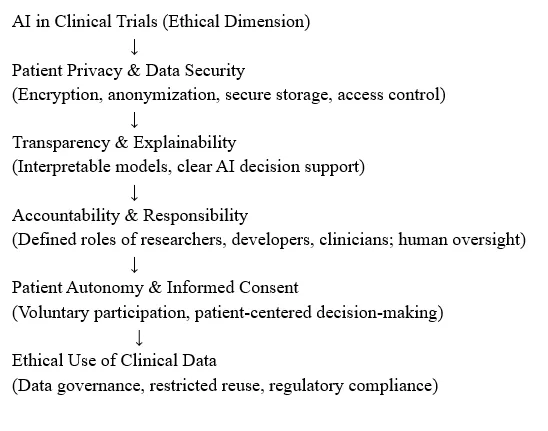
8. Ethical Considerations in AI-Based Clinical Trials
The integration of artificial intelligence (AI) into clinical trials has enhanced research efficiency, accelerated drug development, and improved patient monitoring. At the same time, it introduces important ethical challenges that must be addressed to ensure responsible, transparent, and patient-centered clinical research. Since clinical trials involve human participants and sensitive health data, ethical governance remains essential throughout all stages of AI implementation. The key ethical considerations are outlined below.
8.1 Patient Privacy and Confidentiality
AI systems depend on large volumes of sensitive patient information, including medical histories, genetic profiles, and laboratory data. This dependence raises concerns regarding privacy protection, data security, and potential misuse. Ethical implementation requires robust encryption methods, secure data storage systems, and strict access control to ensure confidentiality and maintain patient trust [22].
8.2 Transparency and Explainability
Many AI models, particularly deep learning algorithms, operate as “black boxes,” where internal decision-making processes are not easily interpretable. This limitation can reduce confidence among clinicians, researchers, and patients. Therefore, ethical AI deployment requires explainable and interpretable models that provide clinically meaningful outputs and support informed decision-making [23].
8.3 Accountability and Responsibility
In AI-assisted clinical trials, determining responsibility becomes complex when errors or adverse outcomes occur. Clear ethical frameworks are required to define accountability among developers, investigators, and healthcare professionals. Despite increasing automation, human oversight remains a fundamental requirement to ensure safe and responsible clinical decision-making [24].
8.4 Patient Autonomy
AI systems should function as supportive tools rather than replacements for patient decision-making. Trial participants must retain full autonomy in deciding whether to participate in clinical studies or accept AI-supported recommendations. Ethical practice requires that informed consent remains central to all clinical trial procedures.
8.5 Ethical Use of Data
AI applications rely on extensive health datasets collected from diverse sources. Ethical concerns arise when such data are reused beyond the scope of original consent. Consequently, strong data governance policies are necessary to ensure appropriate data utilization, protect participant rights, and maintain compliance with ethical and regulatory standards [25].
Real-World Case Studies
AI in COVID-19 Drug Repurposing and Discovery
The COVID-19 pandemic accelerated the adoption of AI for rapid drug discovery and repurposing. Machine learning models were used to analyze biomedical literature, chemical databases, and molecular interaction networks to identify potential therapeutic candidates.
Benevolent AI applied advanced AI-based knowledge graph techniques to identify baricitinib as a potential treatment for COVID-19. The system suggested its role in modulating inflammatory pathways and inhibiting viral entry mechanisms. Subsequent clinical studies supported its effectiveness in reducing severe inflammatory responses in hospitalized patients.
IBM Watson for Patient Recruitment
Patient recruitment is a major bottleneck in clinical trials. IBM Watson has been used to improve patient identification through natural language processing (NLP) of electronic health records.
The system extracts relevant clinical information from structured and unstructured data, including physician notes, laboratory reports, and diagnostic records, to identify eligible patients based on trial criteria. In oncology trials, this approach improved screening efficiency and reduced manual workload.
DeepMind in Ophthalmic Disease Diagnosis
DeepMind, in collaboration with Moorfields Eye Hospital, developed deep learning models for analyzing retinal images obtained through optical coherence tomography (OCT).
The system achieved diagnostic performance comparable to expert clinicians in detecting diabetic retinopathy and age-related macular degeneration. It also contributed to improved patient stratification in clinical research studies.
Tempus AI in Oncology Clinical Trial Matching
Tempus developed AI-based platforms that integrate genomic, clinical, and pathological data for patient-trial matching in oncology.
AI algorithms analyze electronic medical records and molecular profiling data to identify patients eligible for specific clinical trials. This approach improved recruitment efficiency and supported precision oncology initiatives.
AI in Clinical Data Management: Medidata Solutions
Medidata Solutions has implemented AI tools to improve clinical trial data management and monitoring.
These systems detect data inconsistencies, missing values, protocol deviations, and safety signals in real time. AI also supports remote data collection in decentralized clinical trial settings, improving data integrity and operational efficiency.
AI in Vaccine Development (Pfizer Case Study)
During COVID-19 vaccine development, Pfizer utilized AI-supported analytics to streamline clinical trial processes.
AI contributed to site selection, participant monitoring, safety assessment, and large-scale data analysis. These technologies enabled faster interpretation of trial data while ensuring regulatory compliance.
AI in Predicting Clinical Trial Outcomes
Companies such as Novartis and Roche have used predictive AI models to estimate clinical trial success rates.
Machine learning algorithms analyze historical trial data, biomarkers, and patient characteristics to identify factors influencing outcomes. This helps optimize trial design, improve patient selection, and reduce development costs.
AI in Decentralized Clinical Trials (DCTs)
AI plays a key role in decentralized clinical trials by enabling remote participation and monitoring.
Companies such as IQVIA have developed platforms for remote patient monitoring, electronic consent, virtual engagement, and automated data collection. Wearable devices integrated with AI continuously track patient health data, reducing the need for hospital visits.
AI in Rare Disease Research
Rare disease research benefits significantly from AI due to limited patient populations and diagnostic challenges.
Sophia Genetics uses AI-based genomic analysis tools to identify disease-causing mutations and support clinical trial recruitment for rare disorders. This improves diagnostic accuracy and accelerates development of targeted therapies.
9. Future Perspectives of AI in Clinical Trials
Artificial intelligence (AI) is rapidly transforming clinical trials by improving drug development, patient recruitment, trial monitoring, and data analysis. With ongoing technological progress, the integration of machine learning, big data analytics, wearable technologies, genomics, and digital health systems is expected to further enhance the efficiency, accuracy, and personalization of clinical research [26].
9.1 Advancement of Personalized Medicine
AI is expected to play a central role in advancing personalized medicine through the integration of genomic, clinical, and molecular data. Future AI systems will enable more accurate prediction of individual drug responses, identification of clinically relevant biomarkers, and development of targeted therapies, particularly for complex diseases such as cancer and chronic disorders.
9.2 Growth of Decentralized Clinical Trials
Decentralized clinical trials are likely to expand with the support of AI, wearable devices, and telemedicine. Remote recruitment, home-based monitoring, and digital consent systems will improve patient accessibility, reduce logistical burden, and lower overall trial costs.
9.3 Improved Drug Discovery and Development
AI will further accelerate drug discovery by enhancing molecular simulation, predicting drug–target interactions, and identifying novel therapeutic candidates. These advancements are expected to reduce experimental workload and improve the success rate of clinical trials [27].
9.4 Enhanced Real-Time Patient Monitoring
AI-enabled wearable technologies will support continuous real-time monitoring of patient health parameters. This will improve early detection of adverse events, strengthen treatment adherence, and enhance overall patient safety during clinical trials.
9.5 Integration with Emerging Technologies
Future clinical trials will increasingly integrate AI with emerging technologies such as blockchain, Internet of Things (IoT), digital twins, and cloud computing. This convergence will enhance data security, interoperability, remote monitoring, and predictive analytics.
9.6 Ethical and Regulatory Advancements
Regulatory frameworks are expected to become more standardized to address AI-specific challenges such as bias, transparency, and data privacy. Strengthened ethical governance systems will ensure the responsible, safe, and compliant use of AI in clinical research.
9.7 AI-Driven Preventive Healthcare
AI is likely to shift clinical research toward predictive and preventive healthcare by enabling early disease risk identification and timely intervention. This will support early diagnosis, reduce disease burden, and improve long-term health outcomes.
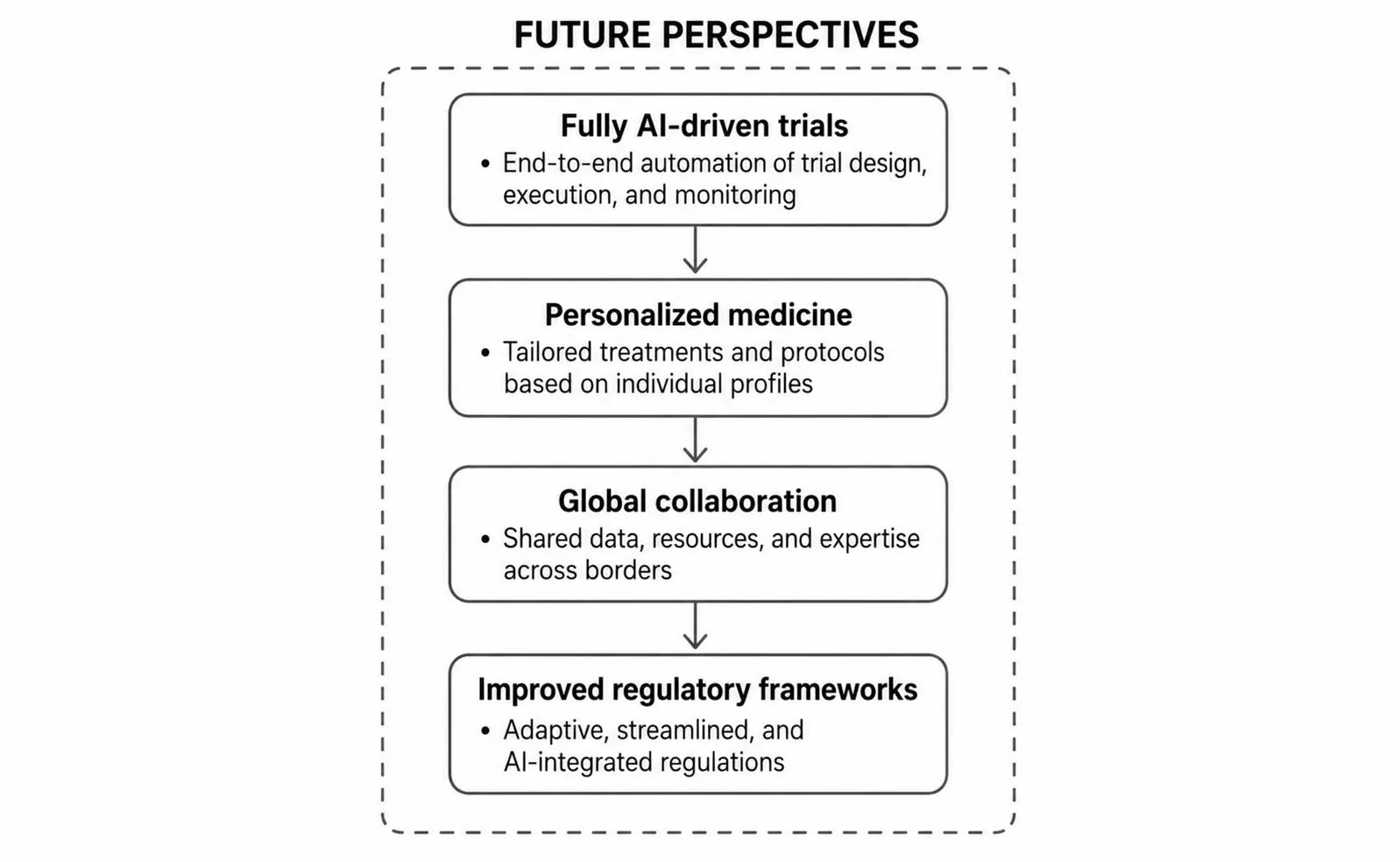
Figure 3. Future perspectives of AI in clinical trials.AI in clinical trials will enable personalized medicine, decentralized trials, real-time monitoring, predictive analytics, and faster, more efficient drug development.
AI in Clinical Trials (Future Development)
↓
Personalized Medicine
(Genomics integration, targeted therapy, biomarker discovery)
↓
Decentralized Clinical Trials
(Remote recruitment, telemedicine, home monitoring, digital consent)
↓
Drug Discovery Enhancement
(Molecular simulation, drug–target prediction, faster development)
↓
Real-Time Patient Monitoring
(Wearables, continuous data tracking, early adverse event detection)
↓
Integration of Emerging Technologies
(Blockchain, IoT, digital twins, cloud computing)
↓
Ethical & Regulatory Improvements
(Bias reduction, transparency, data privacy, AI governance)
↓
Preventive & Predictive Healthcare
(Early diagnosis, risk prediction, disease prevention)
↓
Real-World Evidence Integration
(EHRs, registries, insurance data, improved clinical decision-making)
10. Flowchart
AI in Clinical Trials Workflow:Data Collection → AI Processing → Patient Selection → Trial Design → Monitoring → Analysis → Outcome Prediction
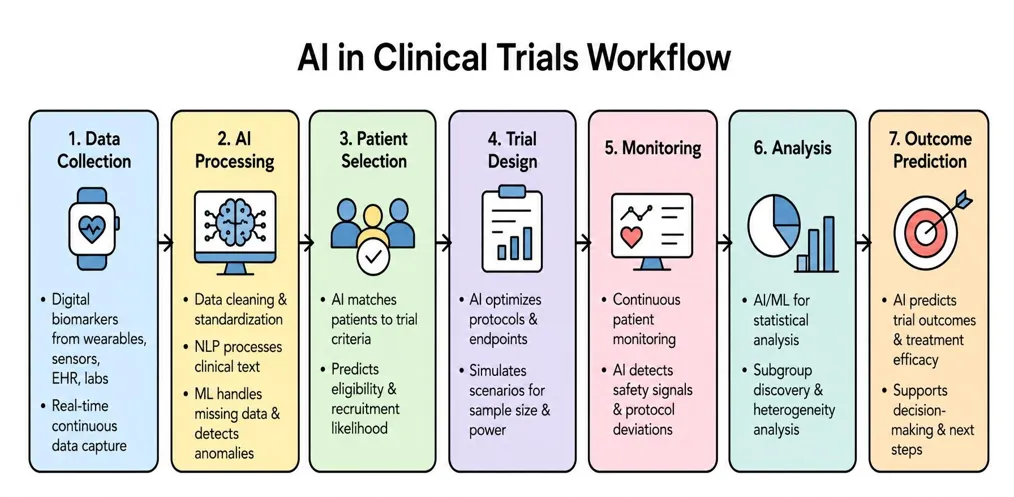
Fig 4 : Workflow of AI in Clinical Trial: AI in Clinical Trials Workflow illustrating sequential stages from Data Collection through AI Processing, Patient Selection, Trial Design, Monitoring, Analysis, and Outcome Prediction
1. Data Collection
At the initial stage, large volumes of heterogeneous data are gathered from multiple sources such as electronic health records (EHRs), laboratory reports, imaging systems, wearable devices, genomic databases, and previous clinical studies. AI-enabled systems help in organizing both structured and unstructured data, ensuring high-quality datasets for further processing.
2. AI Processing (Data Preprocessing and Integration)
Collected data is cleaned, standardized, and integrated using AI and machine learning algorithms. This stage includes error detection, missing value handling, normalization, and feature extraction. Natural language processing (NLP) is often used to extract meaningful clinical information from unstructured text data such as physician notes and research documents.
3. Patient Selection (Recruitment and Stratification)
AI algorithms analyze patient data to identify eligible participants based on inclusion and exclusion criteria. Machine learning models improve recruitment efficiency by matching patients to suitable trials, reducing recruitment time, and enhancing diversity. Predictive analytics also assist in patient stratification based on risk profiles and disease progression.
4. Trial Design Optimization
AI supports adaptive and efficient trial design by simulating different study scenarios. It helps in selecting optimal sample sizes, endpoints, treatment arms, and randomization strategies. This improves the likelihood of successful outcomes while minimizing cost and resource utilization.
5. Monitoring (Real-time Trial Oversight)
During the trial, AI enables continuous monitoring of patient safety, adherence, and data quality. Wearable devices and remote monitoring systems provide real-time physiological data. AI systems can detect anomalies, predict adverse events, and generate early warnings for clinical intervention.
6. Data Analysis
AI-driven analytics process large-scale clinical data to identify patterns, correlations, and treatment effects. Machine learning models assist in subgroup analysis, biomarker identification, and comparative effectiveness evaluation. This enhances statistical accuracy and reduces human bias.
7. Outcome Prediction
In the final stage, AI models predict trial outcomes such as treatment efficacy, safety profiles, and long-term patient responses. These predictive insights support regulatory submissions, clinical decision-making, and future drug development strategies.
11. Summary
Artificial intelligence (AI) has emerged as a transformative technology in clinical trials, reshaping traditional approaches to drug development and healthcare research. Its application across machine learning (ML), deep learning (DL), and predictive analytics has improved multiple aspects of clinical research, including study design, participant recruitment, data management, and real-time monitoring. AI enables rapid processing of large and complex datasets such as electronic health records, genomic information, and medical imaging, thereby supporting more informed and timely clinical decision-making.
AI has also strengthened personalized medicine by enabling more precise prediction of individual treatment responses, particularly in complex diseases such as oncology and rare genetic disorders. Furthermore, its integration with wearable devices, telemedicine, and the Internet of Things (IoT) has facilitated decentralized clinical trial models, improving accessibility, patient engagement, and operational flexibility.
Despite these advancements, several limitations persist. Key challenges include data quality issues, algorithmic bias, lack of transparency, and concerns related to privacy and regulatory compliance. Ethical considerations such as informed consent, accountability, and data security remain critical for responsible implementation. In addition, the limited interpretability of many AI systems continues to affect clinical trust and widespread adoption.
Overall, AI holds strong potential to enhance the efficiency, reliability, and scientific quality of clinical trials. Its responsible and well-regulated integration into clinical research is expected to further advance evidence-based medicine and improve future healthcare outcomes.
12. CONCLUSION
Artificial intelligence (AI) is transforming clinical trials by improving efficiency, accuracy, and speed in drug development. AI techniques such as machine learning, deep learning, and predictive analytics enhance patient recruitment, optimize trial design, support real-time monitoring, and strengthen clinical data analysis. It also plays a crucial part in personalized medicine by enabling patient-specific treatment predictions and targeted therapies.
Despite these benefits, challenges such as data privacy, cybersecurity risks, algorithmic bias, ethical concerns, and regulatory issues limit full implementation. Ensuring high-quality data, transparency, and human oversight is essential for reliable AI use in clinical research.Overall, AI has strong potential to revolutionize clinical trials by reducing costs, accelerating drug development, and improving patient outcomes. With proper regulation and responsible use, it will become a central tool in the future of healthcare research.
CONFLICT OF INTEREST DECLARATION:
The authors declare no conflict of interest.
REFERENCES



Bhavisha Patel, Artificial Intelligence in Clinical Trials: Transforming Design, Execution, Monitoring, And Outcomes, Int. J. of Pharm. Sci., 2026, Vol 4, Issue 6, 6830-6845. https://doi.org/10.5281/zenodo.20930226
 10.5281/zenodo.20930226