

We use cookies to ensure our website works properly and to personalise your experience. Cookies policy
Department of Pharmaceutics, D.S.T.S. Madal’s College of Pharmacy, Solapur, Maharashtra India – 413004
A herbal face wash tablet was formulated and evaluated using Terminalia arjuna bark powder and Multani mitti as the principal herbal ingredients. The objective of the study was to develop a natural, eco-friendly, portable, and effective face wash tablet capable of cleansing the skin while minimizing the adverse effects associated with synthetic cosmetic products. Four formulations (F1–F4) were prepared by the direct compression method using different concentrations of sodium lauryl sulphate and crospovidone according to a 2² factorial design. The prepared tablets were evaluated for pre-compression parameters, including bulk density, tapped density, Carr's index, Hausner's ratio, and angle of repose, as well as post-compression parameters such as physical appearance, hardness, thickness, friability, weight variation, pH, foamability, and washability. The results demonstrated that all formulations complied with acceptable pharmaceutical limits. Among the formulations, F4 exhibited the best overall performance, showing excellent foamability and washability, satisfactory hardness, acceptable friability and weight variation, and a skin-friendly pH. The study concludes that the optimized F4 formulation is a promising herbal face wash tablet that offers effective cleansing, convenience, portability, and improved patient compliance, making it a suitable natural alternative to conventional liquid face washes.
Skin is the largest organ in the human body, covering about 1.5 to 2 square meters in adults and making up roughly 15% of total body weight. It serves as a protective layer against harmful elements such as ultraviolet rays, pollutants, harmful bacteria, and physical damage. Additionally, it helps regulate body temperature, allows us to feel sensations, and keeps the body hydrated. The skin on the face is more exposed to the environment, which makes it more prone to damage from environmental factors, oxidation, and bacterial growth. Because of this, cleansing the face regularly is a key part of maintaining good skin health1
The skin is made up of thee layers: 2
Cosmetics are the items made specially to be used on the body with the aim of cleaning ,improving appearance, changing how someone looks, and making their features more appealing3.
Herbal cosmetics, which are also referred to as products, are formulated using a variety of permissible cosmetic ingredients to create a base. Within this base ,one or more herbal ingredients are incorporated to deliver specific cosmetic benefits. These products that include herbal ingredients for defined cosmetic purpose are termed as “Herbal Cosmetics4.
Herbal and natural cosmetics are commonly used, particularly in India. In traditional medicine, they are often suggested for promoting health and beauty. In recent years, there has been a growing preference for herbal cosmetic products. These products are considered safer and more suitable for the skin. They also have a lower risk of causing adverse effects. The rising interest in herbal cosmetics has driven the creation of effective, environmentally friendly, and sustainable skincare options5.
Preparation for skincare on the face includes the following items:
Herbal cosmetics, particularly face washes, have gained popularity because they effectively clean the skin without using harsh chemicals. These products are made from natural ingredients like plants, herbs, essential oils, and botanicals. They help remove dirt, excess oil, dead skin cells, and makeup while keeping the skin moisturized and balanced. Herbal face washes are known for their ability to control oil production, treat acne, reduce blemishes, and improve the overall appearance of the skin, all while avoiding the irritation that can come from synthetic ingredients. A notable advancement in this category is the introduction of herbal face wash tablets. These tablets are small, easy to carry, and designed for travel. When dissolved in water, they create a natural and nourishing cleansing paste. Unlike traditional face washes that often contain artificial scents or preservatives, these tablets are free from harmful chemicals, are more cost-effective, and are convenient to use. They provide the same benefits of cleansing, soothing, and balancing the skin without the drawbacks of synthetic products, offering a sustainable and practical option for skincare7.
Many people use herbs such as neem, aloe vera, turmeric, liquorice, and other similar plants in their skincare routines8.
The present study is designed to formulate and evaluate a polyherbal facewash tablet using selected herbal ingredients and suitable pharmaceutical excipients.
MATERIALS :
1. Terminalia arjuna bark powder
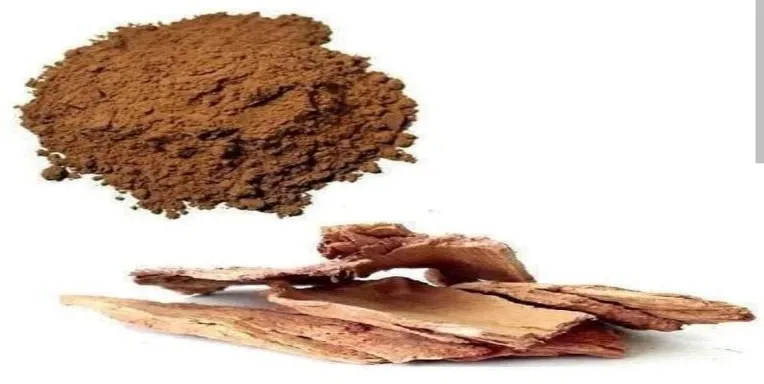
Figure 1: Image of Arjuna Bark Powder
Terminalia arjuna is an evergreen tree belonging to the Combretaceae family, commonly found in various regions across South Asia. In Indian languages, this tree is known by several local names such as white marudah, arjuna, arjunam, kakubha, and kahu.
The bark of Terminalia arjuna is notable for its unique appearance. It has a smooth texture, with a pinkish-gray color on the outer surface and a smooth, deep red color on the inner part
Terminalia arjuna’s bark is rich in bioactive compounds that contribute to its therapeutic benefits. These compounds include flavonoids, tannins, saponins, glycosides, and phenolic acids, all of which have strong antioxidant and anti-inflammatory effects when combined.
Flavonoids like quercetin and kaempferol help neutralize free radicals, which prevents damage to skin cells caused by oxidative stress. Tannins due to their astringent properties, help maintain skin elasticity ad reduce inflammation, making them useful in managing skin condition like melasma. Saponins and glycosides support skin repair and renewal by promoting collagen production and aiding in maintaining skin elasticity. Phenolic acids also play a protective role by reducing the harmful effect of UV radiation on the skin.
Together, these compounds work together in a synergistic way, making Terminalia arjuna a promising option for use in dermatology, its ability to influence different pathways involved in the development of melasma makes it a safe, natural, and effective alternative to synthetic treatments9-11.
2. Multani mitti
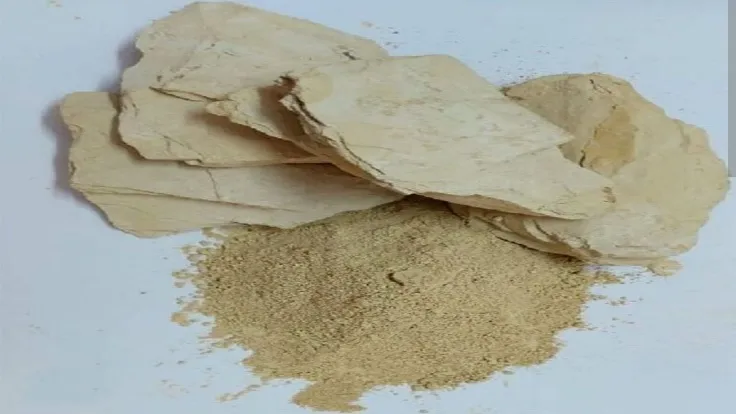
Figure 2 : Image of Multani Mitti
Multani mitti helps to decrease excess oiliness and balance the skin's pH level because of its Ruksa (dry) and Sita (cold) properties. Also known as Fuller's Earth, Multani mitti is a clay-rich mineral that has been used for a long time in beauty care. It is a completely natural exfoliating powder that gives the skin a youthful and radiant appearance. This natural clay helps to control the over production of oil and provides the skin with a healthy glow. As a naturally occurring substance, it has many benefits for both skin and hair. It works by removing impurities from the skin and scalp and by clearing out clogged pores. It is known for clearing blemishes and brightening the skin tone, which improves the overall complexion. Apricot oil, often used with Multani mitti, helps firm and tone the skin due to its rich content of vitamins A and E. It also has a calming effect and helps slow down the aging process. Additionally, it protects the skin cells from damage caused by free radicals8.
FORMULATION TABLE :
Table 1: Formulation table
|
Ingredients |
F1 (mg) |
F2 (mg) |
F3(mg) |
F4(mg) |
Use |
|
Arjuna bark powder |
45 |
45 |
45 |
45 |
Antioxidant |
|
Multani mitti |
30 |
30 |
30 |
30 |
Cleansing agent |
|
Microcrystalline cellulose |
27 |
27 |
27 |
27 |
Binder |
|
Sodium lauryl sulphate |
60 |
90 |
60 |
90 |
Foaming gent |
|
Crosprovidone |
80 |
80 |
95 |
95 |
Disintegrating agent |
|
Lactose |
55 |
25 |
40 |
10 |
Diluent |
|
Magnesium stearate |
3 |
3 |
3 |
3 |
Lubricant |
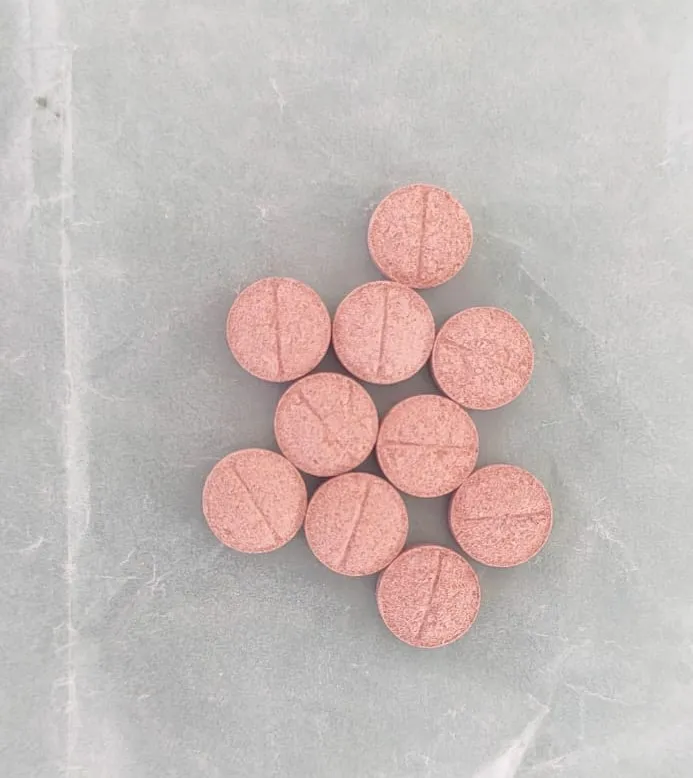
METHOD OF PREPARATION OF FACE WASH TABLETS:
PREFORMULATION STUDIES
Formula :
Bulk density = Weight of powder/ Bulk powder
Formula :
Tapped density : Weight of powder/ Tapped volume
Formula:
Carr’s index = ( Tapped density – Bulk density /Tapped density )×100
Formula :
Hausner’s ratio = Tapped density/ Bulk density
tan θ = h/r
Where, θ is the angle of repose, h is the height, r is the radius.
EVALUATION OF FACEWASH TABLET
Physical evaluation:
The physical features of the developed face wash tablets were evaluated by examining factors like color and general appearance.
Hardness Test :
The ability of a tablet to withstand mechanical shock is assessed through its hardness. The hardness value is measured in units of Kg/cm².This measurement is carried out using a hardness tester (Monsanto).
Thickness :
The thickness of the tablets is measured using a Vernier caliper. The tablet thickness should remain within a tolerance of ±5 and is expressed in Kg/cm².
Friability Test:
A friabilator was used to determine the friability of the tablets. The device was turned on, and the tablets were weighed. The count was set to 100 by pressing the count button, and the test duration was similarly adjusted. The tablets were then placed into the friabilator for testing.
Weight Variation:
For the weight variation test, twenty tablets from each formulation were weighed individually using an electronic balance. The average weight was calculated, and any deviations from this average were recorded. The acceptable weight variation should not be more than ±7.50 13.
Formula:
% Weight Variation = (Individual Weight - Average Weight) / Average Weight × 100
Washability:
Formulations were applied to the skin, and the extent to which they were washed off with water was checked manually14.
Determination of pH
The pH was determined using a calibrated digital pH meter to measure the pH of a 1% aqueous solution of the formulation under constant temperature conditions15.
Foamability
Take 20 ml of water in a 250 ml measuring cylinder, place the tablet inside, cover the measuring cylinder with your hand, and shake it vigorously for a few minutes. Then measure the volume of the foam that is produced7.
RESULT AND DISCUSSION :
Table 2 : Results of Pre- formulation studies:
|
Formulation |
Bulk density |
Tapped density |
Carr’s index |
Hausner’s ratio |
Angle of repose |
|
F1 |
0.567 |
0.64 |
12.5 |
1.12 |
33.68 |
|
F2 |
0.565 |
0.639 |
11.5 |
1.13 |
32.4 |
|
F3 |
0.594 |
0.703 |
15.5 |
1.18 |
41.98 |
|
F4 |
0.540 |
0.576 |
6.25 |
1.06 |
30.9 |
Table 3 : Evaluation tests of tablets:
|
Formulation |
Colour |
Hardness test (kg/cm2) |
Thickness test (mm) |
Friability test (%) |
Weight variation (mg) |
|
F1 |
Light-brown |
3.0 |
2.9 |
0.80 |
Pass |
|
F2 |
Light-brown |
3.1 |
2.9 |
0.50 |
Pass |
|
F3 |
Light-brown |
3.1 |
2.9 |
0.60 |
Pass |
|
F4 |
Light-brown |
3.0 |
2.9 |
0.90 |
Pass |
Table 4. Evaluation test for facewash tablets:
|
Formulation |
pH |
Washability |
Foamability (ml) |
|
F1 |
5.2 |
Bad |
68 |
|
F2 |
5.1 |
Good |
80 |
|
F3 |
5.2 |
Good |
75 |
|
F4 |
5.3 |
Excellent |
98 |
CONCLUSION :
The present study successfully formulated and evaluated a herbal face wash tablet containing Terminalia arjuna bark powder and Multani mitti by the direct compression method. All formulations exhibited satisfactory pre-compression and post-compression characteristics and complied with the acceptable pharmacopeial limits for hardness, friability, weight variation, and pH. Among the developed formulations, F4 was identified as the optimized batch because it demonstrated excellent foamability and washability, acceptable mechanical strength, good tablet integrity, and a skin-compatible pH. The combined use of Terminalia arjuna, known for its antioxidant and skin-protective properties, and Multani mitti, recognized for its cleansing and oil-absorbing properties, contributed to the overall effectiveness of the formulation. The developed face wash tablet is portable, easy to use, eco-friendly, and suitable for daily skincare. Therefore, the optimized F4 formulation can be considered a promising herbal alternative to conventional face wash products and has potential for future commercial development.
ACKNOWLEDGEMENT :
Authors are thankful to D.S.T.S. Mandal’s College of Pharmacy, Solapur, Maharashtra for providing necessary facilities.
CONFLICT OF INTEREST :
No conflict of interest
REFERENCES

Samruddhi Gaikwad*, Baburao Chandakavathe, Akanksha Putale, Nikita Mali, Formulation And Evaluation Of A Natural Nutritional Bar, Int. J. of Pharm. Sci., 2026, Vol 4, Issue 8, 1032-1038. https://doi.org/ 10.5281/zenodo.21824990
 10.5281/zenodo.21824990