

We use cookies to ensure our website works properly and to personalise your experience. Cookies policy
Delonix Society’s Baramati College of Pharmacy, Barhanpur, Maharashtra, India
With improved diagnostic accuracy, intelligent decision-making, individualized care, and ongoing patient monitoring, artificial intelligence (AI) has become a game-changing technology in medical equipment. Medical devices like diagnostic imaging systems, wearable health monitors, robotic surgical platforms, clinical decision support systems, and Software as a Medical Device (SaMD) are increasingly incorporating AI technologies, including machine learning, deep learning, natural language processing, and computer vision. In the end, these intelligent systems enhance patient outcomes and save healthcare costs by enabling early disease identification, real-time clinical data analysis, increased workflow efficiency, and better treatment interventions. Despite these developments, there are still many obstacles to overcome when integrating AI into medical devices, such as cybersecurity, data privacy, algorithm transparency, bias, clinical validation, and regulatory compliance. To guarantee the efficacy, safety, and lifecycle management of AI-enabled medical devices, regulatory organizations including the Central Drugs Standard Control Organization (CDSCO), the European Medicines Agency (EMA), and the U.S. Food and Drug Administration (FDA) are creating risk-based frameworks. This review highlights the crucial role of intelligent systems in advancing patient-centered, effective, and evidence-based healthcare by offering a thorough overview of AI technologies, their integration into medical devices, current clinical applications, ethical and regulatory issues, emerging trends, and future perspectives.
A. Definition of Artificial Intelligence
Artificial Intelligence (AI) refers to the capability of computer systems to execute tasks typically requiring human intelligence, including learning, reasoning, problem-solving, perception, and decision-making. AI comprises of several subfields such as machine learning (ML), deep learning (DL), natural language processing (NLP), and computer vision[1]. They enable computers to analyze huge amounts of data, recognize patterns and make predictions with little human input. AI has emerged as a revolutionary technology in healthcare, assisting in clinical decision-making, disease diagnosis, treatment planning, and patient monitoring [2].
B. Evolution of AI in Healthcare
The use of AI in healthcare has developed significantly since the early expert systems were developed in the 1970s. Early systems, like MYCIN, used rule-based algorithms to help doctors diagnose infectious disorders [3]. The application of AI in healthcare environments has grown because of developments in cloud computing, big data analysis, digital health records and processing capacity. Current artificial intelligence (AI) systems are capable of analyzing complex clinical data, such as medical images, genomics, physiological signals, and electronic health records, thereby facilitating precision medicine and personalized healthcare approaches [4]. Deep learning has recently achieved great progress in enhancing diagnostic performance in radiology, pathology, ophthalmology, and cardiology, making AI an integral part of modern healthcare delivery [5].
C. Overview of Medical Devices
Medical devices are defined as instruments, apparatus, machines, implants, reagents, software or similar or related articles including a component part or accessory intended for use in the diagnosis, prevention, monitoring, treatment or alleviation of disease. Medical equipment varies from simple devices like thermometers and syringes to complex devices such as pacemakers, magnetic resonance imaging (MRI) systems, robotic surgical platforms, and wearable health monitoring devices [6]. Regulatory authorities such as U.S. Food and Drug Administration (FDA), European Medicines Agency (EMA) and Central Drugs Standard Control Organization (CDSCO) classify medical devices on the basis of their intended use and associated risk levels to ensure their safety, efficacy and quality before being marketed [7].
D. Convergence of AI and Medical Devices
The combination of AI and medical devices has evolved traditional healthcare technologies into smart systems that can independently analyze data and deliver real-time clinical decision support. AI-enabled medical devices are equipped with advanced algorithms to analyze medical imaging, identify anomalies, predict disease progression, remotely monitor patient health, and optimize therapeutic interventions. Examples are AI-enabled radiography software, robotic surgical systems, wearable glucose monitors, automated ECG interpretation systems and Software as a Medical Device (SaMD). AI in medical devices has led to improved workflow efficiency, reduced human error, improved diagnostic accuracy, and enabled customized treatment strategies [8].
E. Rationale and Objectives of the Review
The rapid development of AI-enabled medical devices has brought with it new ethical, technological and legal challenges, as well as significant opportunities to improve healthcare outcomes. The ongoing evolution of artificial intelligence (AI) technologies has highlighted concerns regarding algorithmic transparency, cybersecurity, data privacy, clinical validation, bias, and post-market surveillance [9]. Moreover, regulatory agencies around the world are developing protocols for the safe and effective use of AI-based medical devices in clinical settings [10]. Thus, this review serves to provide a comprehensive overview of AI in medical devices, discuss current applications and technological advancements, evaluate regulatory issues, review the relevant challenges, and explore potential future directions for intelligent healthcare systems.
2. FUNDAMENTALS OF ARTIFICIAL INTELLIGENCE
Artificial intelligence (AI) is the study of computer systems that can learn, reason, recognize patterns, make decisions, understand language, and solve problems – abilities typically associated with human intelligence. In the healthcare and medical equipment sector, Artificial Intelligence (AI) has emerged as a game changer, enabling clinical decision support systems, automated diagnosis, illness prediction, picture interpretation, and patient monitoring. Artificial intelligence systems use computer algorithms to learn from huge data sets and constantly improve their performance [13].
A. Types of AI
2.1 Narrow AI vs General AI
2.1.1 Narrow AI (Artificial Narrow Intelligence)
Narrow AI is limited to carrying out particular activities inside a predetermined domain and is not able to operate outside of its intended scope. This group includes the majority of AI-enabled medical devices now utilized in healthcare [11].
Examples include wearable arrhythmia detection technologies, radiological image analysis platforms, AI-based ECG interpretation software, and diabetic retinopathy screening systems [12].
Task-specific functionality, dependency on domain-specific data, excellent performance in a small number of applications, and the incapacity to generalize knowledge across tasks are important traits.
2.1.2 General AI (Artificial General Intelligence)
Artificial General Intelligence (AGI) is a speculative type of AI that can reason, learn, and adapt in a variety of disciplines to perform any intellectual task that a human can.[13] As of right now, medical AI systems are task-specific and categorized as Narrow AI; there is no AGI in the healthcare industry.[13]
2.2 Reactive Machines and Limited Memory AI
2.2.1 Reactive Machines
The most basic AI systems are reactive machines, which don't learn from past events and only respond to present inputs.[14] Examples include early rule-based healthcare expert systems, which provide dependable but constrained performance in fixed clinical contexts.(14)
2.2.2 Limited Memory AI
Most modern machine learning and deep learning models used in healthcare are part of Limited Memory AI, which leverages past data to enhance decision-making.(15) Applications include sepsis prediction, wearable cardiac monitoring, continuous glucose monitoring, and intelligent patient monitoring systems that improve predictive accuracy by utilizing historical patient data.(15)
2.3 Machine Learning (ML)
A subfield of artificial intelligence called machine learning (ML) allows computers to learn from data and generate predictions without the need for explicit programming. The majority of AI-enabled medical devices are built upon it.[12]
2.4 Deep Learning (DL)
Using multi-layered neural networks to extract intricate patterns from massive datasets, Deep Learning (DL) is a specialized type of machine learning that enhances image analysis, speech recognition, and medical diagnostics.[11] Automatic feature extraction is its main benefit.[12]
DL has demonstrated great accuracy in automated pathology interpretation, retinal disease screening, skin cancer classification, and tumor identification.[12]
2.5 Natural Language Processing (NLP)
Computers can comprehend and handle human language thanks to Natural Language Processing (NLP), which transforms unstructured clinical writing into structured data.[13] It is extensively utilized in healthcare chatbots, clinical recordkeeping, information extraction, speech recognition, and decision assistance.[12,13] NLP facilitates knowledge discovery from clinical data, increases workflow efficiency, and lessens the load of documentation.[12]
2.6 Computer Vision
One of the most popular AI technologies in healthcare is computer vision, which allows AI systems to analyze medical images and videos.[12] Image classification, object detection, segmentation, pattern recognition, and anomaly detection are fundamental tasks.[13]
Applications support organ segmentation, skin lesion categorization, diabetic retinopathy screening, radiography, ophthalmology, dermatology, pathology, and surgical navigation.[11] Computer vision can attain diagnostic performance on par with medical experts when given high-quality datasets.[12]
2.7 Big Data in Healthcare
Large and complicated healthcare datasets that are unmanageable with conventional techniques are referred to as "big data."[17] The five Vs—volume, velocity, variety, veracity, and value—are what define it.[17] AI applications including disease prediction, clinical decision assistance, precision medicine, population health management, and healthcare resource optimization are supported by big data.[17]
2.8 Data Sources in Healthcare AI
2.8.1 Electronic Health Records (EHRs)
EHRs are a vital source of data for the creation of AI models since they include patient demographics, diagnoses, test results, prescription drugs, treatment histories, and clinical notes. [20] Their longitudinal data aids in forecasting clinical outcomes and the course of the disease.[20]
2.8.2 Medical Imaging Data
AI models for cancer diagnosis, organ segmentation, disease classification, and image-guided therapies are frequently trained using medical imaging data from X-rays, CT, MRI, ultrasound, and digital pathology .[11,12] One of the most effective uses of AI-enabled medical devices is medical imaging.[11]
2.8.3 Wearable Devices and Internet of Medical Things (IoMT)
Heart rate, blood pressure, oxygen saturation, exercise, sleep, and glucose levels are among the physiological data that wearable technology and IoMT continuously gather .[15,18] AI makes use of these data for remote patient management, individualized care, early disease identification, and ongoing monitoring.[16]
2.9 Data Preprocessing and Annotation
Data preprocessing improves healthcare data quality by performing cleaning, normalization, feature selection, dimensionality reduction, and data augmentation.[17,19] In medical imaging, augmentation techniques such as rotation, flipping, scaling, and cropping improve model performance.[12] Data annotation involves labeling datasets (e.g., tumours, lesions, ECG signals) by clinical experts, providing ground-truth data that improves AI model accuracy and reliability.[17]
3. OVERVIEW OF MEDICAL DEVICES
Medical devices include tools, implants, software, reagents, and associated products that are used for illness diagnosis, prevention, monitoring, treatment, or relief. Instead of using pharmacological action, they mostly use mechanical, software-based, or physical methods.[21]
Medical devices can be as basic as thermometers and bandages or as sophisticated as robotic surgical systems, implanted pacemakers, and AI-powered diagnostic software. Regulatory bodies categorize them according to their level of risk and intended usage.[21]
Table 1. Classification of Medical Devices with Examples [23],[24]
|
Device Class |
Risk Level |
Regulatory Control |
Examples |
AI Applications |
|
Class I |
Low Risk |
General Controls |
Stethoscope, tongue depressor, surgical gloves, elastic bandages |
Rarely AI-enabled |
|
Class II |
Moderate Risk |
General+ Special Control |
ECG monitors, infusion pumps, |
AI Radiology image analysis |
|
Class III |
High Risk |
Premarket Approval (PMA) |
Pacemakers, heart valves, implantable defibrillators |
Supports future robotic surgery systems , autonomous therapy |
B. Traditional vs AI-Enabled Medical Devices
Conventional medical gadgets don't learn from data; instead, they use mechanical functions, predetermined algorithms, or established rules to provide predictable results.[22] Thermometers, infusion pumps, blood pressure monitors, and traditional ECG systems are a few examples.[26]
Medical gadgets with AI capabilities include:
1. AI-assisted breast cancer detection mammography devices.[25]
2. Deep learning-based diabetic retinopathy screening systems.[25]
3. AI-driven CT imaging stroke detection program.[25]
4. Machine learning techniques in wearable cardiac monitoring devices.[27]
C. Software as a Medical Device (SaMD)
Table 3. Examples of Software as a Medical Device (SaMD) [24]
|
SaMD Category |
Function |
Example |
|
Diagnostic SaMD |
Disease detection |
AI-based diabetic retinopathy screening |
|
Clinical Decision Support |
Risk assessment |
Sepsis prediction software |
|
Imaging Analysis |
Image interpretation |
AI radiology software |
|
Monitoring Software |
Continuous patient monitoring |
ECG rhythm analysis app |
|
Digital Therapeutics |
Disease management |
Software for behavioral interventions |
4. INTEGRATION OF AI IN MEDICAL DEVICES
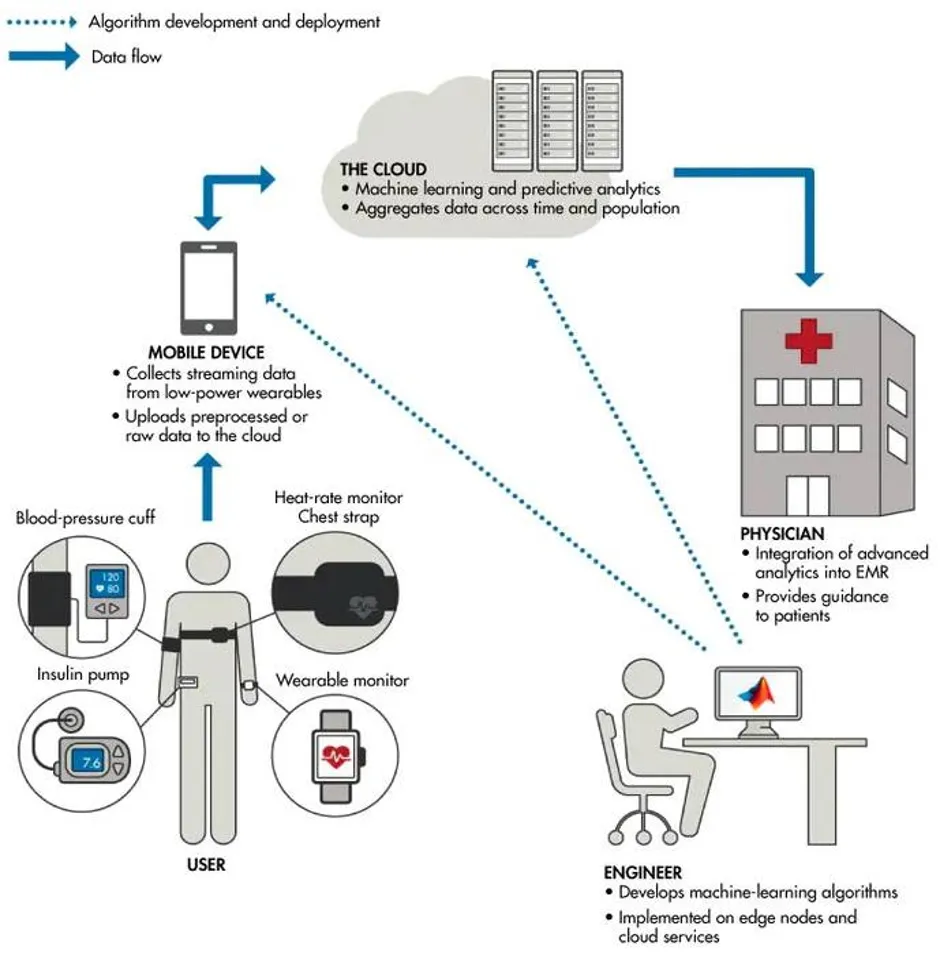
AI has made traditional medical equipment into intelligent systems that support clinical judgments, analyze data, identify patterns, and enhance patient outcomes.[28] AI-enabled devices are used extensively in radiology, cardiology, ophthalmology, pathology, wearable monitoring, and critical care. They combine sensors, software, algorithms, and communication technologies.[28]
Data collection, algorithm creation, validation, deployment, and ongoing performance monitoring are all part of the process of creating AI-enabled medical devices.[29]
The architecture of an AI-enabled medical device includes interconnected components such as data acquisition, preprocessing, AI processing, decision support, user interface, and communication modules that work together to analyze data and generate clinical outputs.[29] Patient data from sensors, medical imaging, or electronic health records are collected, preprocessed, and analyzed by machine learning or deep learning algorithms to support prediction, classification, and clinical decision-making.[32] Modern AI-enabled devices also incorporate cybersecurity, cloud connectivity, interoperability, and continuous learning capabilities for safe and effective clinical use.[30]
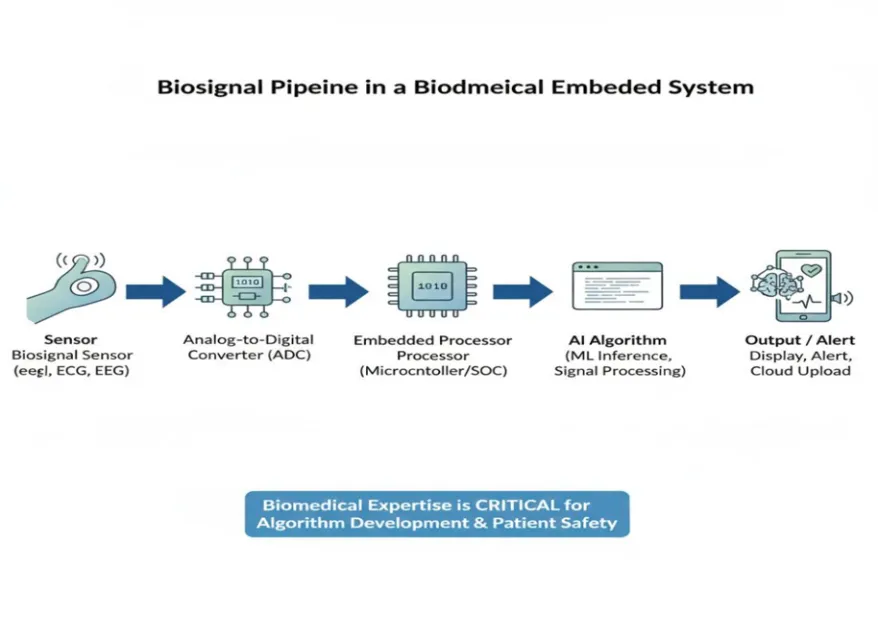
4.1 Data Collection
Data collection is the first step in AI integration, requiring large, high-quality datasets from sources such as electronic health records (EHRs), medical imaging, laboratory systems, wearable devices, and bedside monitors.[34] The quality, diversity, and representativeness of these data directly affect AI model accuracy and reliability, while biased or inadequate datasets can reduce clinical performance and lead to unequal healthcare outcomes. [35]
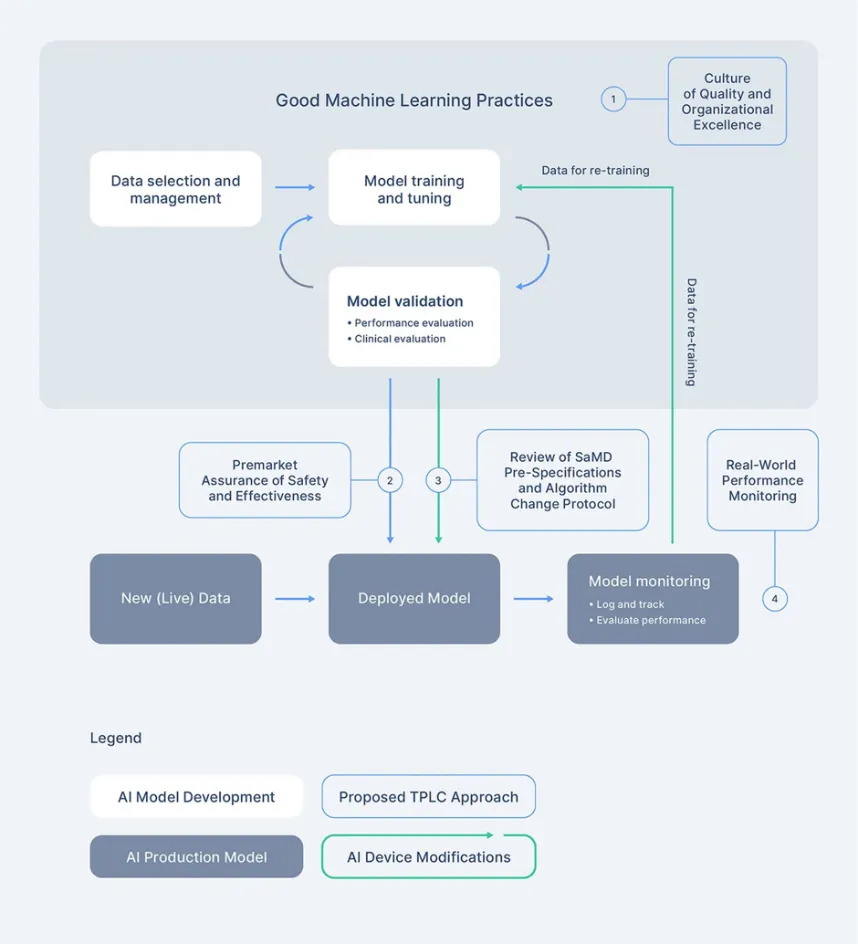
4.2 Model Training
In order to find patterns connected to particular clinical outcomes, machine learning or deep learning algorithms examine labeled datasets during model training. Iteratively, the model modifies its internal parameters to reduce prediction errors and enhance performance.[36]
Logistic regression, random forests, support vector machines, convolutional neural networks (CNNs), recurrent neural networks (RNNs), and transformer-based architectures are often employed techniques in medical equipment. Medical imaging and signal analysis benefit greatly from deep learning models [36].
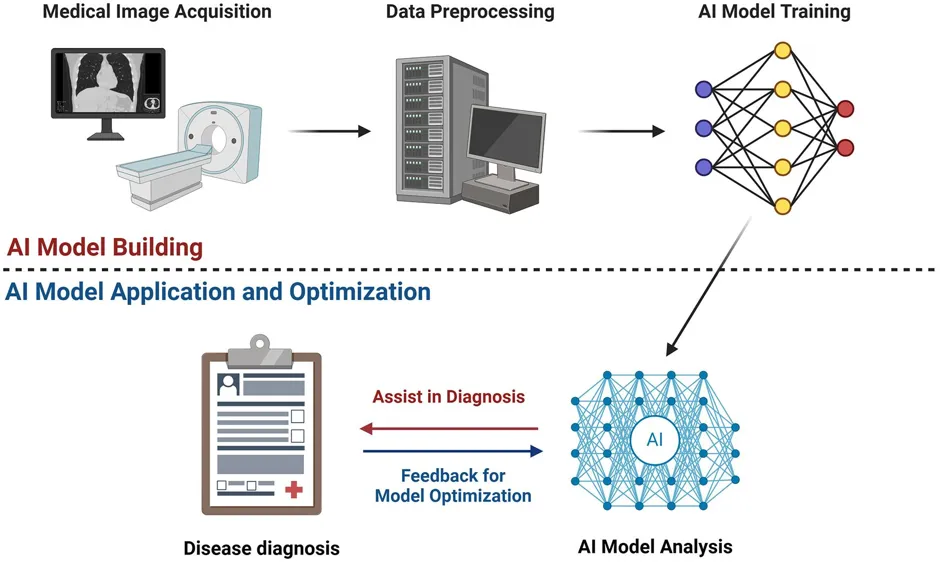
4.3 Validation
Before AI models are deployed, their safety, accuracy, dependability, and clinical efficacy are assessed through internal, external, and clinical validation utilizing independent datasets and actual patient populations.[33]
Regulators want uniform performance in various healthcare environments. Sensitivity, specificity, accuracy, precision, recall, and area under the receiver operating characteristic curve (AUC) are common evaluation metrics.(33)
4.4 Deployment
The process of deployment entails incorporating the verified AI model into the clinical and medical device workflow. The gadget is set up for continuous monitoring, user training, real-world functioning, and compatibility with healthcare systems.[33]
Because AI performance may change over time due to changing patient populations, clinical procedures, and data characteristics, post-market surveillance is crucial after implementation. Continuous monitoring throught the product lifecycle is becoming more and more important in regulatory regimes.[37]

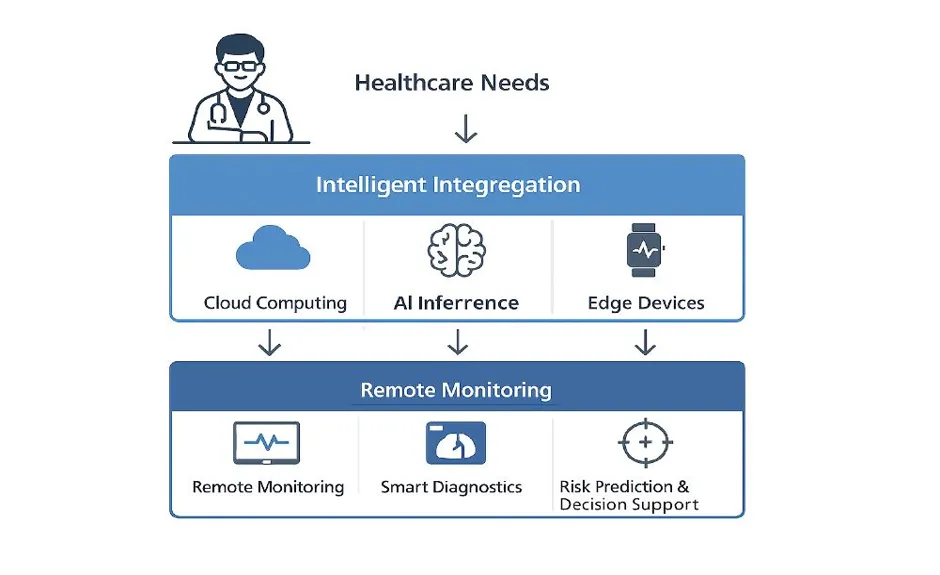
4.5 Embedded AI Systems
Using onboard processors, embedded AI systems process data and carry out AI calculations inside the medical device. Low latency, less reliance on internet connectivity, more privacy, and dependable performance in settings with restricted network access are all provided by these systems.(38)
Examples include wearable health monitors, implanted cardiac devices, portable ultrasonography systems, and ECG monitors with AI capabilities. Applications that need quick clinical answers are especially dependent on embedded AI.(38)
4.6 Cloud-Based AI Systems
Healthcare data is processed by cloud-based AI systems on distant servers, which offer powerful computers, extensive storage, centralized model updates, and sophisticated analytics.(35)
They are extensively utilized in clinical decision support systems, radiology, population health management, and remote patient monitoring; however, to safeguard patient data, they need robust cybersecurity and dependable internet access.(39)
D. Real-Time Decision-Making Capabilities
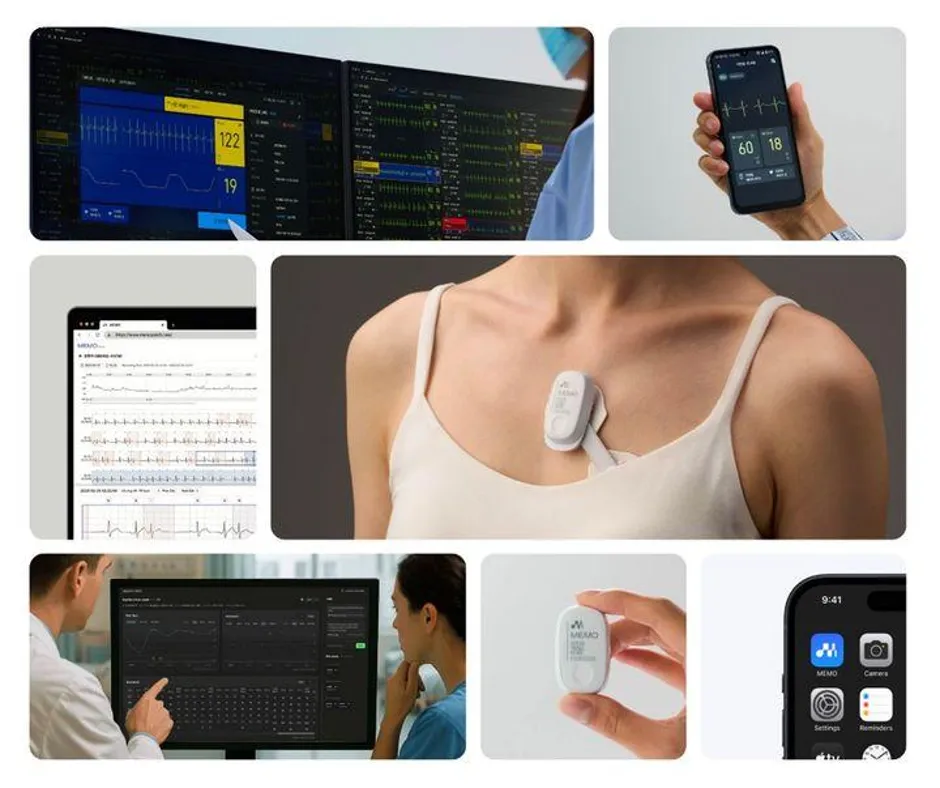
By continuously evaluating patient data, AI-enabled medical devices facilitate real-time decision-making by offering prompt alarms, forecasts, and therapeutic suggestions.[35]
Critical care, emergency medicine, cardiac monitoring, and remote patient management all make extensive use of these technologies to diagnose stroke, forecast sepsis, detect arrhythmias, track blood sugar levels, and identify patient decline.[40] Reliable infrastructure and effective data processing facilitate quick clinical insights, which enhance patient outcomes and healthcare effectiveness.[40]
Examples of Real-Time AI Medical Devices
5. APPLICATIONS OF AI IN MEDICAL DEVICES
Medical equipment have been improved by artificial intelligence (AI), which has improved clinical decision-making, patient monitoring, diagnosis, therapy, and personalized healthcare. Healthcare professionals can receive reliable, rapid, and evidence-based results from AI-enabled devices that evaluate vast healthcare databases.[41]
A. Uses for Diagnostics
i. Radiology
AI algorithms evaluate X-rays, CT, MRI, and mammograms to accurately identify anomalies such lung illnesses, cancer, fractures, and strokes.[42]
ii. Pathology
AI-assisted pathology systems assess digital tissue images and assist in identifying histological anomalies, disease biomarkers, and malignant cells, hence enhancing diagnostic consistency.[45]
iii. Prompt Disease Identification
By identifying minute changes in clinical and imaging data, AI makes it possible to detect diseases like diabetic retinopathy, sepsis, cardiovascular issues, and cancer early on.[46]
B. Therapeutic Devices
i. Robotic Surgery
During minimally invasive treatments, AI-assisted robotic surgical devices enhance control, precision, and visualization, lowering surgical problems and enhancing results.[47]
ii. Intelligent Drug Transport Systems
Drug delivery systems with AI capabilities automatically modify prescription dosages in response to current patient data. For the treatment of diabetes, artificial pancreas systems are a typical example.[48]
C. Monitoring and Wearable Devices
i. Constant Surveillance
Wearable technology with AI capabilities continuously monitors physiological indicators including blood pressure, heart rate, oxygen saturation, and glucose levels, making it possible to identify anomalies early.[49]
ii. Remote Medical Services
AI facilitates telemedicine and remote patient monitoring by evaluating health data outside of hospital settings, enhancing the management of chronic illnesses, and lowering hospital visits.[50]
D. Clinical Decision Support Systems (CDSS)
AI-based CDSS helps doctors with diagnosis, therapy selection, and risk assessment by analyzing patient data from laboratory tests, electronic health records, and medical imaging. [51]
E. Personalized Medicine and Predictive Analytics
By combining genetic, clinical, and lifestyle data, AI helps customized medicine by customizing treatment plans for each patient. Predictive analytics can forecast patient outcomes, therapy response, and disease progression. [52]
6. REGULATORY AND ETHICAL CONSIDERATIONS
The safety, efficacy, dependability, and credibility of AI-enabled medical devices for clinical use are guaranteed by ethical and regulatory supervision. [53]
A. Regulatory Frameworks
B. Challenges in Regulation
C. Ethical Issues
7. CHALLENGES AND LIMITATIONS
Despite its advantages, AI-enabled medical devices have operational, clinical, and technical difficulties that may have an impact on acceptance, performance, and safety..[61]
A. Data Quality and Availability
AI needs datasets that are big, precise, and varied. Lack of access to standardized datasets continues to be a significant problem, and biased or poor-quality data can lower model performance..[63]
B. Model Interpretability
Numerous deep learning models operate as "black boxes," making it challenging to understand their conclusions. This can erode clinician confidence and make regulatory approval more difficult..[62,64]
C. Integration with Healthcare Systems
It is technically difficult to integrate AI with clinical workflows, EHRs, and hospital information systems, and inadequate interoperability may restrict efficacy..[65]
D. Cost and Infrastructure
Adoption of AI-enabled medical devices is constrained in low-resource environments by the significant expenditure required in development, validation, implementation, and computational infrastructure. [66]
E. Cybersecurity Concerns
Sensitive patient data and network connectivity make AI-enabled devices susceptible to data breaches and cyberattacks. Patient safety depends on robust cybersecurity and safe data handling. [67]
8. FUTURE PERSPECTIVES AND EMERGING TRENDS
A Through developments in explainability, distributed learning, connectivity, and precision medicine, AI is anticipated to enhance medical device accuracy, accessibility, and customisation. [68]
A. Explainable AI (XAI)
By making AI judgments more transparent and understandable, XAI boosts clinician confidence. [70]
B. Federated Learning
Federated learning improves security and privacy by enabling AI model training across various institutions without exchanging patient data..[70]
C. Integration with IoT and 5G
Real-time data transfer, remote monitoring, and quicker clinical decision-making are all made possible by AI coupled with IoT and 5G..[72]
D. AI in Point-of-Care Devices
At the patient's bedside or in remote locations, AI-powered point-of-care devices offer quick diagnosis and treatment recommendations.73]
E. Role in Precision Medicine
By evaluating genomic, clinical, and lifestyle data to support individualized treatment plans, AI makes precision medicine possible..[74]
9. CASE STUDIES AND REAL-WORLD EXAMPLES
AI-enabled medical equipment in the real world have enhanced patient outcomes, workflow efficiency, and diagnostic precision..[75]
A. FDA-Approved AI Medical Devices
AI-assisted radiography tools, stroke detection software, and diabetic retinopathy screening systems are examples of FDA-approved AI devices.75]
B. Clinical Success Stories
AI-assisted radiology and AI-based diabetic retinopathy screening have decreased interpretation time, increased diagnostic precision, and allowed for the early detection of conditions including breast cancer and stroke..[75,77]
C. Lessons Learned
High-quality data, thorough validation, physician participation, regulatory supervision, and ongoing post-market monitoring are all necessary for the successful application of AI..[69]
10. CONCLUSION
A. Summary of Key Findings
AI has revolutionized medical devices by enhancing clinical decision-making, patient monitoring, treatment support, and diagnostic accuracy.[78] Many contemporary medical gadgets incorporate technologies like computer vision, machine learning, deep learning, and natural language processing .[79]
B. Impact on Healthcare
AI-enabled medical devices improve patient outcomes, healthcare efficiency, and access to care by enhancing early disease identification, lowering diagnostic mistakes, supporting individualized treatment, and enabling remote patient monitoring. [80,81]
C. Future Outlook
The safety, transparency, and efficacy of AI-enabled medical devices are anticipated to be significantly enhanced by developments in Explainable AI (XAI), federated learning, IoT, 5G, and precision medicine.[83] To solve data quality, ethical, cybersecurity, and regulatory issues and enable more individualized and patient-centered healthcare, researchers, physicians, business, and regulators must continue to work together..[82,84]
REFERENCES

Rupali Waghmode, Aarti Dagadkhair, Anisha Nalwade, Sayali Nanaware, Dr. Gauri Patil, Dr. Rajendra Patil, Artificial Intelligence in Medical Devices: Transforming Healthcare through Intelligent, Int. J. of Pharm. Sci., 2026, Vol 4, Issue 8, 27-45. https://doi.org/10.5281/zenodo.21735717
 10.5281/zenodo.21735717