

We use cookies to ensure our website works properly and to personalise your experience. Cookies policy
Department of Pharmaceutics, D.S.T.S. Mandal’s College of Pharmacy, Solapur, Maharashtra, India 413009
Acacia fernesiana (L.) pods are used traditionally for a range of ailments, but data on their general toxicity remain limited. This study evaluated the ethanolic extract of A. fernesiana pod wall for general toxicity using the brine shrimp (Artemia salina) lethality bioassay. Dried, powdered plant material was macerated in ethanol for 48 hrs, and the resulting extract was tested against brine shrimp nauplii at 1, 10, 100, 1000 µg/ml, with a seawater vehicle control, over 24 h exposure. Mortality increased in a concentration dependent manner, from the control group. Probit regression of the log-concentration-mortality date gave a median lethal concentration (LC50) of approximately 1231 µg/ml, which per Meyer’s toxicity criteria, indicates non-toxic/general toxicity of the pod extract at the concentrations tested. These findings, considered alongside the phytochemical profile of the pod wall, rich in alkaloids, flavonoids, tannins, phenols, and terpenoids supports the traditional use of Acacia fernesiana pods and provide a preliminary safety indication that warrants further pharmacological and mechanistic investigation.
Acacia farnesiana (L.) commonly known as huizache, is a thorny shrub of the family Fabaceae, widely distributed across tropical and subtropical regions of the Indian subcontinent, Mexico, North Africa, and Asia.1,2 The plant's various parts - bark, leaves, flowers, roots, and pods - are widely used in traditional medicine as astringents, antispasmodics, antidiarrheals, and antipyretics. It is also prized for its essential oil, fodder, and gum.2 Since then, pharmacological research has confirmed a number of these conventional assertions, showing that plant extracts have antioxidant, anti-inflammatory, antibacterial, anthelmintic, antidiabetic, thrombolytic, and cytotoxic properties.2-4
Numerous secondary metabolites, such as phenolic acids (gallic acid, ferulic acid, caffeic acid), flavonoids (kaempferol, quercetin, myricetin, naringenin), tannins, triterpenoids (lupeol, α- and β-amyrin), β-sitosterol, saponins, alkaloids, and cyanogenic glycosides, have been found in A. farnesiana pods.5-6 The antioxidant, anti-inflammatory, antimicrobial, and cytotoxic qualities of the pods are typically attributed to this polyphenolic and flavonoid-rich profile.3,4
Operating on the "like dissolves like" principle without the use of heat, maceration is still one of the most straightforward and affordable solvent-extraction techniques for recovering bioactive constituents from plant material. This makes it ideal for thermolabile phytoconstituents. Because of its low toxicity, water miscibility, and ability to extract a wide range of polarity phenolics, flavonoids, and alkaloids, ethanol is a preferred solvent for maceration. 7-8
The brine shrimp lethality bioassay (BSLA) is a quick, inexpensive, in vivo screening technique for the initial cytotoxic assessment of plant extracts. It was initially standardized by Meyer et al. using Artemia salina Leach. The median lethal concentration (LC50) is determined by probit analysis using mortality data from nauplii exposed to graded extract concentrations. Extracts are categorized as non-toxic (LC50 > 1000 µg/ml), weakly toxic (500–1000 µg/ml), moderately toxic (100–500 µg/ml), or highly toxic (< 100 µg/ml). Brine shrimp lethality is an ethically acceptable preliminary screen before more focused bioassay-guided studies because it correlates broadly with antitumor, cytotoxic, antimicrobial, and pesticidal activities and does not require higher vertebrate animals.9-10
Most existing studies have focused on specific bioactivities such as antioxidant capacity, anti-inflammatory response, or anthelmintic action1,2,4, and related antiproliferative work has relied on n-hexane, dichloromethane, or methanol extracts against cancer cell lines11, leaving a clear gap in general whole-organism cytotoxicity screening of the ethanolic pod extract obtained by maceration.
The present study therefore aims to prepare an ethanolic extract of Acacia farnesiana pods by maceration, perform preliminary phytochemical screening, and evaluate its cytotoxic potential using the brine shrimp (Artemia salina) lethality bioassay, determining the LC50 by Probit analysis and classifying the extract according to established toxicity criteria. The findings are expected to generate baseline toxicological data that contextualise the traditional and pharmacological use of A. farnesiana pods and inform dose selection for future pharmacological investigation.
MATERIALS AND METHODS
Plant material
Acacia fernesiana (L.) pods was collected from Solapur, Maharashtra, India.
To remove dust and surface contaminants, the gathered plant material was thoroughly cleaned with water. The plant material was cleaned and then allowed to dry completely in the shade. The plant parts were dried, then ground into a fine powder using a grinder and stored in an airtight container.
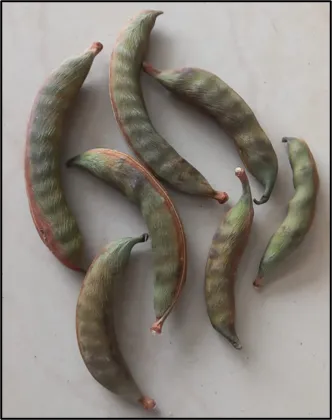
Fig1: Image of Acacia fernesiana pods
Ethanolic extraction
Ethanolic extraction was carried out using a maceration method. To aid in extraction, 10g of the powdered, dried plant material was macerated in 100ml of absolute ethanol for 48 hours while being shaken periodically. Whatman filter paper was used to filter the extract after 48 hours. The resulting dried crude ethanolic extract was stored at 4-5°C in a refrigerator after the filtrate was evaporated to dryness at room temperature.12,15
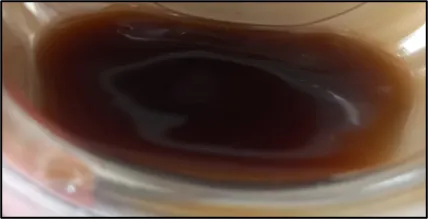
Fig2: Image of extract of Acacia fernesiana (L.) pods
Brine Shrimp Lethality Assay
The toxicity of the ethanolic extract of Acacia farnesiana pod extract was evaluated using the brine shrimp (Artemia salina Leach) lethality bioassay. We bought the Artemia salina eggs from Amazon. The pH of the artificial seawater was adjusted to 8.5–9 by adding 38 g of NaCl per liter of water. Artemia salina cysts were hatched at room temperature in artificial seawater with constant lighting and mild aeration. After a day, phototropic, actively swimming nauplii were gathered for the assay from the hatching chamber's illuminated side.
To achieve final test concentrations of 1, 10, 100, and 1000 µg/ml, stock solutions of the ethanolic pod extract were made in DMSO and serially diluted with artificial seawater. Each test tube was filled with ten nauplii, and artificial seawater with the proper extract concentration was added to bring the volume down to ten milliliters.9,13,14 Each test tube's motile nauplii count was determined after a 24-hour period. The percentage of death was computed as
% Mortality = (Number of dead nauplii / Total number of nauplii) *100
RESULT
A 30% (w/w) yield of dried extract was obtained from the ethanolic extraction of Acacia fernesiana (L.) pods by maceration, demonstrating the effective recovery of ethanol-soluble phytoconstituents under the extraction conditions used.
Table1: Brine shrimp lethality of ethanolic extract of Acacia fernesiana pod at 24h exposure
|
Concentration µg/ml |
No. of dead nauplii (out of 10) |
% Mortality |
|
1 |
1 |
10% |
|
10 |
2 |
20% |
|
100 |
3 |
30% |
|
1000 |
5 |
50% |
|
Control |
0 |
0 |
The ethanolic pod extract of A. fernesiana was found to increase nauplii mortality in a concentration-dependent manner, from 10% at 1 µg/ml to 50% at 1000 µg/ml. According to Meyer's toxicity criteria (LC50 > 1000 µg/ml), the LC50, which was calculated by probit regression of the log-concentration mortality relationship, was roughly 1231 µg/ml, indicating non-toxic/low general toxicity of the pod extract. Mortality was precisely 50% at the maximum tested concentration of 1000 µg/ml.
DISCUSSION
The brine shrimp lethality bioassay, first described by Meyer et al., remains one of the most widely used preliminary screening tools due to its simplicity, low cost, and good correlation with cytotoxic activity in higher animal models and cell lines. The ethanolic extract of Acacia farnesiana pods demonstrated a concentration-dependent lethal effect against Artemia salina nauplii in the current study, with an estimated LC50 of roughly 1231 µg/ml and mortality rising from 10% at 1 µg/ml to 50% at 1000 µg/ml. Meyer's toxicity scale classifies extracts as either non-toxic or of low general toxicity if their LC50 value is less than 1000 µg/ml. Despite the presence of bioactive phytoconstituents like alkaloids, flavonoids, tannins, and terpenoids reported in previous phytochemical studies of the pod wall, which suggests that some bioactivity is present, the relatively high LC50 value observed suggests that the pod extract has low general toxicity at the concentration tested, which is a favorable indicator for its potential safety in further pharmacological evaluation.
It is crucial to remember that the brine shrimp lethality assay does not pinpoint the precise mechanism of action or the extract compound causing the observed effect, even though it offers a helpful initial indication of general toxicity. Additionally, the translational relevance of these results would be strengthened by correlating the brine shrimp LC50 with cytotoxicity data from human cell lines or in vivo toxicity models.
CONCLUSION
The present study evaluated the general toxicity of the ethanolic extract of Acacia fernesiana (L.) pods using the brine shrimp (Artemia salina) lethality bioassay. The extract exhibited a concentration-dependent lethality, with mortality rising from 10% at 1 µg/ml to 50% at 1000 µg/ml and an estimated LC50 of approximately 1231 µg/ml, indicating non-toxic/low general toxicity potential as per Meyer’s toxicity criteria, albeit close to the 1000 µg/ml threshold. These results, taken together with the qualitative phytochemical profile of the pod wall rich in alkaloids, flavonoids, tannins, phenols, and terpenoids, support the traditional use of Acacia fernesiana pods and provide a scientific basis for further pharmacological investigation. Further studies involving bioassay-guided of the active constituents, along with detailed cytotoxicity and mechanistic studies, are recommended to fully establish the therapeutic and safety profile of this plant for potential pharmaceutical application.
AKNOWLEDGEMENT
Authors are thankful to D.S.T.S. Mandal’s College of Pharmacy, Solapur, Maharashtra for providing necessary facilities.
CONFLICT OF INTEREST:
No conflict of interest
REFERENCES


Nikita Mali, Baburao Chandakavathe, Akanksha Putale, Samruddhhi Gaikwad, Assessment of cytotoxicity of Acacia fernesiana (L.) wild pods using Brine Shrimp Lethality Assay, Int. J. of Pharm. Sci., 2026, Vol 4, Issue 8, 2240-2244. https://doi.org/10.5281/zenodo.21923493
 10.5281/zenodo.21923493