1M Pharm Student, Department of Pharmacy Practice, Visveswarapura Institute of Pharmaceutical Sciences, Bengaluru-70, Karnataka. 2Assistant Professor, Department of Pharmacy Practice, Visveswarapura Institute of Pharmaceutical Sciences, Bengaluru-70, Karnataka
Blood and its components are essential to modern patient care, yet a substantial proportion of collected units are discarded without being transfused. This review outlines the causes of blood wastage, its economic burden, and evidence-based prevention strategies. Reported causes span the entire transfusion pathway—donor and pre-donation factors (reactive screening, replacement donation, lipemia), collection errors (quantity-not-sufficient, overweight, clotted or underweight units), processing and laboratory issues (contamination, bag leakage, haemolysis, icterus, delayed TTI results), storage/inventory and cold-chain failures (expiry, clerical/ordering errors, temperature excursions), and clinical/bedside administrative lapses. The economic burden extends beyond acquisition cost to testing, processing, storage, personnel time, and disposal, with indirect costs such as donor productivity loss only partially quantified in the literature. Evidence supports several preventive approaches, including donor-level screening and counselling, FIFO stock management, cold-chain monitoring, maximum surgical blood ordering schedules, dedicated transfusion teams, staff education, audit-based corrective and preventive action, and Patient Blood Management as an overarching framework. Reported wastage rates vary considerably across settings, partly reflecting differences in definitions and denominators, underscoring the need for standardized reporting and prospective multicentre research.
Blood and its components have been essential to patient care in modern medicine. As one of the main biological fluids, blood carries waste products from these same cells and supplies nutrients and oxygen. The majority of emergency medical and surgical treatments rely on Blood Transfusion Services (BTS).1
Blood wastage is defined as any blood component discarded without being transfused, regardless of the reason, including units lost due to expiration, improper storage, reactive testing, or failure to use after issuance.2 Blood wastage is a widespread ethical and economic issue. The National Accreditation Board for Hospitals and Health Care Providers recommends the blood component wastage rate as one of the quality indicators.3 87.5% of developing nations collect less than 50% of their blood needs, according to data from the World Health Organization (WHO). Inadequate donor recruitment strategies, improper blood collection and component processing, and inadequate stock management and transportation are only a few of the numerous problems that contribute to the lack of blood supply and waste.4
The expenses associated with blood components are high and frequently include hidden factors that are not typically taken into consideration in straightforward economic terms. Therefore, it is both morally and financially necessary to use blood and blood components cautiously.5 Blood component waste will continue to be a problem in all hospitals; therefore, low-cost and simple interventions like educational outreach, print and digital messaging, and better transportation and component identification modalities can have a quick and significant impact on reducing blood waste, both in terms of cost and resource savings. Since blood products have a short half-life, precise procedures should be implemented for blood reserves to minimize waste and prevent loss.6
This review comprehensively outlines the causes of blood wastage, economic burden, evidence-based preventive measures and strategies for optimal blood utilization.
CAUSES OF BLOOD WASTAGE
Donor and pre-donation factors
Positive serological tests: blood bags are screened for tti infections. Reactive blood bags are discarded. One major reason for discarding is transfusion-transmitted illnesses.7
Replacement donation: replacement donation can indirectly increase blood wastage through overcollection and expiry.8
Lipemia: according to quality standards for plasma fractionation, lipemic plasma donations must be discarded. Lipemic blood units interfere with the ability to perform viral marker tests, and hence the units are discarded.9
Collection-related factors
Quantity Not Sufficient: QNS is the result of incomplete collection of blood, which does not meet quality standards and is therefore discarded. Phlebotomy procedure difficulties, such as unfavourable donor reactions, including unease, anxiety attacks, vomiting, hematoma, and vein collapse, are the primary reason for lower-than-expected blood volume collection .10
Overweight: in overweight bags, the amount of anticoagulant is not sufficient, and hence the coagulation cascade may be stimulated. Hence, it can lead to discard of blood & its components.11,12
Clotted blood: lack of training in phlebotomy techniques, low flow rates, improper blood-to-anticoagulant ratios, inadequate mixing, anticoagulant defects, or bag defects can all result in clotted blood.4
Underweight: underweight blood bags are discarded as excess anticoagulant can denature the blood during storage. Reasons for underweight bags include donation stoppage due to donor reaction, blood flow from a small-calibre vein exceeding 15 min, or even a non-calibrated spring balance.11,12
Processing and laboratory factors
Contamination: blood waste results from plasma contamination with Red Blood Cells (RBCs) caused by inefficient separation of plasma from red cells during centrifugation or processing due to human or centrifuge variables.4
Blood bag leakage: blood bag leaks may be due to mishandling during collection, processing, and storage or manufacturing mistakes. Blood bag integrity is a crucial step to avoid leaks.10
Haemolysis: haemolysis refers to the breakdown of red cell membranes and the subsequent release of free haemoglobin, which occurs due to bacterial contamination, improper storage or handling, resulting in discarding of blood components.12
Icterus: icterus refers to yellow discolouration due to high bilirubin content; such blood components are discarded.12
Delay in getting TTI results: platelets and other blood components with a short shelf life may be wasted if TTI (transfusion-transmitted infections) results are delayed.4
Storage, inventory and transport
Shelf life and expiry: components keep for very different periods: red cells for several weeks (about 35 days in CPDA-1 bags, longer with additive solutions), frozen plasma for months to a year or more depending on temperature, and platelets for only about five days.13 Holding more stock than needed leads to expiry, a leading cause of wastage worldwide.14
Clerical errors and ordering errors: overordering, improper requisition procedures, peripheral storage and handling, over-ordering, incorrect requisitions, storage at peripheral sites and failure to reissue returned units all cause avoidable losses.8 Other documented causes are patients who are discharged or die before the transfusion is given.14
Cold chain and storage temperatures: blood components are sensitive to temperature. Excursions outside the permitted range reduce viability, allow bacteria to grow and can cause serious reactions in recipients.5
Clinical and bedside administrative factors
Avoidable blood product wastage: overestimating blood loss, or recognising and controlling critical bleeding late, leads to requests for units that are then not transfused. Delayed physiological responses to resuscitation and slow laboratory results contribute to this.5
ECONOMIC BURDEN
The cost of blood products usually covers a variety of operational and maintenance costs, such as equipment depreciation, salaries of blood centre staff and utility costs. Other services, including donor recruitment, blood collection, testing, storage and delivery to hospitals, are also factored into the overall cost.14
Direct cost: blood collection, infectious disease or compatibility testing, processing/separation and preparation of components, storage of blood components, blood bags and disposable consumables, personnel salaries/time, equipment and maintenance, outreach/camp-based collection cost.15
Indirect cost: loss of donor productivity/time off work, travel expenses.16
Wastage specific cost: expiries, transfusion-transmissible infection (TTI) reactivity.2
Table no. 1: Reported cost of blood and blood components in different countries (15,16)
Study
Country
Year
Blood/component
Reported cost
Type of cost
Fragoulakis et al
Greece
2013
1 unit of blood
€131.49/unit
Direct production cost
Fragoulakis et al
Greece
2013
1 unit of blood
€34/unit
Indirect cost
Pokhrel et al.
India
2018
Blood/component unit
₹1,829/unit
Economic cost including collection, processing, storage and NAT
Pokhrel et al.
India
2018
Blood/component unit without NAT
₹1,255/unit
Economic cost
Table no 2: Financial impact of blood component wastage
Study
Country
Study period
Reported financial impact
Reasons for Discarding of Whole Blood/Red Cell Units in a Regional Blood Transfusion Centre.17
India
2012–2016
Approximately ₹6.7–7 million loss
Blood wastage intervention study.18
Iran
2013–2017
Demonstrated economic benefit of reducing wastage
Loss of blood components constitutes a major financial drain, and evidence suggests that successful measures for minimizing wastage can lead to large cost savings for transfusion services.
PREVENTIVE STRATEGIES
At the level of donor
Donors will not be permanently postponed if blood bank employees are properly trained in counselling donors.3
Donors with rare and negative blood types should be kept in reserve, and blood should only be drawn when needed.3
By promoting single donor platelets through apheresis based only on demand, platelet concentrate/RDP waste can be prevented.3
Strict adherence to the donor selection rules and appropriate donor screening will reduce the amount of such units collected from the donors, preventing their disposal.13
By properly interrogating donors about the time between their last meal and donation, lipemic discards can be reduced.6
Blood that is inappropriate for transfusion because the anticoagulant used in the bag and the volume of blood collected do not match. This kind of collection typically takes place at blood donation camps. It can be avoided by choosing healthy donors carefully, encouraging donors, and providing phlebotomy personnel with sufficient training.19
Current guidelines that highlight voluntary blood donation as a more effective and dependable source are supported by higher waste among replacement donors compared to voluntary donors.8
It is advised that blood be collected using double- or triple-filtered bags and that all donors, including those with increased haemoglobin, have their haemoglobin levels tested. Blood bags from these donors should be labelled to create an appropriate product in the processing unit if these bags are not accessible.20
At the level of blood centre and technical process
Issue units strictly on a first-in, first-out (FIFO) basis.3
Whole blood unit collection can be minimized since it has limited demand.3
To reduce the chances of damage and leakage, the blood bag should be placed in a plastic bag before immersing it in lukewarm water.13
Larger or better-equipped storage, software to track stock and forecast use, and use of those data to target donors of the groups and quantities actually required all support optimal use of blood.13
Platelet additive solution, specialised storage bags and cryopreservation can lengthen the usable life of platelets, and preparing platelets on demand cuts expiry.6
Continuous staff training, supervision of component separation and automated separators can limit red-cell contamination of plasma. Red cells carrying platelet contamination can still be used for patients of the same blood group within 24 hours of separation.6
Collecting into CPD bags with an additive solution extends the storage period of red cells.6
Storage equipment should be calibrated and validated, with electronic temperature monitoring and an audible alarm. Automatic SMS alerts to the blood-bank medical officer or technical supervisor allow quick action and help prevent storage-related loss.6
Inventory and information management
Inexpensive and easy interventions such as educational outreach, print and digital messaging, and improved transportation and component identification modalities can have a prompt and dramatic impact on reducing blood wastage, concerning both cost and resource savings.6
Surplus components can be sent to other licensed blood centres, and surplus FFP to fractionation.6
Donor recruitment, collection and component separation can be adjusted to hospital demand, and the best stock levels of red cells, platelets and FFP can be reviewed daily.6
Continuing education for technical staff in standard procedures for collection, processing, storage, internal transfer and transport, together with FIFO issue and regular audit by the hospital transfusion committee, helps reduce technical faults.6
Machine-learning models that use real-time clinical data have shown promise for forecasting transfusion needs and reducing unnecessary reservations, but they require validation in resource-limited settings.21
Platelet overproduction can be curbed by changing the type of bags used at donation and by making longer-lasting products, such as cryoprecipitate, from triple-bag collections.20
At clinician interface
A maximum surgical blood ordering schedule (MSBOS) aligns the number of cross-matched units with the likely transfusion need for each procedure. It serves as a guide for surgeons, anaesthetists and the transfusion service without overriding clinical judgement.21
Issuing red cells to the ward one unit at a time limits over-requesting, ordering errors and repeated rewarming. Transporting components in insulated containers or cool bags with a portable thermometer keeps them from prolonged exposure to room temperature.14
Physicians and residents should be trained in the indications, use and handling of blood components to minimise bedside wastage.22
Clinicians should return any issued unit not used within 30 minutes, keeping it cold and sterile. Red cells and platelet concentrates returned within that time may be restocked.22
Packed red cell and platelet concentrates can be taken back to blood bank if received back within 30 minutes of issue.22
Plasma should not be thawed until transfusion is confirmed. If thawed plasma is ordered but not transfused, it may be stored at 2-6 °C and reissued with priority within 24 hours.22
Avoiding unnecessary type-and-screen (T&S) or type-and-cross-match (TC) requests: a growing body of evidence suggests that many operations do not need either test, which adds cost and ties up blood, a stretched resource.21
Governance, audit and quality improvement
Clear communication with clinicians, and issuing group-compatible units rather than defaulting to group O, limits wastage of group O positive and negative stock.6
Continuous monitoring of wastage with corrective and preventive action (CAPA) aimed at root causes in collection, processing and storage has been shown to reduce wastage.23
Proper management of blood, self‑audit of blood and blood components discarded rate, and understanding reasons for discarding in blood bank will reduce unnecessary wastage of blood and blood components.6
Every institution should have an active transfusion committee that sets rules for prudent use of blood, since the discard rate is itself a quality indicator.10
Patient Blood Management (PBM)
PBM is a patient-centred, systematic and evidence-based approach that aims to improve outcomes by managing and conserving the patient's own blood while promoting safety and patient empowerment.24
Hospital PBM programmes have been associated with shorter stays and lower blood use, and the resulting savings may offset programme costs. In one cost-benefit analysis, savings exceeded costs in about two-thirds of simulated repetitions.24,25
By reducing demand and over-ordering, PBM complements measures that target discards directly.
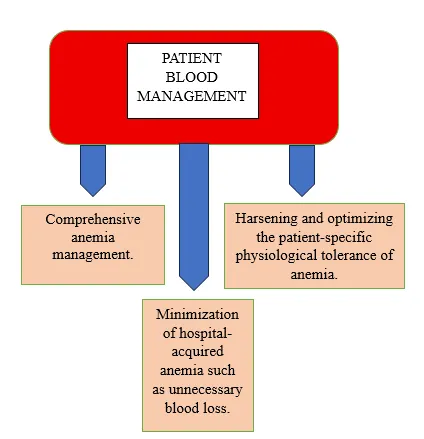
Three pillars of PBM
Comprehensive detection and management of anemia.
Prevention and reduction of avoidable blood loss, including hospital-acquired anemia from unnecessary blood loss.
Optimization of the patient’s individual physiological capacity to tolerate of anemia.25
Figure no 1: Three Pillars of PBM (Patient Blood Management)
Table no 3: Reported Effect of Intervention on Blood Components Wastage
Intervention
Study & setting
Design
Reported effect on wastage
Reported cost saving
Targeted multi-component intervention
Tounsi et al., 2025; Saudi tertiary hospital2
Retrospective before–after study
Total wastage declined by 35.71% relative reduction. Monthly wastage declined by 7.73% relative reduction.
SAR 171,366 (~US$45,856); costs reduced by 15.9%
Dedicated transfusion team
Australia; Level 1 trauma centre5
Retrospective pre/post intervention
Wastage decreased from 1.7% to 1.1%
Not reported
Maximum Surgical Blood Ordering Schedule (MSBOS)
Benzil et al., 2025; 18 hospitals, USA21
Multicentre implementation study
4,166 fewer type-and-screen tests; no patient-safety issues reported
US$223,839 cost avoidance in the first 9 months
Audit-based corrective and preventive action
Gnanaraj et al., 2024; single blood centre, India23
Quality improvement study
Discard rate reduced from approximately 5% to 3%; significant improvement (p-value <0.0 5)
Not reported
Table no 3 summarizes the reported effects of different interventions on blood component wastage, including targeted multicomponent stratergies, a dedicated transfusion team, the Maximum Surgical Blood Ordering Schedule (MSBOS) and audit based corrective action, which reduced wastage across setting.
Future Perspectives
Standardized definitions and reporting: A consensus definition of wastage with a stated denominator, reported separately by component, cause and stage, is a prerequisite for comparison between centres and countries. A minimum national dataset for blood centres and hospitals would support benchmarking.
Stronger study designs: Future work should move from single-centre retrospective studies to prospective, multicentre and controlled designs, including interrupted time-series and stepped-wedge implementation trials, with follow-up long enough to show whether reductions are sustained.
Complete economic evaluation: Studies should capture direct and indirect costs, including donor time, recruitment, recollection, disposal, and the opportunity cost of a unit unavailable when needed, and report them in a single currency, price-year adjusted for inflation and purchasing power. Cost-effectiveness and return-on-investment analyses of individual interventions are needed.
Evidence from low- and middle-income settings: Research in replacement-donation systems, district hospitals and private facilities, and on the effect of moving towards voluntary non-remunerated donation, would make recommendations more transferable.
Digital tools and forecasting: Barcode or radio-frequency tracking, electronic issue, real-time temperature monitoring, and machine-learning forecasting (especially for platelets) need validation for accuracy, cost and feasibility in resource-limited blood banks.
Product innovation and supply-chain cooperation: Extended-shelf-life products, platelet additive solutions, on-demand component preparation and redistribution of near-expiry stock between hospitals deserve prospective evaluation, with safeguards against creating shortages.
Integration with Patient Blood Management: PBM programmes should be evaluated using combined outcomes (wastage, utilisation, stock-outs, patient outcomes and cost), with clinical pharmacists and transfusion committees involved in anaemia management, blood-loss minimisation and audit.
Governance and quality systems: Routine publication of wastage indicators, linkage with haemovigilance data and periodic external audit may sustain improvements and allow benchmarking.
CONCLUSION
Blood is a limited resource that depends on donors, and avoidable wastage has clinical, ethical and economic consequences. Wastage can occur at any stage from donor selection to administration, and many of its causes are preventable, including reactive screening and donor reactions, excess stock, inappropriate ordering, cold-chain breaks, failure to return unused units in time, and technical errors in collection and processing. Reported rates vary widely, and part of that variation probably reflects differences in definitions and denominators rather than true differences in performance.
The cost of wastage extends beyond the purchase or processing cost of a unit to include disposal, staff time, transport, storage, recollection and the opportunity cost of a unit that is unavailable when needed, but these indirect costs have been only partly quantified. Published evidence suggests that better inventory control, FIFO practice, maximum surgical blood ordering schedules, dedicated transfusion teams, staff and clinician education, and audit-based corrective action can all reduce wastage, and patient blood management offers a framework that brings them together. Future research should prioritise standard definitions, prospective multicentre designs, full economic evaluation and low- and middle-income settings, where every donated unit matters most.
FUNDING
None
ETHICAL STATEMENT
Ethical approval was not required because this is a literature-based review.
CONFLICT OF INTEREST
The authors declare no conflicts of interest.
LIST OF ABBREVIATIONS
Abbreviation
Full form
BTS
Blood Transfusion Services
CAPA
Corrective and Preventive Action
CME
Continuing Medical Education
CPD
Citrate Phosphate Dextrose
FFP
Fresh Frozen Plasma
FIFO
First In, First Out
MSBOS
Maximum Surgical Blood Ordering Schedule
NABH
National Accreditation Board for Hospitals and Healthcare Providers
NAT
Nucleic Acid Testing
PAS
Platelet Additive Solution
PBM
Patient Blood Management
PRBC
Packed Red Blood Cells
QNS
Quantity Not Sufficient
RBC
Red Blood Cells
RDP
Random Donor Platelets
SAR
Saudi Riyal
SDP
Single Donor Platelets
SMS
Short Message Service
T&S
Type and Screen
TC
Type and Cross-match
TTI
Transfusion-Transmitted Infections
WHO
World Health Organization
REFERENCES
Kori S, Yadav YR, Banerjee S, Bari V. Analysis of the total wastage of blood bags and various blood components in a blood bank of a tertiary care hospital. Int J Community Med Public Health. 2024;11(2):904-7
Tounsi WA, Alzahrani OA, Bukhari AG, Garout RM, Felimban RI, Al-Musallam RH, et al. Reducing blood component wastage through targeted interventions: a four-year retrospective study at a Saudi tertiary hospital. Transfus Med. 2025;35(6):556-63.
Syed IA. Categorization of the inevitable causes of blood and components wastage detected in south Indian urban blood centre. Int J Multidiscip Res. 2024;6(4).
Alsulami H, Aljobran A, Safhi S, Alquthami N, Alnafisah I. Determination of rate, causes and cost of wastage of blood and its products in two blood donation centers in Riyadh. GSC Adv Res Rev. 2023;14(1):55-59.
Mitra B, Garland R, Catalano J, O'Reilly G, Nevill A. Reducing blood wastage through introduction of a transfusion team. Scand J Trauma Resusc Emerg Med. 2025;33:136.
Simon K, Ambroise MM, Ramdas A. Analysis of blood and blood components wastage in a tertiary care hospital in South India. J Curr Res Sci Med. 2020;6(1):39-44.
Jairajpuri ZS, Sehgal S, Khetrapal S, Jetley S, Rana S. Evaluation of causes and rate of wastage of blood and its components - an important quality indicator in blood banks. Online J Health Allied Sci. 2022;21(2):7.
Manikandan N, Rawat R, Aravind S, Sharma S, Yadav A. Wastage of blood and blood components in a tertiary care hospital: a retrospective study from Central India. Int J Curr Pharm Rev Res. 2026;18(5):600-605.
de Oliveira M, Antunes M, Amil M. Plasma lipemia: when the blood donor becomes a patient. Transfus Apher Sci. 2022 Feb;61(1):103294
Rajput S, Chatterjee T, Bindra MS, Barik S. Assessment of wastage of blood and its components in a tertiary care center: uncovering causes and rates. APIK J Intern Med. 2025;13(2):118-122.
Hayer SS, Gotekar YR. Evaluation of rate and causes of wastage of blood and blood components in a teaching hospital. Int J Curr Med Appl Sci. 2018;18(3):79-83.
Dogra A, Gosai D. An analytical study of discarded units of whole blood and its components in a blood bank at a tertiary care hospital in Vadodara. Glob J Med Res C Microbiol Pathol. 2020;20(2):11-14.
Bashir F, Khalid A, Iqbal S, Ghafoor T, Ahmed M. Exploring the causes of wastage of blood and its components in a tertiary care hospital blood bank. Cureus. 2021;13(12):e20500.
Chien JH, Yao CY, Chen HF, Ho TF. Trends in blood transfusion and causes of blood wastage: a retrospective analysis in a teaching hospital. BMC Health Serv Res. 2025;25:67.
Fragoulakis V, Stamoulis K, Grouzi E, Maniadakis N. The cost of blood collection in Greece: an economic analysis. Clin Ther. 2014;36(7):1028-1036.e5.
Pokhrel A, Chaudhary K, Sachdeva P, Gupta A, Varshney S, Arora H. Activity wise unit cost of blood components in a tertiary care hospital blood bank for the year 2018. Indian J Hematol Blood Transfus. 2020;36(2):368-73.
Jariwala K, Mishra K, Patel G, Seliya R, Shukla R, Ghosh K. Reasons for discarding of whole blood/red cell units in a regional blood transfusion centre in Western India. Indian J Hematol Blood Transfus. 2018;34(3):501-505.
Javadzadeh Shahshahani H, Sharifi S, Nasizadeh S. Impact of implementing a standard operating procedure to reduce blood wastage in blood centers of Iran. Arch Iran Med. 2024;27(2):89-95.
Kulkarni KR, Kulkarni P, Jamkhandi U. The rationale for discarding blood and its components in a tertiary care hospital blood bank in North Karnataka. Cureus. 2022;14(11):e31112.
Azadbakht M, Bagheri P, Akbarzadeh M, Foruozandeh H, Khaleghi A, Gholami MS, et al. Frequency of blood components wastages and related factors in Fars blood transfusion centers, Iran. Int J Med Lab. 2024;11(1):72-85.
Benzil DL, Auron M, Otrock ZK, Lallo D, Flowers N, Cummings K 3rd, et al. A maximum surgical blood ordering schedule: does it add value? Vox Sang. 2025;120(4):411-8.
Kumari N, Maheshwari A, Kumar N, Rabab S. Reasons and recommendations to reduce wastage pattern of the blood components in the newly started tertiary care hospital based blood center in East India. Int J Contemp Med Res. 2019;6(5):E1-E4.
Gnanaraj J, Kulkarni R, Sahoo D, Basavarajegowda A. Audit-based corrective and preventive actions to reduce wastage of blood components at a single blood center: A quality improvement study. Asian J Transfus Sci. 2024;18(1):27-34.
Dreher D, Honnef G, Zoidl P, Auinger D, Heuschneider L, Zajic P, et al. Patient blood management: a systematic review of current international guidelines. Br J Anaesth. 2026;137(1):74-88.
Meybohm P, Straub N, Füllenbach C, Judd L, Kleinerüschkamp A, Taeuber I, et al. Health economics of patient blood management: a cost-benefit analysis based on a meta-analysis. Vox Sang. 2020;115(2):182-8. doi:10.1111/vox.12873
Reference
Kori S, Yadav YR, Banerjee S, Bari V. Analysis of the total wastage of blood bags and various blood components in a blood bank of a tertiary care hospital. Int J Community Med Public Health. 2024;11(2):904-7
Tounsi WA, Alzahrani OA, Bukhari AG, Garout RM, Felimban RI, Al-Musallam RH, et al. Reducing blood component wastage through targeted interventions: a four-year retrospective study at a Saudi tertiary hospital. Transfus Med. 2025;35(6):556-63.
Syed IA. Categorization of the inevitable causes of blood and components wastage detected in south Indian urban blood centre. Int J Multidiscip Res. 2024;6(4).
Alsulami H, Aljobran A, Safhi S, Alquthami N, Alnafisah I. Determination of rate, causes and cost of wastage of blood and its products in two blood donation centers in Riyadh. GSC Adv Res Rev. 2023;14(1):55-59.
Mitra B, Garland R, Catalano J, O'Reilly G, Nevill A. Reducing blood wastage through introduction of a transfusion team. Scand J Trauma Resusc Emerg Med. 2025;33:136.
Simon K, Ambroise MM, Ramdas A. Analysis of blood and blood components wastage in a tertiary care hospital in South India. J Curr Res Sci Med. 2020;6(1):39-44.
Jairajpuri ZS, Sehgal S, Khetrapal S, Jetley S, Rana S. Evaluation of causes and rate of wastage of blood and its components - an important quality indicator in blood banks. Online J Health Allied Sci. 2022;21(2):7.
Manikandan N, Rawat R, Aravind S, Sharma S, Yadav A. Wastage of blood and blood components in a tertiary care hospital: a retrospective study from Central India. Int J Curr Pharm Rev Res. 2026;18(5):600-605.
de Oliveira M, Antunes M, Amil M. Plasma lipemia: when the blood donor becomes a patient. Transfus Apher Sci. 2022 Feb;61(1):103294
Rajput S, Chatterjee T, Bindra MS, Barik S. Assessment of wastage of blood and its components in a tertiary care center: uncovering causes and rates. APIK J Intern Med. 2025;13(2):118-122.
Hayer SS, Gotekar YR. Evaluation of rate and causes of wastage of blood and blood components in a teaching hospital. Int J Curr Med Appl Sci. 2018;18(3):79-83.
Dogra A, Gosai D. An analytical study of discarded units of whole blood and its components in a blood bank at a tertiary care hospital in Vadodara. Glob J Med Res C Microbiol Pathol. 2020;20(2):11-14.
Bashir F, Khalid A, Iqbal S, Ghafoor T, Ahmed M. Exploring the causes of wastage of blood and its components in a tertiary care hospital blood bank. Cureus. 2021;13(12):e20500.
Chien JH, Yao CY, Chen HF, Ho TF. Trends in blood transfusion and causes of blood wastage: a retrospective analysis in a teaching hospital. BMC Health Serv Res. 2025;25:67.
Fragoulakis V, Stamoulis K, Grouzi E, Maniadakis N. The cost of blood collection in Greece: an economic analysis. Clin Ther. 2014;36(7):1028-1036.e5.
Pokhrel A, Chaudhary K, Sachdeva P, Gupta A, Varshney S, Arora H. Activity wise unit cost of blood components in a tertiary care hospital blood bank for the year 2018. Indian J Hematol Blood Transfus. 2020;36(2):368-73.
Jariwala K, Mishra K, Patel G, Seliya R, Shukla R, Ghosh K. Reasons for discarding of whole blood/red cell units in a regional blood transfusion centre in Western India. Indian J Hematol Blood Transfus. 2018;34(3):501-505.
Javadzadeh Shahshahani H, Sharifi S, Nasizadeh S. Impact of implementing a standard operating procedure to reduce blood wastage in blood centers of Iran. Arch Iran Med. 2024;27(2):89-95.
Kulkarni KR, Kulkarni P, Jamkhandi U. The rationale for discarding blood and its components in a tertiary care hospital blood bank in North Karnataka. Cureus. 2022;14(11):e31112.
Azadbakht M, Bagheri P, Akbarzadeh M, Foruozandeh H, Khaleghi A, Gholami MS, et al. Frequency of blood components wastages and related factors in Fars blood transfusion centers, Iran. Int J Med Lab. 2024;11(1):72-85.
Benzil DL, Auron M, Otrock ZK, Lallo D, Flowers N, Cummings K 3rd, et al. A maximum surgical blood ordering schedule: does it add value? Vox Sang. 2025;120(4):411-8.
Kumari N, Maheshwari A, Kumar N, Rabab S. Reasons and recommendations to reduce wastage pattern of the blood components in the newly started tertiary care hospital based blood center in East India. Int J Contemp Med Res. 2019;6(5):E1-E4.
Gnanaraj J, Kulkarni R, Sahoo D, Basavarajegowda A. Audit-based corrective and preventive actions to reduce wastage of blood components at a single blood center: A quality improvement study. Asian J Transfus Sci. 2024;18(1):27-34.
Dreher D, Honnef G, Zoidl P, Auinger D, Heuschneider L, Zajic P, et al. Patient blood management: a systematic review of current international guidelines. Br J Anaesth. 2026;137(1):74-88.
Meybohm P, Straub N, Füllenbach C, Judd L, Kleinerüschkamp A, Taeuber I, et al. Health economics of patient blood management: a cost-benefit analysis based on a meta-analysis. Vox Sang. 2020;115(2):182-8. doi:10.1111/vox.12873
K. S. Prasanna Babu
Corresponding author
Assistant Professor, Department of Pharmacy Practice, Visveswarapura Institute of Pharmaceutical Sciences, Bengaluru-70, Karnataka
K. C . Nishmitha
Co-author
M Pharm Student, Department of Pharmacy Practice, Visveswarapura Institute of Pharmaceutical Sciences, Bengaluru-70, Karnataka.
K. C . Nishmitha, K. S. Prasanna Babu, Blood Wastage: Causes, Economic Burden, And Prevention Strategies - A Narrative Review, Int. J. of Pharm. Sci., 2026, Vol 4, Issue 10, 1713-1724. https://doi.org/10.5281/zenodo.23335124




 10.5281/zenodo.23335124