

We use cookies to ensure our website works properly and to personalise your experience. Cookies policy
Nalanda institute of pharmaceutical sciences, siddhardh Nagar, Kantepudi (v), Sattenapalli(M), Guntur(DIST)-522438.
Effective delivery of therapeutic agents into the brain can greatly improve the treatments of neurological and neurodegenerative diseases. Application of focused ultrasound facilitated by microbubbles has shown the potential to deliver drugs across the blood–brain barrier into targeted sites within the brain noninvasively. This review provides a summary of the technological background and principle, highlights of recent significant developments and research progress, as well as a critical commentary on the challenges and future directions in the field. This review also outlines and discusses the tasks that researchers face in order to successfully translate the technology into a clinical reality, including obtaining improved understanding of the mechanisms, demonstration of therapeutic efficacy and safety for specific applications, and development of methodology for rational design to achieve optimized and consistent outcome
Blood–brain barrier (BBB) is a semi-permeable barrier encompassing microvasculature of central nervous system (CNS). In the capillaries, the wedged endothelial cells line in the interior vessels forming extensive tight junctions. Together with an ensemble of receptors, transporters, efflux pumps and other cellular components, the barrier takes control of entrance and expulsion of the molecules in vascular compartment to the brain. The intact BBB impedes the influx of most blood-borne substances from entering the brain. But it should be noted that at meantime of brain protection, BBB also excludes more than 98% of small-molecule drugs and all macromolecular therapeutics from access to the brain. The tight gap allows only passive diffusion of lipid-soluble drugs at a molecular weight lower than 400-600 Da. Increasing lipophilic of the therapeutic agents is a feasible method to improve the BBB permeability. For example, Crostini, an oral selective small-molecular tyrosine kinase inhibitor, is an effective anti-cancer medicine but with poor activity against brain tumor metastases due to its low BBB penetration Structural modification of conjugation of a fluoroethyl moiety increases the lipophilicity of Crizotinib and results in enhanced brain permeability. However, increasing lipophilicity is not a universal strategy as it may inhibit the biological activity of drugs of interest. Further, therapeutic drugs with high liposolubility have longer retention and duration of action in non-target peripheral organs, causing considerable side effects. In addition, due to the presence of P-glycoprotein (referred to as multidrug resistance associated membrane protein), drugs could be transported back into the blood by ATP-dependent efflux pumps. Thus, it is urging to address the issue of brain-targeted therapeutics by developing effective and safe delivery strategies.
Spurred by recent development of materials science and nanotechnology, various strategies for regulation of BBB permeability were developed as well as a library of brain-targeted drug delivery systems. Transport routes of the drug molecules across the BBB occurs via the pathways including Para cellular and trans cellular diffusion, receptor-mediated transactions, cell-mediated transactions, transporter-mediated transactions, and adsorptive mediated transcytosis Many efforts have been made in response to each process of the drug transportation, which have also been accompanied by reviews of latest progress in this field, but most of literature emphasize the BBB breakdown in specific brain disorders, or give a general review of delivery strategies concentrating on the barrier physiology. On the basis of these strategies, functional materials with small size, tailored architecture and therapeutic motifs that facilitate the targeted drug delivery are widely engineered.
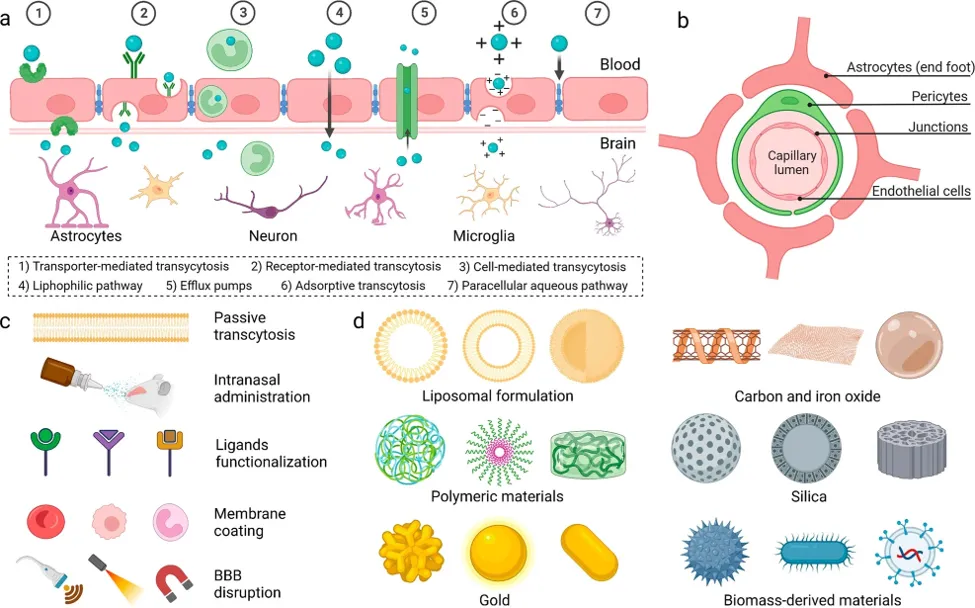
FIGURE : 2 TRANSPORT PATHWAY AND DRUG DELIVARY STRATEGIES OF BBB
1.1 BBB structure and physiology:
A) Anatomical structure of the BBB:
The existence of the BBB was first found by Paul Ehrlich and proved by Edwin Goldmann. BBB is a spacious, multicellular, and dynamic semi-permeable membrane that isolates the foreign substances in the blood from the CNS. The presence of BBB avoids the brain from damage by keeping a stable environment., But it also limits the drugs that enter into the CNS for treating brain diseases such as neurodegenerative diseases and brain cancer. Capillaries are the major site of the BBB. Because the neural cell is close to a capillary no further than 25 µm, passaging the BBB for drug delivery is a favored route when compared to another by-passed route which is relatively longer. This case pushes researchers to develop effective strategies to regulate BBB permeability and targeted delivery systems to overcome the BBB limits. Some reviews have discussed the BBB recognition which is one of the key steps for enhanced brain-targeted delivery. For a deeper understating of the interaction between delivery systems and the brain, how the BBB is constructed should be clarified.
From the physiological point of view, endothelial cells, astroglia, pericytes, and junctional complexes including tight junctions and adherens junctions compose the BBB basicallyIn this section, we focus on the five constituents mentioned above and others are not covered here.
B) Liposomal formulations:
Liposomes are the first generation of drug delivery systems and have been widely used since their discovery in 1965.They are composed of one or more lipid bilayers and hollow aqueous compartment, which endow them with loading versatility for both hydrophobic and hydrophilic therapeutic agents. Together with high biocompatibility, biodegradability and its intrinsic capability of BBB crossing, liposomes are considered as one of the most successful delivery systems with a great potential in translational medicine. In the past decade, research on liposomes has further substantially increased along with the advance of materials engineering and nanotechnologyVarious types of functionalization strategies have been involved for the development of liposomal delivery system such as brain/tumor-targeting delivery, controlled drug release, imaging-guided delivery These strategies facilitate the development of liposomal formulations to improve brain-specific delivery.
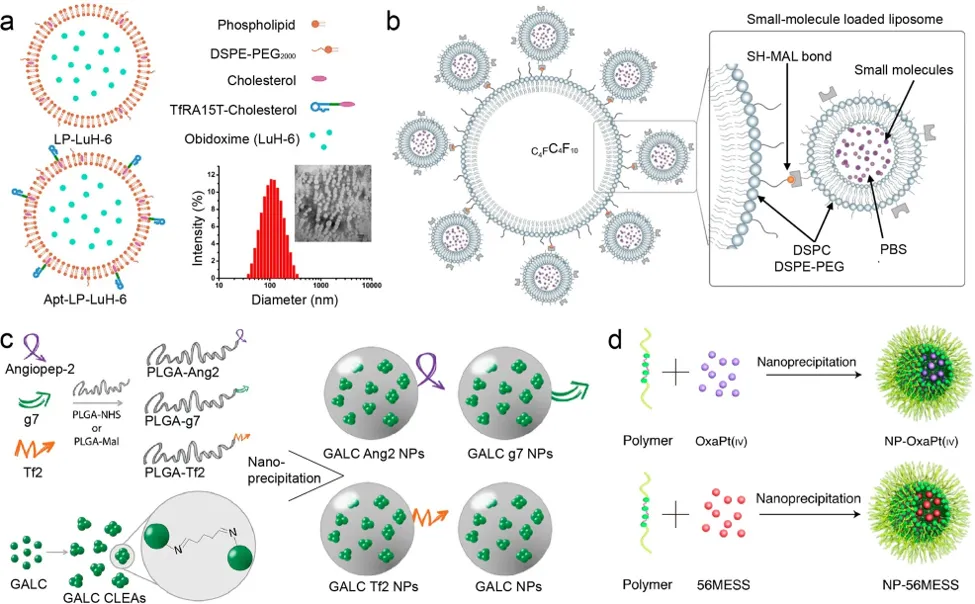
Brain-targeted delivery of the liposomes could be enhanced by modification of targeting ligands including polymers, peptides, antibodies, and aptamers. For example, Zhan et al. functionalized liposomal surface with amyloid-β-derived peptide which has a highly specific binding affinity towards plasm apolipoproteins, giving a protein corona-modified liposomal system. Significant enhancement of the brain distribution of DOX-loaded liposomes as well as higher anti-tumor efficacy were found. Quan et al. developed transferrin receptor aptamer-functionalized liposomes to deliver acetylcholinesterase reactivator in brain Compared with non-targeting liposomes, this functionalized system has higher BBB penetration efficiency confirmed by both in vitro BBB model and in vivo biodistribution study. Conjugation of brain-targeting peptide is also proved to be an effective method to improve the brain accumulation. Zhang et al. used RVG29, a 29 amino-acid peptide derived from rabies virus glycoprotein, as a targeting ligand in the liposome-based delivery system for treatment of Parkinson’s disease. But it begs for the question that how can targeting ligand-modified liposomes bypass through the BBB via receptor-mediated transcytosis. To give a vivid description, Lauritzen et al. characterized all steps of the liposome delivery routes into brain by using transferrin receptor-targeted liposomal nanoparticles as a model system. They revealed that
1.2 post-capillary venues is the key site for transactions-mediated brain entry
1.2.1 Endothelial cells:
Endothelial cells are considered as the BBB’s core anatomical structure for lining the cerebral blood vessels and interacting with different types of cells in the CNS. The endothelial cells in the BBB differ from peripheral endothelial cells in morphology and function. The barrier performance is not the innate properties of endothelial cellsFor morphology, the endothelial cells in the BBB are fastened by both tight junctions and adherens junctions, resulting in distinct lumenal and abluminal membrane compartments. They further present with no fenestrations, also known as small transcellular pores, which greatly limit free diffusion and the rapid exchange of molecules between brain tissue and blood. Besides, the amounts of mitochondria in endothelial cells in the BBB are higher than in peripheral endothelial cells, which means more energy is needed for transportFor function, first, they display a net
negative surface charge, refusing to accept negatively charged compounds, as well as quite low degrees of leukocyte adhesion molecules, hampering the entry of the number of immune cells Second, they show designated transporters for regulating the inflow and outflow of specific substrates. Third, they show a restriction on the number of transcellular vesicles through the vessel wall due to the high transendothelial electrical resistance. Because of the existence of the local environment, endothelial cells can together form and maintain the BBB.
1.2.2 Astrocytes:
Astrocytes, also known as astroglia, are the most numerous glial cells, expressing polarized and complex morphology, which are heterogeneous throughout the brain In tradition, they are divided into two categories, that one is protoplasmic which locates in the well-vascularized gray matter, and the other one is fibrous which locates in the less vascular white matter. Their end feet link them with the basement membrane, via the binding of a set of proteins (aquaporin IV and the dystroglycan-dystrophin complex) with the proteoglycan agrinIn the CNS, they play a major role in dynamic signaling such as clearing waste, tuning brain blood flow, regulating vascular function, ion hemostasis and balancing neuroimmune respons However, the exact role of astrocytes in BBB function is still controversial. Some studies considered astrocytes can arise barrier behaviors in cerebral, other endothelial cells, and related epithelial, while other studies thought the BBB goes first before the appearance of astrocytes. In this regard, there is no doubt that the BBB exists primarily through the coordination between cells, and astrocytes are a type of neural cells that together with pericytes surround blood vessels in the brain, serving as the interface between neurons and endothelial cells. Moreover, for invertebrates that lack a vascularized circulatory system, astrocytes are the main components of the barrier separating humoral fluids from the CNS.
1.2.3 Peristyles:
Pericytes are mural cells presenting at intervals along the walls of the capillary blood vessels. They are embedded in the basement membrane and lie abluminal to the endothelial cells. The length that pericytes covering the CNS endothelium approaches 100%. It should be noted that pericytes are central to the neurovascular unit function., Because of the physical apposition, pericytes and endothelial cells are in close communicate with each other. For example, the PDGF-B signaling pathway is one such communication. Endothelial cells secrete the PDGF-B to bind PDGFRβ on pericytes, which recruits pericytes to blood vessels., In turn, pericytes also can release signaling factors to affect endothelial cells by determining the numbers of tight junctions and polarizing the end feet of astrocytes. If the amounts of pericytes reduce, the tight junctions between endothelial cells will also be reduced. Except for modulating and maintaining the BBB, pericytes also have functions in adjusting cerebral blood flow, vascular development and maintenance, and neuroinflammation.
1.2.4 Tight junctions:
In the BBB, tight junctions are the main functional components in sustaining the permeability barrier and controlling tissue homeostasis. They are also known as occluding junctions or zonulae occludes which can restrict the cross of hydrophilic molecules and macromolecules. They reside between endothelial cells, seal the interendothelial cleft, and work as gates and fences to limit paracellular permeability and the lateral diffusion of integral membrane proteins and lipids, thus maintaining cell polarization. There are many transmembrane and cytoplasmic proteins involved in forming tight junctions. Claudins and occludins that situate in two-cell contacts are the major tight junction proteins. Claudins display essential barrier function and occludins ensure the tightness of the tight junctions. Tricellulin and the lipolysis-stimulated lipoprotein receptor that reside in three-cell contacts are also the major tight junction proteins. Besides, more like junction adhesion molecules, calcium/calmodulin-dependent serine protein kinase, monoclonal antibody 7H6, and heterotrimeric G protein also contribute to the constitution of tight junctions. Junction adhesion molecules mediate the early attachment in the BBB developmental processes. Kinase-like proteins modulate the blood–brain barrier permeability. Interactions among these proteins provide physical support for the complex of tight junctions. Downregulation of tight junction-related proteins will loss of the BBB phenotype. effective drug enrichment at the tumor site is key to improving the therapeutic outcome of neurological gliomas
1.2.5 Challenges in glioma treatmentBlood-brain barrier and blood-tumor barrier:
The existence of the BBB is a major obstacle in glioma treatment. Its endothelial cells have tight junctions, lack fenestrations, possess highly expressed efflux transporters such as P-glycoprotein and breast cancer resistance protein, and contain abundant enzyme systems, all working together to prevent drugs from entering the brain Even if some drugs can cross the BBB, the amount reaching the tumor site is extremely low, often failing to achieve effective therapeutic concentrations. Although the BTB has higher permeability than the BBB in some aspects, it also has its own complexities. The abnormal structure and function of tumor vessels lead to heterogeneous permeability of the BTB, resulting in uneven distribution of drugs within the tumor tissue Simultaneously, the BTB retains some of the barrier properties of the BBB, further increasing the difficulty of drug delivery
1.3 Tumor heterogeneity:
Neurological gliomas are highly heterogeneous, exhibiting significant differences in molecular characteristics, biological behavior, and response to therapy among different patients, different regions of the same tumor, and different tumor cell subpopulations This heterogeneity makes it difficult for a single treatment regimen to be effective against all tumor cells, easily leading to tumor recurrence and drug resistance
1.3.1 Limitations of Traditional therapeutic drugs:
Traditional chemotherapeutic drugs like temozolomide, while capable of inhibiting tumor cell growth to some extent, lack targeting specificity. While acting on tumor cells, they also cause toxic side effects on normal tissue cells Furthermore, long-term use of chemotherapeutic drugs can easily induce drug resistance in tumor cells, reducing treatment efficacy. Some novel therapeutic drugs, such as gene therapy drugs and immunotherapy drugs although potentially highly effective and specific, face drug delivery challenges and struggle to reach tumor cells effectively to exert their effects
1.3.2 Research progress on novel drug delivery systems Nanocarriers:
A) Liposomes:
Liposomes are vesicles composed of phospholipids and other lipid materials with bilayer or multilayer membrane structures. They possess good biocompatibility, biodegradability, and low immunogenicity. Liposomes can encapsulate both hydrophilic and hydrophobic drugs, increasing drug solubility and protecting drugs from degradation by enzymes and other components in body fluids Modifying the liposome surface, such as by attaching polyethylene glycol (PEG) to form PEGylated liposomes, can prolong their circulation time in the blood and reduce phagocytosis by the mononuclear phagocyte system Further modification with targeting ligands, such as mannose (MAN) or transferrin (Ft.) enables targeted recognition of specific receptors on tumor cells or the BBB
In delivering nucleic acid drugs, cationic liposomes can bind negatively charged siRNA through electrostatic interactions, achieving siRNA loading .However, cationic liposomes suffer from cytotoxicity and poor in vivo stability. The addition of PEG chains can improve their pharmacokinetic properties but may also limit the uptake of liposomes by tumor cells. Men. developed a pH-responsive anti-polyethylene glycol (PEG) × anti-Teri bispecific antibody (pH-PEG engager Teri). This antibody can complex with PEGylated Nano medicine at physiological pH to trigger TfR-mediated transactions in brain microvascular endothelial cells, while rapidly dissociating from the PEGylated Nano medicine at acidic endosomes for efficient release of the Nano medicine to cross the BBB .The conditional release of PEGylated Nano medicine during BBB-related receptor-mediated transactions by pH-pH-PEG engager Term is promising for enhanced brain drug delivery to treat CNS disorders. Although such smart delivery systems have demonstrated promising performance in preclinical studies, significant variations in the relative efficacy of different liposomal systems persist. The feasibility of large-scale production and batch-to-batch consistency remain major obstacles to clinical translation.
B) Polymeric nanoparticles:
Polymeric nanoparticles are nanoscale particles prepared from synthetic or natural polymers .Commonly used synthetic polymers include polylactic acid (PLA)
PLGA nanoparticles exhibit good biocompatibility and biodegradability. Surface modification with different targeting ligands can achieve targeted delivery to gliomas Chitosan is a natural cationic polysaccharide with good biocompatibility, bio adhesion, and degradability. Chitosan nanoparticles can bind negatively charged drugs or bio macromolecules through electrostatic interactions for loading and delivery demonstrated that liposomes surface-modified with transferrin (Tf) for receptor targeting and with cell-penetrating peptide PFVYLI (PFV) increased the translocation of doxorubicin (Dox) and erlotinib (Erlo) across the BBB into glioblastoma (U87) tumor cells. Using an in vitro brain tumor model, the translocation of dual-functionalized liposomes across the BBB was significantly (p < 0.05) higher, delivering chemotherapeutic drugs to the glioblastoma tumor cells inside a PLGA-Chitosan scaffold and resulting in approximately 52% tumor cell death. Although these results are encouraging, multiple challenges arise in actual clinical translation. First, the preparation process for the dual-modified system is complex, making it difficult to ensure batch-to-batch consistency. Second, in vitro models cannot fully replicate the intricate in vivo BBBmicroenvironment.
Finally, non-specific uptake of the cell-penetrating peptide may induce toxic reactions in normal brain tissue. These issues partially explain why such complex systems struggle to advance into clinical research phases.
C) Protein Nanocarriers:
Protein Nanocarriers possess good biocompatibility, low immunogenicity, and precise structure Human heavy-chain ferritin (HFn) is a well-studied protein Nanocarriers. Hens has properties allowing specific tumor recognition and BBB crossing .To address the issue of lysosomal escape when ferritin delivers siRNA, researchers developed a class of internally cationic HFn variants (HFn + NPs). The top-performing candidate, HFn2, effectively delivered siRNA to glioma cells after traversing the BBB and achieved the highest silencing efficacy among HFn + NPs .Hen can selectively deliver a large amount of cargo into tumors in vivo via transferrin receptor 1 (TfR1)-mediated tumor-cell-specific targeting followed by rapid internalization. Utilizing the intrinsic tumor-targeting property and unique nanocage structure of human Hens, a broad variety of cargo-loaded HFn formulations have been developed for biological analysis, imaging diagnosis, and medicine development .Although HFn2 demonstrated the highest gene silencing efficacy in preclinical studies, the translation of this protein nanocarrier from laboratory to clinical settings faces unique challenges. These include high costs associated with large-scale production, storage stability issues, and potential immunogenicity risks. Even with human-derived proteins, individual variations may trigger immune responses. Furthermore, the TfR1 expression required for HFn function exhibits heterogeneity across patients and tumor types, potentially limiting its broad applicability.
being injected through the tails of ICR (CD-1) mice, the NP showed significant antinociceptive effects which means loperamide was able to be transported across BBB. Frey II et al. investigated the delivery of IGF1 to CNS, confirming they reached CNS target sites of rats by administering a mixture of [125I]-labeled IGF1. The results from high-resolution phosphor imaging autoradiography established the specific binding of IGF1 and binding sites. Further, they proved IGF1 could activate different signaling pathways in diverse CNS areas
Methods:
This study [87] used single element-focused US transducers (center frequency of 1.5 or 1.7 MHz) for transcranial application to the rat brain with acoustic pressure of 0.36–2.5 MPa through an intact skull. Under MRI guidance, pulsed US (30 s duration, PRF 1 Hz, and DC 1%) was applied after injection of Optison microbubbles (Malinckrodt, St. Louis, MO) through the tail vein and before the administration of Trypan blue (ICN Biomedical, Aurora, OH). Doxil (Ben Venue Laboratories, Bedford, OH), which is DOX hydrochloride-encapsulated in long-circulating pegylated liposomes, was administered IV in 4 bolus injection immediately after Optison injection at a total dose of 3.0–5.7 mg/Kg. After US exposure, DOX was flushed out from the cerebral vasculature with fresh saline. The tissue block stained with Trypan blue was homogenized to extract the DOX. The amount of DOX within the tissue was measured by the fluorescent signals using a fluorometer (VersaFluor; Bio-Rad Laboratories, Hercules, CA)..
D)RESULTS:
Localized BBB opening was confirmed by MRI and Trypan blue examinations at the location of US focal application in all animals and all sites exposed to acoustic power of 0.6W. Therapeutic levels of DOX (886 ± 327 ng/g tissue) were detected in the US-treated brain. The MRI signal strength correlated with the DOX concentration in the brain. No necrotic lesions were observed in locations exposed to US at power of 0.12–1.2 W and 0.1 ml/kg Optison, although macroscopic tissue damage was observed with a higher concentration of Optison (0.5 ml/kg). Other histological findings regarding tissue damage include injury characterized by pronounced vacuolation and local tissue necrosis.
1.4 CONCLUSION AND PERSPECTIVES:
BBB is a natural barrier protecting the brain from the entrance of toxins and pathogens. However, intact BBB consisted of endothelial cells and tight junctions impedes the brain permeability of therapeutic agents, which largely comprises their therapeutic efficacy of CNS diseases. Along with the rapid development of materials science and nanotechnology, various strategies for BBB regulation and crossing have been developed and engineered delivery systems with unique physio-chemical properties and multifunctional motifs were prepared for enhanced drug delivery via different BBB crossing pathways. This review introduced the basic information of BBB structure and physiology and discussed the different strategies to enhance BBB crossing in detail as well as the bypassing routes and mechanisms. Recent progress of various types of drug delivery systems and their distinguishing attributes for BBB crossing were summarized. The engineered drug delivery systems with appropriate physio-chemical properties, multi-functional modules, and good biocompatibility guaranteed excellent performance of BBB penetration for enhanced drug delivery. Although extensive achievements have been made in this community with several FDA-approved trials, there is still a long way to go from clinical popularization and translational application. More efforts on both development of materials engineering and biomedicine are needed to bridge the gap. We list some pointel aspects for future research as following: (1) More appropriate in vitro and in vivo models for evaluation of BBB permeability. Currently, cell monolayer model (e.g., Transwell model) was widely used to verify the BBB crossing and calculate the penetration efficiency. Yet, a compliant three-dimensional BBB model is more preferred to investigate the role of blood flow and drug transport in BBB maintenance. Recent advances in 3D printing technology may provide an alternative approach to in vitro BBB study; Targeted delivery with better spatial and temporal precision. Although abovementioned strategies provide means to improve brain targeting, none of them could complete brain region-specific delivery, which is crucial for treatment of brain disorders. Strategy of targeting ligand functionalization significantly relies on the receptor expression, and stimuli-triggered BBB disruption has limited resolution. Drug release in a time-controlled manner would also be highly favored. Treatment of paroxysmal disorders such as epilepsy required timely drug release. Safety issues should be addressed before clinical translation. In addition to conventional acute and chronic toxicity evaluation in cellular, organ, tissue, and system levels, studies on distribution and metabolic fate of nanomaterials in a long-term period should be conducted. Even though most literature claimed satisfactory biocompatibility in their reports, toxicological studies on organic and inorganic drug delivery systems revealed neurotoxicity and inflammatory damages
REFERENCES


Dr. D. Rama Brahma Reddy, K. Malleswari, M. Teja, Blood–Brain Barrier Targeted Drug Delivery, Int. J. of Pharm. Sci., 2026, Vol 4, Issue 9, 1015-1024, https://doi.org/10.5281/zenodo.22687985
 10.5281/zenodo.22687985