

We use cookies to ensure our website works properly and to personalise your experience. Cookies policy
1Senior resident, Department of Cardiology King George Medical University, Lucknow, Uttar Pradesh., India
2,3,4Junior Resident, Department of Pharmacology and Therapeutics, King George’s Medical University, Lucknow, U.P., India
Depression and anxiety are complex neuropsychiatric disorders involving monoaminergic dysfunction, stress-related changes, neuroinflammation, oxidative stress and impaired neuroplasticity. Drug repurposing offers a useful strategy to identify established drugs with potential neuropsychopharmacological benefits. This review critically evaluates chlorpheniramine, a first-generation H1 antihistamine, as a possible repurposing candidate, focusing on serotonergic signaling, oxidative stress, inflammation and Nrf2-BDNF-related neuroplasticity. A structured narrative search of PubMed-indexed literature and backward reference chaining was performed using terms related to chlorpheniramine/chlorphenamine, depression, anxiety, serotonin, monoamines, forced swim test, oxidative stress, inflammation, Nrf2 and BDNF. Priority was given to original preclinical studies, systematic reviews, meta-analyses and mechanistically relevant primary studies. Available preclinical evidence, although limited, suggests that chlorpheniramine may influence serotonergic transmission, reduce anxiety-like and depressive-like behaviors, and modulate oxidative and inflammatory pathways. A 2023 rat study reported reduced immobility and anxiety-related behavior, restoration of serotonin and noradrenaline, decreased malondialdehyde and pro-inflammatory cytokines, increased superoxide dismutase activity, and upregulation of Nrf2-BDNF signaling. However, interpretation is limited by small sample sizes, male-only studies, heterogeneous stress models, locomotor confounding and the restricted translational validity of the forced swim test. Chlorpheniramine cannot currently be considered an antidepressant or anxiolytic treatment. Rather, it may serve as a mechanistic probe and potential lead compound linking histaminergic, monoaminergic, inflammatory, oxidative and neurotrophic pathways. Further replication, causal pathway studies and exposure-response evaluation are required.
Major depressive disorder (MDD) and anxiety disorders are biologically heterogeneous conditions whose pathophysiology extends beyond a simple deficiency of monoamine neurotransmitters. Contemporary models incorporate dysregulated stress responses, immune activation, oxidative and nitrosative stress, altered neurotrophic signaling, mitochondrial dysfunction and impaired synaptic plasticity [1-7]. This broader framework has encouraged interest in drugs that influence multiple interconnected pathways rather than a single target.
Drug repurposing is particularly attractive in neuropsychopharmacology because known compounds can serve both as therapeutic candidates and as pharmacological probes for discovering unconventional mechanisms [8,9]. Chlorpheniramine (chlorphenamine), a classical first-generation H1 antihistamine, is intriguing in this context because it readily penetrates the central nervous system and possesses actions beyond histamine H1-receptor blockade. First-generation H1 antihistamines can cause sedation and psychomotor impairment, but their CNS penetration also allows engagement of central serotonergic and other neuronal systems [10,11].
Preclinical studies have reported that chlorpheniramine modifies brain serotonin metabolism, produces 5-HT1A-linked behavioral effects, exerts anxiolytic-like actions, and shows antidepressant-like activity in selected stress paradigms [12-16]. More recently, a rat study connected these behavioral effects with changes in oxidative stress, neuroinflammation and Nrf2-BDNF signaling [16]. The central question is therefore not whether chlorpheniramine is already an antidepressant—it is not—but whether its pleiotropic pharmacology reveals a biologically coherent repurposing opportunity or lead-scaffold concept.
This review critically integrates the direct chlorpheniramine literature with mechanistic evidence from depression biology. Particular attention is given to the distinction between established findings, indirect support and testable hypotheses.
Materials and Methods
This article was prepared as a structured narrative review rather than a systematic review or meta-analysis. The search strategy was designed to be reproducible while allowing inclusion of mechanistic literature necessary to interpret a small direct evidence base.
Information sources and search date
PubMed-indexed literature was searched and supplemented by backward citation chaining from the principal chlorpheniramine studies and key reviews. The search was updated on 1 September 2026. The 2023 chlorpheniramine/Nrf2-BDNF paper was used as a seed article for identification of older directly relevant studies.
Search concepts
Core search concepts included combinations of: ("chlorpheniramine" OR "chlorphenamine") AND ("depression" OR "antidepressant" OR "anxiety" OR "anxiolytic" OR "forced swim" OR "serotonin" OR "5-HT" OR "noradrenaline" OR "dopamine" OR "oxidative stress" OR "nitric oxide" OR "inflammation" OR "Nrf2" OR "BDNF"). Mechanistic searches combined ("depression" OR "stress") with ("Nrf2", "BDNF", "neuroinflammation", "IL-6", "IL-1 beta", "oxidative stress", "histamine H1 receptor", and "forced swim test validity").
Eligibility and prioritization
Eligible evidence included (i) original animal or mechanistic studies directly administering chlorpheniramine and measuring CNS, mood-related or stress-related outcomes; (ii) primary mechanistic studies relevant to Nrf2-BDNF, oxidative stress and inflammatory signaling; and (iii) high-quality systematic reviews, meta-analyses or authoritative narrative reviews establishing broader biological context. Human efficacy claims were not inferred from animal behavioral tests. Articles whose relevance was peripheral to the review question were used sparingly.
Evidence classification
To reduce overinterpretation, statements were classified conceptually as: Established/direct evidence—demonstrated in a chlorpheniramine experiment; Supportive evidence—shown in depression biology or related pharmacology but not necessarily with chlorpheniramine; Hypothesis—biologically plausible but requiring direct causal testing. This distinction is used throughout the critical-evidence table.
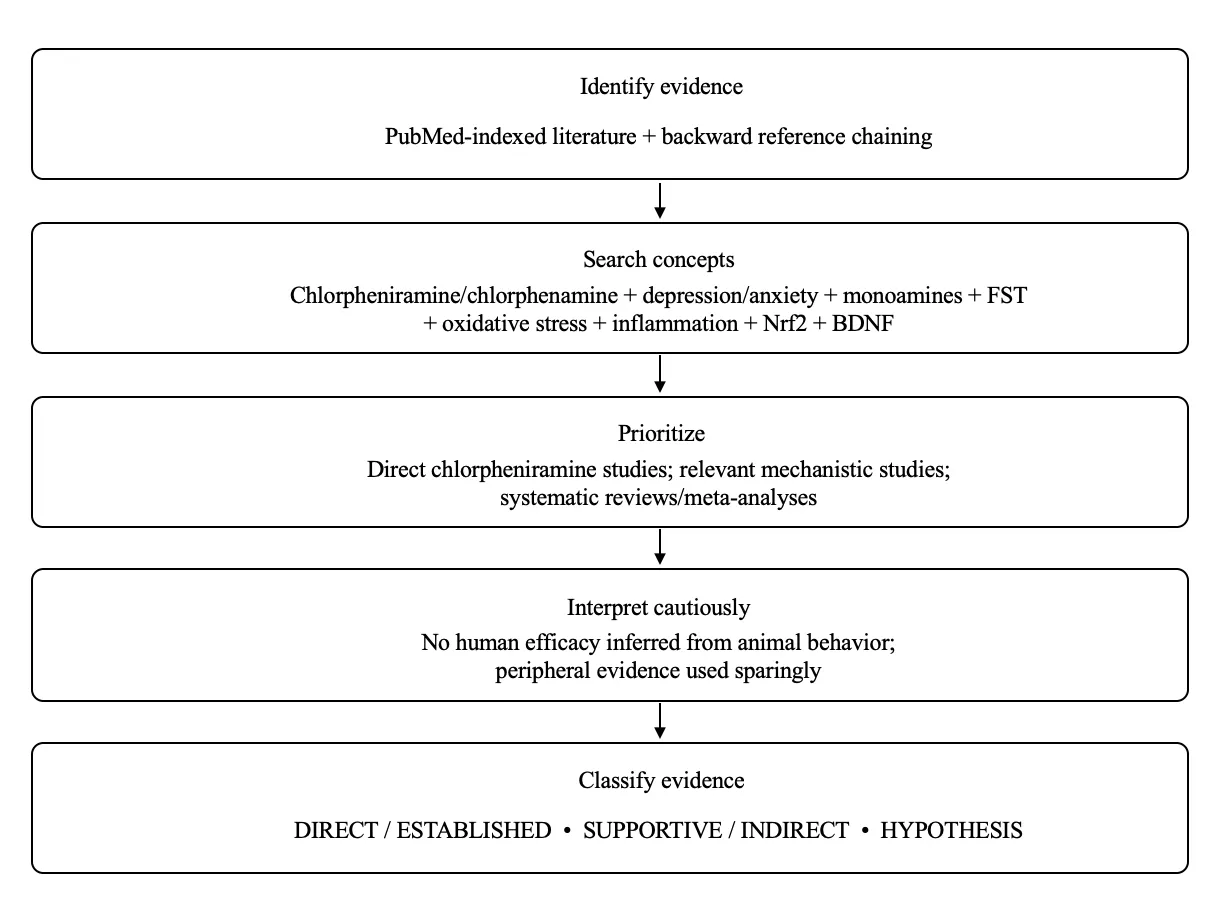
Figure 1. Literature-search and evidence-classification workflow used in this structured narrative review.
Neurobiological Rationale: Why a Multi-Pathway Model Is Needed
Monoaminergic drugs remain central to antidepressant pharmacotherapy, yet the delay between transporter blockade and full clinical response, incomplete remission, and treatment resistance indicate that downstream adaptive mechanisms are important [2,3]. Stress can alter serotonin, norepinephrine and dopamine transmission while also activating the HPA axis, reactive oxygen species production and inflammatory cascades [4-7]. These pathways converge on synaptic plasticity and neurotrophin systems, including BDNF-TrkB.
Meta-analytic human evidence supports higher oxidative-stress markers in depression and elevations of several inflammatory mediators, particularly CRP, IL-6 and TNF-alpha [5,6,17,18]. Likewise, reduced peripheral and central BDNF concentrations have been repeatedly associated with MDD, while successful pharmacological treatment is often accompanied by rising BDNF levels [19-22]. Such observations do not establish a single causal chain, but they justify evaluating compounds with simultaneous monoaminergic, antioxidant, anti-inflammatory and neuroplastic effects.
Histaminergic Signaling and the CNS Pharmacology of Chlorpheniramine
Histaminergic neurons of the tuberomammillary nucleus project widely throughout the brain and participate in arousal, cognition, appetite and emotional regulation. Chlorpheniramine is a lipophilic first-generation H1-receptor antagonist/inverse agonist with clinically meaningful CNS penetration [10,11]. Central H1 blockade explains much of its sedative burden, but several experimental findings cannot be reduced to H1 antagonism alone.
This distinction is important for repurposing. A CNS-active compound may produce both useful and undesirable effects through different targets. Thus, the relevant translational question is whether chlorpheniramine's non-H1 actions can be pharmacologically separated from sedation and anticholinergic liability, either through dosing, stereochemistry or medicinal-chemistry optimization.
Direct Evidence for Serotonergic and Monoaminergic Actions
Older neurochemical work showed that d- and dl-chlorpheniramine altered serotonin turnover, including reductions in 5-HIAA in several rat brain regions [12]. In Wistar rats, higher-dose chlorpheniramine increased locomotor activity and regional 5-HT while reducing 5-HIAA; pharmacological manipulation with 5-HT1A-related agents supported involvement of postsynaptic 5-HT1A signaling [13]. These experiments establish that chlorpheniramine can meaningfully perturb central serotonergic biology.
Miyata and colleagues subsequently showed dose-dependent anxiolytic-like effects in mice together with activation of prefrontal serotonergic systems [14]. This study is particularly important because it tied a behavioral phenotype to a regional neurotransmitter mechanism and argued that the effect was not explained solely by H1-receptor antagonism.
The 2023 rat study found that acute forced-swim-associated stress reduced cortical serotonin and noradrenaline, whereas chlorpheniramine treatment restored both toward control values [16]. These findings support a monoaminergic component but do not establish that monoamine restoration is necessary or sufficient for the behavioral effect.
Antidepressant-Like and Anxiolytic-Like Behavioral Evidence
Gammoh et al. evaluated chlorpheniramine in stressed BALB/c mice and reported an antidepressant-like effect in the forced swim test, broadly similar in direction to escitalopram. Chlorpheniramine also prevented stress-related nitric oxide elevation but did not consistently produce anxiolytic improvement in the elevated plus maze [15]. This mixed pattern is scientifically useful because it argues against a simplistic claim of universal anxiolytic activity.
Alamri et al. extended the evidence base using male Wistar rats. Chlorpheniramine reduced immobility and improved several open-field and elevated-plus-maze outcomes while concurrently modifying cortisol, monoamines, redox markers, cytokines and Nrf2-BDNF expression [16]. The mechanistic breadth is notable, but the study was small (n=6/group), used a single chlorpheniramine dose, and relied on an acute-stress/FST-centered design.
A key interpretive issue is the forced swim test. The FST can detect many compounds with antidepressant-like pharmacological activity but is increasingly viewed as a test of stress-coping strategy rather than a model of human depression [23-27]. Its output is also sensitive to strain, sex, laboratory conditions, drug-induced locomotor changes and protocol variation [24,26]. Therefore, reduced immobility should be described as an antidepressant-like or active-coping effect, not proof of antidepressant efficacy.
Oxidative and Nitrosative Stress
Oxidative stress is relevant to depression because the brain has high metabolic demand, abundant oxidizable lipids and complex redox-sensitive signaling. Meta-analyses have reported higher markers of oxidative damage and lower antioxidant status in depressed populations, although substantial heterogeneity exists [5,17].
The chlorpheniramine evidence is suggestive rather than definitive. Gammoh et al. observed prevention of stress-associated nitric oxide elevation without a significant SOD effect [15]. Alamri et al. reported decreased hippocampal MDA and increased SOD after chlorpheniramine treatment [16]. The divergence in SOD findings may reflect species, model, tissue and dose differences, and it argues for replication using standardized panels of oxidative and nitrosative biomarkers.
An antioxidant contribution is therefore directly supported at the biomarker-association level, but the molecular target responsible for the redox effect remains uncertain.
Neuroinflammation
Inflammatory signaling can influence neurotransmission, glutamate homeostasis, HPA-axis feedback and neuronal plasticity. Meta-analytic and review evidence supports a pro-inflammatory phenotype in at least a subgroup of patients with depression, including elevations in CRP, IL-6 and TNF-alpha [6,7,18,28].
In the 2023 chlorpheniramine study, acute stress increased hippocampal IL-6 and IL-1 beta, whereas chlorpheniramine lowered both markers [16]. This is a direct preclinical observation. However, whether chlorpheniramine acts on immune signaling directly, indirectly via redox changes, through histamine-dependent immunomodulation, or as a consequence of reduced stress activation remains unknown.
A rigorous causal program would require measurement of microglial activation, NF-kappaB-related signaling, cytokine transcription, and ideally pharmacological or genetic interruption of candidate inflammatory pathways.
Nrf2 as a Redox-Inflammation Interface
Nrf2 is a central regulator of cellular antioxidant and cytoprotective responses. Under oxidative stress, liberation of Nrf2 from Keap1 permits nuclear translocation and transcription of antioxidant-response-element-dependent genes. Nrf2 also intersects with inflammatory pathways, including NF-kappaB signaling [29-32].
A systematic review of animal and human depression studies found that lower Nrf2 activity is commonly associated with depressive phenotypes, whereas diverse antidepressant interventions tend to increase Nrf2-related signaling [30]. This makes Nrf2 an attractive mechanistic bridge between oxidative stress, inflammation and neuroplasticity, although it is not specific to depression.
Alamri et al. reported that chlorpheniramine increased cortical Nrf2 expression in stressed rats [16]. This is direct evidence of association, but causal necessity has not been shown. Studies using Nrf2 knockdown, knockout animals or pathway-specific inhibitors are required before Nrf2 can be described as a demonstrated mediator of chlorpheniramine's behavioral effects.
BDNF, TrkB and Neuroplasticity
BDNF-TrkB signaling has long been implicated in stress adaptation, synaptic plasticity and antidepressant response [19-22,33,34]. Meta-analytic evidence indicates lower BDNF concentrations in MDD and increases after antidepressant treatment, although peripheral BDNF is an imperfect surrogate for brain signaling [19-22].
Experimental work has also linked Nrf2 activation to BDNF expression and antidepressant-like effects in rodents [35]. In the chlorpheniramine rat study, stress reduced cortical BDNF expression while chlorpheniramine restored it toward control values [16].
The most defensible mechanistic formulation is therefore that chlorpheniramine treatment is associated with coordinated increases in Nrf2 and BDNF signaling under the tested conditions. Direct demonstration that Nrf2 drives BDNF changes, or that BDNF-TrkB signaling is required for behavioral improvement, remains a hypothesis.
Proposed Integrated Mechanism
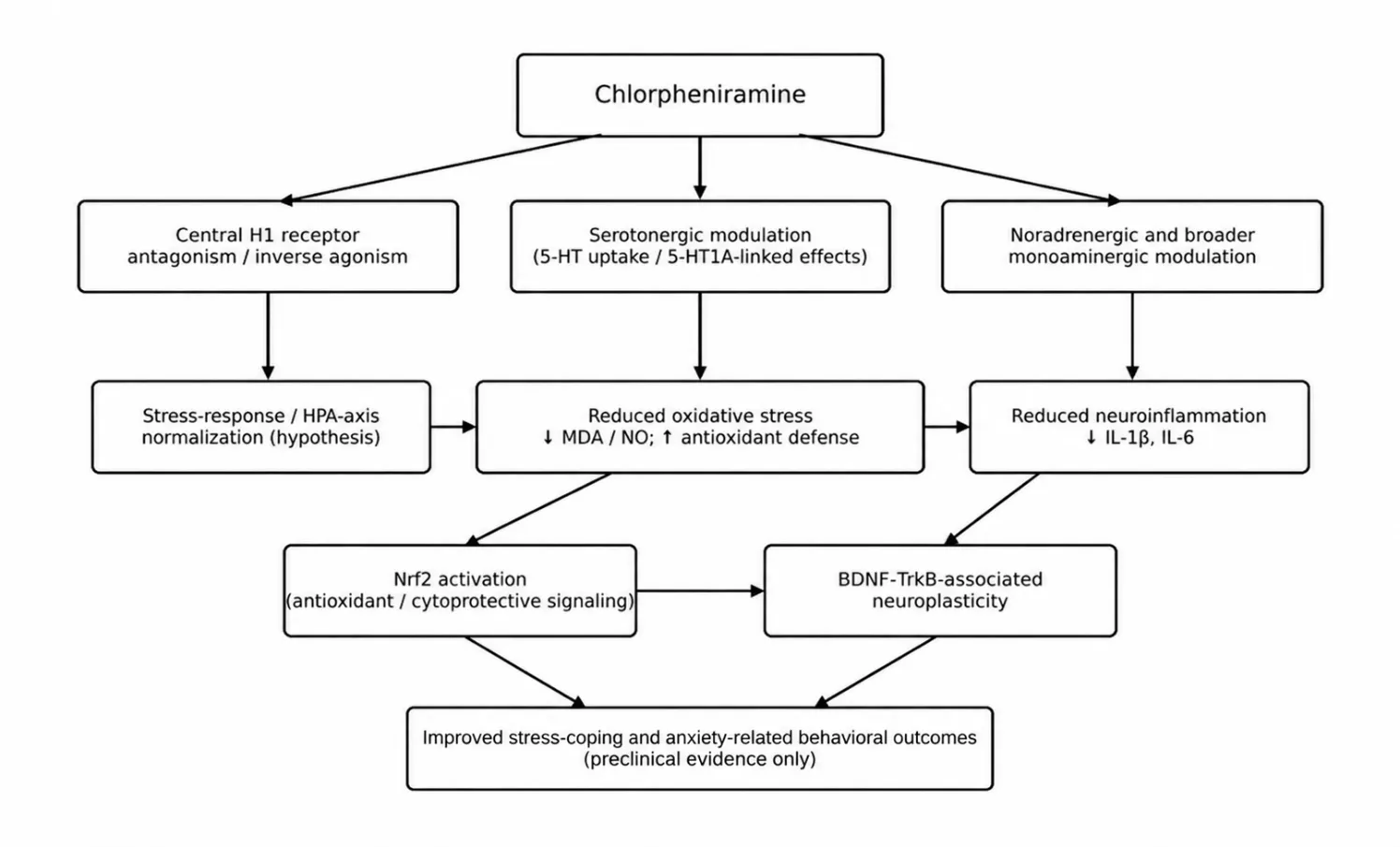
The available data support a network model rather than a single-target model. Chlorpheniramine may simultaneously alter central H1 signaling and serotonergic function; altered monoaminergic and stress signaling may influence redox balance; improved redox homeostasis may reduce inflammatory amplification; and Nrf2-BDNF-associated signaling may support adaptive neuroplasticity. Because each step has different levels of evidentiary support, the pathway should be viewed as a testable framework rather than an established sequence.
Preclinical Studies Directly Relevant to Chlorpheniramine CNS/Mood Actions
|
Study |
Species / model |
Dose / route |
Key CNS/behavioral findings |
Mechanistic findings |
Overall interpretation |
|
Sakurai et al., 1991 [12] |
Rats; regional neurochemistry |
d-/dl-CPA, IV |
No behavioral assessment |
↓ 5-HIAA across multiple brain regions |
Demonstrates central serotonergic modulation by CPA |
|
Karamanakos et al., 2004 [13] |
Wistar rats; locomotor/neurochemical model |
40 mg/kg, i.p. |
Marked hyperlocomotion |
↑ 5-HT, ↓ 5-HIAA; 5-HT₁A-linked effects |
Supports serotonergic activity, although behavioral interpretation is confounded by hyperlocomotion |
|
Miyata et al., 2011 [14] |
Mice; anxiety/fear paradigms |
0.05–5 mg/kg, i.p. |
Dose-dependent ↓ freezing |
Activation of prefrontal serotonergic pathways |
Provides direct evidence of serotonergic anxiolytic-like activity |
|
Gammoh et al., 2017 [15] |
BALB/c mice; immobilization stress, OFT/EPM/FST |
0.5 mg/kg; 3 weeks |
↓ FST immobility; variable anxiolytic effect |
Prevented stress-induced ↑ NO; SOD unchanged |
Supports antidepressant-like and redox-modulating effects |
|
Alamri et al., 2023 [16] |
Male Wistar rats; stress/FST, OFT/EPM |
10 mg/kg, i.p.; ~2–3 weeks |
↓ immobility; improved anxiety-like measures |
↑ 5-HT/NA, ↑ SOD, ↓ MDA, ↓ IL-1β/IL-6, ↑ Nrf2/BDNF |
Provides integrated evidence for serotonergic, antioxidant, anti-inflammatory and neuroplastic mechanisms |
Translational Limitations
The FST is useful as a pharmacological screen but has conceptual, welfare and predictive-validity limitations [23-27]. Immobility is better interpreted as a stress-coping phenotype than as depression itself. This distinction is especially important when studying chlorpheniramine because the drug can alter locomotor activity at some doses [13].
The direct literature uses different species, routes and doses, from sub-milligram anxiolytic experiments to much higher doses in locomotor studies [13-16]. Without brain exposure data, receptor/transporter occupancy and dose-response curves, mechanistic comparisons across studies remain uncertain.
The principal 2023 study used male rats, and the broader literature remains biased toward male animals. Chronic depression and anxiety cannot be adequately modeled by a single acute stressor. Future work should use both sexes and chronic stress paradigms, with attention to estrous status where relevant.
First-generation H1 antihistamines cross the blood-brain barrier and can impair alertness, cognition and psychomotor performance [10,11]. These liabilities may overlap with symptoms that matter in depression, making benefit-risk evaluation essential. The most plausible translational value may lie in identifying a derivative or stereochemical strategy that preserves desirable serotonergic/redox actions while reducing sedation and anticholinergic burden.
Future Directions
Future studies should focus on confirming the antidepressant- and anxiolytic-like effects of chlorpheniramine in larger and more diverse animal models, including both sexes and chronic stress paradigms. Its exact mechanism should be clarified using pathway-specific experiments, along with dose–response, brain-exposure and safety studies. Further work should also explore whether the beneficial serotonergic, anti-inflammatory, antioxidant and Nrf2–BDNF-related effects can be retained while reducing sedation and anticholinergic adverse effects, which will be essential before considering clinical translation.
CONCLUSION
Chlorpheniramine is an instructive drug-repurposing candidate because its CNS pharmacology extends beyond histamine H1 antagonism. Direct preclinical studies support meaningful serotonergic effects and show antidepressant-like and, in some paradigms, anxiolytic-like behavioral activity. More recent data connect these effects with oxidative stress, inflammatory cytokines and Nrf2-BDNF-associated signaling.
The evidence is nevertheless preliminary. The strongest current conclusion is not that chlorpheniramine should be used clinically for depression or anxiety, but that it provides a useful mechanistic probe for the convergence of histaminergic, monoaminergic, redox, immune and neurotrophic pathways. The field now requires replication, causal pathway experiments, exposure-response characterization and safety-focused medicinal pharmacology. If these steps are successful, chlorpheniramine may prove more valuable as a lead scaffold or mechanistic template than as a directly repurposed psychiatric drug.
REFERENCES




Ravikant Mayank, Pratibha Singh*, Tripthy Shetty, Vijay R., Chlorpheniramine for Depression and Anxiety: From Monoaminergic Modulation to Nrf2-BDNF Signaling, Oxidative Stress, and Neuroinflammation , Int. J. of Pharm. Sci., 2026, Vol 4, Issue 9, 3557-3568. https://doi.org/10.5281/zenodo.23013253
 10.5281/zenodo.23013253