

We use cookies to ensure our website works properly and to personalise your experience. Cookies policy
Department of Pharmaceutical Chemistry, Tagore College of Pharmacy, Rathinamangalam, Chennai, Tamil Nadu, India.
Scientific interest in plant-derived medicinal compounds has increased due to the rising prevalence of antibiotic resistance and the negative side effects of long-term usage of synthetic anti-inflammatory medications. Traditionally used to heal wounds, infections, and inflammatory conditions, Jatropha gossypifolia L. (Euphorbiaceae) has become a promising but little-studied medicinal resource. The available experimental data on the antibacterial and anti-inflammatory qualities of J. gossypifolia are carefully assessed and compared in this study, with a focus on methodological techniques, repeatability, and the degree of pharmacological support. Standardized in-vitro assays, such as agar well diffusion, disc diffusion, and minimum inhibitory concentration (MIC) determination against clinically relevant Gram-positive and Gram-negative bacterial strains, have been used primarily to study antibacterial activity. Numerous investigations document measurable inhibitory effects, especially from extracts of leaves, latex, and stem bark made with polar and semi-polar solvents. These results show moderate repeatability among experimental models and are typically measurable. The anti-inflammatory action, on the other hand, has mostly been evaluated in vitro using techniques like membrane stabilization assays and protein denaturation inhibition, with little in vivo validation using carrageenan-induced paw edema models. The assay type, extract preparation, and experimental design all seem to have a significant impact on the observed anti-inflammatory benefits. Flavonoids, phenolic compounds, diterpenoids, and other secondary metabolites frequently linked to antibacterial and anti-inflammatory properties are found, according to phytochemical analyses. Nevertheless, molecular pathways and direct compound–activity relationships are still not well understood. Comparative analysis indicates that whereas anti-inflammatory results are still preliminary and less reliable, antibacterial data is comparatively more consistent and methodologically standardized.
Medicinal plants have been central to traditional Indian systems like Ayurveda and Siddha for centuries. One such plant, Jatropha gossypifolia — called "Kattamanakku" in Tamil — is a shrub widely used across Africa, the Americas, and India for its healing properties. Different parts of the plant serve different purposes. Leaf decoctions clean wounds, stem juice stops bleeding, and young stems treat fungal infections. The name "Jatropha" itself comes from Greek, meaning "doctor food," reflecting its medicinal roots. The plant contains alkaloids, flavonoids, tannins, steroids, and terpenoids, giving it antibacterial, anti-inflammatory, antioxidant, and anticancer properties. Studies show it may inhibit prostaglandin synthesis, making it relevant for conditions like rheumatoid arthritis. However, long-term use carries risks — particularly ethanolic leaf extracts, which may be toxic over time. Further research is needed to develop safer, standardized treatments from this plant.
1.1 Biological Source
It is found in tropical semi-arid parts of Africa and the Americas as well as nations with tropical, subtropical, and dry tropical weather (1). The plant is reported to have a number of therapeutic and insecticidal qualities. It is a bushy, social plant that grows up to 1.8 meters tall, has three to five lobes, and is about 20 centimeters long and wide. The leaves have long leaf tips that are covered with glandular hairs.(2)The seeds resemble greenish capsules. The new leaves are sticky, and the leaf tips are covered with thick, dark brown hairs. When its thin, frequently greenish bark is cut, a large amount of liquid sap is released. Each of the three-celled fruits has a single seed (3)
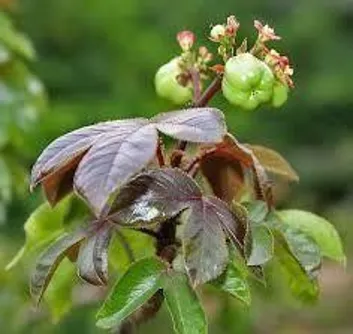
FIGURE: 1 fruit of J. Gossipiifolia
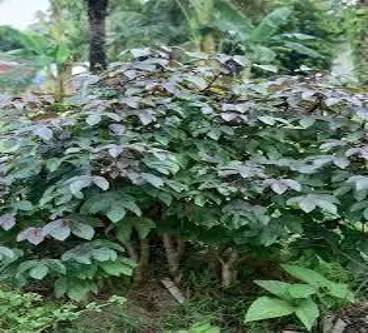
FIGURE: 2 J.Gossipifolia
1.2 Habitat
1.3 Leaves
1.4 Flowers
1.5 Fruits
2. COLLECTION AND PREPARATION OF PLANT MATERIAL
A botanist gathers and authenticates fresh Jatropha Gossypifolia leaves (or other elements like stem bark/roots). After giving the plant material a thorough water wash to get rid of any dirt, it is shade-dried at room temperature. A mechanical grinder is then used to ground the dried material into a powder, which is subsequently kept in an air-tight jar for extraction.(5)
2.1 Solvent Extraction Methods
2.1.1 Maceration Method
This process involves soaking the powdered plant material in a closed container with an appropriate solvent, such as water, methanol, or ethanol 90% or 80%. For 48 to 72 hours, the mixture is left at room temperature with occasional stirring. Following extraction, the mixture is filtered via Whatman filter paper or muslin cloth. Evaporation concentrates the filtrate, which is then saved for additional research.(5)
2.1.2 Soxhlet Extraction Method
One method of continuous heat extraction is Soxhlet extraction. In Soxhlet extractor, take 10g of powdered Jatropha Gossypifolia is extracted using solvents such as petroleum ether, methanol (80%), ethanol (90%) or chloroform. The extraction process lasts for six to eight hours, or until the solvent turns colorless. A rotary evaporator is used to concentrate the resulting extract, which is then stored for examination.(5)
2.1.3 Alcoholic Extraction Method
Alcoholic extraction is widely used due to the ability of alcohol to extract both polar and moderately non-polar compounds. The powdered plant material is subjected to maceration or Soxhlet extraction using ethanol (95%) or methanol (80%) . The alcoholic extract is filtered and concentrated under reduced pressure. The dried extract is stored in a desiccator until use.(6)
2.1.4 Aqueous Extraction Method
In aqueous extraction, the powdered plant material is boiled with distilled water for a specific time or soaked overnight. The extract is filtered and concentrated by evaporation. (6)
2.2 Storage of Extract
Stored in airtight containers at 4 °C for further phytochemical and antibacterial studies.(7)
3. ANTI BACTERIAL ACTIVITY OF JATROPHA GOSSYPIFOLA
Table :1 Phytochemicals responsible for anti-bacterial (7)
|
Phytochemical |
Plant Part Reported |
Antimicrobial Role/ Mechanism |
Microorganisms Affected |
|
Flavonoids |
Leaves, stems |
Disrupt microbial cell membranes; inhibit nucleic acid synthesis |
Staphylococcus aureus, E. coli, Pseudomonas aeruginosa |
|
Tannins |
Leaves, bark |
Precipitate microbial proteins; inhibit enzymes |
Gram-positive & Gram-negative bacteria |
|
Alkaloids |
Leaves, latex |
Interfere with DNA replication and cell metabolism |
Bacteria and fungi |
|
Saponins |
Leaves, roots |
Increase cell membrane permeability causing leakage |
Candida albicans, E. coli |
|
Phenolic compounds |
Leaves, bark |
Oxidative damage to microbial cells |
Broad-spectrum antibacterial activity |
|
Terpenoids (Diterpenes e.g., Jatrophone) |
Roots, latex |
Disrupt membrane integrity; inhibit respiration |
Bacillus subtilis, Staphylococcus aureus |
|
Glycosides |
Leaves |
Inhibit microbial enzyme systems |
Bacterial strains |
|
Steroids |
Leaves |
Alter membrane fluidity and permeability |
Gram-positive bacteria |
3.1 Experimental Models Used
3.1.1Agar Well Diffusion Assay
This method was a initial technique for assessing the antibacterial activity of plant extracts is the agar well diffusion experiment. The chosen bacterial strains are uniformly injected into sterile nutrient agar or Mueller-Hinton agar plates. A sterile cork borer is used to punch wells into the agar that are all the same diameter.
The wells are filled with extract from Jatropha Gossypifolia in varying quantities. After that, the plates are incubated for 18 to 24 hours at 37°C. The diameter of the zone of inhibition surrounding each well, which represents the microorganism's susceptibility to the extract, is used to measure the antibacterial activity.(8)
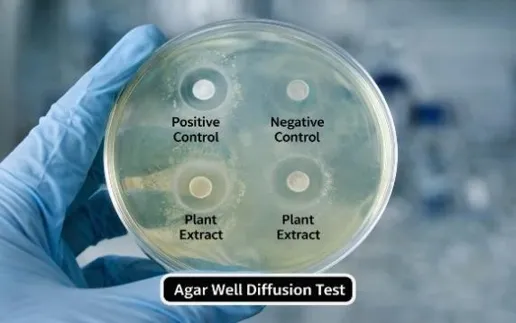
FIGURE 3: Agar Well Diffusion
3.1.2 Disc Diffusion Method
The disc diffusion method is another widely used technique to assess antibacterial efficacy. Sterile filter paper discs are filled with known concentrations of Jatropha Gossypifolia extract and placed on agar plates previously inoculated with test microorganisms. Standard antibiotic discs may be used as positive controls, while solvent-loaded discs serve as negative controls. After incubation at 37 °C for 18–24 hours, the zones of inhibition around the discs are measured in millimeters. Larger inhibition zones indicate stronger antibacterial activity.(9
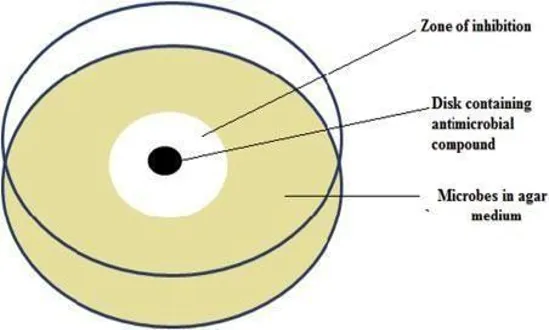
FIGURE 4: Disc Diffusion
3.1.3 Minimum Inhibitory Concentration (MIC) Determination
Minimum Inhibitory Concentration (MIC) determination provides quantitative information about the lowest concentration of the plant extract required to inhibit visible microbial growth. MIC is commonly determined using broth dilution methods. Serial dilutions of Jatropha Gossypifolia extract are prepared in nutrient broth and inoculated with standardized bacterial suspensions. After incubation at 37 °C for 24 hours, the tubes are examined for turbidity. The lowest concentration showing no visible growth is recorded as the MIC value, indicating the potency of the extract .(10) figure5
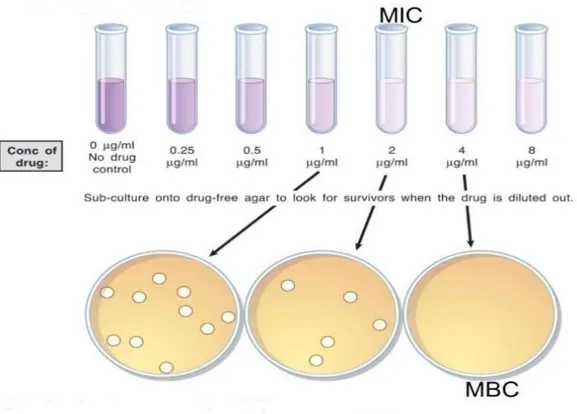
FIGURE 5: Minimum Inhibitory Concentration
3.2 Target Microorganisms
3.2.1 Gram-Positive Bacteria
Staphylococcus aureus is a Gram-positive bacterium frequently used in antibacterial studies due to its clinical significance. It is responsible for a wide range of infections, including skin, wound, and systemic infections. Gram-positive bacteria possess a thick peptidoglycan cell wall, which makes them suitable models for evaluating the antibacterial potential of herbal extracts such as Jatropha Gossypifolia.(11)
3.2.2 Gram-Negative Bacteria
Escherichia coli is a representative Gram-negative bacterium commonly employed in antimicrobial screening. It is associated with gastrointestinal and urinary tract infections.
Gram-negative bacteria have an outer membrane that often confers resistance to many antimicrobial agents. Therefore, evaluating the activity of Jatropha Gossypifolia against E. coli helps in understanding its broad-spectrum antibacterial potential.(12) figure 6
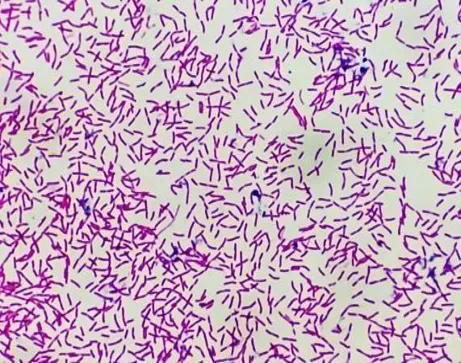
FIGURE 6: Escherichia coli
4. ANTI-INFLAMMATORYACTIVITY OF JATROPHA GOSSYPIFOLA
Table : 2 Phytochemicals responsible for anti-inflammatory(13)
|
Phytochemical group |
Specific compounds reported |
Part of plant |
Role in anti-inflammatory activity |
|
Flavonoids |
Quercetin, Kaempferol, Luteolin |
Leaves, stems |
Inhibit prostaglandin synthesis, suppress inflammatory mediators (COX, LOX pathways) |
|
Phenolic compounds |
Gallic acid, Ferulic acid |
Leaves |
Antioxidant action reduces oxidative stress–induced inflammation |
|
Diterpenoids |
Jatrophone, Jatropholones |
Roots, stems |
Strong inhibition of nitric oxide (NO) and cytokine production |
|
Triterpenoids |
β-amyrin, Lupeol |
Leaves, bark |
Stabilize lysosomal membranes and reduce edema |
|
Saponins |
Steroidal and triterpenoid saponins |
Leaves, roots |
Suppress inflammatory cell infiltration and mediator release |
|
Tannins |
Condensed tannins |
Leaves, bark |
Astringent effect; reduce capillary permeability and swelling |
|
Alkaloids |
Jatrophine-type alkaloids |
Roots, stems |
Modulate inflammatory signaling pathways |
|
Glycosides |
Flavonoid glycosides |
Leaves |
Enhance anti-inflammatory and antioxidant synergy |
4.1 In-vitro Models Reported
The anti-inflammatory potential of Jatropha Gossypifolia has mainly been evaluated using laboratory-based (in-vitro) experimental models. These models help to understand how plant extracts may reduce inflammation at the cellular or protein level before moving to animal or clinical studies. Two commonly reported methods are the protein denaturation assay and the membrane stabilization assay.(13)
4.1.1 Protein Denaturation Assay
Inflammation in the body is often associated with the denaturation (structural damage) of proteins. When proteins lose their natural structure due to stress, heat, or chemicals, they can trigger inflammatory responses.
In the protein denaturation assay, the extract of Jatropha Gossypifolia is tested for its ability to prevent or reduce protein denaturation under controlled laboratory conditions. If the plant extract inhibits protein denaturation, it suggests that it may possess anti-inflammatory properties.
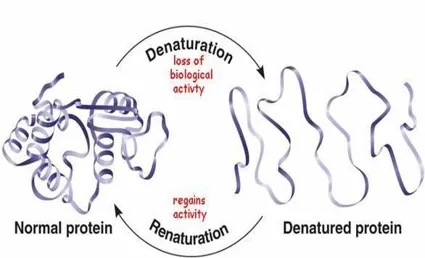
FIGURE 7: Schematic representation of potein denaturation assay using BSA and plant extract
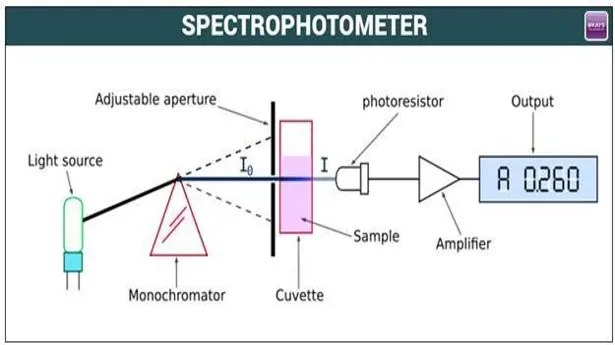
Figure 8: Measurement of absorbance using spectrophotometer at 660nm
4.1.2 Membrane Stabilization Assay
The membrane stabilization assay is based on the principle that inflammation involves the release of lysosomal enzymes from damaged cells. Stabilizing the cell membrane helps prevent the release of these inflammatory mediators.
In this method, human or animal red blood cells (RBCs) are exposed to stress conditions such as heat or hypotonic solution. The ability of Jatropha Gossypifolia extract to protect the RBC membrane from rupture (hemolysis) is measured. If the extract prevents hemolysis, it indicates membrane stabilization activity, which is comparable to the action of standard anti-inflammatory drugs.
Jatropha Gossypifolia extracts can significantly protect red blood cells from damage, indicating potential anti-inflammatory activity. This protective effect may be due to bioactive constituents that help strengthen cellular membranes and reduce inflammatory responses.(14)
4.2 In-Vivo Models Reported
4.2.1 Carrageenan-Induced Paw Edema Model
Experimental Animals
Healthy adult albino rats (150-200g) were used for the study. The animals were kept under standard laboratory conditions. All experimental procedures were carried out following ethical guideline.
Grouping of Animals
The animals were divided into the following groups, with each group containing six animals:
Preparation of Test Extract
The plant extract of Jatropha Gossypifolia was prepared using a suitable solvent and administered at a selected dose based on previous studies.
Induction of Inflammation
Acute inflammation was induced by injecting 0.1 mL of 1% carrageenan solution into the sub-plantar region of the left hind paw of each rat.
Drug Administration
The standard drug and plant extract were administered orally one hour before carrageenan injection. The control group received normal saline.
Measurement of Paw Edema
The paw volume was measured using a plethysmometer before carrageenan injection and at regular intervals (1, 2, 3, and 4 hours) after injection.
Percentage inhibition = (Vc −Vt)/Vc ×100
Vc = Mean paw volume of control group
Vt = Mean paw volume of treated group (15)
5.1 Methodological Comparison:
There are noticeable variations in the standardization, output parameters, and reproducibility of the methodological approaches used to assess Jatropha Gossypifolia's antibacterial and anti-inflammatory properties. Studies on Jatropha Gossypifolia's antibacterial efficacy frequently use comparatively standardized experimental models, such as disc diffusion, agar well diffusion, and minimum inhibitory concentration (MIC) experiments. These techniques are commonly used and correspond to standard procedures, which facilitates the comparison of findings from various investigations. The results, which offer precise and quantifiable proof of antibacterial efficacy, are presented as quantifiable characteristics like zone of inhibition and MIC values. (16)
In contrast, a range of experimental models, such as protein denaturation and membrane stabilization assays, are used to evaluate the anti-inflammatory properties of Jatropha Gossypifolia. These models lack uniform methodologies and vary significantly between investigations. Assay type, extract concentration, and experimental circumstances can all affect the results, which are often reported as % inhibition. The reproducibility of anti-inflammatory results is typically worse than that of antibacterial research because of this heterogeneity. While anti-inflammatory research is still very inconsistent and method-dependent, assessments of Jatropha Gossypifolia's antibacterial effectiveness generally show greater reproducibility and methodological consistency. (17)
5.2 Relative Strength of Evidence
Compared to its anti-inflammatory activity, Jatropha Gossypifolia's antibacterial activity has more preliminary evidence. Research has consistently shown that both Gram-positive and Gram-negative bacteria are susceptible to antibiotic actions. Standardized and generally recognized techniques such disc diffusion, agar well diffusion, and minimum inhibitory concentration (MIC) assays are frequently used in these studies.
The antibacterial outcomes are typically more consistent throughout several research since these techniques yield quantifiable and repeatable results.On the other hand, there is little and data fluctuations to support Jatropha Gossypifolia's anti-inflammatory properties.
Few in-vivo studies are available, and the majority of research relies on in-vitro testing such membrane stability and protein denaturation.The kind of extract, concentration, and experimental model utilized frequently affect the outcomes.(18)
The data for anti-inflammatory efficacy is still suggestive rather than definitive because of these variances and the lack of thorough in-vivo confirmation. Overall, Jatropha Gossypifolia's antibacterial actions are backed by more consistent and measurable evidence under present experimental circumstances, even though both activities show promise.(19)
5.3 Phytochemical Overlap and Comparative Evaluation
In traditional medicine, Jatropha Gossypifolia is a common medicinal herb used to cure wounds, inflammation, and infections. According to phytochemical analyses, this plant contains a number of bioactive substances, most frequently flavonoids and phenolic compounds. Research on medicinal plants is well aware of these phytochemical groups' links to antibacterial and anti-inflammatory properties. Because of their capacity to impede microbial development and disrupt bacterial cell processes, flavonoids and phenolics are often proposed as contributing components in studies pertaining to Jatropha Gossypifolia's antibacterial action.(20)
These same families of chemicals are also utilized in anti-inflammatory studies to reduce inflammatory responses, perhaps through membrane stability and antioxidant propertiesCommon chemical ingredients may have numerous biological actions, as suggested by the occurrence of overlapping phytochemicals in both types of investigations.
Comparatively speaking, Jatropha Gossypifolia's antibacterial activity seems to be supported by more reliable experimental data, primarily from standardized in-vitro tests. On the other hand, there is comparatively little evidence of anti-inflammatory activity, and it varies according to the assay.(21)
6.1 Predominance of in-vitro experiments
In-vitro experimental models including agar diffusion, protein denaturation, or membrane stabilization assays have been used in studies on Jatropha Gossypifolia. Although these techniques are helpful for preliminary screening, they are not a faithful representation of the intricate biological processes that take place in living things. Results obtained in vitro are unable to predict how plant components will be absorbed, metabolized, or eliminated by the body. Because of this, the plant's true medicinal potential may vary in in vivo settings. This restricts many reported findings' therapeutic applicability.(22)
6.2 Absence of mechanism-based investigations
However, Jatropha Gossypifolia's antibacterial and anti-inflammatory properties do not account for the extract's interactions with inflammatory pathways or microbial cells. To determine the molecular targets and biological pathways involved, mechanism-based research is crucial. The prospects for medication development and scientific understanding are limited in the absence of such studies. There is still a significant research void in this area.(23)
6.3 No standardized extract preparation protocols
The techniques used to make extracts of Jatropha Gossypifolia vary widely. Different plant components, solvents, extraction durations, and concentrations are used in different investigations. Biological activity and phytochemical composition vary as a result of this lack of uniformity. As a result, it becomes challenging to compare study results. Reproducibility and result validation depend on standardized extraction procedures.(23)
6.4 Safety and toxicity data
Safety evaluation is a critical aspect of medicinal plant research, yet toxicity studies on Jatropha Gossypifolia are limited. Many studies focus only on biological activity without assessing potential adverse effects. Since some species of Jatropha are known to contain toxic compounds, the lack of toxicity data raises concerns regarding safe usage. Comprehensive acute and chronic toxicity studies are required before considering therapeutic applications. (24)
7.1 Integrated Evaluation Of Antibacterial And Anti-Inflammatory Effects
Antibacterial and anti-inflammatory qualities have been independently established by Jatropha Gossypifolia. However, inflammation and microbial infection happen continuously and are chemically linked in many infectious disorders. Thus, integrated experimental methods that assess both antibacterial and anti-inflammatory effects within the same study model should be the main focus of future research.(24)
7.2 Isolation and Characterization of Active Constituents
Preliminary phytochemical screenings have identified flavonoids, terpenoids, alkaloids, phenolics, and other secondary metabolites in J. Gossypiifolia,. Future investigations should prioritize bioassay-guided fractionation to isolate specific active molecules responsible for antibacterial and anti-inflammatory effects. Advanced analytical techniques such as HPLC, LC-MS, GC-MS, and NMR spectroscopy can aid in structural characterization. Identifying and characterizing these bioactive constituents would increase the possibilities for developing standardized herbal formulations or even noveldrug leads. (24)
7.3 Toxicity and Pharmacokinetic Profiling
According to systematic toxicological evaluations, J. gossypifolia may show dose-dependent toxicity. Determining safe treatment windows requires acute, subacute, and chronic toxicity investigations. Furthermore, less is known about pharmacokinetic profiling, which includes absorption, distribution, metabolism, and excretion (ADME) research. Dosage optimization, formulation development, and reducing potential side effects will all depend on an understanding of how the active chemicals function within the body. Clinical translation is still in its early stages without comprehensive safety and pharmacokinetic data.(25)
7.4 Utilization of Jatropha Gossypifolia as a Value-Added Product from an Invasive Species
J. Gossypiifolia is regarded as an invasive plant in a number of areas, frequently creating environmental issues. Its proven bioactive potential, however, presents a chance to turn an environmental issue into a useful biological resource. In order to produce value-added goods like herbal extracts, phytopharmaceutical compounds, natural antibacterial agents, or anti-inflammatory topical formulations, future study could examine sustainable harvesting, plant management, and biotechnological applications. This strategy, which repurposes invasive plant species into profitable goods while also supporting in ecosystem management, is consistent with the concepts of sustainable development and the circular bioeconomy.(25)
Further studies are warranted to evaluate:
Jatropha Gossypiifolia shows promising antibacterial and anti-inflammatory activities. Among these, antibacterial activity has stronger and more consistent experimental support, as it is evaluated using standardized methods that provide measurable and reproducible results. In comparison, anti-inflammatory activity has been reported in several studies, but the findings are more variable and depend on the type of assay used.
However, most of the existing evidence is preliminary and limited to in-vitro studies using crude extracts. There is a lack of standardized research designs, detailed mechanism studies, and toxicity evaluations. Therefore, further systematic and well-controlled investigations are necessary to confirm the therapeutic potential of Jatropha gossypiifolia.
Future research should focus on systematic and standardized experimental designs, including compound isolation, mechanism-based studies, and well-controlled in-vivo evaluations. Such approaches will help establish clearer evidence regarding the therapeutic potential of Jatropha gossypiifolia and support its possible development as a value-added medicinal resources.
REFERENCES



Bhuvana Ezhil Rohini R, Sujatha M, Abinaya V, Janani R, Kishore Kumar R, Ragu Semaraj T, Vaishnavi B, Comparative Evaluation of Antimicrobial and Anti-inflammatory Activity of Jatropha gossipyfolia, Int. J. of Pharm. Sci., 2026, Vol 4, Issue 7, 5223-5235. https://doi.org/10.5281/zenodo.21627366
 10.5281/zenodo.21627366