

We use cookies to ensure our website works properly and to personalise your experience. Cookies policy
Department of Pharmaceutics, Srinivas college of pharmacy, Valachil, Mangalore-575143.
Cubosomes are advanced lipid-based nanocarriers composed of bicontinuous cubic liquid crystalline structures that have gained considerable attention as promising drug delivery systems because of their unique internal architecture, high drug-loading capacity, biocompatibility, biodegradability, and ability to encapsulate hydrophilic, hydrophobic, and amphiphilic therapeutic agents. Their three-dimensional honeycomb-like structure enables controlled and sustained drug release while enhancing drug stability and bioavailability. This review comprehensively discusses the structural characteristics, advantages, limitations, mechanism of drug release, formulation components, preparation techniques, characterization methods, and pharmaceutical applications of cubosomes. The role of key amphiphilic lipids such as glyceryl monooleate and phytantriol, together with stabilizers including Poloxamer 407 and alternative surfactants, is highlighted in relation to cubosome formation and stability. Different preparation approaches, including top-down, bottom-up, spray-drying, and heat-treatment methods, are critically described with their respective advantages and limitations. The review also summarizes important characterization techniques such as cryogenic transmission electron microscopy, small-angle X-ray scattering, differential scanning calorimetry, polarized light microscopy, particle size analysis, entrapment efficiency, in vitro drug release studies, and stability evaluation for assessing cubosome quality and performance. Furthermore, the diverse therapeutic applications of cubosomes in oral, topical, intravenous, ocular, anticancer, antifungal, and infectious disease treatment are discussed, emphasizing their ability to improve drug solubility, targeted delivery, and therapeutic efficacy. Although challenges such as high viscosity, formulation instability, and difficulties in large-scale manufacturing remain, continuous advancements in formulation strategies and production technologies are expected to overcome these limitations. Overall, cubosomes represent a versatile and highly promising nanocarrier platform with significant potential for the future development of safe, effective, and targeted pharmaceutical drug delivery systems
Drug delivery systems are designed to transport therapeutic agents to targeted sites within the body. Controlled drug release is strategically engineered to maintain an effective drug concentration at the site of action, thereby reducing toxic side effects while enhancing therapeutic efficacy. An advanced form of these systems, known as novel drug delivery systems (NDDS), has gained significant attention in recent years as they overcome the limitations of conventional approaches. Key advantages of NDDS include reduced dosing frequency, improved site-specific targeting, minimized adverse effects, enhanced protection against degradation particularly in the acidic gastric environment and increased bioavailability1.
Nanotechnology-based drug delivery systems have been widely explored over the past few decades because of their versatility and promising applications in the biomedical field. Various nanocarriers, derived from both natural and inorganic materials such as liposomes, polymeric micelles, solid lipid nanoparticles, dendrimers, carbon nanotubes, exosomes, mesoporous silica particles, cubosomes, and hexosomes have been developed for pharmaceutical purposes.2
Cubosomes are the nanostructured particles and these are the discrete and submicron size particles (10-500nm) of the bicontinuous cubic liquid crystalline phase3. The term “bicontinuous” refers to two distinct (continuous but non intersecting) hydrophilic regions separated by the bilayer. One of the key advantages of such systems is their ability to adjust membrane curvature. These structures are partly composed of liquid crystalline phases and are formed from amphiphilic components such as polymers, lipids, and surfactants that contain both polar and non-polar regions.They exhibit the symmetry of solid cubic crystals while retaining characteristics of liquid crystals, such as optical isotropy and structural flexibility. When the cubic phase is fragmented, it leads to the formation of colloidal dispersions that are thermodynamically stable.4
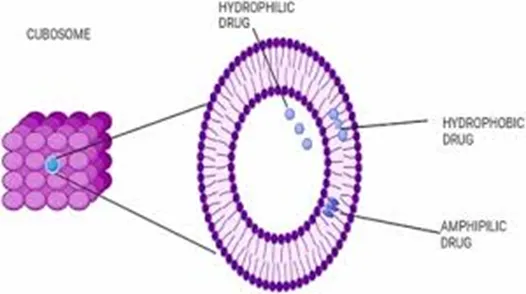
Figure 1. Structure of a Cubosome
2.ADVANTAGES 5,6
3.DISADVANTAGES7,8
4.MECHANISM OF DRUG RELEASE1,9
Drug release from cubosomes primarily occurs through diffusion, driven by the concentration gradient of the drug across the system. As a result, the release behavior often follows models such as the Higuchi and Fick’s diffusion equations. Several factors influence the release rate, including drug solubility, diffusion and partition coefficients, the geometry of the cubic liquid crystalline structure, pore size and distribution, interfacial curvature, as well as environmental conditions like temperature, pH, and ionic strength.Studies using hydrophilic model drugs have shown that diffusion is the dominant release mechanism, with cubic liquid crystals exhibiting faster drug release compared to hexagonal phases.The nanostructure of cubosomes and lipid composition can effectively control drug release.In contrast, hydrophobic drugs tend to remain within the hydrophobic regions of the cubic phase, making their release more challenging under standard conditions. However, studies have demonstrated that drug release significantly increases in acidic digestion media (0.1 M hydrochloric acid) compared to neutral conditions (pH 6.5).
5.COMPONENTS OF CUBOSOMES
Kare Larsson initially established the foundation of cubic phase research, he further demonstrated that cubosomes can be generated by dispersing bulk cubic phases into water, producing submicron particles that retain the same internal structure as the parent phase.Structurally, cubosomes exhibit a three-dimensional “honeycomb-like” organization and are primarily composed of amphiphilic lipids dispersed in an aqueous medium, typically stabilized by suitable surfactants or stabilizing agents.10
Glycerol monooleate (GMO), and commonly referred to as monoolein, along with phytantriol (PHYT), are currently the most widely used amphiphilic lipids in the preparation of Cubosomes.11
Monoolein (glyceryl monooleate, GMO) is the principal precursor in cubosome formation. It consists mainly of monoesters of oleic acid, where the acyl chain is esterified to a glycerol backbone. The remaining hydroxyl groups on glycerol impart polarity and enable hydrogen bonding with water, forming the hydrophilic “head,” while the hydrocarbon chain provides a hydrophobic “tail,” giving GMO its amphiphilic nature. Commercially, monoolein is available as mixed glycerides or in a refined form, the latter being preferred in pharmaceutical applications due to its higher purity. It appears as a waxy yellow paste with a characteristic odor and swells in water to form various lyotropic liquid crystalline phases. GMO is a polar, unsaturated monoglyceride with a melting point of 35–37 °C, storage temperature around −20 °C, and an HLB value of approximately 3. Its amphiphilicity arises from hydroxyl groups in the head region and hydrocarbon chains in the tail. Additionally, GMO is widely used as an emulsifier in the food industry and is valued for being safe, non-toxic, biodegradable, and biocompatible. 12
Phytantriol (PHYT) is a common ingredient in cosmetic formulations and is often used as an alternative to GMO in cubosome preparation.It consist of Polyhydroxy alcohol which has three hydroxyl groups on one side of the molecule and a long hydrocarbon chain on the other side of the molecule. Phytantriol is stable to aqueous conditions as it lacks an ester bond in its structure. It can form bicontinuous cubic phases in aqueous media under physiological conditions and temperatures. Owing to its high chemical stability, enhanced skin penetration, and superior moisture-retention capacity, PHYT has attracted considerable interest in biomedical applications. Additionally, it enables sustained release of various drugs, particularly hydrophilic molecules.13
The dispersion of bulk cubic phases into stable cubosome nanoparticles requires an effective stabilizer to prevent aggregation and coalescence.
The most often used stabilizers are Pluronics known as the “gold standard”. Pluronic F127 (poloxamer 407), a triblock copolymer composed of poly (ethylene oxide)–poly (propylene oxide)–poly (ethylene oxide) (PEO–PPO–PEO is the most widely used stabilizer for this purpose. It has been extensively applied in cubosome formulations since its introduction as a steric stabilizer for lipid nanoparticles and remains the gold standard due to its biocompatibility and efficiency.14
While Pluronic F127 remains the most widely used stabilizer, its relatively high molecular weight and potential for opsonization (despite its PEO content) have motivated exploration of alternative stabilizing agents. Smaller amphiphilic polymers such as Brij 96V (polyoxyethylene 10 oleyl ether) and Cremophor EL have been evaluated as co-stabilizers. Polysorbate 80 (Tween 80), a nonionic surfactant, has been employed both as a primary stabilizer and as a component of mixed stabilizer systems.15
The following methods are commonly used for the preparation of Cubosomes.
6.1. Top Down Approach :16
The top-down technique is one of the most common methods for preparing cubosomes, which involves two part . In this approach, a bulk cubic liquid-crystalline phase is first created and then broken down into nanosized particles using high energy. Typically, the bulk cubic phase is made by mixing a lipid material, like glyceryl monooleate or phytantriol, with a stabilizing agent such as poloxamer 407. The resulting thick phase is then dispersed in water through energy-intensive processes like high-pressure homogenization or ultrasonication, leading to the formation of cubosome nanoparticles.
Advantage:
Disadvantage:
6.2. Bottom Up Approach: 3
This method is often called the solvent dilution technique, which entails dispersing a mixture that includes cubosomes, a lipid, a stabilizing agent, and a hydrotrope in a large volume of water using minimal energy. The hydrotrope plays a crucial role in this bottom-up strategy as it is introduced to dissolve lipids that are insoluble in water, forming lipid precursors and helping to avoid the formation of liquid crystals at elevated concentrations. A hydrotrope is a substance that can solubilize poorly soluble compounds in aqueous solutions through hydrotropic solubilization, which refers to the increase in solubility of one substance due to the presence of another. Commonly utilized hydrotropes include urea, sodium alginate, and sodium benzoate. The mechanism by which hydrotropes solubilize involves the formation of complexes between the hydrotrope and the hydrophobic substance.
Advantage:
Disadvantage:
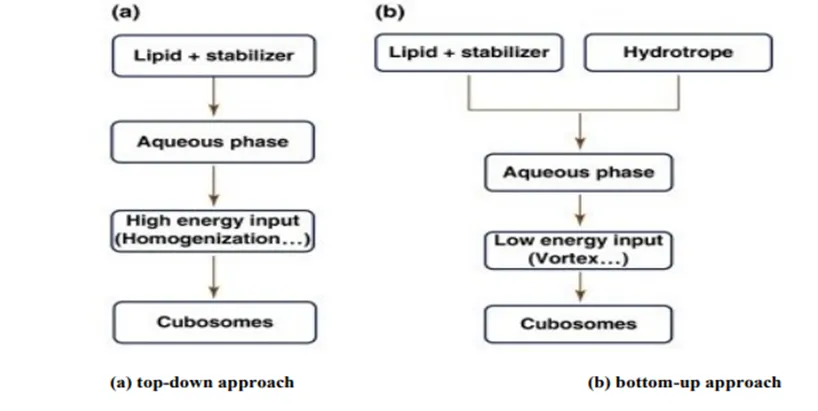
Figure 2: Method of Preparation
6.3. Spray Drying Method17
Spray drying is employed to create dry powder precursors of cubosomes that can be rehydrated. This technique is beneficial for large-scale manufacturing and for preserving sensitive biomolecules, including proteins and vaccines. Nevertheless, the swift creation of cubic phases during the hydration process can complicate matters and influence consistency.
Advantages:
Disadvantage:
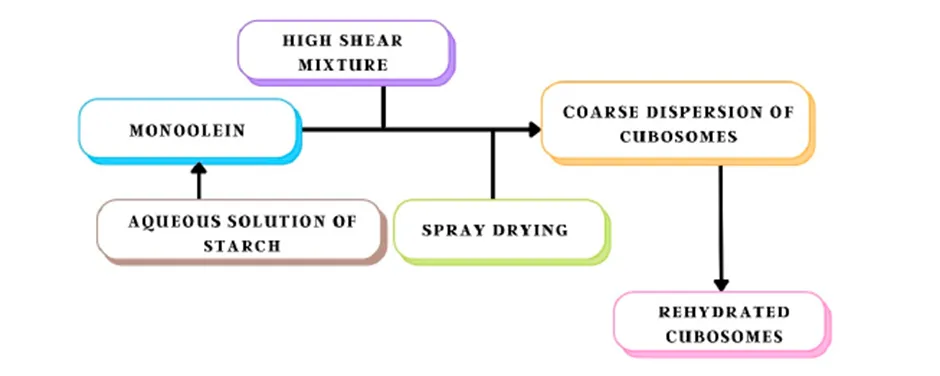
Figure 3: Schematic representation of the preparation of dry powder cubosomes.
6.4. Heat Treatment 18
Heat treatment alone cannot be seen as a complete method for preparing cubosomes. Its main role is to help convert non-cubic vesicles into well-organized cubic particles. Dispersed particles can be produced effectively through a simple process that involves homogenization followed by heat treatment. Studies show that heat treatment reduces the number of small vesicular particles, leading to larger cubic structures. These structures have a narrow particle size distribution and improved colloidal stability. Considering the overall preparation process it is clear that this phase transition mainly happens during the heat treatment stage. Higher temperatures may reduce the solubility and stability of the system, starting the transition. Below the cloud point, the surfactant remains highly soluble, which helps keep particle stability with minimal fusion. However, when surfactant solubility falls below a critical level, rapid fusion of vesicles takes place.
Advantage:
Disadvantage:
Regardless of how they are prepared, the physicochemical properties of cubosomes, like particle size and internal structure, are vital for drug and gene delivery applications. Different methods exist for characterizing cubosomes. These methods generally fall into two categories: direct techniques that identify phases and indirect techniques that use measurements to describe the phases.
7.1 Direct Technique
7.1.1 Electron Microscopy 19,20
Cryogenic transmission electron microscopy (cryo-TEM) allows for direct observation of samples in their hydrated state by vitrifying them in a thin film suspended between polymer-coated grids. Traditional (negative staining) transmission electron microscopy (TEM), in which materials are dried on carbon grids before being seen under the microscope, is not suggested because of the complications connected with dehydration.
Cryo-TEM provides direct visual proof of the internal nanostructure of cubosomes in their native hydrated state-without dehydration or staining artifacts. The sample is vitrified in liquid ethane and imaged at cryogenic temperatures (typically -170°C or below), revealing the periodic internal lattice as alternating light and dark bands.
7.1.2 Small-Angle X-Ray Scattering (SAXS)21
Small angle X-ray scattering (SAXS) can be used to identify the spatial arrangements of different groups in the sample. The diffraction patterns obtained are converted to plots of intensity versus q value, which enable the identification of peak positions, and their conversion to Miller Indices. The Miller Indices could then be correlated with known values for different liquid crystalline structures and space groups to identify the dominant internal nanostructure of the sample.
7.1.3 Differential Scanning Calorimetry22,23
DSC experiments were performed to study the thermal behavior and physical state of the drug and excipients in cubosome. Approximately 1–2 mg of each freeze-dried sample is sealed in aluminum pans. The DSC scans are performed from 25–450°C at a heating rate of 10°C/min in a nitrogen atmosphere. In pure GMO/water systems, the endothermic transition for the cubic phase bilayer occurs at approximately 80-85°C; this shifts with drug or co-lipid addition.
7.1.4 Polarised Light Microscopy24
Polarized light microscopy can be employed to examine cubosomal surface coatings that exhibit optically birefringent or vesicular characteristics. This technique also helps distinguish between anisotropic and isotropic structures. Additionally, it can be used to monitor changes occurring in cubic phases and provides information regarding the possible coexistence of hexagonal and lamellar liquid crystalline phases.
7.2 Indirect Technique
7.2.1 Particle Size Analysis25
The samples are diluted with a suitable solvent and analyzed at 25°C under light-scattering conditions of 300 Hz. Particle size is determined using a Zeta sizer and dynamic light scattering (DLS) techniques. This method also measures zeta potential and the polydispersity index (PDI). It provides details on the average particle size, weight, and volume distribution. For particle size analysis with a Malvern Zeta sizer, samples are usually diluted about 100-fold with water before measurement.
7.2.2 Entrapment Efficiency 26
For the determination of entrapment efficiency, the cubosomes from the resulting dispersions are first separated by centrifugation. The separation of the free (non entrapped) drug from the entrapped drug in the cubosome dispersion is achieved by centrifugation at 16000 rpm for 1 hour. The resulting solution is then separated and supernatant liquid is collected. The collected supernatant is then diluted appropriately and estimated using UV visible spectrophotometer at λmax . The percent of encapsulation efficiency (%EE) was determined by the following equation
% of EE = Ct-Cf/Ct × 100
Where, Ct – Total drug concentration
Cf – Free drug concentration
7.2.3 In Vitro Drug Release Studies27
The release of medications from cubosomes is studied using dialysis membrane bags in simulated physiological media at a temperature of 37°C while continuously stirring. Samples are collected at specific time intervals and analyzed with UV-Vis or HPLC methods.
7.2.4 Stability Studies28
The physical stability can be assessed by examining the organoleptic and morphological properties of cubosomes over time. The particle size distribution, zeta potential, drug content, and entrapment efficiency of cubosomes at various temperatures can be measured at different intervals to assess potential variations with time. The exothermic or endothermic energy changes accompany the phase transition in liquid crystalline systems. To evaluate the stability of liquid crystalline structures, Differential Scanning Calorimetry (DSC) can be employed to determine the phase transition temperature of the binary liquid-crystalline system. Additionally, the viscosity of cubosome formulations should be measured at various angular velocities using a rotary viscometer. ICH guidelines recommend stability testing at 25°C/60% RH and 40°C/75% RH for pharmaceutical formulations.
8. APPLICATION OF CUBOSOMES
8.1. Oral Delivery29,30
Although oral drug delivery is the most convenient and widely established route of administration, it often presents challenges in delivering poorly water-soluble drugs, particularly those with low absorption and high molecular weight. Cubosomes assist the absorption of orally administered drugs, possibly because of their interactions with the intestinal cell membrane or their induction of physiological secretions during lipid digestion in GI tract. It can be because of the bioadhesive properties of cubosomes that these agents are effectively administered orally. Moreover, cubosomes can act as a key carrier for the oral administration of poorly soluble drugs. When drugs are delivered orally, they are integrated in a solubilized state and within the lipid bilayer of the cubosomes. This setup helps prevent drug crystallization in the gastrointestinal tract. It also improves intestinal absorption due to the mucoadhesive properties of GMO. Thus, Cubosomes offer an effective approach to overcome the limitations of conventional oral drug delivery systems.
8.2 Dermatological Delivery 31,32
Dermatological medications treat various skin disorders. However, delivering drugs through the skin can be difficult. The stratum corneum has a highly organized structure that serves as a major barrier, limiting how well topically applied agents penetrate. Cubosomes, due to their unique structure and properties, show great promise as carriers for transdermal drug delivery. Cubosomes made with glyceryl monooleate (GMO) work especially well for topical and mucosal drug delivery. Another new use for cubosomes in topical therapy is vaccine delivery through transcutaneous immunization (TCI). The combination of microneedles with cubosome-based systems has been an effective approach for the targeted local delivery of antigens to skin cells.
High drug loading capacity of cubosomes results in effective loading of the antifungal drugs in the lipid bilayer formation.The loading of antifungal drug in Cubosomes is an effective strategy that increases drug retention in the skin. Cubosomes penetrate the stratum corneum corneocytes via the paracellular pathway, thus leading to immediate drug delivery and then a slow and sustained release because of their ability to create a drug reservoir in the lipid layer of stratum corneum.
8.3 Intravenous Drug Delivery33
Lipid nanoparticles containing internal liquid crystalline structures of curved lipid membranes are used for the solubilisation, encapsulation and targeted delivery of drugs to diseased regions of the body. The cubosome nanoparticles can load a higher amount of peptides, proteins and different poorly soluble small molecules as compared to emulsions and liposomes, which make them promising vehicles for injectable drug delivery systems. Cubosomes are an effective solution for injectable drug delivery. They have a unique internal liquid crystalline structure, a high capacity to hold drugs, and can encapsulate both water-loving and water-fearing therapeutic agents. Therefore, cubosomes ability to deliver drugs to specific sites and improve availability in the body makes them suitable carriers for effectively treating various diseases.
Drug delivery through the eye can be a lucrative area for formulators owing to the complexity of the eye structure and its physiology. The mode of delivery that is predominantly employed includes topically applied formulations to the conjunctival sac for the management of disorders including conjunctivitis, uveitis, endophthalmitis, glaucoma, and postoperative pain. There are many features of cubosomes that qualify them as promising carriers for the delivery of drugs to the eye. With the incorporation of biodegradable lipids in nanoparticles, it will be possible to develop particles with superior corneal permeability, stability of drugs against chemical and physical decomposition, controlled release of drugs, along with favorable biocompatibility and biodegradability. Furthermore, cubosomes might be physically more stable than liposomes owing to the presence of multiple layers of lipid bilayers. Because of their superior biocompatibility, improved corneal permeability, and sustained drug release. cubosomes can be used as effective carriers for ocular drug delivery.
CONCLUSION
As an innovative drug delivery nanocarrier, cubosomes have been identified as promising carriers owing to their specific bicontinuous cubic structures, high loading capacity, biological compatibility, and capability of entrapping hydrophilic, hydrophobic, and amphiphilic molecules. Cubosomes hold significant potential for various biomedical applications due to their ability to facilitate controlled and targeted drug delivery, enhance stability, and improve drug bioavailability. The effectiveness of cubosomes has been evidenced by many successful studies using these carriers in oral administration, topical therapy, ocular treatment, parenteral delivery, antitumor therapy, antifungal drugs, and infectious disease treatments. However, problems like instability, high viscosity, and difficulty in large-scale production hinder their clinical development further. Ongoing progress in formulation strategies and production techniques is likely to address these challenges. Therefore, cubosomes have great potential as a next-generation drug delivery system for future pharmaceutical and biomedical uses.
REFERENCES



Abhay Rai, Navami R Alva, A. R Shabaraya, Cubosomes : An Emerging Nanocarrier For Advanced Drug Delivery Systems, Int. J. of Pharm. Sci., 2026, Vol 4, Issue 7, 2728-2738, https://doi.org/10.5281/zenodo.21349918
 10.5281/zenodo.21349918