View Article

  • Curcumin-Based Emulgel and Nanoemulgel Systems for Atopic Dermatitis: Recent Advances, Therapeutic Potential, and Future Perspectives

  • Assistant Professor, Shree Krishna College of Pharmacy,Sitapur.

Abstract

Atopic dermatitis (AD) is a chronic relapsing inflammatory skin disorder characterized by severe pruritus, epidermal barrier dysfunction, immune dysregulation, and recurrent inflammatory episodes. The increasing prevalence of AD worldwide has prompted the exploration of safer and more effective therapeutic strategies beyond conventional corticosteroids and immunosuppressive agents. Curcumin, a bioactive polyphenolic constituent isolated from Curcuma longa, possesses remarkable anti-inflammatory, antioxidant, antimicrobial, immunomodulatory, and wound-healing properties. Despite its therapeutic promise, poor aqueous solubility, limited skin permeation, rapid degradation, and low bioavailability restrict its clinical application. Recent advances in topical drug delivery systems, particularly emulgels, nanoemulgels, liposomes, nanostructured lipid carriers, transfersomes, and polymeric nanoparticles, have significantly improved the topical delivery and therapeutic performance of curcumin. [7]This review comprehensively discusses the pathophysiology of atopic dermatitis, pharmacological mechanisms of curcumin, formulation strategies of curcumin-loaded emulgel and nanoemulgel systems, characterization approaches, preclinical and clinical evidence, recent technological advancements, regulatory challenges, and future perspectives. Special emphasis is placed on studies published between 2021 and 2026 concerning nano-enabled topical delivery systems for inflammatory skin disorders. Emerging evidence suggests that curcumin-loaded emulgel systems provide enhanced skin penetration, sustained drug release, improved stability, reduced inflammatory cytokine expression, and superior patient compliance compared with conventional topical formulations. These findings position curcumin-based topical nanotherapeutics as promising alternatives for the management of atopic dermatitis. [7]

Keywords

Curcumin, Atopic Dermatitis, Emulgel, Nanoemulgel, Topical Drug Delivery, Nanotechnology, Skin Inflammation, Transdermal Delivery

Introduction

× Popup Image

Atopic dermatitis (AD), commonly referred to as eczema, is a chronic inflammatory skin disease affecting approximately 15–20% of children and 3–10% of adults globally. The disease is characterized by erythema, xerosis, edema, excoriation, skin thickening, and intense itching that significantly impacts patient quality of life. [32-35]

Current therapeutic approaches involve:

  • Topical corticosteroids [4,9]
  • Calcineurin inhibitors [4,9]
  • Janus kinase inhibitors [4,9]
  • Systemic immunomodulators [4,9]
  • Biological agents [4,9]

However, long-term therapy frequently leads to adverse effects including skin atrophy, irritation,burning sensation, and immunosuppression.

Natural phytochemicals have attracted considerable interest as safer therapeutic alternatives. Among them, curcumin has emerged as a promising candidate due to its broad-spectrum pharmacological activities and favorable safety profile. [1,2]


Table.1 Current Therapeutic Approaches for Atopic Dermatitis

Therapeutic Approach

Mechanism of Action

Examples

Topical Corticosteroids [4,9]

Reduce inflammation, itching, and immune responses in the skin

Hydrocortisone, Betamethasone, Clobetasol Propionate, Mometasone Furoate

Calcineurin Inhibitors [4,9]

Inhibit T-cell activation and inflammatory cytokine release

Tacrolimus Ointment, Pimecrolimus Cream

Janus Kinase (JAK) Inhibitors [4,9]

Block JAK signaling pathways involved in inflammation

Ruxolitinib Cream, Upadacitinib, Abrocitinib, Baricitinib

Systemic Immunomodulators [4,9]

Suppress overactive immune responses in moderate-to-severe disease

Cyclosporine, Methotrexate, Azathioprine, Mycophenolate Mofetil

Biological Agents (Biologics) [4,9]

Target specific cytokines involved in atopic dermatitis pathogenesis [4,9,10]

Dupilumab, Tralokinumab, Lebrikizumab


2. Global Burden of Atopic Dermatitis [4,9]

Atopic dermatitis is recognized as one of the most common chronic inflammatory skin disorders worldwide. The prevalence has increased dramatically over the last three decades, particularly in industrialized nations. [32-34]

Major factors contributing to disease progression include:

  • Genetic predisposition
  • Filaggrin gene mutations
  • Environmental pollutants
  • Microbial dysbiosis
  • Allergens
  • Oxidative stress
  • Immune dysregulation

The chronic and recurrent nature of AD often results in psychological distress, sleep disturbances, anxiety, depression, and substantial healthcare expenditures. [4,9,10]


Table 2 Major Factors Contributing to Atopic Dermatitis Disease Progression

Contributing Factor

Role in Disease Progression

Examples

Genetic Predisposition

Inherited genetic factors increase susceptibility to atopic dermatitis and other allergic diseases [4,9]

Family history of atopic dermatitis, asthma, or allergic rhinitis [4,9]

Filaggrin Gene Mutations

Defective filaggrin protein impairs skin barrier function, leading to increased water loss and allergen penetration

FLG loss-of-function mutations (e.g., R501X, 2282del4)

Environmental Pollutants

Pollutants damage the skin barrier and trigger inflammation

Tobacco smoke, vehicle exhaust, particulate matter (PM2.5), industrial pollutants

Microbial Dysbiosis

Imbalance of skin microbiota promotes inflammation and skin infections

Overgrowth of Staphylococcus aureus, reduced microbial diversity

Allergens

Allergens penetrate the damaged skin barrier and activate immune responses.

House dust mites, pollen, pet dander, molds, food allergens (milk, eggs, peanuts)

Oxidative Stress

Excessive production of reactive oxygen species (ROS) damages skin cells and enhances inflammation.

UV radiation, air pollution, ROS-induced lipid peroxidation

Immune Dysregulation

Abnormal activation of immune pathways leads to chronic inflammation and itching

Increased Th2 cytokines (IL-4, IL-5, IL-13), elevated IgE levels


3. Pathophysiology of Atopic Dermatitis [4,9]

Atopic dermatitis (AD) is a chronic inflammatory skin disorder resulting from a complex interaction of epidermal barrier dysfunction, immune dysregulation, genetic susceptibility, oxidative stress, and environmental factors. These mechanisms collectively contribute to skin inflammation, pruritus, and recurrent disease exacerbations. [32-35]

3.1 Skin Barrier Dysfunction

The hallmark of AD is impairment of the epidermal barrier. [4,9,10]

  • Mutations in the filaggrin (FLG) gene reduce the production of filaggrin, a key protein responsible for maintaining skin hydration and structural integrity.
  • Decreased levels of ceramides and other epidermal lipids weaken the stratum corneum and increase transepidermal water loss (TEWL).
  • The defective barrier facilitates the penetration of allergens, irritants, microorganisms, and environmental pollutants.

Consequences:

  • Xerosis (dry skin)
  • Increased skin sensitivity
  • Enhanced allergen penetration
  • Initiation and perpetuation of cutaneous inflammation

3.2 Immune Dysregulation

AD is primarily characterized by an exaggerated Type 2 helper T-cell (Th2)-mediated immune response. [4,9,10]

Key cytokines involved include:

  • Interleukin-4 (IL-4)
  • Interleukin-5 (IL-5)
  • Interleukin-13 (IL-13)
  • Interleukin-31 (IL-31), which plays a major role in pruritus (itching)

These cytokines lead to:

  • Increased immunoglobulin E (IgE) production by B cells
  • Recruitment and activation of eosinophils
  • Suppression of epidermal barrier proteins, including filaggrin

As the disease progresses, additional immune pathways become involved, including:

  • Th17 pathway activation
  • Th22 pathway activation
  • Regulatory T-cell (Treg) dysfunction

These immune abnormalities further amplify inflammation and contribute to chronic disease progression.

3.3 Oxidative Stress

Oxidative stress plays a significant role in the pathogenesis of AD through excessive production of reactive oxygen species (ROS). [16-18,35]

Oxidative stress contributes to:

  • Keratinocyte damage
  • Release of pro-inflammatory cytokines
  • Disruption of epidermal barrier function
  • Persistent skin inflammation

Consequences include:

  • Increased transepidermal water loss (TEWL)
  • Skin dehydration
  • Enhanced allergen penetration
  • Increased susceptibility to microbial colonization

3.4 Itch–Scratch Cycle

Pruritus is a defining symptom of AD and is largely mediated by cytokines such as IL-31. [4,9,10]

  • Persistent itching induces scratching.
  • Scratching further damages the skin barrier.
  • Barrier damage increases allergen penetration and inflammation.
  • This creates a self-perpetuating itch–scratch cycle, leading to chronic lesions and disease exacerbation.

3.5 Microbial Dysbiosis

Patients with AD frequently exhibit altered skin microbiota, particularly colonization by Staphylococcus aureus. [4,9,10]
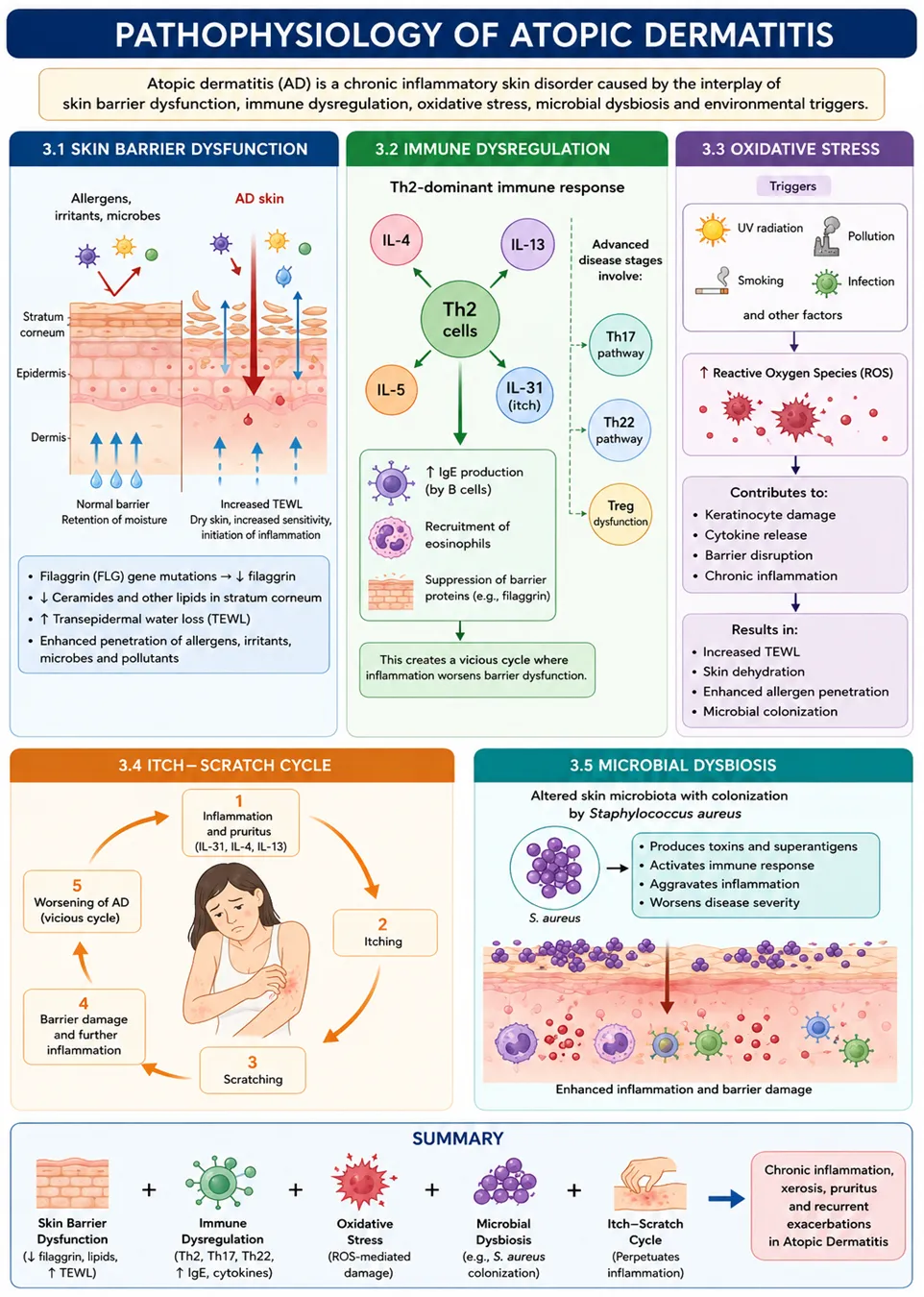
  • S. aureus releases toxins and superantigens that stimulate immune responses.
  • Microbial colonization aggravates inflammation and worsens disease severity.


Figure 1. Pathophysiology of Atopic Dermatitis


4. Curcumin: Chemistry and Pharmacological Profile [1,2]

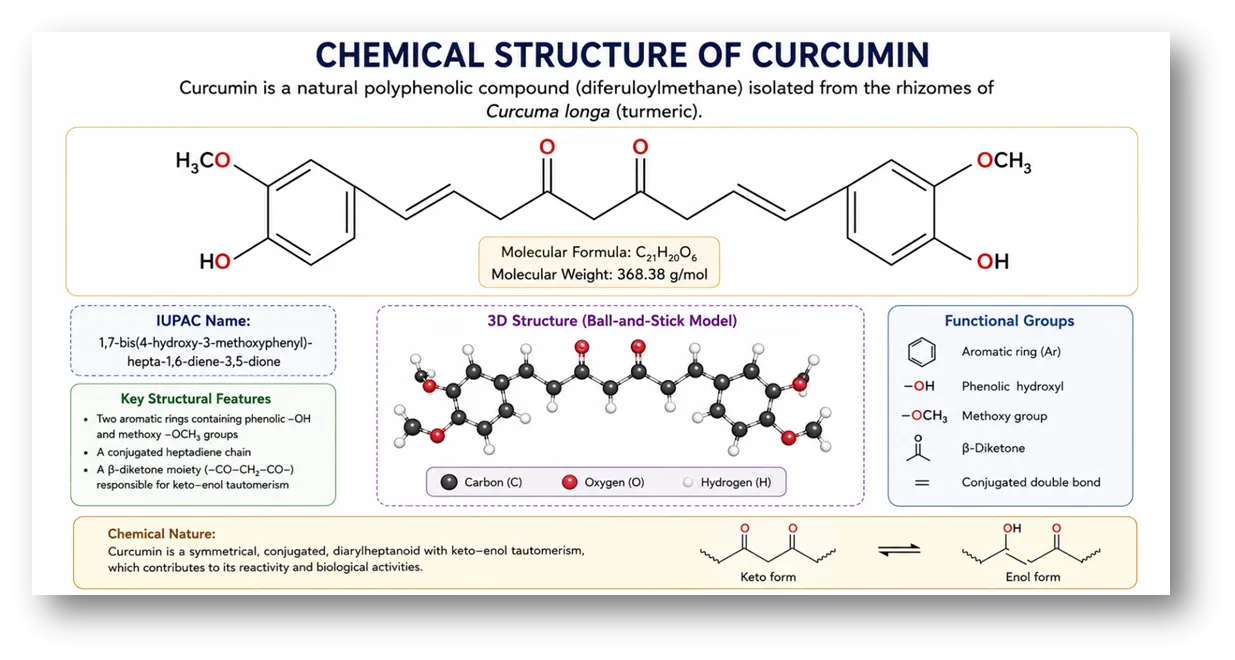
Curcumin is a naturally occurring polyphenol extracted from turmeric (Curcuma longa). [11,13-15,20-24]

Chemical Characteristics

  • Molecular formula: C21H20O6
  • Molecular weight: 368.38 g/mol
  • Hydrophobic compound
  • Poor aqueous solubility
  • BCS Class II molecule

Biological Activities

  • Anti-inflammatory
  • Antioxidant
  • Antibacterial
  • Antifungal
  • Antiviral
  • Wound-healing
  • Anticancer

Recent dermatological investigations indicate substantial therapeutic potential against:
  • Psoriasis
  • Acne vulgaris
  • Skin cancer
  • Chronic wounds
  • Atopic dermatitis [4,9]


Figure 2. Chemical Structure of Curcumin


5. Molecular Mechanisms of Curcumin in Atopic Dermatitis [1,2]

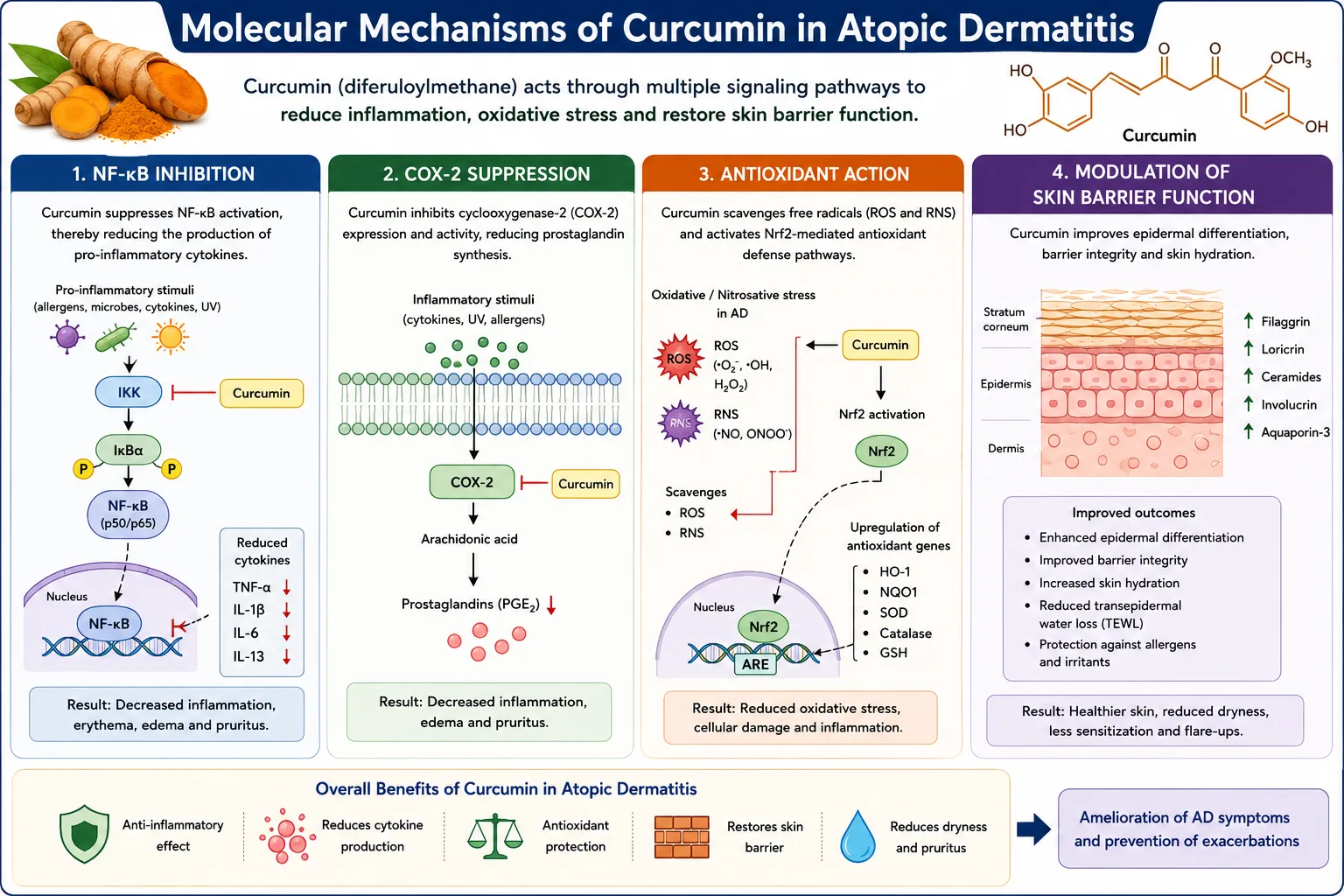
Curcumin acts through multiple signaling pathways. [1,2]

5.1 NF-κB Inhibition

Curcumin suppresses NF-κB activation, thereby reducing: [1-3]

  • TNF-α
  • IL-1β
  • IL-6
  • IL-13

5.2 COX-2 Suppression

Curcumin inhibits cyclooxygenase-mediated prostaglandin synthesis. [1,2]

5.3 Antioxidant Action

Curcumin scavenges: [1,2]

  • Reactive oxygen species (ROS)
  • Reactive nitrogen species (RNS)

and activates Nrf2-mediated antioxidant defense pathways.

5.4 Modulation of Skin Barrier Function

Experimental studies suggest curcumin improves: [1,2]
  • Epidermal differentiation
  • Barrier integrity
  • Skin hydration


Figure 3. Molecular Mechanisms of Curcumin in AD


6. Limitations of Curcumin Therapy [1,2]

Despite its therapeutic promise, curcumin suffers from: [11,12,20,23-25]

  • Poor water solubility
  • Chemical instability
  • Rapid metabolism
  • Low bioavailability
  • Limited skin penetration [4,9]

These challenges have stimulated extensive research into advanced drug delivery systems.

7. Topical Drug Delivery Systems for Curcumin [1,2]

7.1 Conventional Systems

  • Creams
  • Ointments
  • Lotions
  • Gels

Limitations

  • Poor penetration
  • Drug instability
  • Low residence time

7.2 Advanced Delivery Systems

Nanoemulsions [11,25]

Provide:

  • Enhanced solubilization
  • Improved penetration
  • High stability

Liposomes [5,6,10]

Facilitate:

  • Controlled release
  • Skin targeting

Transfersomes [5,6,10]

Enhance transdermal transport through deformable vesicles. [4,9]

Polymeric Nanoparticles [5,6,25]

Improve:

  • Drug stability
  • Sustained release
  • Controlled delivery

8. Emulgel Technology [7,9]

8.1 Concept of Emulgel

Emulgels combine: [7,9]

  • Emulsion systems [7,9]
  • Gel matrices [7,9]

to create a dual-controlled drug delivery platform.

8.2 Advantages

  • Non-greasy
  • Easily spreadable
  • Better patient compliance
  • Improved drug loading
  • Sustained release
  • Enhanced penetration

9. Nanoemulgel Systems [7]

Nanoemulgels represent the next generation of emulgel technology. [7,11]

Advantages

  • Droplet size below 500 nm
  • Increased surface area
  • Enhanced permeation
  • Improved drug retention
  • Controlled release

Nanoemulgels have demonstrated superior performance compared with conventional emulgels in inflammatory skin disorders. [7]

10. Formulation Components Used in Curcumin Emulgels [1,2]

Oil Phase

  • Calendula oil
  • Coconut oil
  • Tamanu oil
  • Olive oil
  • Liquid paraffin

Surfactants

  • Tween 20
  • Tween 80
  • Span 20
  • Span 80

Gelling Agents

  • Carbopol 934
  • Carbopol 940
  • HPMC
  • Xanthan gum

Permeation Enhancers

  • Propylene glycol
  • Ethanol
  • Oleic acid

11. Characterization Techniques

Preformulation Studies

  • Solubility analysis
  • Melting point determination
  • FTIR
  • DSC
  • XRD

Nanoformulation Characterization [5,6,10]

  • Particle size
  • Zeta potential
  • Polydispersity index

Evaluation Parameters

  • pH
  • Viscosity
  • Spreadability
  • Drug content
  • Entrapment efficiency
  • In-vitro release
  • Ex-vivo permeation

12. Recent Advances (2021–2026)

Recent studies have reported: [6,11,12,14,15]

  • Curcumin nano emulsions [1,2]
  • Curcumin liposomal hydrogels [1,2]
  • Curcumin-loaded polymeric nanoparticles [1,2]
  • Curcumin nano emulgels [1,2]
  • Curcumin phytosome systems [1,2]

These systems demonstrated enhanced anti-inflammatory effects and improved skin penetration compared with conventional formulations. [4,9]

13. Clinical Evidence

Several clinical investigations have demonstrated beneficial effects of curcumin-containing topical formulations in inflammatory skin disorders. [13-15,20-24]

Observed outcomes include:

  • Reduced erythema
  • Reduced pruritus
  • Improved hydration
  • Enhanced wound healing
  • Decreased corticosteroid dependence

However, large randomized controlled trials remain limited.

14. Safety and Toxicological Considerations

Curcumin exhibits excellent safety. [13,20,21,24]

Reported observations include:

  • Minimal irritation
  • Low toxicity
  • High tolerability

Nevertheless, formulation-specific safety evaluations remain essential.

15. Challenges and Regulatory Considerations

Major barriers to commercialization include: [11,19,25-29]

  • Standardization of formulations
  • Batch-to-batch variability
  • Scale-up challenges
  • Regulatory approval pathways
  • Long-term stability concerns

16. Future Perspectives

Future research should focus on: [6,11,16-19,30,31]

  • AI-assisted formulation design
  • Quality-by-Design optimization
  • Personalized dermatological therapy
  • Smart nano-responsive systems
  • Clinical translation of nanoemulgels [7]
  • Large multicenter clinical trials

REFERENCES

  1. Mo Z, et al. Advancements in dermatological applications of curcumin. 2024.
  2. Kasprzak-Drozd K, et al. Potential of curcumin in the management of skin diseases. 2024.
  3. Mohammadi SG, et al. Exploring curcumin's healing properties in skin disorders. 2024.
  4. Parga AD, et al. Transdermal drug delivery systems in atopic dermatitis. 2025.
  5. Vyas J, et al. Polymeric conjugates and nanocarriers for atopic dermatitis. 2026.
  6. Sharma T, et al. Curcumin-loaded nanocarriers for dermatological applications: current advances and biomedical implications. EXCLI J. 2026. doi:10.17179/excli2026-9317.
  7. Jeengar MK, et al. Emu oil based nano-emulgel for topical delivery of curcumin.
  8. Zhu JJ, et al. Curcumin nanoparticles for improved therapy of dermatitis.
  9. Goindi S, et al. Topical formulations for atopic dermatitis.
  10. Kakkar V, et al. Nano delivery approaches for atopic dermatitis.
  11. Waghule T, Gorantla S, Rapalli VK, Shah P, Dubey SK, Saha RN, Singhvi G. Emerging trends in topical delivery of curcumin through lipid nanocarriers: effectiveness in skin disorders. AAPS PharmSciTech. 2020;21(7):284. doi:10.1208/s12249-020-01831-9.
  12. Rapalli VK, et al. Curcumin loaded nanostructured lipid carriers for enhanced skin retained topical delivery: optimization, scale-up, in-vitro characterization and assessment of ex-vivo skin deposition. Eur J Pharm Sci. 2020;152:105438. doi:10.1016/j.ejps.2020.105438.
  13. Vaughn AR, Branum A, Sivamani RK. Effects of turmeric (Curcuma longa) on skin health: a systematic review of the clinical evidence. Phytother Res. 2016;30(8):1243-1264. doi:10.1002/ptr.5640.
  14. Vollono L, Falconi M, Gaziano R, Iacovelli F, Dika E, Terracciano C, et al. Potential of curcumin in skin disorders. Nutrients. 2019;11(9):2169.
  15. Panahi Y, Fazlolahzadeh O, Atkin SL, Majeed M, Butler AE, Johnston TP, Sahebkar A. Evidence of curcumin and curcumin analogue effects in skin diseases: a narrative review. J Cell Physiol. 2019;234(2):1165-1178.
  16. Kim YE, Choi SW, Kim MK, Nguyen TL, Kim J. Therapeutic hydrogel patch to treat atopic dermatitis by regulating oxidative stress. Nano Lett. 2022;22(5):2038-2047. doi:10.1021/acs.nanolett.1c04899.
  17. Trinh TA, Phan NM, Nguyen TL, Kim J. Antioxidant hydrogel-based transdermal drug delivery patch for reactive oxygen species- and MyD88-targeted management of atopic dermatitis. Biomacromolecules. 2026;27(1):121-133. doi:10.1021/acs.biomac.5c00741.
  18. Peng Z, Wei XY, Zeng X, Anwaier G, Zhou X, Shi BJ. A berberine-loaded hydrogel for the treatment of atopic dermatitis through antibacterial activity, inhibition of inflammation and modulation of oxidative stress. Front Immunol. 2026;17:1740911. doi:10.3389/fimmu.2026.1740911.
  19. Ghosh S, Tiwari T, Nagaich U, Jain N. A detailed insight into nanostructured lipid carriers: a versatile drug delivery system. Recent Pat Nanotechnol. 2023;17(4):284-306. doi:10.2174/1872210516666220523121733.
  20. Anand P, Kunnumakkara AB, Newman RA, Aggarwal BB. Bioavailability of curcumin: problems and promises. Mol Pharm. 2007;4(6):807-818.
  21. Hewlings SJ, Kalman DS. Curcumin: a review of its effects on human health. Foods. 2017;6(10):92.
  22. Vaughn AR, Branum A, Sivamani RK. Effects of turmeric on skin health and dermatologic disease: clinical evidence and future directions. Phytother Res. 2016;30(8):1243-1264.
  23. Prasad S, Tyagi AK, Aggarwal BB. Recent developments in delivery, bioavailability, absorption and metabolism of curcumin: the golden pigment from golden spice. Cancer Res Treat. 2014;46(1):2-18.
  24. Gupta SC, Patchva S, Aggarwal BB. Therapeutic roles of curcumin: lessons learned from clinical trials. AAPS J. 2013;15(1):195-218.
  25. Naksuriya O, Okonogi S, Schiffelers RM, Hennink WE. Curcumin nanoformulations: a review of pharmaceutical properties and preclinical studies and clinical data related to cancer treatment. Biomaterials. 2014;35(10):3365-3383.
  26. Pardeike J, Hommoss A, Müller RH. Lipid nanoparticles (SLN, NLC) in cosmetic and pharmaceutical dermal products. Int J Pharm. 2009;366(1-2):170-184.
  27. Müller RH, Radtke M, Wissing SA. Nanostructured lipid matrices for improved microencapsulation of drugs. Int J Pharm. 2002;242(1-2):121-128.
  28. Naseri N, Valizadeh H, Zakeri-Milani P. Solid lipid nanoparticles and nanostructured lipid carriers: structure, preparation and application. Adv Pharm Bull. 2015;5(3):305-313.
  29. Chauhan I, Yasir M, Verma M, Singh AP. Nanostructured lipid carriers: a groundbreaking approach for transdermal drug delivery. Adv Pharm Bull. 2020;10(2):150-165.
  30. Ahmed EM. Hydrogel: preparation, characterization, and applications: a review. J Adv Res. 2015;6(2):105-121.
  31. Koetting MC, Peters JT, Steichen SD, Peppas NA. Stimulus-responsive hydrogels: theory, modern advances, and applications. Mater Sci Eng R Rep. 2015;93:1-49.
  32. Langan SM, Irvine AD, Weidinger S. Atopic dermatitis. Lancet. 2020;396(10247):345-360.
  33. Weidinger S, Novak N. Atopic dermatitis. Lancet. 2016;387(10023):1109-1122.
  34. Bieber T. Atopic dermatitis. N Engl J Med. 2008;358(14):1483-1494.
  35. Ji H, Li XK. Oxidative stress in atopic dermatitis. Oxid Med Cell Longev. 2016;2016:2721469.

Reference

  1. Mo Z, et al. Advancements in dermatological applications of curcumin. 2024.
  2. Kasprzak-Drozd K, et al. Potential of curcumin in the management of skin diseases. 2024.
  3. Mohammadi SG, et al. Exploring curcumin's healing properties in skin disorders. 2024.
  4. Parga AD, et al. Transdermal drug delivery systems in atopic dermatitis. 2025.
  5. Vyas J, et al. Polymeric conjugates and nanocarriers for atopic dermatitis. 2026.
  6. Sharma T, et al. Curcumin-loaded nanocarriers for dermatological applications: current advances and biomedical implications. EXCLI J. 2026. doi:10.17179/excli2026-9317.
  7. Jeengar MK, et al. Emu oil based nano-emulgel for topical delivery of curcumin.
  8. Zhu JJ, et al. Curcumin nanoparticles for improved therapy of dermatitis.
  9. Goindi S, et al. Topical formulations for atopic dermatitis.
  10. Kakkar V, et al. Nano delivery approaches for atopic dermatitis.
  11. Waghule T, Gorantla S, Rapalli VK, Shah P, Dubey SK, Saha RN, Singhvi G. Emerging trends in topical delivery of curcumin through lipid nanocarriers: effectiveness in skin disorders. AAPS PharmSciTech. 2020;21(7):284. doi:10.1208/s12249-020-01831-9.
  12. Rapalli VK, et al. Curcumin loaded nanostructured lipid carriers for enhanced skin retained topical delivery: optimization, scale-up, in-vitro characterization and assessment of ex-vivo skin deposition. Eur J Pharm Sci. 2020;152:105438. doi:10.1016/j.ejps.2020.105438.
  13. Vaughn AR, Branum A, Sivamani RK. Effects of turmeric (Curcuma longa) on skin health: a systematic review of the clinical evidence. Phytother Res. 2016;30(8):1243-1264. doi:10.1002/ptr.5640.
  14. Vollono L, Falconi M, Gaziano R, Iacovelli F, Dika E, Terracciano C, et al. Potential of curcumin in skin disorders. Nutrients. 2019;11(9):2169.
  15. Panahi Y, Fazlolahzadeh O, Atkin SL, Majeed M, Butler AE, Johnston TP, Sahebkar A. Evidence of curcumin and curcumin analogue effects in skin diseases: a narrative review. J Cell Physiol. 2019;234(2):1165-1178.
  16. Kim YE, Choi SW, Kim MK, Nguyen TL, Kim J. Therapeutic hydrogel patch to treat atopic dermatitis by regulating oxidative stress. Nano Lett. 2022;22(5):2038-2047. doi:10.1021/acs.nanolett.1c04899.
  17. Trinh TA, Phan NM, Nguyen TL, Kim J. Antioxidant hydrogel-based transdermal drug delivery patch for reactive oxygen species- and MyD88-targeted management of atopic dermatitis. Biomacromolecules. 2026;27(1):121-133. doi:10.1021/acs.biomac.5c00741.
  18. Peng Z, Wei XY, Zeng X, Anwaier G, Zhou X, Shi BJ. A berberine-loaded hydrogel for the treatment of atopic dermatitis through antibacterial activity, inhibition of inflammation and modulation of oxidative stress. Front Immunol. 2026;17:1740911. doi:10.3389/fimmu.2026.1740911.
  19. Ghosh S, Tiwari T, Nagaich U, Jain N. A detailed insight into nanostructured lipid carriers: a versatile drug delivery system. Recent Pat Nanotechnol. 2023;17(4):284-306. doi:10.2174/1872210516666220523121733.
  20. Anand P, Kunnumakkara AB, Newman RA, Aggarwal BB. Bioavailability of curcumin: problems and promises. Mol Pharm. 2007;4(6):807-818.
  21. Hewlings SJ, Kalman DS. Curcumin: a review of its effects on human health. Foods. 2017;6(10):92.
  22. Vaughn AR, Branum A, Sivamani RK. Effects of turmeric on skin health and dermatologic disease: clinical evidence and future directions. Phytother Res. 2016;30(8):1243-1264.
  23. Prasad S, Tyagi AK, Aggarwal BB. Recent developments in delivery, bioavailability, absorption and metabolism of curcumin: the golden pigment from golden spice. Cancer Res Treat. 2014;46(1):2-18.
  24. Gupta SC, Patchva S, Aggarwal BB. Therapeutic roles of curcumin: lessons learned from clinical trials. AAPS J. 2013;15(1):195-218.
  25. Naksuriya O, Okonogi S, Schiffelers RM, Hennink WE. Curcumin nanoformulations: a review of pharmaceutical properties and preclinical studies and clinical data related to cancer treatment. Biomaterials. 2014;35(10):3365-3383.
  26. Pardeike J, Hommoss A, Müller RH. Lipid nanoparticles (SLN, NLC) in cosmetic and pharmaceutical dermal products. Int J Pharm. 2009;366(1-2):170-184.
  27. Müller RH, Radtke M, Wissing SA. Nanostructured lipid matrices for improved microencapsulation of drugs. Int J Pharm. 2002;242(1-2):121-128.
  28. Naseri N, Valizadeh H, Zakeri-Milani P. Solid lipid nanoparticles and nanostructured lipid carriers: structure, preparation and application. Adv Pharm Bull. 2015;5(3):305-313.
  29. Chauhan I, Yasir M, Verma M, Singh AP. Nanostructured lipid carriers: a groundbreaking approach for transdermal drug delivery. Adv Pharm Bull. 2020;10(2):150-165.
  30. Ahmed EM. Hydrogel: preparation, characterization, and applications: a review. J Adv Res. 2015;6(2):105-121.
  31. Koetting MC, Peters JT, Steichen SD, Peppas NA. Stimulus-responsive hydrogels: theory, modern advances, and applications. Mater Sci Eng R Rep. 2015;93:1-49.
  32. Langan SM, Irvine AD, Weidinger S. Atopic dermatitis. Lancet. 2020;396(10247):345-360.
  33. Weidinger S, Novak N. Atopic dermatitis. Lancet. 2016;387(10023):1109-1122.
  34. Bieber T. Atopic dermatitis. N Engl J Med. 2008;358(14):1483-1494.
  35. Ji H, Li XK. Oxidative stress in atopic dermatitis. Oxid Med Cell Longev. 2016;2016:2721469.

Photo
Vinod Kumar
Corresponding author

Assistant Professor, Shree Krishna College of Pharmacy, Sitapur Uttar Pradesh, India

Photo
Sadhna Rajvanshi
Co-author

Assistant Professor, Shree Krishna College of Pharmacy, Sitapur, Uttar Pradesh India

Vinod Kumar, Sadhna Rajvanshi, Curcumin-Based Emulgel and Nanoemulgel Systems for Atopic Dermatitis: Recent Advances, Therapeutic Potential, and Future Perspectives, Int. J. of Pharm. Sci., 2026, Vol 4, Issue 7, 6097-6107, https://doi.org/10.5281/zenodo.21721765

More related articles
A Case Study of the Clinical Association of Galash...
Dr. Bhupendra Rathod, Dr. Jayantkumar Wagh , Dr. Gaurao Dhotre...
Assessment of the Anti-Lipase Activity of Clitoria...
Dr. V. Suresh, E. Deivamani, P. Chandrik, A. Aziza, C. Asma, R. A...
Evaluation Of India’s Generic Drug Marketing Aut...
N.Gopi, A. Keerthana, A. Arulpandiyan, G. Arthi, H.Yukesh, Dr.S.K...
Medication Error Reporting Systems and Patient Safety Enhancement...
Komal Jadhav , Dr. Vijay Pawar , Vitthal Gawade , Rushikesh Gadekar , Ganesh Chavan ...
Rutin Hydrate Attenuates Valproic Acid-Induced Autism Spectrum Disorder-Like Beh...
P Aswathy, Manjunatha PM, K Keerthana, Harshitha G, Surendra Vada...
Related Articles
A Review on Solid Lipid Nanoparticles as Targeted Drug Delivery Systems for The ...
Arti Kumari, S. Rajarajan, Beny Baby, S.Swetha Malika Devi...
Phytochemical and antibacterial study of Citrullus lanatus Seed extract...
Mriganka Karmakar, Gargi Seth, Nilay Ganguly, Probal Dhara, Debasmita Ghosh, Sanchita poddar ...
A Case Study of the Clinical Association of Galashotha with Acute Pharyngitis an...
Dr. Bhupendra Rathod, Dr. Jayantkumar Wagh , Dr. Gaurao Dhotre...
More related articles
A Case Study of the Clinical Association of Galashotha with Acute Pharyngitis an...
Dr. Bhupendra Rathod, Dr. Jayantkumar Wagh , Dr. Gaurao Dhotre...
Assessment of the Anti-Lipase Activity of Clitoria Ternatea Linn. Extract Using ...
Dr. V. Suresh, E. Deivamani, P. Chandrik, A. Aziza, C. Asma, R. Asharaf Ali, Dr. S. K. Senthilkumar ...
Evaluation Of India’s Generic Drug Marketing Authorization Process With A Kap ...
N.Gopi, A. Keerthana, A. Arulpandiyan, G. Arthi, H.Yukesh, Dr.S.K. Senthil Kumar, Dr.P.Praveen Kumar...
A Case Study of the Clinical Association of Galashotha with Acute Pharyngitis an...
Dr. Bhupendra Rathod, Dr. Jayantkumar Wagh , Dr. Gaurao Dhotre...
Assessment of the Anti-Lipase Activity of Clitoria Ternatea Linn. Extract Using ...
Dr. V. Suresh, E. Deivamani, P. Chandrik, A. Aziza, C. Asma, R. Asharaf Ali, Dr. S. K. Senthilkumar ...
Evaluation Of India’s Generic Drug Marketing Authorization Process With A Kap ...
N.Gopi, A. Keerthana, A. Arulpandiyan, G. Arthi, H.Yukesh, Dr.S.K. Senthil Kumar, Dr.P.Praveen Kumar...