

We use cookies to ensure our website works properly and to personalise your experience. Cookies policy
D.S.T.S Mandal’s College Of Pharmacy, Solapur, Maharashtra, India.
Dandruff is a widespread scalp condition mainly linked to *Malassezia* species, often causing symptoms like itching, flaking, and discomfort. While many synthetic anti-dandruff shampoos are available, their continuous use can lead to unwanted side effects, prompting interest in natural remedies. This study aimed to create and assess an anti-dandruff shampoo using onion (*Allium cepa*) peel extract, which is a natural source of flavonoids and other active compounds known for their antimicrobial and antifungal effects. The onion peel extract was made using the maceration method with a hydroethanolic solution (70% ethanol and 30% water).Three shampoo versions were made with 0.5% (F1), 1.0% (F2), and 1.5% (F3) onion peel extract, using ingredients such as Carbopol, Sodium Lauryl Sulfate, glycerin, citric acid, methyl paraben, perfume, and purified water. Each formulation was tested for physical look, pH, viscosity, density, percentage of solid content, dirt dispersion, and foam formation. All formulations had good physical and chemical properties, with pH levels between 5.51 and 5.81, which match the natural pH of the scalp. The solid content ranged from 24.48% to 28.42%, showing good consistency and ease of rinsing. All the formulations had good cleansing ability and acceptable density and viscosity. Among the options, F3 produced the most stable foam while keeping up with other quality standards. The results indicate that onion peel extract can be effectively used in shampoo products and might be a good natural component for anti-dandruff treatments. However, additional research on antimicrobial activity, product stability, and clinical effectiveness is needed to fully understand its long-term benefits.
Hair is an important part of how someone looks and feels healthy. Taking care of hair and the scalp usually starts with using shampoo, which cleanses the hair effectively and gently. Over time, shampoo has become more than just a cleaning product—it's seen as important for keeping hair healthy, shiny, and easy to manage. Hair is also a sign of what's going on inside the body. It's part of the body and comes from the ectoderm. It helps protect the body and is connected with oil glands and sweat glands. Hair care products are made to clean hair, change its texture or color, nourish it, and make it look better. Shampoo is a type of beauty product that cleans hair by removing oil, dirt, and leftover products from the scalp and hair.
A shampoo can be described as a preparation containing surfactants, which are surface-active materials, in a suitable form such as liquid, solid, or powder. When used according to the specified conditions, it effectively removes surface grease, dirt, and dead skin cells from the hair, hair shaft, and scalp without causing harm to the hair, scalp, or the user's health. The term "shampoo" in English originated in 1762, meaning "massage." It comes from the Anglo-Indian term "shampoo," which itself is derived from the Hindi word "champoo," an imperative form of "champna," meaning to rub or knead the muscles and perform massage. Nowadays, there are numerous shampoos available for both men and women. A quality shampoo should create a considerable amount of foam quickly, regardless of the type of water used or the level of dirt or oil present in the hair. Although the formation of foam does not directly contribute to the cleaning process, people generally prefer products that produce a high volume of foam. Some shampoos may have side effects, such as making the hair excessively dry, which can make it difficult to handle or comb. Therefore, proper conditioning of the hair is also an important factor to consider. Certain shampoos can cause eye irritation and lead to a lasting cloudiness on the cornea. These types of shampoos should be avoided. Shampoos are expected to perform a variety of functions. Most shampoos have water, a cleaning agent that helps wash the hair, a substance used in making leather, salt, and a scent that doesn't hurt the environment. Many shampoos also include vitamins and certain types of alcohol that help keep the natural oils from the hair and scalp from washing away too fast. ,
Dandruff
Dandruff is one of the most common skin issues affecting the scalp and is a long-term, non-inflammatory condition that leads to excessive flaking of the scalp skin. It is believed to be caused by a type of fungus called Malassezia, specifically Malassezia restricta and M.globosa. Previously known as Pityrosporum, Malassezia is a yeast that can cause infections on the skin and scalp. This fungus thrives in warm and moist conditions, and is more likely to grow in environments that are crowded or where personal hygiene is not properly maintained. , Dandruff affects about 5% of people and usually starts after puberty, often between the ages of 20 and 30.It happens more often in men than in women. Dandruff tends to show up on parts of the skin where there is a lot of oil. The main signs are itching, flaking, and redness on the affected areas. Dandruff is a very common skin problem that affects the scalp. It is not a serious, red, or inflamed condition, but it does cause the scalp to flake a lot. Many shampoos and hair products use antifungal ingredients to help with dandruff. However, these treatments can sometimes have unwanted side effects like losing hair, more flaking, itching, skin irritation, feeling sick, or headaches. To solve these issues, a new type of synthetic antidandruff shampoo was made to be safer and more effective. Dandruff is mostly caused by a kind of fungus called Malassezia restricta and Malassezia globosa. These fungi were once called Pityrosporum and are a type of yeast that can cause infections on the skin and scalp, leading to itching. This fungus grows better in warm and moist areas, in crowded places, and when people don’t keep up with good hygiene. About 5% of people have dandruff, which usually starts after puberty, especially between the ages of 20 and 30, and it happens more often in men than women. Dandruff tends to appear in parts of the skin where there is a lot of oil. The main signs of dandruff are itching, flaking, and redness on the scalp. Dandruff can be treated using either natural or chemical-based antidandruff shampoos.
Onion Peel
Allium cepa is used, which has strong anti-microbial properties and contains various phytochemicals like flavonoids, terpenoids, polyphenols, and tannins. Extracts from onion peel are also effective anti-fungal agents. Onion (Allium cepa L.) is one of the most important vegetable crops globally, with growing production linked to increasing consumption, which is driven by its nutritional, medicinal, and functional benefits. The processing of onions results in approximately 37% waste, mostly in the form of peels and skins, which are typically thrown away in landfills, causing environmental issues. Despite being a by-product of industrial onion peeling, onion skin contains a high amount of bioactive compounds, particularly phenolics and flavonoids. Among these, quercetin and quercetin-4-O-glucoside are the main components, along with other derivatives formed through the breakdown and oxidation of quercetin. Although these compounds have significant bioactive potential, they are mostly not used after onion processing, leading to the loss of a beneficial resource. Onion skin contains these compounds in higher amounts compared to the edible part of the onion, and they are linked to various health benefits such as cancer prevention, management of obesity, control of diabetes, protection of the nervous system, improvement of heart health, and antimicrobial effects. The evaluation of these compounds' bioactive properties using cellular models is still limited, and there has not been any previous study that connects the main compounds in onion skin with their biological effects. To address this gap, this study aims to extract flavonoid-rich compounds from onion skin waste and assess their bioactive properties to better understand how their composition relates to their biological functions.
The specific goals of this study are:
• To analyze the chemical makeup of onion skins.
• To measure their antioxidant activity against biological oxidants.
• To examine their antidiabetic and anti-inflammatory effects using both cellular and non-cellular models.
• To investigate their ability to inhibit enzymes.
• To test the cytotoxicity and antimicrobial activity of the extract.
MATERIALS AND METHOD
Onion (Allium cepa) was obtained from a local market, and its peels were removed and verified by the Department of Botany at Walchand College of Arts and Science in Solapur prior to their use in making the extract. All other ingredients and substances used in the study were of laboratory quality and were obtained from the college laboratory.
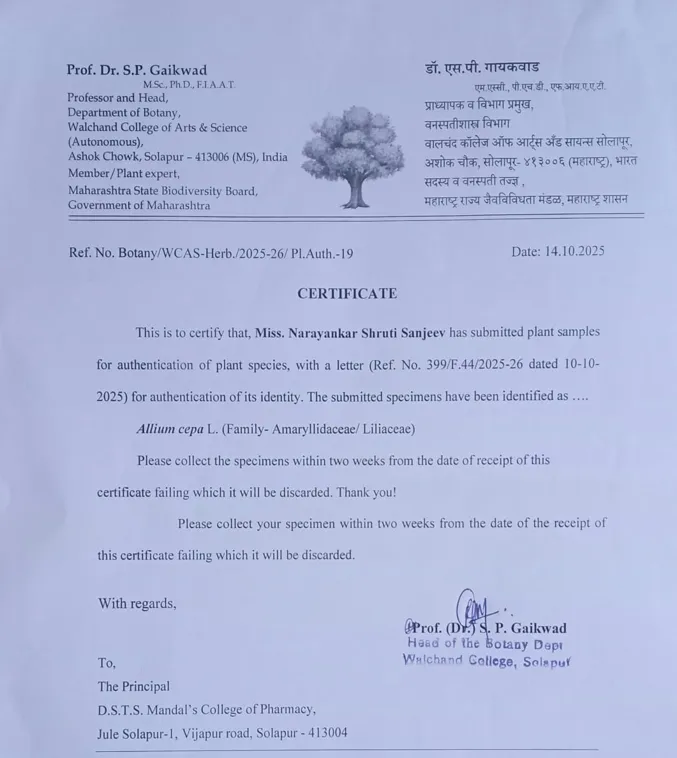
Figure No.1: Authentication letter of Plant species
Extraction of Onion Peel
The onion peels were cut into small pieces and left in the sunlight for two days without being washed. After that, the peels were kept in a container that did not contain any moisture at room temperature. Extraction is an important step in identifying the desired bioactive compounds and their use in the nutraceutical industry. One of the earliest traditional methods used for extraction is based on the polarity of the compounds, and various extraction techniques have been developed using different solvent systems. Different solvents, such as methanol, ethanol, and acetone, have been used in the solvent extraction process to effectively extract these phytochemicals or bioactive compounds. Water is a commonly used solvent for extracting bioactive compounds from onion peels. The extraction process was performed using the maceration method with a hydroethanolic solvent (ethanol to water, 70:30 by volume) for 24 to 48 hours at room temperature. The ethanolic extract of onion peel was concentrated by allowing the ethanol to evaporate in a china dish at room temperature. The residue obtained after complete solvent evaporation was collected as the dried onion peel extract and subsequently used in the preparation of the antidandruff shampoo.
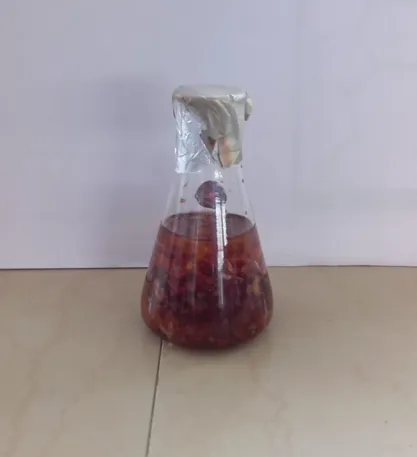
Figure No. 2 Extraction process
Preparation of Shampoo
Carbopol was dissolved in purified water and allowed to hydrate for 30 minutes. Sodium Lauryl Sulfate (SLS) and glycerin were added slowly with continuous stirring. The dried onion peel extract was then incorporated into the shampoo base. Perfume was added, and the mixture was stirred thoroughly. The pH was adjusted using citric acid solution. The final volume was made up with purified water, and the formulation was stirred gently until a homogeneous shampoo was obtained. The prepared shampoo was transferred into suitable containers and stored at room temperature.3
Table No. 1: Formulation of Anti-Dandruff Shampoo
|
Ingredients |
F1 |
F2 |
F3 |
|
Onion peel extract |
0.5% |
1% |
1.5% |
|
Sodium Lauryl Sulfate (SLS) |
3 gm |
3 gm |
3 gm |
|
Glycerin |
1.5 ml |
1.5 ml |
1.5 ml |
|
Citric Acid |
30 mg |
30 mg |
30 mg |
|
Carbopol |
500 mg |
500 mg |
500 mg |
|
Methyl paraben |
30 mg |
30 mg |
30 mg |
|
Perfume |
1 to 3 drops |
1 to 3 drops |
1 to 3 drops |
|
Purified Water |
Qs to 30 ml |
Qs to 30 ml |
Qs to 30 ml |
Evaluation of Shampoo
To check the quality of the prepared products, some tests were done. These tests included looking at the product visually and doing some science-based checks like measuring pH, density, and thickness.
1. Physical appearance and visual assessment:
The product was checked for how clear it was, its color, its smell, whether it could make foam, and how well it flowed.
2. pH measurement:
A solution was made by mixing 10% of the shampoo with distilled water. The pH of this solution was measured using a pH meter that had been checked and set up properly. ,
3. Determining the percentage of solid content:
A clean and dry dish was weighed. Then, four grams of shampoo were added to it. The total weight of the dish and shampoo was noted. The exact weight of the shampoo was calculated. The dish with shampoo was placed on a hot plate until all the liquid dried up. The weight of the dried shampoo was then measured, which showed how much solid stuff was in it.
4. Rheological testing:
The viscosity was determined using a Brookfield Viscometer with spinning speeds ranging from 0.3 to 10 revolutions per minute. The temperature and the size of the container used for each test remained constant throughout all measurements.
5. Dirt dispersion test:
Two drops of shampoo were added to a test tube with 10 ml of distilled water. Then, one drop of India ink was added. The tube was sealed and shaken ten times. The amount of ink in the foam was checked and rated as None, Light, Moderate, or Heavy.
6. Foam Formation:
The ability of the shampoo to form foam was tested using the agitation method in a cylinder. Fifty milliliters of a 10% (w/v) shampoo solution were poured into a 500 ml graduated cylinder, sealed, and manually shaken ten times. The total volume of foam was measured 5, 10 and 15 minutes after shaking.
7. Density:
The density of each formulation was calculated by dividing the mass of the shampoo sample by its volume in a test tube.
Result:
In this research, a total of three formulations were prepared and tested for various parameters. The results of the visual inspection of these formulations are listed in Table 2. It can be observed that all the formulations exhibited good foaming characteristics. The pH of shampoos is important as it helps improve and enhance hair quality, reduces eye irritation, and maintains the ecological balance of the scalp. There is a current trend towards developing shampoos with lower pH levels to reduce damage to the hair. Mild acidity helps prevent swelling and promotes the tightening of the hair cuticles, thereby enhancing shine. As shown in Table 2, all the shampoos had an acidic balance with a pH range of 5.5 to 5.9, which is close to the skin's natural pH. The percentage of solid content in the shampoo is also important because if it is too high, the product may be difficult to apply to the hair or hard to rinse out. The results for the percentage of solids are presented in Table 2, and they were found to range between 22% and 29%. As a result, the shampoos were easy to rinse out. Dirt that remains in the foam is hard to wash out. It will settle back onto the hair. All three shampoos produced similar results. These results suggest that no dirt remains in the foam, meaning that the prepared and marketed formulations are acceptable. The significance of measuring the density of a shampoo lies in its ability to show the loss of volatile components or the presence of air in the product. The viscosity of the shampoo formulations was determined using a Brookfield viscometer with spindle number 63 at a rotational speed of 50 rpm. Out of the three formulations, F1 had the highest viscosity, whereas F3 had the lowest.
Table No. 2 Evaluation of Physical Appearance, pH, Solid Content, Dirt dispersion, Density and Viscosity
|
Batches
|
Appearance |
pH |
Solid Content (%) |
Dirt dispersion |
Density |
Viscosity |
|
F1 |
Reddish-orange |
5.51 ± 0.02 |
24.48 ± 2.19% |
Good |
1.013 ± 0.023 g/ml |
2244cP |
|
F2 |
Dark orange to brown |
5.61 ± 0.02 |
28.42 ± 6.10% |
Good |
1.207 ± 0.190 g/ml |
1811cP |
|
F3 |
Dark brownish |
5.81 ± 0.04 |
25.22 ± 2.34% |
Moderate |
1.233 ± 0.208 g/ml |
1800cp |
Even though the amount of foam produced has little impact on how well a shampoo cleans, it is very important to customers. Because of this, foam is a key factor when assessing the effectiveness of a shampoo. The foam stability of the shampoo formulations was assessed with a 500 ml graduated cylinder. The volume of foam, measured in milliliters, was noted at 5, 10, and 15 minutes following shaking. Batch F3 showed the greatest foam retention, with F2 and F1 following in that order.
Table No. 3 Evaluation of Foam formation
|
Time |
F1 |
F2 |
F3 |
|
5min |
350ml |
380ml |
380ml |
|
10min |
280ml |
300ml |
310ml |
|
15min |
250ml |
280ml |
295ml |
DISCUSSION
The developed anti-dandruff shampoo formulations exhibited acceptable physicochemical properties, including suitable pH, viscosity, density, foam stability, and cleansing ability. Among the formulations, F3 containing 1.5% onion peel extract showed the best overall performance, particularly in foam stability, while maintaining acceptable quality parameters. These findings suggest that onion peel extract is a promising natural ingredient for anti-dandruff shampoo formulations, although further antimicrobial, stability, and clinical studies are required to confirm its therapeutic efficacy.
CONCLUSION
The current research successfully created and tested an anti-dandruff shampoo that includes onion peel extract at various concentrations. All the formulas showed good physical and chemical characteristics, such as a suitable pH level, good foaming capability, acceptable viscosity, proper density, and effective dirt removal, which suggest that the product is of good quality and performs well in cleaning. Among the tested formulas, F3, which contains 1.5% onion peel extract, performed best in terms of foam stability while still meeting the required quality standards. The findings indicate that onion peel extract can be a useful natural component in shampoo formulations because of its known antimicrobial and antifungal qualities, which may help in reducing dandruff. Therefore, onion peel extract appears to be a promising and environmentally friendly option for anti-dandruff shampoos. Nevertheless, additional studies on antimicrobial activity, product stability, and clinical effectiveness are needed to ensure its long-term benefits and safety.
Acknowledgement:
The authors express their sincere gratitude to D.S.T.S. Mandal's College of Pharmacy, Solapur, for providing the necessary laboratory facilities and academic support to carry out this research work. The authors are especially thankful to the Principal, the Department of Pharmaceutics, and all the faculty members for their valuable guidance, encouragement, and continuous support throughout the study.
Conflict of Interest:
The authors state that there are no conflicts of interest related to the publication of this research.
REFERENCES

Shruti Narayankar, K. Kamalapurkar, Priyanka Bandicchot, Development and Characterization of Anti-Dandruff Shampoo Using Onion Peel Extract, Int. J. of Pharm. Sci., 2026, Vol 4, Issue 8, 4078-4086, https://doi.org/10.5281/zenodo.22091338
 10.5281/zenodo.22091338