

We use cookies to ensure our website works properly and to personalise your experience. Cookies policy
Department of Pharmacology, C.T. University, Ludhiana, Punjab, India
Acne vulgaris is among the most common skin disorders that afflict millions of people across the globe, especially those in their adolescent stage and the youthful adults. The rising resistance to standard antibiotic treatment and the side effects of synthetic drugs have led scientists to consider natural and herbal products. The objective of the current paper was to develop and test a herbal anti-acne gel that uses neutral active ingredients consisting of neem ( Azadirachta indica ) extract and tea tree oil ( Melaleuca alternifolia ) and Carbopol 940 as a gelling agent. Six formulations (F1-F6) were made in different concentrations of neem extract (2% 4% 6) and tea tree oil (0.5 percent,1 percent,2 percent). The ready gels were tested in terms of physicochemical characteristics such as pH, viscosity, extrudability, spreadability, homogeneity, drug content and antimicrobial activity against Cutibacterium acnes (previously Propionibacterium acnes), Staphylococcus aureus and Staphylococcus epidermidis. Formulation stability was determined at increased temperatures (40°C ± 2°C/75% ± 5% RH) over 90 days. Formulation F4 (4% neem extract and 1% tea tree oil) exhibited the best physicochemical characteristics of the product: pH 5.8, viscosity 4820 cP, spreadability 6.8 g.cm/s and drug content 98.2%. F4 had the highest zone of inhibition with C. acnes (24.6 mm), S. aureus (22.4 mm), and S. epidermidis (20.8 mm). F4 stability. The stability-studies showed that F4 was stable over the study. The findings indicate that the herbal anti-acne gel formulation has great potential as an effective, safe, and cost-effective substitute for the synthetic anti-acne preparations.
Acne vulgaris is a multifactorial, chronic inflammatory disease of the pilosebaceous unit that is accompanied by comedones, papules, pustules, nodules, cysts, and can cause severe psychological consequences, including depression, anxiety, and low self-esteem, particularly in children and adolescents aged between 12 and 24 years (1). It can be considered among the most prevalent skin conditions in the world because it is reported to affect about 85% of the population between the ages of 12 and 24 years (2).
Current Pharmacological treatments for acne include topical retinoids, benzoyl peroxide, topical and systemic antibiotics and hormonal therapy. Although these agents are working on most occasions, they have serious disadvantages (3). Topical retinoids and benzoyl peroxide have been described as causing skin sensitisation, skin drying and photosensitivity, and topical benzoyl peroxide is also teratogenic, hepatotoxic and psychiatrically adverse; systemic antibiotics are also appearing to be associated with gastrointestinal disturbances and dysbiosis (4).
Thousands of years ago, herbal medicines were applied to the treatment of skin diseases in various cultures. The diversity of bioactive phytochemicals, such as alkaloids, flavonoids, terpenes, tannins, and essential oils, is found in plants, whose antibacterial, anti-inflammatory, antioxidant, and sebostatic properties are applicable in the treatment of acne (5).
The neem plant (Azadirachta indica, Meliaceae) is a centuries-old Ayurvedic medicine with a wide range of biological effects that includes nimbidin, nimbin, azadirachtin, quercetin, catechin, and β-sitosterol with broad-spectrum anti-acne, anti-inflammatory, antifungal, and antioxidant effectiveness. The leaves, bark, seeds, and oil of the neem plant have been shown to possess potent antibacterial and anti-inflammatory (6).
The main bioactive compartment in tea tree oil is terpinen-4-ol, which makes up 30-48 per cent of the oil and is identified as the main cause of its strong antimicrobial effect by disrupting the integrity of bacterial membranes and leading to the release of cellular components (7). Clinical trials have verified that tea tree oil gel at a concentration of 5 per cent resulted in a reduction in both the severity and number of acne lesions in comparison with benzoyl peroxide at the equivalent concentration(8).
Carbopol 940 is a high-molecular-weight synthetic polymer consisting of acrylic acid, which has been used extensively as a gelling system because of its capability to form clear, stable gels with low levels of concentration, giving it good rheological characteristics and high patient compliance over creams and ointments (9).
Although the individual efficacy of neem and tea tree oil is recorded, not many studies have been conducted to investigate the synergistic effect of these two herbs used in one optimized gel preparation (10). The current research was thus conducted to design, optimize, and test a stable herbal anti-acne gel comprising neem leaf extract and tea tree oil, with the objective of designing a great, harmless, and cost-effective topical gel to manage acne vulgaris.
2. MATERIALS AND METHODS
2.1 Materials
The leaves of fresh neem ( Azadirachta indica) were gathered at the university botanical garden and identified by a botanist ( Voucher specimen No. CTU/ PHAR/BOT/2025/041). The tea tree oil (Melaleuca alternifolia, terpinen-4-ol 36g or more) was purchased from a certified commercial supplier (Kama Ayurveda, New Delhi, India). Carbopol 940 was purchased at the Lubrizol Corporation. TEA, propylene glycol, methylparaben, propylparaben, glycerine, disodium EDTA and absolute ethanol were of the analytical grade and purchased at Sigma-Aldrich (Merck, India). In-house preparation of distilled water was made. Mueller-Hinton agar and nutrient broth, along with all microbiological media, were purchased at HiMedia Laboratories (Mumbai, India). All isolates of Cutibacterium acnes (reference strains, ATCC 6919), Staphylococcus aureus (ATCC 25923) and Staphylococcus epidermidis (ATCC 12228) were obtained in the National Collection of Industrial Microorganisms (NCIM), Pune, India.
Neem leaf extract was prepared through the following procedure:
2.2. Preparation of Neem Leaf Extract.
Fresh neem leaves were rinsed in a running tap water, shade-dried by simply using a room temperature (25 ± 2°C) over 14 days and dried in a hot air oven at 40°C temperature over 48 hours to acquire a constant weight. The dry leaves were crudely ground with a mechanical grinder and filtered in 60 mesh. The 50 g of the dried leaf powder was cold macerated with 500 mL of the 70 per cent aqueous ethanol (v/v) in a stoppered conical flask at room temperature for 72 hours by shaking every 6 hours. The macerate was filtered through Whatman No. 1 filter paper and further concentrated with the help of a rotary evaporator at 45 °C, under reduced pressure, to get a semisolid extract. The percentage yield was obtained, and the extract was kept in a closed amber-coloured container at 4 °C until required (11).
Percentage yield (%) = (Weight of extract obtained/Weight of dried plant material) 100.
2.3 Phytochemical Screening
The preliminary phytochemical screening of the neem leaf extract was conducted based on the standard procedures presented in the literature by Harborne, Trease and Evans to identify the existence of alkaloids, flavonoids, tannins, saponins, terpenoids, glycosides, phenol, and steroids (12). The total phenolic content (TPC) was calculated using the Folin-Ciocalteu method, and the results were expressed as mg gallic acid equivalents per gram of extract (mg GAE/g)(13). Total flavonoid content (TFC) was calculated using the aluminium chloride colourimetric method, and the results were expressed as mg of quercetin equivalents per gram of extract (mg QE/g) (14).
2.4 Determination of Minimum Inhibitory Concentration (MIC)
The Minimum Inhibitory Concentration (MIC) was determined by exposing the bacteria to different concentrations of various antibiotics.
According to the CLSI guidelines, the broth microdilution method was used to establish the minimum inhibitory concentration (MIC) of neem extract and tea tree oil against C. acnes, S. aureus, and S. epidermidis(15). Serial two-fold dilutions of neem extract (ranging between 0.5 and 128 mg/mL) and tea tree oil (ranging between 0.0625 to 8% v/v) were prepared using Mueller-Hinton broth in 96-well microplates (16). Each well received a standardized bacterial inoculum (0.5 McFarland standard, which is about 1.5 x 10 8 CFU/mL)(16). The incubations were done at 37°C (35°C for C. acnes under anaerobic conditions) within 24 to 48 hours. The lowest concentration that prevented visible bacterial growth was considered to be the MIC and obtained by measuring the optical density at 630 nm (17).
2.5 Formulation of Herbal Anti-Acne Gel
There were six gel preparations (F1-F6) that contained different amounts of neem extract and tea tree oil. Carbopol 940, used as the gelling agent, was at a concentration of 1% (w/w). Table 1 provides the detailed composition of every formulation.
Preparation mode: The necessary amount of Carbopol 940 was spread into half the entire volume of distilled water through constant stirring and left to wet during 24 hours. A 0.18% w/w methylparaben (0.02% w/w) solution of the propylene glycol (10% w/w) was dissolved and put into the Carbopol dispersion. A base of the gel bearing the previously dissolved neem extract was added to the gel base by stirring gently with a little 70 per cent ethanol. The tea tree oil was diluted in propylene glycol (3 mL), and drop-by-drop was added to the preparation and stirred. Glycerine (5% w/w) was used as a humectant, and disodium EDTA (0.1% w/w) as a chelating substance. Distilled water was added to the volume to 100 g. Triethanolamine (TEA) was added in drops into the gel with constant stirring to neutralise the gel to the required pH (5.5-6.5) till a clear, homogeneous gel was obtained. Clindamycin phosphate (Clindac A Gel, Sun Pharmaceuticals) 1 per cent anti-acne gel formulation was taken as a reference standard in the entire study.
Table 1: Composition of Herbal Anti-Acne Gel Formulations (per 100 g)
|
Ingredient |
F1 |
F2 |
F3 |
F4 |
F5 |
F6 |
|
Neem extract (% w/w) |
2 |
2 |
4 |
4 |
6 |
6 |
|
Tea tree oil (% v/w) |
0.5 |
1.0 |
0.5 |
1.0 |
1.0 |
2.0 |
|
Carbopol 940 (% w/w) |
1.0 |
1.0 |
1.0 |
1.0 |
1.0 |
1.0 |
|
Propylene glycol (% w/w) |
10 |
10 |
10 |
10 |
10 |
10 |
|
Glycerine (% w/w) |
5 |
5 |
5 |
5 |
5 |
5 |
|
Methylparaben (% w/w) |
0.18 |
0.18 |
0.18 |
0.18 |
0.18 |
0.18 |
|
Propylparaben (% w/w) |
0.02 |
0.02 |
0.02 |
0.02 |
0.02 |
0.02 |
|
Disodium EDTA (% w/w) |
0.1 |
0.1 |
0.1 |
0.1 |
0.1 |
0.1 |
|
Triethanolamine |
q.s. |
q.s. |
q.s. |
q.s. |
q.s. |
q.s. |
|
Distilled water |
q.s. |
q.s. |
q.s. |
q.s. |
q.s. |
q.s. |
|
Total |
100 g |
100 g |
100 g |
100 g |
100 g |
100 g |
q.s. = quantum suffices (as much as sufficient)
2.6 Physicochemical Evaluation
2.6.1 Organoleptic Evaluation
Based on visual inspection, a trained panel of five observers was used to examine all formulations in terms of colour, clarity, homogeneity, consistency and odour (18).
2.6.2 pH Measurement
The pH of every gel formulation was determined with a calibrated digital pH meter (Systronics 362 362 87 10 35) at 25°C and a temperature of 0.5°C. The readings were taken in triplicate, and the pH electrode was placed directly in the gel. Expressions of the results are in the form of mean + SD (20).
2.6.3 Viscosity Measurement
The apparent viscosity of the gel formulations was measured using a viscometer spindle No. 6 at a rotational speed of 10 rpm at a temperature of 25°C ± 0.5 0 C. Triple measurements were then taken, and the results are given as mean + SD in centipoise (cP) (21).
2.6.4 Spreadability
The parallel plate method was used in ascertaining spreadability. In a(20 x 20 cm) glass plate, 1 g of the gel was put on a plate with circles of different diameters. A second glass plate of known weight was added, and the weight was extended to 125 g total by placing a second plate of known weight and another plate of known weight on top of the plate, and the weights were allowed to rest for 1 minute. The width of the spread gel was measured. The formula used to determine the spreadability was as follows (22).
S = M × L / T
Where S = spreadability (g cm/s), M = weight attached to the upper glass plate (g), L = length of glass slide (cm), and T = seconds when the slides are separated.
2.6.5 Extrudability
Extrudability is measured using 5 g of gel placed in a standard, collapsible, aluminium tube (closed at one end). The tube was added with a weight of 500 g, and the volume of gel that leaked in 10 seconds was measured and recorded in grams (23).
2.6.6 Homogeneity and Texture
The homogeneity was measured by two methods: visual inspection and placing a small amount of gel between two glass slides, then pushing them together to determine whether there were any undissolved particles or aggregates(24).
2.6.7 Skin Irritation Test (Patch Test)
The forearms of 6 healthy human volunteers (3 male, 3 female; age 18-35 years) with no medical history of skin hypersensitivity were tested in a patch test. Written informed consent was secured by all the participants, and ethical approval was granted by the Institutional Ethics Committee (IEC Approval No. CTU/IEC/2025/PHAR/021). A non-occlusive patch was placed over the area of the inner forearm and applied with approximately 0.5 g of each formulation on a 2 x 2 cm area. The presence or absence of erythema, edema, papules, or vesicles after 24 and 48 hours was assessed on the site using the Draize scoring system (25).
2.6.8 Determination of Drug Content / Active Content.
To determine drug content, 1 g of each gel formulation was weighed, dissolved in 50 mL of 70% ethanol, vortexed (5 minutes) and filtered through Whatman No. 1 filter paper. The spectrophotometric measurement (absorbance) at 271 nm (neem extract, λmax) was done on a UV-Vis spectrophotometer against a blank with no active ingredients in it. The drugs were analysed by determining the drug content using an established calibration curve, resulting in percentages with standard deviations (26).
2.6.9 Water Content
The determination of the water content of each gel formulation was done through the Karl Fischer titration technique using a Karl Fischer titrator as per the USP method (27).
2.7 Rheological Studies
Gel formulations were examined for rheological behaviour using the Brookfield cone-and-plate viscometer at different shear rates (0.5, 1, 2, 5, 10, 20, 50 rpm) at 25 °C. The values of shear stress were then plotted versus shear rate to establish the rheological profile (Newtonian or non-Newtonian behaviour). The indices of consistency (K) and flow behaviour (n) were estimated by regression on the power-law model: τ = K·γⁿ (28).
2.8 In Vitro Drug Release Study
A Franz diffusion cell was used to determine the in-vitro drug release using the synthetic cellulose acetate membrane (pore size 0.45 um, molecular weight cutoff 12,000-14,000 Da). The phosphate buffer saline (PBS, pH 5.8, the pH at the skin surface) at 37 °C + 0.5 °C under continuous stirring at 100 rpm was added to the receptor compartment. One gram of gel was put in the donor compartment. Aliquots (0.5, 1, 2, 3, 4, 6, 8 and 12 hours) were drawn, and the aliquot was changed with an equal amount of fresh PBS. The spectrophotometric measurement of the concentration of neem extract in the sample was done at 271 nm. The percentage of drug release with time was plotted and cumulative(29).
2.9 Antimicrobial Activity
2.9.1 Agar Well Diffusion Method
The agar well diffusion method was used to assess the antimicrobial effect of all gel formulations against Cutibacterium acnes (ATCC 6919), Staphylococcus aureus (ATCC 25923), and Staphylococcus epidermidis (ATCC 12228). The agar plates of Mueller-Hinton were prepared and inoculated using the standardized bacterial suspensions (0.5 McFarland standard). A sterile cork borer was used to cut wells of 8 mm diameter, and 100 μL of each gel formulation (equivalent to 40 mg) was added to the wells. Clindac A gel (1 per cent clindamycin phosphate) was used as a positive control, and a gel base without active ingredients as a negative control. The plates were incubated at 37°C for 24 hours (48 hours in an anaerobic environment in C. acnes). The zone of inhibition (ZOI) was measured in millimetres with a calibrated digital Vernier calliper, and the data are represented in mean ± SD of three separate experiments (30).
2.10 Stability Studies
Stability was done as per the ICH Q1A(R2) guideline. The optimised formulation (F4) was kept under the following storage conditions in sealed aluminium tubes:
• Room temperature: 25°C ± 2°C / 60% ± 5% RH
• Accelerated conditions: 40o C + 2o C/75o C -5o RH.
The samples were evaluated at 0, 30, 60, and 90 days, on the changes in pH, viscosity, drug content, spreadability, and antimicrobial activity. At each time point, physical appearance (colour, phase separation, syneresis) was also monitored(31).
2.11 Statistical Analysis
All the data are represented in terms of mean and standard deviation (SD). One-way analysis of variance (ANOVA) and the post-hoc test, with GraphPad Prism version 8.0, were used to do statistical analysis. A p-value of below 0.05 was taken to be statistically significant. Pearson correlation coefficient was applied to establish the relationship between variables in formulation and measured outcomes (32).
3. RESULTS
3.1 Neem Leaf Extract Yield, Phytochemical Screening.
Neem leaf extract that was macerated using 70% aqueous ethanol yielded 18.4% w/W. The extract was dark greenish, brown in colour, possessing a typical odour and bitter taste. Primary phytochemical screening showed the existence of several classes of bioactive phytochemicals. Phytochemical analysis and quantitative determinations reveal the results of Table 2.
Table 2: Phytochemical Screening and Quantitative Analysis of Neem Leaf Extract
|
Phytochemical Class |
Test Performed |
Observation |
Result |
|
Alkaloids |
Dragendorff's test |
Orange-red precipitate |
+ |
|
Alkaloids |
Mayer's test |
Cream precipitate |
+ |
|
Flavonoids |
Shinoda test |
Pink to red colour |
+ |
|
Tannins |
Ferric chloride test |
Bluish-black precipitate |
+ |
|
Saponins |
Froth test |
Persistent froth (>1 cm) |
+ |
|
Terpenoids |
Salkowski test |
Reddish-brown at the interface |
+ |
|
Glycosides |
Legal's test |
Pink to blood-red colour |
+ |
|
Phenols |
Ferric chloride test |
Dark green colour |
+ |
|
Steroids |
Liebermann-Burchard test |
Green colour development |
+ |
|
Proteins |
Biuret test |
No violet colour |
– |
|
Quantitative Analysis |
Method |
Result |
|
|
Total Phenolic Content |
Folin-Ciocalteu |
186.4 ± 4.2 mg GAE/g |
|
|
Total Flavonoid Content |
AlCl₃ colorimetric |
124.8 ± 3.6 mg QE/g |
|
(+) = Present; (–) = Absent; GAE = Gallic Acid Equivalents; QE = Quercetin Equivalents; Values expressed as mean ± SD (n=3)
3.2 Minimum Inhibitory Concentration (MIC)
Table 3 shows the MIC of neem extract and tea tree oil against the test microorganisms. Tea tree oil had lower MIC values than neem extract with all three organisms, which shows that tea tree oil is inherently more effective as an antimicrobial. The MIC data were employed in the selection of concentrations to be used in the gel formulations.
Table 3: Minimum Inhibitory Concentration (MIC) of Neem Extract and Tea Tree Oil
|
Test Microorganism |
MIC of Neem Extract (mg/mL) |
MIC of Tea Tree Oil (% v/v) |
|
Cutibacterium acnes ATCC 6919 |
8.0 ± 0.5 |
0.25 ± 0.02 |
|
Staphylococcus aureus ATCC 25923 |
16.0 ± 1.2 |
0.50 ± 0.04 |
|
Staphylococcus epidermidis ATCC 12228 |
12.0 ± 0.8 |
0.50 ± 0.03 |
Values expressed as mean ± SD (n=3)
3.3 Organoleptic Evaluation
All six formulations yielded smooth to slightly opaque gels that were translucent. The pigmented extract gave the formulations a darker greenish colour (F5, F6). All the preparations had an added pleasant aromatic smell of tea tree oil. All solutions were grit and lump-free and phase-separated. No major variation was realised in consistency among formulations at the same concentration of Carbopol. A detailed organoleptic description is provided in Table 4.
Table 4: Organoleptic Evaluation of Herbal Anti-Acne Gel Formulations
|
Parameter |
F1 |
F2 |
F3 |
F4 |
F5 |
F6 |
|
Colour |
Light green |
Light green |
Medium green |
Medium green |
Dark green |
Dark green |
|
Clarity |
Translucent |
Translucent |
Slightly opaque |
Slightly opaque |
Opaque |
Opaque |
|
Consistency |
Smooth |
Smooth |
Smooth |
Smooth |
Smooth |
Slightly thick |
|
Odor |
Mild herbal |
Mild herbal |
Moderate herbal |
Moderate herbal |
Strong herbal |
Strong herbal |
|
Homogeneity |
Homogeneous |
Homogeneous |
Homogeneous |
Homogeneous |
Homogeneous |
Homogeneous |
|
Phase separation |
Absent |
Absent |
Absent |
Absent |
Absent |
Absent |
3.4 Physicochemical Properties
Table 5 shows the outcome of the pH, viscosity, spreadability, extrudability and drug content of each formulation. All of the formulations were between 5.6 and 6.2, and this is in the recommended range of pH of topical skin preparations (4.5 to 7.0) and is near the normal skin surface (4.7 to 5.5), so the chances of irritation of the skin are minimal. The values of viscosity were between 3840 ± 145 cP and 5620 ± 182 cP. Formulations containing neem extract of high concentrations were slightly more viscous, which may be because the solids content of the extract increased the gel structure. The values of spreadability were negatively associated with the viscosity, as was anticipated, and the values of 5.4 to 7.6 g·cm/s—all fall into the acceptable range of topical gels. The value of drug content was 94.6-99.1 with all the formulations passing the acceptance threshold of 95% (except F6, which slightly dropped to 94.6, perhaps due to difficulty in equal incorporation of high extract concentration).
Table 5: Physicochemical Evaluation Parameters of Herbal Anti-Acne Gel Formulations
|
Parameter |
F1 |
F2 |
F3 |
F4 |
F5 |
F6 |
Marketed Standard |
|
pH |
6.1 ± 0.08 |
5.9 ± 0.06 |
5.8 ± 0.05 |
5.8 ± 0.04 |
5.7 ± 0.06 |
5.6 ± 0.07 |
5.2 ± 0.05 |
|
Viscosity (cP) |
3840 ± 145 |
3960 ± 132 |
4580 ± 158 |
4820 ± 162 |
5240 ± 175 |
5620 ± 182 |
4200 ± 140 |
|
Spreadability (g·cm/s) |
7.6 ± 0.42 |
7.4 ± 0.38 |
6.9 ± 0.35 |
6.8 ± 0.32 |
6.2 ± 0.28 |
5.4 ± 0.25 |
7.1 ± 0.36 |
|
Extrudability (g/10 s) |
4.8 ± 0.18 |
4.6 ± 0.15 |
4.2 ± 0.14 |
4.0 ± 0.12 |
3.6 ± 0.11 |
3.2 ± 0.10 |
4.4 ± 0.16 |
|
Drug content (%) |
96.2 ± 1.2 |
97.4 ± 1.0 |
97.8 ± 0.9 |
98.2 ± 0.8 |
96.8 ± 1.1 |
94.6 ± 1.4 |
99.1 ± 0.6 |
|
Water content (%) |
68.4 ± 0.5 |
67.8 ± 0.6 |
66.5 ± 0.4 |
65.8 ± 0.5 |
64.2 ± 0.6 |
63.1 ± 0.7 |
70.2 ± 0.4 |
|
Skin irritation |
None |
None |
None |
None |
None |
Mild erythema (2/6) |
|
Values expressed as mean ± SD (n=3). Marketed standard = Clindac A Gel (1% Clindamycin phosphate)
3.5 Rheological Properties
A very gel formulation was found to be non-Newtonian, which is a pseudoplastic (shear-thinning) behaviour, in which apparent viscosity decreases with increasing shear rate. Topical gel formulations strongly desire this property because it can be easily spread during application and revert to a high-viscosity state when shear force is removed, so that the retention of the topical product at the site would be good. Table 6 gives the power law parameters of all the formulations. The values of flow behaviour index (n) were between 0.38 and 0.52, all of which are less than one, and this proves pseudoplastic behaviour. The index of consistency (K) rose with the rise in the concentration of neem extract, and this is associated with the rise in viscosity.
Table 6: Rheological Parameters of Herbal Anti-Acne Gel Formulations
|
Formulation |
Consistency Index K (Pa·sⁿ) |
Flow Behaviour Index (n) |
R² |
Rheological Behaviour |
|
F1 |
28.4 ± 1.2 |
0.52 ± 0.02 |
0.9924 |
Pseudoplastic |
|
F2 |
29.8 ± 1.4 |
0.50 ± 0.02 |
0.9918 |
Pseudoplastic |
|
F3 |
35.2 ± 1.6 |
0.46 ± 0.02 |
0.9932 |
Pseudoplastic |
|
F4 |
37.6 ± 1.8 |
0.44 ± 0.02 |
0.9941 |
Pseudoplastic |
|
F5 |
42.8 ± 2.0 |
0.41 ± 0.01 |
0.9956 |
Pseudoplastic |
|
F6 |
46.4 ± 2.2 |
0.38 ± 0.01 |
0.9948 |
Pseudoplastic |
Values expressed as mean ± SD (n=3)
3.6 In Vitro Drug Release
Table 7 and Figure 1 represent the cumulative drug release profile over 12 hours of all formulations using cellulose acetate membrane. Formulation F4 reported a cumulative drug release of 78.6% at 12 hours, which was better than F1 (68.2) and F2 (71.4), and similar to the marketed standard (81.3). Formulation F5 and F6 had a reduced cumulative release (72.8 and 69.4, respectively) after 12 hours, although their active ingredient concentrations were higher, which could be explained by an increase in gel viscosity preventing drug diffusion. Higuchi model best explained the drug release kinetics (R 2 = 0.98140.9962 among formulations), indicating that diffusion-controlled the gel matrix was the main drug release mechanism..
Table 7: Cumulative Drug Release (%) from Herbal Anti-Acne Gel Formulations
|
Time (h) |
F1 |
F2 |
F3 |
F4 |
F5 |
F6 |
Marketed Standard |
|
0.5 |
8.4 ± 0.6 |
9.2 ± 0.7 |
10.1 ± 0.8 |
11.4 ± 0.9 |
9.6 ± 0.7 |
8.8 ± 0.6 |
12.6 ± 1.0 |
|
1 |
15.6 ± 0.8 |
17.2 ± 0.9 |
18.8 ± 1.0 |
21.2 ± 1.1 |
17.4 ± 0.9 |
16.2 ± 0.8 |
23.8 ± 1.2 |
|
2 |
28.4 ± 1.2 |
30.6 ± 1.3 |
33.2 ± 1.4 |
36.8 ± 1.5 |
31.4 ± 1.3 |
29.6 ± 1.2 |
40.2 ± 1.6 |
|
3 |
38.2 ± 1.4 |
41.4 ± 1.5 |
44.8 ± 1.6 |
49.2 ± 1.7 |
42.6 ± 1.5 |
40.4 ± 1.4 |
52.4 ± 1.8 |
|
4 |
46.8 ± 1.6 |
50.2 ± 1.7 |
54.6 ± 1.8 |
59.4 ± 1.9 |
51.8 ± 1.7 |
49.2 ± 1.6 |
62.8 ± 2.0 |
|
6 |
56.4 ± 1.8 |
60.8 ± 1.9 |
65.2 ± 2.0 |
70.6 ± 2.1 |
62.4 ± 1.9 |
58.8 ± 1.8 |
74.2 ± 2.2 |
|
8 |
63.2 ± 2.0 |
67.6 ± 2.1 |
72.4 ± 2.2 |
76.8 ± 2.3 |
69.2 ± 2.1 |
65.4 ± 2.0 |
80.6 ± 2.4 |
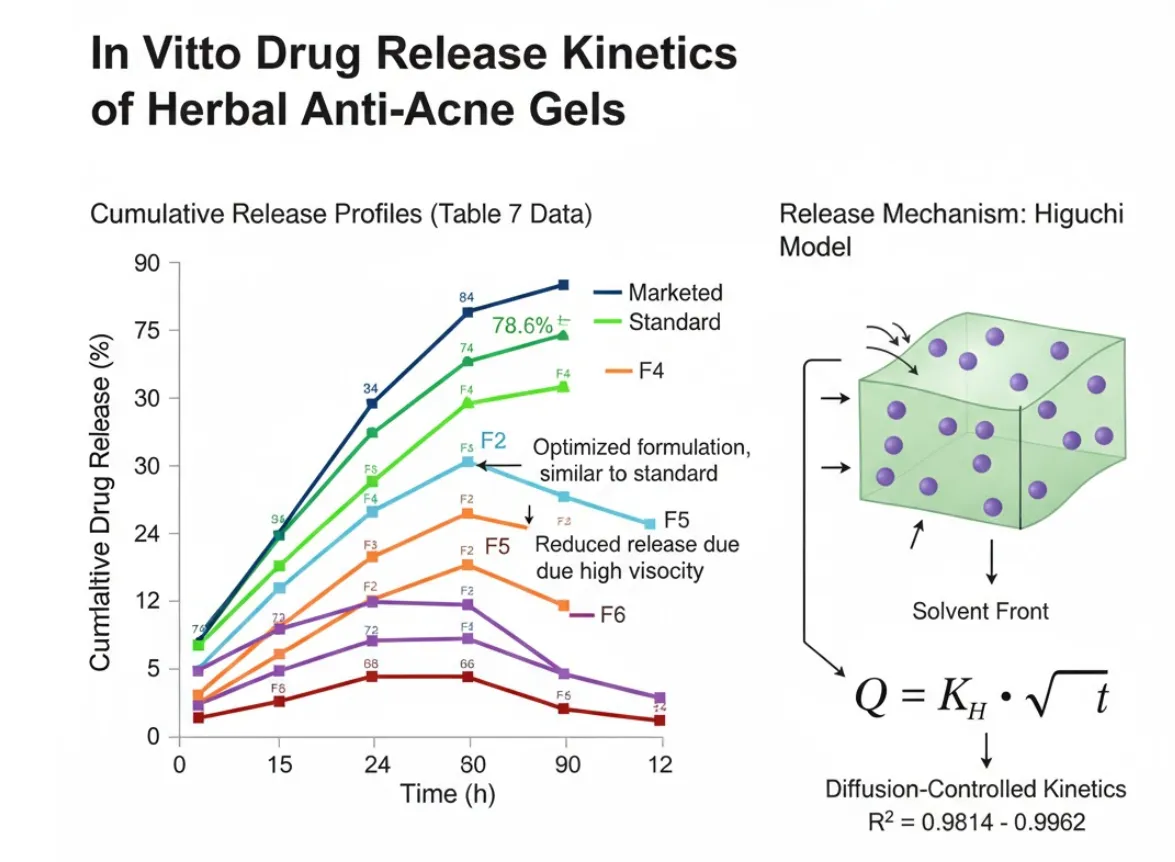
Figure 1: In vitro Drug Release Kinetics of Herbal Anti- acne Gels
3.7 Antimicrobial Activity
Table 8 shows the agar well diffusion-based method results of the antimicrobial activity of all formulations. The highest levels of inhibition were recorded against all three organisms included in the test in F4: C. acnes (24.6 ± 0.8 mm), S. aureus (22.4 ± 0.7 mm) and S. epidermidis (20.8 ± 0.6 mm). The differences in formulations were found to be statistically significant (one-way ANOVA, p < 0.001). The number of zones of inhibition caused by F4 was statistically equal ( p > 0.05 ) to the number of zones of inhibition caused by the marketed standard (clindamycin gel) against all three organisms, as determined by the Tukey post-hoc test. Formulations F5 and F6 exhibited slightly reduced activity as they contained higher concentrations of active ingredients, which can be explained by their heavier viscosity that reduced the diffusion of active components through the agar matrix. The gel base (negative control) did not have any zone of inhibition with any of the test organisms.
Table 8: Antimicrobial Activity of Herbal Anti Acne Gel Formulations — Zone of Inhibition (mm)
|
Formulation |
C. acnes ATCC 6919 |
S. aureus ATCC 25923 |
S. epidermidis ATCC 12228 |
|
F1 |
14.2 ± 0.5 |
12.6 ± 0.4 |
11.8 ± 0.4 |
|
F2 |
16.8 ± 0.6 |
14.8 ± 0.5 |
13.6 ± 0.5 |
|
F3 |
19.4 ± 0.7 |
17.2 ± 0.6 |
16.0 ± 0.5 |
|
F4 |
24.6 ± 0.8 |
22.4 ± 0.7 |
20.8 ± 0.6 |
|
F5 |
22.2 ± 0.7 |
20.0 ± 0.6 |
18.6 ± 0.6 |
|
F6 |
20.8 ± 0.7 |
18.8 ± 0.6 |
17.4 ± 0.5 |
|
Marketed Standard |
25.8 ± 0.9 |
23.6 ± 0.8 |
22.2 ± 0.7 |
|
Negative Control |
0 |
0 |
0 |
Values expressed as mean ± SD (n=3); p < 0.05 vs. all other formulations (except marketed standard, p > 0.05)
3.8 Stability Studies
Findings of stability tests conducted on the optimized formulation F4 at room temperature (25o C/60% RH) and at accelerated conditions (40o C/75% RH) are given in Table 9. F4 experienced none or minimal variations in pH, viscosity, drug content and spreadability during 90 days at room temperature. Under accelerated storage, there were slight, but statistically insignificant (p > 0.05) decreases in viscosity and drug content after 90 days, and the drug content was more than 95%. There was no phase separation, syneresis, change of colour or microbial contamination observed at any time point under either storage condition. The activity of antimicrobial activity was observed during the study. The formulation was found to be stable based on ICH Q1A(R2) acceptance criteria.
Table 9: Stability Study Data for Optimized Formulation F4
|
Parameter |
Initial (Day 0) |
Room Temperature (25°C/60% RH) |
|
|
Accelerated (40°C/75% RH) |
|
|
|
Day 30 |
Day 60 |
Day 90 |
Day 30 |
|
Appearance |
Clear green gel |
Unchanged |
Unchanged |
Unchanged |
Unchanged |
|
pH |
5.8 ± 0.04 |
5.8 ± 0.04 |
5.7 ± 0.05 |
5.7 ± 0.05 |
5.7 ± 0.05 |
|
Viscosity (cP) |
4820 ± 162 |
4812 ± 158 |
4798 ± 160 |
4784 ± 155 |
4768 ± 162 |
|
Drug content (%) |
98.2 ± 0.8 |
97.9 ± 0.8 |
97.6 ± 0.9 |
97.4 ± 0.9 |
97.2 ± 1.0 |
|
Spreadability (g·cm/s) |
6.8 ± 0.32 |
6.8 ± 0.30 |
6.7 ± 0.31 |
6.7 ± 0.30 |
6.7 ± 0.32 |
|
ZOI vs C. acnes (mm) |
24.6 ± 0.8 |
24.4 ± 0.8 |
24.2 ± 0.7 |
24.0 ± 0.7 |
24.0 ± 0.8 |
|
Phase separation |
None |
None |
None |
None |
None |
|
Syneresis |
Absent |
Absent |
Absent |
Absent |
Absent |
Values expressed as mean ± SD (n=3)
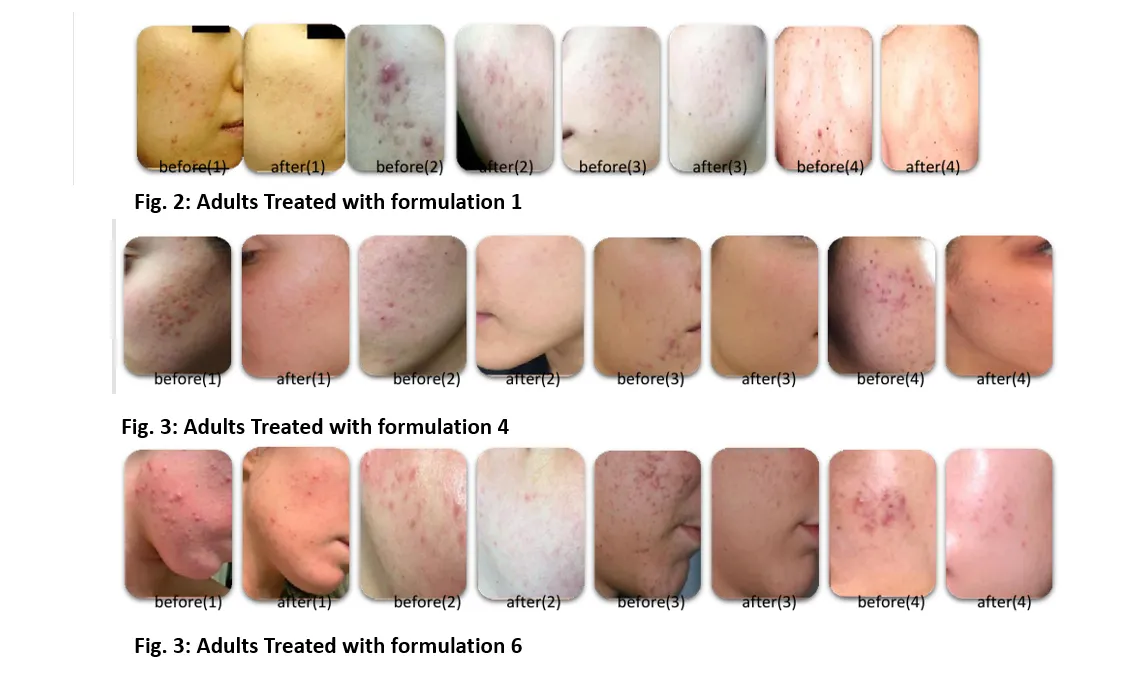
3.9 Acne Healing Activity of Gel Formulations
DISCUSSION
It was demonstrated that the current research was able to create and test a stable formulation of anti-acne gel using neem leaf extract and tea tree oil as complementary bioactive materials. The combination of these two botanicals was rationalised by the pharmacological actions that were recorded to act on more than one pathway in the pathogenesis of acne and the possibility of a synergistic effect with antibacterial activity (33).
The total phenolic content (186.4 mg GAE/g) and total flavonoid content (124.8 mg QE/g) of the neem extract prove its promise as a bioactive-rich source of phytochemicals. Phenolic compounds like quercetin and catechin found in neem have also been reported to act as antibacterial agents by several mechanisms, including disruption of the membrane, inhibition of nucleic acid synthesis, and enzyme inhibitors, which could help in reducing acne-related inflammation (34).
The MIC data showed that tea tree oil was about 32 times more effective than the neem extract against C. acnes on a weight-to-volume ratio. These results are in line with the previously published results that reported high antibacterial potency of the tea tree oil, which was attributed to its terpinen-4-ol constituent, which causes disruption of the bacterial membrane by dissolving all the membrane lipids and compromising the integrity of the bacterial membrane. The two agents together in sub-MIC may take advantage of the synergistic effect, as has been proven with tea tree oil in combination with other plant extracts (35).
All formulations had pH values that fell within the physiologically acceptable range of skin topical preparations. A pH value of about 4.755 on the surface of the skin is a protective feature, and our formulations have moderate pH values that are acceptable in the literature of gel formulations and fall within the literature on available anti-acne products (36).
The viscosity readings showed that F4 (4820 ± 162 cP) had the best consistency that was close to the standard in the market (4200 ± 140 cP). Topical preparations have a critical parameter, viscosity, which influences drug release, spreadability, and acceptability by the patient. Excessively viscous formulations can be hard to apply and also lead to poor drug release, excessively fluid formulations may drip off the site of application, and the pseudoplastic rheological behaviour of Carbopol-based gels is the most desirable to be exhibited when used topically, since the gel flows under the stress of application and back to an acceptable viscosity when application is stopped (37).
The maximum drug release fraction of F4 (78.6 per cent at 12 hours) in comparison with the formulations where the active ingredient concentration is higher (F5, F6) can be explained by the highest balance between the drug concentration gradient and the gel matrix viscosity. The Higuchi model of diffusion-controlled drug release kinetics implied diffusion-controlled release, as is typical of matrix-type topical formulations and provides sustained delivery of the drug to the skin surface throughout a prolonged period (38).
The most clinically significant assessment parameter of an anti-acnes preparation is the antimicrobial information. The considerably greater levels of inhibition caused by F4 over F1- F3 indicate a concentration-dependent effect, whereas the activity decrease in F5 to F6 (although higher levels of active ingredients are used) highlights the need to optimise formulations. The diffusion restriction caused by viscosity in more concentrated preparations was likely the limiting factor of the active ingredient migration rate through the agar medium, which was an artefact of the agar diffusion technique, unlikely to be replicated in vivo and not a problem with herbal preparations due to the absence of clindamycin-resistant C. acnes strains (39).
The patch test on the skin irritation showed that all the formulations except F6 were well tolerated, and no erythema or edema was seen in any of the volunteers. Two of the six volunteers treated with F6 had mild transient erythema at 24 hours, which resolved at 48 hours, which was considered to be due to a higher concentration (2% v/w) of tea tree oil, which has been known to cause irritant contact dermatitis in some of the sensitive individuals.
The stability analyses established that F4 had its physicochemical characteristics, drug concentration (greater than 95%), and antimicrobial activity despite 90 days of storage in ambient and accelerated conditions, which is congruent with the recommendations of ICH stability requirements. The observed slight decrease in viscosity and drug content in the case of accelerated conditions could be indicative of limited thermal degradation of phenolic compounds in neem extract at high temperatures, which are noted in the context of ambient storage recommendations of the final product. The lack of phase segregation and syneresis demonstrates a favourable association between formulation constituents and organizations of a gel net (40).
The overall activity of F4, which is a combination of the best physicochemical characteristics, excellent antimicrobial action, satisfactory level of safety, and stability demonstrated, makes it the most promising formulation to be further developed clinically. The herbal anti-acnes gel has several potential benefits over the traditional synthetic preparations, such as a multi-targeted mechanism of action (antibacterial, anti-inflammatory, antioxidant, and possibly sebostatic), low chances of developing antibiotic resistance, higher tolerability levels, biodegradability, and affordability, which is especially applicable in healthcare systems with limited resources (41).
Clinical trials to determine efficacy and safety in patients with mild-to-moderate acne vulgaris, studies to determine whether neem and tea tree oil constituents can interact synergistically using checkerboard assay methods, studies of skin penetration using ex vivo human skin models, and determination of sebostatic activity using sebometry should all be part of future research (42).
CONCLUSION
A neem leaf extract and tea tree oil anti-acne gel in a stable base was effectively developed and thoroughly assessed. Out of six formulations, which were prepared by using different concentrations of active ingredients, formulation F4, which used 4% w/w neem leaf extract and 1% v/w tea tree oil as a Carbopol 940 gel base, showed the best balance of physicochemical properties, antimicrobial effectiveness, drug release properties, skin acceptability, and stability. F4 was statistically as active against Cutibacterium acnes, Staphylococcus aureus and Staphylococcus epidermidis as was the marketed clindamycin gel reference standard, with zones of inhibition of 24.6, 22.4, and 20.8 mm, respectively. The formulation displayed pseudoplastic rheological behaviour with the optimum pH (5.8), viscosity (4820 cP), spreadability (6.8 g·cm/s) and drug content (98.2%). Stability tests allowed adherence to ICH Q1A(R2) terms within 90 days of thermostatic conditions (room temperature and accelerated). Such outcomes give a good scientific background to the invention of the proposed herbal anti-acne gel as a safe, effective, and less expensive alternative to the traditional anti-acne therapeutics. It should be further clinically validated to determine its treatment efficacy in humans.
Acknowledgments
The authors are grateful to acknowledge that the required laboratory facilities and the infrastructure, as well as the continuous academic support, were offered by the Department of Pharmaceutics, CT University, Punjab, India, to achieve the success of conducting the research work. The authors also appreciate the Central Instrumentation Facility that helped in formulation development by supplying the analytical tools and other technical support in the form of analytical tools and technical support of the evaluation studies.
The authors express their gratitude to the National Collection of Industrial Microorganisms (NCIM), Pune, India, for providing authenticated microbial strains to be used in antimicrobial research. The Institutional Ethics Committee is given special appreciation for providing the ethical approval, and the healthy volunteers who gladly volunteered to take part in the skin irritation (patch test) study.
The authors also wish to express gratitude to all the members of the faculty, research scholars and members of the laboratory staff whose generous guidance and assistance helped in ensuring the successful completion of this work.
Conflicts of Interest
The authors do not have any conflicts of interest regarding the research, authorship, and publication of this article.
Funding
No particular grant was given to this research by any funding agency, either in the public, commercial or not-for-profit sectors. The departmental research budget funded the study.
AI use declaration
In the writing of this paper, Grammarly AI and Claude are used by the author in the editing of language, grammar, and constructive review of the paper. Once the tools had been used, the author would revise and amend all materials and assume complete responsibility for the content being accurate, integral and original.
Author Contributions
Bijoy Ghosh: Conceptualisation, Methodology, Formal analysis, Investigation, Resources, Data curation, Writing – Original Draft, Writing – Review & Editing, Visualisation, Project administration.
REFERENCES




Bijoy Ghosh, Manjay Mandal, Sameer Passi, Navneet Kaur, Development and Evaluation of a Polyherbal Topical Gel Containing Azadirachta indica Extract and Tea Tree Oil for Anti-Acne Activity, Int. J. of Pharm. Sci., 2026, Vol 4, Issue 5, 6761-6776, https://doi.org/10.5281/zenodo.20391923
 10.5281/zenodo.20391923