The project focuses on the formulation and evaluation of an herbal hair mask for promoting healthy hair. The goal was to create a natural, biodegradable, and safe hair mask in a powder form that provides multiple benefits such as conditioning, nourishment, and promoting hair growth, while avoiding the harmful effects of synthetic chemicals found in many commercial products. The mask was prepared using a combination of dried herbal powders and wet ingredients to form a smooth paste, designed to protect hair fibers and improve their physical properties.
An herbal hair mask is a natural and nourishing treatment for our hair, typically made from a combination of plant-based ingredients known for their beneficial properties. These masks are often used to improve the health and appearance of hair, addressing issues such as dryness, damage hair, and promoting overall hair growth. Our Herbal Hair Mask is a carefully crafted, blend of natural herbs and botanicals, designed to nourish, protect and revitalize our hair.
Hair promotes well-being in people and also protects the scalp from solar radiation and mechanical abrasion. The development of hair care formulations is important for the treat and protect the hair fiber from daily external hair aggressions. The primary functions of hair care formulations improve the physical properties of the hair fiber, such as texture, strength, and combability. The secondary functions are the improve of sensory properties, such as brightness, frizz reduction and hair film formation 1. Hair is simple in structure made of the root and shaft. The root is enclosed in the hair follicle; hair shaft is the part of the hair seen above tin incin Hair is made up of tough protein called keratin that forms the strength of hair. Keratin is a large molecule made up of smaller units called amino acids, which join together to form a chain. Hair structure is made up of different layers and structures. The hair follicle is the centre of the biological activity like hair growth, pigmentation; whereas the hair shaft is considered to be dead and is mainly made of protein.
A herbal hair mask is a deep-conditioning treatment made from plant-based ingredients. These masks provide essential nutrients, vitamins, and antioxidants that improve hair texture, reduce hair fall, and enhance overall scalp health. Unlike commercial hair treatments laden with sulfates and parabens, herbal hair masks are free from harmful chemicals, making them a safer and more sustainable option.
HAIR
Human body hair is categorized into three distinct types depending on age, location, and hormonal influences:
Lanugo: Fine, soft, unpigmented hair formed in utero on the fetus, typically shed prior to birth (around 36–40 weeks of gestation).
Vellus Hair: Short, fine, soft, and usually unpigmented "peach fuzz" covering most body surfaces in children and adults. It lacks a true medulla and has a shallow hair follicle.
Terminal Hair: Long, coarse, thick, and pigmented hair found on the scalp, eyebrows, eyelashes, and, after puberty, in response to circulating androgens (axillary, pubic, and beard regions).
Anatomy of Hair and Hair Follicle
The hair structure is divided into two primary portions: the hair shaft (the visible, non-living part above the skin surface) and the hair follicle (the living organ situated in the dermis/subcutis).
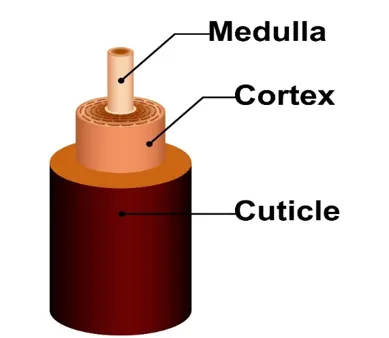
1. Structure of the Hair Shaft: The hair shaft is composed of three concentric layers:
Cuticle: The outermost layer consisting of 5–10 overlapping, flattened, scale-like, dead keratinocytes. It acts as a protective barrier, preventing chemical and mechanical damage to the inner layers and regulating hydration.
Cortex: The main structural bulk of the hair shaft, situated between the cuticle and medulla. It is composed of elongated, tightly packed keratinized cells linked by disulfide bonds, hydrogen bonds, and salt bridges. The cortex provides hair with its tensile strength, elasticity, and contains melanin granules (eumelanin and pheomelanin) that determine hair color.
Medulla: The innermost central core, composed of loosely packed, vacuolated cells and air spaces. It is prominent in thick terminal hairs but often fragmented or entirely absent in fine vellus hairs.
Figure 1: Hair Shaft
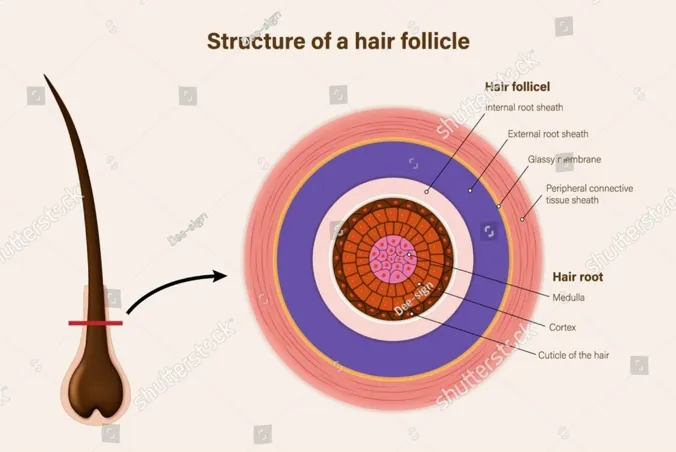
2. Anatomy of the Hair Follicle (Pilosebaceous Unit)
The hair follicle is an invagination of the epidermis extending into the dermis or subcutaneous fat layer.
Key Structural Components
Hair Bulb & Dermal Papilla: The enlarged base of the follicle. The bottom of the bulb surrounds the dermal papilla, a vascularized connective tissue core that provides oxygen, nutrients, and chemical signals controlling follicular activity.
Hair Matrix: Located directly above the dermal papilla, this layer contains rapidly proliferating epithelial cells (keratinocytes) and melanocytes. Matrix cells divide and differentiate upward to form the hair shaft and inner root sheath.
Inner Root Sheath (IRS): Surrounds the growing hair shaft up to the level of the sebaceous gland opening. Composed of three layers:
Henle’s layer (outermost)
Huxley’s layer (middle)
IRS Cuticle (innermost, interlocks with the shaft cuticle)
Outer Root Sheath (ORS): Encloses the IRS and extends down from the epidermis. It serves as a reservoir for epithelial stem cells in the bulge region.
Follicular Bulge: A specialized segment of the ORS near the insertion of the arrector pili muscle. It houses multipotent epithelial stem cells responsible for follicular regeneration during each new growth cycle.
Connective Tissue Sheath (Dermal Sheath): A fibrous layer surrounding the ORS, continuous with the dermis.
Figure 2: Hair Follicle
Associated Structures (Pilosebaceous Unit)
Sebaceous Gland: Opens into the upper follicular canal (infundibulum) and secretes sebum, an oily substance that lubricates the skin and hair shaft.
Arrector Pili Muscle: A smooth muscle bundle extending from the dermal papilla region to the papillary dermis. Under sympathetic stimulation (cold or emotional stress), it contracts, causing the hair shaft to stand upright (cutis anserina or "goosebumps").
Physiology of Hair
Hair growth is an active, cyclic process rather than a continuous one. Each follicle operates independently through distinct regenerative phases.
The hair growth cycle
Anagen Phase (Active Growth Phase):
Matrix cells in the hair bulb proliferate rapidly and synthesize keratin and melanin.
Scalp hair spends 2 to 7 years in this phase (growing ~0.35 mm/day or ~1 cm/month).
Approximately 85–90% of scalp hair is in anagen at any given time.
Catagen Phase (Regression/Transitional Phase):
Matrix cell proliferation stops, and melanin synthesis ceases.
The lower part of the follicle undergoes apoptosis (programmed cell death) and shrinks toward the bulge region.
Lasts 2 to 3 weeks. Accounts for ~1% of scalp hair.
Telogen Phase (Resting Phase):
The hair becomes a fully keratinized, dormant "club hair."
The hair follicle remains inactive while resting in the upper dermis.
Lasts 2 to 4 months. Accounts for 10–15% of scalp hair.
Exogen Phase (Shedding Phase):
The chemical links holding the club hair in place break down, and the hair falls out naturally during washing, brushing, or when pushed out by a newly emerging anagen hair.
Normal physiological daily hair loss ranges from 50 to 100 hairs/day.
Physiological Functions of Hair
Function
Mechanism
Thermoregulation
Traps an insulating air layer near the skin (primarily in mammals; minor in modern humans).
Physical Protection
Scalp hair protects the cranium from ultraviolet (UV) radiation and mechanical trauma; eyelashes and eyebrows protect eyes from debris and sweat.
Sensory Perception
Nerve endings wrapped around the base of the hair follicle (peritrichial nerve endings) act as sensitive mechanoreceptors detecting light touch or air currents.
Immune / Barrier Defense
Nostril and ear canal hairs (vibrissae) filter particulate matter and airborne pathogens.
AIM
The primary aim of a herbal hair mask is to provide a natural, holistic, and chemical- free approach to hair care by utilizing plant-based ingredients.
Reduce dandruff and itchiness: Soothe and calm the scalp.
Repair and Restore Hair: Repair breakage, split ends, and damage caused by chemical processing, heat styling or environmental stressors.
Formulation of a Natural Herbal Hair Mask: Creating a blend of herbal powders, fresh extracts, and essential oils tailored for different hair concerns.
Scientific Validation of Herbal Ingredients: Researching the efficacy of Ayurvedic herbs such as Amla,Jtamansi , Nagarmota, and Hibiscus in hair care.
Encouraging Regular Application for Long-Term Benefits: Educating consumers about the benefits of consistent herbal hair mask use for visible improvements.
Providing a Safe, Chemical-Free Alternative: Eliminating harmful chemicals such as sulfates, parabens, and artificial fragrances to promote scalp and hair health.
COMMON HAIR PROBLEMS AND THEIR CAUSES
Hair is a protein filament and a vital component of the human body. However, many people face a variety of hair problems, including dandruff, split ends, dry hair, oily hair, frizz, and hair loss. These issues are often caused by stress, scalp infections, hormonal imbalances, poor nutrition, and excessive use of chemical shampoos. The project file highlights that an herbal hair mask can offer a gentle yet effective way to address these concerns. Unlike commercial products, which can contain harsh chemicals, herbal masks are designed to be safe for all hair types and free from harmful side effects.
Dandruff: It is mainly caused by the overgrowth of a yeast-like fungus called Malassezia on the scalp, leading to irritation and flaking.
Dry Hair: Dry hair is caused by insufficient moisture or natural oils in the hair shaft due to factors like environmental damage, excessive heat styling, or reduced sebum production.
Oily Hair: Oily hair is caused by overactive sebaceous glands producing excess sebum on the scalp, leading to greasy hair.
Frizzy Hair: Frizzy hair is caused by a lack of moisture in the hair cuticle, leading it to absorb humidity from the air and swell unevenly.
Grey Hair: Grey hair is caused by a reduction in melanin production in hair follicles, often due to aging, genetics, or oxidative stress
HAIR MASK PHYSIOLOGY
An herbal hair mask works through three main physiological mechanisms to improve hair and scalp health:
1. Follicle & Microcirculation Stimulation
Active phytochemicals penetrate the epidermal layer of the scalp. They induce localized vasodilation, increasing microvascular blood supply to the dermal papilla cells at the base of the hair follicle. This delivers more oxygen, micronutrients, and amino acids required for active cell division during the anagen (growth) phase.
2. Cuticle Smoothing & Shaft Protection
The outer layer of the hair shaft (the cuticle) consists of overlapping scale-like keratin cells.
Plant Mucilage & Phytosterols (found in aloe vera, fenugreek, or hibiscus) form a temporary protective film over the shaft, filling in microscopic gaps along damaged cuticles.
Natural Tannins & Polyphenols slightly lower pH, causing expanded cuticles to contract and lay flat. This reduces friction between strands, prevents moisture loss (transepidermal water loss), and restores shine.
3. Scalp Microbiome & Sebaceous Regulation
Herbal masks alter the biochemical environment of the scalp:
Sebum Modulation: Astringent herbs regulate sebum production by the sebaceous glands without stripping the scalp's natural acid mantle, suppressing localized follicular inflammation.
BENEFITS OF HERBAL HAIR MASK
Strengthens Roots and Reduces Shedding: Botanical powders like Amla, Brahmi, and Bhringraj feed the hair follicles with Vitamin C, flavonoids, and minerals. Regular application boosts local blood circulation, fortifies roots, and significantly reduces excessive hair fall.
Deep Conditioning and Moisture Retention: Mucilage-rich herbs such as Fenugreek (Methi), Aloe Vera, and Hibiscus absorb water and form a protective, hydrating gel coating over the cuticle. This smoothes frizz, locks in moisture, and restores natural elasticity without weighing hair down.
Scalp Health and Anti-Dandruff Action: Antimicrobial and anti-inflammatory botanicals like Neem, Tulsi, and Reetha help balance scalp pH, control excess sebum production, and soothe fungal or bacterial conditions that cause dandruff and itchiness.
Cuticle Repair and Shine: Natural astringents and proteins in herbs help smooth damaged hair cuticles, allowing the strands to reflect light better and improving overall shine and softness.
Free of Harsh Chemical Build-Up: Herbal masks are free from sulfates, parabens, and synthetic silicones. They nourish hair without leaving heavy chemical residues that cause dullness over time.
INGREDIENTS AND BENEFITS
1. Amla Powder (Phyllanthus emblica)
Active Constituents: High concentrations of Ascorbic Acid (Vitamin C), gallic acid, and ellagic acid (tannins).
Mechanism of Action: Vitamin C acts as a mandatory cofactor in prolyl and lysyl hydroxylase enzymatic activity, essential for cross-linking stable collagen triple-helices. Collagen reinforces the dermal papilla surrounding the follicle base. Additionally, its potent antioxidant profile neutralizes reactive oxygen species (ROS) that contribute to premature follicle miniaturization and lipid peroxidation on the scalp.
2. Flax Seeds (Linum usitatissimum)
Active Constituents: Alpha-Linolenic Acid (ALA — an essential Omega-3 fatty acid) and lignans (secoisolariciresinol diglucoside).
Mechanism of Action:ALA regulates anti-inflammatory pathways by downregulating pro-inflammatory eicosanoids (like PGE2). This mitigates micro-inflammation around the hair bulb, a primary contributor to telogen effluvium. The lipids integrate into the intercellular lipid matrix of the scalp barrier, preventing transepidermal water loss (TEWL) and improving cutaneous microcirculation.
3. Aloe Vera (Aloe barbadensis Miller)
Active Constituents: Proteolytic enzymes (e.g., bradykinase), acemannan polysaccharides, and essential amino acids.
Mechanism of Action: Bradykinase relieves topical inflammation, while proteolytic enzymes enzymatically break down keratinized dead skin cells (stratum corneum debris) surrounding the follicular ostium. Clearing these plugs prevents sebum backup and folliculitis. Acemannan provides mucilaginous humectant properties, binding water molecules to hydrate the epidermal tissue.
4. Shikakai (Acacia concinna)
Active Constituents: Natural triterpenoid saponins, flavonoids, and oxalic acid.
Mechanism of Action: Saponins function as natural amphiphilic surfactants. Upon contact with water, they lower surface tension, emulsifying excess surface lipids, grime, and product residue into micelles that rinse away easily. Because of its naturally acidic pH (4.5–5.5), Shikakai cleanses without disrupting the scalp’s protective acid mantle or stripping internal keratin-bound lipids.
5. Methi Powder (Trigonella foenum-graecum)
Active Constituents: High protein payload, mucilage, lecithin, and steroidal saponins (diosgenin).
Mechanism of Action: Methi’s rich amino acid profile bonds directly to damaged areas along the hair cuticle's hydrophobic coating. Lecithin and mucilage form a filmogenic barrier over the fiber shaft, filling structural micro-voids, increasing tensile strength, restoring elastic recovery, and drastically reducing mechanical breakage during detangling.
6. Hibiscus Powder (Hibiscus rosa-sinensis)
Active Constituents: Anthocyanins, vitamin C, mucilage, and flavonoids (quercetin).
Mechanism of Action: Flavonoids and amino acids stimulate blood perfusion to the dermal papilla, extending the duration of the anagen (growth) phase of the hair cycle. The natural mucilage smooths the cuticle scales flat against the cortex, optimizing light reflection across the hair surface to create visual shine and luster.
7. Nagarmotha (Cyperus rotundus)
Active Constituents: Essential oils containing cyperene, α-cyperone, and sesquiterpenes.
Mechanism of Action: Exhibits potent antimicrobial and antifungal activity, specifically targeting lipophilic Malassezia species responsible for seborrheic dermatitis and dandruff. By controlling fungal overgrowth and balancing sebum secretion via astringent tannins, Nagarmotha calms pruritus (itching) and curbs secondary hair shedding.
8. Jatamansi (Nardostachys jatamansi)
Active Constituents: Sesquiterpenes (jatamansone), coumarins, and lignans.
Mechanism of Action: Well-known for neuroprotective and calming properties, topically applied Jatamansi extract promotes follicle transition from the telogen (resting) phase back into the active anagen phase. It prolongs the active growth phase by modulating local dermal papilla signalling pathways and reducing neurogenic cutaneous stress.
9. Gotu Kola (Centella asiatica)
Active Constituents: Triterpenoid saponins, specifically asiaticoside, madecassoside, and asiatic acid.
Mechanism of Action: Stimulates Vascular Endothelial Growth Factor (VEGF) expression in dermal tissue. This induces angiogenesis—the formation of new micro-capillaries around the hair follicle base—ensuring maximum delivery of oxygen, glucose, and systemic nutrients required for rapid keratin synthesis.
10. Til Oil (Sesamum indicum / Sesame Oil)
Active Constituents: Linoleic acid, oleic acid, sesamin, sesamolin, Tocopherol (Vitamin E), and minerals (Ca, P, Zn).
Mechanism of Action: Serves as an ideal lipid carrier vehicle with high cutaneous penetration depth. Its balanced fatty acid profile re-establishes the stratum corneum barrier, while sesamin and vitamin E provide structural oxidative stability. Zn and Ca act as vital cofactors in cellular division and structural keratin production within the hair matrix.
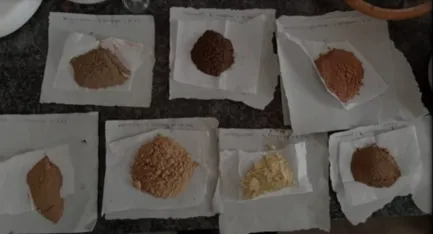
Figure3: Dry Ingredients
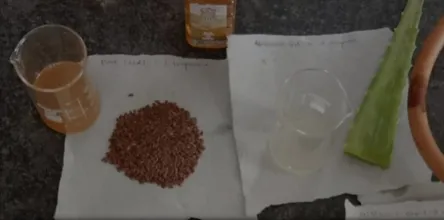
Figure4: Wet Ingredients
TABLE NO.1 OF INGREDIENTS
Sr no
Ingredients name
Quantity
1
Flax seed powder
2 Teaspoons
2
Hibiscus powder
2 Teaspoon
3
Aloe vera gel
2 Teaspoon
4
Amla powder
2 Teaspoon
5
Shikakai
2 Teaspoon
6
Methi powder
1 Teaspoon
7
Gotu Kola
2 Teaspoon
8
Jatmansi
1 Teaspoon
9
Nagarmotha
1 Teaspoon
10
Til oil
3 Teaspoon
TABLE NO.2 OF EQUIPMENT
Sr. no
Instruments
1
PH meter
2
Viscometer
3
Weighing balance
4
Freezer
METHOD AND PREPARATION
Ingredients—Jatamansi, Gotu Kola, Nagarmotha, Shikakai, Hibiscus, Methi, and Amla—are combined. Next, wet ingredients, including flaxseed gel, aloe vera gel, and Til oil, are gradually added to form a smooth paste. The consistency can be adjusted by adding a small amount of water.
EVALUATION
Colour
Odour
Nature
Texture
PH
Viscosity
Spreadability
Washability
Solubility
1. Colour
Significance: Indicates the presence and concentration of natural plant pigments and acts as a primary indicator of chemical stability.
Mechanism & Herbal Context: Derived directly from plant bioactives (e.g., green from chlorophyll in henna/neem, brownish-yellow from curcuminoids/tannins, or deep dark hues from amla/hibiscus).
Quality Control: A shift in colour over time (e.g., browning or fading) often signals oxidation of sensitive polyphenols, photolytic degradation, or microbial contamination.
2. Odour
Pleasant herbal odour
3. pH
Significance: Critical for maintaining scalp barrier integrity and sealing the hair cuticle.
Target Range: Ideal scalp/hair mask pH is slightly acidic, between 4.5 and 5.5.
Mechanism & Physiological Impact:
The natural scalp acid mantle rests around pH 5.5. A formulation within this range preserves the protective skin barrier and inhibits pathogenic microbes like Malassezia.
An acidic pH causes the keratin scales of the cuticle layer to contract and lay flat, locking in moisture and smoothing the hair shaft. Alkaline formulations (pH > 7) cause the cuticle to swell and open, leading to friction, frizz, and breakage.
4. Viscosity
Significance: Refers to the formulation's resistance to flow; directly impacts structural stability and ease of application.
Rheological Behavior: Herbal masks typically exhibit shear-thinning (pseudoplastic) behavior. High viscosity at rest prevents liquid separation (syneresis) and keeps the product inside the container; under shear stress (rubbing between hands/scalp), viscosity decreases so it flows smoothly across hair strands.
5. Spreadability
Significance: The ease with which the mask distributes evenly over the scalp and along the length of hair strands under minimal force.
Testing & Influence: Measured by the area covered when a specific weight is applied to the formulation over a set time.
Formulation Impact: High spreadability ensures uniform coverage of active herbal ingredients without requiring aggressive rubbing, which can fracture wet hair shafts. It is directly governed by yield value and low high-shear viscosity.
6. Nature
Significance: Defines the physical state, physical phase, and emulsion/base type of the product.
7. Texture
Significance: The sensory tactile feel of the mask during handling and scalp application (smoothness, grittiness, stickiness).
Ideal Profile: Should feel smooth, homogenous, and velvety. Fine particle size reduction (<150 microns for powder ingredients) prevents a gritty texture that could cause mechanical irritation or abrasive damage to the scalp epithelium.
8. Washability
Significance: The ease with which the mask rinses off the hair and scalp using warm or room-temperature water without leaving a heavy, greasy film.
Mechanism & Cleansing:
Good washability depends on the presence of mild non-ionic surfactants or naturally occurring saponins (e.g., from reetha/shikakai) that emulsify oil residues.
Ensures that plant particles and lipid carriers release cleanly from hair fibers, preventing follicular clogging and build-up on the scalp.
9. Solubility (Hydration / Extractability)
Significance: Applies to how raw herbal extracts dissolve or disperse within the formulation base, or how powder masks hydrate in water.
Mechanism & Bioavailability:
Hydrophilic bioactives (flavonoids, mucilage, tannins) require a polar water base to fully hydrate and dissolve.
Lipophilic bioactives (essential oils, phytosterols, fatty acids) require solubilizers or emulsifiers to prevent phase separation. Proper solubility/dispersion ensures that active phytochemicals are evenly released onto the hair shaft and scalp during application.
TABLE NO.3 FORMULATION OF HERBAL HAIR MASK
Sr. no
Materials
F1
F2
F3
F4
1
Nagarmotha
3.2gm
5.45gm
6.51gm
8.54gm
2
Jatamansi
2.61
6.81gm
7gm
7.26gm
3
Gotu Kola
5.58gm
8.71gm
12.51gm
15.34gm
4
Methi Powder
3.31gm
5.2gm
8gm
9.37gm
5
Shikakai
4.26gm
6.11gm
7.41gm
8gm
6
Amla Powder
2.80gm
5.21gm
6.31gm
6.63gm
7
Hibiscus Powder
2.5gm
1.5gm
5.1gm
9.11gm
8
Flax seeds gel
10ml
15ml
20ml
20ml
9
Aloe Vera gel
15ml
10ml
25ml
30ml
10
Til oil
5ml
10ml
10ml
15ml
11
Hibiscus gel
15ml
20ml
10ml
20ml
12
Water
10ml
10ml
20ml
10ml
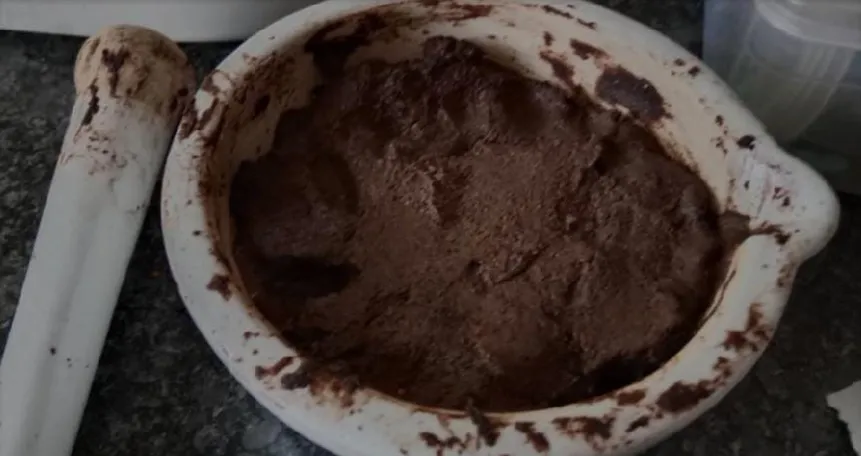
Figure 5: Herbal Hair Mask
RESULT TABLE NO.4: EVALUATION STUDIES
Sr. no
Test
F1
F2
F3
F4
1
Colour
Brown
Brownish black
Brown
Brownish black
2
Odour
Sweet
Sweet
Sweet
Sweet
3
PH
4
4.2
4.9
4.7
4
Viscosity
4428.4
4606.9
5013.5
54428.4
5
Spreadability
10.6
10.59
11.50
11.60
6
Nature
Semi solid
Semi solid
Semi solid
Semi solid
7
Texture
Partially smooth
Partially rough
Smooth
Smooth
8
Washability
Easily wash
Easily wash
Easily wash
Easily wash
9
Solubility
Soluble
Soluble
Soluble
Soluble
DISCUSSION:
About table indicates result of evaluation parameter was Performed to ensure superiority of prepared herbal hair mask. The formulation of hair mask was prepared and evaluated for Several parameters like colour, odour, nature, texture, pH, Washability. The colour of formulation was almost same. F1 and F3 are brown in colour and F2 and F4 were Browning black in colour. The odour of prepared F4 batch Was pleasant and sweet in odour. So, it is good for acceptance. Compare to other batch F4 shows smooth texture. The pH of all Formulation is near to neutral range. Batch F4 easily washable by using water. After using of herbal hair mask was provide Silky and smooth hair.
CONCLUSION
The project successfully formulated a natural, non-toxic, and chemical-free herbal hair mask. The mask's ingredients, selected for their traditional and proven benefits, work synergistically to provide a comprehensive solution for various hair problems. By creating a product that is biodegradable and safe for use, this study offers a viable and effective alternative to synthetic hair care products, contributing to a more sustainable and health-conscious approach to personal care.
REFERENCES
Jadhav AP, Wakale MT, Telangi GM, Warpe PV. Formulation and evaluation of herbal anti dandruff hair Mask. International Journal of Scientific Research in Science and Technology. 2022;9(3):557-564.
Jaybhaye A, Panchal R, Nimbalkar S, Shinde A, Musmade D. Formulation of herbal hair mask.International Journal of Creative Research Thoughts. 2020;8:2480-2485.
Hall, J. E., & Hall, M. E. (2020). Guyton and Hall Textbook of Medical Physiology (14th ed.). Elsevier.
Standard, R., & Paus, R. (2019). Biology of Hair Follicles. New England Journal of Medicine, 341(7), 491–497.
Tobin, D. J. (2008). Human hair pigmentation biological aspects. International Journal of Cosmetic Science, 30(4), 233–257.
Blanpain, C., & Fuchs, E. (2009). Epidermal homeostasis: a balancing act of stem cells in the skin. Nature Reviews Molecular Cell Biology, 10(3), 207–217.
Lanjewar A, Maurya S, Sharma D, Gaur A. Review on hair problem and its solution. JDDT 2020; 10(3): 322–329.
Harland DP, Walls RJ, Vernon JA, Dyer JM, Woods JL, Bell F. three-dimensional architecture of microfibrils in Human scalp hair cortex. Journal of Structural Biology. 2024;185(3):397-404.
Lanjewar A, Maurya S, Sharma D, Gaur A. Review on Hair problem and it’s solution. Journal of Drug Delivery And Therapeutics. 2020;10(3):322-329
Chaughule A, Zinjad S, Lokhande R. Formulation and Evaluation of protective rule of flaxseed gel in hair Growth, nourishment and anti-dandruff activity. Journal Of Emerging Technologies and Innovative Research. 2020;9(6):272-277.
Khile DB. Review on hair conditioner containing curry Leaves, Amla, Aloe vera, Neam and flaxseeds.International Journal of Creative Research Thoughts.2022;10(1):639-640.
Mayurya S, Maury S. A Review on activity on herbal Hair mask on hair fall. World Journal of Pharmaceutical Research. 2022;11(6):316-324.
Ramakrishna S, Gopikrishna UV. Formulation and Evaluation of herbal hair gel. Scholars
International Journal of Traditional Complementary Medicine. 2022;5(2):28-22.
Reference
Jadhav AP, Wakale MT, Telangi GM, Warpe PV. Formulation and evaluation of herbal anti dandruff hair Mask. International Journal of Scientific Research in Science and Technology. 2022;9(3):557-564.
Jaybhaye A, Panchal R, Nimbalkar S, Shinde A, Musmade D. Formulation of herbal hair mask.International Journal of Creative Research Thoughts. 2020;8:2480-2485.
Hall, J. E., & Hall, M. E. (2020). Guyton and Hall Textbook of Medical Physiology (14th ed.). Elsevier.
Standard, R., & Paus, R. (2019). Biology of Hair Follicles. New England Journal of Medicine, 341(7), 491–497.
Tobin, D. J. (2008). Human hair pigmentation biological aspects. International Journal of Cosmetic Science, 30(4), 233–257.
Blanpain, C., & Fuchs, E. (2009). Epidermal homeostasis: a balancing act of stem cells in the skin. Nature Reviews Molecular Cell Biology, 10(3), 207–217.
Lanjewar A, Maurya S, Sharma D, Gaur A. Review on hair problem and its solution. JDDT 2020; 10(3): 322–329.
Harland DP, Walls RJ, Vernon JA, Dyer JM, Woods JL, Bell F. three-dimensional architecture of microfibrils in Human scalp hair cortex. Journal of Structural Biology. 2024;185(3):397-404.
Lanjewar A, Maurya S, Sharma D, Gaur A. Review on Hair problem and it’s solution. Journal of Drug Delivery And Therapeutics. 2020;10(3):322-329
Chaughule A, Zinjad S, Lokhande R. Formulation and Evaluation of protective rule of flaxseed gel in hair Growth, nourishment and anti-dandruff activity. Journal Of Emerging Technologies and Innovative Research. 2020;9(6):272-277.
Khile DB. Review on hair conditioner containing curry Leaves, Amla, Aloe vera, Neam and flaxseeds.International Journal of Creative Research Thoughts.2022;10(1):639-640.
Mayurya S, Maury S. A Review on activity on herbal Hair mask on hair fall. World Journal of Pharmaceutical Research. 2022;11(6):316-324.
Ramakrishna S, Gopikrishna UV. Formulation and Evaluation of herbal hair gel. Scholars
International Journal of Traditional Complementary Medicine. 2022;5(2):28-22.
Akansha Nikure
Corresponding author
P. R. Patil Institute of Pharmacy, Talegaon (S.P) Wardha, Maharashtra, India 442201
Rushikesh Nirgude
Co-author
P. R. Patil Institute of Pharmacy, Talegaon (S.P) Wardha, Maharashtra, India 442201
Sanket Hingade
Co-author
P. R. Patil Institute of Pharmacy, Talegaon (S.P) Wardha, Maharashtra, India 442201
Mahesh Gadge
Co-author
P. R. Patil Institute of Pharmacy, Talegaon (S.P) Wardha, Maharashtra, India 442201
Akansha Nikure, Rushikesh Nirgude. Sanket Hingade, Mahesh Gadge, Formulation and Evaluation of Herbal Hair Mask, Int. J. of Pharm. Sci., 2026, Vol 4, Issue 10, 1252-1263. https://doi.org/10.5281/zenodo.23240900






 10.5281/zenodo.23240900