

We use cookies to ensure our website works properly and to personalise your experience. Cookies policy
Department of Pharmaceutical Chemistry, Narasaraopet Institute of Pharmaceutical Sciences, Narasaraopet, Andhra Pradesh, India 522601
SARS-CoV-2 is a highly infective and disease-causing coronavirus that appeared in the latter part of 2019. It is currently responsible for a global outbreak of respiratory disease called "coronavirus disease 2019" (COVID-19) that has endangered the health of individuals and the safety of the public. The Review discusses virology basics like genomic features, receptor usage, and the differences between SARS-CoV-2 and SARS-CoV, which is the cause of SARS and the first human coronavirus outbreak in 2002/2003. Transmission routes, the evolution of the epidemic situation, and pathogenesis of the disease are presented, with a special focus on the ACE2 receptor, viral multiplication, and immune response of the infected host. The clinical picture, diagnostics, and therapies (antivirals, immunomodulators, and supportive care) are presented. In addition to the vaccines currently used around the world, we look at what we can expect in the future: the mechanisms of action, different phases, and potential problems or side effects. Then, prevention of the pandemic through various measures, in addition to future possibilities such as a vaccine against all variant strains, will also be highlighted. It is a summary and update on this topic for readers including pharmacy students, medical practitioners, and scientists. However, at the moment, the virus continues to evolve, and the battle to contain it should not be stopped for a second.
Covid-19 is an infectious and respiratory disease. It is caused by the novel Corona Beta virus (the severe and acute syndrome coronavirus 2/SARS-CoV-2). It was first characterized in Wuhan, China, in December 2019. The surface proteins (the spike proteins) of the virus are responsible for mediating its attachment to the surface of the host cell and subsequent cellular internalization. The protein (the Spike protein) of SARS-CoV-2 plays an important role in attaching to and subsequently entering the host cell with the aid of the angiotensin-converting enzyme 2 (ACE2) receptors. There are several clinical pictures produced by a patient being affected by coronavirus. Some of these are asymptomatic or mild respiratory illnesses, while others involve severe pneumonia, respiratory failure, and even systemic complications. When coronavirus symptoms appear, viral infections can be successfully combated with antiviral medication, which often remains the main drug prescribed. Sometimes, immune-modulating or autoimmune therapies are also given to patients. It is clear now that vaccination has turned out to be another major way of suppressing the virus, mainly by reducing the number of lethal cases. Nevertheless, researchers keep monitoring the new developments since there are still mutations observed in the virus, and issues related to treatment safety and adverse effects of vaccines and drugs have to be considered. This book presents different aspects of coronavirus disease, its infection characteristics, methods of transmission, factors that drive the disease at a cellular level, what clinical presentations can be expected, methods to diagnose a case with suspected coronavirus symptoms, the different methods of drug administration, and vaccines as ways to contain the spread, side effects of vaccines and drugs, and what the future holds for this matter[1].
2. SARS-COV-2: STRUCTURE AND CHARACTERISTICS
Severe acute respiratory coronavirus 2 (SARS-CoV-2) is an enveloped, positive-sense single-stranded RNA (ssRNA) virus that's classified in the Beta coronavirus family. The virion is roughly round, approximately 60-140 nm in diameter. Viruses of this size have about 30 kb of RNA genetic code wrapped up in their genome. SARS-CoV-2 virion is covered with the virus's distinctive proteins, mainly spike proteins (protruding spikes), embedded in the viral envelope, that are responsible for the virus looking like a crown when you see its surface under a microscope. The SARS-CoV-2 viral genome produces four major structural proteins: spike (S), envelope (E), membrane (M), and nucleocapsid (N). The S protein is a major determinant of interaction of the virus with the host cell and is the virus's surface protein that mediates the attachment and fusion steps in the infection of cells bearing angiotensin-converting enzyme 2 (ACE 2) as a receptor. The N protein is the RNA-binding protein present in the nucleocapsid. In addition to these structural proteins, the viral genome also contains multiple open reading frames (ORFs) that produce non-structural viral proteins responsible for viral replication. RNA-dependent RNA polymerases, one of these proteins, are essential not only for the process of replication of viral RNA but also for the transcription of viral RNA, as are viral proteases, which cleave precursor polyproteins into functional viral proteins necessary for replication of the virus. When SARS-CoV-2 infects a cell, the S protein binds to the surface ACE2 receptor of a permissive cell, which allows the virus to be internalized. Inside the cell, the viral RNA is exposed to cytoplasm and serves as both the mRNA for viral replication (it is the blueprint from which the proteins of the virus will be made) and an ingredient of new replicating viral particles that carry the RNA of the virus. Viral components that are newly made, RNA and the structural proteins, put the viral particle together, resulting in virions being released from the cell by means of exocytosis. SARS-CoV-2 relies mostly on the interaction between its S protein, ACE2, the viral proteases, and the RNA-dependent RNA polymerase during viral infection to complete its life cycle and is therefore one of the main features considered to be targeted with antiviral drugs. In order to design drugs that can be both preventive and medicinal, knowledge of a virus's structure and reproduction is of the greatest importance in the fight againstCOVID-19[2].
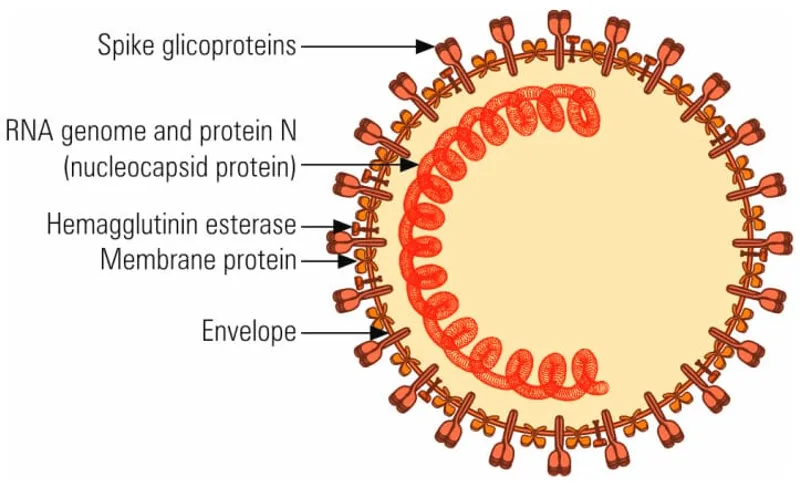
Fig:1 Structure of SARS-CoV-2
3. PATHOGENESIS OF COVID-19
COVID-19 is caused by the novel coronavirus 2 (SARS-CoV-2). There is a complicated interplay between virus replication and the host immune system, leading to the development of COVID-19. The first stage of the disease is when the virus enters through the respiratory tract and makes its way to susceptible cells with susceptibility.
It is the viral spike glycoprotein (S) protein that connects to the host's angiotensin-converting enzyme 2 (ACE2) receptors, usually at the cells' level of the respiratory epithelium, including the bronchiolar and alveolar areas, which is how the virus enters the host cell. The proteolytic activation of the S protein supports the fusion and entry of the virus into the host cells.
In the initial virus entry stage, the single-stranded, positive-sense RNA is released into the cytoplasm. The viral RNA functions as messenger RNA, and its expression produces non-structural proteins, which include viral RNA-replicase enzymes. Next, viral replication and transcription result in genomic and subgenomic RNAs. Through these RNAs, structural proteins, such as spike (S), membrane (M), envelope (E), and nucleocapsid (N), which are the components of the virus, are produced. All the virus parts get their way to the endoplasmic reticulum-Golgi, and there, virus maturation is finished, and then virions are released to reach and infect new cells. Cells affected by the virus can identify viral parts via the innate immune receptors, with subsequent production of interferons. SARS-CoV-2, on the other hand, is able to avoid or delay the antiviral immune response, which gives the virus a chance to keep replicating during the initial infection phase. In patients whose illness is generally mild, the innate and adaptive immune reactions work together to restrain virus replication and help the body heal. But in some patients, immune system overactivation causes their disease to worsen. Increased inflammation combined with a disrupted alveolar-capillary barrier could result in pulmonary edema, impaired gas exchange, and progressive respiratory failure. It is also possible that SARS-CoV-2 infection disrupts the ACE2-related Renin-Angiotensin System. A decrease in ACE2 may hinder the protective ACE2 receptor pathway and favor pro-inflammatory and vasoconstrictive effects. Combined with endothelial dysfunction and inflammation, the above changes may play a role in vascular damage and pulmonary complications. An increase in the formation of immune cells and a cytokine storm seen in severe cases of patients is also responsible for activating procoagulant pathways, causing a shift to a hypercoagulable state, and significantly elevating blood-thrombosis risks both on microvascular and macrovascular levels. Viral replication plus immune-endothelial injury, and abnormal coagulation together contribute to the onset of lung injury and ARDS or other organ dysfunction in the most severe cases [3].
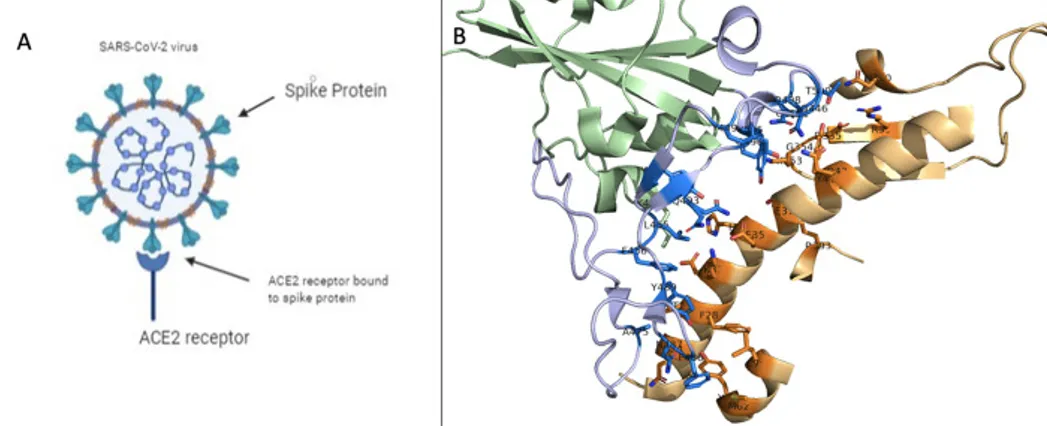
Fig. 2 Interaction of SARS-CoV-2 Spike protein with the ACE2 Receptor
4. TRANSMISSION
Transmission of SARS-CoV-2 occurs predominantly from the infected person to another person via infectious respiratory particles produced at different times by breathing, talking, coughing, sneezing, and other respiratory activities. Close contact with an infected individual will result in a higher possibility of transmission, also if you breathe the same air in a poorly ventilated or enclosed space[4].
4.1 RESPIRATORY TRANSMISSION
SARS-CoV-2 is transmitted mostly via aerosols and droplets. People at risk can also be infected if such particles reach their eyes, nose, or mouth. The chance of exposure increasing their risk of infection increases with the length of time a person spends in a place very close to the infected.
4.2 TRANSMISSION IN INDOOR ENVIRONMENTS
Poorly ventilated or enclosed spaces with dense crowds are more conducive environments for virus transmission. At the same time, people's risk is increased if they are exposed to the environment continuously. Besides that, respiratory functions like talking, coughing and sneezing are responsible for discharging virus infected particles by the infected person. This may lead to the spread of the virus as the infectious air is breathed by others. The spread of the disease is also facilitated by high concentrations of aerosols over a longer time in enclosed settings.
4.3 ASYMPTOMATIC AND PRE-SYMPTOMATIC TRANSMISSION
An individual could also pass on the SARS-CoV-2 virus without even showing symptoms or before symptoms become severe. At the very beginning, viral load in the upper respiratory tract is at a high level and can cause spread by infecting others just a few days before the symptoms become evident or as soon as symptoms are onset.
4.4 FOMITE TRANSMISSION
Spreading the virus through contaminated surfaces has also been proposed as a possibility. SARS-CoV-2 viral detection on some surfaces could last a long time, and theoretically, getting the virus by touching a contaminated surface and then touching your eyes, nose, or mouth could lead to infection. However, most people agree that spreading through the airways is the main mode of spreading among the population, and there hasn't been a lot of concrete evidence on fomites.
4.5 FACTORS INFLUENCING TRANSMISSION
The possibility of infection being transmitted is based on being near an infected person, the length of exposure, airflow, population density, the number of infectious respiratory droplets, and how sick a person is. Transmission risk can be heightened in environments that lack adequate ventilation and when a person is exposed for a lengthy duration to aerosolized particles of infectious nature.
Overall, it's the infectious respiratory particles that are the main source of SARS-CoV-2 virus spreading. It occurs mainly when a person and another person stay in proximity for a while, and in a place with not many people and poor ventilation. Viral spread during symptom onset or even in the absence of symptoms has also been reported, whereas contaminated surfaces play a relatively unimportant role in spreading the virus[5].
5. CLINICAL MANIFESTATIONS
Infection with the SARS-CoV-2 virus is associated with diverse symptoms of the disease or absence of any symptoms. The common symptoms of the infection include fever, coughing without mucus production, tiredness, muscle aches, headaches, sore throat, and difficulty breathing. In addition, some people may fall ill due to eating or drinking and experience temporary loss of sense of smell and taste.
Mild cases of the disease show uncomplicated respiratory symptoms. On the other hand, complications may include pneumonia, hypoxia, acute respiratory distress syndrome (ARDS), and systemic complications. Patients older than 60 years of age and those with diseases like diabetes, hypertension, and heart diseases have been found to be at greater risk of developing severe complications from the infection. Clinical manifestations differ from one patient to another, making it essential for diagnosis and assessment of the disease severity[6].
6. DIAGNOSIS OF COVID-19
A diagnosis of the condition requires the use of clinical assessment combined with laboratory diagnostics. Some commonly used methods include nucleic acid amplification tests (NAAT), where RT-PCR is a common one, antigen tests, and serologic tests. PCR is known as a first-line method for identifying SARS-CoV-2, as the technique uses viral RNA present in a respiratory sample, such as nasopharyngeal and oropharyngeal swab samples. If done properly, the test can provide a high level of analytical sensitivity and specificity. The antigen test is able to identify viral proteins; although faster than molecular testing, its sensitivity can be lower compared to molecular tests, especially when there is a low concentration of virus in the body. The serologic test identifies antibodies produced against the virus and is mostly helpful in assessing the patient's exposure and immune response but not the presence of the virus itself. In case of suspected severe disease, additional tests, such as chest imaging, oxygen saturation, and standard laboratory tests, might help to estimate the severity of the disease[7].
7. PHARMACOLOGICAL MANAGEMENT
It appears that the pharmacological treatment of patients suffering from severe, life-threatening, and different stages of infection is what finally decides the use of certain types of treatments. Medicines serve the purpose not only of inhibiting viral replication and halting the advancement of the disease but also of handling the possible side effects.
Patients with mild-to-moderate symptoms who, however, have conditions that make them prone to development more or very severe illness are possibly good candidates for antiviral drugs together with various types of supportive therapies. The three drugs listed as possible ones are nirmatrelvir/ritonavir, remdesivir, and molnupiravir; but the actual selection of a drug will always hinge on the clinical conditions of the patients and the guidelines that the doctors in charge follow. Since remdesivir interferes with viral RNA replication, and that is the only way the virus can be created, the replication cycle of the virus will be stopped at that stage due to this drug action.
A combination of supplemental oxygen and corticosteroids such as dexamethasone is used to decrease the immune-driven tissue damage that may occur in severely ill patients. In addition to corticosteroids, drugs like tocilizumab and baricitinib serve as immuno-modulators. The decision to administer these drugs is made according to the clinical presentation as well as the severity of the disease.
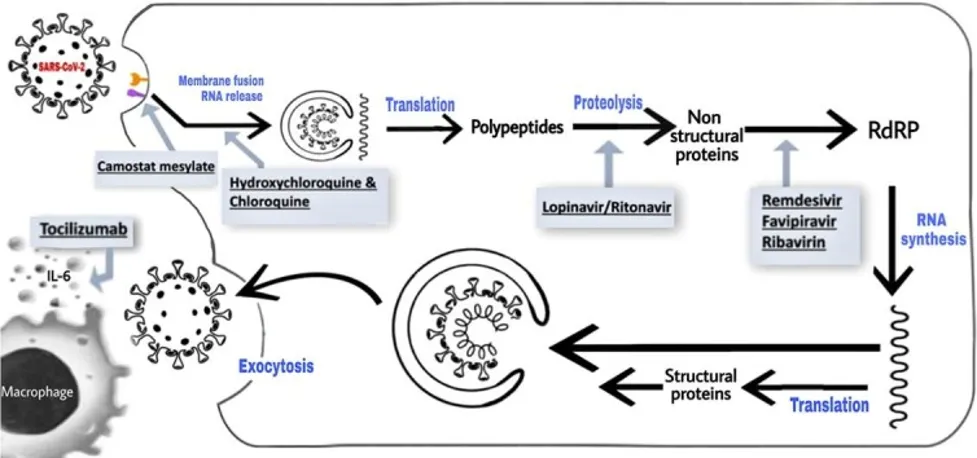
Fig:3 Interaction of SARS-Cov-2 Spike protein with the ACE2 Receptor
Antibacterials are only used if there is evidence of a superimposed bacterial infection. Supportive therapy, including the use of oxygen and managing complications, is an important part of the treatment protocol. In conclusion, the drug therapy for COVID-19 involves antiviral therapy, immunomodulation, and supportive therapy[8].
8. COVID-19 VACCINE
The aim of COVID-19 vaccines was to build immunity in the immune system against the SARS-CoV-2 virus, especially through the production of immune responses towards the viral spike protein. Different kinds of vaccine platforms were developed, namely mRNA vaccines; viral vector vaccines; protein-subunit vaccines; and inactivated virus vaccines. mRNA vaccines, such as mRNA-1273 and BNT162b2, inject messenger RNA that codes for the SARS-CoV-2 spike protein. Cells in the host briefly manufacture the antigen, which results in both antibody and cellular immune responses. In Viral vector vaccines, a modified and non-replicating virus is used to deliver genetic instructions for the spike protein. In the case of protein-subunit vaccines, the component is the purified viral proteins. Inactivated vaccines are made from non-infective SARS-CoV-2 particles. It turned out that vaccination against COVID-19 protects a person quite a bit from serious illness, the need for a hospital stays, or death. Nonetheless, it is a fact that immunity may not last forever, and the emergence of novel SARS-CoV-2 variants might decrease the level of protection from the contagion. In addition, vaccine formulations and vaccination policies might get revised and updated to fit a changing picture of circulating viral variants and epidemiology [9].
9. PREVENTION AND FUTURE PERSPECTIVES
PREVENTION OF COVID-19
relies on reducing exposure to SARS-CoV-2 and blocking community infections. Vaccination is key, and it is an effective method for the prevention of the severity of disease, hospitalization, and death, more so among persons at risk. Vaccination is a very important way; other preventive measures include using masks properly, especially indoors or in crowded places. The use of well-ventilated indoor or outdoor areas can reduce the number of infectious particles. It is important for a suspected person to isolate and avoid any physical contact, especially with those who are at high risk; early detection and medical treatment in case of progression are also important [10].
FUTURE PERSPECTIVES
Although the global impact of COVID-19 has decreased, SARS-CoV-2 continues to circulate and evolve, creating a need for continuous monitoring of emerging variants. Strengthening genomic surveillance, epidemiological monitoring, and wastewater surveillance can help identify changes in viral circulation and emerging variants at an early stage [11].
Future vaccine research is focused on developing variant-adapted and broader vaccines that can provide more durable protection against multiple SARS-CoV-2 variants and potentially reduce infection and transmission. WHO also continues to evaluate the antigen composition of vaccines as the virus evolves.
Future research is required to improve antiviral therapies, long-COVID management, rapid diagnostic methods, and pandemic preparedness. Integrating COVID-19 surveillance with broader respiratory disease surveillance may help health systems respond more effectively to future outbreaks [12].
10. CONCLUSION
Coronavirus disease 2019 (COVID-19) arises from infection with severe acute respiratory syndrome coronavirus 2 (SARS-CoV-2). A virus 2 (SARS-CoV-2), has significantly contributed to both the spread of infectious diseases around the world and the identification of more accurate diagnostic tools, antiviral therapies, and vaccines. The paper briefly presents the morphology and the mechanism of infection of SARS-CoV-2, clinical signs, and how this novel virus is being managed in different ways, such as through medicine or vaccination.
However, the virus is still capable of changing itself genetically at a high rate, and thus different strains are born. As these changes in the gene can influence many aspects like the virus' ability to spread and evade immune recognition, the effectiveness of diagnostic tests and therapeutics, and vaccine efficacy, it is a concern if there is an unchecked virus spread. That is why continuous sequencing and monitoring, the invention of strong antiviral drugs and new vaccines, and improving overall public health preparedness are all essential. Also, the fight against COVID-19 will require continuous research efforts and collaboration among various fields of medicine.
REFERENCES







M. Kasthuri, J. N. Suresh Kumar, R. Rajani, P. Durga Shareef, N. Likitha, P. Bala Adi Lakshmi, P. Venkata Leela Aparna, An Overview of SARS-COV-2, Pathogenesis, Clinical Manifestations, Pharmacological Management, and Vaccines, Int. J. of Pharm. Sci., 2026, Vol 4, Issue 10, 1264-1272. https://doi.org/10.5281/zenodo.23241198
 10.5281/zenodo.23241198