

We use cookies to ensure our website works properly and to personalise your experience. Cookies policy
B.Pharm, Indore Institute of Pharmacy, RGPV University, Indore.
Anxiety, cognitive decline, and oxidative stress are among the most widespread and interconnected burdens on public health, and the conventional pharmacotherapies used to manage them — benzodiazepines, antidepressants, and related synthetic agents — frequently carry risks of sedation, dependency, and cognitive blunting on long-term use. Polyherbal drug delivery systems that combine adaptogenic, nootropic, and antioxidant botanicals within a single, patient-friendly dosage form offer a promising complementary strategy, and the chewable gummy has emerged as one of the fastest-growing nutraceutical delivery platforms worldwide. The present study reports the formulation and evaluation of a polyherbal chewable gummy containing extracts of Ashwagandha (Withania somnifera), Brahmi (Bacopa monnieri), and Moringa (Moringa oleifera). A gelatin–sodium alginate gel base was combined with a sucrose–mannitol syrup, and 6 g each of the three herbal extracts were incorporated per 300 g batch, together with propylene glycol as a humectant and orange flavour as an organoleptic modifier. The gummies were prepared by a standard melt-and-pour method and evaluated for colour, odour, taste, transparency, texture, stickiness, grittiness, pH, hedonic acceptability, and weight variation. The optimised formulation yielded light-green, opaque, smooth, and non-sticky gummies with a pleasant herbal taste, a slightly acidic pH of approximately 4–5, and uniform unit weight, and it passed hedonic panel evaluation. Supporting clinical literature on the individual botanicals indicates effective daily dose ranges of 300–600 mg for Ashwagandha root extract, 300–450 mg for standardised Bacopa monnieri extract, and 100–200 mg for Moringa leaf preparations when combined with other actives, providing a pharmacological basis for the selected combination. These findings indicate that the tri-herbal blend can be successfully incorporated into a stable, palatable chewable matrix, supporting the feasibility of
1.1 The Interconnected Burden of Stress, Anxiety, and Cognitive Decline
Chronic psychological stress, anxiety disorders, and age- or lifestyle-related cognitive decline are increasingly recognised not as isolated conditions but as an interconnected continuum, in which sustained activation of the hypothalamic–pituitary–adrenal (HPA) axis and elevated systemic oxidative stress contribute jointly to impaired neurotransmission, reduced neuroplasticity, and accelerated cognitive ageing. Modern lifestyles characterised by occupational pressure, disrupted sleep, and constant digital stimulation have made subclinical, chronic stress an almost universal experience, and its downstream physiological consequences — elevated cortisol, low-grade neuroinflammation, and oxidative damage to neuronal membranes — are now understood to underlie much of the burden traditionally attributed to anxiety and memory complaints separately. This convergence has strengthened the scientific and clinical rationale for interventions that act simultaneously on the stress axis, on cognitive/neurotransmitter systems, and on cellular oxidative status, rather than on any single pathway in isolation.
1.2 Limitations of Conventional Pharmacotherapy
Benzodiazepines, selective serotonin reuptake inhibitors, and related anxiolytic or antidepressant agents remain the mainstay of clinical management for anxiety disorders, and are supported by a substantial evidence base for short- to medium-term efficacy. However, their long-term use is consistently associated with adverse effects including sedation, psychomotor slowing, tolerance, physical dependency, withdrawal phenomena on discontinuation, and, in some agents, measurable impairment of memory and executive function. These limitations are particularly problematic in the very populations most likely to seek relief from chronic, low-grade stress — working adults, students, and the elderly — for whom cognitive clarity and functional independence are priorities rather than acceptable trade-offs. This safety and tolerability gap has driven sustained scientific, regulatory, and commercial interest in plant-derived alternatives capable of modulating the stress response and supporting cognitive health with a more favourable long-term risk profile.
1.3 The Rise of Nutraceuticals and Herbal Drug Delivery Systems
The term nutraceutical describes a food-derived product that provides medical or health benefits, including the prevention or treatment of disease, and the category has grown rapidly as consumers seek “clean-label” alternatives to synthetic pharmaceuticals for everyday wellness indications. Within this category, Ayurvedic and other traditional-medicine botanicals have attracted particular attention because centuries of empirical use provide a starting point for modern pharmacological validation, and because many of these plants — unlike single-molecule synthetic drugs — appear to act through multiple, complementary mechanisms simultaneously. Realising this potential in practice, however, depends critically on the dosage form chosen to deliver the plant material: a herbal extract that is pharmacologically promising but delivered in an unpalatable, poorly bioavailable, or inconvenient dosage form will consistently underperform its theoretical potential in real-world use because of poor patient adherence.
1.4 Rationale for the Gummy Dosage Form
Gummies have moved rapidly from a confectionery novelty to a mainstream nutraceutical delivery platform. Industry analyses place the global nutraceutical gummies market on a trajectory of double-digit annual growth over the current decade, reflecting strong and rising consumer preference for chewable, good-tasting supplement formats over traditional tablets and capsules. Figure 5 presents an indexed projection of this market trend, illustrating the scale of the shift toward gummy-based delivery across the dietary supplement industry as a whole. This growth is directly relevant to herbal formulation science: a dosage form with strong, independent consumer pull creates a natural vehicle for delivering botanicals such as Ashwagandha, Brahmi, and Moringa to precisely the population — stressed, time-pressed adults reluctant to take “medicine-like” tablets — most likely to benefit from them.
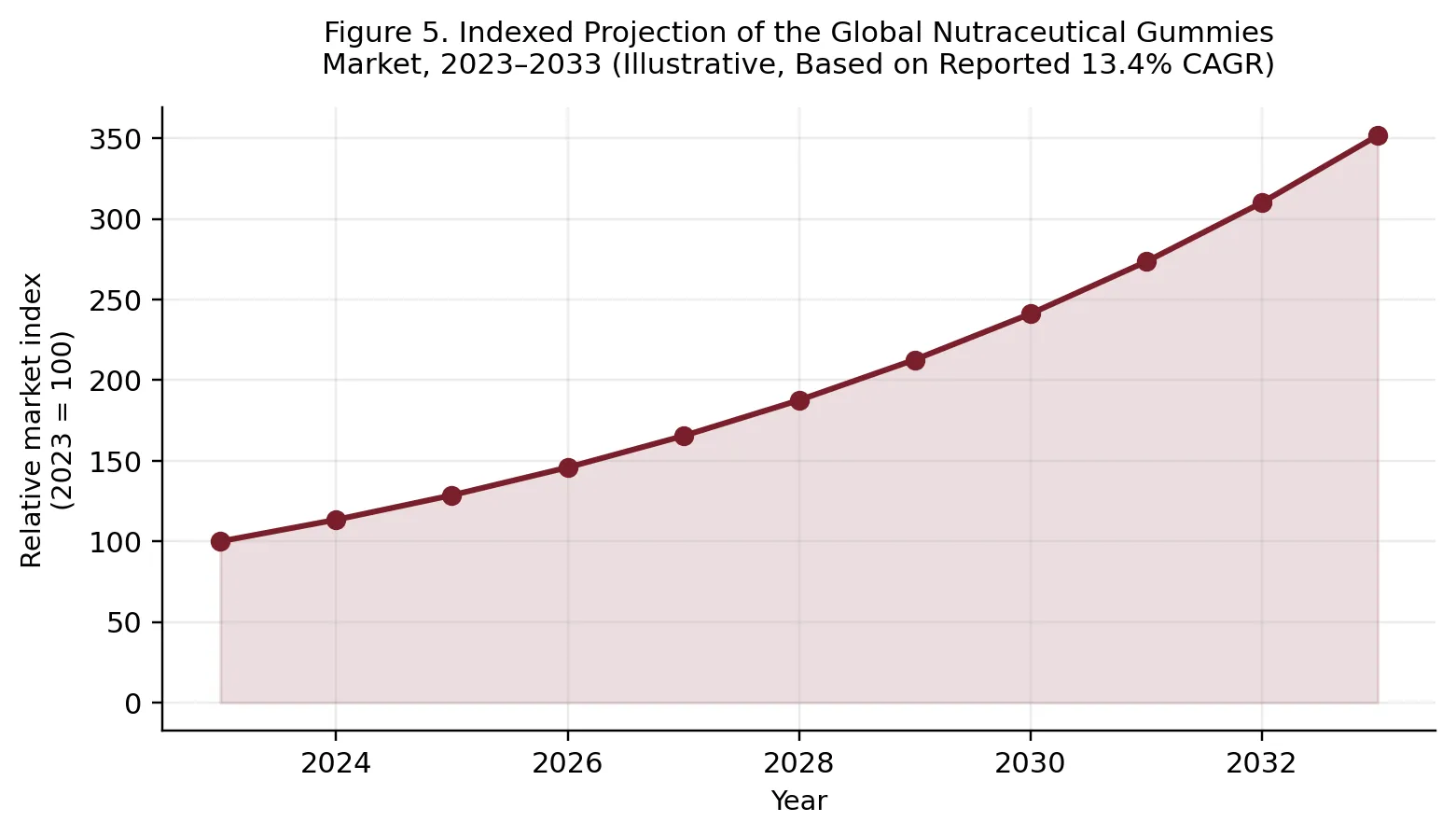
Figure 5. Indexed projection of the global nutraceutical gummies market, 2023–2033, illustrating the sustained double-digit growth reported for this dosage-form category.
1.5 Advantages of the Gummy Dosage Form
Gummies have been a well-established way of delivering active constituents to children, and their use among adults has grown steadily. They are palatable, chewable, easier to swallow than solid units, and offer a more effortless method of administration than conventional tablets or capsules. Chewable gummy formulations are built from concentrated sugar solutions combined with a gelling agent — typically gelatin, though pectin- and starch-based systems are increasingly used — to yield a firm, soft, chewy confectionery matrix. This dosage form carries several advantages: a naturally sweet taste, distinctive texture, attractive shape and colour, pleasant aroma, and overall ease of consumption, which together make it broadly acceptable across age groups, and particularly valuable for children and elderly patients who have difficulty swallowing conventional solid dosage forms. Relative to tablets and capsules specifically, gummies require no water for administration, are highly portable, allow effective masking of the bitterness typical of herbal actives, and — critically for the present application — their compositional flexibility permits multiple actives to be co-formulated within a single chewable unit, making them a natural platform for polyherbal combinations such as the one developed here.
1.6 Objectives of the Present Study
Building on this rationale, the present work set out to formulate and evaluate a polyherbal gummy incorporating Ashwagandha, Brahmi, and Moringa extracts using gelatin and sodium alginate as the principal gelling excipients, with the specific aim of producing a stable, palatable, and patient-acceptable adaptogenic, nootropic, and antioxidant nutraceutical, and to interpret the resulting formulation against the wider phytochemical, pharmacological, and dosage-form literature summarised in the sections that follow.
2. Botanical and Phytochemical Profile of the Selected Medicinal Plants
The formulation draws on three phytochemically well-characterised medicinal plants — Ashwagandha, Brahmi, and Moringa — selected for their complementary, partly overlapping pharmacological actions on the stress axis, cognitive function, and cellular oxidative status. The sections below review the taxonomy, phytochemistry, pharmacology, clinical evidence, and safety profile of each plant in turn, followed by a consolidated rationale for their combination.
2.1 Ashwagandha (Withania somnifera)
Withania somnifera, family Solanaceae, is known in classical and folk usage as “Indian winter cherry” or “Indian ginseng.” The root is the officinal part, and the plant's name is traditionally explained as a compound of ashwa (horse), reflecting the folk belief that the root imparts strength and vitality comparable to that of a horse, and gandha (odour), referring to the characteristic smell of the fresh root. It has been used since antiquity in Ayurvedic medicine as a tonic that fortifies the nervous system.
Chemically, Withania somnifera is characterised by a group of steroidal lactones collectively termed withanolides (including withaferin A), together with alkaloids such as isopelletierine, anaferine, cuscohygrine, and anahygrine, and saponins including the sitoindosides. Sitoindosides VII–X and withaferin A in particular have demonstrated significant anti-stress activity in acute experimental stress models, and several of the plant's constituents additionally display immunomodulatory action. The aerial parts of the plant yield further withanolide derivatives, including 5-dehydroxy withanolide-R and withasomniferin-A, broadening the phytochemical basis for its adaptogenic reputation.
Clinical evidence for Ashwagandha's anxiolytic and stress-modulating activity has grown substantially over the past decade. A double-blind, randomized, placebo-controlled trial of a standardized 240 mg daily root extract in stressed adults reported statistically significant reductions in Hamilton Anxiety Rating Scale scores together with reductions in morning cortisol and dehydroepiandrosterone-sulphate, with no adverse events over the 60-day study period. A systematic review and meta-analysis of nine randomized controlled trials involving 558 participants confirmed a significant pooled effect of Ashwagandha formulations on the Perceived Stress Scale, the Hamilton Anxiety Scale, and serum cortisol relative to placebo, while noting that mild-to-moderate adverse events were reported in a minority of included trials. Separate randomized, placebo-controlled studies have additionally reported improvements in self-reported mood, cognitive performance, and stress-related food cravings with proprietary Ashwagandha root-and-leaf extracts, and beneficial effects on inflammatory biomarkers and physical performance with lower, twice-daily dosing regimens in healthy volunteers. Taken together, this body of evidence supports the widely cited effective dose range of approximately 300–600 mg per day for standardized Ashwagandha root extract in anxiolytic and stress-modulating applications, although several of the newer proprietary extracts have demonstrated benefit at lower daily doses.
Ashwagandha is nonetheless not free of caution points relevant to formulation and labelling. It is generally not recommended for individuals with autoimmune disease or thyroid disorders, or during pregnancy and lactation, and it should be avoided by those with known hypersensitivity to Solanaceae (nightshade family) plants. Potential interactions have been reported with sedatives, thyroid hormone replacement therapy, and immunosuppressant medication, warranting medical consultation before use in these groups. Reported adverse effects, while generally mild, include gastrointestinal upset, headache, and drowsiness.
2.2 Brahmi (Bacopa monnieri)
Bacopa monnieri, family Plantaginaceae, is a marsh-dwelling herb widely distributed across India and a cornerstone nootropic in Ayurvedic practice. Its principal bioactive constituents are triterpenoid saponins known as bacosides (notably bacoside A and bacoside B), supplemented by alkaloids such as brahmine and herpestine, flavonoids, glycosides, sterols, and betulinic acid.
Pharmacologically, Brahmi demonstrates consistent nootropic activity, improving memory, learning capacity, and information retention through enhanced neuronal communication and synaptic activity, alongside neuroprotective effects that reduce oxidative stress and protect neuronal tissue from damage. It modulates key neurotransmitter systems — serotonergic, dopaminergic, and cholinergic — which underlies reported anxiolytic and antidepressant activity, and it exerts antioxidant and anti-inflammatory effects that contribute to reduced mental fatigue and improved overall brain health.
A systematic review and meta-analysis of randomized controlled trials found that standardized Bacopa extracts, administered at doses of 300–450 mg per day for a minimum of twelve weeks, produced measurable improvements in cognitive performance, particularly speed of attention and choice reaction time, across the pooled trial population. An earlier systematic review similarly concluded that Bacopa improves memory free recall, while noting that evidence for benefit across other cognitive domains remained comparatively limited at the time. An acute, double-blind, placebo-controlled crossover study additionally reported sustained cognitive performance benefits from single 320 mg and 640 mg doses of a standardized Bacopa extract, supporting both the acute and chronic-use evidence base for the doses used in the present formulation. More recent network meta-analyses of plant-based cognitive interventions in healthy older adults have continued to rank Bacopa-containing compounds favourably for executive-function and language-domain outcomes, though reviews focused specifically on Alzheimer's-type dementia have judged the overall quality of trial evidence in that population to be low, reflecting small sample sizes and methodological heterogeneity across studies. Clinically and traditionally, Brahmi has additionally been used in the management of anxiety, stress, insomnia, and epilepsy, and as a general brain tonic for concentration and mental clarity, supported by an established safety profile that favours its inclusion in polyherbal wellness formulations.
2.3 Moringa (Moringa oleifera)
Moringa oleifera, commonly called the drumstick tree, belongs to the family Moringaceae and is one of the most extensively studied nutraceutical plants owing to its dense nutrient and phytochemical profile. Its leaves, seeds, pods, and roots contain flavonoids such as quercetin and kaempferol, phenolic acids, alkaloids, saponins, tannins, vitamins A, C, and E, minerals including calcium, potassium, and iron, and a full complement of essential amino acids.
This phytochemical richness underlies a broad pharmacological profile. A randomized crossover trial found that a single 500 mg dose of Moringa leaf extract rapidly and significantly enhanced plasma antioxidant status, as measured by ferric-reducing antioxidant power and Trolox-equivalent antioxidant capacity, while concurrently reducing the lipid-peroxidation marker malondialdehyde within thirty minutes of administration — direct human evidence for the acute antioxidant activity underlying Moringa's inclusion in the present formulation. A recent narrative review covering twenty-two clinical trials and nine case reports published between 2015 and 2025 further documented benefit across immunological, metabolic, endocrine, and inflammatory outcome domains, while a separate mechanistic review concluded that Moringa's antidiabetic and anti-inflammatory effects operate substantially through inhibition of nuclear factor kappa-B signalling and enhancement of the Nrf2 antioxidant-response pathway, alongside reductions in pro-inflammatory cytokines. Additional randomized studies have reported improvements in antioxidant and oxidative-stress biomarkers with Moringa supplementation in specific patient populations, reinforcing the plant's role as a broad-spectrum antioxidant and neuroprotective adjunct rather than a primary anxiolytic agent.
A practical formulation obstacle is that Moringa leaf material has a distinctive, often unappealing odour that limits direct consumer acceptance, creating a clear rationale for delivering the extract within a flavoured, taste-masking matrix such as a gummy rather than as a raw leaf powder or simple aqueous preparation.
2.4 Rationale for the Polyherbal Combination
The combination of Ashwagandha, Brahmi, and Moringa in a single dosage unit is rationalised on the premise that their mechanisms of action, while individually well documented, are largely complementary rather than redundant. Ashwagandha's principal contribution is adaptogenic modulation of the HPA axis and circulating cortisol; Brahmi contributes nootropic and anxiolytic activity through modulation of serotonergic, dopaminergic, and cholinergic neurotransmission; and Moringa supplies a dense flavonoid and phenolic antioxidant load that is proposed to protect neuronal tissue from the oxidative damage associated with chronic stress and cognitive ageing. Figure 3 presents a conceptual schematic of this proposed three-pathway complementarity. It should be emphasised that this synergy is a pharmacologically plausible hypothesis grounded in the mechanisms reported for each botanical individually; it has not been directly demonstrated for this specific tri-herbal combination and would require dedicated combination pharmacodynamic and clinical studies to confirm.
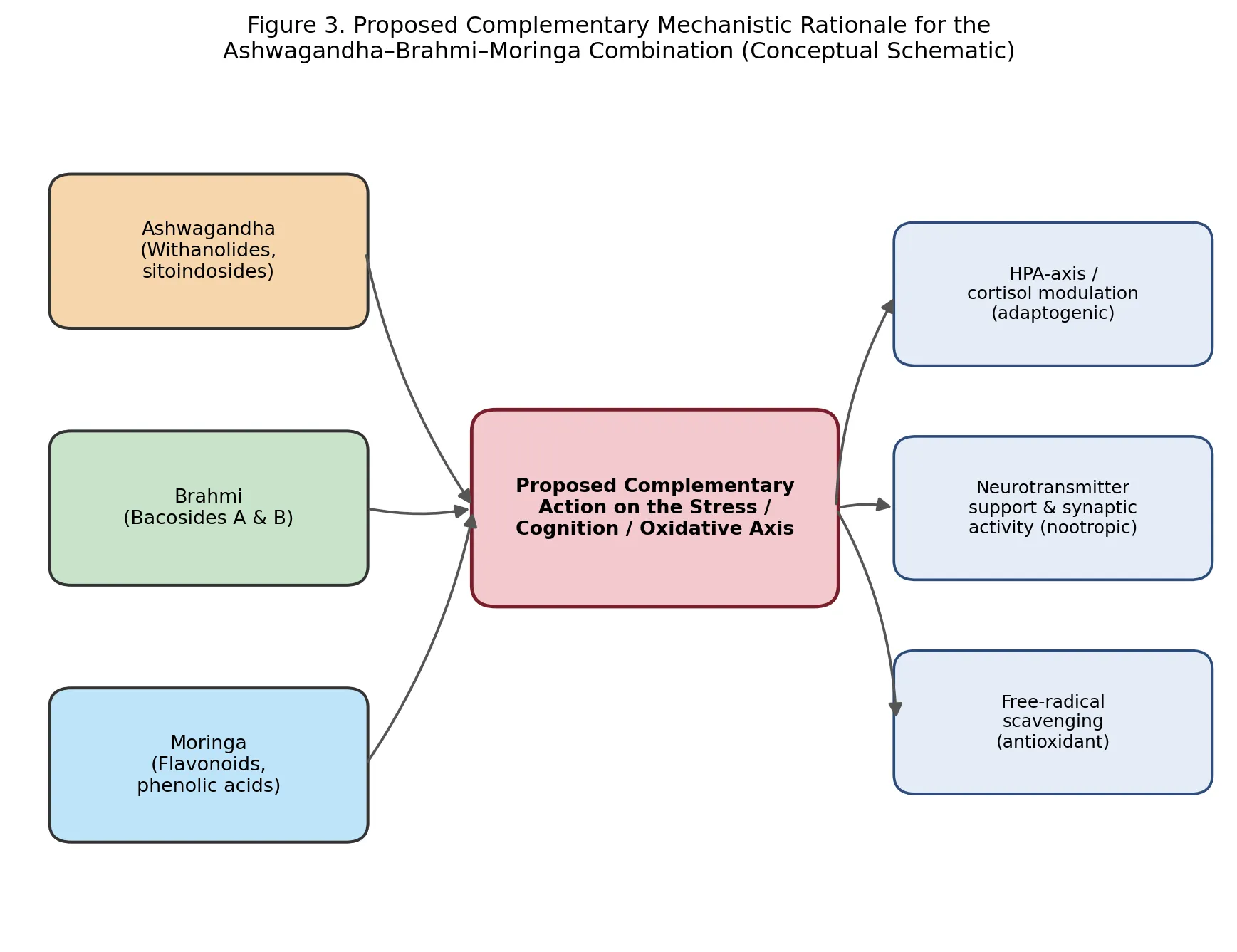
Figure 3. Proposed complementary mechanistic rationale for combining Ashwagandha, Brahmi, and Moringa within a single gummy formulation (conceptual schematic, not experimentally verified for the combination).
2.5 Summary of Supporting Clinical and Preclinical Evidence
Table 1. Representative clinical and experimental evidence supporting the dose ranges and pharmacological rationale for each component herb.
|
Herb |
Extract / Study Type |
Reported Dose |
Key Reported Outcome |
|
Ashwagandha |
Standardized root extract; RCT (Speers et al., 2019) |
240 mg/day, 60 days |
Reduced HAM-A anxiety score; reduced morning cortisol and DHEA-S; well tolerated |
|
Ashwagandha |
Meta-analysis of 9 RCTs, n = 558 (2024) |
Pooled, various |
Significant reduction in Perceived Stress Scale, HAM-A, and serum cortisol vs placebo |
|
Brahmi |
Meta-analysis of RCTs (Kongkeaw et al., 2013) |
300–450 mg/day, ≥12 weeks |
Improved speed of attention and choice reaction time |
|
Brahmi |
Acute crossover study (Stough et al., 2013) |
320 mg and 640 mg (single dose) |
Sustained cognitive performance improvement |
|
Moringa |
Randomized crossover trial |
500 mg (single dose) |
Rapid increase in plasma antioxidant capacity (FRAP, TEAC); reduced MDA |
|
Moringa |
Narrative review, 22 RCTs + 9 case reports (2015–2025) |
Variable, 2–8 g/day (leaf preparations) |
Benefit across immunological, metabolic, and oxidative-stress domains |
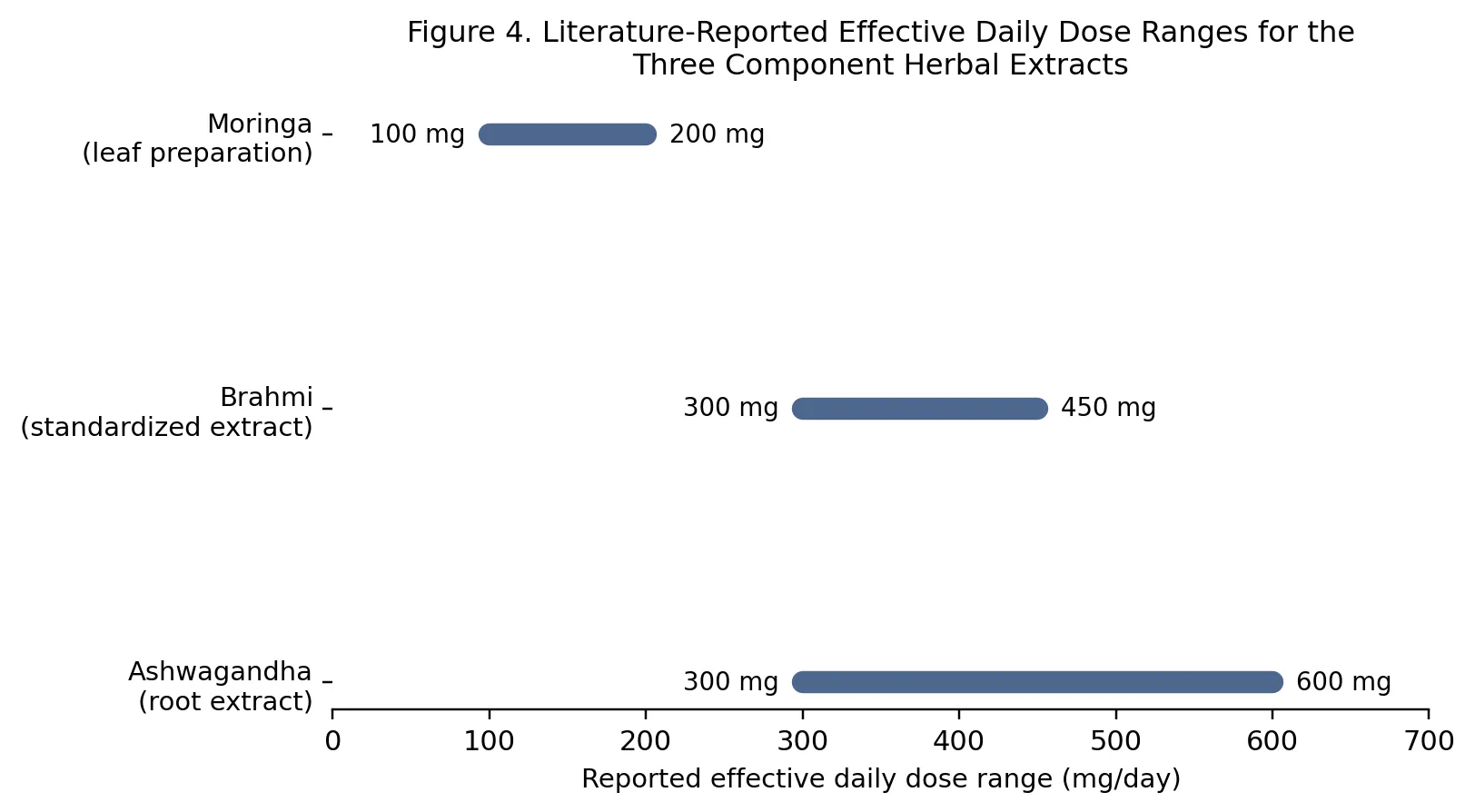
Figure 4. Literature-reported effective daily dose ranges for Ashwagandha, Brahmi, and Moringa; the present formulation delivers 6 g of each crude extract per 300 g batch, corresponding to a fixed proportion of extract per gummy unit that can be adjusted at the unit-dose design stage to align with these clinically supported ranges.
2.6 Comparative Phytochemical Summary
Table 2 in Section 4.5 summarises the pharmacological role of each active ingredient as used in the formulation; Table 1 above (Section 2.5) summarises the clinical dose–outcome evidence. Taken together with the mechanistic schematic in Figure 3, this evidence base indicates that the three botanicals, despite sharing some overlapping antioxidant and neuroprotective activity, are not pharmacologically redundant: Ashwagandha's primary literature-supported effect is on the HPA axis and circulating cortisol, Brahmi's is on attentional and memory-related cognitive performance, and Moringa's is on systemic and cellular antioxidant capacity. This distribution of primary effects across three related but distinct endpoints is the central pharmacological argument for formulating them together rather than as single-agent products, while also underscoring why dedicated combination studies — rather than simple extrapolation from single-herb data — remain necessary to confirm the magnitude of any additive or synergistic benefit in practice.
3. Aim and Objectives
3.1 Aim
To formulate and evaluate polyherbal edible gummies containing Ashwagandha (Withania somnifera), Brahmi (Bacopa monnieri), and Moringa (Moringa oleifera) using gelatin and sodium alginate as the principal gelling excipients.
3.2 Objectives
The specific objective of this work was to develop a gummy-based herbal drug delivery system incorporating the selected medicinal plant extracts with improved pharmaceutical and organoleptic properties relative to conventional dosage forms. The formulation was designed to optimise palatability, physical stability, and patient acceptability while addressing the well-known limitations of tablets and capsules — namely swallowing difficulty and poor taste masking — and thereby to improve overall patient compliance with adaptogenic and antioxidant phytotherapy.
3.3 Plan of Work
4. MATERIALS AND METHODS
4.1 Materials Used
The following materials were used in the preparation of the polyherbal gummy formulation: Ashwagandha extract (Withania somnifera), Brahmi extract (Bacopa monnieri), Moringa extract (Moringa oleifera), gelatin, sodium alginate, sucrose, mannitol, propylene glycol, orange flavouring agent, and purified water.
4.2 Equipment
Formulation and evaluation were carried out using standard pharmaceutical laboratory equipment, comprising an analytical/digital weighing balance, a water bath or hot plate with magnetic stirrer for gel-base and syrup preparation, a digital pH meter with calibration buffers, silicone gummy moulds, a refrigerator for controlled cooling, and an airtight storage container for the finished product. Where texture and hardness are to be quantified in subsequent optimisation work, a texture analyser fitted with a compression probe is the instrument of choice, consistent with texture-profile-analysis approaches reported in the contemporary gummy-formulation literature.
4.3 Preformulation Studies
Prior to full-batch preparation, each herbal extract was subjected to preliminary organoleptic screening — visual appearance, odour, and colour — to confirm identity and batch-to-batch consistency, and compatibility of the three extracts with the gelatin–sodium alginate gel base was assessed qualitatively by observing gel-set time, clarity, and the absence of visible precipitation on small-scale trial mixing. Such preformulation screening is standard practice in polyherbal gummy development, since interactions between tannins, saponins, or polyphenolic constituents in crude extracts and the gelling matrix can otherwise compromise gel strength or produce visible turbidity.
4.4 Selection of the Gelling System
Gelatin remains the most widely used gelling agent in pharmaceutical and confectionery gummy formulations, prized for the elasticity, transparency, and characteristic chew it imparts to the finished product. Gelatin concentration is a key formulation variable: comparative studies of gelatin–pectin chewable systems have shown that gelatin concentration systematically affects dispersion time, syneresis, hardness, gumminess, and chewiness, with 8–10% gelatin (alone or blended with a secondary hydrocolloid) frequently identified as an optimal working range for herbal-extract-loaded gummies. Sodium alginate was selected as a co-gelling and stabilising agent in the present formulation to reinforce structural integrity and reduce surface stickiness, a combination consistent with contemporary trends toward blended hydrocolloid systems rather than single-agent gels. The broader gummy-formulation literature also documents a growing shift toward plant-based hydrocolloids such as pectin, driven by clean-label and vegan consumer demand, and this represents a relevant avenue for future reformulation of the present product (Section 10).
4.5 Active Ingredients and Their Pharmacological Action
Table 2. Active ingredients, biological source, principal constituents, and pharmacological rationale.
|
S. No. |
Active Ingredient |
Biological Source |
Major Chemical Constituents |
Usage / Pharmacological Action |
|
1 |
Ashwagandha (Withania somnifera) |
Roots |
Withanolides, alkaloids, sitoindosides |
Adaptogen; reduces stress and anxiety, improves cognitive function, enhances stamina |
|
2 |
Brahmi (Bacopa monnieri) |
Whole plant |
Bacosides, alkaloids, flavonoids |
Nootropic; improves memory, learning, and concentration; anxiolytic and neuroprotective |
|
3 |
Moringa (Moringa oleifera) |
Leaves |
Flavonoids, phenolics, vitamins, minerals |
Antioxidant; reduces oxidative stress, supports brain health, boosts immunity |
4.6 Excipients and Their Functions
Table 3. Excipients selected for the gel base, syrup phase, and organoleptic modification.
|
S. No. |
Excipient |
Category |
Function / Use |
|
1 |
Gelatin |
Gelling agent |
Provides structure and elasticity to the gummy matrix |
|
2 |
Sodium alginate |
Stabilizer / thickener |
Enhances viscosity and physical stability |
|
3 |
Sucrose |
Sweetening agent |
Improves taste and overall palatability |
|
4 |
Mannitol |
Bulking agent / sweetener |
Adds bulk and mild secondary sweetness |
|
5 |
Propylene glycol |
Solvent / humectant |
Improves solubility and retains moisture |
|
6 |
Orange flavour |
Flavouring agent |
Enhances taste and masks residual herbal odour |
|
7 |
Purified water |
Vehicle |
Acts as solvent and processing medium |
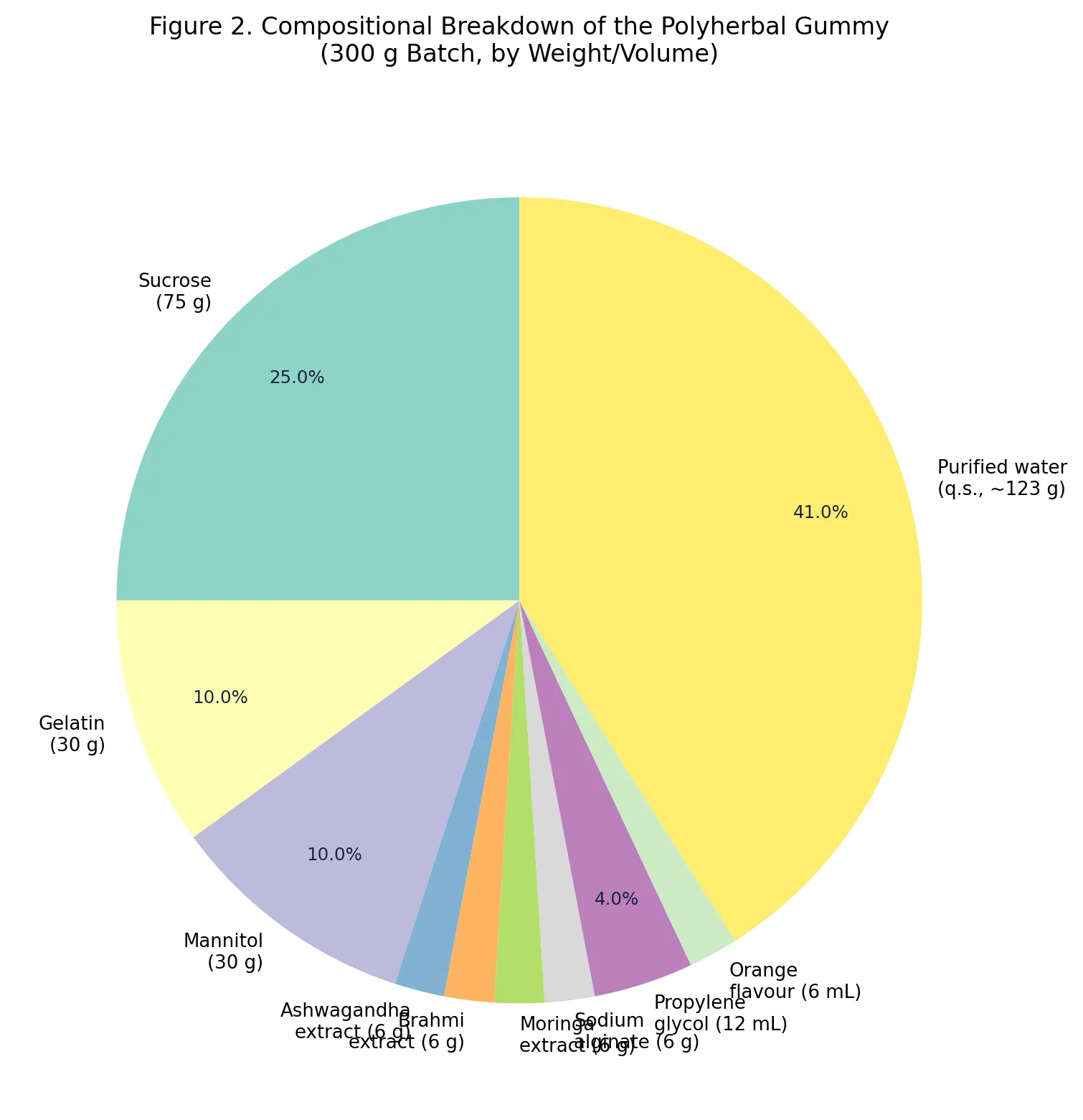
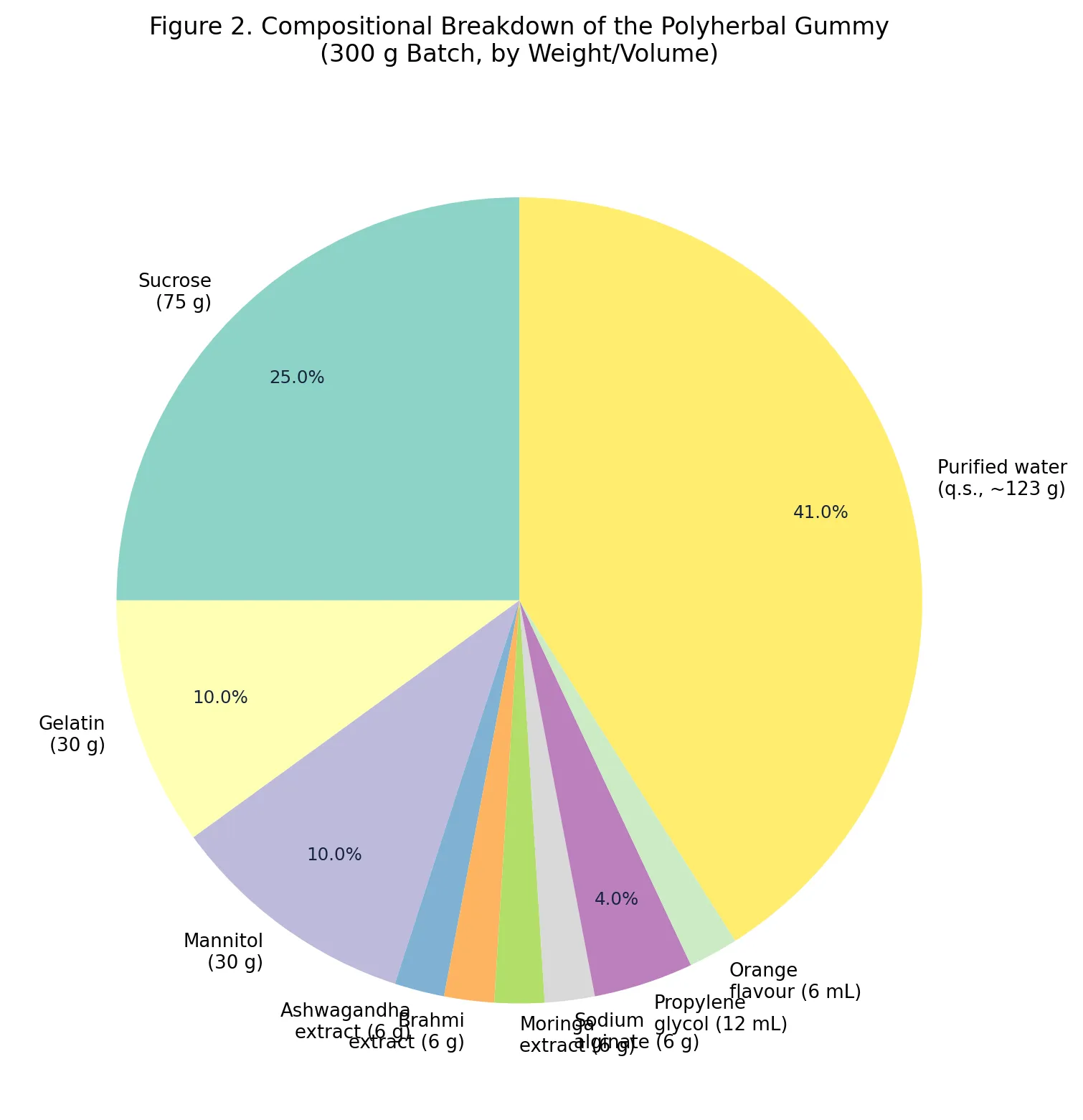
4.7 Formulation of Polyherbal Gummies (300 g Batch)
Table 4. Batch formulation of the polyherbal gummy (300 g scale).
|
S. No. |
Ingredient |
Category |
Quantity (300 g batch) |
|
1 |
Ashwagandha extract (Withania somnifera) |
Active ingredient |
6 g |
|
2 |
Brahmi extract (Bacopa monnieri) |
Active ingredient |
6 g |
|
3 |
Moringa extract (Moringa oleifera) |
Active ingredient |
6 g |
|
4 |
Gelatin |
Gelling agent |
30 g |
|
5 |
Sodium alginate |
Stabilizer |
6 g |
|
6 |
Sucrose |
Sweetening agent |
75 g |
|
7 |
Mannitol |
Bulking agent |
30 g |
|
8 |
Propylene glycol |
Solvent / humectant |
12 mL |
|
9 |
Orange flavour |
Flavouring agent |
6 mL |
|
10 |
Purified water |
Vehicle |
q.s. to 300 g |
4.8 Method of Preparation
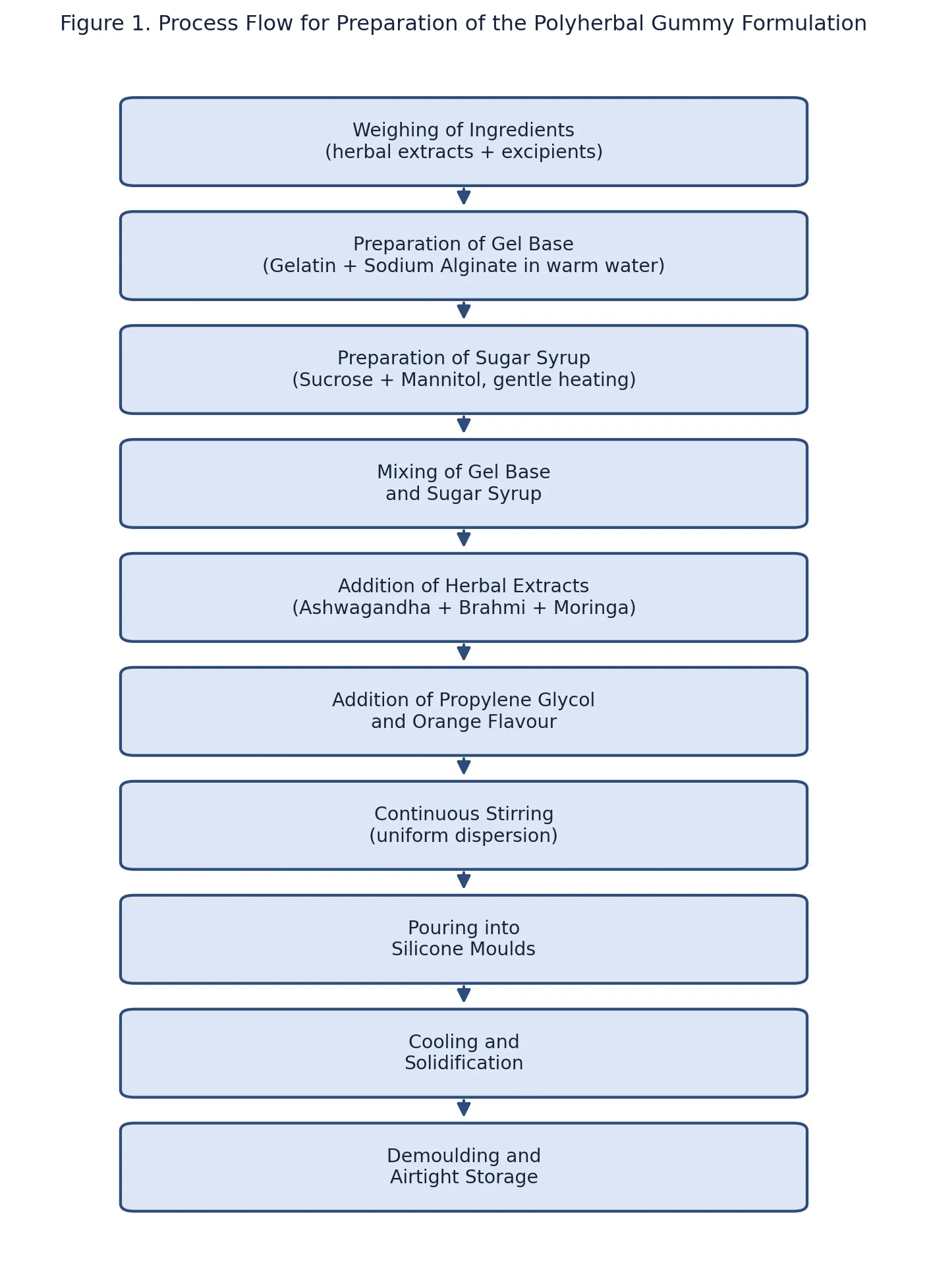
Figure 1. Sequential process flow for preparation of the polyherbal gummy formulation.
4.9 Evaluation Parameters for the Gummies
4.10 Proposed Design for Formulation Optimisation
Although the present study characterises a single, fixed-ratio formulation, systematic optimisation of gummy dosage forms is typically achieved by preparing a small series of trial batches in which one excipient variable is varied while others are held constant, followed by comparative organoleptic, textural, and hedonic evaluation. Table 5 outlines a design of this type, proposed as the logical next step for formally optimising the gelatin–sodium alginate ratio of the present formulation; no experimental results from this proposed design are reported here, and the values shown are formulation variables for future work rather than completed trial data.
Table 5. Proposed trial-batch design for future gelatin–sodium alginate ratio optimisation (formulation design only; not experimental results).
|
Trial Batch |
Gelatin (%) |
Sodium Alginate (%) |
Rationale |
|
F1 |
6 |
1 |
Lower gel strength; baseline chewability reference |
|
F2 |
8 |
2 |
Intermediate gel strength; expected balance of elasticity and firmness |
|
F3 |
10 |
2 |
Higher gelatin fraction; increased hardness and reduced syneresis expected |
|
F4 |
8 |
3 |
Increased alginate fraction; expected improvement in structural stability and reduced stickiness |
|
F5 |
10 |
3 |
Maximal gel strength within the proposed range; risk of excessive hardness to be assessed |
4.11 Stability Testing Framework (Proposed)
Formal stability assessment of the optimised formulation should follow accelerated and long-term storage protocols broadly analogous to those used for other semi-solid and confectionery-type nutraceutical dosage forms, typically involving storage at 25°C/60% relative humidity (long-term) and 40°C/75% relative humidity (accelerated), with periodic assessment of appearance, texture, syneresis, pH drift, microbial load, and, where analytically feasible, marker-compound content (e.g., withanolide or bacoside assay) at defined intervals over a minimum six-month accelerated study. This framework is proposed as a template for future stability work on the present formulation and was not executed within the scope of the present study.
4.12 Statistical Considerations
For future optimisation studies employing the trial-batch design outlined in Section 4.10, quantitative response variables (hardness, gumminess, chewiness, disintegration time, hedonic score) would be analysed using a completely randomized design with appropriate analysis of variance, consistent with the statistical approach reported in the contemporary gelatin/pectin gummy-optimisation literature, allowing formal identification of the excipient ratio that best satisfies the target product profile.
5. RESULTS
The polyherbal gummies containing Ashwagandha, Brahmi, and Moringa extracts were successfully prepared using gelatin, sodium alginate, sucrose, mannitol, propylene glycol, orange flavour, and purified water as the excipient system. The finished gummies were subjected to a full panel of organoleptic and physicochemical evaluation tests, comprising colour, odour, taste, transparency, texture, stickiness, grittiness, pH, hedonic acceptability, and weight variation. The formulation produced gummies with a smooth, non-sticky surface and a pleasant taste and odour, indicating good overall palatability. The measured pH of the formulation was slightly acidic, a range considered appropriate and stable for gummy-type confectionery-based dosage forms, and consistent with the 3.5–5.5 optimal range identified in the wider gummy-formulation literature. Weight variation testing showed uniform distribution of the formulation mass across individual units, indicating satisfactory content uniformity across the batch. Collectively, the evaluation outcomes confirmed that the prepared gummies met the required quality benchmarks for this dosage form.
Table 6. Summary of organoleptic and physicochemical evaluation results for the optimised polyherbal gummy formulation.
|
S. No. |
Evaluation Test |
Observation |
|
1 |
Colour |
Light green |
|
2 |
Odour |
Pleasant herbal odour |
|
3 |
Taste |
Slightly sweet with mild herbal taste |
|
4 |
Transparency |
Opaque |
|
5 |
Texture |
Smooth and chewy |
|
6 |
Stickiness |
Non-sticky |
|
7 |
Grittiness |
Non-gritty |
|
8 |
pH |
Slightly acidic (≈ 4–5) |
|
9 |
Hedonic test |
Passed the test |
No degradation, phase separation, colour change, or visible microbial growth was observed in the finished gummies over the short-term observation period following preparation. The absence of grittiness on chewing indicates that the herbal extract powders were adequately incorporated into the gel matrix rather than remaining as coarse, undispersed particles, while the non-sticky surface texture indicates that the gelatin–sodium alginate ratio used was adequate to prevent the excessive surface tack that commonly affects poorly optimised gummy formulations.
6. DISCUSSION
The formulated polyherbal gummies displayed acceptable organoleptic characteristics — pleasant taste, agreeable odour, and a uniform light-green colour — indicating that the gelatin–sodium alginate–sucrose–mannitol excipient system was effective at masking the inherently bitter and astringent taste typical of Ashwagandha, Brahmi, and Moringa extracts. The texture was smooth, non-sticky, and free from grittiness, confirming that the herbal powders were adequately solubilised or finely dispersed within the gel matrix rather than remaining as coarse, undissolved particles. The slightly acidic pH of the formulation (≈ 4–5) falls within a range generally favourable for gummy-type confections, supporting both microbial and chemical stability, while the observed uniformity in weight variation across units reflects consistent mixing and a reasonably even distribution of the active herbal extracts throughout the batch.
From a formulation-science perspective, the selection of herbal actives was guided by complementary, partially overlapping mechanisms of action, as summarised schematically in Figure 3. Ashwagandha's adaptogenic activity, largely attributed to its withanolide and sitoindoside content, is understood to act via modulation of cortisol and the hypothalamic–pituitary–adrenal stress axis, and this mechanism is now directly supported by human trial data showing reductions in both anxiety scores and circulating cortisol. Brahmi contributes nootropic and anxiolytic effects mediated through bacoside-driven modulation of serotonergic, dopaminergic, and cholinergic neurotransmission, alongside direct neuroprotective and antioxidant activity, consistent with the attentional and reaction-time benefits reported in pooled trial data. Moringa supplies a dense flavonoid and phenolic antioxidant load that is proposed to act synergistically with the other two botanicals by limiting oxidative damage to neuronal tissue — a mechanism directly evidenced by the rapid rise in plasma antioxidant capacity and fall in lipid peroxidation observed after acute Moringa dosing in human subjects. The combination of these three complementary mechanisms in a single dosage unit is intended to produce an additive, and potentially synergistic, benefit for stress relief, cognitive performance, and cellular antioxidant protection, though this synergy has not been directly demonstrated for the specific tri-herbal combination developed here and would require dedicated pharmacodynamic and clinical evaluation of the finished product.
The optimisation of the gel base and sugar syrup ratio was central to achieving satisfactory physical properties. Gelatin contributed elasticity and chewability, while sodium alginate reinforced structural integrity and reduced surface stickiness, together yielding a gummy that held its shape without adhering excessively to packaging or to the fingers of the user — a common failure mode in poorly optimised gummy formulations, and one that the broader gelatin/pectin gummy literature attributes directly to gelling-agent type and concentration. The addition of orange flavour was likewise important in offsetting the residual bitterness and characteristic odour of the herbal extracts, particularly that of Moringa leaf material, and in doing so materially improved the anticipated consumer acceptability and, by extension, patient compliance.
Taken together, the evaluation results support the conclusion that a stable, palatable, and dosage-uniform polyherbal gummy can be prepared from Ashwagandha, Brahmi, and Moringa extracts using conventional pharmaceutical gelling and sweetening excipients. Nonetheless, this study was limited to short-term organoleptic and physicochemical characterisation; formal accelerated and long-term stability testing along the lines outlined in Section 4.11, in-vitro drug release and dissolution profiling, microbial limit testing, marker-compound assay (e.g., HPTLC or HPLC quantification of withanolides and bacosides), and controlled clinical evaluation of anxiolytic, nootropic, and antioxidant efficacy remain necessary before the formulation can be considered validated for therapeutic claims.
6.1 Advantages of the Developed Gummy Dosage Form
6.2 Limitations of the Polyherbal Gummy Formulation
7. Comparative Analysis of Dosage Forms
To contextualise the choice of gummy dosage form, Table 7 compares gummies against conventional tablets and capsules across attributes most relevant to herbal actives: palatability, swallowability, dose precision, stability, and suitability for polyherbal combinations.
Table 7. Comparative assessment of gummy, tablet, and capsule dosage forms for delivery of polyherbal actives.
|
Attribute |
Gummy |
Tablet |
Capsule |
|
Palatability / taste-masking |
Excellent |
Poor to moderate |
Good (if coated/enteric) |
|
Ease of swallowing (paediatric/geriatric) |
Excellent |
Poor |
Moderate |
|
Dose precision / uniformity |
Moderate |
Excellent |
Excellent |
|
Physical/chemical stability |
Moderate (moisture-sensitive) |
Excellent |
Good |
|
Suitability for polyherbal loading |
High (flexible matrix) |
Moderate (compression limits) |
Moderate (fill-volume limits) |
|
Portability / water-free dosing |
Excellent |
Good |
Good |
|
Suitability for diabetic patients |
Poor (unless sugar-free) |
Good |
Good |
|
Typical shelf life |
Shorter |
Longest |
Long |
7.1 SWOT Analysis of the Polyherbal Gummy Formulation
A structured strengths–weaknesses–opportunities–threats (SWOT) analysis provides a concise framework for assessing the commercial and scientific viability of the developed formulation alongside the comparative dosage-form assessment in Table 7.
Table 8. SWOT analysis of the developed polyherbal gummy formulation.
|
Category |
Key Points |
|
Strengths |
Palatable, water-free, chewable delivery; effective taste-masking of bitter extracts; combines three complementary mechanisms (adaptogenic, nootropic, antioxidant) in one unit; simple, scalable melt-and-pour manufacturing process; strong consumer pull toward gummy-format nutraceuticals |
|
Weaknesses |
Moisture sensitivity and associated microbial risk; lower drug-loading capacity than tablets/capsules; sugar content unsuitable for diabetic consumers without reformulation; herbal extract standardisation remains analytically challenging; no dedicated combination efficacy or stability data yet generated |
|
Opportunities |
Rapidly growing nutraceutical gummies market (≈13% CAGR reported industry-wide); scope for sugar-free/vegan (pectin-based) line extensions; potential for clinical validation and premium positioning as a stress-and-cognition-focused product; scope for additional actives or target-specific variants |
|
Threats |
Regulatory scrutiny of health claims for herbal nutraceuticals; batch-to-batch variability in crude herbal extracts; competitive, crowded gummy-supplement market; consumer misperception of gummies as confectionery, raising overconsumption risk |
7.2 Recommended Analytical Quality-Control Package
Beyond the organoleptic and physicochemical panel applied in the present study, a formal quality-control package suitable for regulatory submission or commercial release of this formulation would typically include the additional analytical tests summarised in Table 9. These tests were not performed within the scope of the present study and are presented as a recommended package for subsequent product development.
Table 9. Recommended analytical quality-control package for future development of the formulation (not performed in the present study).
|
Test |
Typical Method |
Purpose |
|
Withanolide / bacoside marker assay |
HPTLC or HPLC |
Confirms extract identity and potency; supports label-claim accuracy |
|
Microbial limit test |
Total viable count, pathogen screening (per Indian Pharmacopoeia/FSSAI limits) |
Ensures microbiological safety of the moisture-rich matrix |
|
Heavy metal screening |
ICP-MS or AAS |
Confirms compliance with permissible limits for lead, arsenic, cadmium, mercury |
|
Disintegration / dissolution behaviour |
In-vitro dissolution apparatus (modified for chewable matrices) |
Characterises release of actives from the gel matrix |
|
Texture profile analysis |
Texture analyser (compression probe) |
Quantifies hardness, gumminess, chewiness for batch-to-batch consistency |
|
Accelerated stability (40°C/75% RH) |
ICH-aligned stability chambers |
Predicts shelf life and identifies degradation pathways |
8. Regulatory Considerations for Herbal Nutraceutical Gummies
Commercialisation of a polyherbal gummy of this type would need to satisfy the regulatory framework governing nutraceuticals and herbal products in the intended market of sale. In India, such products fall broadly within the scope of the Food Safety and Standards Authority of India's Nutraceuticals, Health Supplements and Novel Food Regulations, which govern permissible ingredients, labelling, and health-claim substantiation for food-derived health products, while formulations positioned as classical Ayurvedic medicines would instead require licensing under the Ministry of AYUSH framework administered through state drug licensing authorities. In jurisdictions such as the United States, comparable herbal gummies are typically regulated as dietary supplements under the Dietary Supplement Health and Education Act framework, which permits structure/function claims but not disease-treatment claims without additional regulatory approval. Irrespective of jurisdiction, herbal extract standardisation (e.g., minimum withanolide or bacoside content), heavy-metal and microbial limit testing, and accurate, non-misleading labelling of active-ingredient content per gummy unit represent common regulatory expectations that any future commercial development of this formulation would need to address.
9. Safety, Contraindications, and Toxicity Considerations
Each of the three component herbs carries its own, generally favourable, safety profile at the doses supported by clinical literature, but specific caution points merit attention in a combined product. Ashwagandha should be avoided or used only under medical supervision in pregnancy and lactation, autoimmune disease, thyroid disorders, and in individuals with known Solanaceae hypersensitivity, and may interact with sedatives, thyroid hormone replacement therapy, and immunosuppressants. Reported adverse effects across the Ashwagandha clinical literature are generally mild and include gastrointestinal upset, headache, and drowsiness, with mild-to-moderate adverse events reported in a minority of pooled trial participants. Brahmi and Moringa are both supported by comparatively favourable long-term safety records in the reviewed literature, though Brahmi may cause mild gastrointestinal upset in sensitive individuals, and Moringa supplementation protocols in pregnancy specifically should be approached cautiously pending further dedicated safety data. As with any polyherbal product, the combined formulation has not itself been subjected to dedicated combination toxicology or drug-interaction studies, and the safety statements above should be understood as extrapolated from the individual-herb literature rather than as data generated on the finished gummy.
A precautionary labelling approach for a commercial version of this product would reasonably advise against use in pregnancy and lactation, in children below an age threshold to be defined in consultation with paediatric formulation guidance, and in individuals on concurrent sedative, thyroid, or immunosuppressant therapy, pending dedicated interaction data for the combined extract. Because the finished product resembles confectionery in appearance and texture, child-resistant packaging and clear per-unit active-ingredient labelling are recommended to mitigate the risk of accidental overconsumption noted in Section 6.2 and Table 8.
10. Limitations of the Present Study
11. FUTURE SCOPE
CONCLUSION
This study successfully demonstrates the formulation and evaluation of polyherbal edible gummies containing Ashwagandha, Brahmi, and Moringa extracts, prepared using a gelatin–sodium alginate gel base and a sucrose–mannitol syrup system. The developed gummies exhibited acceptable organoleptic properties, satisfactory texture, uniform weight, and stable, slightly acidic pH, and passed hedonic panel evaluation. Independent clinical literature on the three component herbs — reviewed in detail in Section 2 — supports the pharmacological rationale for their combination at the dose ranges used, even though the combined product itself has not yet been subjected to dedicated efficacy or safety testing. As a dosage form, the polyherbal gummy offers a convenient, palatable, and patient-friendly alternative to conventional tablets and capsules, with particular value for populations who have difficulty swallowing solid oral dosage forms. On this basis, polyherbal gummies represent a promising delivery platform for adaptogenic, nootropic, and antioxidant botanicals aimed at stress management, cognitive support, and general well-being, warranting the further stability, dissolution, marker-compound, and clinical investigation outlined in Sections 10 and 11 to establish long-term efficacy and safety.
Declarations
Ethical Approval
This study involved formulation development and organoleptic/physicochemical evaluation only; no human or animal experimentation was undertaken, and formal ethics committee approval was therefore not applicable. Any future hedonic panel or clinical evaluation of the finished product should be conducted only after appropriate institutional ethics review and informed consent.
Conflict of Interest
The authors declare no conflict of interest associated with this work.
Funding
This research did not receive any specific grant from funding agencies in the public, commercial, or not-for-profit sectors.
Author Contributions
All authors contributed to the conception, formulation development, evaluation, drafting, and final approval of the manuscript.
Acknowledgements
The authors acknowledge the Department of Pharmaceutics for providing the laboratory facilities used in this work.
Data Availability
The evaluation data generated and analysed during the present study are included within this article. Data from the proposed future studies outlined in Sections 4.10–4.12, 7.2, and 11 do not yet exist and will be made available upon completion of that work.
REFERENCES
1.1 The Interconnected Burden of Stress, Anxiety, and Cognitive Decline
Chronic psychological stress, anxiety disorders, and age- or lifestyle-related cognitive decline are increasingly recognised not as isolated conditions but as an interconnected continuum, in which sustained activation of the hypothalamic–pituitary–adrenal (HPA) axis and elevated systemic oxidative stress contribute jointly to impaired neurotransmission, reduced neuroplasticity, and accelerated cognitive ageing. Modern lifestyles characterised by occupational pressure, disrupted sleep, and constant digital stimulation have made subclinical, chronic stress an almost universal experience, and its downstream physiological consequences — elevated cortisol, low-grade neuroinflammation, and oxidative damage to neuronal membranes — are now understood to underlie much of the burden traditionally attributed to anxiety and memory complaints separately. This convergence has strengthened the scientific and clinical rationale for interventions that act simultaneously on the stress axis, on cognitive/neurotransmitter systems, and on cellular oxidative status, rather than on any single pathway in isolation.
1.2 Limitations of Conventional Pharmacotherapy
Benzodiazepines, selective serotonin reuptake inhibitors, and related anxiolytic or antidepressant agents remain the mainstay of clinical management for anxiety disorders, and are supported by a substantial evidence base for short- to medium-term efficacy. However, their long-term use is consistently associated with adverse effects including sedation, psychomotor slowing, tolerance, physical dependency, withdrawal phenomena on discontinuation, and, in some agents, measurable impairment of memory and executive function. These limitations are particularly problematic in the very populations most likely to seek relief from chronic, low-grade stress — working adults, students, and the elderly — for whom cognitive clarity and functional independence are priorities rather than acceptable trade-offs. This safety and tolerability gap has driven sustained scientific, regulatory, and commercial interest in plant-derived alternatives capable of modulating the stress response and supporting cognitive health with a more favourable long-term risk profile.
1.3 The Rise of Nutraceuticals and Herbal Drug Delivery Systems
The term nutraceutical describes a food-derived product that provides medical or health benefits, including the prevention or treatment of disease, and the category has grown rapidly as consumers seek “clean-label” alternatives to synthetic pharmaceuticals for everyday wellness indications. Within this category, Ayurvedic and other traditional-medicine botanicals have attracted particular attention because centuries of empirical use provide a starting point for modern pharmacological validation, and because many of these plants — unlike single-molecule synthetic drugs — appear to act through multiple, complementary mechanisms simultaneously. Realising this potential in practice, however, depends critically on the dosage form chosen to deliver the plant material: a herbal extract that is pharmacologically promising but delivered in an unpalatable, poorly bioavailable, or inconvenient dosage form will consistently underperform its theoretical potential in real-world use because of poor patient adherence.
1.4 Rationale for the Gummy Dosage Form
Gummies have moved rapidly from a confectionery novelty to a mainstream nutraceutical delivery platform. Industry analyses place the global nutraceutical gummies market on a trajectory of double-digit annual growth over the current decade, reflecting strong and rising consumer preference for chewable, good-tasting supplement formats over traditional tablets and capsules. Figure 5 presents an indexed projection of this market trend, illustrating the scale of the shift toward gummy-based delivery across the dietary supplement industry as a whole. This growth is directly relevant to herbal formulation science: a dosage form with strong, independent consumer pull creates a natural vehicle for delivering botanicals such as Ashwagandha, Brahmi, and Moringa to precisely the population — stressed, time-pressed adults reluctant to take “medicine-like” tablets — most likely to benefit from them.
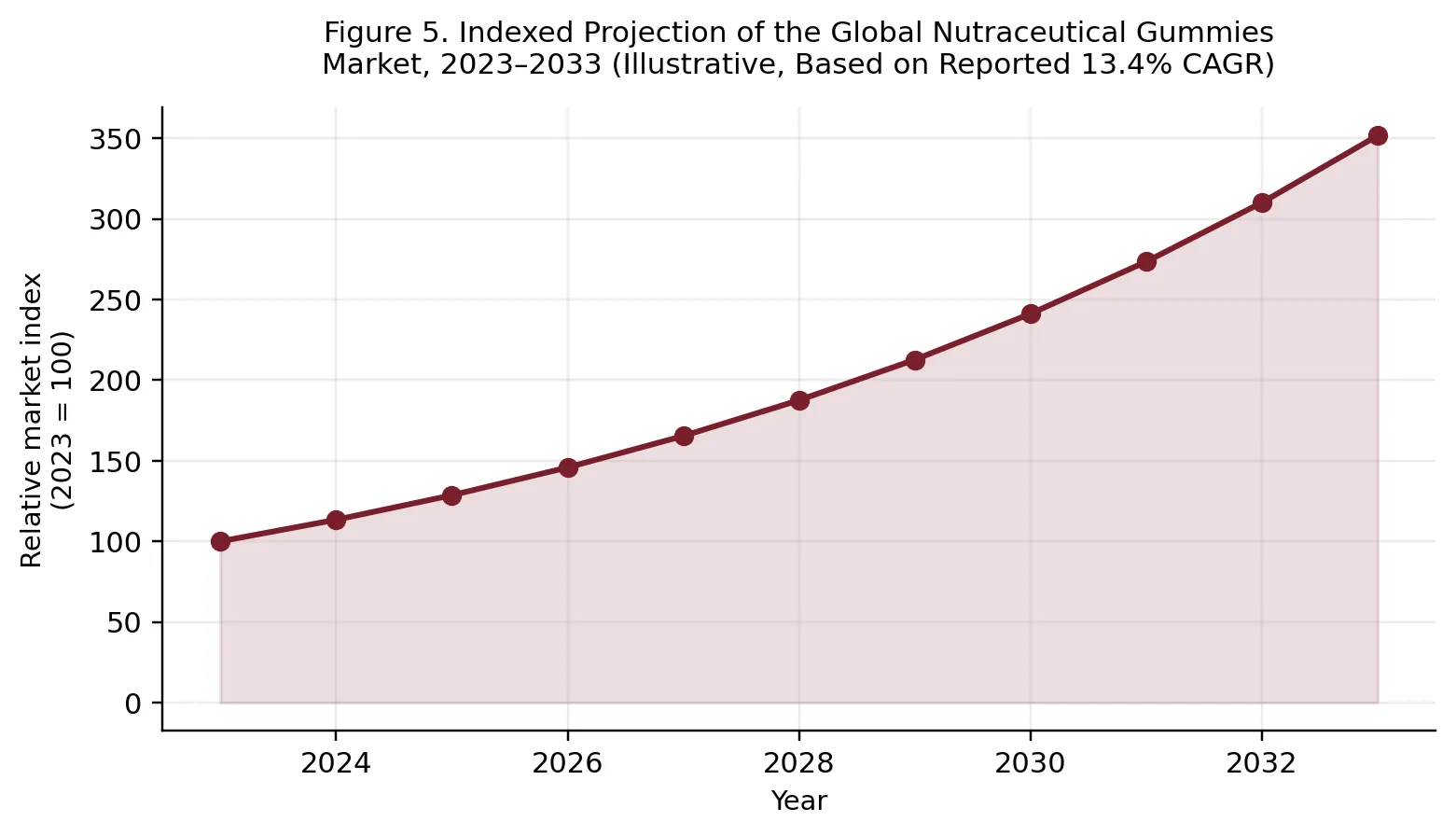
Figure 5. Indexed projection of the global nutraceutical gummies market, 2023–2033, illustrating the sustained double-digit growth reported for this dosage-form category.
1.5 Advantages of the Gummy Dosage Form
Gummies have been a well-established way of delivering active constituents to children, and their use among adults has grown steadily. They are palatable, chewable, easier to swallow than solid units, and offer a more effortless method of administration than conventional tablets or capsules. Chewable gummy formulations are built from concentrated sugar solutions combined with a gelling agent — typically gelatin, though pectin- and starch-based systems are increasingly used — to yield a firm, soft, chewy confectionery matrix. This dosage form carries several advantages: a naturally sweet taste, distinctive texture, attractive shape and colour, pleasant aroma, and overall ease of consumption, which together make it broadly acceptable across age groups, and particularly valuable for children and elderly patients who have difficulty swallowing conventional solid dosage forms. Relative to tablets and capsules specifically, gummies require no water for administration, are highly portable, allow effective masking of the bitterness typical of herbal actives, and — critically for the present application — their compositional flexibility permits multiple actives to be co-formulated within a single chewable unit, making them a natural platform for polyherbal combinations such as the one developed here.
1.6 Objectives of the Present Study
Building on this rationale, the present work set out to formulate and evaluate a polyherbal gummy incorporating Ashwagandha, Brahmi, and Moringa extracts using gelatin and sodium alginate as the principal gelling excipients, with the specific aim of producing a stable, palatable, and patient-acceptable adaptogenic, nootropic, and antioxidant nutraceutical, and to interpret the resulting formulation against the wider phytochemical, pharmacological, and dosage-form literature summarised in the sections that follow.
2. Botanical and Phytochemical Profile of the Selected Medicinal Plants
The formulation draws on three phytochemically well-characterised medicinal plants — Ashwagandha, Brahmi, and Moringa — selected for their complementary, partly overlapping pharmacological actions on the stress axis, cognitive function, and cellular oxidative status. The sections below review the taxonomy, phytochemistry, pharmacology, clinical evidence, and safety profile of each plant in turn, followed by a consolidated rationale for their combination.
2.1 Ashwagandha (Withania somnifera)
Withania somnifera, family Solanaceae, is known in classical and folk usage as “Indian winter cherry” or “Indian ginseng.” The root is the officinal part, and the plant's name is traditionally explained as a compound of ashwa (horse), reflecting the folk belief that the root imparts strength and vitality comparable to that of a horse, and gandha (odour), referring to the characteristic smell of the fresh root. It has been used since antiquity in Ayurvedic medicine as a tonic that fortifies the nervous system.
Chemically, Withania somnifera is characterised by a group of steroidal lactones collectively termed withanolides (including withaferin A), together with alkaloids such as isopelletierine, anaferine, cuscohygrine, and anahygrine, and saponins including the sitoindosides. Sitoindosides VII–X and withaferin A in particular have demonstrated significant anti-stress activity in acute experimental stress models, and several of the plant's constituents additionally display immunomodulatory action. The aerial parts of the plant yield further withanolide derivatives, including 5-dehydroxy withanolide-R and withasomniferin-A, broadening the phytochemical basis for its adaptogenic reputation.
Clinical evidence for Ashwagandha's anxiolytic and stress-modulating activity has grown substantially over the past decade. A double-blind, randomized, placebo-controlled trial of a standardized 240 mg daily root extract in stressed adults reported statistically significant reductions in Hamilton Anxiety Rating Scale scores together with reductions in morning cortisol and dehydroepiandrosterone-sulphate, with no adverse events over the 60-day study period. A systematic review and meta-analysis of nine randomized controlled trials involving 558 participants confirmed a significant pooled effect of Ashwagandha formulations on the Perceived Stress Scale, the Hamilton Anxiety Scale, and serum cortisol relative to placebo, while noting that mild-to-moderate adverse events were reported in a minority of included trials. Separate randomized, placebo-controlled studies have additionally reported improvements in self-reported mood, cognitive performance, and stress-related food cravings with proprietary Ashwagandha root-and-leaf extracts, and beneficial effects on inflammatory biomarkers and physical performance with lower, twice-daily dosing regimens in healthy volunteers. Taken together, this body of evidence supports the widely cited effective dose range of approximately 300–600 mg per day for standardized Ashwagandha root extract in anxiolytic and stress-modulating applications, although several of the newer proprietary extracts have demonstrated benefit at lower daily doses.
Ashwagandha is nonetheless not free of caution points relevant to formulation and labelling. It is generally not recommended for individuals with autoimmune disease or thyroid disorders, or during pregnancy and lactation, and it should be avoided by those with known hypersensitivity to Solanaceae (nightshade family) plants. Potential interactions have been reported with sedatives, thyroid hormone replacement therapy, and immunosuppressant medication, warranting medical consultation before use in these groups. Reported adverse effects, while generally mild, include gastrointestinal upset, headache, and drowsiness.
2.2 Brahmi (Bacopa monnieri)
Bacopa monnieri, family Plantaginaceae, is a marsh-dwelling herb widely distributed across India and a cornerstone nootropic in Ayurvedic practice. Its principal bioactive constituents are triterpenoid saponins known as bacosides (notably bacoside A and bacoside B), supplemented by alkaloids such as brahmine and herpestine, flavonoids, glycosides, sterols, and betulinic acid.
Pharmacologically, Brahmi demonstrates consistent nootropic activity, improving memory, learning capacity, and information retention through enhanced neuronal communication and synaptic activity, alongside neuroprotective effects that reduce oxidative stress and protect neuronal tissue from damage. It modulates key neurotransmitter systems — serotonergic, dopaminergic, and cholinergic — which underlies reported anxiolytic and antidepressant activity, and it exerts antioxidant and anti-inflammatory effects that contribute to reduced mental fatigue and improved overall brain health.
A systematic review and meta-analysis of randomized controlled trials found that standardized Bacopa extracts, administered at doses of 300–450 mg per day for a minimum of twelve weeks, produced measurable improvements in cognitive performance, particularly speed of attention and choice reaction time, across the pooled trial population. An earlier systematic review similarly concluded that Bacopa improves memory free recall, while noting that evidence for benefit across other cognitive domains remained comparatively limited at the time. An acute, double-blind, placebo-controlled crossover study additionally reported sustained cognitive performance benefits from single 320 mg and 640 mg doses of a standardized Bacopa extract, supporting both the acute and chronic-use evidence base for the doses used in the present formulation. More recent network meta-analyses of plant-based cognitive interventions in healthy older adults have continued to rank Bacopa-containing compounds favourably for executive-function and language-domain outcomes, though reviews focused specifically on Alzheimer's-type dementia have judged the overall quality of trial evidence in that population to be low, reflecting small sample sizes and methodological heterogeneity across studies. Clinically and traditionally, Brahmi has additionally been used in the management of anxiety, stress, insomnia, and epilepsy, and as a general brain tonic for concentration and mental clarity, supported by an established safety profile that favours its inclusion in polyherbal wellness formulations.
2.3 Moringa (Moringa oleifera)
Moringa oleifera, commonly called the drumstick tree, belongs to the family Moringaceae and is one of the most extensively studied nutraceutical plants owing to its dense nutrient and phytochemical profile. Its leaves, seeds, pods, and roots contain flavonoids such as quercetin and kaempferol, phenolic acids, alkaloids, saponins, tannins, vitamins A, C, and E, minerals including calcium, potassium, and iron, and a full complement of essential amino acids.
This phytochemical richness underlies a broad pharmacological profile. A randomized crossover trial found that a single 500 mg dose of Moringa leaf extract rapidly and significantly enhanced plasma antioxidant status, as measured by ferric-reducing antioxidant power and Trolox-equivalent antioxidant capacity, while concurrently reducing the lipid-peroxidation marker malondialdehyde within thirty minutes of administration — direct human evidence for the acute antioxidant activity underlying Moringa's inclusion in the present formulation. A recent narrative review covering twenty-two clinical trials and nine case reports published between 2015 and 2025 further documented benefit across immunological, metabolic, endocrine, and inflammatory outcome domains, while a separate mechanistic review concluded that Moringa's antidiabetic and anti-inflammatory effects operate substantially through inhibition of nuclear factor kappa-B signalling and enhancement of the Nrf2 antioxidant-response pathway, alongside reductions in pro-inflammatory cytokines. Additional randomized studies have reported improvements in antioxidant and oxidative-stress biomarkers with Moringa supplementation in specific patient populations, reinforcing the plant's role as a broad-spectrum antioxidant and neuroprotective adjunct rather than a primary anxiolytic agent.
A practical formulation obstacle is that Moringa leaf material has a distinctive, often unappealing odour that limits direct consumer acceptance, creating a clear rationale for delivering the extract within a flavoured, taste-masking matrix such as a gummy rather than as a raw leaf powder or simple aqueous preparation.
2.4 Rationale for the Polyherbal Combination
The combination of Ashwagandha, Brahmi, and Moringa in a single dosage unit is rationalised on the premise that their mechanisms of action, while individually well documented, are largely complementary rather than redundant. Ashwagandha's principal contribution is adaptogenic modulation of the HPA axis and circulating cortisol; Brahmi contributes nootropic and anxiolytic activity through modulation of serotonergic, dopaminergic, and cholinergic neurotransmission; and Moringa supplies a dense flavonoid and phenolic antioxidant load that is proposed to protect neuronal tissue from the oxidative damage associated with chronic stress and cognitive ageing. Figure 3 presents a conceptual schematic of this proposed three-pathway complementarity. It should be emphasised that this synergy is a pharmacologically plausible hypothesis grounded in the mechanisms reported for each botanical individually; it has not been directly demonstrated for this specific tri-herbal combination and would require dedicated combination pharmacodynamic and clinical studies to confirm.
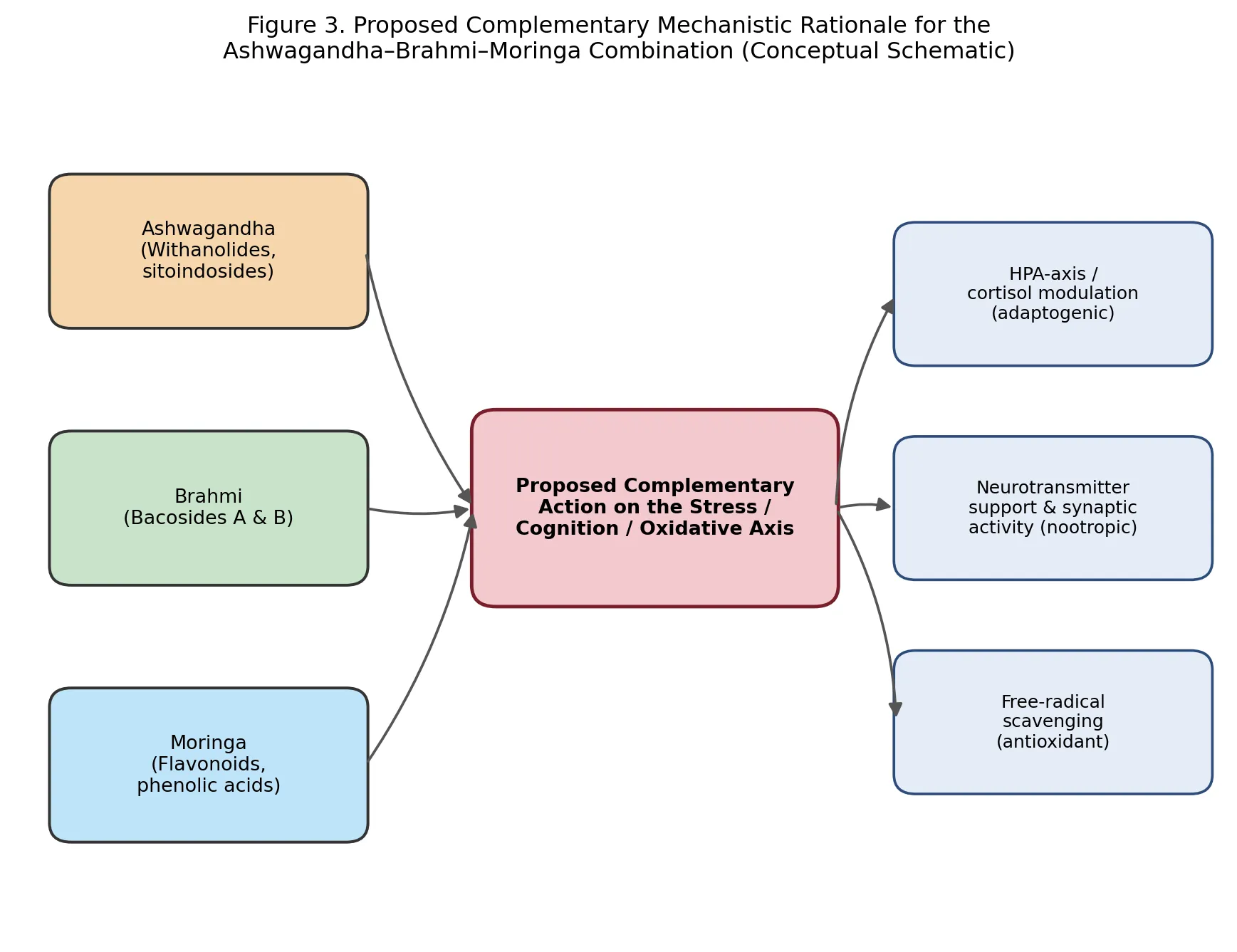
Figure 3. Proposed complementary mechanistic rationale for combining Ashwagandha, Brahmi, and Moringa within a single gummy formulation (conceptual schematic, not experimentally verified for the combination).
2.5 Summary of Supporting Clinical and Preclinical Evidence
Table 1. Representative clinical and experimental evidence supporting the dose ranges and pharmacological rationale for each component herb.
|
Herb |
Extract / Study Type |
Reported Dose |
Key Reported Outcome |
|
Ashwagandha |
Standardized root extract; RCT (Speers et al., 2019) |
240 mg/day, 60 days |
Reduced HAM-A anxiety score; reduced morning cortisol and DHEA-S; well tolerated |
|
Ashwagandha |
Meta-analysis of 9 RCTs, n = 558 (2024) |
Pooled, various |
Significant reduction in Perceived Stress Scale, HAM-A, and serum cortisol vs placebo |
|
Brahmi |
Meta-analysis of RCTs (Kongkeaw et al., 2013) |
300–450 mg/day, ≥12 weeks |
Improved speed of attention and choice reaction time |
|
Brahmi |
Acute crossover study (Stough et al., 2013) |
320 mg and 640 mg (single dose) |
Sustained cognitive performance improvement |
|
Moringa |
Randomized crossover trial |
500 mg (single dose) |
Rapid increase in plasma antioxidant capacity (FRAP, TEAC); reduced MDA |
|
Moringa |
Narrative review, 22 RCTs + 9 case reports (2015–2025) |
Variable, 2–8 g/day (leaf preparations) |
Benefit across immunological, metabolic, and oxidative-stress domains |
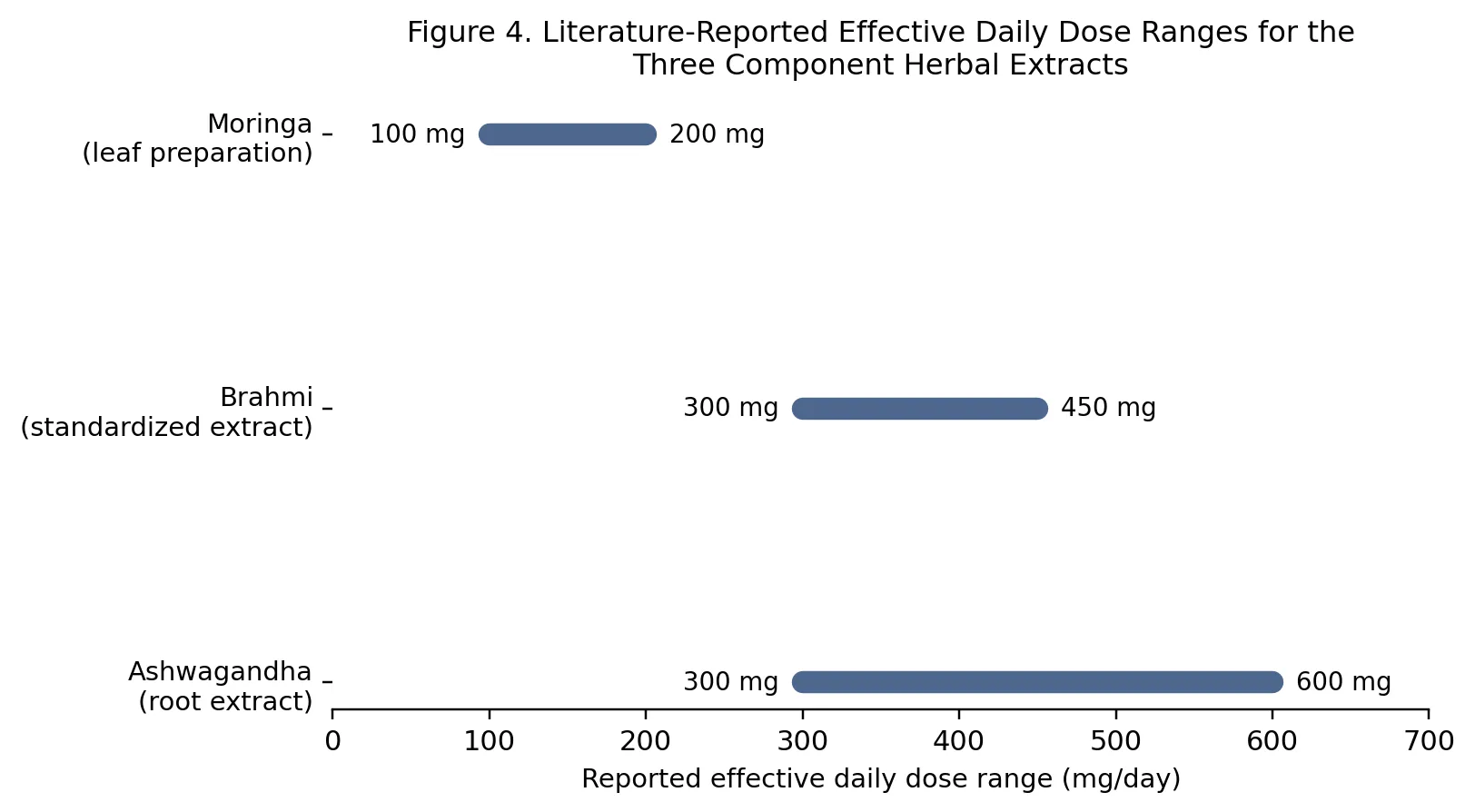
Figure 4. Literature-reported effective daily dose ranges for Ashwagandha, Brahmi, and Moringa; the present formulation delivers 6 g of each crude extract per 300 g batch, corresponding to a fixed proportion of extract per gummy unit that can be adjusted at the unit-dose design stage to align with these clinically supported ranges.
2.6 Comparative Phytochemical Summary
Table 2 in Section 4.5 summarises the pharmacological role of each active ingredient as used in the formulation; Table 1 above (Section 2.5) summarises the clinical dose–outcome evidence. Taken together with the mechanistic schematic in Figure 3, this evidence base indicates that the three botanicals, despite sharing some overlapping antioxidant and neuroprotective activity, are not pharmacologically redundant: Ashwagandha's primary literature-supported effect is on the HPA axis and circulating cortisol, Brahmi's is on attentional and memory-related cognitive performance, and Moringa's is on systemic and cellular antioxidant capacity. This distribution of primary effects across three related but distinct endpoints is the central pharmacological argument for formulating them together rather than as single-agent products, while also underscoring why dedicated combination studies — rather than simple extrapolation from single-herb data — remain necessary to confirm the magnitude of any additive or synergistic benefit in practice.
3. Aim and Objectives
3.1 Aim
To formulate and evaluate polyherbal edible gummies containing Ashwagandha (Withania somnifera), Brahmi (Bacopa monnieri), and Moringa (Moringa oleifera) using gelatin and sodium alginate as the principal gelling excipients.
3.2 Objectives
The specific objective of this work was to develop a gummy-based herbal drug delivery system incorporating the selected medicinal plant extracts with improved pharmaceutical and organoleptic properties relative to conventional dosage forms. The formulation was designed to optimise palatability, physical stability, and patient acceptability while addressing the well-known limitations of tablets and capsules — namely swallowing difficulty and poor taste masking — and thereby to improve overall patient compliance with adaptogenic and antioxidant phytotherapy.
3.3 Plan of Work
4. MATERIALS AND METHODS
4.1 Materials Used
The following materials were used in the preparation of the polyherbal gummy formulation: Ashwagandha extract (Withania somnifera), Brahmi extract (Bacopa monnieri), Moringa extract (Moringa oleifera), gelatin, sodium alginate, sucrose, mannitol, propylene glycol, orange flavouring agent, and purified water.
4.2 Equipment
Formulation and evaluation were carried out using standard pharmaceutical laboratory equipment, comprising an analytical/digital weighing balance, a water bath or hot plate with magnetic stirrer for gel-base and syrup preparation, a digital pH meter with calibration buffers, silicone gummy moulds, a refrigerator for controlled cooling, and an airtight storage container for the finished product. Where texture and hardness are to be quantified in subsequent optimisation work, a texture analyser fitted with a compression probe is the instrument of choice, consistent with texture-profile-analysis approaches reported in the contemporary gummy-formulation literature.
4.3 Preformulation Studies
Prior to full-batch preparation, each herbal extract was subjected to preliminary organoleptic screening — visual appearance, odour, and colour — to confirm identity and batch-to-batch consistency, and compatibility of the three extracts with the gelatin–sodium alginate gel base was assessed qualitatively by observing gel-set time, clarity, and the absence of visible precipitation on small-scale trial mixing. Such preformulation screening is standard practice in polyherbal gummy development, since interactions between tannins, saponins, or polyphenolic constituents in crude extracts and the gelling matrix can otherwise compromise gel strength or produce visible turbidity.
4.4 Selection of the Gelling System
Gelatin remains the most widely used gelling agent in pharmaceutical and confectionery gummy formulations, prized for the elasticity, transparency, and characteristic chew it imparts to the finished product. Gelatin concentration is a key formulation variable: comparative studies of gelatin–pectin chewable systems have shown that gelatin concentration systematically affects dispersion time, syneresis, hardness, gumminess, and chewiness, with 8–10% gelatin (alone or blended with a secondary hydrocolloid) frequently identified as an optimal working range for herbal-extract-loaded gummies. Sodium alginate was selected as a co-gelling and stabilising agent in the present formulation to reinforce structural integrity and reduce surface stickiness, a combination consistent with contemporary trends toward blended hydrocolloid systems rather than single-agent gels. The broader gummy-formulation literature also documents a growing shift toward plant-based hydrocolloids such as pectin, driven by clean-label and vegan consumer demand, and this represents a relevant avenue for future reformulation of the present product (Section 10).
4.5 Active Ingredients and Their Pharmacological Action
Table 2. Active ingredients, biological source, principal constituents, and pharmacological rationale.
|
S. No. |
Active Ingredient |
Biological Source |
Major Chemical Constituents |
Usage / Pharmacological Action |
|
1 |
Ashwagandha (Withania somnifera) |
Roots |
Withanolides, alkaloids, sitoindosides |
Adaptogen; reduces stress and anxiety, improves cognitive function, enhances stamina |
|
2 |
Brahmi (Bacopa monnieri) |
Whole plant |
Bacosides, alkaloids, flavonoids |
Nootropic; improves memory, learning, and concentration; anxiolytic and neuroprotective |
|
3 |
Moringa (Moringa oleifera) |
Leaves |
Flavonoids, phenolics, vitamins, minerals |
Antioxidant; reduces oxidative stress, supports brain health, boosts immunity |
4.6 Excipients and Their Functions
Table 3. Excipients selected for the gel base, syrup phase, and organoleptic modification.
|
S. No. |
Excipient |
Category |
Function / Use |
|
1 |
Gelatin |
Gelling agent |
Provides structure and elasticity to the gummy matrix |
|
2 |
Sodium alginate |
Stabilizer / thickener |
Enhances viscosity and physical stability |
|
3 |
Sucrose |
Sweetening agent |
Improves taste and overall palatability |
|
4 |
Mannitol |
Bulking agent / sweetener |
Adds bulk and mild secondary sweetness |
|
5 |
Propylene glycol |
Solvent / humectant |
Improves solubility and retains moisture |
|
6 |
Orange flavour |
Flavouring agent |
Enhances taste and masks residual herbal odour |
|
7 |
Purified water |
Vehicle |
Acts as solvent and processing medium |
4.7 Formulation of Polyherbal Gummies (300 g Batch)
Table 4. Batch formulation of the polyherbal gummy (300 g scale).
|
S. No. |
Ingredient |
Category |
Quantity (300 g batch) |
|
1 |
Ashwagandha extract (Withania somnifera) |
Active ingredient |
6 g |
|
2 |
Brahmi extract (Bacopa monnieri) |
Active ingredient |
6 g |
|
3 |
Moringa extract (Moringa oleifera) |
Active ingredient |
6 g |
|
4 |
Gelatin |
Gelling agent |
30 g |
|
5 |
Sodium alginate |
Stabilizer |
6 g |
|
6 |
Sucrose |
Sweetening agent |
75 g |
|
7 |
Mannitol |
Bulking agent |
30 g |
|
8 |
Propylene glycol |
Solvent / humectant |
12 mL |
|
9 |
Orange flavour |
Flavouring agent |
6 mL |
|
10 |
Purified water |
Vehicle |
q.s. to 300 g |
4.8 Method of Preparation
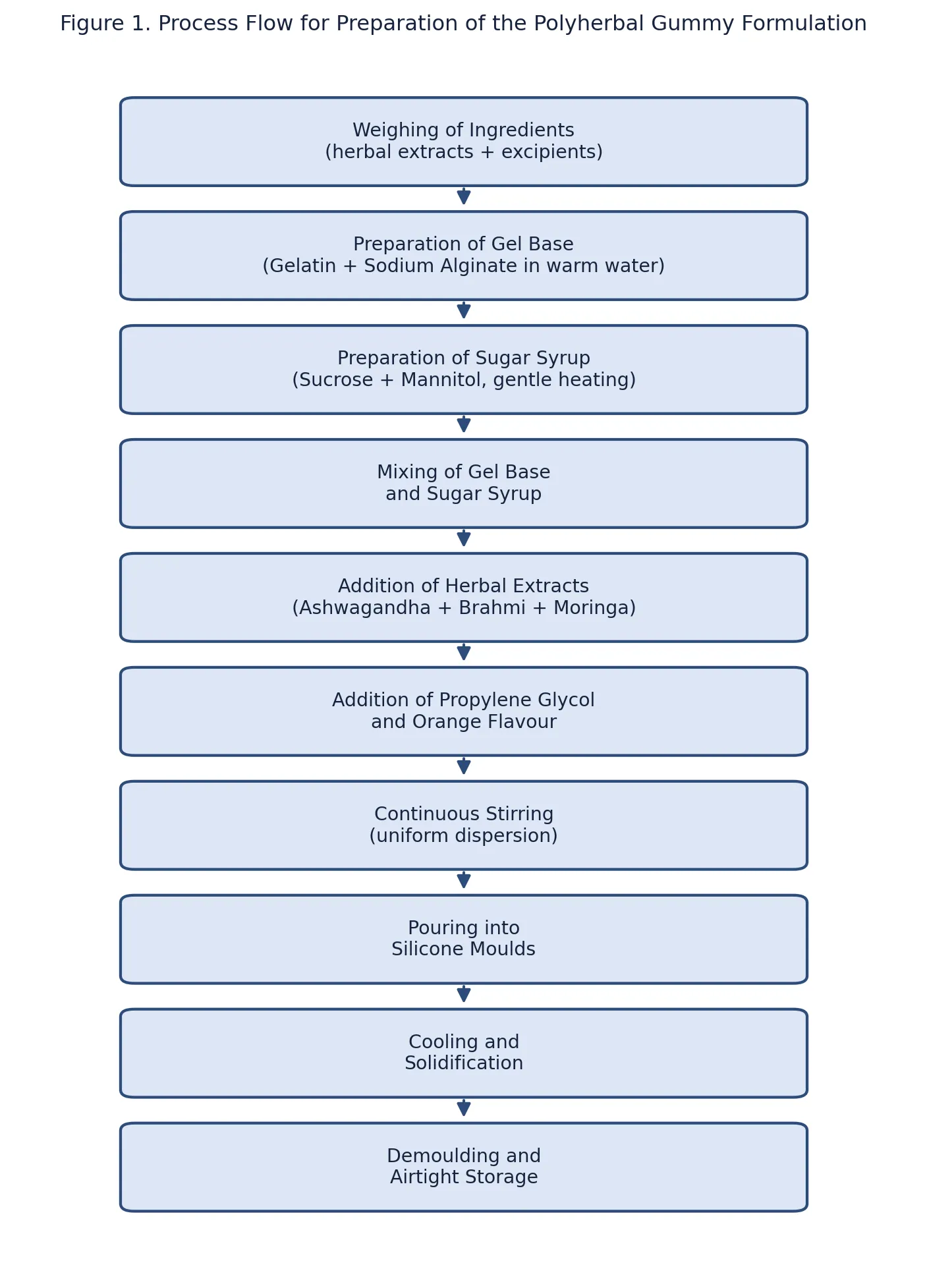
Figure 1. Sequential process flow for preparation of the polyherbal gummy formulation.
4.9 Evaluation Parameters for the Gummies
4.10 Proposed Design for Formulation Optimisation
Although the present study characterises a single, fixed-ratio formulation, systematic optimisation of gummy dosage forms is typically achieved by preparing a small series of trial batches in which one excipient variable is varied while others are held constant, followed by comparative organoleptic, textural, and hedonic evaluation. Table 5 outlines a design of this type, proposed as the logical next step for formally optimising the gelatin–sodium alginate ratio of the present formulation; no experimental results from this proposed design are reported here, and the values shown are formulation variables for future work rather than completed trial data.
Table 5. Proposed trial-batch design for future gelatin–sodium alginate ratio optimisation (formulation design only; not experimental results).
|
Trial Batch |
Gelatin (%) |
Sodium Alginate (%) |
Rationale |
|
F1 |
6 |
1 |
Lower gel strength; baseline chewability reference |
|
F2 |
8 |
2 |
Intermediate gel strength; expected balance of elasticity and firmness |
|
F3 |
10 |
2 |
Higher gelatin fraction; increased hardness and reduced syneresis expected |
|
F4 |
8 |
3 |
Increased alginate fraction; expected improvement in structural stability and reduced stickiness |
|
F5 |
10 |
3 |
Maximal gel strength within the proposed range; risk of excessive hardness to be assessed |
4.11 Stability Testing Framework (Proposed)
Formal stability assessment of the optimised formulation should follow accelerated and long-term storage protocols broadly analogous to those used for other semi-solid and confectionery-type nutraceutical dosage forms, typically involving storage at 25°C/60% relative humidity (long-term) and 40°C/75% relative humidity (accelerated), with periodic assessment of appearance, texture, syneresis, pH drift, microbial load, and, where analytically feasible, marker-compound content (e.g., withanolide or bacoside assay) at defined intervals over a minimum six-month accelerated study. This framework is proposed as a template for future stability work on the present formulation and was not executed within the scope of the present study.
4.12 Statistical Considerations
For future optimisation studies employing the trial-batch design outlined in Section 4.10, quantitative response variables (hardness, gumminess, chewiness, disintegration time, hedonic score) would be analysed using a completely randomized design with appropriate analysis of variance, consistent with the statistical approach reported in the contemporary gelatin/pectin gummy-optimisation literature, allowing formal identification of the excipient ratio that best satisfies the target product profile.
5. RESULTS
The polyherbal gummies containing Ashwagandha, Brahmi, and Moringa extracts were successfully prepared using gelatin, sodium alginate, sucrose, mannitol, propylene glycol, orange flavour, and purified water as the excipient system. The finished gummies were subjected to a full panel of organoleptic and physicochemical evaluation tests, comprising colour, odour, taste, transparency, texture, stickiness, grittiness, pH, hedonic acceptability, and weight variation. The formulation produced gummies with a smooth, non-sticky surface and a pleasant taste and odour, indicating good overall palatability. The measured pH of the formulation was slightly acidic, a range considered appropriate and stable for gummy-type confectionery-based dosage forms, and consistent with the 3.5–5.5 optimal range identified in the wider gummy-formulation literature. Weight variation testing showed uniform distribution of the formulation mass across individual units, indicating satisfactory content uniformity across the batch. Collectively, the evaluation outcomes confirmed that the prepared gummies met the required quality benchmarks for this dosage form.
Table 6. Summary of organoleptic and physicochemical evaluation results for the optimised polyherbal gummy formulation.
|
S. No. |
Evaluation Test |
Observation |
|
1 |
Colour |
Light green |
|
2 |
Odour |
Pleasant herbal odour |
|
3 |
Taste |
Slightly sweet with mild herbal taste |
|
4 |
Transparency |
Opaque |
|
5 |
Texture |
Smooth and chewy |
|
6 |
Stickiness |
Non-sticky |
|
7 |
Grittiness |
Non-gritty |
|
8 |
pH |
Slightly acidic (≈ 4–5) |
|
9 |
Hedonic test |
Passed the test |
No degradation, phase separation, colour change, or visible microbial growth was observed in the finished gummies over the short-term observation period following preparation. The absence of grittiness on chewing indicates that the herbal extract powders were adequately incorporated into the gel matrix rather than remaining as coarse, undispersed particles, while the non-sticky surface texture indicates that the gelatin–sodium alginate ratio used was adequate to prevent the excessive surface tack that commonly affects poorly optimised gummy formulations.
6. DISCUSSION
The formulated polyherbal gummies displayed acceptable organoleptic characteristics — pleasant taste, agreeable odour, and a uniform light-green colour — indicating that the gelatin–sodium alginate–sucrose–mannitol excipient system was effective at masking the inherently bitter and astringent taste typical of Ashwagandha, Brahmi, and Moringa extracts. The texture was smooth, non-sticky, and free from grittiness, confirming that the herbal powders were adequately solubilised or finely dispersed within the gel matrix rather than remaining as coarse, undissolved particles. The slightly acidic pH of the formulation (≈ 4–5) falls within a range generally favourable for gummy-type confections, supporting both microbial and chemical stability, while the observed uniformity in weight variation across units reflects consistent mixing and a reasonably even distribution of the active herbal extracts throughout the batch.
From a formulation-science perspective, the selection of herbal actives was guided by complementary, partially overlapping mechanisms of action, as summarised schematically in Figure 3. Ashwagandha's adaptogenic activity, largely attributed to its withanolide and sitoindoside content, is understood to act via modulation of cortisol and the hypothalamic–pituitary–adrenal stress axis, and this mechanism is now directly supported by human trial data showing reductions in both anxiety scores and circulating cortisol. Brahmi contributes nootropic and anxiolytic effects mediated through bacoside-driven modulation of serotonergic, dopaminergic, and cholinergic neurotransmission, alongside direct neuroprotective and antioxidant activity, consistent with the attentional and reaction-time benefits reported in pooled trial data. Moringa supplies a dense flavonoid and phenolic antioxidant load that is proposed to act synergistically with the other two botanicals by limiting oxidative damage to neuronal tissue — a mechanism directly evidenced by the rapid rise in plasma antioxidant capacity and fall in lipid peroxidation observed after acute Moringa dosing in human subjects. The combination of these three complementary mechanisms in a single dosage unit is intended to produce an additive, and potentially synergistic, benefit for stress relief, cognitive performance, and cellular antioxidant protection, though this synergy has not been directly demonstrated for the specific tri-herbal combination developed here and would require dedicated pharmacodynamic and clinical evaluation of the finished product.
The optimisation of the gel base and sugar syrup ratio was central to achieving satisfactory physical properties. Gelatin contributed elasticity and chewability, while sodium alginate reinforced structural integrity and reduced surface stickiness, together yielding a gummy that held its shape without adhering excessively to packaging or to the fingers of the user — a common failure mode in poorly optimised gummy formulations, and one that the broader gelatin/pectin gummy literature attributes directly to gelling-agent type and concentration. The addition of orange flavour was likewise important in offsetting the residual bitterness and characteristic odour of the herbal extracts, particularly that of Moringa leaf material, and in doing so materially improved the anticipated consumer acceptability and, by extension, patient compliance.
Taken together, the evaluation results support the conclusion that a stable, palatable, and dosage-uniform polyherbal gummy can be prepared from Ashwagandha, Brahmi, and Moringa extracts using conventional pharmaceutical gelling and sweetening excipients. Nonetheless, this study was limited to short-term organoleptic and physicochemical characterisation; formal accelerated and long-term stability testing along the lines outlined in Section 4.11, in-vitro drug release and dissolution profiling, microbial limit testing, marker-compound assay (e.g., HPTLC or HPLC quantification of withanolides and bacosides), and controlled clinical evaluation of anxiolytic, nootropic, and antioxidant efficacy remain necessary before the formulation can be considered validated for therapeutic claims.
6.1 Advantages of the Developed Gummy Dosage Form
6.2 Limitations of the Polyherbal Gummy Formulation
7. Comparative Analysis of Dosage Forms
To contextualise the choice of gummy dosage form, Table 7 compares gummies against conventional tablets and capsules across attributes most relevant to herbal actives: palatability, swallowability, dose precision, stability, and suitability for polyherbal combinations.
Table 7. Comparative assessment of gummy, tablet, and capsule dosage forms for delivery of polyherbal actives.
|
Attribute |
Gummy |
Tablet |
Capsule |
|
Palatability / taste-masking |
Excellent |
Poor to moderate |
Good (if coated/enteric) |
|
Ease of swallowing (paediatric/geriatric) |
Excellent |
Poor |
Moderate |
|
Dose precision / uniformity |
Moderate |
Excellent |
Excellent |
|
Physical/chemical stability |
Moderate (moisture-sensitive) |
Excellent |
Good |
|
Suitability for polyherbal loading |
High (flexible matrix) |
Moderate (compression limits) |
Moderate (fill-volume limits) |
|
Portability / water-free dosing |
Excellent |
Good |
Good |
|
Suitability for diabetic patients |
Poor (unless sugar-free) |
Good |
Good |
|
Typical shelf life |
Shorter |
Longest |
Long |
7.1 SWOT Analysis of the Polyherbal Gummy Formulation
A structured strengths–weaknesses–opportunities–threats (SWOT) analysis provides a concise framework for assessing the commercial and scientific viability of the developed formulation alongside the comparative dosage-form assessment in Table 7.
Table 8. SWOT analysis of the developed polyherbal gummy formulation.
|
Category |
Key Points |
|
Strengths |
Palatable, water-free, chewable delivery; effective taste-masking of bitter extracts; combines three complementary mechanisms (adaptogenic, nootropic, antioxidant) in one unit; simple, scalable melt-and-pour manufacturing process; strong consumer pull toward gummy-format nutraceuticals |
|
Weaknesses |
Moisture sensitivity and associated microbial risk; lower drug-loading capacity than tablets/capsules; sugar content unsuitable for diabetic consumers without reformulation; herbal extract standardisation remains analytically challenging; no dedicated combination efficacy or stability data yet generated |
|
Opportunities |
Rapidly growing nutraceutical gummies market (≈13% CAGR reported industry-wide); scope for sugar-free/vegan (pectin-based) line extensions; potential for clinical validation and premium positioning as a stress-and-cognition-focused product; scope for additional actives or target-specific variants |
|
Threats |
Regulatory scrutiny of health claims for herbal nutraceuticals; batch-to-batch variability in crude herbal extracts; competitive, crowded gummy-supplement market; consumer misperception of gummies as confectionery, raising overconsumption risk |
7.2 Recommended Analytical Quality-Control Package
Beyond the organoleptic and physicochemical panel applied in the present study, a formal quality-control package suitable for regulatory submission or commercial release of this formulation would typically include the additional analytical tests summarised in Table 9. These tests were not performed within the scope of the present study and are presented as a recommended package for subsequent product development.
Table 9. Recommended analytical quality-control package for future development of the formulation (not performed in the present study).
|
Test |
Typical Method |
Purpose |
|
Withanolide / bacoside marker assay |
HPTLC or HPLC |
Confirms extract identity and potency; supports label-claim accuracy |
|
Microbial limit test |
Total viable count, pathogen screening (per Indian Pharmacopoeia/FSSAI limits) |
Ensures microbiological safety of the moisture-rich matrix |
|
Heavy metal screening |
ICP-MS or AAS |
Confirms compliance with permissible limits for lead, arsenic, cadmium, mercury |
|
Disintegration / dissolution behaviour |
In-vitro dissolution apparatus (modified for chewable matrices) |
Characterises release of actives from the gel matrix |
|
Texture profile analysis |
Texture analyser (compression probe) |
Quantifies hardness, gumminess, chewiness for batch-to-batch consistency |
|
Accelerated stability (40°C/75% RH) |
ICH-aligned stability chambers |
Predicts shelf life and identifies degradation pathways |
8. Regulatory Considerations for Herbal Nutraceutical Gummies
Commercialisation of a polyherbal gummy of this type would need to satisfy the regulatory framework governing nutraceuticals and herbal products in the intended market of sale. In India, such products fall broadly within the scope of the Food Safety and Standards Authority of India's Nutraceuticals, Health Supplements and Novel Food Regulations, which govern permissible ingredients, labelling, and health-claim substantiation for food-derived health products, while formulations positioned as classical Ayurvedic medicines would instead require licensing under the Ministry of AYUSH framework administered through state drug licensing authorities. In jurisdictions such as the United States, comparable herbal gummies are typically regulated as dietary supplements under the Dietary Supplement Health and Education Act framework, which permits structure/function claims but not disease-treatment claims without additional regulatory approval. Irrespective of jurisdiction, herbal extract standardisation (e.g., minimum withanolide or bacoside content), heavy-metal and microbial limit testing, and accurate, non-misleading labelling of active-ingredient content per gummy unit represent common regulatory expectations that any future commercial development of this formulation would need to address.
9. Safety, Contraindications, and Toxicity Considerations
Each of the three component herbs carries its own, generally favourable, safety profile at the doses supported by clinical literature, but specific caution points merit attention in a combined product. Ashwagandha should be avoided or used only under medical supervision in pregnancy and lactation, autoimmune disease, thyroid disorders, and in individuals with known Solanaceae hypersensitivity, and may interact with sedatives, thyroid hormone replacement therapy, and immunosuppressants. Reported adverse effects across the Ashwagandha clinical literature are generally mild and include gastrointestinal upset, headache, and drowsiness, with mild-to-moderate adverse events reported in a minority of pooled trial participants. Brahmi and Moringa are both supported by comparatively favourable long-term safety records in the reviewed literature, though Brahmi may cause mild gastrointestinal upset in sensitive individuals, and Moringa supplementation protocols in pregnancy specifically should be approached cautiously pending further dedicated safety data. As with any polyherbal product, the combined formulation has not itself been subjected to dedicated combination toxicology or drug-interaction studies, and the safety statements above should be understood as extrapolated from the individual-herb literature rather than as data generated on the finished gummy.
A precautionary labelling approach for a commercial version of this product would reasonably advise against use in pregnancy and lactation, in children below an age threshold to be defined in consultation with paediatric formulation guidance, and in individuals on concurrent sedative, thyroid, or immunosuppressant therapy, pending dedicated interaction data for the combined extract. Because the finished product resembles confectionery in appearance and texture, child-resistant packaging and clear per-unit active-ingredient labelling are recommended to mitigate the risk of accidental overconsumption noted in Section 6.2 and Table 8.
10. Limitations of the Present Study
11. FUTURE SCOPE
CONCLUSION
This study successfully demonstrates the formulation and evaluation of polyherbal edible gummies containing Ashwagandha, Brahmi, and Moringa extracts, prepared using a gelatin–sodium alginate gel base and a sucrose–mannitol syrup system. The developed gummies exhibited acceptable organoleptic properties, satisfactory texture, uniform weight, and stable, slightly acidic pH, and passed hedonic panel evaluation. Independent clinical literature on the three component herbs — reviewed in detail in Section 2 — supports the pharmacological rationale for their combination at the dose ranges used, even though the combined product itself has not yet been subjected to dedicated efficacy or safety testing. As a dosage form, the polyherbal gummy offers a convenient, palatable, and patient-friendly alternative to conventional tablets and capsules, with particular value for populations who have difficulty swallowing solid oral dosage forms. On this basis, polyherbal gummies represent a promising delivery platform for adaptogenic, nootropic, and antioxidant botanicals aimed at stress management, cognitive support, and general well-being, warranting the further stability, dissolution, marker-compound, and clinical investigation outlined in Sections 10 and 11 to establish long-term efficacy and safety.
Declarations
Ethical Approval
This study involved formulation development and organoleptic/physicochemical evaluation only; no human or animal experimentation was undertaken, and formal ethics committee approval was therefore not applicable. Any future hedonic panel or clinical evaluation of the finished product should be conducted only after appropriate institutional ethics review and informed consent.
Conflict of Interest
The authors declare no conflict of interest associated with this work.
Funding
This research did not receive any specific grant from funding agencies in the public, commercial, or not-for-profit sectors.
Author Contributions
All authors contributed to the conception, formulation development, evaluation, drafting, and final approval of the manuscript.
Acknowledgements
The authors acknowledge the Department of Pharmaceutics for providing the laboratory facilities used in this work.
Data Availability
The evaluation data generated and analysed during the present study are included within this article. Data from the proposed future studies outlined in Sections 4.10–4.12, 7.2, and 11 do not yet exist and will be made available upon completion of that work.
REFERENCES

Mahak Verma, Development and Evaluation of Polyherbal Gummies of Ashwagandha, Brahmi, and Moringa for Adaptogenic, Cognitive, and Antioxidant Support, Int. J. of Pharm. Sci., 2026, Vol 4, Issue 9, 2949-2971, https://doi.org/10.5281/zenodo.22916224
 10.5281/zenodo.22916224