

We use cookies to ensure our website works properly and to personalise your experience. Cookies policy
1Student, Shivajirao S. Jondhle College of Pharmacy, Thane, India
2Pharmaceutics, Shivajirao S. Jondhle College of Pharmacy, Thane, India
3Pharmaceutics, Shivajirao S. Jondhle College of Pharmacy, Thane, India
4Student, Shivajirao S. Jondhle College of Pharmacy, Thane, India
5Shivajirao S. Jondhle College of Pharmacy, Thane, India
6Shivajirao S. Jondhle College of Pharmacy, Thane, India.
Women's quality of life is impacted by menopause, which is linked to a number of psychological and physical ailments brought on by hormonal imbalance. The goal of the current study was to create and assess hard gelatin capsules filled with polyherbal granules including Vitex agnus-castus and Clitoria ternatea for the treatment of menopausal symptoms. These herbs were chosen for their hormone-regulating, adaptogenic, antioxidant, and anxiolytic qualities. To enhance flow characteristics and capsule filling efficiency, the formulation was made utilising the wet granulation method with the right excipients. Pre-compression characteristics, including angle of repose, bulk density, tapped density, Carr's index, and Hausner ratio, were assessed for the produced granules. In accordance with pharmacopeial requirements, the filled capsules were additionally assessed for weight variation, disintegration time, content consistency, and stability studies. The optimised formulation demonstrated acceptable stability, homogeneity, appropriate disintegration, and satisfactory flow characteristics. According to the study, the created polyherbal capsule formulation may enhance patient compliance and quality of life while acting as a safe and efficient herbal substitute for the treatment of menopausal symptoms. To verify its therapeutic efficacy and safety, more clinical research is advised.
1.1. Menopause
Menopause is a natural physiological condition in women, usually occurring between 45–55 years of age, characterized by the permanent cessation of menstruation due to decreased ovarian function. This leads to a decline in estrogen and progesterone hormone levels.
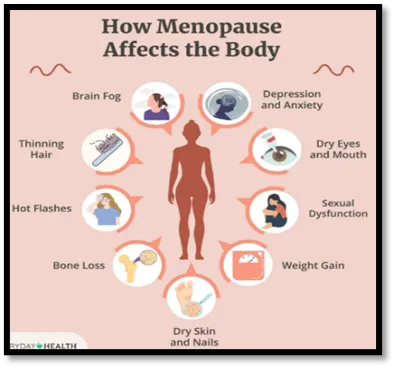
Fig 1: Menopause symptoms
Hormone Replacement Therapy (HRT) is commonly used to manage menopausal symptoms. However, long-term use of HRT may lead to side effects such as increased risk of cardiovascular diseases and breast cancer. Therefore, there is a growing interest in combining synthetic drugs with herbal ingredients for safer and more effective therapy. Tibolone is widely used for managing menopausal symptoms due to its estrogenic, progestogenic, & androgenic activity. It helps in relieving vasomotor symptoms and prevents bone loss. [1]
1.1.1. Prevalence of Menopause
Menopause is a natural biological process characterized by the permanent cessation of menstruation due to the loss of ovarian follicular activity. It generally occurs between the ages of 45 and 55 years, with the average age being approximately 50 years worldwide. In India, menopause commonly occurs slightly earlier, around.
46–48 years of age. The prevalence of menopause is increasing globally because of improved life expectancy and better healthcare facilities. According to epidemiological studies, millions of women enter menopause every year, and postmenopausal women constitute a significant proportion of the female population worldwide.[2] It is estimated that women spend nearly one-third of their lives in the postmenopausal phase. Various menopausal symptoms are highly prevalent among women, including hot flashes, night sweats, mood changes, sleep disturbances, osteoporosis, and cardiovascular complications. The prevalence and severity of menopausal symptoms vary depending on genetic, environmental, nutritional, and socioeconomic factors. Vasomotor symptoms such as hot flashes are reported in nearly 50–80% of menopausal women. Osteoporosis and cardiovascular diseases are also more common after menopause due to oestrogen deficiency. Increasing awareness regarding menopause and its management is important because the growing population of postmenopausal women represents a major public health concern.[3,4,5]
1.1.2 Causes of Menopause[6,7]
Menopause occurs mainly due to the natural decline in ovarian function and depletion of ovarian follicles with advancing age. As the ovaries lose their ability to produce oestrogen and progesterone hormones, menstrual cycles gradually become irregular and eventually cease permanently. The causes of menopause can be classified into natural, premature, surgical, and induced menopause.
i. Natural Menopause
Natural menopause occurs as a part of the normal aging process in women, usually between 45–55 years of age. It results from gradual depletion of ovarian follicles and reduced secretion of estrogen and progesterone hormones.
ii. Premature Menopause
Premature menopause occurs before the age of 40 years. It may be caused by:
iii. Surgical Menopause
Surgical menopause occurs due to surgical removal of both ovaries (bilateral oophorectomy). It may also occur after hysterectomy if ovarian blood supply is affected. Symptoms are usually sudden and more severe because hormone levels decline abruptly.
iv. Induced Menopause
Induced menopause may occur due to:
These treatments damage ovarian tissue and reduce hormone production.
v. Lifestyle and Environmental Factors
Certain factors may contribute to early menopause, including:
Thus, menopause is mainly associated with hormonal changes resulting from ovarian aging or damage to ovarian function.
1.1.3 Treatment of Menopause
The treatment of menopause mainly aims to relieve menopausal symptoms, improve quality of life, and prevent long-term complications such as osteoporosis and cardiovascular diseases. Treatment depends on the severity of symptoms, age of the patient, and overall health condition.
a. Hormone Replacement Therapy (HRT)[1,3]
Hormone Replacement Therapy is the most effective treatment for menopausal symptoms caused by estrogen deficiency.
Types of HRT
Routes of Administration
Adverse Effects
b. Non-Hormonal Therapy[8,9,10]
Non-hormonal drugs are used in women who cannot receive hormone therapy.
Drugs Used
These drugs help reduce vasomotor symptoms such as hot flashes.
c. Lifestyle Modifications
Lifestyle changes play an important role in menopause management.
Recommended Measures
d. Alternative and Supportive Therapy
Some women use supportive therapies for symptom relief:
Thus, appropriate treatment and lifestyle management can effectively reduce menopausal symptoms and improve overall health in postmenopausal women.
1.2 Oral Drug Delivery System
Oral drug delivery system is the most commonly used method for administration of drugs through the oral route to achieve systemic or local therapeutic effects. In this system, the drug is administered by mouth and absorbed through the gastrointestinal tract. Oral dosage forms include tablets, capsules, syrups, suspensions, powders, and solutions. The oral route is widely preferred because it is convenient, non-invasive, economical, and provides better patient compliance compared to other routes of administration.
1.2.1 Capsules
Capsules are solid unit dosage forms in which the drug substance is enclosed within a hard or soft soluble shell made mainly of gelatin or other suitable polymers. Capsules are one of the most widely used oral drug delivery systems because they are easy to swallow, provide accurate dosing, and improve patient compliance. The capsule shell dissolves in the gastrointestinal fluids after administration, releasing the medicament for absorption. Capsules can contain powders, granules, pellets, semi-solids, or liquid formulations depending on the type of capsule used.
1.2.2 Tablet vs Capsule
Table no 1: Tablet vs Capsule
|
Parameter |
Tablets |
Capsules |
|
Definition |
Solid dosage form prepared by compression of powders or granules |
Drug enclosed within a hard or soft shell |
|
Structure |
Compressed solid unit |
Gelatin or polymer shell containing drug |
|
Taste Masking |
Less effective |
Better taste masking |
|
Swallowing |
Sometimes difficult |
Easier to swallow |
|
Manufacturing Cost |
Economical |
More expensive |
|
Drug Release |
Slower in some formulations |
Faster drug release |
|
Stability |
More stable |
Sensitive to humidity |
|
Flexibility of Formulation |
Limited for liquids |
Suitable for powders and liquids |
|
Patient Compliance |
Moderate |
Better patient compliance |
|
Appearance |
Less attractive |
Elegant appearance |
2. DRUG PROFILE
i. BUTTERFLY PEA[11-16]
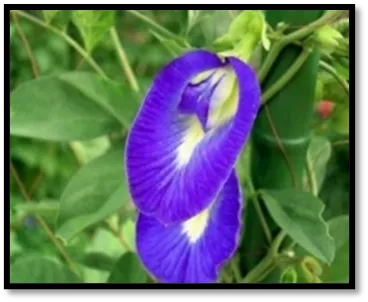
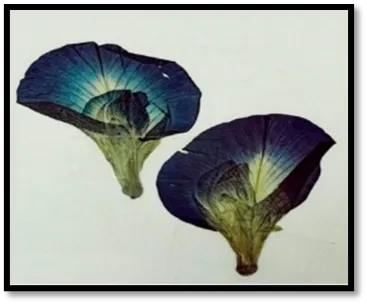
Fig 2.1: Blue pea flower
Synonym: Aparajita, Blue pea, Darwin pea, Asian pigeonwings
Biological source: The biological source of the butterfly pea flower is Clitoria ternatea L., a perennial herbaceous plant.
Family: Fabaceae (subfamily Faboideae).
Chemical constituents:
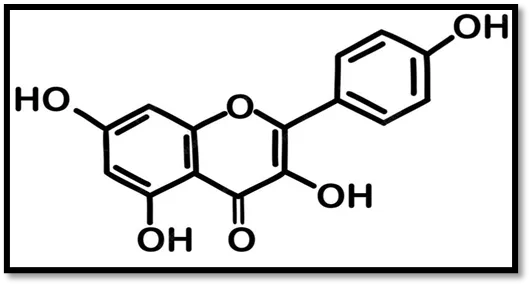
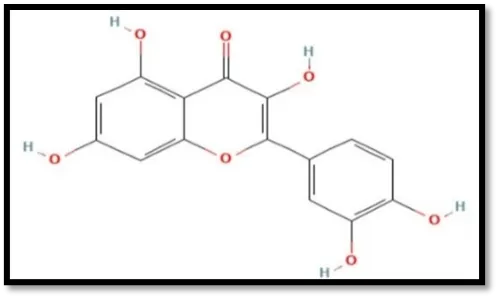
Fig 2.2: Chemical constituents of blue pea
Polyphenolic compounds like kaempferol, anthocyanins, phenolic acid, myricetin, and quercetin are abundant in it. Butterfly pea flowers also include lipophilic components, such as fatty acids like palmitic acid, linolic acid, and arachidic acid; phytosterols like campesterol, sitostanol, and sigmasterol.
Solubility: Highly soluble in water, soluble in polar solvents & insoluble in non- polar solvents.
Pharmacological Profile: Blue pea's antioxidant, neuroprotective, anti-inflammatory, and modest adaptogenic qualities may be beneficial during menopause. Its anthocyanins, flavonoids, and phenolic substances may aid with cognitive decline, anxiety, mood swings, fatigue, oxidative stress, and skin ageing. Its bioactive ingredients have low oral bioavailability due to gastrointestinal instability and significant first-pass metabolism, with metabolites being removed thru urine and bile. The plant predominantly functions thru non-hormonal mechanisms, such as free radical scavenging, cholinergic activity modulation, and potential stress response regulation, with no significant oestrogen receptor agonistic activity. It is generally well tolerated, but stomach problems, sleepiness, and moderate allergic responses may occur. It is normally avoided during pregnancy and lactation, and it should be used with caution when combined with CNS depressants or antihypertensive medications due to potential synergistic effects.
ii. CHASTEBERRY[17-22]
Synonyms: Monk’s pepper
Biological source: The biological source of Vitex consists of the dried ripe fruits, and occasionally the leaves and flowering tops, of the plant Vitex agnus-castus.
Family: Lamiaceae (formerly classified under Verbenaceae).
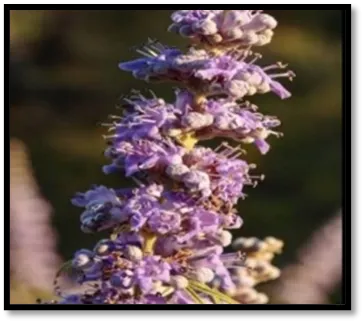
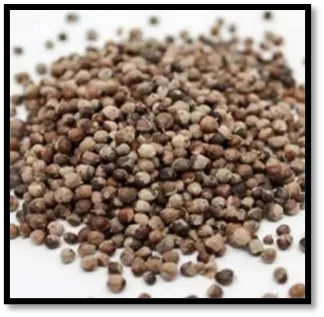
Fig 2.3: Chasteberry plant & chasteberry seeds
Chemical constituents:
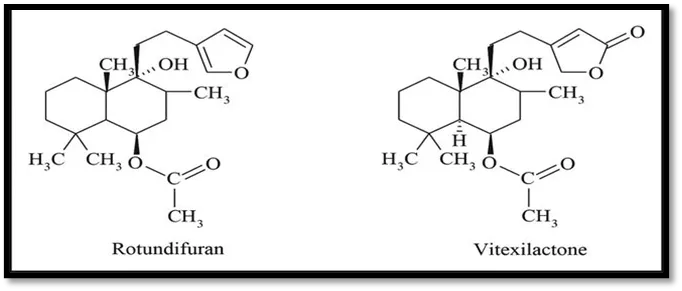
Fig 2.4: Chemical constituents of Vitex agnus-castus
Vitex agnus-castus has a wide variety of pharmacologically significant chemical constituents. Its dopaminergic activity is mainly caused by diterpenoids, which include rotundifuran and vitexilactone, among other major bioactive compounds. The plant also contains iridoid glycosides like aucubin and agnuside, flavonoids like casticin, kaempferol, and quercetagetin, and essential oils.
Solubility: Soluble in polar solvents, insoluble in non-polar & inert solvents
Pharmacological Profile: According to its endocrine-modulating and neuroendocrine properties, Vitex agnus-castus is used as a supportive herbal therapy for menopausal symptoms like mood swings, irritability, hot flashes, sleep disorders, and breast discomfort. Its diterpenoids, flavonoids, and iridoid glycosides mostly work by stimulating dopaminergic D₂ receptors, which lowers prolactin release and aids in controlling the balance of FSH, LH, and reproductive hormones. Its components undergo hepatic metabolism, conjugation, and excretion primarily thru urine and bile following oral dosing; nevertheless, comprehensive human pharmacokinetic data are scarce. Although chasteberry is usually well accepted, it can cause irregular menstruation, headaches, dizziness, or skin problems. It should be taken with caution in hormone-sensitive disorders, with dopamine-modulating medications or hormone replacement treatment, and during pregnancy and breastfeeding.
3. MATERIAL & METHODS
MATERIALS:
The active compounds in the mixture were ashwagandha, bamboo silica, chasteberry extract, and blue pea extract, which offered antioxidant, hormonal balance, adaptogenic, and bone-supporting qualities, respectively. Magnesium stearate, ethyl cellulose, microcrystalline cellulose, talc, and HPMC were utilised as lubricant, diluent, glidant, and binder/film forming, respectively. The extracts of blue peas and chasteberries were made in a lab, while the other ingredients were procured from SSJCOP Store and internet retailers.
METHODS:
EXTRACTION METHOD[17,25,29]
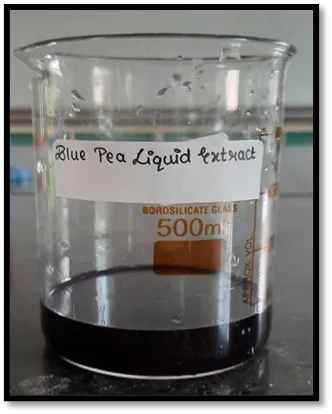
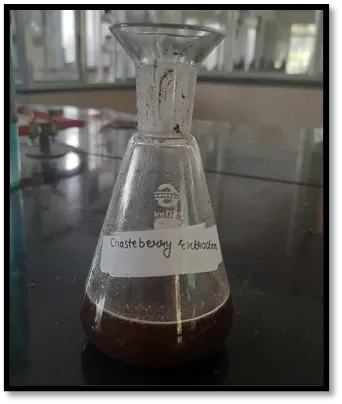
Fig 3.1: Blue pea extract Fig 3.2: Chasteberry extract
Extraction method of Blue pea & Chasteberry
Dried powdered blue pea flowers and chasteberry seeds were taken
↓
Extracted with Ethanol: Water (70:30, v/v) individually
↓
Macerated for 24–72 h with intermittent shaking
↓
Filtration through muslin cloth & Whatmann filter paper
↓
Concentration of filtrate using a water bath
↓
Obtained concentrated extract
↓
Storage in an airtight container
FORMULATION DEVELOPMENT METHOD[25,28,30]
Accurately weighed quantities of herbal extracts and excipients were mixed uniformly. Binder solution was added gradually with continuous mixing to obtain a coherent damp mass. The wet mass was passed through sieve no.12 to prepare wet granules. The prepared granules were dried in a tray dryer or hot air oven at controlled temperature until optimum moisture content was achieved. Dried granules were re-sieved to obtain uniform granule size. Finally, lubricants and glidants were added, mixed properly, and the prepared polyherbal granules were then filled into hard gelatin capsules manually. Capsules stored in airtight container.
Table no 3: Formulation table for composition of polyherbal granules
|
Sr.no. |
Ingredients |
F1(%) |
F2(%) |
F3(%) |
F4(%) |
F5(%) |
F6(%) |
|
1. |
Blue pea |
30.56 |
30.56 |
30.56 |
30.56 |
30.56 |
30.56 |
|
2. |
Chasteberry |
22.22 |
22.22 |
22.22 |
22.22 |
22.22 |
22.22 |
|
3. |
Ashwagandha |
19.44 |
19.44 |
19.44 |
19.44 |
19.44 |
19.44 |
|
4. |
Bamboo silica |
8.33 |
8.33 |
8.33 |
8.33 |
8.33 |
8.33 |
|
5. |
EC |
1.39 |
1.39 |
5.56 |
2.78 |
1.39 |
1.39 |
|
6. |
HPMC |
2.78 |
6.94 |
2.78 |
4.17 |
2.78 |
2.78 |
|
7. |
MCC |
8.33 |
8.33 |
8.33 |
9.72 |
9.72 |
9.72 |
|
8. |
Talc |
1.39 |
1.39 |
1.39 |
1.39 |
4.17 |
1.39 |
|
9. |
Magnesium stearate |
1.39 |
1.39 |
1.39 |
1.39 |
1.39 |
4.17 |
|
|
Total weight (in mg) |
360 mg |
360mg |
360mg |
360mg |
360mg |
360mg |
4. RESULT & DISCUSSION
Table no 4.1: Organoleptic evaluation of blue pea extract & chasteberry extract
|
Parameter |
Result (blue pea) |
Result (chasteberry) |
|
Colour |
Deep blue |
Brownish black
|
|
Odour |
Characteristic aromatic odour |
Characteristic aromatic odour |
|
Taste |
Slightly bitter |
Bitter and slightly pungent |
|
Appearance |
Fine dry powder |
Fine dry powder |
|
Texture |
Smooth and free flowing |
Smooth and free flowing |
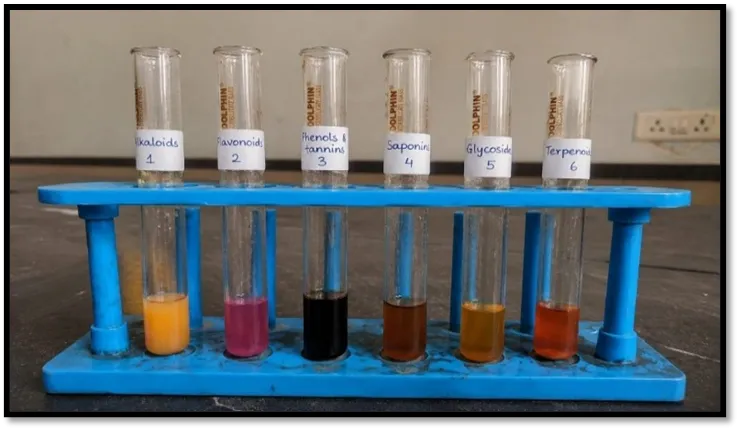
Fig 4.1: Phytochemical evaluation of blue pea extract
Table no 4.2: Phytochemical evaluation of blue pea extract[11-22]
|
Test |
Observation |
Result |
|
Alkaloids |
Cream / orange precipitate observed |
Present
|
|
Flavonoids |
Pink / yellow coloration observed |
Present
|
|
Phenol & Tannins |
Blue-black coloration observed |
Present
|
|
Saponins |
Persistent stable foam formation |
Present
|
|
Glycosides |
Brown ring formation at interface |
Absent |
|
Terepenoids |
Reddish-brown coloration at interface |
Present
|
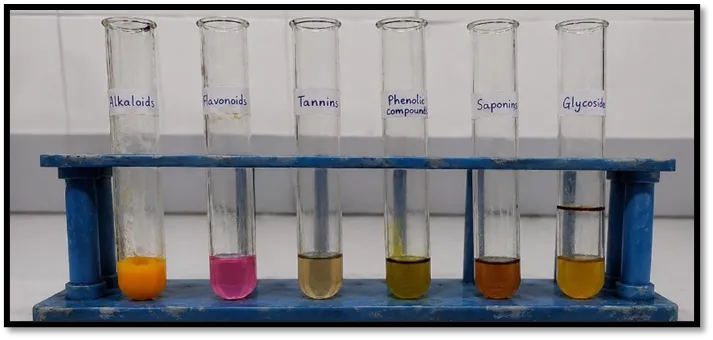
Fig 4.2: Phytochemical evaluation of chasteberry extract
Table no 4.3: Phytochemical evaluation of chasteberry extract[11-22]
|
Test
|
Observation
|
Result
|
|
Alkaloids
|
Orange precipitate
|
Present
|
|
Flavonoids |
Pink colouration produced
|
Present
|
|
Tannins |
No greenish black colour observed
|
Absent |
|
Phenolic compounds |
White precipitate
|
Present
|
|
Saponins |
No stable foam formation
|
Absent |
|
Glycosides |
Brown Ring formation |
Present
|
Table no 4.4: Evaluation of Flow properties of granules [26,27,30]
|
Batch |
Bulk Density (g/ml) |
Tapped Density (g/ml) |
Carr’s Index (%) |
Hausner Ratio |
Angle of Repose (°) |
|
F1 |
0.45 |
0.52 |
13.46 % |
1.15 |
28 |
|
F2 |
0.43 |
0.50 |
14.00 % |
1.16 |
30 |
|
F3 |
0.46 |
0.54 |
14.81 % |
1.17 |
29 |
|
F4 |
0.48 |
0.54 |
11.11 % |
1.12 |
26 |
|
F5 |
0.50 |
0.56 |
10.71 % |
1.12 |
25 |
|
F6 |
0.47 |
0.55 |
14.54 % |
1.17 |
31 |
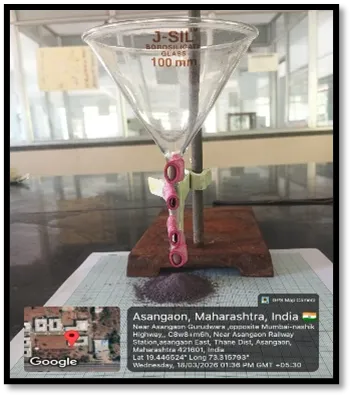
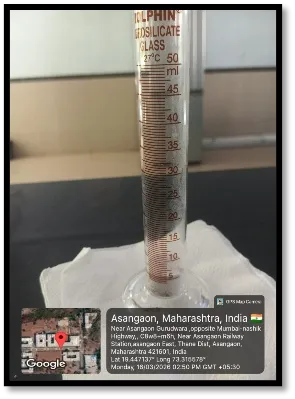
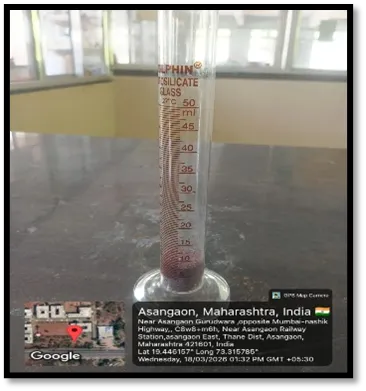
Fig 4.3: Flow properties Evaluation
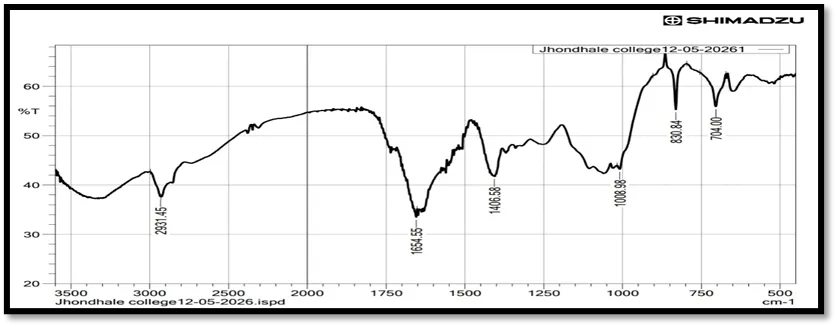
Fig 4.4: FTIR peak of Blue pea and Chasteberry
Table no 4.5: FTIR peak interpretation of drug sample[25,30]
|
Peak cm⁻¹ |
Chemical group |
Chemical constituents |
|
2931.45 cm⁻¹ |
C-H |
Terpenoids, iridoids and other aliphatic compounds |
|
1654.55 cm⁻¹ |
C=O |
Flavonoids, anthocyanins and phenolic compounds |
|
1008.98 cm⁻¹ |
C-O |
Flavonoid glycosides and iridoid glycosides |
|
830.84 cm⁻¹ |
=C-H |
Aromatic phytoconstituents |
Formulation of granules
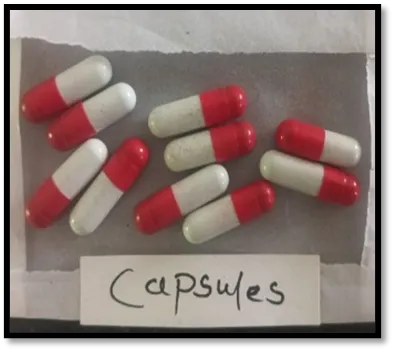
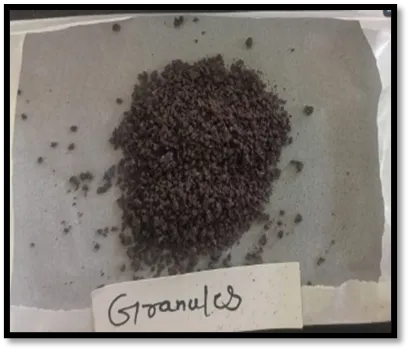
Fig 4.5: Granules & Capsules
Table no 4.6 : Appearance Evaluation of granules
|
Parameter |
Observation |
|
Colour |
Uniform bluish black colour |
|
Odour |
Characteristic herbal odour |
|
Surface appearance |
Smooth & elegant |
|
Leakage |
Absent |
|
Physical defects |
No cracks or deformation observed |
Table no 4.7: Solubility Study of granules in different medium
|
Medium |
Observation |
|
Water |
Partially soluble |
|
Hydrochloric acid |
Freely soluble |
|
Sodium hydroxide |
Moderately soluble |
|
Overall result |
Satisfactory solubility observed |
Table no 4.8: Weight Variation test
|
Formulation |
Average weight (mg) |
% Deviation |
Result |
|
F1 |
359 |
±2.1 |
Pass |
|
F2 |
361 |
±1.8 |
Pass |
|
F3 |
364 |
±6.5 |
Exceed the limit |
|
F4 |
362 |
±1.6 |
Pass |
|
F5 |
365 |
±7.44 |
Pass |
|
F6 |
359 |
±2.4 |
Exceed the limit |
Table no 4.9: Content uniformity Test
|
Formulation |
Drug content (%) |
Result |
|
F1 |
96.2 % |
Uniform |
|
F2 |
98.4 % |
Uniform |
|
F3 |
99-100 % |
Uniform |
|
F4 |
98.0 % |
Uniform |
|
F5 |
98.9-99.0 % |
Uniform |
|
F6 |
96.5 % |
Uniform |
Table no 4.10: Moisture content test
|
Formulation |
Moisture content (%w/w) |
Result |
|
F1 |
4.5 |
Acceptable |
|
F2 |
4.2 |
Acceptable |
|
F3 |
4.8 |
Acceptable |
|
F4 |
4.4 |
Acceptable |
|
F5 |
4.9 |
Acceptable |
|
F6 |
5.0 |
Acceptable |
Table no 4.11: Dissolution test[28,30]
|
Formulation |
Absorbance at 30 min |
% Drug release |
Observation |
|
F1 |
0.712 |
82.4 % |
Moderate drug release observed |
|
F2 |
0.756 |
86.8 % |
Improved dissolution profile |
|
F3 |
0.804 |
91.2 % |
Uniform drug release obtained |
|
F4 |
0.836 |
94.5 % |
Rapid dissolution observed |
|
F5 |
0.861 |
97.1 % |
Nearly complete drug release |
|
F6 |
0.875 |
98.4 % |
Maximum drug release achieved |
Table no 4.12: Disintegration Test[28,30]
|
Formulation |
Avg. disintegration time (min) |
Observation |
|
F1 |
10.24 |
Complete disintegration observed |
|
F2 |
09.48 |
Uniform disintegration observed |
|
F3 |
08.36 |
Rapid & complete disintegration |
|
F4 |
08.12 |
Satisfactory disintegration behaviour |
|
F5 |
07.54 |
Faster disintegration observed |
|
F6 |
07.32 |
Complete & uniform disintegration |
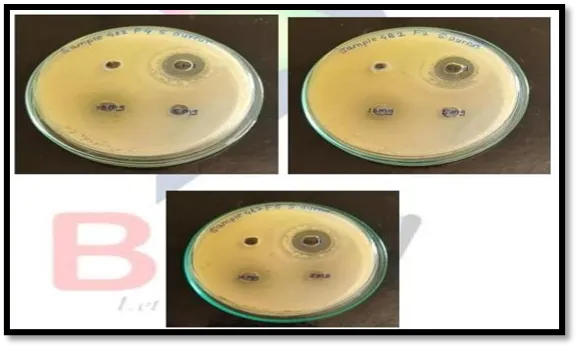
Fig 4.6: Antimicrobial test
Table no 4.13: Antimicrobial test[18,19]
|
Sr.no |
Sample |
Concentration |
Zone of Inhibition |
|
1 |
Control |
- |
- |
|
2 |
Standard Streptomycin |
1 mg/ml |
35 |
|
3 |
Sample -BP CB- F2 |
5mg/mL |
02 |
|
10mg/mL |
06 |
||
|
4 |
Sample -BP CB- F4 |
5 mg/mL |
02 |
|
10mg/mL |
10 |
||
|
5 |
Sample -BP CB- F5 |
5 mg/mL |
03 |
|
10mg/mL |
14 |
Table no 4.14: Stability studies[28,30]
|
PARAMETER |
Formulation code |
Initial |
After 15 days |
After 30 days |
|
Physical appearance |
F1 to F6 |
Good physical appearance |
Good physical appearance |
Good physical appearance |
|
Colour stability |
F1 to F6 |
Bluish black colour |
Stable |
Stable |
|
Odour |
F1 to F6 |
Characteristic odour |
No change |
No change |
|
Moisture content |
F1 to F6 |
Within limits |
Within limits |
Within limits |
5. SUMMARY & CONCLUSION
The present research work was focused on the development and evaluation of herbal capsules containing standardized extracts of Clitoria ternatea and Vitex agnus-castus for the management of menopausal symptoms. The formulation was designed to provide a natural and safe alternative to conventional hormone therapy with improved patient compliance. The selected herbal drugs were extracted and subjected to phytochemical, physicochemical, and solubility studies. The results confirmed the presence of bioactive constituents such as flavonoids, phenolics, anthocyanins, and iridoid glycosides which are responsible for antioxidant, neuroprotective, and hormonal balancing activities.
The formulated capsules were evaluated for physical parameters including appearance, weight variation, flow properties, and capsule integrity. The results showed uniform filling, good flow characteristics, and absence of leakage or physical defects. The in vitro drug release study showed a satisfactory and controlled release of herbal constituents with maximum release observed within 45 minutes. The formulation also exhibited acceptable disintegration time and uniform content distribution, indicating good performance characteristics. Stability evaluation conducted under laboratory conditions showed no significant changes in physical appearance, drug content, or dissolution behavior, indicating that the formulation is stable under the tested conditions.
The present study successfully developed and evaluated polyherbal granules filled in hard gelatin capsules containing Clitoria ternatea and Vitex agnus-castus for the management of menopausal symptoms. The prepared formulations were evaluated for various preformulation and postformulation parameters including flow properties, appearance, solubility, weight variation, content uniformity, moisture content, dissolution, disintegration, antimicrobial activity, and stability studies. [45,46,47,48] The granules exhibited satisfactory flow characteristics with acceptable bulk density, tapped density, Carr’s index, Hausner ratio, and angle of repose, indicating good flowability and suitability for capsule filling. FTIR studies confirmed the compatibility of herbal ingredients and excipients without significant interaction.
All formulations showed acceptable physical appearance, satisfactory solubility, good capsule integrity, and uniform drug content. The formulations also demonstrated acceptable moisture content, effective dissolution behaviour, rapid disintegration, and satisfactory stability during the study period. [60]
Among all the formulations, Batch F3 and Batch F5 were identified as the optimized formulations based on their superior evaluation parameters.
• F3 showed good content uniformity, satisfactory dissolution, rapid disintegration, and uniform drug release characteristics.
• F5 exhibited excellent dissolution profile, faster disintegration time, good antimicrobial activity, and stable formulation behaviour.
Therefore, the study concludes that F3 and F5 are the best formulations, with F5 considered the best overall batch due to its enhanced drug release, faster disintegration, and better overall performance for effective management of menopausal symptoms.
REFERENCES






Akshata Palve, Nikita Pagare, Gauri Mahajan, Shweta Pandey, Sujal Unikam, Harshal Nathe, Development & Evaluation Of Polyherbal Granules Filled Hard Gelatin Capsules Containing Ciltoria Ternatea & Vitex Agnus Castus For Menopausal Symptom Management, Int. J. of Pharm. Sci., 2026, Vol 4, Issue 10, 1853-1872. https://doi.org/10.5281/zenodo.23339872
 10.5281/zenodo.23339872