

We use cookies to ensure our website works properly and to personalise your experience. Cookies policy
Department of Pharmacy, G.H. Raisoni Institute of Life Sciences, Nagpur – 440016.
The growing interest in natural and plant-based health products has led to increased use of herbal beverages as supportive wellness supplements. The present study aimed to develop and evaluate herbal tea bags formulated with extracts of Carica papaya leaves and Aloe vera. Papaya leaves contain various bioactive compounds, including flavonoids, alkaloids, phenolics, and enzymes, which are associated with antioxidant and immune-supportive properties. Similarly, Aloe vera is recognized for its beneficial phytoconstituents that exhibit antioxidant, anti-inflammatory, antimicrobial, and digestive-supporting effects. Herbal tea bags were prepared by incorporating standardized extracts of both plants along with natural flavor-enhancing ingredients such as ginger and cardamom to improve sensory acceptance. The formulated tea bags were assessed for parameters including appearance, aroma, taste, moisture content, pH, ash value, extractive value, weight uniformity, and stability. Evaluation results indicated satisfactory physicochemical characteristics and acceptable sensory qualities. The developed formulation demonstrated potential as a convenient and economical herbal beverage that may contribute to general wellness and antioxidant support. Further studies are recommended to explore its therapeutic efficacy and functional health benefits in greater detail.
Medicinal plants have played an important role in healthcare systems for centuries and continue to be widely used across the world. Plant-derived remedies are valued because they contain naturally occurring bioactive compounds that may support health and help manage various ailments. These compounds include flavonoids, alkaloids, tannins, glycosides, saponins, terpenoids, and phenolic substances, many of which have been reported to possess beneficial biological activities. Growing consumer awareness regarding wellness and preventive healthcare has increased the popularity f herbal products, nutraceuticals, and functional foods.The use of medicinal plants has expanded beyond traditional medicine and is now common in the pharmaceutical, food, cosmetic, and nutraceutical sectors. Herbal ingredients are incorporated into a variety of products, including tablets, capsules, syrups, extracts, powders, oils, and beverages. Among these, herbal teas have gained considerable attention because they are easy to prepare, convenient to consume, and generally well accepted by consumers.rbal tea bags provide a practical method for delivering plant-based ingredients in beverage form. They allow the extraction of beneficial phytochemicals into hot water while maintaining convenience and portability. In recent years, consumer demand for natural beverages has increased significantly, encouraging the development of herbal tea formulations containing medicinal plants and natural flavoring agents.Interest in health-oriented beverages increased further during and after the COVID-19 pandemic, as many individuals sought products containing plant-derived ingredients known for their antioxidant and wellness-supporting properties. Medicinal plants such as Carica papaya, Aloe vera, turmeric, peppermint, and ginger have attracted attention due to their nutritional and phytochemical composition. Since fresh plant materials are highly perishable, their conversion into stable formulations such as extracts, powders, and beverages helps improve storage stability and ease of consumption.The functional beverage market has experienced substantial growth with the introduction of products enriched with plant extracts, vitamins, minerals, and natural antioxidants. Such beverages are increasingly preferred by health-conscious consumers because they combine pleasant sensory characteristics with potential health benefits. As a result, herbal tea formulations have emerged as promising natural products that may contribute to overall well-being while providing a convenient mode of administration for medicinal planThe present research is aimed at the development and standardization of herbal tea bags prepared using Carica papaya leaf extract and Aloe vera extract. These medicinal plants have been widely recognized for their nutritional value and diverse biological activities. The incorporation of both herbal extracts into a single formulation is expected to enhance the overall therapeutic potential of the beverage and provide a natural approach to supporting health and wellness
1.1 Herbal Tea
Herbal tea is a plant-based beverage prepared by infusing various medicinal plant materials such as leaves, flowers, roots, seeds, bark, fruits, or extracts in hot water. Unlike traditional tea derived from Camellia sinensis, herbal tea is generally caffeine-free and is consumed primarily for its beneficial health effects and nutritional value. Due to the presence of naturally occurring phytochemicals, herbal teas are often categorized as functional beverages that offer advantages beyond basic nourishment.Tea bag formulations provide a convenient and user-friendly method for consuming medicinal herbs. In this dosage form, finely powdered or coarsely ground plant materials are enclosed within filter paper sachets. When immersed in hot water, the active constituents are released into the infusion, producing a beverage rich in plant-derived compounds.The use of herbal teas has a long history in traditional healthcare systems, including Ayurveda, Unani, Siddha, and Traditional Chinese Medicine. These beverages have traditionally been consumed to promote general well-being and support the management of various health conditions.Herbal teas contain a variety of bioactive substances such as flavonoids, alkaloids, tannins, glycosides, phenolic compounds, vitamins, minerals, and antioxidants. These naturally occurring constituents are associated with numerous beneficial properties, including antioxidant, antimicrobial, anti-inflammatory, digestive-supporting, detoxifying, antidiabetic, immunomodulatory, and calming effects. Owing to these characteristics, herbal tea formulations continue to gain popularity among consumers seeking natural and health-promoting beverages.
Advantages of Herbal Tea Bags
• Easy to prepare and consume
• Better patient compliance
• Accurate dose administration
• Improved shelf life and stability
• Portable and convenient
• Pleasant taste and aroma
• Cost effective formulation
1.1 Introduction to Carica papaya
Carica papaya Linn., commonly known as papaya, belongs to the family Caricaceae. It is a tropical herbaceous plant widely cultivated in India, Mexico, Central America, Africa, and Southeast Asia. Different parts of the plant including leaves, fruits, roots, seeds, and latex possess medicinal value.
Taxonomical Classification
Category Classification
Kingdom Plantae
Division Magnoliophyta
Class. Magnoliopsida
Order Brassicales
Family Caricaceae
Genus Carica
Species papaya
Morphological Features:
• Soft stemmed small tree
• Large green palmately lobed leaves
• Hollow stem
• Yellow-orange fruit on ripening
• Presence of milky latex
Chemical Constituents of Papaya Leaves:
Papaya leaves contain various biologically active compounds such as:
• Alkaloids (Carpaine)
• Flavonoids
• Tannins
• Saponins
• Glycosides
• Phenolic compounds
• Papain enzyme
• Chymopapain enzyme
1.2 Introduction to Aloe vera
Aloe vera is one of the most widely used medicinal plants due to its therapeutic and nutritional value. The plant contains numerous bioactive constituents such as anthraquinones, aloin, aloe-emodin, polysaccharides, vitamins, enzymes, amino acids, sterols, and minerals. Aloe vera possesses antioxidant, wound healing, anti-inflammatory, antimicrobial, laxative, gastroprotective, and immunomodulatory activities. It is extensively used in pharmaceutical, cosmetic, nutraceutical, and food preparations.
Aloe vera is one of the oldest and most widely used medicinal plants belonging to the family Asphodelaceae. The plant is commonly known as “Ghritkumari” in Ayurveda and is widely used in pharmaceutical, cosmetic, food, and nutraceutical industries.
Taxonomical Classification
Category Classification
• Kingdom Plantae
• Division Magnoliophyta
• Class Liliopsida
• Order . Asparagales
• Family. Asphodelaceae
• Genus Aloe
Morphological Features
• Succulent perennial herb
• Thick fleshy leaves
• Green to grey-green leaves
• Presence of transparent gel
• Marginal spines on leaves
Chemical Constituents of aleovra .
• Anthraquinones
• Aloin
• Aloe-emodin
• Polysaccharides
• Glycoproteins
• Vitamins
• Amino acids
• Minerals
• Enzymes
Pharmacological Activities
• Antioxidant activity
• Anti-inflammatory activity
• Antimicrobial activity
• Wound healing property
• Gastroprotective activity
• Immunomodulatory activity
• Laxative effect
• Moisturizing and soothing action
2: SCOPE OF STUDY
Aim : The aim of the study is to formulate and standardize an herbal tea bag containing Carica papaya leaves and Aloe vera extract for developing a convenient, effective, and health-promoting herbal beverage.
Objectives:
The primary objective of the present study is to formulate, develop, and standardize an herbal tea bag containing Carica papaya leaf extract and Aloe vera extract in combination with suitable herbal ingredients in order to obtain a safe, effective, stable, economical, and convenient herbal beverage possessing antioxidant, digestive, immunomodulatory, and health-promoting properties for routine consumption.
• Collection of Plant Materials
To collect fresh and healthy leaves of Carica papaya and Aloe vera from reliable sources.
• Drying and Processing of Herbal Materials
To properly wash, shade dry and sieve the plant materials in order to obtain extract suitable for herbal tea bag preparation while maintaining the stability of active phytoconstituents and minimizing microbial contamination.
• Preparation of Herbal Extracts
To prepare suitable extracts from Aloevera and Carica papaya using appropriate extraction methods for obtaining maximum yield of therapeutically active constituents required for herbal formulation development.
• Formulation of Herbal Tea Bags
To formulate herbal tea bags containing optimized quantities of Carica papaya leaf Extract and Aloe vera extract along with suitable natural additives such as ginger, cardamom, liquorice, cinnamon, for improving therapeutic efficacy and palatability.
• Selection of Suitable Excipients and Flavoring Agents
To select suitable herbal excipients, flavoring agents, sweetening agents, and aromatic substances in order to improve the taste, aroma, appearance, infusion quality, and overall acceptability of the herbal tea preparation.
• Standardization of the Formulation
To standardize the prepared herbal tea bags by maintaining uniformity in weight, particle size, composition, filling capacity, and packaging to ensure consistency in therapeutic activity and product quality.
3: Methodology
Required Materials and Ingredients for
Herbal Tea Bag Project
• Herbal Ingredients Required.
1. Carica papaya leaf Extract
Main herbal ingredient, antioxidant and immunomodulatory activity
2. Aloe vera Extract
Cooling, digestive, antioxidant activity
3. Ginger powder
Flavoring and digestive agent
4. Liquorice powder Sweetening and soothing agent
5. Cardamom powder Aroma and flavor enhancer
6. Cinnamon powder
Flavoring and antioxidant activity
• Example Formulation for One Tea Bag.
|
Ingredients |
Quantity |
|
Carica papaya leaf Extract |
500 mg |
|
Aloe vera Extract |
300 mg |
|
Ginger powder |
100 mg |
|
Liquorice powder |
50 mg |
|
Cardamom powder |
30 mg |
|
Cinnamon powder |
20 mg |
Total Weight = 1000 mg (1 g)
• Evaluation Tests Required
1. Organoleptic evaluation
2. Weight variation test
3. Moisture content
4. Ash value
5. Extractive value
6. pH determination
7. Phytochemical screening
8. Identification of phytoconstituents
9. Shelf life evaluation
10. Infusion time test
3.1 : Extraction Process of Carica papaya Leaves
• Method of Extraction
Fresh leaves of Carica papaya were collected and washed thoroughly with distilled water to remove dust and foreign particles. The leaves were shade dried at room temperature for about 5–7 days until complete removal of moisture was achieved. The dried leaves were then powdered using a mortar and pestle and passed through a suitable sieve to obtain a coarse powder.
Approximately 50g of powdered papaya leaves were taken and extracted with distilled water and ethanol by maceration method. The mixture was kept for 4–5 days in a cool and dark place with frequent shaking simultaneously, then it was heated gently for about 30–45 minutes and then allowed to cool at room temperature.The extract obtained was filtered using muslin cloth followed by Whatman filter paper to remove plant debris and insoluble materials.The filtrate obtained was concentrated by evaporation on a water bath at controlled temperature until a semi-solid extract was formed. The concentrated extract was dried properly and stored in an airtight container for further formulation of herbal tea bags. After this to remove the oily nature of carica paypa we need to do seperation process through separating funnel with N-haxen and distilled water.
3.2 : Extraction Process of Aloe vera
• Method of Extraction
Fresh leaves of Aloe vera were collected and washed thoroughly with distilled water. The outer green rind of the leaves was removed carefully using a sterile knife, and the inner transparent gel was collected.
The collected gel was homogenized properly and filtered to remove fibrous materials. The filtrate was then dried using tray drying/shade drying at controlled temperature to obtain dried Aloe vera extract. The dried material was pulverized into fine powder and stored in an airtight container for further use in herbal tea bag formulation. Alternatively, the Aloe vera gel may be concentrated using a water bath at low temperature to preserve active constituents before drying and powdering.
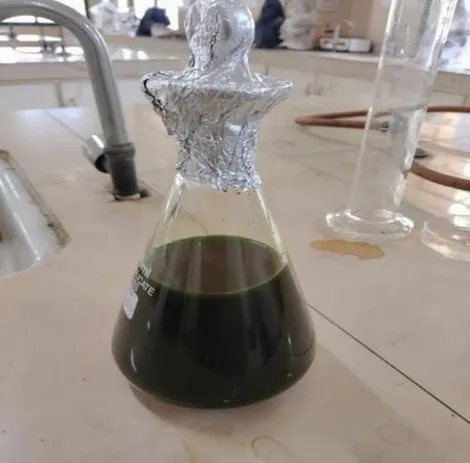
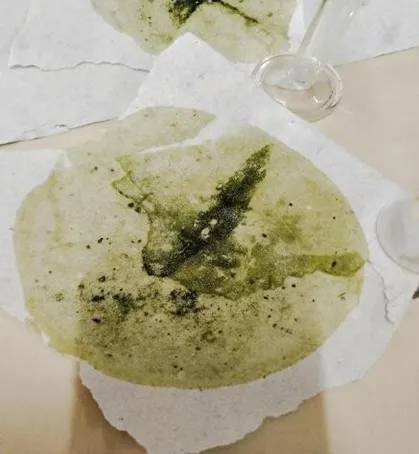
Figure no.01 Maceration Figure no.02 Drying
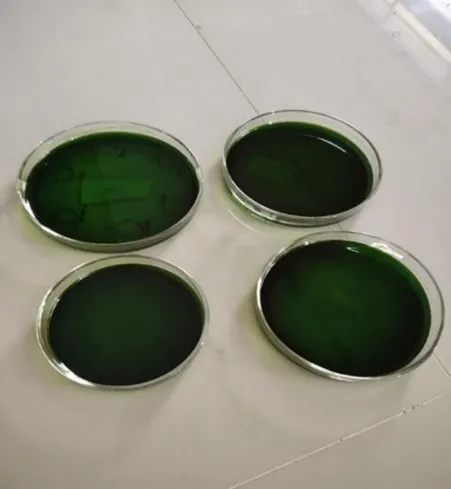
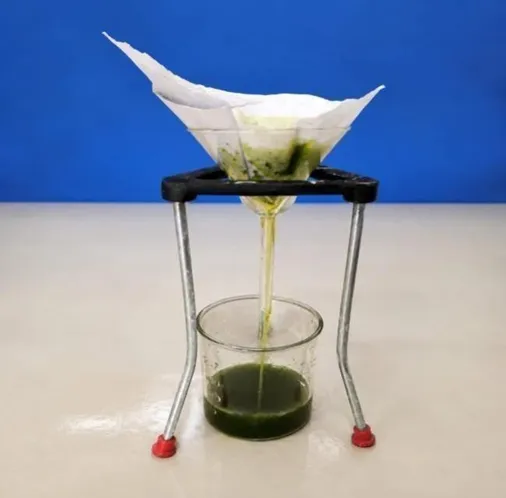
Figure no.03 Evaporation Figure no.04 filterate
3.3 : Formulation of aloe vera extract and carica papaya extract into teabag
1. Collection of Plant Materials
Fresh leaves of Carica papaya and fresh Aloe vera leaves were collected from local sources. Other herbal ingredients such as ginger, cardamom, liquorice, and cinnamon were procured from the local market.
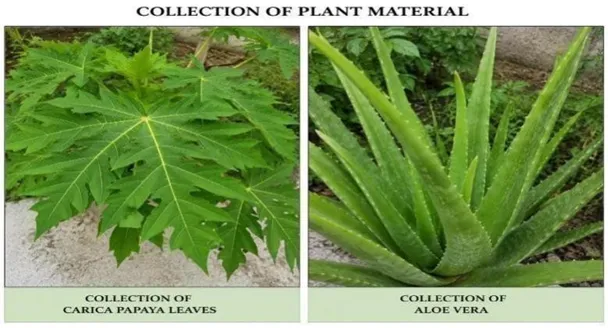
Figure no.05 Collection of plant material
2. Washing and Drying
The collected leaves were washed thoroughly with distilled water to remove dust and foreign particles. The plant materials were shade dried at room temperature for several days until complete removal of moisture was achieved.
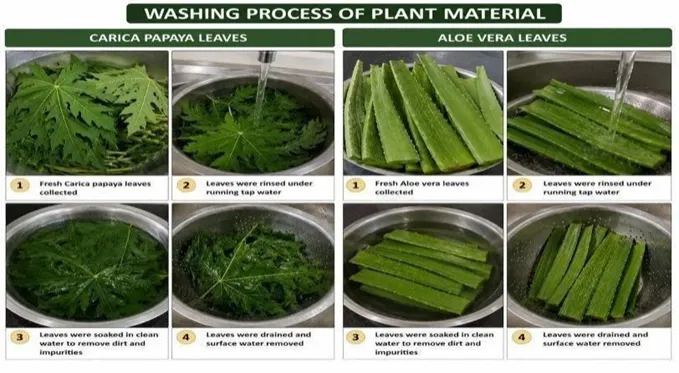
Figure no.06 washing process of plant material
3. Preparation of Extracted Powder.
The dried leaves of Carica papaya and other herbal ingredients were separately powdered using a mortar and pestle. The powders were passed through a suitable sieve to obtain uniform particle size. Then perform extraction process of both and get the extracted material or powder form of both.
4. Formulation of Herbal Tea.
Different herbal ingredients were weighed accurately according to the formulation requirement. The Extract of Carica papaya leaves, Aloe vera extract, ginger, cardamom, liquorice, and cinnamon were mixed uniformly to prepare the herbal tea blend.
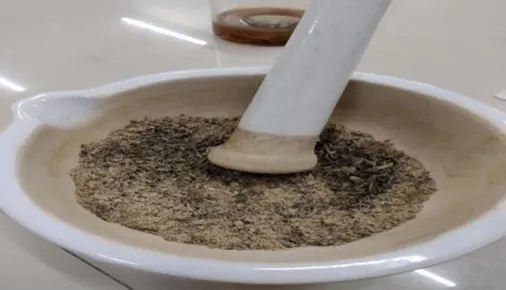
Figure no.07 mixing
5. Filling of Tea Bags
The prepared herbal blend was accurately weighed and filled into empty filter paper tea bags. The tea bags were sealed properly to prevent leakage and contamination.
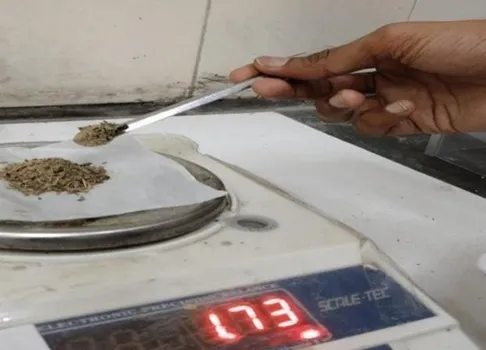
Figure no.08 weighing
6. Packaging and Storage
The prepared tea bags were packed in airtight containers or laminated pouches and stored in a cool and dry place to protect them from moisture and environmental contamination.
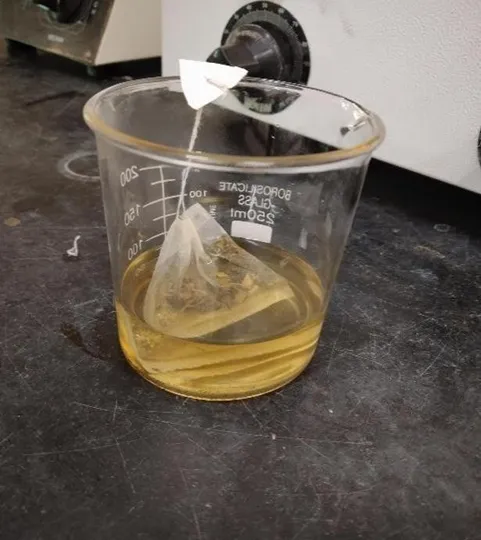
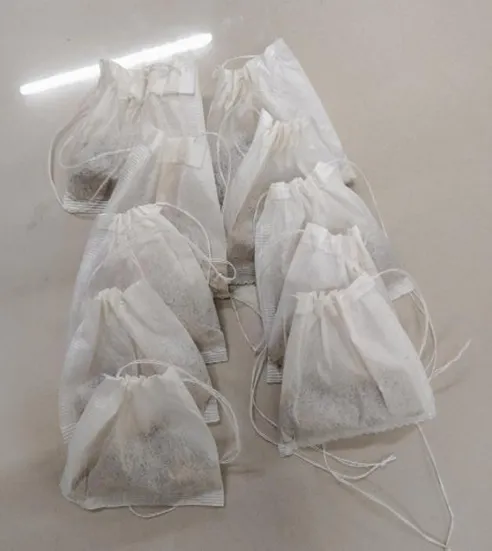
Figure no.09 Infusion of teabag Figure no.10 Teabag
3.3: Evaluation Tests Performed for Herbal Tea Bag Formulation
The prepared herbal tea bags containing Carica papaya leaf extract and Aloe vera extract were evaluated by performing various organoleptic, physicochemical, phytochemical, and quality control tests to ensure purity, quality, stability, and acceptability of the formulation.
1. Organoleptic Evaluation
Parameters Evaluated Color
Odor Taste
Appearance Aroma
Clarity of infusion
Procedure
One herbal tea bag was immersed in a cup containing approximately 100–150 mL of hot water for 3–5 minutes. The prepared infusion was observed visually and evaluated for color, odor, taste, and appearance by sensory observation.
Observation
The prepared tea infusion showed characteristic herbal color, pleasant aroma, acceptable taste, and clear appearance.
2. Weight Variation Test
Procedure
Ten tea bags were selected randomly and weighed individually using a digital balance. The average weight was calculated and individual weights were compared with the average weight.
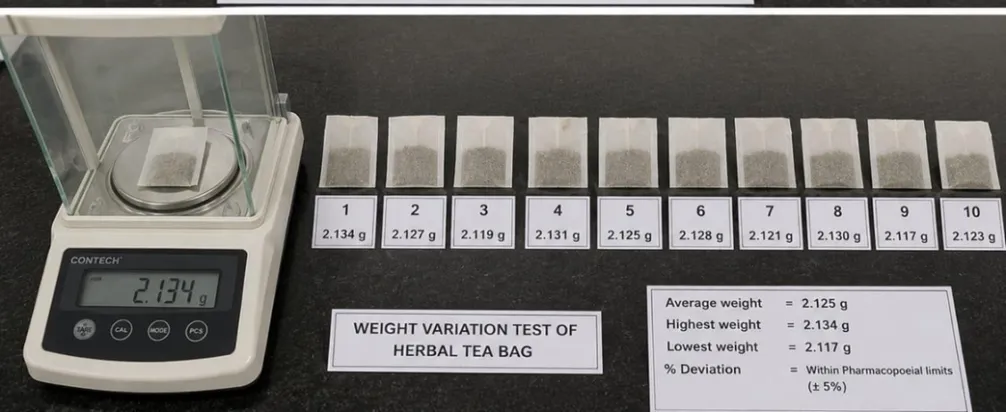
Figure no.11 Weight Variation Test
Observation
All tea bags showed uniformity in weight with minimal variation.
3. Moisture Content Determination
Procedure
About 2 g of herbal Extract was weighed accurately in a dried evaporating dish and dried in a hot air oven at 105°C until constant weight was obtained. The sample was cooled in a desiccator and weighed again.
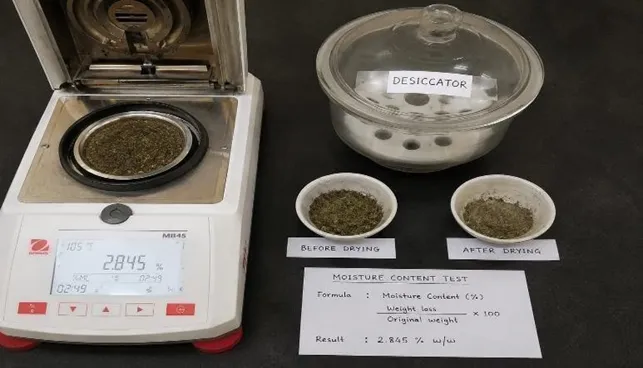
Figure no.12 Moisture Content Determination
Observation
Low moisture content indicated better stability and reduced microbial contamination.
4. Ash Value Determination
Procedure
About 2–3 g of accurately weighed herbal Extract was placed in a silica crucible and incinerated gradually by increasing temperature until carbon-free ash was obtained. The crucible was cooled in a desiccator and weighed.
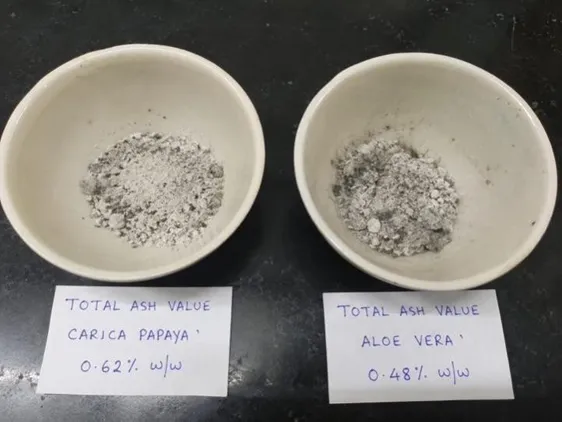
Observation
Ash value indicated purity and presence of inorganic matter in the sample.
5. Water Soluble Extractive Value
Procedure
About 5 g of powdered Extract was macerated with 100 mL of distilled water in a closed flask for 24 hours with occasional shaking. The solution was filtered and 25 mL of filtrate was evaporated to dryness in a tarred dish and dried at 105°C.
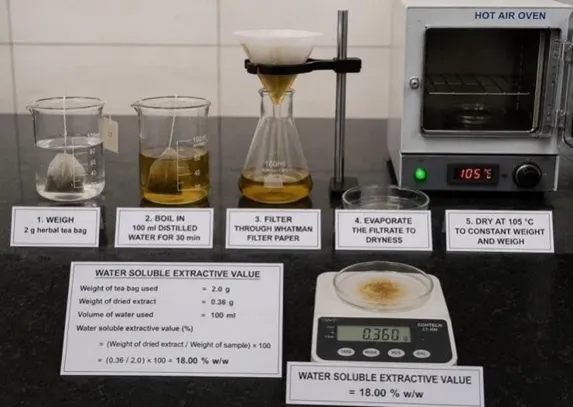
Figure no.14 Water Soluble Extractive Value
Observation
Higher extractive value indicated presence of water soluble phytoconstituents.
6. pH Determination
Procedure
One tea bag was infused in distilled water and the pH of the solution was measured using a calibrated digital pH meter.
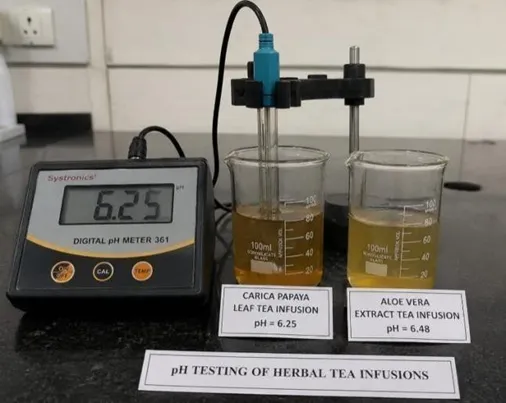
Figure no.15 pH Determination
Observation
The herbal infusion showed acceptable pH suitable for oral consumption.
7. Infusion Time Test
Procedure
One tea bag was immersed in hot water and the time required for proper diffusion of color and flavor into water was recorded.
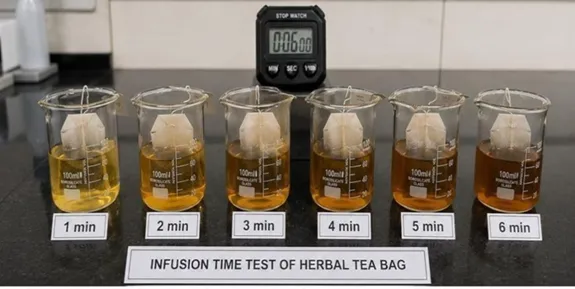
Figure no.16 Infusion Time Test
Observation
The infusion was prepared within 3–5 minutes.
8. Phytochemical Screening
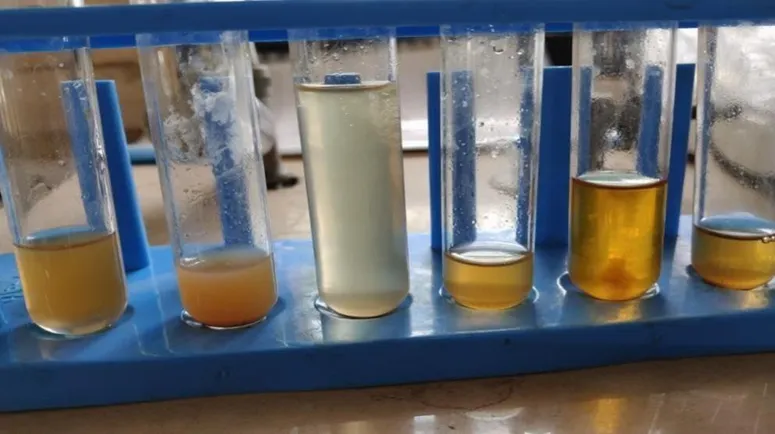
Figure no.17 Phytochemical Screening
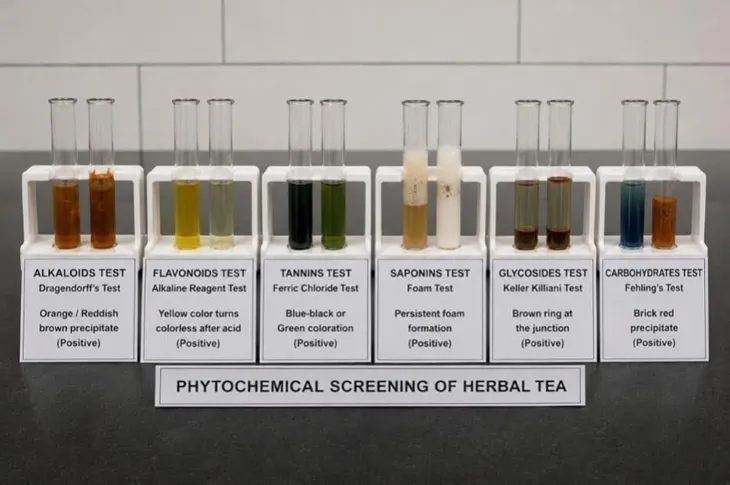
Figure no.18 Phytochemical Screening
1. Test for Alkaloids – Dragendorff’s Test
Procedure
Few drops of Dragendorff’s reagent were added to the extract.
Observation
Orange or reddish-brown precipitate indicated presence of alkaloids.
2. Test for Flavonoids – Alkaline Reagent Test
Procedure
Few drops of sodium hydroxide solution were added to the extract.
Observation
Formation of intense yellow color which became colorless after addition of dilute acid indicated presence of flavonoids.
3. Test for Tannins – Ferric Chloride Test
Procedure
Few drops of ferric chloride solution were added to the extract.
Observation
Blue-black or green coloration indicated presence of tannins.
4. Test for Saponins – Foam Test
Procedure
The extract was shaken vigorously with distilled water.
Observation
Persistent foam formation indicated presence of saponins.
5. Test for Glycosides – Keller Killiani Test
Procedure
Extract was treated with glacial acetic acid, ferric chloride, and concentrated sulfuric acid carefully.
Observation
Brown ring formation at the junction indicated presence of glycosides.
6. Test for Carbohydrates – Fehling’s Test
Procedure
Equalquantities of Fehling’s solution A and B were mixed and added to the extract followed by heating.
Observation
Brick red precipitate indicated presence of reducing sugars.
RESULT & DISCUSSION
Result –
The herbal tea bags containing Carica papaya leaf Extract and Aloe vera extract were prepared successfully by using suitable herbal ingredients such as ginger, liquorice, cardamom, and cinnamon. The prepared tea bags showed:
• Uniform filling and proper sealing
• Good appearance without leakage
• Brownish-green colored infusion
• Pleasant aroma and acceptable taste
• Clear infusion after preparation
DISCUSSION
The findings of the present study indicate that the herbal tea bags formulated with Carica papaya leaf extract and Aloe vera extract were successfully prepared and met the desired quality requirements. The formulation exhibited acceptable organoleptic characteristics, satisfactory physicochemical parameters, and good storage stability, demonstrating its suitability as a herbal beverage.The incorporation of natural ingredients such as ginger, liquorice, cardamom, and cinnamon enhanced the sensory appeal of the tea by improving its taste and aroma.
These ingredients also helped reduce the bitterness associated with papaya leaf extract, thereby increasing the overall acceptability of the formulation. In addition, Aloe vera contributed to the quality of the infusion and added potential functional benefits.Preliminary phytochemical investigations revealed the presence of various biologically active compounds, including flavonoids, alkaloids, tannins, and phenolic constituents. These phytochemicals are known to possess a range of beneficial properties and may support the antioxidant, antimicrobial, anti-inflammatory, digestive, and immune-supporting potential of the herbal tea.The tea bags demonstrated efficient infusion characteristics, allowing rapid extraction of active constituents into hot water within a short period. This feature enhances user convenience and makes the formulation suitable for routine consumption. Stability evaluation further suggested that the product maintained its quality attributes during storage under normal environmental conditions.Based on the overall results, the developed herbal tea bag formulation can be considered a promising natural beverage with desirable quality, ease of use, and consumer acceptability. Its combination of medicinal plant extracts and herbal additives may provide supportive health benefits and promote general well-being.
SUMMARY & CONCLUSION
Summary
The present investigation was undertaken to formulate and standardize a herbal tea bag containing extracts of Carica papaya leaves and Aloe vera. The study was designed to develop a natural, convenient, and consumer-friendly herbal beverage with potential health-supporting properties. Herbal teas have gained considerable popularity as functional beverages due to their ease of preparation, pleasant sensory characteristics, and potential therapeutic benefits.For the preparation of the formulation, fresh leaves of Carica papaya and Aloe vera were collected, cleaned thoroughly, shade dried, and processed to obtain suitable extracts. These extracts were blended with selected herbal ingredients, including ginger, liquorice, and cardamom, to enhance flavor, aroma, and overall acceptability. The final herbal mixture was packed into tea bags to obtain a convenient dosage form.
The formulated tea bags were subjected to various evaluation tests, including organoleptic assessment, pH determination, moisture content analysis, ash value determination, infusion studies, and phytochemical screening. The results demonstrated satisfactory physicochemical characteristics and desirable sensory properties. Preliminary phytochemical investigations revealed the presence of several bioactive constituents such as flavonoids, alkaloids, tannins, and phenolic compounds, which may contribute to the potential health benefits of the formulation.
CONCLUSION
The study successfully developed and standardized a herbal tea bag formulation containing Carica papaya leaf extract and Aloe vera extract. The selected plant materials were chosen because of their recognized nutritional and pharmacological significance and were effectively incorporated into a convenient tea bag dosage form.
Evaluation of the prepared formulation showed acceptable quality attributes with respect to appearance, aroma, taste, pH, moisture content, ash value, and infusion characteristics. The observed results indicated that the formulation remained stable and met the desired quality parameters. Phytochemical screening confirmed the presence of various beneficial plant constituents that may contribute to the functional properties of the herbal tea. Overall, the developed herbal tea bags demonstrated good consumer acceptability and satisfactory quality characteristics. The combination of Carica papaya and Aloe vera may offer a promising natural beverage with potential wellness-supporting benefits. Further pharmacological and clinical studies are recommended to establish itsefficacy and explore its broader therapeutic applications.
REFERENCES


Jaisal Jethwa, Arati Mehar, Pranali Dhapodkar, Development and Standardization of Herbal Tea Bags Based on Carica papaya Leaves extract and Aloe Vera Extract, Int. J. of Pharm. Sci., 2026, Vol 4, Issue 6, 6672-6686, https://doi.org/10.5281/zenodo.20926934
 10.5281/zenodo.20926934