Drug repurposing is a smart and cost-effective approach that involves finding new uses for existing medicines. Instead of developing a new drug from scratch, researchers explore whether approved or previously studied drugs can be used to treat different diseases. This method saves time, reduces development costs, and lowers the risk of failure because much of the drug's safety information is already available. Recent advances in artificial intelligence, data analysis, and biomedical research have made drug repurposing more efficient and accurate. Several medicines, including Aspirin, Sildenafil, and Metformin, have successfully found new therapeutic applications through this approach. Although challenges such as regulatory approval, funding, and patent issues remain, drug repurposing continues to offer great potential for improving healthcare. Overall, it provides a faster and more practical way to bring effective treatments to patients and address unmet medical needs.
Keywords
Drug Repurposing, Artificial Intelligence, Clinical Trials, Therapeutic Applications, Drug Development, Potential.
Introduction
×
2.Introduction to Drug Repurposing
2.1 Definition
Drug repurposing (DR), often called drug repositioning, is the strategic process of finding new therapeutic uses for existing drugs—specifically those already approved for one indication, or compounds that were successfully tested in humans but failed for their original target disease. The essence of this approach is leveraging existing knowledge to accelerate the development of new treatments(1).
This strategy is fundamentally based on identifying "new tricks for old drugs" (2).
It utilizes the wealth of information already gathered on a drug's safety, toxicology, formulation, and pharmacokinetics, significantly derisking the initial development phase (1,3,4).
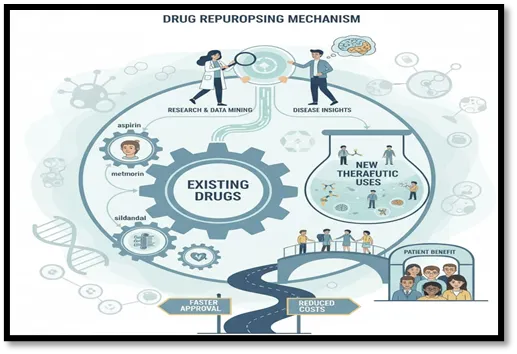
Drug repurposing transforms drug discovery from a long, linear path into a more efficient, circular process, as the repurposed drug is an "already-built and tested vehicle" for a new disease destination.(5)
The approach has proven especially valuable in responding to urgent, unmet medical needs, such as developing therapeutics for infectious diseases.(6)
2.2 Importance Compared to De Novo Drug Discovery
Drug repurposing has emerged as a cornerstone of modern drug discovery due to the inherent drawbacks of the traditional de novo (new discovery) pipeline, (2,7)The primary advantage of DR lies in its ability to drastically reduce the time, cost, and risk associated with bringing a new therapy to market.(1,8)
Table 1: Importance compared to De Novo Drug Discovery
Feature
Drug Repurposing (DR)
De Novo Drug Discovery
Cost
Significantly Reduced
High, often billions of dollars
Development Time
Shortened (Can bypass early phases)
Very Long (10-15 years average)
Toxicity/Safety
Largely known; Phase I trials are often unnecessary
Unknown; High failure rate in preclinical and Phase I
Stages
Can begin at later stages (e.g., Phase II)
Must begin with Phase I (safety/PK)
Risk of Failure
Lower
High
The ability to bypass the time-consuming and costly preclinical and early clinical safety trials (Phase I) is the core economic and logistical benefit.(8,9) This empowers researchers to fast-track candidates directly into efficacy trials, making it a powerful strategy.(8) However, one challenge can be navigating existing intellectual property and patent issues.(10,11)
2.3 Brief History with Successful Examples
While drug repurposing has a long, often serendipitous history, where observant clinicians noted unexpected secondary effects of treatments(3), the systematic and data-driven application of DR has dramatically increased in the last few decades.(12,13) The integration of high-throughput screening and computational (in silico) methods has formalized DR into a strategic discipline.(14,15)
Key Successful Examples:
Sildenafil (Viagra): Initially investigated for its action against angina, it was famously repurposed for treating erectile dysfunction and later approved for pulmonary arterial hypertension (1).
Thalidomide: After being withdrawn due to severe teratogenicity, it was successfully repurposed decades later to treat leprosy and the cancer multiple myeloma, demonstrating the power of re-evaluating compounds.(1,2)
Minoxidil: Originally an oral treatment for hypertension, it was repurposed into a topical application for stimulating hair growth (alopecia).(8)
Aspirin: A classic example, widely used for pain and fever, it was later repurposed for its anti-platelet properties to reduce the risk of cardiovascular events.(3)
The current era relies heavily on computational approaches (e.g., cheminformatics, systems biology, network-based predictions) and the analysis of vast datasets (drug databases, genomics) to systematically predict new uses, further solidifying DR as a futuristic and essential drug discovery strategy.(16–18)
2.4 Advantages and Disadvantages
Table 2:Advantages and Disadvantages
Category
Advantage (Facilitator)
Disadvantage (Barrier)
Development
Known safety/toxicity data (preclinical & Phase I avoided).
Need for robust Phase II/III clinical validation for new use.
Reduced development time (by several years).
Weak or expired IP/patent protection for many candidates.
Cost & Funding
Significantly lower overall development cost.
Limited commercial incentive for generic drugs; funding gaps.
Scientific
Existing manufacturing and formulation data.
Potential for mechanism of action (MoA) to remain unknown.
Potential for use in rare/neglected diseases.
High rate of false positives from in silico screening requiring validation.
3. Rationale for Drug Repurposing
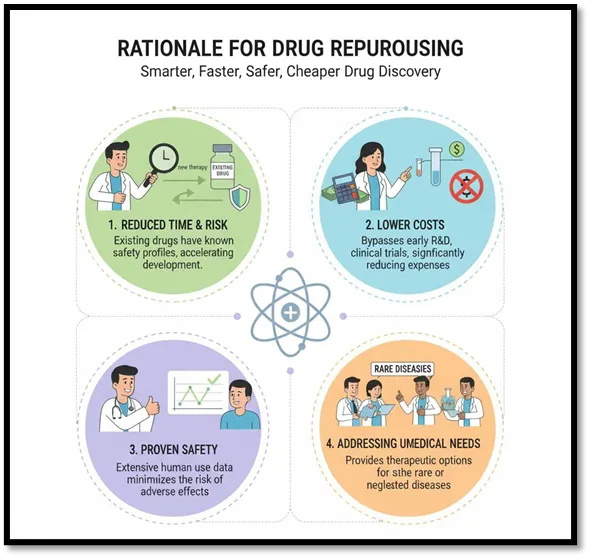
The fundamental rationale behind drug repurposing stems from recognizing that biological systems are highly interconnected, and therapeutic compounds rarely exhibit single, isolated effects. This strategy capitalizes on pre-existing knowledge about a drug to efficiently find new clinical applications.(2) The general principle and process rely on several key pharmacological and economic advantages.
3.1 General Principle and Process
The underlying principle of drug repurposing is that a given drug molecule may have multiple, previously unrecognized mechanisms of action or interact with several distinct biological targets—a phenomenon known as polypharmacology.(2)
Principle: Molecular Promiscuity
Target Diversity: Drugs often bind to a range of targets beyond the one they were originally designed for (e.g., receptors, enzymes, or ion channels).(2) By identifying a drug's 'off-target' activity that matches a key molecular driver of a different disease, a new therapeutic indication can be predicted (17).
Disease Mechanism Overlap: Many diseases, even those clinically distinct, share common molecular pathways, signaling cascades, or cellular pathologies (e.g., inflammation, apoptosis, metabolic dysfunction). A drug effective against one disease pathway may therefore be effective against another disease that shares that same pathway(17).
Figure 1: Rationale for Drug Repurposing
Process: Reducing the Valley of Death
The rationale is heavily supported by the process-related benefits that drastically reduce the risks associated with the drug discovery pipeline (1,8).
Safety and Toxicology Assurance: The most critical step bypassed is establishing compound safety. Since the repurposed drug has already passed extensive preclinical studies and Phase I clinical trials for its original purpose, its human safety, tolerability, and pharmacokinetics (absorption, distribution, metabolism, and excretion or ADME) are largely known(3). This avoids the "valley of death"—the high failure rate and huge investment required for novel compounds in early development (8).
Bioavailability and Formulation: Repurposed drugs often have established and optimized manufacturing processes, stable formulations, and known bioavailability, eliminating significant developmental hurdles that plague novel compounds(1).
Speed to Market: Because Phase I is typically skipped, and the compound's profile is known, the time required to reach Phase II (efficacy testing) and subsequent approval is significantly shortened, accelerating patient access to new therapies(7,9,19).
The overall rationale is that repositioning is not simply finding a new target, but using the existing "target-to-drug" journey as a proven starting point for a new therapeutic destination (2,5). This data-rich environment is what powers modern computational approaches (in silico methods), which systematically match known drug profiles against disease signatures or biological data for prediction(13,15). This is the next critical section for a thorough review of drug repurposing. I will analyze your references to detail the primary approaches—Computational, Experimental, and Clinical—while ensuring originality and using the Vancouver-style numbered citations.
Figure 2: Mechanism of the Drug Repurposing
4. Approaches to Drug Repurposing
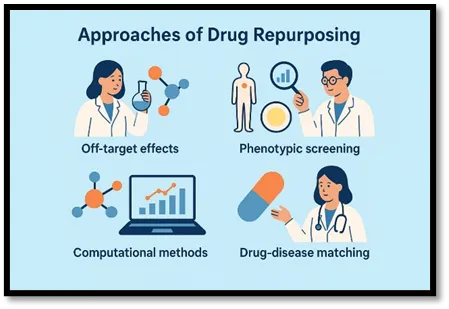
The process of drug repurposing is no longer purely serendipitous; it is a systematic, multi-faceted discipline that integrates high-tech data mining with traditional biological testing. These approaches can be broadly categorized as in silico (computational), experimental (in vitro/in vivo), and clinical observations(14).
Figure 3:Approaches of Drug Repurposing
4.1 Computational / In Silico Methods
Computational, or in silico, methods form the backbone of modern drug repurposing(12,13). These approaches leverage vast public and proprietary biological and chemical data sets to predict new drug-disease pairings quickly and cost-effectively, guiding subsequent experimental validation (13,15).
Molecular Docking: This is a structure-based method that involves simulating how a known drug molecule binds to a specific target protein (e.g., an enzyme or receptor) associated with a new disease. The goal is to predict the binding affinity and the drug's potential inhibitory or modulatory effect, essentially performing a virtual screen against new targets(13).
Network Pharmacology: This approach views drugs, targets, and diseases as interconnected nodes within a biological network. It aims to identify drugs that can modulate disease-related pathways by targeting multiple nodes (polypharmacology) rather than just a single target(17). By comparing a drug's known target network with a disease's molecular network, researchers can predict shared mechanisms and potential repositioning candidates (13).
AI/Machine Learning (ML) Approaches: Modern computational repurposing relies heavily on ML to process the massive amounts of data generated by genomics, transcriptomics, and electronic health records (EHRs)(7,18). ML algorithms can identify non-obvious patterns, such as drug-induced gene expression changes that reverse a disease-related gene expression profile, leading to novel predictions that are difficult for humans to discern (12,14,18).
4.2 Experimental Methods
Experimental methods use laboratory-based techniques to physically test the known drugs against new disease models.
High-Throughput Screening (HTS): This is a target-centric approach involving testing large libraries of existing drugs against a single, validated molecular target (e.g., a purified protein or enzyme) associated with the new indication (1,19). HTS is automated, allowing thousands of compounds to be tested rapidly to identify potent binding partners.
Phenotypic Screening (Cell-Based Assays): Unlike HTS, which focuses on a specific target, phenotypic screening tests the drug's effect on a disease phenotype in a cell or organism model without a pre-defined molecular target (1). This approach is particularly effective in identifying drugs that affect complex biological processes or interact with novel, unknown targets, based on observing a favourable change in the disease state (1).
4.3 Clinical Observations
Historically, the earliest and most straightforward form of drug repurposing involved astute observation in the clinical setting. These methods rely on the real-world application of the drug.
Serendipitous Discoveries: Many successful repurposing cases arose when physicians or patients noted an unexpected but beneficial side effect of a drug being used for its original indication (3). For instance, a drug for one condition might show an unexpected anti-inflammatory effect relevant to a different chronic illness.
"Off-Label Use" Leading to Repurposing:Off-label use occurs when a physician prescribes an approved drug for a purpose or patient population not officially endorsed by the regulatory body (10). If patterns of successful off-label use emerge across many patients, this clinical evidence can serve as a strong basis for initiating formal clinical trials to obtain a new regulatory approval for the repurposed indication (13). This transition from informal use to formal repurposing is a key facilitator in translational research (11,19).
Table 3: Approaches of Drug Repurposing
Approach Category
Specific Method
Starting Point
Key Advantage
Computational (In Silico)
Network Pharmacology
Disease Biology Data
Speed and cost-effectiveness; identifies polypharmacology.
Molecular Docking
Target Structure
Predicts binding affinity to a specific new target.
AI/Machine Learning
Omics/EHR Data
Identifies non-obvious patterns across massive datasets.
Experimental
High-Throughput Screening (HTS)
Molecular Target
Rapidly tests large compound libraries against a single protein.
Phenotypic Screening
Cell/Organism Response
Identifies efficacy without a known target; highly translational.
Clinical
Off-Label Use
Clinical Observation
Provides immediate, real-world human efficacy data.
5. Case Studies in Drug Repurposing
Drug repurposing has proven its utility across a wide range of therapeutic areas, providing both rapid responses to global crises and slow, deliberate progress against chronic diseases. The following examples highlight the successful application and potential of this strategy.
5.1 Recent Examples: COVID-19 and Remdesivir
The urgency of the COVID-19 pandemic dramatically showcased the power and speed of drug repurposing as a response mechanism (1,9).
Remdesivir: This antiviral drug was originally developed to treat Ebola and was later tested against other coronaviruses, including MERS and SARS. Its known activity against viral RNA polymerases, combined with existing safety data, allowed it to be rapidly moved into clinical trials against SARS-CoV-2. It became one of the first drugs to receive regulatory approval for treating COVID-19, demonstrating the efficiency of leveraging compounds with a known human safety profile and mechanism of action (1,7).
The global public health crisis accelerated research, leading to numerous clinical trials (e.g., using hydroxychloroquine, ivermectin, various immunomodulators) based on in silico predictions or preclinical data. While not all candidates proved effective, the speed of testing underscores the strategic value of repurposing in emergent situations (1,6).
5.2 Classic Examples of Repurposing Success
Long-standing examples of drug repurposing confirm the principle of polypharmacology—that a single molecule can have beneficial effects across multiple, seemingly unrelated conditions (2).
Aspirin (Analgesic to Cardiovascular Prevention): Aspirin is perhaps the most famous example of a repurposed drug. Originally developed and used widely as an analgesic and anti-inflammatory agent for pain and fever, it was later recognized for its separate mechanism of action as an inhibitor of platelet aggregation (via cyclooxygenase-1). This finding led to its current widespread use for the long-term prevention of cardiovascular events like stroke and myocardial infarction (3).
Metformin (Diabetes to Cancer/Aging Studies): Metformin is the first-line drug for managing type 2 diabetes. Beyond its glucose-lowering effects, clinical and experimental evidence has shown it possesses unique anti-proliferative and anti-inflammatory properties, potentially influencing longevity pathways (2,4). Researchers are actively exploring its potential use in cancer prevention and therapy (especially in oncology trials involving diabetic patients) and as a therapeutic intervention for aging-related diseases(4,11). This exploration is driven by observations that Metformin users often exhibit reduced incidence and mortality from various cancers compared to other diabetic populations (11).
Table 4: Case Studies
Drug
Original Indication
New Indication
Mechanism of Action
Sildenafil
Angina
Erectile dysfunction
Phosphodiesterase-5 (PDE5) inhibition
Thalidomide
Sedative
Multiple myeloma
Anti-angiogenic and immunomodulatory
Remdesivir
Ebola
COVID-19
RNA-dependent RNA polymerase inhibition
Minoxidil
Antihypertensive
Alopecia
Vasodilation and follicular stimulation
Aspirin
Analgesic
Antiplatelet therapy
Cyclooxygenase (COX) inhibition
Metformin
Diabetes
Cancer prevention
AMPK activation and metabolic regulation
Chlorpromazine
Antipsychotic
Antiviral activity
Endocytic pathway modulation
Riluzole
Amyotrophic lateral sclerosis
Depression
Glutamate modulation
6. Challenges and Limitations of Drug Repurposing
Despite the clear benefits of reduced time and cost, drug repurposing faces several significant obstacles—ranging from legal and regulatory issues to financial and scientific hurdles—that often prevent promising candidates from reaching patients (1,9–11).
6.1 Intellectual Property (IP) and Patent Issues
The most frequent barrier to repurposing is the complexity surrounding intellectual property (IP) for existing drugs (10,11).
Expired Patents: Many promising repurposing candidates are generic drugs whose original composition and use patents have expired. This means there is little or no opportunity for a company to secure a lengthy market exclusivity period, reducing the potential return on investment for the expensive clinical trials required for a new indication (1,10).
"New Use" Patents: While a company can seek a "new use" patent for the repurposed indication, these patents are often narrower, weaker, and easier to challenge than composition-of-matter patents, offering limited commercial protection (10,11). This weak IP protection is a major root cause of the lack of commercial incentive (10).
6.2 Regulatory Hurdles for New Indication
While a drug's safety profile is known, regulatory approval for a new indication is far from automatic (1).
New Clinical Data Required: Repurposing still requires successful completion of well-controlled clinical trials (typically Phase II and Phase III) specific to the new disease and patient population (1,19). The regulatory body must be convinced that the drug is both safe and effective at the new dosage or administration route required for the new condition (9).
Safety Profile Re-Evaluation: Even though the general safety is known, the new patient population, the different stage of the disease, or the higher dosage required for the new indication may introduce previously unseen adverse effects or toxicity (9).
6.3 Funding and Commercial Incentives
Drug repurposing faces severe financial disadvantages when competing for investment compared to de novo discovery (10).
Limited Commercial Incentives for Generic Drugs: For generic drugs, the market return is simply too low to justify the $20-$100 million needed for late-stage clinical trials (1,10). Pharmaceutical companies naturally prioritize novel candidates with strong, long-term patent protection. This issue is particularly acute for diseases affecting small patient populations (orphan diseases) or for drugs in development by academic labs (19).
"Funding Difficulties": Academics and small biotech’s—who often identify repurposed candidates—struggle to secure the funding necessary to transition from an in-silico prediction or a promising preclinical result into a full-scale clinical development program (19).
6.4 Need for Robust Clinical Validation
The vast number of repositioning predictions generated by computational methods must be rigorously validated, which is a significant resource bottleneck (20).
Validation Gap:In silico (computational) and in vitro (experimental) screening methods often produce hundreds of "hits," but the predictive value of these hits varies widely (20). The crucial, expensive step of validating these candidates in relevant animal models and moving them into human trials remains the biggest scientific hurdle (13).
Mechanism Unknown: In many cases, repurposing relies on a phenotypic observation (the drug works, but the exact target is unknown). Without a clear molecular mechanism, designing the correct dose, patient stratification, and Phase II trial endpoints can be extremely challenging, leading to trial failures (2).
7. Ethical and Regulatory Considerations
The inherent efficiency of drug repurposing—using compounds with known safety profiles—necessitates careful navigation of the regulatory landscape to protect patients and maintain scientific integrity. The primary considerations revolve around the transition from informal use to formal approval, patient safety, and regulatory oversight (1,10,19).
7.1 Off-Label Use vs. Approved Repurposing
A major ethical and regulatory distinction in this field lies between an informal clinical practice and a formalized development strategy (1,10).
Off-Label Use: This occurs when a physician, using professional judgment, prescribes an FDA/EMA-approved drug for an indication that has not received official regulatory clearance (10). This practice is legal and often provides early evidence of a drug's potential, acting as a "facilitator" for repurposing (10). However, off-label use lacks controlled efficacy and safety data for that new purpose, creating ethical concerns regarding patient consent and evidence-based practice (9).
Approved Repurposing: Formal drug repurposing involves dedicating resources to clinical trials (Phase II and III) to achieve a new official regulatory indication(1,19). This process provides the necessary evidence to support the drug's efficacy and safety for the new disease, transitioning the treatment from anecdotal evidence to established, evidence-based medicine (1).
7.2 Patient Safety Concerns
While the drug's basic toxicology is known, patient safety must be rigorously re-evaluated for the new context (9).
Toxicity in New Populations: A drug deemed safe for a population with one disease may exhibit different toxicity profiles in patients with a new, distinct condition, especially in different age groups, disease severity stages, or genetic backgrounds (9).
Dose Modification: Repurposing often requires the drug to be used at a higher concentration, a different frequency, or via a new route of administration to achieve efficacy for the new target (1,9). These modifications must be studied to ensure that the risk-benefit ratio remains favourable, particularly since high doses could uncover previously hidden toxic effects (9).
7.3 Role of FDA/EMA Guidelines
Regulatory agencies like the U.S. FDA and the European Medicines Agency (EMA) play a crucial role in balancing innovation with patient protection (1).
Streamlined Trials: Agencies often allow repurposed drugs to bypass initial phases (e.g., Phase I) due to existing safety data, effectively fast-tracking them to efficacy trials (19).
Orphan Drug Designation: Regulatory bodies can provide incentives, such as Orphan Drug Designation (ODD), for repurposed drugs targeting rare diseases. ODD can provide tax credits, fee waivers, and a period of market exclusivity, helping overcome the commercial barrier presented by weak IP (1,19).
7.4 Balancing Innovation with Accessibility
The ethical framework must address the tension between creating financial incentive for companies to pursue new approvals and ensuring that life-saving repurposed drugs remain affordable and accessible (10,11).
Generic Drug Disincentive: Because generic drugs have limited patent life, the economic incentive to invest in clinical trials for a new use is low (10,11). This creates a situation where the best scientific candidate may be ignored for commercial reasons.
Recommendations for Policy: To rectify this imbalance, experts suggest policy changes, such as greater public funding for academic-led clinical trials of generic repurposed drugs, or enhancing regulatory incentives like market exclusivity for new indications of old compounds, ensuring that the benefit of repurposing translates into available treatments (1,19).
8. Future Perspectives
The landscape of drug repurposing is rapidly evolving, driven by technological advancements and greater international collaboration. The future of DR lies in embracing big data, prioritizing precision medicine, fostering new partnerships, and addressing areas of high unmet medical need(1,12,21).
8.1 Role of Big Data, AI, and Multi-Omics in Accelerating Repurposing
The convergence of vast biological data sets and advanced computing power is the primary engine of future repurposing efforts (12,18,21).
AI and Machine Learning (ML): Artificial Intelligence will move beyond simple similarity searches to integrate diverse data sources (genomics, proteomics, chemical structures, disease pathways, and patient records) to predict drug-disease associations with higher accuracy and confidence (12,13). These advanced algorithms will be essential for filtering the large number of potential candidates and validating computational technologies (20).
Multi-Omics: The integration of data from different "omics" fields (e.g., genomics, transcriptomics, metabolomics) allows researchers to create complex, personalized molecular profiles of diseases (18). Repurposing strategies will use this multi-omics data to find drugs that can correct disease-specific molecular deviations, rather than simply hitting a single target (14,17).
Public Data Resources: The continued growth of accessible, well-structured drug and disease databases is critical, as they provide the raw materials for in silico prediction and hypothesis generation (14,16).
8.2 Personalized / Precision Medicine Opportunities
As our understanding of individual disease heterogeneity grows, repurposing efforts will shift from a "one-size-fits-all" approach to personalized medicine (1).
Stratification: Future repurposing will increasingly focus on identifying drugs that are effective for specific subpopulations of a disease, often defined by genetic markers or gene expression patterns (1,18). This precision approach will increase the success rate of clinical trials by focusing on patients most likely to respond to the repurposed drug.
Network-Based Approaches: By mapping a patient's individual biological network against the known effects of various drugs, physicians may eventually be able to select an existing medication that best addresses the specific molecular pathology of that individual's illness (17).
8.3 Global Collaboration and Public-Private Partnerships
Overcoming the financial and IP hurdles (Section 6) requires structural changes in how repurposing is funded and managed (1,10,19).
Academic and Non-Profit Role: Academic institutions and government agencies are uniquely positioned to lead the repurposing of generic or off-patent drugs, where commercial incentives are low (19). Increased public funding for these translational studies is a key recommendation for the future (1,10).
Open Science and Data Sharing: Greater global data sharing and collaborative platforms are necessary to maximize the output of computational screening efforts and reduce redundant research (13,14). Public-private partnerships, where companies contribute proprietary data on shelved drugs for academic screening, are vital to unlocking the full potential of these abandoned compounds (1).
8.4 Potential in Neglected and Rare Diseases
Drug repurposing offers a beacon of hope for conditions that traditional de novo discovery often neglects due to small market size (1,6).
Accelerated Rare Disease Treatment: Because repurposing is faster and cheaper, it is perfectly suited for developing treatments for rare and neglected diseases, which have enormous unmet needs (6). Regulatory incentives like the Orphan Drug Designation will continue to play a crucial role in making these endeavours financially viable (1).
CONCLUSION
9.1 Summary of Benefits and Challenges
Drug repurposing (DR) has solidified its position as an essential and impactful strategy in modern drug development, primarily by offering compelling advantages over traditional de novo discovery. The fundamental benefit lies in the drastically reduced timeline and cost. By utilizing drugs with established safety profiles, DR largely bypasses the lengthy and failure-prone preclinical and Phase I trials, enabling a quicker path to clinical efficacy testing. The success stories, such as the rapid deployment of antivirals during the COVID-19 pandemic and the decades-long evolution of drugs like Aspirin and Metformin, demonstrate the strategic value of leveraging known pharmacology’s.
However, the path to repurposing is not without significant challenges:
Commercial Barriers: The weak intellectual property (IP) and lack of market exclusivity for off-patent, generic drugs severely restrict the commercial incentive for pharmaceutical investment in expensive late-stage trials.
Regulatory Complexity: Despite known safety, achieving regulatory approval for a new indication still requires robust clinical data, and new patient populations may introduce unforeseen safety concern.
Scientific Validation: The burgeoning field of in silico prediction requires rigorous and costly experimental validation to confirm the high number of predicted hits and move them toward clinical reality.
9.2 Emphasis on Impactful Strategy in Modern Drug Development
In summary, drug repurposing represents a paradigm shift toward efficiency and integration in biomedical research. The field is poised for exponential growth, largely driven by the increasing sophistication of computational methods, AI, and multi-omics data integration, which enable precision and personalization in identifying novel indications. By fostering global collaborations and developing creative financial mechanisms—such as increased public funding and enhanced regulatory incentives for rare and neglected diseases—the inherent economic and scientific hurdles can be overcome. Drug repurposing is more than a cost-saving measure; it is an empowering, futuristic strategy capable of unlocking untapped therapeutic potential in existing molecules, ultimately serving as a cornerstone for accelerating the delivery of new treatments to patients worldwide.
REFERENCES
Pushpakom S, Iorio F, Eyers PA, Escott KJ, Hopper S, Wells A, et al. Drug repurposing: progress, challenges and recommendations. Nat Rev Drug Discov. 2019 Jan;18(1):41-59. doi: 10.1038/nrd.2018.168. Epub 2018 Oct 12.
Oprea TI, Mestres J. Drug Repurposing: Far Beyond New Targets for Old Drugs. AAPS J. 2012;14(4):759-762.
Rudrapal M, Khairnar SJ, Jadhav AG. Drug Repurposing (DR): An Emerging Approach in Drug Discovery. In: Drug Repurposing - Hypothesis, Molecular Aspects and Therapeutic Applications. IntechOpen; 2020. doi: 10.5772/intechopen.93193.
Kulkarni VS, Alagarsamy V, Solomon VR, Jose PA, Murugesan S. Drug Repurposing: An Effective Tool in Modern Drug Discovery. Russ J Bioorg Chem. 2023;49(2):157–66. doi: 10.1134/S1068162023020139.
Kale MA, Shamkuwar PB, Mourya VK, Deshpande AB, Shelke PA. Drug Repositioning: A Unique Approach to Refurbish Drug Discovery. Curr Drug Discov Technol. 2022;19: e140122192307. doi: 10.2174/1570163818666210316114331.
Law GL, Tisoncik-Go J, Korth MJ, Katze MG. Drug repurposing: a better approach for infectious disease drug discovery? Curr Opin Immunol. 2013;25(4):545-552.
Zhan P, Yu B, Ouyang L. Drug repurposing: An effective strategy to accelerate contemporary drug discovery. Drug Discov Today. 2022;27(7):1785-1788.
Kumar S, Roy V. Repurposing Drugs: An Empowering Approach to Drug Discovery and Development. Drug Res (Stuttg). 2023;73:481-490.
Talevi A, Bellera CL. Challenges and opportunities with drug repurposing: finding strategies to find alternative uses of therapeutics. Expert Opin Drug Discov. 2020;15(4):397-401. doi: 10.1080/17460441.2020.1704729.
Krishnamurthy N, Grimshaw AA, Axson SA, Choe SH, Miller JE. Drug repurposing: a systematic review on root causes, barriers and facilitators. BMC Health Serv Res. 2022;22:970. doi: 10.1186/s12913-022-08272-z.
Pinzi L, Bisi N, Rastelli G. How drug repurposing can advance drug discovery: challenges and opportunities. Front Drug Discov. 2024;4:1460100. doi: 10.3389/fddsv.2024.1460100.
Tanoli Z, Fernández-Torras A, Özcan UO, Kushnir A, Nader KM, Gadiya Y, et al. Computational drug repurposing: approaches, evaluation of in silico resources and case studies. Nat Rev Drug Discov. 2025. doi: 10.1038/s41573-025-01164-x.
Jarada TN, Rokne JG, Alhajj R. A review of computational drug repositioning: strategies, approaches, opportunities, challenges, and directions. J Cheminform. 2020;12:46. doi: 10.1186/s13321-020-00450-7.
Xue H, Li J, Xie H, Wang Y. Review of Drug Repositioning Approaches and Resources. Int J Biol Sci. 2018;14(10):1232-44. doi: 10.7150/ijbs.24612.
Hodos RA, Kidd BA, Shameer K, Readhead BP, Dudley JT. In silico methods for drug repurposing and pharmacology. Wiley Interdiscip Rev Syst Biol Med. 2016;8(3):216-31. doi: 10.1002/wsbm.1337.
Masoudi-Sobhanzadeh Y, Omidi Y, Amanlou M, Masoudi-Nejad A. Drug databases and their contributions to drug repurposing. Genomics. 2020;112(1):1087-1095.
Cheng F, Desai RJ, Handy DE, Wang R, Schneeweiss S, Barabási A-L, Loscalzo J. Network-based approach to prediction and population-based validation of in silico drug repurposing. Nat Commun. 2018;9(1):2691.
Cousins HC, Nayar G, Altman RB. Computational Approaches to Drug Repurposing: Methods, Challenges, and Opportunities. Annu Rev Biomed Data Sci. 2024;7:15-29.
Oprea TI, Bauman JE, Bologa CG, Buranda T, Chigaev A, Edwards BS, Jarvik JW, Gresham HD, Haynes MK, Hjelle B, Hromas R, Hudson L, Mackenzie DA, Muller CY, Reed JC, Simons PC, Smagley Y, Strouse J, Surviladze Z, Thompson T, Ursu O, Waller A, Wandinger-Ness A, Winter SS, Wu Y, Young SM, Larson RS, Willman C, Sklar LA. Drug Repurposing from an Academic Perspective. Drug Discov Today Ther Strateg. 2011;8(3–4):61–9. doi: 10.1016/j.ddstr.2011.10.002.
Schuler J, Falls Z, Mangione W, Hudson ML, Bruggemann L, Samudrala R. Evaluating the performance of drug-repurposing technologies. Drug Discov Today. 2022;27(1):282-290.
Khan S, Agnihotri J, Patil S, Khan N. Drug repurposing: A futuristic approach in drug discovery. J Pharm Biol Sci. 2023;11(1):66-9. doi: 10.18231/j.jpbs.2023.011.
Reference
Pushpakom S, Iorio F, Eyers PA, Escott KJ, Hopper S, Wells A, et al. Drug repurposing: progress, challenges and recommendations. Nat Rev Drug Discov. 2019 Jan;18(1):41-59. doi: 10.1038/nrd.2018.168. Epub 2018 Oct 12.
Oprea TI, Mestres J. Drug Repurposing: Far Beyond New Targets for Old Drugs. AAPS J. 2012;14(4):759-762.
Rudrapal M, Khairnar SJ, Jadhav AG. Drug Repurposing (DR): An Emerging Approach in Drug Discovery. In: Drug Repurposing - Hypothesis, Molecular Aspects and Therapeutic Applications. IntechOpen; 2020. doi: 10.5772/intechopen.93193.
Kulkarni VS, Alagarsamy V, Solomon VR, Jose PA, Murugesan S. Drug Repurposing: An Effective Tool in Modern Drug Discovery. Russ J Bioorg Chem. 2023;49(2):157–66. doi: 10.1134/S1068162023020139.
Kale MA, Shamkuwar PB, Mourya VK, Deshpande AB, Shelke PA. Drug Repositioning: A Unique Approach to Refurbish Drug Discovery. Curr Drug Discov Technol. 2022;19: e140122192307. doi: 10.2174/1570163818666210316114331.
Law GL, Tisoncik-Go J, Korth MJ, Katze MG. Drug repurposing: a better approach for infectious disease drug discovery? Curr Opin Immunol. 2013;25(4):545-552.
Zhan P, Yu B, Ouyang L. Drug repurposing: An effective strategy to accelerate contemporary drug discovery. Drug Discov Today. 2022;27(7):1785-1788.
Kumar S, Roy V. Repurposing Drugs: An Empowering Approach to Drug Discovery and Development. Drug Res (Stuttg). 2023;73:481-490.
Talevi A, Bellera CL. Challenges and opportunities with drug repurposing: finding strategies to find alternative uses of therapeutics. Expert Opin Drug Discov. 2020;15(4):397-401. doi: 10.1080/17460441.2020.1704729.
Krishnamurthy N, Grimshaw AA, Axson SA, Choe SH, Miller JE. Drug repurposing: a systematic review on root causes, barriers and facilitators. BMC Health Serv Res. 2022;22:970. doi: 10.1186/s12913-022-08272-z.
Pinzi L, Bisi N, Rastelli G. How drug repurposing can advance drug discovery: challenges and opportunities. Front Drug Discov. 2024;4:1460100. doi: 10.3389/fddsv.2024.1460100.
Tanoli Z, Fernández-Torras A, Özcan UO, Kushnir A, Nader KM, Gadiya Y, et al. Computational drug repurposing: approaches, evaluation of in silico resources and case studies. Nat Rev Drug Discov. 2025. doi: 10.1038/s41573-025-01164-x.
Jarada TN, Rokne JG, Alhajj R. A review of computational drug repositioning: strategies, approaches, opportunities, challenges, and directions. J Cheminform. 2020;12:46. doi: 10.1186/s13321-020-00450-7.
Xue H, Li J, Xie H, Wang Y. Review of Drug Repositioning Approaches and Resources. Int J Biol Sci. 2018;14(10):1232-44. doi: 10.7150/ijbs.24612.
Hodos RA, Kidd BA, Shameer K, Readhead BP, Dudley JT. In silico methods for drug repurposing and pharmacology. Wiley Interdiscip Rev Syst Biol Med. 2016;8(3):216-31. doi: 10.1002/wsbm.1337.
Masoudi-Sobhanzadeh Y, Omidi Y, Amanlou M, Masoudi-Nejad A. Drug databases and their contributions to drug repurposing. Genomics. 2020;112(1):1087-1095.
Cheng F, Desai RJ, Handy DE, Wang R, Schneeweiss S, Barabási A-L, Loscalzo J. Network-based approach to prediction and population-based validation of in silico drug repurposing. Nat Commun. 2018;9(1):2691.
Cousins HC, Nayar G, Altman RB. Computational Approaches to Drug Repurposing: Methods, Challenges, and Opportunities. Annu Rev Biomed Data Sci. 2024;7:15-29.
Oprea TI, Bauman JE, Bologa CG, Buranda T, Chigaev A, Edwards BS, Jarvik JW, Gresham HD, Haynes MK, Hjelle B, Hromas R, Hudson L, Mackenzie DA, Muller CY, Reed JC, Simons PC, Smagley Y, Strouse J, Surviladze Z, Thompson T, Ursu O, Waller A, Wandinger-Ness A, Winter SS, Wu Y, Young SM, Larson RS, Willman C, Sklar LA. Drug Repurposing from an Academic Perspective. Drug Discov Today Ther Strateg. 2011;8(3–4):61–9. doi: 10.1016/j.ddstr.2011.10.002.
Schuler J, Falls Z, Mangione W, Hudson ML, Bruggemann L, Samudrala R. Evaluating the performance of drug-repurposing technologies. Drug Discov Today. 2022;27(1):282-290.
Khan S, Agnihotri J, Patil S, Khan N. Drug repurposing: A futuristic approach in drug discovery. J Pharm Biol Sci. 2023;11(1):66-9. doi: 10.18231/j.jpbs.2023.011.
Sanika Nalande
Corresponding author
Srinath college of pharmacy, chhatrapati Sambhajinagar
Sumeet Bhilwade
Co-author
Srinath college of pharmacy, chhatrapati Sambhajinagar
Tanaya Markande
Co-author
Srinath college of pharmacy, chhatrapati Sambhajinagar
Pranjali Narawade
Co-author
Srinath college of pharmacy, chhatrapati Sambhajinagar
Snehal Nage
Co-author
Srinath college of pharmacy, chhatrapati Sambhajinagar
Aarti More
Co-author
Srinath college of pharmacy, chhatrapati Sambhajinagar
Sanika Nalande*, Sumeet Bhilwade, Tanaya Markande, Pranjali Narawade, Snehal Nage, Aarti More, Drug Repurposing: The Cost-Effective Approach to drug Development, Int. J. of Pharm. Sci., 2026, Vol 4, Issue 6, 4916-4929. https://doi.org/10.5281/zenodo.20758043








 10.5281/zenodo.20758043