

We use cookies to ensure our website works properly and to personalise your experience. Cookies policy
United College of Pharmacy, Coimbatore, Tamilnadu, India.
Anemia is a common complication of chronic kidney disease (CKD), occurring mainly due to reduced erythropoietin production by the diseased kidneys, and is linked to increased cardiovascular risk and mortality. Erythropoiesis-stimulating agents (ESAs) such as erythropoietin and darbepoetin are widely used to correct anemia in these patients. This prospective comparative study was carried out over six months in 100 patients with CKD-associated anemia, divided equally into two groups. Group A received erythropoietin 4000 units subcutaneously twice weekly, while Group B received darbepoetin alfa 40 mcg subcutaneously once monthly. Hemoglobin, RBC count, and packed cell volume were recorded before and after treatment, and adverse reactions were noted, with comparison done using the z-test. Both drugs showed a significant rise in hemoglobin (1.2 g/dL each, p<0.0001), with comparable improvement in RBC count and PCV. Hypertension was the most common side effect, seen in 38% on erythropoietin and 36% on darbepoetin, with a few mild reactions in the erythropoietin group. Both drugs were equally effective, though darbepoetin's once-monthly dosing may offer better convenience
Anemia is a common hematologic disorder affecting up to one-third of pregnant women. Anemia is categorized by etiology (i.e., acquired or inherited), mechanism (i.e. decreased red blood cell production or increased red blood cell destruction), and red blood cell size (i.e. microcytic, macrocytic, or normocytic [1]. The National Kidney Foundation of The United States of America defines chronic kidney disease (CKD) as a evidence of kidney damage based on abnormal urinalysis results (eg, proteinuria, haematuria) or structural abnormalities observed on ultrasound images or an absolute glomerular filtraion rate (GFR) of less than 60 mL/min for 3 or more month.Erythropoietin deficiency is the most significant cause of anemia in CKD and has been demonstrated to occur at each stage of kidney failure. Because the kidney is the sole source of erythropoietin (EPO) synthesis in adults, reduction in kidney mass as occurs in progressive CKD often results in impairment of EPO production, resulting in anemia.[2] Anaemia in patients with chronic kidney disease (CKD) is a common complication that has been associated with poor outcomes such as cardiovascular complications and mortality . Erythropoiesis-stimulating agents (ESAs) have been available for almost two decades and remain the central strategy for the treatment of anaemia in patients with CKD. Anaemia management is rapidly evolving, as new trial designs and an increasing number of treatment options continue to advance the understanding of Hb control in patients with CKD. Clearly, maintaining patients within target Hb ranges is more important than ever, and the ability of ESAs to contribute to Hb control will be under new scrutiny.[3] One of the major challenges for management of CKD in India is late presentation of patients to the nephrologist. Indian CKD registry reported close to 48% patients presenting in stage V[4]. The dysfunction of erythropoietin (EPO) production because of declining renal function is the major cause of anaemia in patients with chronic renal failure. Therefore, dialysis patients with anaemia have an increased risk for cardiovascular morbidity and mortality [5]. The major difference between erythropoietin and darbepoetin is their half-life, Darbepoetin has three-time higher half-life compared to erythropoietin, therefore can be administered less frequently. This is because of an addition of N-linked carbohydrate groups, which reduces its affinity to EPO receptor and thus prolonging circulation time [6]. Anemia in children is defined based on the 2012 KDIGO Clinical Practice Guideline for Anemia in Chronic Kidney Disease, with haemoglobin (Hb) cut-off levels varying based on age and sex [2].
Evidence from the North American Paediatric Renal Trials and Collaborative Studies (NAPRTCS) cohort consistently reveals an escalating risk of anemia with the progression of CKD stages.[7]. Darbepoetin (DPO) is a novel erythropoiesis-stimulating protein (NESP) that is a recombinant hyperglycosylated analogue of epoetin which stimulates red blood cell production by the same mechanism as the endogenous hormone Produced by recombinant DNA technology [8]. Clinical studies have shown that darbepoetin with a reduced dose frequency (once a week or biweekly) for treating anemia in CKD patients has similar efficacy and safety as epoetin benefiting both patients and health care staff [9]. Darbepoetin (DPO) is a novel erythropoiesis-stimulating protein (NESP) that is a recombinant hyperglycosylated analogue of epoetin which stimulates red blood cell production by the same mechanism as the endogenous hormone Produced by recombinant DNA technology.[8] Anemia of CKD is highly associated with adverse comes such as cardiovascular events and increased mortality. Additionally, the severity of anemia correlates with decreased quality of life and increased hospitalizations. Understanding the diverse mechanisms involved, recommended treatment guidelines, and new therapeutic developments is crucial for managing this condition effectively [ 10]. Endogenous erythropoietin (EPO), the primary regulator in the production of red blood cells, is a glycoprotein hormone produced by the kidneys in response to hypoxia and anemia. There is a physiologic rise in EPO levels during pregnancy, which increases red blood cell production. Recombinant EPO (rEPO) is a synthetic version of this hormone derived from Chinese hamster ovarian cells. Historically, rEPO use in pregnancy has been limited to pregnant patients with anemia secondary to end- stage renal disease.[1] Early recognition, timely management with appropriate therapy helps to reduce the complications of anemia. Erythropoiesis-stimulating agents (ESAs) are one of the important measures for correction of anemia in CKD patients. Darbepoetin, an ESA is a valuable therapeutic option for the treatment of anemia in CKD patients and has played a vital role in enhancing anemia management.[4] The most common use is in people with anaemia (low blood count) related to kidney dysfunction. When the kidneys are not properly functioning, they produce less than normal amounts of erythropoietin, which can lead to low red blood cell production, or anaemia. Erythropoietin triggers the bone marrow to increase red blood cell production.[8]
AIM
To compare the therapeutic outcomes of erythropoietin and darbepoetin in chronic kidney disease patients with anemia.
OBJECTIVE
METHODOLOGY
STUDY TYPE
STUDY DURATION
INCLUSION CRITERIA
EXCLUSION CRITERIA
STUDY PROCEDURE
RESULTS:
Table 1: Comparison of demographics data in the study groups.
|
Parameters |
Group Erythropoietin n=50 |
Percentage (%) |
Group Darbepoietin n=50 |
Percentage (%) |
|
Age Wise |
|
|||
|
Age:18-37 |
8 |
16 % |
2 |
4% |
|
Age:38-57 |
18 |
36 % |
16 |
32 % |
|
Age:58-77 |
20 |
40 % |
26 |
52 % |
|
Age:78-97 |
4 |
8 % |
6 |
12 % |
|
Gender Wise |
|
|||
|
Male |
34 |
68 % |
30 |
60 % |
|
Female |
16 |
32 % |
20 |
40 % |
|
Stages of CKD |
|
|||
|
Stage 5 CKD |
33 |
66 % |
24 |
48 % |
|
Stage 4 CKD |
17 |
34% |
26 |
52% |
The study enrolled 50 patients in each group — Erythropoietin and Darbepoietin.
In both groups, the majority of patients fell within the 58–77year age range, indicating a predominantly middle-to-older adult population. Males outnumbered females in both groups, accounting for 68% and 60% respectively. Regarding disease severity, 66% of the Erythropoietin group had Stage 5 CKD compared to 48% in the Darbepoietin group. Overall, the two groups were broadly comparable in their baseline demographic and clinical characteristics, making them appropriate for a meaningful treatment comparison.
Table 2: Comparison of haemoglobin levels in the study groups.
|
Drug |
Haemoglobin before |
Haemoglobin after |
Mean change |
P value |
|
Erythropoietin |
7.8 ± 1.3 |
9.0 ± 1.4 |
1.2 |
<0.0001 |
|
Darbepoetin |
8.5 ± 1.2 |
9.7 ± 1.3 |
1.2 |
<0.0001 |
Table 2 compares the haemoglobin levels before and after treatment with erythropoietin and darbepoetin. In the erythropoietin group, the mean haemoglobin increased from 7.8 ± 1.3 g/dL to 9.0 ± 1.4 g/dL, with a mean change of 1.2 g/dL. In the darbepoetin group, the mean haemoglobin increased from 8.5 ± 1.2 g/dL to 9.7 ± 1.3 g/dL, also with a mean change of 1.2 g/dL. The improvement in haemoglobin levels was statistically significant in both groups (p < 0.0001), indicating that both drugs were effective in increasing haemoglobin levels
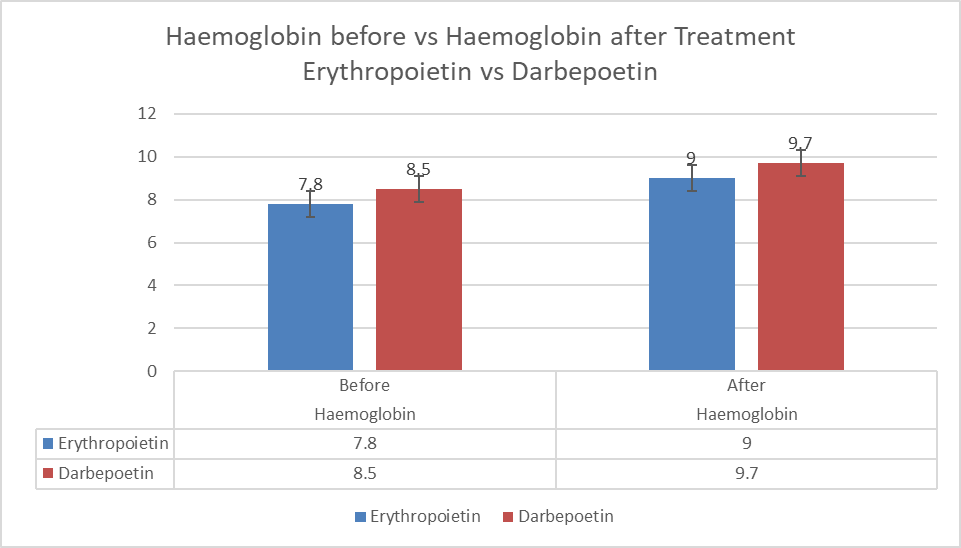
Figure 1: Haemoglobin before vs after treatment Erythropoietin vs Darbepoetin
Figure 1 compares the haemoglobin levels before and after treatment with erythropoietin and darbepoetin. Haemoglobin levels increased in both groups following treatment. The erythropoietin group showed an increase from 7.8 g/dL to 9.0 g/dL, while the darbepoetin group increased from 8.5 g/dL to 9.7 g/dL. The graph demonstrates that both treatments effectively improved haemoglobin levels, with darbepoetin showing slightly higher haemoglobin values than erythropoietin.
Table 3: Comparison of RBCs levels in the study groups.
|
Drug |
RBC Before |
RBC After |
Mean change |
P Value |
|
Erythropoietin |
2.7 ± 0.5 |
3.2 ± 0.5 |
0.5 |
<0.0001 |
|
Darbepoetin |
3.0 ± 0.6 |
3.4 ± 0.6 |
0.4 |
<0.0001 |
Table 3 compares the RBC levels before and after treatment with erythropoietin and darbepoetin. In the erythropoietin group, the mean RBC count increased from 2.7 ± 0.5 to 3.2 ± 0.5, with a mean change of 0.5. In the darbepoetin group, the mean RBC count increased from 3.0 ± 0.6 to 3.4 ± 0.6, with a mean change of 0.4. The increase in RBC count was statistically significant in both groups (p < 0.0001), indicating that both erythropoietin and darbepoetin effectively improved RBC levels.
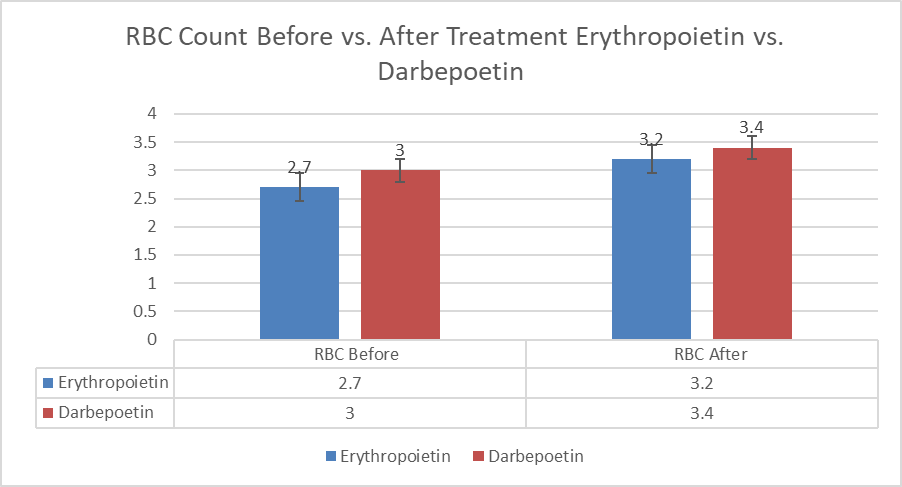
Figure 2: RBC count before vs after Treatment Erythropoietin vs Darbepoetin
Figure 2 compares the RBC counts before and after treatment with erythropoietin and darbepoetin. RBC counts increased in both groups following treatment. The erythropoietin group showed an increase from 2.7 × 10⁶/µL to 3.2 × 10⁶/µL, while the darbepoetin group increased from 3.0 × 10⁶/µL to 3.4 × 10⁶/µL. The graph indicates that both treatments effectively improved RBC counts, with darbepoetin showing slightly higher RBC values than erythropoietin after treatment.
.
Table 4: Comparison of Packed Cell Volume levels in the study groups.
|
Drug |
Packed cell Volume before |
Packed cell Volume after |
Mean change |
P Value |
|
Erythropoietin |
24 ± 4.2 |
27.5 ± 4.5 |
3.5 |
<0.0001 |
|
Darbepoetin |
26 ± 4.0 |
29.5 ± 4.0 |
3.5 |
<0.0001 |
Table 4 compares the packed cell volume (PCV) levels before and after treatment with erythropoietin and darbepoetin. In the erythropoietin group, the mean PCV increased from 24 ± 4.2 to 27.5 ± 4.5, with a mean change of 3.5. In the darbepoetin group, the mean PCV increased from 26 ± 4.0 to 29.5 ± 4.0, also with a mean change of 3.5. The improvement in PCV was statistically significant in both groups (p < 0.0001), indicating that both drugs were effective in increasing packed cell volume.
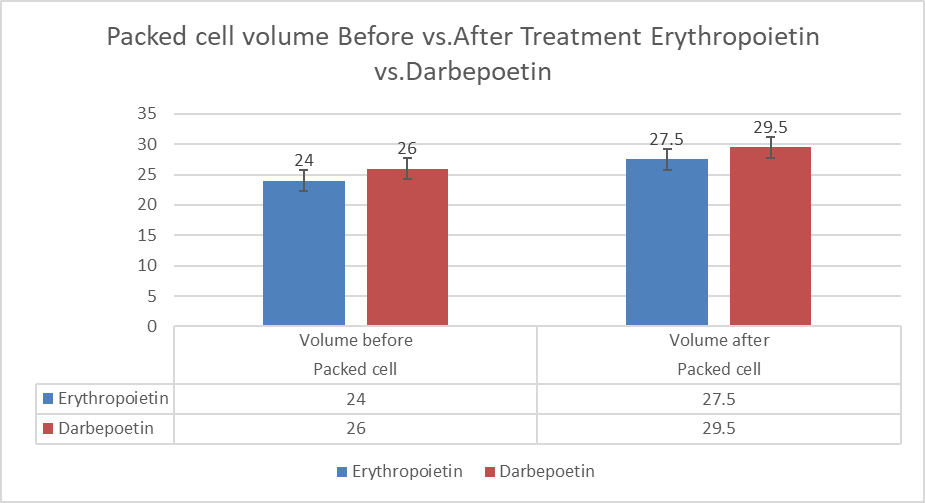
Figure 3: Packed cell volume before vs after Treatment Erythropoietin vs Darbepoetin
Figure 3 compares the packed cell volume (PCV) before and after treatment with erythropoietin and darbepoetin. PCV increased in both groups following treatment. The erythropoietin group showed an increase from 24% to 27.5%, while the darbepoetin group increased from 26% to 29.5%. The graph demonstrates that both treatments effectively improved packed cell volume, with darbepoetin showing slightly higher PCV values than erythropoietin after treatment.
Table 5: Shows the adverse events reported by patients on erythropoietin.
|
Adverse Event |
No.of patients |
Percentage (%) |
|
HTN |
19 |
38% |
|
Headache |
1 |
2% |
|
Joint Pain |
1 |
2% |
|
Vomiting |
1 |
2% |
|
No Adverse events |
28 |
56% |
Table 5 shows the adverse events reported by patients receiving erythropoietin. Out of 50 patients, 19 (38%) experienced hypertension (HTN), while 1 (2%) each reported headache, joint pain, and vomiting. Twenty-eight patients (56%) did not experience any adverse events. These results indicate that hypertension was the most common adverse event, while more than half of the patients tolerated erythropoietin without any adverse effects.
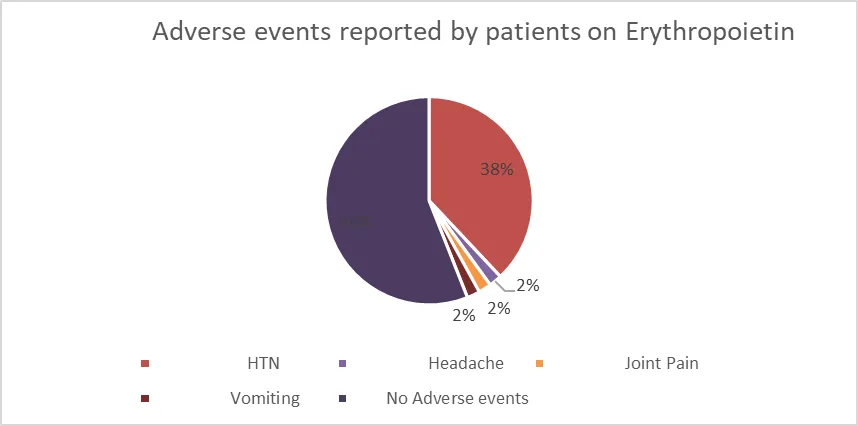
Figure 4: Adverse events reported by patients on Erythropoietin
Figure 4 shows the adverse events reported by patients receiving erythropoietin. Among the patients, 38% experienced hypertension (HTN), while 2% each reported headache, joint pain, and vomiting. The majority of patients (56%) did not experience any adverse events. The chart indicates that hypertension was the most common adverse event, and more than half of the patients tolerated erythropoietin therapy without any adverse effects.
Table 6: Shows the adverse events reported by patients on darbepoetin.
|
Adverse Event |
No.of patients |
Percentage (%) |
|
HTN |
18 |
36% |
|
No Adverse events |
32 |
64% |
Table 6 shows the adverse events reported by patients receiving darbepoetin. Out of 50 patients, 18 (36%) developed hypertension (HTN), while 32 (64%) had no adverse events. This indicates that most patients tolerated darbepoetin well, although hypertension was the most common adverse event observed.
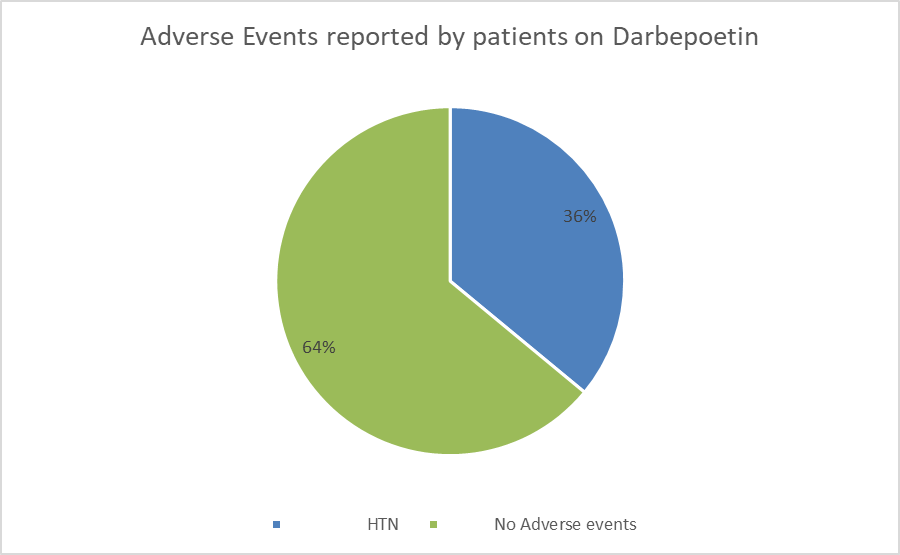
Figure 5: Adverse Events reported by patients on Darbepoetin
Figure 5 shows the adverse events reported by patients receiving darbepoetin. Among the patients, 36% experienced hypertension (HTN), while 64% did not report any adverse events. No other adverse events were observed in the darbepoetin group. The graph indicates that most patients tolerated darbepoetin well, with hypertension being the only reported adverse event.
EFFICACY ASSESSMENT:
The efficacy of treatment was assessed by evaluating changes in haemoglobin (Hb), red blood cells (RBCs), and packed cell volume (PCV) in both groups before and after therapy.
Prior to treatment, the mean ± SD haemoglobin level was 7.8 ± 1.3 g/dL in the erythropoietin (EPO) group and 8.5 ± 1.2 g/dL in the darbepoetin group. Following treatment, haemoglobin levels increased to 9.0 ± 1.4 g/dL and 9.7 ± 1.3 g/dL, respectively. The mean rise in haemoglobin was 1.2 g/dL in both groups, demonstrating a highly significant improvement (p < 0.0001).
Similarly, the mean ± SD RBC count before treatment was 2.7 ± 0.5 million cells/mm³ in the EPO group and 3.0 ± 0.6 million cells/mm³ in the darbepoetin group. Post-treatment values increased to 3.2 ± 0.5 and 3.4 ± 0.6 million cells/mm³, respectively. The mean increase in RBC count was 0.5 in the EPO group and 0.4 in the darbepoetin group, both of which were statistically significant (p < 0.0001).
The mean ± SD PCV levels prior to treatment were 24 ± 4.2% in the EPO group and 26 ± 4.0% in the darbepoetin group. After treatment, PCV values rose to 27.5 ± 4.5% and 29.5 ± 4.0%, respectively. The mean increase in PCV was 3.5% in both groups, with statistically significant improvement (p < 0.0001).
Overall, both erythropoietin and darbepoetin treatments resulted in significant improvements in haematological parameters, with comparable efficacy observed between the two groups.
SAFETY ASSESSMENT:
Along with efficacy, the safety profile of both treatment groups was evaluated by monitoring adverse drug reactions.
Hypertension emerged as the most frequently observed adverse event in both groups. It was reported in 19 patients (38%) in the erythropoietin (EPO) group and in 18 patients (36%) in the darbepoetin group.
In the EPO group, additional adverse effects included headache, joint pain, and vomiting, each occurring in 2% of patients. These events were mild and did not necessitate discontinuation of treatment.
In the darbepoetin group, no other significant adverse events were noted apart from hypertension.
Overall, the frequency and nature of adverse effects were comparable between the two groups, suggesting that erythropoietin and darbepoetin exhibit similar safety profiles.
DISCUSSION
The present study was undertaken to compare the efficacy and safety of erythropoietin (EPO) and darbepoetin in the treatment of anemia among patients with chronic kidney disease (CKD). Anemia is a frequent complication of CKD, mainly resulting from decreased endogenous erythropoietin production, shortened red blood cell (RBC) lifespan, and nutritional deficiencies. Appropriate management of anemia is crucial for improving quality of life, reducing cardiovascular risk, and slowing disease progression.
In this study, both treatment groups showed statistically significant improvements in haemoglobin (Hb), RBC count, and packed cell volume (PCV) following therapy. The mean increase in haemoglobin was 1.2 g/dL in both groups, indicating that erythropoietin and darbepoetin are equally effective in stimulating erythropoiesis. This improvement reflects a favourable bone marrow response to erythropoiesis-stimulating agents (ESAs), leading to enhanced oxygen-carrying capacity.
RBC counts also improved significantly in both groups, with a slightly greater increase observed in the EPO group (0.5) compared to the darbepoetin group (0.4). However, this minor numerical difference is not clinically significant, suggesting similar efficacy between the two treatments. The rise in RBC count further supports the role of ESAs in promoting the proliferation and differentiation of erythroid progenitor cells.
Similarly, PCV levels increased by 3.5% in both groups, demonstrating consistent improvement across all haematological parameters. The parallel rise in Hb, RBC, and PCV indicates a uniform and effective correction of anemia in both treatment groups.
From a pharmacological standpoint, both erythropoietin and darbepoetin act by stimulating erythropoietin receptors in the bone marrow. Darbepoetin, however, has a longer half-life due to the presence of additional sialic acid residues, allowing for less frequent dosing. Despite this pharmacokinetic advantage, the present findings indicate that both agents provide comparable clinical efficacy, consistent with previous studies.
Regarding safety, hypertension was the most commonly reported adverse event in both groups, occurring in 38% of patients receiving EPO and 36% of those receiving darbepoetin. This is a known class effect of ESAs, likely due to increased blood viscosity and vascular resistance associated with rapid correction of anemia. Other adverse events such as headache, joint pain, and vomiting were reported only in a small proportion of patients in the EPO group and were mild in severity.
Importantly, no serious adverse events or treatment discontinuations were observed, indicating that both therapies were well tolerated. The similar incidence of adverse effects in both groups suggests comparable safety profiles, supporting their use in the long-term management of CKD-associated anemia.
An additional consideration is the clinical convenience offered by darbepoetin. Its longer duration of action allows for reduced dosing frequency, which may enhance patient compliance and convenience, particularly in outpatient settings. However, in terms of efficacy, both agents demonstrate equivalent therapeutic benefits.
The study has certain strengths, including the direct comparison of two commonly used ESAs using standardized haematological parameters. Nevertheless, limitations such as a relatively small sample size and short follow-up period may affect the generalizability of the results. Further long-term studies are warranted to assess sustained efficacy, cardiovascular outcomes, and cost-effectiveness.
CONCLUSION
Erythropoietin and Darbepoetin were effective in the treatment of anemia associated with chronic kidney disease. No significant difference was observed in the improvement of haemoglobin, Red blood cell count, and haematocrit levels between the two groups, indicating comparable therapeutic efficacy. Adverse events were reported in both groups; however, a lower incidence was observed with Darbepoetin, suggesting a comparatively better safety profile. Therefore, Darbepoetin may be considered a preferable treatment option, while Erythropoietin remains an effective and well-tolerated alternative.
REFERENCES

Dr. R. Dinesh Kumar, A. Lawrance, Dr. M. Alagarraja, Dr. D. Christopher Vimalson, Effectiveness Of Erythropoietin and Darbepoetin in The Treatment of Chronic Kidney Disease- Associated Anemia, Int. J. of Pharm. Sci., 2026, Vol 4, Issue 7, 5602-5612, https://doi.org/10.5281/zenodo.21672647
 10.5281/zenodo.21672647