

We use cookies to ensure our website works properly and to personalise your experience. Cookies policy
1Ayurveda Consultant, Telemedicine Department, Patanjali Bhartiya Ayurvigyan Evum Anusandhan Sansthan, Patanjali Yogpeeth Phase-I, Haridwar, Uttarakhand, India.
2Fellow of the Royal Society for Public Health, United Kingdom; Associate Member, International Society of Nephrology (ISN).
3Assistant Professor, Department of Dravyaguna, Patanjali Bhartiya Ayurvigyan Evam Anusandhan Sansthan, Patanjali Yogpeeth Phase-I, Haridwar, Uttarakhand, India.
4Professor and Head of Department, Agada Tantra, SCPM Ayurveda College, Gonda, Uttar Pradesh, India.
Asthma and chronic obstructive pulmonary disease (COPD) are chronic respiratory disorders associated with airway inflammation, airflow limitation and recurrent respiratory symptoms. Shwasamrit Herbal Nebulizer is a polyherbal formulation comprising Pushkarmool (Inula racemosa), Vasa (Justicia adhatoda), Bharangi (Clerodendrum serratum) and Kantakari (Solanum virginianum). These plants have a history of use in traditional respiratory care and have been investigated for various phytochemical and pharmacological properties. This article describes the traditional rationale for selecting the four plants, the preparation process using aqueous extraction with a Soxhlet apparatus, and the reported administration procedure. During use, patients with asthma and COPD were reported to experience symptomatic improvement; further study is needed to assess longer-term effects.
Asthma and COPD are important chronic respiratory conditions that may cause cough, wheeze, breathlessness and recurrent exacerbations. Ayurveda describes several medicinal plants traditionally used in conditions associated with cough and difficult breathing. Pushkarmool, Bharangi, Vasa and Kantakari are among the plants associated with this traditional respiratory context. Published reviews describe their traditional uses, phytochemistry and pharmacological investigations, including studies of antiallergic activity for Inula racemosa, anti-inflammatory activity of Clerodendrum serratum, and the pharmacological properties of Justicia adhatoda and Solanum species [1–11]. This article presents the selected plant profiles and describes the preparation and administration procedure of Shwasamrit Herbal Nebulizer.
AIM AND OBJECTIVES
The aim is to describe the traditional rationale, selected plant properties, preparation method and administration procedure of Shwasamrit Herbal Nebulizer for research relating to asthma and COPD. The objectives are to summarise information on the four constituent plants, document the formulation preparation and present relevant literature on their reported pharmacological activities.
BOTANICAL PROFILE AND TRADITIONAL PROPERTIES
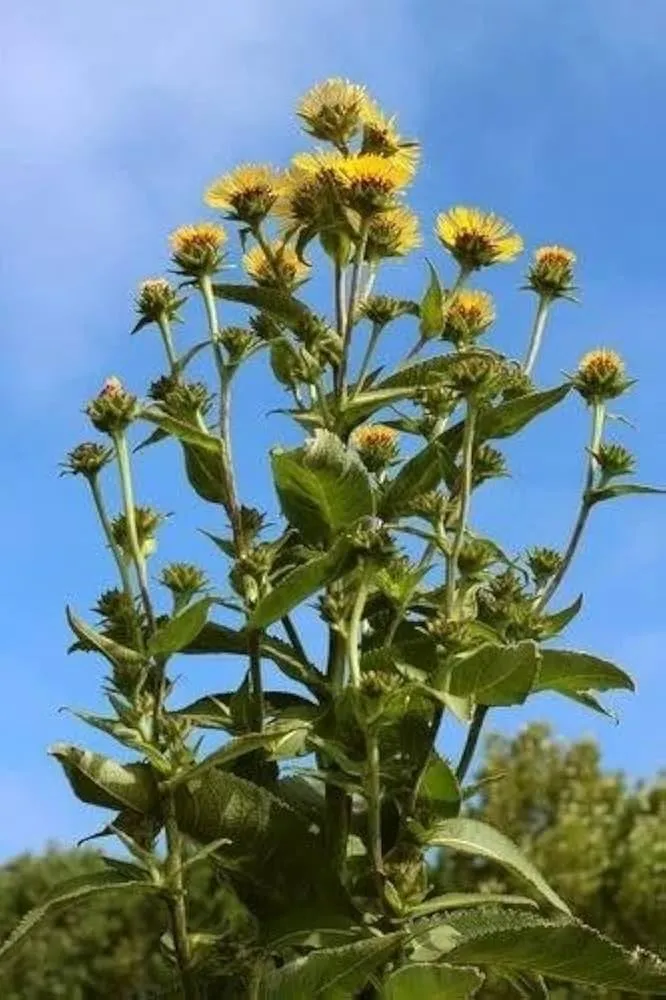
1. Pushkarmool — Inula racemosa
Pushkarmool is a perennial Himalayan herb found in mountainous regions, particularly in parts of the western Himalaya. The root and rhizome are the principal medicinal parts traditionally used. Reported constituents include sesquiterpene lactones, including alantolactone and isoalantolactone. The species has been reviewed for its ethnopharmacology, phytochemistry and conservation, while experimental research has investigated antiallergic activity in rats [1,2].
Pushkarmool
2. Vasa — Justicia adhatoda
Vasa is an evergreen shrub widely distributed across the Indian subcontinent, and its leaves are a major medicinal part. Quinazoline alkaloids, particularly vasicine and vasicinone, are among its best-known constituents. Reviews describe its traditional uses, phytochemistry and pharmacological activities [5,6,9].
3. Bharangi — Clerodendrum serratum
Bharangi is a shrub found in tropical and subtropical parts of the Indian subcontinent and other regions of South and Southeast Asia. Roots and other plant parts have been used in traditional systems, depending on the preparation. Reported chemical groups include flavonoids, phenolic compounds and terpenoids. A preclinical study investigated the effects of Clerodendrum serratum extract on inflammatory mediators in an ovalbumin-induced asthma model in rats [3]. Reviews describe its traditional uses and reported antiasthmatic, antiallergic and anti-inflammatory activities [4,10,11].
4. Kantakari — Solanum virginianum
Kantakari is a prickly herb found in India and other parts of South Asia and is traditionally included in respiratory formulations. Reported constituents include steroidal alkaloids, saponins, flavonoids and other secondary metabolites. Research and reviews on Solanum xanthocarpum discuss antiasthmatic activity and broader phytochemical and therapeutic findings [7,8].
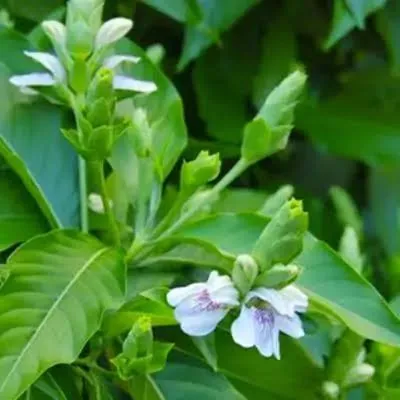
Vasa
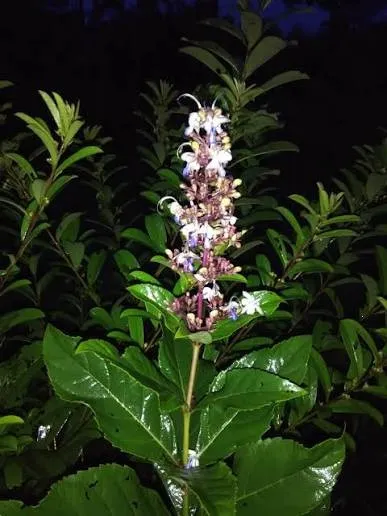
Bharangi
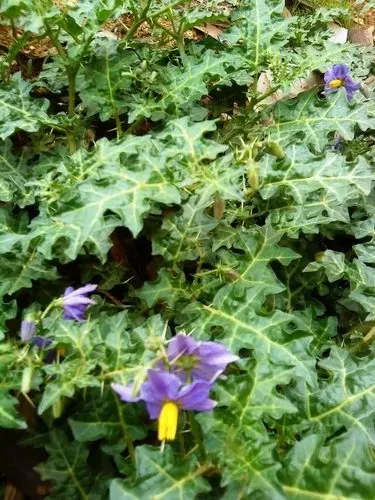
Kantakari
ACTIVE CONSTITUENTS AND THEIR REPORTED PHARMACOLOGICAL ACTIVITIES
| Medicinal plant | Major reported active constituents | Principal reported activity | Potential respiratory relevance |
|---|---|---|---|
| Pushkarmool Inula racemosa |
Alantolactone, isoalantolactone and related sesquiterpene lactones | Primarily reported: antiallergic activity; anti-inflammatory effects also investigated |
Potential relevance to allergic airway inflammation [1,2]. |
| Vasa Justicia adhatoda |
Vasicine, vasicinone and related quinazoline alkaloids | Primarily reported: bronchodilatory and expectorant effects; anti-inflammatory activity also investigated | Potential relevance to airway narrowing and mucus clearance [5,6,9]. |
| Bharangi Clerodendrum serratum | Triterpenoids, triterpenoid saponins and flavonoids | Primarily reported: anti-inflammatory activity; investigated in an experimental asthma model |
Potential relevance to airway inflammation [3,4,10,11]. |
| Kantakari Solanum virginianum |
Steroidal alkaloids, saponins, flavonoids and other phenolic constituents | Primarily reported: antiasthmatic activity investigated in literature on S. xanthocarpum; anti-inflammatory activity also reported |
Potential relevance to respiratory symptoms; species and preparation must be matched [7,8]. |
PREPARATION OF SHWASAMRIT HERBAL NEBULIZER
Ingredients
Preparation Method
The preparation used 25 g of dried extract from each of the four selected medicinal plants, resulting in a total extract weight of 100
g. The extracts were combined with 1,000 mL of water. A Soxhlet apparatus was used for the extraction process. The apparatus facilitates repeated solvent contact through successive cycles of heating, vaporisation, condensation and solvent circulation. The resulting liquid was collected and designated as the Shwasamrit herbal extract.
After preparation, the liquid must be assessed for bacterial and fungal growth. Because a nebulized liquid is delivered as an aerosol directly into the respiratory tract, microbial contamination may be detrimental to health. Microbiological testing and appropriate quality assessment should therefore be completed before any consideration of administration.
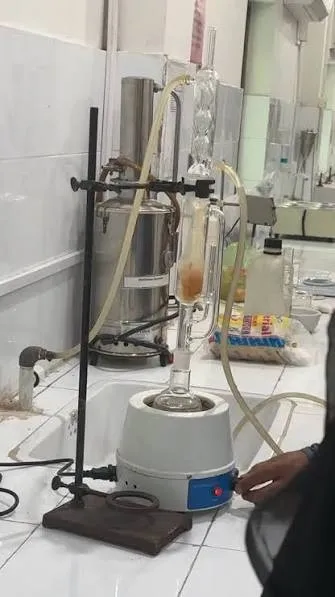
Figure 1: Soxhlet apparatus used during the preparation process.
METHOD OF ADMINISTRATION AND DURATION OF NEBULIZATION
A 3 mL aliquot of the final liquid extract obtained during the preparation of Shwasamrit Herbal Nebulizer was placed in the nebulizer chamber for administration. Each nebulization session lasted approximately 10–12 minutes, continuing until visible aerosol emission ceased. The administration schedule was adjusted according to disease severity, with nebulization performed once, twice, or three times daily.
CONCLUSION
Shwasamrit Herbal Nebulizer comprises Pushkarmool, Vasa, Bharangi and Kantakari. During its use in patients with asthma and COPD, good results were observed, and patients reported symptomatic improvement. Further study is required to evaluate the formulation systematically and estimate its long-term effects. The prepared liquid should be assessed for bacterial and fungal growth before administration because contamination in a nebulized liquid may be detrimental to health.
REFERENCES



Dr. Abdul Aleem, Vaidhshiromani Dheeraj Sharma, Dr. Rajesh Kumar Mishra, Dr. Gv. Karunakar, Efficacy and Therapeutic Potential of Shwasamrit Herbal Nebulizer in Asthma and Chronic Obstructive Pulmonary Disease (COPD), Int. J. of Pharm. Sci., 2026, Vol 4, Issue 10, 4181-4185. https://doi.org/10.5281/zenodo.23685478
 10.5281/zenodo.23685478