

We use cookies to ensure our website works properly and to personalise your experience. Cookies policy
Laddha college of pharmacy yelgao Buldhana
Many people suffer from an inflamed lung condition known as asthma. A variety of widely employed inhalers provide temporary relief but require frequent use, potentially resulting in indacterol management of symptoms. Various forms of asthma encompass conditions such as allergic asthma, non-allergic asthma, adult onset asthma, exercise-induced bronchospasm (EIB), occupational asthma, asthma-COPD overlap syndrome, and pediatric asthma. A sustained-release mechanism refers to altering drugs or their formulations so they maintain active effects for an extended period of time. A sustained-release medication administration method facilitates addressing this issue by gradually dispensing the therapeutic agent for an extended duration. Indacterol acts as a potent long-lasting beta2-receptor stimulant offering sustained bronchial dilation over an extended period of twenty-four hours. It predominantly functions within chronic obstructive pulmonary disease contexts; its therapeutic prospects show significant promise for managing asthmatic conditions. Alginates capsules degrade naturally without harm; they’re secure for controlled medication release over time. The article examines how indacterol-filled alginate capsules can effectively manage chronic obstructive pulmonary disease symptoms over extended periods. A once-daily dose regimen consisting of either 200 ?g or 400 ?g of indacterol resulted in prolonged bronchial dilation over an entire day, characterized by swift action and favorable side effect profiles. More recent research indicates that alginate bead configurations effectively manage indacterol delivery by controlling its release rate while ensuring sustained therapeutic concentrations remain stable over time, thereby decreasing the need for frequent doses and offering an innovative strategy in enhancing asthma treatment efficacy.
Many people suffer from an inflamed lung condition known as asthma. Asthma incidence is on the rise globally, suggesting an anticipated surge among asthmatic individuals due primarily to our current lifestyle choices which introduce harmful elements into our environment. More than three hundred million individuals suffer from asthma, which significantly contributes to health issues. Asthma treatment varies based on its nature; it typically involves using quick-relief bronchodilators like short-acting beta agonists, persistent inhalers such as inhaled corticosteroids for chronic control, and sustained-release agents for prolonged relief. Indacterol acts as an ultra-short-duration beta agonist capable of inducing bronchial dilation lasting approximately twenty-four hours, thus being appropriate for continuous medication administration. Nevertheless, traditional methods necessitate regular administration, while aerosol treatments may lead to inconsistent distribution of medication within the respiratory system. Systems made of biopolymers like alginate capsules allow for controlled delivery of drugs over time, potentially enhancing treatment efficacy and benefiting patients’ health outcomes. The objective of this research project is to assess how different levels of indacterol affect breathing for people who have either short-term or ongoing wheezing issues.
2. Background
2.1Pathophysiology of Asthma
Chronic bronchitis involves persistent lung irritation leading to narrowed air passages, increased mucus secretion, and alterations in airway tissue composition over time. This ailment exhibits intricate immunological reactions primarily characterized by activation of T helper type 2 cells, eosinophils, and antibodies specifically bound to IgE molecules. Asthma management necessitates more than merely opening up narrowed air passages; it involves reducing the chronic inflammatory response as well.
Asthma’s underlying mechanisms are intricate and encompass several elements:
Airway inflammation
Intermittent airflow obstruction
Bronchial hyperresponsiveness
Airway remodeling
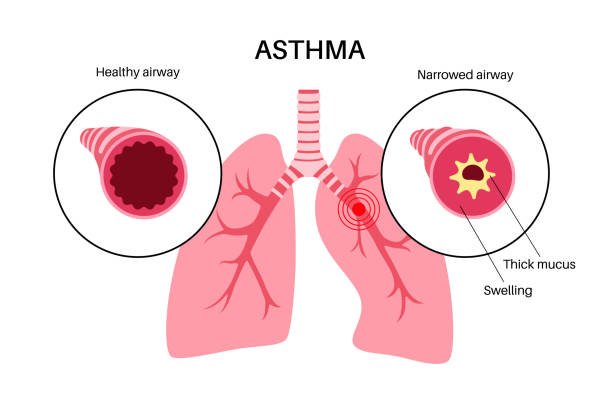
Fig. 1 Asthma
2.2 Indacterol : Pharmacology and healing function
Indacterol is a selective β? -adrenergic receptor agonist that helps relax the airway easy muscular tissues for a protracted duration. It acts quickly and has a long period of action, permitting as soon as-day by day dosing. In patients with COPD, indacterol improves lung function, reduces signs and symptoms, and improves exceptional of existence. Indacterol is a novel chirally pure inhaled extremely-LABA. inside a series of 8-hydroxyquinoline 2-aminoindan derived β?--adrenoceptor agonists, lipophilicity was used as the premise for the design and rationalization of their onset and duration of motion profiles, as assessed by a guinea pig tracheal-strip assay. in addition to lipophilicity, potency and intrinsic efficacy have additionally been proven to be contributing factors in regulating those in vitro time route profiles. decided on from those research became the five,6-diethyl substituted indan analogue, (R)-5-{2-[(5,6-diethyl-2,3-dihydro-1H-inden-2-yl)amino]-1-hydroxyethyl}-8-hydroxyquinolin-2(1H)-one, indacterol. extensive preclinical research related to indacterol were done both in vitro and in vivo and feature documented that it demonstrates a unique fast onset of movement and a bronchodilating effect that lasts for 24 h
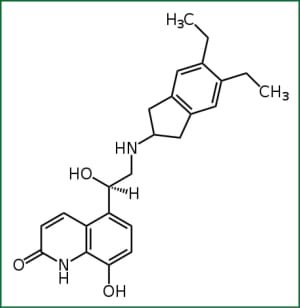
Fig.2 Indacterol stucture
Pharmacological profile of indacterol
|
Parameter |
Description |
|
Drug class |
ULABA |
|
Onset of action |
Rapid |
|
Half-life |
Long |
|
Therapeuticuse |
COPD |
|
Dosing frequency |
Once daily |
|
Main benefit |
Sustained bronchodilation |
3.Sustained launch Drug delivery systems
Sustained release drug transport systems are designed to release the drug slowly over an extended period of time, in order that the drug level stays inside the powerful therapeutic variety. This enables avoid very excessive or very low drug concentrations inside the body. those structures reduce the want for frequent dosing, improve patient compliance, and decrease facet outcomes. distinct materials together with polymers, liposomes, and hydrogels had been studied for use in sustained drug transport. The benefits of administering a single dose of a drug that is released over an extended period of time, in preference to numerous doses, have been apparent to the pharmaceutical industry for a while. typically sustained launch merchandise offer an instantaneous launch of drug that promptly produces the desired healing effect, accompanied with the aid of slow release of extra amounts of drug to keep this impact over a predetermined duration.
4.Alginate Bead systems
4.1 Properties of Alginate
Alginate is a herbal polymer obtained from brown seaweed. it's far made up of two fundamental components: β?-D-mannuronic acid and β?-L-guluronic acid. Alginate can form a gel while it comes in touch with divalent ions which include calcium, which makes it appropriate for forming beads. Alginate is secure, biodegradable, and non-poisonous, and is extensively utilized in controlled release formulations .
4.2Preparation strategies
common strategies for alginate bead guidance encompass :
Ionotropic gelation: Dripping alginate solution into calcium chloride to form gel beads .
Emulsion go-linking: generating smaller beads with the aid of emulsifying alginate in oil earlier than go-linking .
Spray drying: producing dry particulate beads for inhalation or oral administration .
5 Indacaterol-Loaded Alginate Bead systems
5.1 formulation techniques
Indacaterol is typically delivered to alginate beads through first mixing the drug with a sodium alginate answer and then forming beads the use of calcium ions. additional substances including chitosan, poloxamers, or cyclodextrins may be delivered to enhance drug loading and better manipulate the drug release.
5.2 Characterization
Key parameters evaluated in indacaterol alginate beads consist of:
Particle size distribution: influences drug release and ability inhalation suitability.
Encapsulation efficiency: percentage of drug correctly included .
Morphology: floor characteristics seen through SEM .
In vitro launch: Assessed in simulated lung fluid or buffer answers . outcomes from current research show controlled launch extending as much as 24–forty eight hours, relying on method composition .
5.3Mechanism of Drug launch
Drug launch from alginate beads occurs via:
Diffusion: Drug diffuses thru gel matrix .
Matrix erosion: sluggish breakdown of alginate in physiological situations . release kinetics regularly follow non-Fickian or anomalous shipping, with contributions from each diffusion and polymer rest
6.benefits of Sustained Indacaterol transport via Alginate Beads
stepped forward compliance: much less frequent dosing as compared to traditional inhalers .
strong plasma levels: Minimizes peaks and troughs related to frequent administration .
reduced aspect outcomes: lower systemic exposure reduces cardiovascular dangers .
capability for opportunity routes: Oral or managed pulmonary transport with sustained impact .
7.challenges and concerns
7.1 stability and garage
Alginate beads may be sensitive to humidity and temperature, requiring appropriate packaging and storage .
7.2 Scale-Up and production
Reproducibility and scalability want optimization to fulfill industrial requirements .
7.3 Regulatory and protection issues
protection of sustained inhaled formulations need to be carefully set up via clinical research.
eight.
8.FUTURE PERSPECTIVES
research ought to awareness on:
Optimizing release profiles via polymer modification
In vivo studies to validate pharmacokinetics and healing efficacy .
combination healing procedures: Incorporating 07b031025f5f96dfa8443f843db463b6 agents for dual movement .
focused delivery to particular lung regions the usage of particle engineering
CONCLUSION
Indacaterol-loaded alginate bead systems represent a promising method to enhance bronchial asthma manipulate thru sustained drug release. This technique can improve affected person adherence, hold therapeutic efficacy over extended intervals, and doubtlessly lessen systemic facet effects. even as demanding situations remain in components optimization and clinical translation, persisted research may establish those structures as feasible alternatives to conventional bronchodilator remedy.
REFERENCES

Deeppradnya Mane, Enhancing Asthma Control Through Sustained Release Delivery: A Review of Indacterol – loaded Alginate Bead Systems, Int. J. of Pharm. Sci., 2026, Vol 4, Issue 3, 1413-1418. https://doi.org/10.5281/zenodo.19000773
 10.5281/zenodo.19000773