

We use cookies to ensure our website works properly and to personalise your experience. Cookies policy
Delonix Society’s Baramati College Of Pharmacy, Barhanpur Baramati.
Pomegranate (Punica granatum) leaves are a valuable source of natural bioactive substances known for their notable antioxidant properties. This study examines the antioxidant capacity of these leaves and explores their potential pharmaceutical relevance. Extracts obtained using various solvents have shown potent free radical scavenging effects, primarily due to the presence of phenolic compounds, flavonoids, tannins, ellagic acid, gallic acid, and other polyphenols. Common in vitro methods such as DPPH, ABTS, FRAP, and reducing power assays have been used to evaluate this activity. Of the tested extracts, those prepared with methanol and ethanol exhibited the strongest antioxidant performance, reflected by their low IC?? values, which indicate high efficiency in neutralizing radicals. The antioxidant strength of pomegranate leaves is closely linked to their rich content of phenolics and flavonoids. These compounds play a key role in counteracting reactive oxygen species and mitigating oxidative stress—factors implicated in aging, inflammation, heart disease, diabetes, neurodegenerative conditions, and cancer. Emerging research also highlights additional biological effects of pomegranate leaf extracts, such as anti-inflammatory, antimicrobial, cytotoxic, and anti-cholinesterase activities. As a result, these leaves hold promise as a natural antioxidant resource with potential uses in pharmaceuticals, dietary supplements, and functional foods. However, further in vivo and clinical studies are needed to confirm their safety and effectiveness for medical applications.
Herbal medicine, also known as phytotherapy, refers to the use of plant-based substances to prevent and treat illnesses. It plays a central role in long-standing medical traditions like Ayurveda, Traditional Chinese Medicine, and Unani, all of which have been used for hundreds of years.
In recent times, interest in herbal medicine has grown worldwide, driven by its natural sources, therapeutic promise, and generally lower risk of side effects. According to the World Health Organization, a significant portion of people around the globe rely on herbal treatments for their primary health needs. These plants contain a range of biologically active components—such as alkaloids, flavonoids, and terpenoids—that demonstrate medicinal properties like antioxidant, anti-inflammatory, and antimicrobial actions.
Despite its benefits, the field faces challenges including inconsistent standardization, quality control problems, and possible interactions with conventional drugs, underscoring the importance of scientific evaluation. To ensure safety, effectiveness, and broader integration into modern healthcare, it is crucial to combine traditional wisdom with rigorous scientific research.
A.Macroscopic Organoleptic Traits
i.?????????Colour: Green to dark green
ii.?????????Odor: Characteristic, slightly aromatic
iii.?????????Taste: Astringent
iv.?????????Shape: Lanceolate to oblong
v.?????????Size: 2–8 cm long and 1–2 cm wide
vi.?????????Surface: Smooth, glossy (glabrous)
vii.?????????Margin: Entire
Pointed at the top, either sharp or blunt
ix.?????????Arrangement: Opposite or sub-opposite
B. Microscopic Characters :
A skin layer sits up top, covered by a faint film. One cell thick, it holds a delicate outer shield in place
ii.?????????Stomata: Mostly present on the lower (abaxial) surface (anisocytic type)
iii.?????????Mesophyll: Differentiated into
Down near the top of the leaf, tightly packed columns of stretched cells do most of the sunlight catching. These green-packed rods stand shoulder to shoulder, loaded with tiny solar harvesters called chloroplasts
b.????Spongy parenchyma: Loosely arranged with intercellular spaces
iv.?????????Vascular bundles: Collateral type consisting of xylem and phloem
v.?????????Trichomes: Generally absent (glabrous leaf surface)
C. Powder Characteristics :
A dusty green tint marks the substance. Its smell stands out, hard to miss. Not quite like anything else nearby
ii.?????????Presence of:
Little pieces of skin-like plant cells showing tiny openings
b.????Xylem vessels (spiral and annular thickening)
c.?????Fibers
Tiny calcium oxalate crystals might show up now and then
D. Phytochemical Constituents:
From time to time, pomegranate leaves hold natural elements that include.
Flavonoids (e.g., quercetin, kaempferol)
Tannins
Phenolic compounds
Alkaloids
Glycosides
Terpenoids
Chemicals inside them shape how they work in living things.
E.Pharmacological Activities :
Antioxidant activity
Anti-inflammatory activity
Antimicrobial activity
Antidiabetic potential
Wound healing properties
F.Identification Tests:
Blue-black means phenols show up here when tested with ferric chloride
A pink or red tint shows up when flavonoids are present - that’s what a positive Shinoda test looks like. Color change means compounds were found during analysis
Soap-like bubbles show up when shaken. That hints at saponins being there
G.Uses in Traditional Medicine:
In systems like Ayurveda, pomegranate leaves are used for:
Treating diarrhoea and dysentery
Managing inflammation and infections
Promoting wound healing
H. Chemical Components Found in Pomegranate Leaves
Flavonoids: quercetin, kaempferol, luteolin
Gallic acid shows up in some plants as a phenolic compound. Ellagic acid joins it, often found where gallic derivatives break down. Chlorogenic acid appears too, forming when quinic and caffeic components link through ester bonds
Tannins: ellagitannins (punicalagin, punicalin)
Some of these substances deliver powerful antioxidant effects while also tackling inflammation. Strong protective actions come from their ability to neutralize damage plus ease swelling at once. They work on multiple fronts, blocking harmful processes inside cells yet calming immune responses too.
1. Alkaloids
Found in small amounts
Playing a role in fighting microbes while supporting body functions
2. Glycosides
Flavonoid glycosides and other phenolic glycosides
Play a role in bioavailability and therapeutic effects
3. Terpenoids and Triterpenes
Ursolic acid
Oleanolic acid
Some show traits that fight swelling, guard liver cells, help slow cancer growth.
4. Sterols
β-sitosterol
Campesterol
Important for cholesterol-lowering and anti-inflammatory effects
5. Saponins
Found in tiny quantities
With a reputation tied to balancing immunity alongside fighting microbes
1.6 Macroscopy and Morphology of Pomegranate Leaves.
Pomegranate, known scientifically as Punica granatum and part of the Lythraceae family, carries clear physical traits useful in recognition and quality checks. Though small in detail, its shape and outer appearance stand out enough to be reliably spotted. Features like fruit structure, leaf arrangement, and flower form help set it apart from similar plants. These visible clues matter when confirming identity for study or use. Each trait adds a piece to how experts assess authenticity and condition.
I. Macroscopic (Organoleptic) Characters
Young leaves start off pale green. As they grow, a deeper green takes over. Not at first - only when maturity sets in does the shade darken. Early stages show brightness. Later comes richness. What begins soft ends bold. Green shifts as life moves forward
Odor: Faint, characteristic
Taste: Slightly astringent
Texture: Smooth, glossy surface (glabrous)
J. Morphological Characters
Leaf type: Simple
Leaves grow across from each other - or nearly so - now and then bunched together
Shape: Lanceolate to oblong
Some stretch no more than 8 centimeters long, yet stay narrow at just a couple wide. Around two centimeters mark their shortest span, while breadth often fits within one. Lengths differ slightly - some hit near 2, others creep toward 8. Width stays tight, never exceeding 2. A few measure thin as 1, especially when slender
Smooth all around the outside edge
Apex: Acute to obtuse
Base: Narrow or attenuated
A bit of stem might show, though most times there is none at all. Stalks here tend to be stubby, sometimes missing completely
Surface: Glabrous (without hairs), shiny
Branching out from a strong central line, the leaf shows pinnate venation. Side veins stretch outward, clearly visible. A bold midrib runs its full length. These features mark the pattern distinctly
K. Introduction to Antioxidant Activity
Antioxidants are biologically active substances that help shield cells from oxidative damage caused by free radicals and reactive oxygen species (ROS). These unstable molecules arise naturally during metabolism and can also be triggered by environmental exposures such as pollution, radiation, cigarette smoke, and stress. When produced in excess, they lead to oxidative stress, which can harm essential cellular components like lipids, proteins, and DNA. This imbalance is closely linked to the onset of chronic conditions including cancer, diabetes, heart disease, neurodegenerative disorders, and accelerated aging.
Interest in plant-based antioxidants has grown significantly due to their natural origin, favorable safety profile, and potential health benefits. Many medicinal plants contain diverse phytochemicals—such as flavonoids, phenolic compounds, tannins, alkaloids, and terpenoids—that exhibit strong antioxidant effects. These compounds work by donating electrons or hydrogen atoms to neutralize free radicals, thus preventing cellular damage and supporting overall cell function. As a result, natural antioxidants are being increasingly studied as viable alternatives to synthetic ones in both pharmaceutical and food applications.
L. Importance of In Silico Studies
In silico approaches play a crucial role in the study of herbal medicines by enabling researchers to predict the biological activity of phytochemicals, identify potential molecular targets, and assess characteristics like drug-likeness and toxicity. These computational methods reduce reliance on time-consuming and resource-intensive laboratory tests, streamline the discovery of promising lead compounds, and support their refinement. By offering insights into how plant-derived substances interact at the molecular level, in silico tools enhance understanding of their mechanisms of action.
1.Aim of the Study:
The main goal of this research is to assess the antioxidant properties of pomegranate leaves (Punica granatum L.) and explore their potential as a natural source of antioxidant compounds. This will be accomplished through pharmacognostic, phytochemical, and in vitro analyses.
2. Study Objectives:
To meet this aim, the following steps will be undertaken:
1. Collecting and verifying the identity of the plant material
2. Conducting a pharmacognostic assessment
3. Processing and extracting the plant sample
4. Performing initial phytochemical tests
5. Assessing antioxidant activity
6. Determining the bioactive components present
7. Comparing results with established antioxidant standards
8. Providing scientific validation and discussing pharmaceutical relevance
II.LITERATURE REVIEW:
1. Vimukthi et al. (2025)
Vimukthi and co-workers investigated the phytochemical and antioxidant properties of Punica granatum leaves and explored their use in functional beverages. The study evaluated total phenolic content, flavonoid content, and antioxidant activity using DPPH and ORAC assays. Results demonstrated significant antioxidant potential in pomegranate leaves, supporting their application as a natural antioxidant source in nutraceutical and herbal formulations.
2. Foglietta et al. (2025)
Foglietta et al. examined the antioxidant activity of pomegranate leaf extracts and their metabolites in cellular systems. Their findings revealed that leaf extracts effectively maintained cellular redox balance and reduced oxidative stress. The study confirmed that pomegranate leaves possess strong antioxidant compounds capable of protecting cells against oxidative damage.
3. Gullón et al. (2023)
Gullón and colleagues studied the valorization of Punica granatum leaf extracts as a source of bioactive molecules. Different extraction techniques including maceration, ultrasound, and microwave-assisted extraction were used. The extracts exhibited high phenolic and flavonoid content with notable antioxidant activity, indicating that pomegranate leaves are a valuable source of natural antioxidants for pharmaceutical applications.
4. Pereira et al. (2023)
Pereira et al. published a comprehensive review on Punica granatum leaves highlighting their bioactive compounds and biological activities. The review emphasized the presence of gallic acid, ellagic acid, and tannins responsible for strong antioxidant effects. The authors concluded that pomegranate leaves possess considerable potential for food, medicinal, and technological applications due to their antioxidant profile.
5.Yu et al. (2021)
Yu and co-authors conducted phytochemical and antioxidant analysis of several medicinal plants including Punica granatum leaves. Spectrophotometric and chromatographic analyses confirmed the presence of high phenolic content and free radical scavenging activity. The study suggested that pomegranate leaves may serve as effective natural antioxidants and contribute to disease prevention.
6. BenNasr et al. (2013)
BenNasr and colleagues assessed antioxidant, anti-inflammatory, and cytotoxic activities of pomegranate leaf extracts prepared using solvents of varying polarity. Methanolic extracts showed excellent DPPH and ABTS radical scavenging activity owing to their high phenolic and flavonoid concentrations. The study established methanol as an efficient solvent for extracting antioxidant compounds from pomegranate leaves.
III. Plan of work:
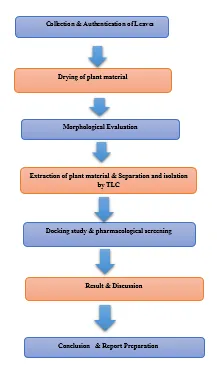
IV. MATERIALS METHOD AND EQIPMENT :
A. Plant material :- The punica granatum leaves were used for experimental purpose
B. Chemicals :
Table No.1 List of Chemicals Used for Antioxidant Property of Punica granatum leaves
|
Sr. No. |
Chemical/Reagent |
Purpose/Use |
|
1 |
Methanol |
Solvent used for extraction of phytoconstituents |
|
2 |
Ethanol |
Alternative extraction solvent |
|
3 |
Distilled Water |
Preparation of solutions and washing |
|
4 |
DPPH (2,2-Diphenyl-1-picrylhydrazyl) |
Determination of antioxidant activity |
|
5 |
Ascorbic Acid |
Standard antioxidant for comparison |
C. Equipments:-
Table No.2 List of Equipment Used for Antioxidant Property of Punica granatum leaves
|
S. No. |
Equipment |
Purpose |
|
1 |
Soxhlet apparatus |
Extraction of phytoconstituents |
|
2 |
Heating mantle |
Heating during extraction |
|
3 |
Condenser |
Solvent condensation |
|
4 |
Round-bottom flask |
Extraction solvent container |
|
5 |
Mechanical grinder |
Powder preparation |
|
6 |
Hot air oven / drying chamber |
Drying (if required) |
|
7 |
Analytical balance |
Accurate weighing |
Collection, authentication and cleaning of raw material:
1.Collection:
Fresh pomegranate leaves were gathered from healthy, disease-free plants in a suitable geographic area. Only high-quality leaves were selected to ensure purity and suitability for antioxidant analysis.
2. Authentication:
A qualified botanist or plant taxonomist verified the plant material to confirm its correct botanical identity. This step was essential to ensure the accuracy and credibility of the study.
3. Cleaning:
The collected leaves were thoroughly rinsed with clean water to eliminate dust, soil, and other contaminants. Following washing, they were dried in the shade to avoid exposure to direct sunlight, which helps preserve their bioactive compounds and prevent contamination.
Extraction of Plant Material:
1. Shade-dried leaves were ground into coarse powder using a mechanical grinder.
2. The powdered material was weighed accurately and stored in an airtight container to prevent moisture absorption.
3. Extraction was carried out using solvents such as methanol, ethanol, or hydroalcoholic mixtures based on phytochemical polarity.
4. The extraction process employed either Soxhlet extraction or maceration technique.
5. Solvent penetrated the plant material and dissolved the active phytochemical constituents.
6. Extraction was continued for sufficient time to achieve maximum recovery of bioactive compounds.
7. The extract was filtered to remove plant residue and insoluble particles.
8. Filtrate was concentrated using a water bath or rotary evaporator under controlled temperature conditions.
9. The concentrated extract was dried and stored in sealed containers at low temperature.
10. Extraction yield was calculated to evaluate extraction efficiency.
11. Temperature was carefully controlled to protect heat-sensitive compounds like flavonoids and phenolics.
12. The dried extract was characterized based on color, texture, and physical consistency.
13. Proper handling and storage were maintained to prevent microbial contamination and oxidation.
14. The prepared extract served as the main sample for phytochemical screening and antioxidant studies
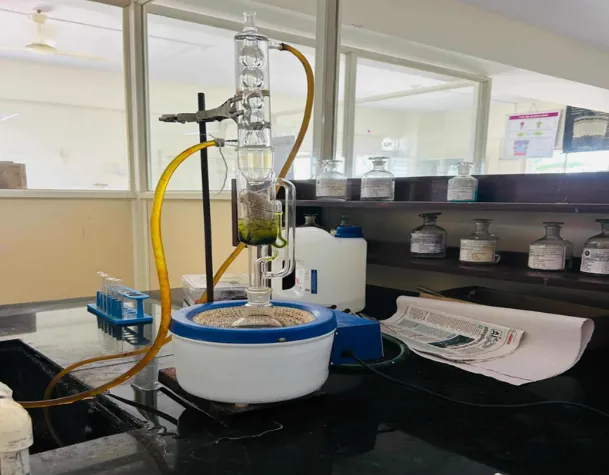
Fig No1. Soxhlet extraction apparatus
Molecular Docking:
Molecular docking is a computational method used to simulate and predict how a ligand such as a bioactive compound interacts with a specific protein target. It provides insights into the binding strength, spatial orientation, and stability of phytochemicals when bound to the protein’s active site. This technique plays a key role in drug development and pharmacological research by helping identify promising therapeutic candidates.
In antioxidant research, molecular docking can assess how phytochemicals from pomegranate leaves interact with proteins involved in oxidative stress and free radical production. The 3D structure of the target protein is typically retrieved from the Protein Data Bank (PDB), while ligand structures are generated using chemical modeling or molecular design software.
The docking procedure includes preparing both the protein and ligand structures, eliminating water molecules, minimizing energy configurations, and defining the active site. Tools like AutoDock, AutoDock Vina, PyRx, and Discovery Studio are frequently employed for these analyses. Following docking, researchers examine binding energies and interaction types—including hydrogen bonds, hydrophobic contacts, and van der Waals forces.
Generally, a lower binding energy or docking score suggests a more stable and favorable interaction between the ligand and the protein. This approach offers preliminary support for the biological activity of plant compounds and helps hypothesize their mechanism of action prior to experimental validation. As a result, molecular docking is valued as an efficient, economical, and time-saving tool in contemporary pharmaceutical and natural product research.
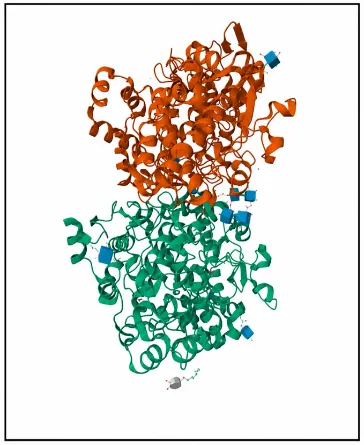
Fig No 2..Three dimensional structure of 5JW1 protein
V. RESULTS AND DISCUSSION:
Extraction and Phytochemical Analysis
Collection, Authentication, and Drying of Plant Material
A. Collection: Punica granatum was selected for experimental use and collected from Barhanpur, Baramati, in the Pune district of India.
B. Authentication: The plant specimen was verified and authenticated at Shardabai Pawar Mahila Arts, Commerce and Science College in Shardanagar, Baramati.
C. Drying: The collected plant material was first dried under shade, then ground into a fine powder using an electric grinder, and subsequently subjected to further drying to ensure proper preservation and consistency for analysis.
Extraction
Table No 3.Organoleptic Characteristics and Percentage Yield of Methanolic Extract of Punica granatum Leaves
|
Sr. No. |
Parameter |
Observation |
|
1 |
Extract |
Methanolic extract of Punica granatum leaves |
|
2 |
Colour |
Dark green to greenish-brown |
|
3 |
Odour |
Characteristic / slightly aromatic |
|
4 |
Physical Nature |
Semisolid, sticky or gummy mass |
|
5 |
Percentage Yield (% w/w) |
10–20 % w/w |
ANTIOXIDANT ACTIVITY
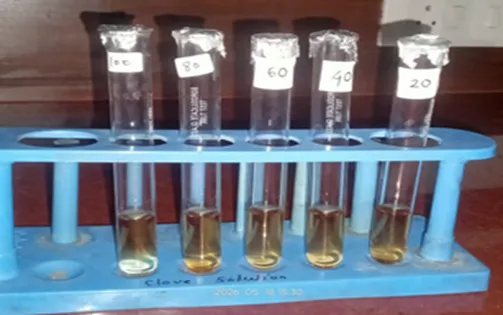
The DPPH assay (2,2-diphenyl-1-picrylhydrazyl assay) is a straightforward and commonly used in-vitro technique for assessing the antioxidant capacity of plant extracts. DPPH is a stable free radical that exhibits a distinct violet color. When antioxidants in the extract transfer hydrogen atoms or electrons to DPPH, the radical is neutralized, resulting in a color shift from violet to yellow. This color change is quantified using a UV-Visible spectrophotometer at a wavelength of 517 nm.
Control Absorbance (DPPH solution only) = 0.800
TABLE No.4.DPPH ASSAY RESULTS
|
Sr. No. |
Concentration (µg/mL) |
Absorbance of Standard (Ascorbic Acid) |
% Inhibition (Standard) |
Absorbance of Sample (Pomegranate Leaf Extract) |
% Inhibition (Sample) |
|
1 |
20 |
0.62 |
22.5 |
0.71 |
11.3 |
|
2 |
40 |
0.51 |
36.2 |
0.65 |
18.8 |
|
3 |
60 |
0.42 |
47.4 |
0.59 |
26.3 |
|
4 |
80 |
0.32 |
59.9 |
0.52 |
35.0 |
|
5 |
100 |
0.24 |
69.9 |
0.44 |
45.0 |
|
6 |
120 |
0.17 |
78.8 |
0.36 |
55.0 |
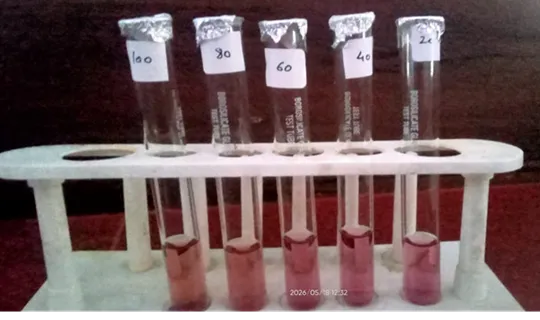
Phytochemical Test :
Table No 5. Phytochemical Test For Punica granatum Leaves
|
Sr. No. |
Phytochemical Constituent |
Phytochemical Test |
Observation |
Presence |
|
1 |
Alkaloids |
Mayer’s Test |
Cream precipitate |
Present (+) |
|
2 |
Flavonoids |
Shinoda Test |
Pink/Red colour |
Present (+) |
|
3 |
Tannins |
Ferric Chloride Test |
Blue-black/Green colour |
Present (+) |
|
4 |
Phenolic Compounds |
Ferric Chloride Test |
Dark green/Blue colour |
Present (+) |
|
5 |
Saponins |
Foam Test |
Persistent foam |
Present (+) |
|
6 |
Glycosides |
Keller–Killiani Test |
Brown ring formation |
Present (+) |
|
7 |
Terpenoids |
Salkowski Test |
Reddish-brown interface |
Present (+) |
|
8 |
Steroids |
Liebermann–Burchard Test |
Green colour |
Present (+) |
|
9 |
Proteins |
Biuret Test |
Violet colour |
Absent (–) |
|
10 |
Carbohydrates |
Molisch’s Test |
Violet ring |
Present (+) |
Top of Form
Molecular Docking Study
Table No 6.Molecular docking result examination of bioactive substances Galic Acid against the protein 5JW1
|
Sr. No. |
Compound Name |
Protein (PDB ID) |
Binding Affinity (kcal/mol) |
Pi–Sigma Interaction |
Pi–Alkyl Interaction |
Van der Waals Interaction |
Other Interactions |
|
1 |
Gallic Acid |
5JW1 |
-6.3 |
_ |
ALA 203 |
LEU 391 PHE 201 ALA 200 TRP 388 |
GLN 204 |
Result of Molecular docking result examination of bioactive substance of Galic Acid against the protein 5JW1 :
A molecular docking analysis of gallic acid with the target protein 5JW1 (Cyclooxygenase-2, COX-2) revealed favorable interactions in the protein's active site. The compound showed a binding affinity of −6.3 kcal/mol, suggesting a moderate ability to bind to the protein. The results indicate that gallic acid fits well within the binding pocket of 5JW1, stabilized by several molecular interactions.
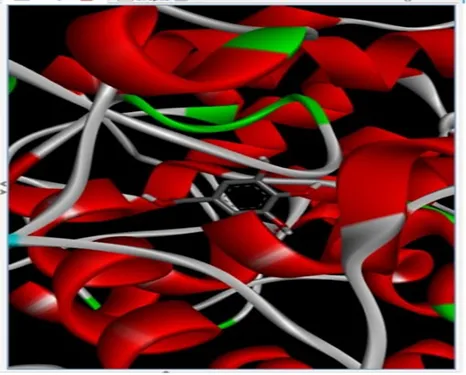
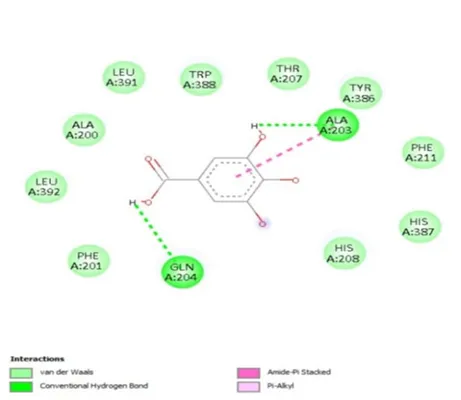
Fig No 4.Two Dimensional and Three Dimensional interaction of Galic Acid against receptor 5JW1
CONCLUSION
In summary, this study confirms that pomegranate (Punica granatum) leaves exhibit notable antioxidant properties, attributed to their abundant phytochemical content. The DPPH assay revealed a dose-responsive radical scavenging effect, reinforcing their potential as a natural source of antioxidants. While the antioxidant capacity was less than that of ascorbic acid, the findings underscore the therapeutic value of pomegranate leaves and point to their possible use in herbal remedies and the development of antioxidant-based treatments.
Methanol extraction of the leaves produced a dark green to greenish-brown semisolid extract rich in bioactive compounds. The method delivered a favorable yield and effectively isolated key phytoconstituents such as phenolics, flavonoids, tannins, and glycosides—substances widely recognized for their antioxidant effects. The success of methanol, a polar solvent, highlights its suitability for extracting antioxidant-laden components from plant material.
Results from the DPPH assay further validated the extract’s significant antioxidant activity, even if somewhat lower than ascorbic acid, affirming its promise as a natural alternative.
Additionally, molecular docking analysis showed that gallic acid binds effectively to the COX-2 enzyme (PDB ID: 5JW1), with a binding affinity of −6.3 kcal/mol. The interaction was stabilized by multiple forces, including hydrogen bonds, Pi–Sigma, Pi–Alkyl, and Van der Waals interactions, suggesting strong engagement within the protein’s active site. These results indicate that gallic acid may have both anti-inflammatory and antioxidant potential, warranting further exploration through pharmacological and computational studies.
ACKN0WLEDGMENT
Grateful feels too small a word, yet it starts here - thanks go to my guide, whose steady hand shaped every phase of this work. Not just direction, but real presence made the difference when ideas stalled. Each suggestion landed at the right moment, never forced, always clear. Progress came easier because feedback arrived without weight or ego. This project stands up partly because someone kept showing up, again and again.
Grateful feels right when thinking about the department head. Support came through in quiet ways, shaped by time and space given freely. Lab access opened doors without fanfare. Faculty guidance showed up steady, never loud. A calm setting grew around the work, piece by piece. Thanks lands here, not with drama, but weight.
Grateful, too, are the moments spent alongside lab team members. Help came in many forms, some clear, others quiet, yet each mattered just the same. Through shared effort - spoken or unspoken - the work moved forward. Support showed up in gestures small and large, shaping what was possible.
Grateful feels too small a word, yet it’s what I carry - thanks to Mom, Dad, relatives near and far. Their steady belief showed up quietly, never loud but always there. When energy dipped, their words found me. Push came without pressure, just care shaped like trust. That kind of backing made sticking with this work possible. Confidence grew where doubt once sat. Finishing wasn’t luck - it followed from their presence.
Gratitude lands first, owed to everyone who stood by this work with quiet strength. Their presence shaped what came next. Each gesture mattered more than words can say.
REFERENCES

Suhani Saste, Aditi Salve, Saurabh shendage, Mayur Sonar, Rajendra Patil, Evaluation Of Antioxidant Activity Of Punica granatum Leaves Using DPPH Assay, Int. J. of Pharm. Sci., 2026, Vol 4, Issue 6, 1010-1022, https://doi.org/10.5281/zenodo.20539017
 10.5281/zenodo.20539017