

We use cookies to ensure our website works properly and to personalise your experience. Cookies policy
P. Wadhwani College of Pharmacy, Yavatmal, Maharahshtra.
Skin infections and inflammatory skin disorders are common health problems that often require prolonged treatment with antimicrobial agents. The increasing concern regarding adverse effects and antimicrobial resistance associated with synthetic drugs has encouraged the development of herbal alternatives. The present study aimed to formulate and evaluate a herbal topical cream incorporating Aloe vera, Tabernaemontana divaricata, and Tagetes erecta for its antimicrobial and anti-inflammatory potential. The selected medicinal plants were chosen based on their traditional use and reported pharmacological activities, including antimicrobial, wound-healing, antioxidant, and anti-inflammatory properties. Aqueous extracts of Tagetes erecta and Tabernaemontana divaricata flowers were prepared by hot water extraction, while fresh Aloe vera gel was extracted and purified. The herbal cream was formulated using natural excipients such as guar gum, Multani mitti, glycerin, turmeric powder, and sodium benzoate. The formulation was evaluated for phytochemical constituents, organoleptic characteristics, homogeneity, spreadability, skin irritation, stability, and antimicrobial activity. The developed cream exhibited satisfactory physicochemical properties, including smooth texture, uniform appearance, good consistency, and acceptable spreadability. The formulation was non-irritant, stable under suitable storage conditions, and provided a cooling and refreshing effect upon application. Phytochemical screening confirmed the presence of bioactive constituents such as flavonoids, alkaloids, tannins, and glycosides. Antimicrobial studies demonstrated antibacterial and antifungal activity, supporting the therapeutic potential of the formulation. No signs of skin irritation or adverse reactions were observed during evaluation. The findings suggest that the formulated herbal topical cream possesses promising antimicrobial, anti-inflammatory, and wound-healing properties and may serve as a safe, effective, and economical alternative to conventional synthetic topical preparations for the management of minor skin infections and inflammatory skin conditions
Skin infections are among the most prevalent health problems worldwide and are commonly caused by pathogenic bacteria, fungi, and other microorganisms. The skin acts as the primary protective barrier of the body; however, disruption of this barrier due to injury, environmental factors, or microbial invasion can lead to various dermatological disorders characterized by redness, inflammation, pain, irritation, and delayed wound healing. The increasing incidence of antimicrobial resistance and adverse effects associated with synthetic antimicrobial agents has encouraged the exploration of plant-based therapeutic alternatives.
Medicinal plants have been utilized since ancient times for the treatment of infectious diseases and inflammatory conditions. Traditional systems of medicine, including Ayurveda, have extensively documented the use of herbal remedies for skin ailments due to their safety, efficacy, and minimal side effects. Plant-derived bioactive compounds such as flavonoids, alkaloids, tannins, glycosides, phenolics, and terpenoids possess significant antimicrobial, anti-inflammatory, antioxidant, and wound-healing activities, making them valuable candidates for topical therapeutic formulations.
Topical creams are semisolid dosage forms intended for external application to the skin, providing localized therapeutic effects. They are widely preferred because of their ease of application, patient compliance, prolonged contact time with the affected area, and ability to deliver active constituents directly to the site of infection. Herbal creams incorporating medicinal plant extracts have gained considerable attention as natural alternatives to conventional synthetic preparations.
Among various medicinal plants, Aloe vera is well known for its antimicrobial, anti-inflammatory, moisturizing, antioxidant, and wound-healing properties. The gel obtained from its leaves contains biologically active constituents including polysaccharides, vitamins, enzymes, and phenolic compounds that promote skin repair and protect against microbial infections. Tabernaemontana divaricata, commonly known as Crape Jasmine, possesses significant antimicrobial, anti-inflammatory, analgesic, and antioxidant activities attributed to its rich content of indole alkaloids and other phytoconstituents. Similarly, Tagetes erecta (Marigold) has been traditionally used for the treatment of wounds, skin infections, and inflammatory disorders. The flowers contain flavonoids, carotenoids, tannins, and essential oils that exhibit notable antimicrobial and healing effects.The combination of these three medicinal plants is expected to provide synergistic therapeutic benefits through multiple mechanisms, including inhibition of microbial growth, reduction of inflammation, enhancement of tissue repair, and protection against oxidative damage. Such a combination may serve as an effective natural remedy for the management of common skin infections and related dermatological conditions.
Therefore, the present study was undertaken to formulate a topical herbal cream incorporating Aloe vera, Tabernaemontana divaricata, and Tagetes erecta extracts and to evaluate its antimicrobial potential. The developed formulation was further subjected to physicochemical characterization and antimicrobial assessment against selected microbial strains to determine its suitability as a safe, effective, and economical herbal topical preparation.
MATERIALS AND METHODS:
MATERIALS:
The materials used for the preparation of the herbal topical cream were selected based on their therapeutic properties, safety profile, and suitability for topical application. The active herbal ingredients included Aloe vera gel, Tabernaemontana divaricata extract, and Tagetes erecta extract, which are well documented for their antimicrobial, anti-inflammatory, antioxidant, and wound-healing activities. Tagetes erecta extract was incorporated due to its antiseptic and antimicrobial properties, making it beneficial for the treatment of cuts, wounds, boils, and skin infections. Tabernaemontana divaricata extract was selected for its anti-inflammatory and soothing effects, which help alleviate skin irritation and inflammatory conditions. Aloe vera gel was included as a natural moisturizing and wound-healing agent that promotes skin regeneration and provides a cooling effect on inflamed tissues.
To prepare a stable cream base, Multani mitti (Fuller's earth) and guar gum were utilized as natural excipients. Multani mitti acts as a cleansing, cooling, and absorbent agent that helps remove impurities and excess oil from the skin. Guar gum served as a natural thickening and stabilizing agent, providing the desired consistency and spreadability to the formulation. Turmeric powder was incorporated as a natural coloring agent and for its additional antimicrobial and anti-inflammatory properties. Glycerin was added as a humectant to improve moisture retention and skin hydration, while sodium benzoate was used as a preservative to prevent microbial contamination and enhance the stability of the formulation during storage.
Table 1: Materials Used in Formulation of Herbal Topical Cream
|
Sr. No. |
Material |
Biological Source/Type |
Role in Formulation |
|
1 |
Tagetes erecta Extract |
Flower Extract |
Antimicrobial, antiseptic, anti-inflammatory agent |
|
2 |
Tabernaemontana divaricata Extract |
Flower Extract |
Anti-inflammatory, antimicrobial, soothing agent |
|
3 |
Aloe vera Gel |
Leaf Gel |
Moisturizing, wound-healing, antimicrobial agent |
|
4 |
Multani Mitti |
Natural Mineral Clay |
Absorbent, cooling agent, cream base |
|
5 |
Guar Gum |
Natural Polysaccharide |
Thickening, stabilizing, and gelling agent |
|
6 |
Turmeric Powder (Curcuma longa) |
Rhizome Powder |
Natural coloring agent, antimicrobial agent |
|
7 |
Glycerin |
Humectant |
Moisturizing and skin-conditioning agent |
|
8 |
Sodium Benzoate |
Preservative |
Prevention of microbial growth and product stabilization |
|
9 |
Distilled Water |
Vehicle |
Solvent and dispersion medium |
METHODOLOGY:
Selection and Collection of Plant Materials:
The medicinal plants selected for the present study were Tagetes erecta (Marigold), Tabernaemontana divaricata (Crape Jasmine), and Aloe vera. These plants were chosen based on their reported antimicrobial, anti-inflammatory, wound-healing, and antioxidant properties documented in traditional and scientific literature. Fresh flowers of Tagetes erecta and Tabernaemontana divaricata along with fresh leaves of Aloe vera were collected from local sources. The collected plant materials were authenticated, washed thoroughly with distilled water to remove dirt and foreign matter, and processed for extraction.
Tagetes erecta:
Table 2: Taxonomical Classification of Tagetes erecta
|
Taxonomic Rank |
Classification |
|
Kingdom |
Plantae |
|
Division |
Magnoliophyta |
|
Class |
Magnoliopsida |
|
Order |
Asterales |
|
Family |
Asteraceae |
|
Genus |
Tagetes |
|
Species |
Tagetes erecta |
|
Subfamily |
Asteroideae |
Chemical Constituents of Tagetes erecta
The plant contains various phytoconstituents including flavonoids (quercetin, quercetagetin, kaempferol derivatives), thiophenes, phenolic compounds, β-sitosterol, erythrodiol, lupeol, and terpenoids such as α-pinene, β-pinene, geraniol, and menthol.
Pharmacological Activities of Tagetes erecta
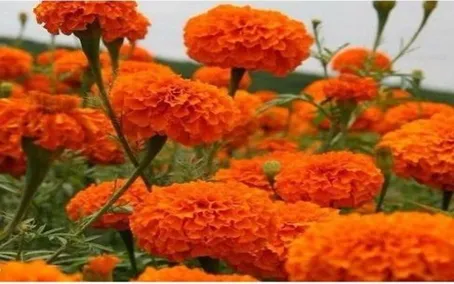
Fig. No. 1- Tagetes erecta(Marigold)
Tabernaemontana divaricate:
Table 3: Taxonomical Classification of Tabernaemontana divaricata
|
Taxonomic Rank |
Classification |
|
Kingdom |
Plantae |
|
Phylum |
Tracheophyta |
|
Class |
Magnoliopsida |
|
Order |
Gentianales |
|
Family |
Apocynaceae |
|
Genus |
Tabernaemontana |
|
Species |
Tabernaemontana divaricata |
|
Botanical Name |
Tabernaemontana divaricata (L.) R.Br. ex Roem. & Schult. |
Chemical Constituents of Tabernaemontana divaricata
The plant contains a variety of bioactive compounds including alkaloids (ibogamine, coronaridine, voacangine, ibogaine), flavonoids (quercetin and kaempferol), tannins, glycosides, and terpenoids.
Pharmacological Activities of Tabernaemontana divaricata
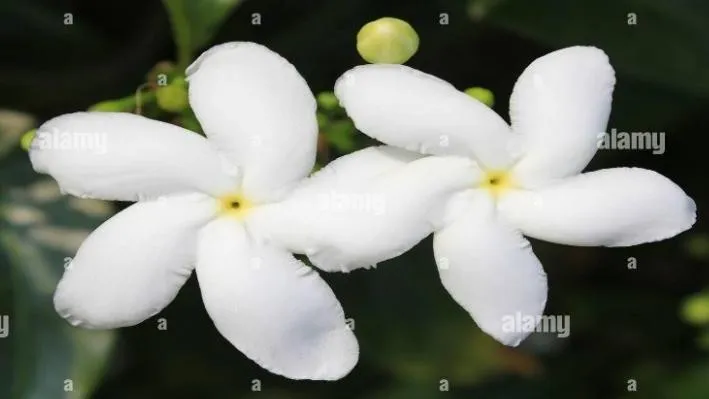
Fig. No. 2- Tabernaemontana divaricate
Aloe vera:
Table 4: Taxonomical Classification of Aloe vera
|
Taxonomic Rank |
Classification |
|
Kingdom |
Plantae |
|
Phylum |
Magnoliophyta |
|
Class |
Liliopsida |
|
Order |
Asparagales |
|
Family |
Asphodelaceae |
|
Genus |
Aloe |
|
Species |
Aloe vera (L.) Burm.f. |
Chemical Constituents of Aloe vera
The gel of Aloe vera contains polysaccharides such as glucomannan and acemannan, vitamins (A, C, and E), amino acids, minerals (calcium, magnesium, and zinc), lignins, saponins, salicylic acid, plant sterols, and prostaglandin precursors.
Pharmacological Activities of Aloe vera

Fig. No. 3-Aloe vera
Preparation of Plant Extracts
Preparation of Aqueous Extracts of Tagetes erecta and Tabernaemontana divaricata
Fresh flowers of Tagetes erecta and Tabernaemontana divaricata were shade-dried at room temperature for 7–10 days until a constant weight was obtained. The dried flowers were powdered separately using a mechanical grinder and passed through a suitable sieve to obtain a uniform powder.
For extraction, 1 g of powdered plant material was mixed with 10 mL of distilled water (1:10 w/v ratio). The mixture was heated on a water bath at 60–70°C for 20–30 minutes with occasional stirring while avoiding boiling or overheating. After heating, the extracts were allowed to cool to room temperature and subsequently filtered through Whatman No.1 filter paper. The filtrates obtained were collected in sterile containers and stored under refrigerated conditions until further use in formulation development.
Table 5: Preparation of Aqueous Plant Extracts
|
Step |
Procedure |
|
1 |
Shade drying of flowers |
|
2 |
Grinding into fine powder |
|
3 |
Weighing of plant powder |
|
4 |
Addition of distilled water (1 g : 10 mL) |
|
5 |
Heating on water bath for 20–30 min |
|
6 |
Cooling to room temperature |
|
7 |
Filtration through filter paper |
|
8 |
Collection and storage of extract |
Extraction of Aloe vera Gel
Fresh leaves of Aloe vera were washed thoroughly with distilled water to remove adhering dust and contaminants. The outer rind was carefully removed using a sterile knife, and the yellow latex layer was discarded to avoid contamination with anthraquinones. The transparent inner gel was collected aseptically and homogenized using a blender to obtain a smooth and uniform gel. The homogenized gel was filtered through muslin cloth followed by filtration through filter paper to remove fibrous materials. The purified gel was stored in airtight containers under refrigerated conditions until further use.
Table 6: Extraction Procedure for Aloe vera Gel
|
Step |
Procedure |
|
1 |
Collection of fresh leaves |
|
2 |
Washing with distilled water |
|
3 |
Removal of yellow latex |
|
4 |
Peeling of outer rind |
|
5 |
Collection of transparent gel |
|
6 |
Homogenization using blender |
|
7 |
Filtration through muslin cloth/filter paper |
|
8 |
Storage under refrigerated conditions |
The prepared extracts and gel were subsequently utilized for the formulation and antimicrobial evaluation of the herbal topical cream containing Aloe vera, Tabernaemontana divaricata, and Tagetes erecta.
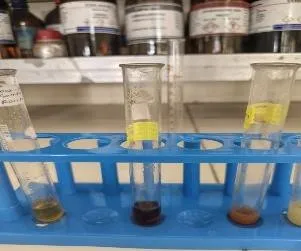
Phytochemical evaluation:
Tagetes erecta:
|
Chemical constituents |
Experimental test |
Observation |
Result |
|
|
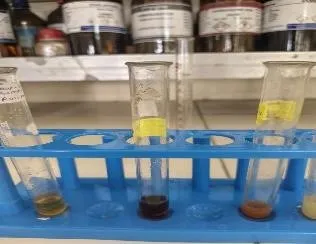
flavonoids |
1-2 drop of Sodium hydroxide in 2ml of filtrate. |
Yellow or green colour |
positive |
|
|
|
1-2 drop of FeCl3 in 2ml of filtrate |
Green ,blue, blackish red colour |
positive |

|
|
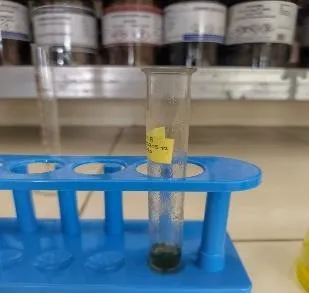
Tannins |
1-2 drop of Sodium hydroxide in 2ml of filtrate. |
green colour |
positive |
|
|
|
1-2 drop of FeCl3 in 2ml of filtrate |
blackish red colour |
Positive |
|
|
|
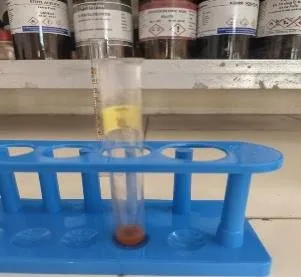
Fehling solution in 2ml of filtrate. |
Brick red colour |
positive |
|
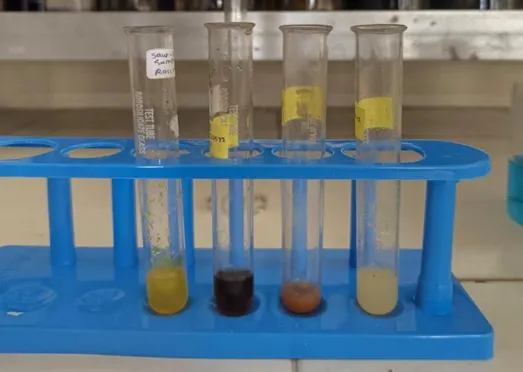
Tabernaemontana divaricate:
|
Chemical constituents |
Experimental test |
Observation |
Result |
|
Alkaloids |
1-2 drop of Mayer’s reagent in 2ml of filtrate. |
Pale yellow colour |
positive |
|
|
1-2 drop of drangondroff’s reagent in 2ml of filtrate |
Reddish brown colour |
positive |
|
|
1-2 drop of wagner’s reagent in 2ml of filtrate. |
Reddish brown colour |
positive |
|
|
1-2 drop of hager’s reagent in 2ml of filtrate |
Yellow colour |
Positive |
|
Glycosides |
Borntragers test :2ml of filtrate add 1-2 drop of HCl and add FeCl3 1-2 drop |
Pink/red colour |
positive |
Formulation of Hebal lep: (For 50 ml batch)
|
Ingredients |
Quantity |
Uses |
Batch 1 |
Batch 2 |
Batch 3 |
|
Tagetes erecta |
10 ml |
Antimicrobial property |
⬛✓ |
⬛✓⬛ |
⬛✓⬛ |
|
Tabernaemontana divaricata |
10 ml |
Anti-inflammetory, analgesic |
✓⬛ |
✓⬛ |
⬛✓ |
|
Aloe vera gel |
20 gm |
Moisturizer/cooling sensation ,healing property |
⬛✓ |
⬛✓⬛ |
⬛✓ |
|
Turmeric powder |
0.5 gm |
Colouring agent,antiseptic |
- |
✓⬛ |
⬛✓ |
|
Multani mitti |
2gm |
base |
⬛✓ |
⬛✓ |
⬛✓ |
|
glycerin |
2 ml |
moisturizer |
⬛✓ |
⬛✓ |
⬛✓ |
|
Sodium benzoate |
0.1 gm |
preservative |
⬛✓ |
⬛✓⬛ |
⬛✓ |
|
Guar gum |
1% |
Thickening agent |
- |
- |
⬛✓ |
|
|
|
|
Fail |
Fail |
Pass |
Procedure:
Preparation of base:
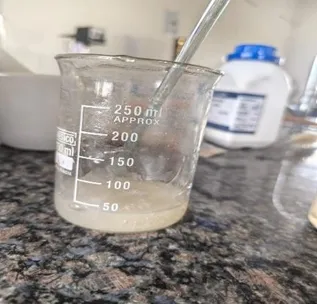
Fig. No. 5 -Gaur gum.
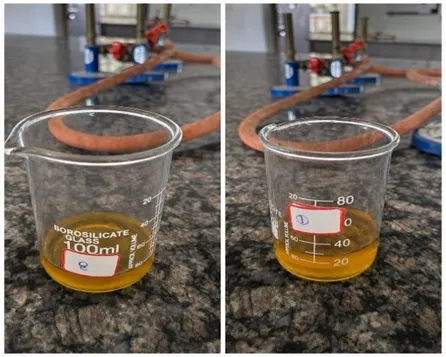
Fig No.6- Extract collection
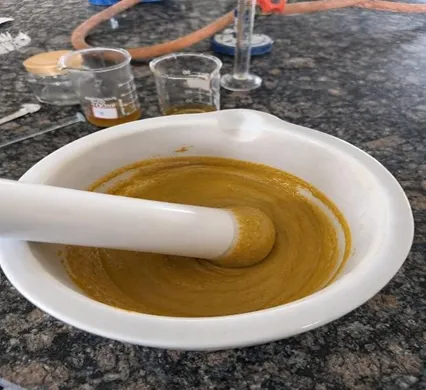
Fig No.7- Smooth, uniform paste formation
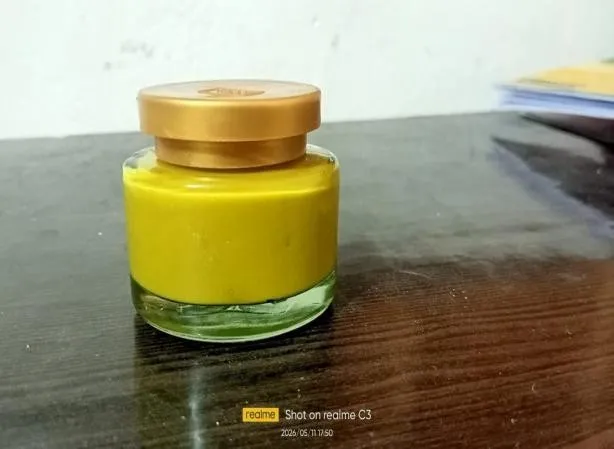
Fig No. 8– prepared formulation in airtight clean container
Organoleptic evaluation:
|
parameters |
powder |
Cream base |
Formulation |
|
Color |
Yellowish-brown |
Bright yellow |
yellowish |
|
Odour |
characteristic |
characteristic |
characteristic |
|
Consistency |
soft |
soft |
soft |
|
Texture |
gritty |
smooth |
gritty |
|
spreadibility |
NA |
28.25cm2 |
19.65cm2 |
|
Loss on drying |
5.5g |
NA |
1% |
|
Skin irritation test |
NA |
Non-irritable |
Non-irritable |
Antimicrobial study:
Prepartion of culture: Table No. I:
|
Ingredients |
Quantity |
|
Agar |
1gm |
|
Sodium chloride |
0.25 gm |
|
Pepton |
0.5 gm |
|
Yeast |
0.5 gm |
|
water |
q.s |
Procedure I:
Table-No .II:
|
Ingredients |
Quantity |
|
MacConkey agar |
2.5 gm |
|
Nutrient broth powder |
0.65 gm |
|
Agar agar type 1 |
0.75 gm |
|
Yeast |
0.25 gm |
|
water |
q.s |
Procedure II:
Preparation of bacterial culture:
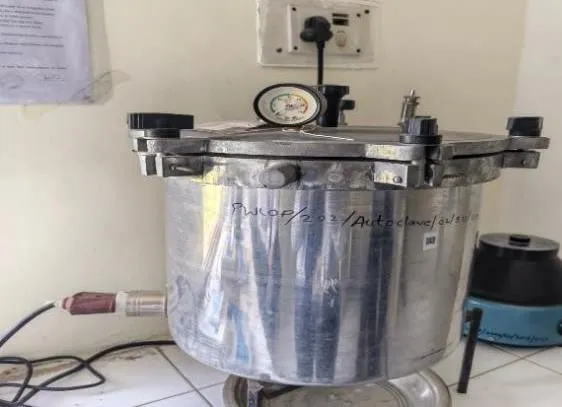
Fig. No.9 - Autoclave.
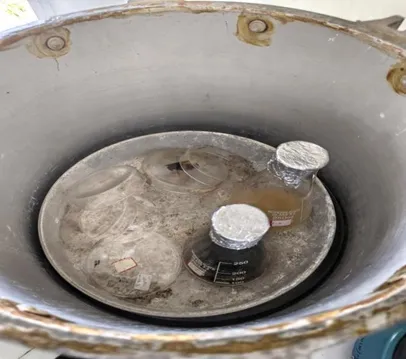
Fig. No. 10-Sterilization
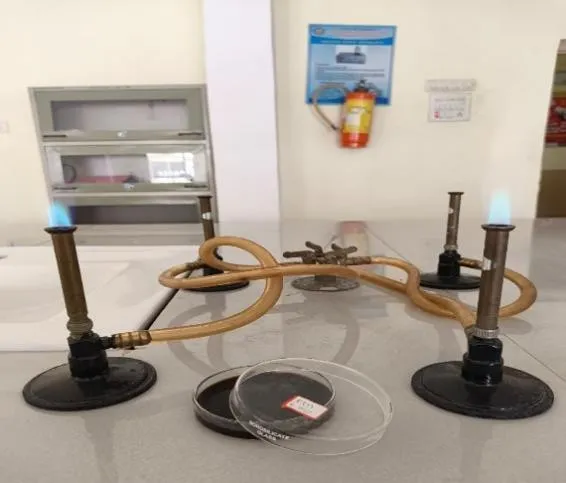
Fig. No. 11- Solution in peteri plate(I)
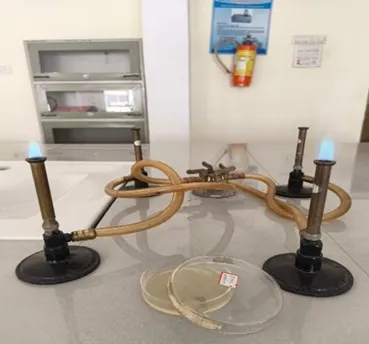
Fig. No. 12 - Solution in peteri plates(II)
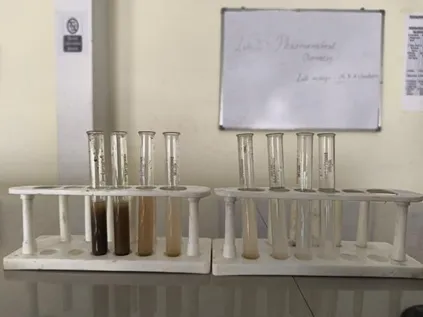
Fig. No. 13- Serial dilution of soil sample
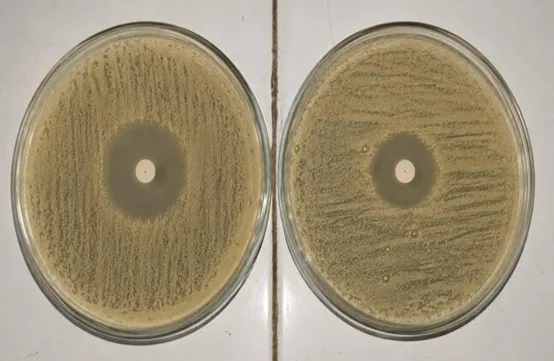
Fig. No. 14- Antimicrobial activity was observed
RESULTS AND DISCUSSION:
Results:
The formulation and evaluation of the antimicrobial and anti-inflammatory topical cream were successfully carried out. The cream was prepared using extracts of Tabernaemontana divaricata, Tagetes erecta, and Aloe vera along with Multani mitti, guar gum, turmeric powder, glycerin, and sodium benzoate as excipients. The prepared formulation exhibited satisfactory physicochemical characteristics and was found to be suitable for topical application.
The formulated cream showed a smooth and homogeneous appearance without any visible lumps or phase separation. It possessed good consistency and spreadability, making it easy to apply uniformly on the skin surface. The formulation was non-sticky in nature and provided a pleasant cooling and refreshing sensation after application. Stability studies conducted under suitable storage conditions revealed no significant changes in color, odor, texture, or consistency, indicating good physical stability of the formulation.
The antimicrobial evaluation demonstrated that the herbal cream possessed antibacterial and antifungal properties, which may be attributed to the presence of bioactive phytoconstituents in the selected medicinal plants. The formulation was also found to be safe for topical use, as no signs of skin irritation, redness, itching, or allergic reactions were observed during the preliminary skin compatibility assessment.
Table 7: Evaluation Results of Herbal Topical Cream
|
Parameter |
Observation |
|
Appearance |
Smooth and uniform |
|
Homogeneity |
Homogeneous |
|
Consistency |
Good |
|
Spreadability |
Satisfactory |
|
Texture |
Smooth |
|
Nature |
Non-sticky |
|
Cooling Effect |
Present |
|
Skin Refreshment |
Present |
|
Stability |
Stable under storage conditions |
|
Skin Irritation |
Not observed |
|
Antibacterial Activity |
Present |
|
Antifungal Activity |
Present |
|
Overall Acceptability |
Excellent |
DISCUSSION
The present study was undertaken to develop a herbal topical cream with antimicrobial, anti-inflammatory, and wound-healing properties using selected medicinal plants and natural excipients. The results obtained demonstrated that the combination of Tagetes erecta, Tabernaemontana divaricata, and Aloe vera produced a stable and effective topical formulation with desirable pharmaceutical characteristics.
The therapeutic efficacy of the formulation can be attributed to the pharmacological properties of the incorporated herbal ingredients. Tagetes erecta has been traditionally used for the treatment of cuts, wounds, boils, insect bites, and inflammatory skin conditions. The plant contains flavonoids, phenolic compounds, terpenoids, and thiophenes that contribute to its antimicrobial, antiseptic, anti-inflammatory, and wound-healing activities. These properties support its use as an active ingredient in topical preparations intended for skin infections and tissue repair.
Tabernaemontana divaricata is recognized in traditional medicine for its analgesic, antimicrobial, and anti-inflammatory effects. The leaves and roots have been used to relieve pain associated with arthritis, toothache, and insect stings. The presence of alkaloids, flavonoids, tannins, and glycosides contributes to its biological activities. Its inclusion in the formulation may help reduce inflammation, soothe irritated skin, and enhance protection against microbial infections.
Aloe vera is widely acknowledged for its moisturizing, cooling, anti-inflammatory, and wound-healing properties. The gel contains polysaccharides such as acemannan and glucomannan, along with vitamins, minerals, amino acids, and antioxidants that promote skin regeneration and hydration. The soothing effect observed in the formulated cream may be attributed primarily to the presence of Aloe vera gel, which also enhances skin compatibility and user acceptability.
The excipients used in the formulation also played important roles in improving product performance. Multani mitti acted as a natural absorbent and cooling agent, helping to remove impurities and excess oil from the skin while providing a soothing effect. Guar gum functioned as a natural thickening and stabilizing agent, imparting appropriate viscosity and consistency to the cream. Turmeric powder served as a natural coloring agent and additionally contributed antimicrobial and anti-inflammatory benefits. Glycerin acted as an effective humectant, maintaining skin hydration and preventing excessive dryness after application.
No irritation, redness, itching, or allergic reactions were observed during the skin compatibility assessment, indicating that the formulation was safe for topical use. Furthermore, sodium benzoate effectively preserved the formulation by preventing microbial contamination during storage, thereby contributing to the overall stability of the product.
The antimicrobial activity exhibited by the formulation suggests a synergistic interaction among the phytoconstituents present in Tagetes erecta, Tabernaemontana divaricata, and Aloe vera. These findings support the traditional use of these medicinal plants in the management of skin infections, inflammation, and wound healing. The combination of antimicrobial, anti-inflammatory, cooling, moisturizing, and wound-healing properties makes the developed cream a multifunctional herbal preparation suitable for topical application.
Overall, the study confirms that the formulated topical cream is a promising natural antimicrobial, anti-inflammatory, and wound-healing preparation with good stability, safety, and patient acceptability. The formulation may serve as a potential herbal alternative to synthetic topical products for the management of minor skin infections and inflammatory skin disorders.
CONCLUSION
The present study successfully achieved the formulation and evaluation of a herbal topical cream incorporating Aloe vera, Tabernaemontana divaricata, and Tagetes erecta. The selected medicinal plants were chosen based on their well-documented antimicrobial, anti-inflammatory, wound-healing, and antioxidant properties, which contribute to the therapeutic effectiveness of the developed formulation. The prepared topical cream exhibited satisfactory physicochemical characteristics, including good appearance, smooth texture, homogeneity, acceptable consistency, and excellent spreadability. The formulation was found to be non-irritant and safe for topical application, demonstrating good patient acceptability. Stability studies indicated that the cream remained physically stable under appropriate storage conditions, while the incorporation of sodium benzoate effectively prevented microbial contamination and enhanced product stability. The antimicrobial evaluation confirmed the potential of the formulation to inhibit the growth of microorganisms, supporting its traditional use in the management of minor skin infections and inflammatory skin conditions. The synergistic action of Aloe vera, Tabernaemontana divaricata, and Tagetes erecta may contribute to the observed antimicrobial, soothing, and wound-healing effects of the cream.
Overall, the findings of the study suggest that the developed herbal topical cream is a promising natural alternative to conventional synthetic formulations. The formulation offers the advantages of safety, effectiveness, affordability, and the use of plant-based ingredients with minimal risk of adverse effects. However, further studies involving detailed antimicrobial assays, long-term stability testing, toxicity evaluation, and clinical investigations are required to establish its therapeutic efficacy and commercial applicability. The present work provides a scientific basis for the development of herbal topical preparations for the treatment of skin infections and related dermatological disorders.
CONFLICT OF INTREST:
None
REFERENCES
To review on isolation and preservation of pure culture media. Int J Pharm Res Appl. 2022;7(Issue):Page numbers

Ashvini Chavhan, Isha Bhujade, Yash Chaulamvar, G. Darwhekar, Dr. Manisha Kitukale, Formulation And Antimicrobial Evaluation of Topical Cream Incorporating Aloe Vera, Tabernaemontana Divaricate and Tagetes Erecta, Int. J. of Pharm. Sci., 2026, Vol 4, Issue 6, 3515-3528, https://doi.org/10.5281/zenodo.20700528
 10.5281/zenodo.20700528