

We use cookies to ensure our website works properly and to personalise your experience. Cookies policy
Department of Pharmaceutics, Jaya College of Paramedical Sciences, College of Pharmacy, Chennai, TN, India Email Id: arsathya.pharma@gmail.com.
The objective of the present work is to design mucoadhesive tablets of lamivudine for oral controlled release by direct compression using different binders. Lamivudine is anti viral drug used in the treatment of hepatitis B and HIV infections. It has a shorter half-life of 2-6 hrs, oral availability is 86% and it is eliminated rapidly from the plasma compartment within few hours. So, frequent administration is necessary to maintain its therapeutic concentration. In order to maintain the therapeutic concentrations of lamivudine modified release formulations are necessary. In the present work the mucoadhesive tablets of lamivudine was prepared to prolong the residence time at the site of application (or) absorption and to facilitate the intimate contact with the underlying absorption surface to improve and enhance the bioavailability. The mucoadhesive tablets of lamivudine were prepared by using Carbopol, Hydroxy propyl methylcellulose, xanthan gum.
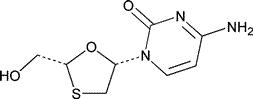
Lamivudine (2 (1H)-Pyrimidinone, 4-amino-1-[2-(hydroxymethyl)-1,3-oxathiolan-5-yl]-, (2R-cis)-. (–)-1-[(2R, 5S) -2-(Hydroxymethyl)-1,3-oxathiolan-5-yl]cytosine.) is a white to off-white crystalline solid with a solubility of approximately 70 mg/mL in water at 20°C. Lamivudine is anti viral drug used in the treatment of hepatitis B and HIV infections.
It has a shorter half-life of 2-6 hrs, oral availability is 86% and it is eliminated rapidly from the plasma compartment within few hours. Prescribed dose is 300 mg daily, administered as either 150 mg twice daily or 300 mg once daily. Lactic acidosis and severe hepatomegaly with steatosis,Hepatic decompensation in patients co-infected with HIV-1 and Hepatitis C, Pancreatitis are side effect of Lamivudine.
MUCOADHESIVE DRUG DELIVERY SYSTEMS
Mucoadhesive drug delivery systems prolong the residency time of the dosage form at the site of application or absorption and facilitate an intimate contact of the dosage form with the underlying absorption surface and thus contribute to improved and/or better therapeutic performance of drugs. The potential site for attachment of any bioadhesive system or mucoadhesive systems includes buccal, oral, vaginal, rectal, nasal and ocular sites as these contain the mucosal lining layer.2,3 The term bioadhesion refers to any bond formed between two biological surfaces or a bond between a biological and a systematic surface. In the case of bio adhesive drug delivery systems, the term bioadhesion is typically used to describe the adhesion between polymers, either synthetic or natural, and soft tissue (i.e., gastrointestinal mucosa). Although the target of many bio adhesive delivery systems may be a soft tissue cell layer (i.e., epithelial cells), the actual adhesive bond may form with either the cell layer, or a mucous layer, or a combination of the two. In instances in which bonds form between mucus and polymer, the term mucoadhesion is used synonymously with bioadhesion. In general, bioadhesion is an all-inclusive term used to describe adhesive interactions with any biological or biologically derived substance, and mucoadhesion is used only when describing a bond involving mucus or a mucosal surface.
Mechanisms of BIOADHESION:3
The mechanisms responsible for the formation of boiadhesive bonds are not completely clear. In order to develop ideal bioadhesive drug delivery systems, it is important to describe and understand the forces that are responsible for adhesive bond formation. Most research has focused on analyzing bioadhesive interactions between polymer hydro gels and soft tissue. The process involved in the formation of such bioadhesive bonds has been described in three steps:
Wetting and swelling of polymer to permit intimate contact with biological tissue,
Interpenetration of bioadhesive polymer chains and entanglement of polymer and mucin chains, and
Formation of week chemical bonds between entangled chains.
MUCOADHESIVE POLYMERS
Mucoadhesive polymers are water insoluble and water soluble polymers which are swellable networks joined by cross- linking agents .The polymer should possess optimal polarity to make sure that it is sufficiently wetted by the mucus and optimal fluidity that permits the mutual adsorption and interpenetration of polymer and mucus to take place. An ideal polymer for a mucoadhesive drug delivery system should have non toxic, non-irritant and non absorbable from the gastrointestinal tract. And it should adhere quickly to moist tissue and should possess some site specificity. The polymer should allow easy incorporation of the drug and must not decompose on storage or during shelf- life of the dosage form. And it should preferably form a strong non covalent bond with the mucin epithelial cell surfaces.
MATERIALS AND METHODS:
Construction of Standard Curve of Lamivudine: lamivudine can be estimated spectrometrically at 270 nm as it obeys beer- lambert’s law. Stock solution is 100mg of lamivudine was dissolved in 100ml of 0.1 n hcl, so as to get a solution 1000 μg/ml concentration.
Standard solution:10ml of stock solution was made to 100ml with 0.1 N Hcl thus giving a concentration of 100 μg/ml. Aliquot of standard drug solution ranging from 4ml to 24 ml were transferred in to 10ml volumetric flask and were diluted up to the mark with 0.1 N Hcl. Thus the final concentration ranges from 4-24 μg/ml. Absorbance of each solution was measured at 270 nm against 0.1 N Hcl as a blank. A plot of concentrations of drug versus absorbance was plotted.
Table None: 01 Standard Curve of Lamivudine in 0.1 N Hcl
| S No | Concentration (mcg/ml) | Absorbance at 270 nm |
|---|---|---|
| 1 | 0 | 0.000 |
| 2 | 4 | 0.060 |
| 3 | 8 | 0.103 |
| 4 | 12 | 0.160 |
| 5 | 16 | 0.216 |
| 6 | 20 | 0.267 |
| 7 | 24 | 0.307 |
Slope : 0.0129, Regression : 0.9989
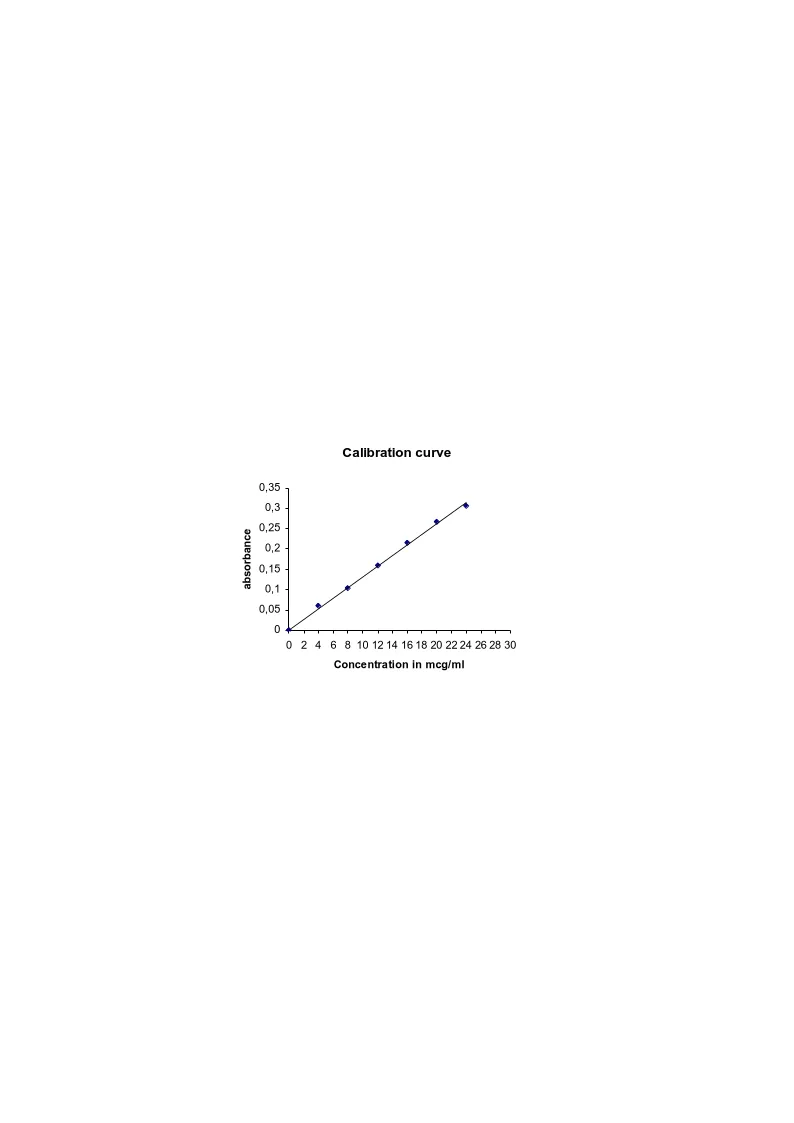
Figure None: 01
Compatibility study24:
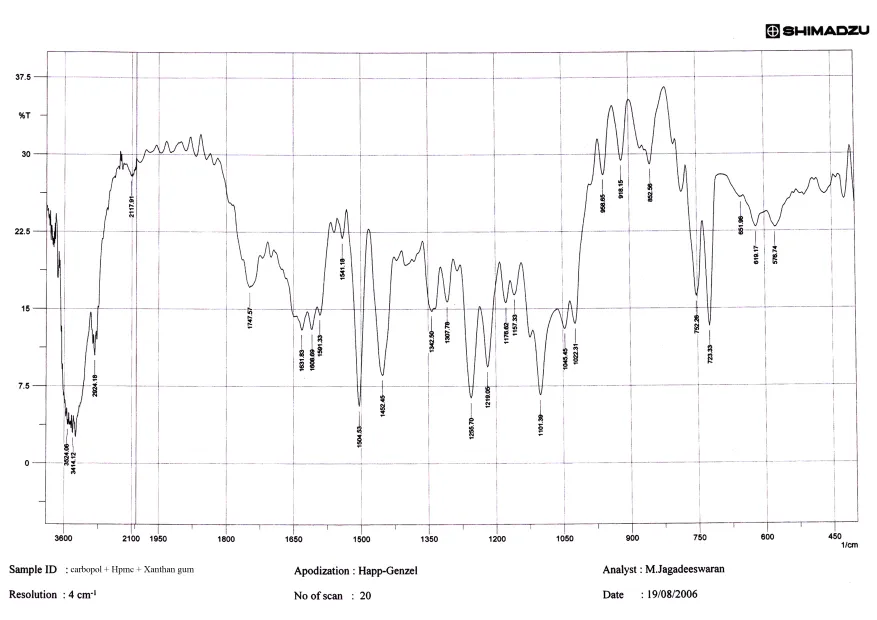
The drug was identified and confirmed by FTIR spectrum. Fig 02 showed the IR spectrum of lamivudine .Fig 03 and Fig 04 shows the IR spectrum of the polymer Ethylcellulose and Hydroxy propyl methylcellulose respectively. . Fig 03 shows the IR spectrum of the physical mixture of Carbopol, hydroxy propyl methylcellulose, xanthan gum and the drug lamivudine.From the Fig 13 it was concluded that the drug along with the polymer showed no change in any characteristic peak of the drug, which confirms that there is no interaction between the drug and the polymer.
Figure None: 02 FTIR (KBr) Spectrum of Lamivudine (Pure Drug)
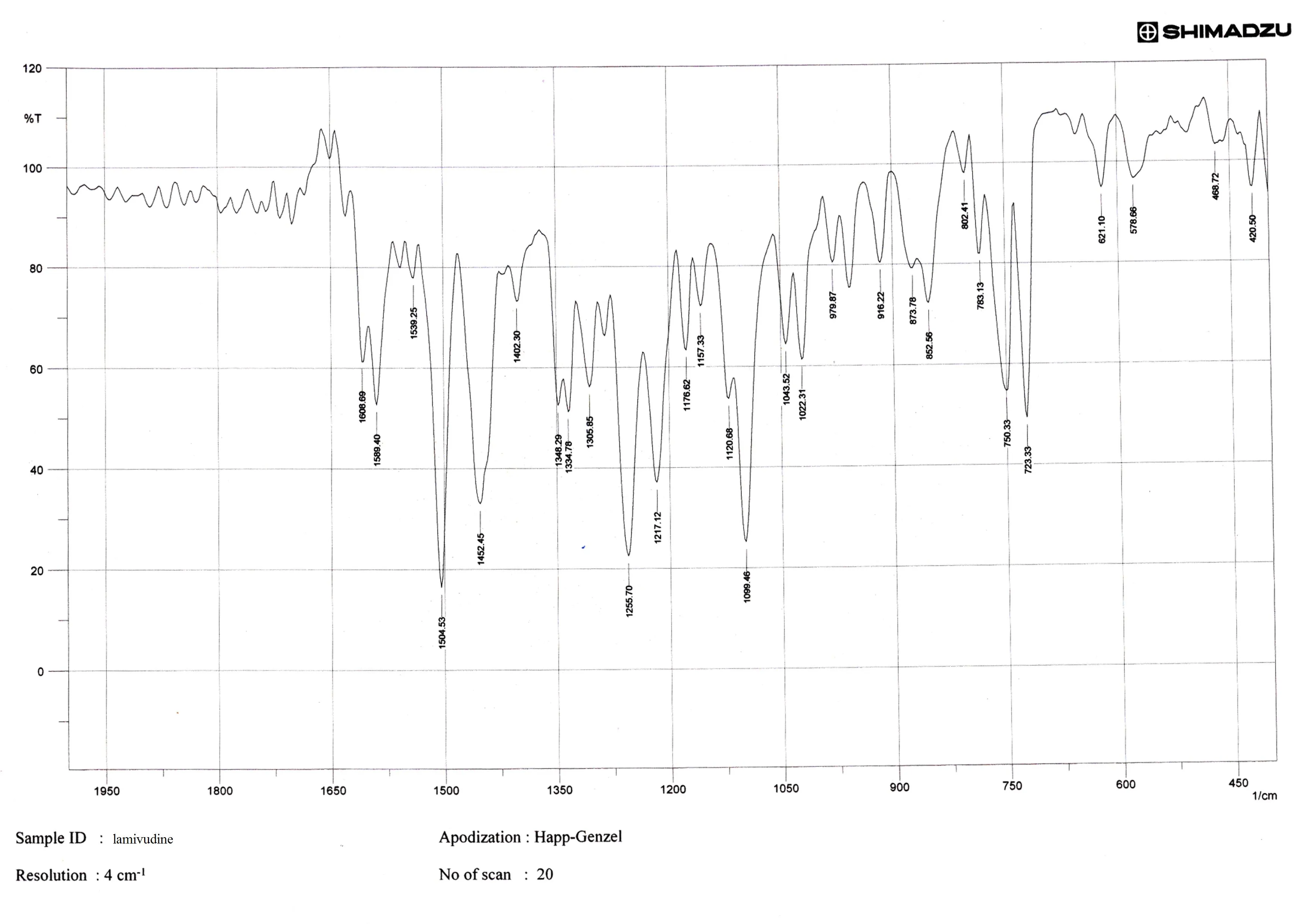
Figure None: 03 FTIR (KBr)SPECTRUM OF HYDROXY PROPYL METHYLCELLULOSE
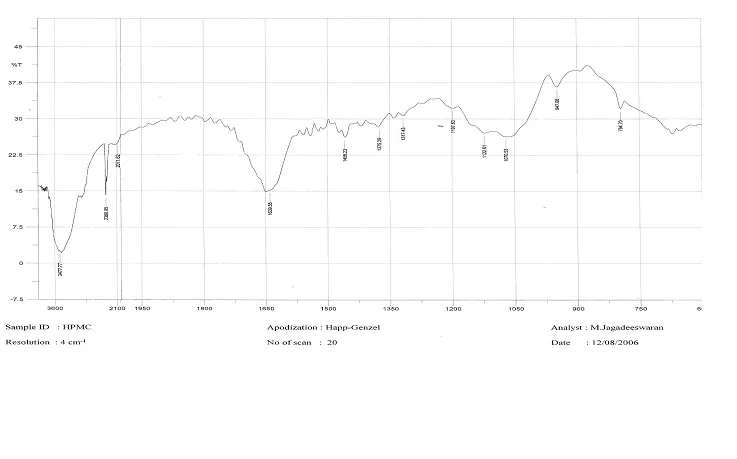
Figure None: 04 Spectrum of Physical Mixture for Xanthan GUM, HPMC and Lamivudine
PREPARATION OF TABLETS 10
Mucoadhesive l tablets containing lamivudine were prepared by direct compression method. The ingredients of the core layer (Table No: 02) were weighed accurately and mixed by trituration in a glass mortor & pestle. The mix was then compressed using 8mm die by a tablet press. In order to obtain constant tablet weight the spray dried lactose was added as filler excipient in the core layer. After compression of tablet the upper punch was removed carefully with out disturbing the set up and mixed ingredients of the backing layer were added over the tablet and compressed again.
Table None: 02 Composition of Formulations of Mucoadhesive Buccal Tablets
| Formula code | Drug(mg) | CP | HPMC | Xanthan gum | Mg. Stereate |
|---|---|---|---|---|---|
| F1 | 150 | - | 30 | - | 5 |
| F2 | 150 | 10 | 20 | - | 5 |
| F3 | 150 | 15 | 15 | - | 5 |
| F4 | 150 | - | - | 30 | 5 |
| F5 | 150 | 10 | - | 20 | 5 |
| F6 | 150 | 15 | - | 15 | 5 |
EVALUATION OF BLEND CHARACTERISTICS OF LAMIVUDINE 14
Flow Property:
The flow property was determined by measuring the angle of repose. In order to determine the flow property, the angle of repose (s) was determined. It is the maximum angle that can be obtained between the free standing surface of a powder heap and the horizontal plane. Values of θ are rarely less than 20o, and values of up to 40o indicate reasonable flow potential. Above 50o, however, the powder flows only with difficulty if at all.
θ = tan-1 (h/r)
Where h = height the pile, r = radius of the pile, θ = angle of repose
The sample was taken in a funnel, which fixed in a holder (5cm) above the surface at an appropriate height and a graph of sheet was placed below the funnel. The sample was passed through the funnel slowly. The height of the powder heap formed was measured. The circumference formed was drawn with a pencil on the graph paper. The radius was measured and the angle of repose was determined. This was repeated three times for a sample.
Determination of bulk density and tapped density:
The powder (W) was carefully poured into the graduated measuring cylinder and the volume (VO) was measured. Then the graduated cylinder was closed with lid and tapped 100times and after that, the volume (Vf) was measured and continued operation till the two consecutive readings were equal. The bulk density, and tapped density were calculated using the following formulas
Bulk density = W / VO, Tapped density = W / Vf
Where, W = weight of the powder, VO = initial volume, Vf = final volume
Compressibility index (Carr’s index):
Compressibility index is an important measure that can be obtained from the bulk and tapped densities. In theory, the less compressible a material the more flow able it is. A material having values of less than 20 to 30% is defined as the free flowing material.
CI = 100 (VO – Vf)
V0
EVALUATION OF TABLETS
Friability test:
Friability of the tablets was tested using a Roche friabilator. The weight of 10 tablets was noted initially (W1) and placed in the friabilator for 4min/100rpm. The tablets were reweighed and noted as (W2). The difference in the weight is noted and expressed as percentage.
Percentage friability = (W1-W2) 100
W1
Weight variation test:
Twenty tablets were selected at random and the average weight was determined. Not more than two of the individual weights deviate from the average weight by more than the percentage deviation shown in table and none deviates by more than twice the percentage. IP official limits of percentage deviation of tablet are presented in the I.P.
Drug content uniformity:
Determine the content of active ingredient (s) in each of 10 tablets taken at random using the method given in the monograph or by any other suitable analytical method. The tablets comply with the test if not more than one of the individual values thus obtain is outside the limits 85 to 115% of the average value and none is outside the limits 75 to 125% of the average value.
Take the prepared Lamivudine tablet and separate the two layers (core and backing). Take tablets and crushed in mortar to fine powder. Then dissolve the total powder in 100ml phosphate buffer (pH 6.8). The solution was suitably diluted with pH 6.8-phosphate buffer. Analyze at 270nm in uv–vis spectrophotometry.
Water absorption studies: 10,15,16
The water absorbing capacity of tables was determined by gravimetry. The swelling rate of the bioadhesive tablets was evaluated by using 1% agar gel plate. The average weight of the tablet was calculated (w1). The tablets were placed on gel surface in a petridish placed in an incubator at 37±1ºC. Tablets was removed at different time intervals (0.5, 1.0, 2.0, 3.0, 4.0, 5.0, 6.0, 7.0, 8.0 h), wiped with filter paper and reweighed (w2). The swelling index was calculated by the formula Swelling index = (w2-w1)/ w
Measurement of surface pH: 11,14
The tablets were allowed to swell by keeping them in contact with 1ml of distilled water (pH 6.8±0.05) for 2hrs and pH was noted by bringing the electrode in contact with the surface of the formulations and allowing it to equilibrate for 1min.
In vitro dissolution studies:
Dissolution done by using USP XXIII paddle method, Tablet was keep first 2 hrs in 0.1 n Hcl and then phosphate buffer pH 6.8.
RESULTS AND DISCUSSION
EVALUATION OF BLEND CHARACTERISTICS OF LAMIVUDINE
Flow Property
| Formulation code | Angle of repose ±S.D (n=3) |
|---|---|
| F1 | 32º59’ ± 1.464 |
| F2 | 33º12’ ± 1.175 |
| F3 | 33º27’ ± 1.018 |
| F4 | 34º27’ ± 1.019 |
| F5 | 33º35’ ± 0.606 |
| F6 | 33º20’ ± 1.103 |
Physical characteristics of lamivudine blend
| Formulation Code | Bulk density (gm/cc) | Tapped density (gm/cc) | Compressibility Index |
|---|---|---|---|
| F1 | 0.433 | 0.52 | 16.66 |
| F2 | 0.371 | 0.43 | 14.28 |
| F3 | 0.406 | 0.49 | 17.18 |
| F4 | 0.433 | 0.50 | 13.33 |
| F5 | 0.382 | 0.47 | 14.70 |
| F6 | 0.317 | 0.43 | 14.28 |
Physical Characteristics
| Formulation Code | Thickness (mm) ± S.D. (n=3) |
Hardness (kg/sq.cm) ± S.D. (n=3) |
Friability (%) |
|---|---|---|---|
| F1 | 3.34 ± 0.128 | 5.2 ± 0.447 | 0.467 |
| F2 | 3.36 ± 0.203 | 5.4 ± 0.548 | 0.412 |
| F3 | 3.40 ± 0.057 | 5.8 ± 0.447 | 0.353 |
| F4 | 3.39 ± 0.061 | 5.6 ± 0.548 | 0.414 |
| F5 | 3.50 ± 0.147 | 5.4 ± 0.548 | 0.409 |
| F6 | 3.34 ± 0.106 | 5.6 ± 0.548 | 0.353 |
Weight variation test
| Formulation Code | Average weight of Tablet | % Weight variation from Average | |
|---|---|---|---|
| + | - | ||
| F1 | 169.0 | 3.540 | 3.00 |
| F2 | 167.9 | 4.228 | 4.705 |
| F3 | 168.8 | 1.303 | 2.251 |
| F4 | 167.7 | 3.756 | 3.398 |
| F5 | 167.9 | 3.037 | 2.918 |
| F6 | 170.8 | 1.873 | 3.395 |
Mucoadhesive strength Drug content uniformity
| Formulation Code | Mucoadhesive strength (gms) ± S.D. (n=3) |
|---|---|
| F1 | 9.2 ± 0.16 |
| F2 | 16.0 ± 0.12 |
| F3 | 14.0 ± 0.16 |
| F4 | 10.0 ± 0.16 |
| F5 | 15.0 ± 0.08 |
| F6 | 12.4 ± 0.54 |
| Formulation code | % Drug content ± S.D. (n=3) |
|---|---|
| F1 | 96.1 ± 1.31 |
| F2 | 99.4 ± 1.52 |
| F3 | 98.5 ± 1.31 |
| F4 | 97.1 ± 1.46 |
| F5 | 97.8 ± 1.45 |
| F6 | 98.3 ± 1.00 |
Measurement of Surface pH
| Formulation code | Surface pH ± S.D. (n=3) |
|---|---|
| F1 | 7.0 ± 0.10 |
| F2 | 7.2 ± 0.23 |
| F3 | 7.3 ± 0.10 |
| F4 | 7.1 ± 0.11 |
| F5 | 6.9 ± 0.10 |
| F6 | 7.4 ± 0.05 |
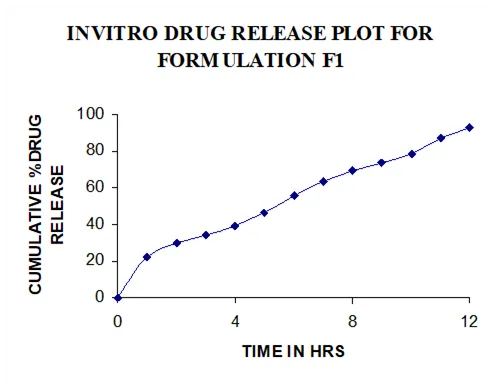
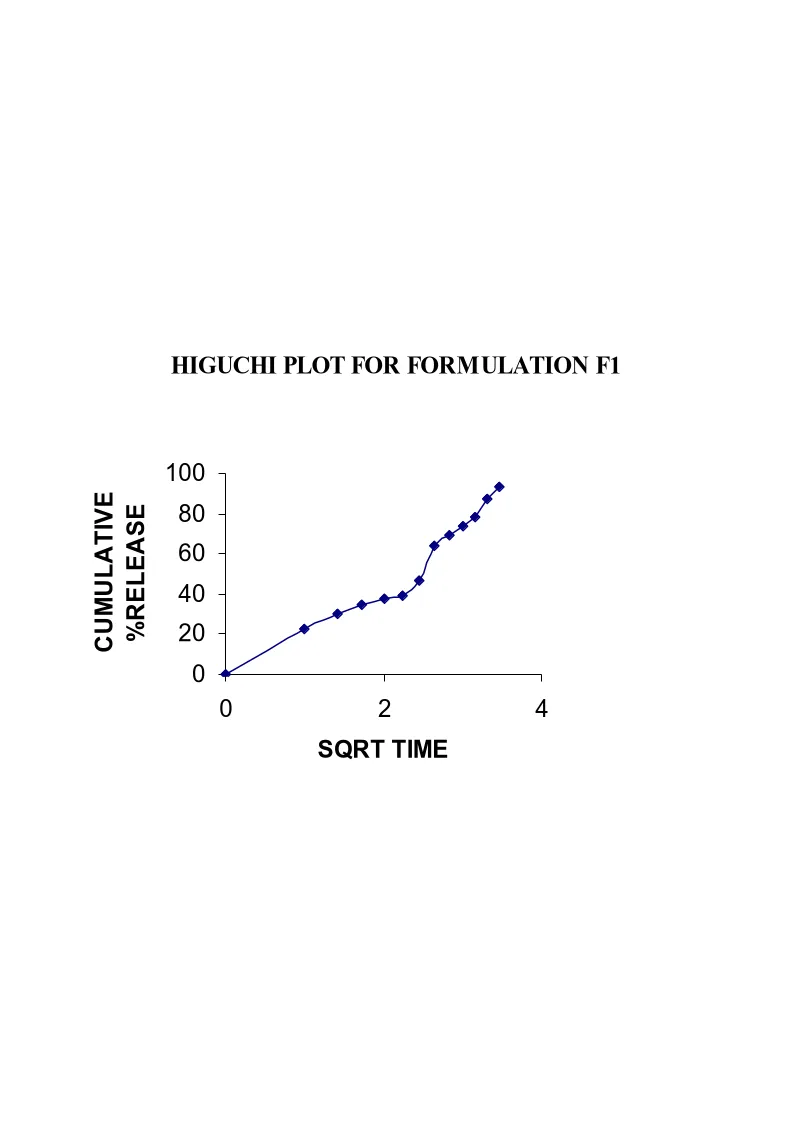
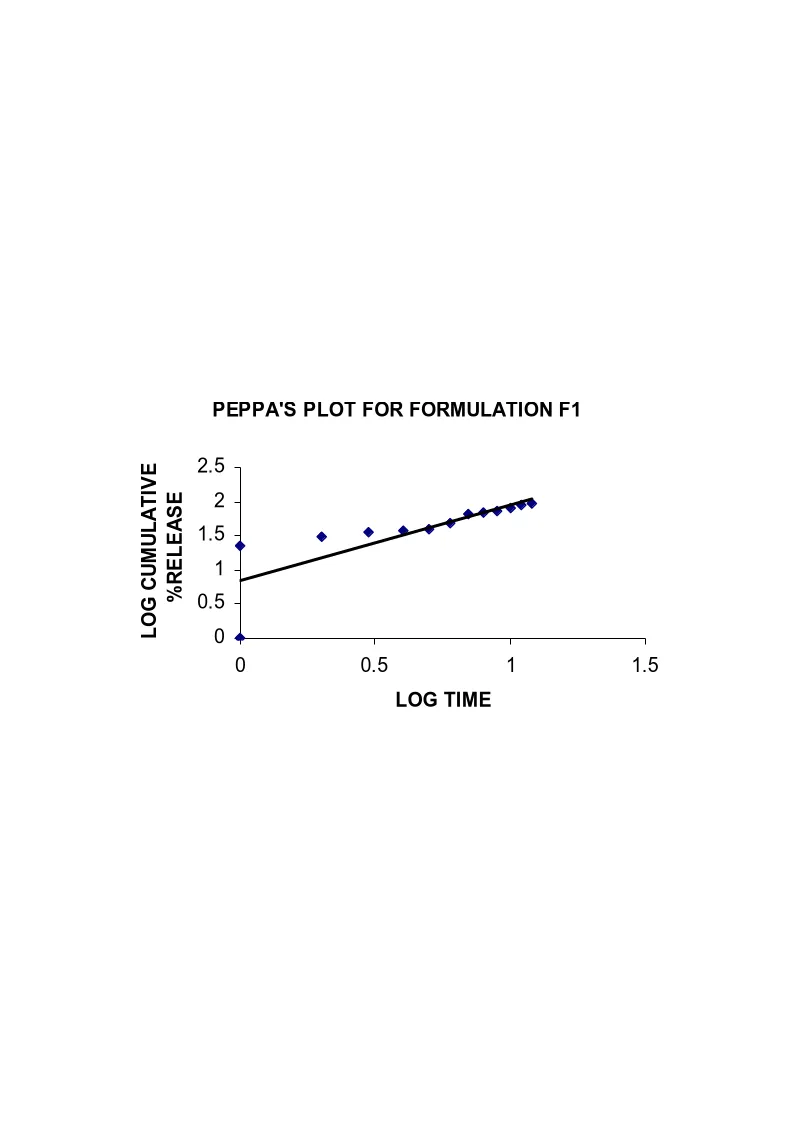
IN VITRO DISSOLUTION PROFILE OF FORMULATION F1
| Sl No | Time (hrs) | Absorbance (245nm) |
Concentration in mcg/ml |
Cumulative amount drug released ( mg) | *Cumulative percentage of drug released |
|---|---|---|---|---|---|
| 0 | 0 | 0 | 0.000 | 0.000 | 0.000 |
| 1 | 1 | 0.0201 | 1.552 | 1.397 | 22.347±0.90 |
| 2 | 2 | 0.0271 | 2.094 | 1.886 | 30.176±0.42 |
| 3 | 3 | 0.0328 | 2.537 | 2.287 | 34.594±0.55 |
| 4 | 4 | 0.0328 | 2.537 | 2.287 | 37.594±0.55 |
| 5 | 5 | 0.0352 | 2.707 | 2.443 | 39.089±1.20 |
| 6 | 6 | 0.042 | 3.249 | 2.933 | 46.929±1.30 |
| 7 | 7 | 0.057 | 4.409 | 3.981 | 63.688±0.60 |
| 8 | 8 | 0.060 | 4.641 | 4.194 | 69.100±0.45 |
| 9 | 9 | 0.066 | 5.105 | 4.616 | 73.857±0.84 |
| 10 | 10 | 0.070 | 5.414 | 4.900 | 78.394±0.76 |
| 11 | 11 | 0.078 | 6.030 | 5.459 | 87.346±0.65 |
| 12 | 12 | 0.0829 | 6.412 | 5.807 | 92.915 ±0.53 |
*Average of three value, ± Standard deviations
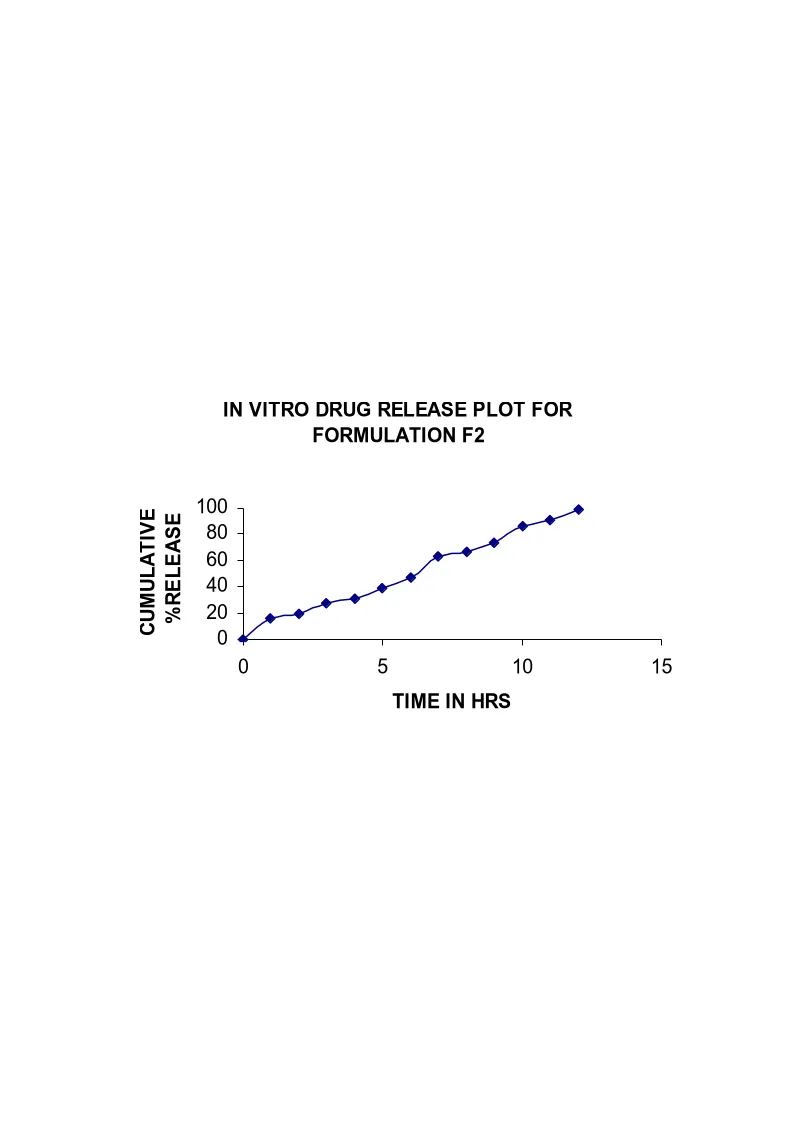
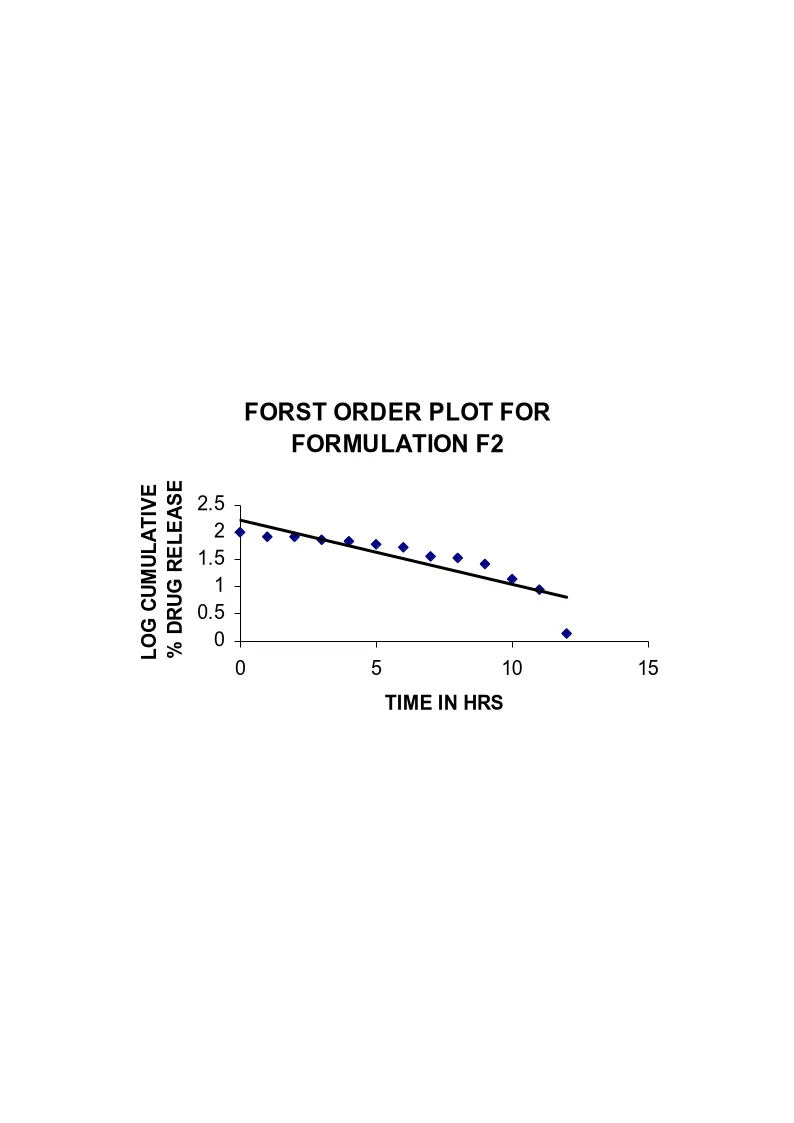
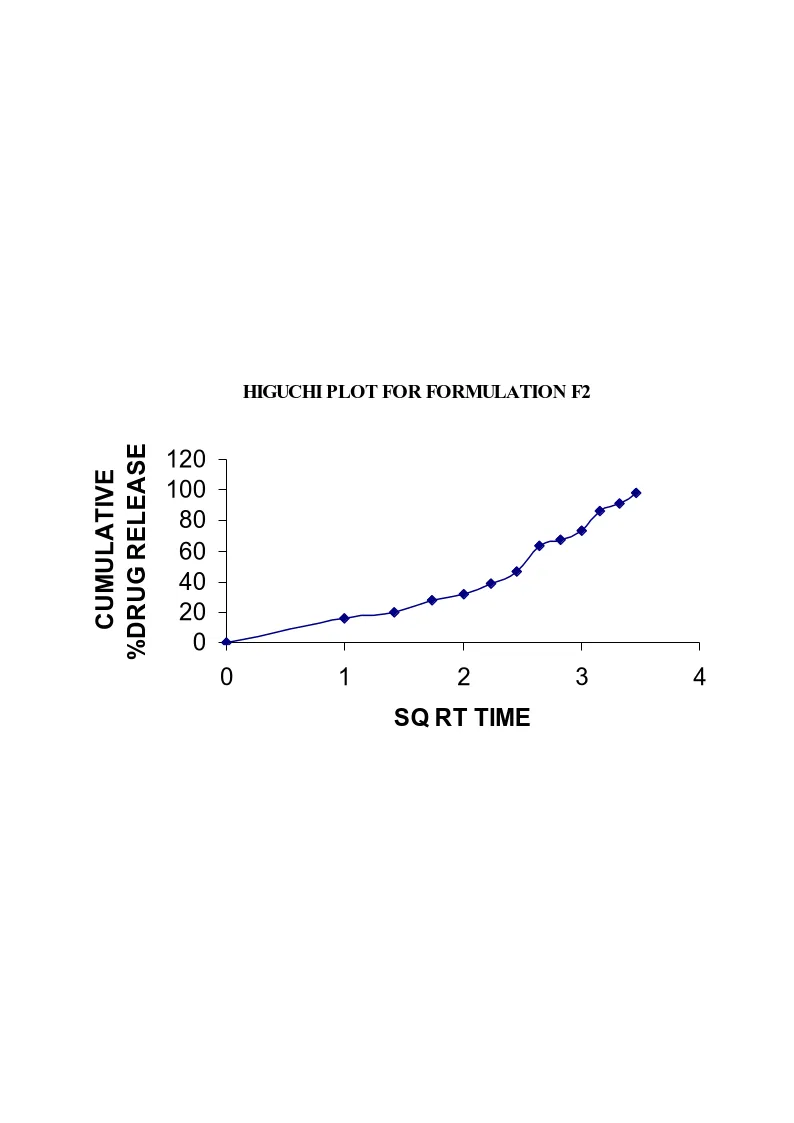
VITRO DISSOLUTION PROFILE OF FORMULATION F2
| Sl. No | Time(hrs) | Absorbance (245nm) |
Concentration in mcg/ml |
Cumulative amount drug released ( mg) | *Cumulative percentage of drug released |
|---|---|---|---|---|---|
| 0 | 0 | 0 | 0.000 | 0.000 | 0.000 |
| 1 | 1 | 0.014 | 1.108 | 0.998 | 15.962±1.00 |
| 2 | 2 | 0.018 | 1.388 | 1.250 | 20.000±0.65 |
| 3 | 3 | 0.025 | 1.934 | 1.743 | 27.885±0.58 |
| 4 | 4 | 0.028 | 2.166 | 1.954 | 31.258±0.48 |
| 5 | 5 | 0.035 | 2.707 | 2.443 | 39.089±1.20 |
| 6 | 6 | 0.042 | 3.249 | 2.933 | 46.929±1.30 |
| 7 | 7 | 0.057 | 4.409 | 3.981 | 63.688±0.60 |
| 8 | 8 | 0.060 | 4.641 | 4.194 | 67.100±0.45 |
| 9 | 9 | 0.066 | 5.105 | 4.616 | 73.857±0.84 |
| 10 | 10 | 0.077 | 5.988 | 5.41 | 86.51±1.40 |
| 11 | 11 | 0.081 | 6.300 | 5.69 | 91.09±0.90 |
| 12 | 12 | 0.088 | 6.815 | 6.16 | 98.61±0.80 |
*Average of three value, ± Standard deviations
IN VITRO DISSOLUTION PROFILE OF FORMULATION F3
| Sl No | Time(hrs) | Absorbance (245nm) |
Concentration in mcg/ml |
Cumulative amount drug released ( mg) | *Cumulative percentage of drug released |
|---|---|---|---|---|---|
| 0 | 0 | 0.000 | 0.000 | 0.00 | 0.00 |
| 1 | 1 | 0.016 | 1.215 | 1.09 | 17.50±0.80 |
| 2 | 2 | 0.020 | 1.554 | 1.40 | 22.40±0.75 |
| 3 | 3 | 0.028 | 2.166 | 1.95 | 31.23±0.65 |
| 4 | 4 | 0.044 | 3.403 | 3.07 | 49.09±0.90 |
| 5 | 5 | 0.047 | 3.897 | 3.52 | 52.25±0.54 |
| 6 | 6 | 0.050 | 3.897 | 3.52 | 56.25±0.54 |
| 7 | 7 | 0.053 | 3.897 | 3.52 | 60.25±0.54 |
| 8 | 8 | 0.057 | 4.409 | 3.981 | 65.688±0.60 |
| 9 | 9 | 0.066 | 5.105 | 4.616 | 70.857±0.84 |
| 10 | 10 | 0.070 | 5.414 | 4.900 | 78.394±0.76 |
| 11 | 11 | 0.078 | 6.030 | 5.459 | 87.346±0.65 |
| 12 | 12 | 0.081 | 6.281 | 6.102 | 95.023±1.10 |
*Average of three value ± Standard deviations
IN VITRO DISSOLUTION PROFILE OF FORMULATION F4
| Sl No | Time(hrs) | Absorbance (245nm) |
Concentration in mcg/ml |
Cumulative amount drug released ( mg) | *Cumulative percentage of drug released |
|---|---|---|---|---|---|
| 0 | 0 | 0.0000 | 0.000 | 0.000 | 0.000 |
| 1 | 1 | 0.0170 | 1.313 | 1.181 | 18.900±0.60 |
| 2 | 2 | 0.0207 | 1.603 | 1.444 | 23.100±1.10 |
| 3 | 3 | 0.0250 | 1.934 | 1.743 | 27.892±0.34 |
| 4 | 4 | 0.031 | 2.166 | 1.954 | 35.258±0.48 |
| 5 | 5 | 0.035 | 2.707 | 2.443 | 39.089±1.20 |
| 6 | 6 | 0.042 | 3.249 | 2.933 | 43.929±1.30 |
| 7 | 7 | 0.0472 | 3.651 | 3.293 | 51.693±0.65 |
| 8 | 8 | 0.060 | 4.641 | 4.194 | 65.100±0.45 |
| 9 | 9 | 0.066 | 5.105 | 4.616 | 71.857±0.84 |
| 10 | 10 | 0.070 | 5.414 | 4.900 | 75.394±0.76 |
| 11 | 11 | 0.078 | 6.030 | 5.459 | 89.346±0.65 |
| 12 | 12 | 0.088 | 6.815 | 6.16 | 96.61±0.80 |
*Average of three value, ± Standard deviations
IN VITRO DISSOLUTION PROFILE OF FORMULATION F5
| Sl No | Time(hrs) | Absorbance (245nm) |
Concentration in mcg/ml |
Cumulative amount drug released ( mg) | *Cumulative percentage of drug released |
|---|---|---|---|---|---|
| 0 | 0 | 0 | 0 | 0 | 0 |
| 1 | 1 | 0.0201 | 1.552 | 1.397 | 22.347±0.90 |
| 2 | 2 | 0.0271 | 2.094 | 1.886 | 30.176±0.42 |
| 3 | 3 | 0.0328 | 2.537 | 2.287 | 36.594±0.55 |
| 4 | 4 | 0.0358 | 2.537 | 2.287 | 39.594±0.55 |
| 5 | 5 | 0.0425 | 3.897 | 3.52 | 42.929±1.30 |
| 6 | 6 | 0.053 | 3.897 | 3.52 | 46.929±1.30 |
| 7 | 7 | 0.0605 | 4.680 | 4.227 | 57.693±0.65 |
| 8 | 8 | 0.0625 | 4.833 | 4.370 | 69.100±0.45 |
| 9 | 9 | 0.066 | 5.105 | 4.616 | 75.857±0.84 |
| 10 | 10 | 0.070 | 5.414 | 4.900 | 79.394±0.76 |
| 11 | 11 | 0.078 | 6.030 | 5.459 | 91.346±0.65 |
| 12 | 12 | 0.082 | 6.281 | 6.102 | 97.023±1.10 |
*Average of three value, ± Standard deviations
IN VITRO DISSOLUTION PROFILE OF FORMULATION F6
| Sl No | Time(hrs) | Absorbance (245nm) |
Concentration in mcg/ml |
Cumulative amount drug released ( mg) | *Cumulative percentage of drug released |
|---|---|---|---|---|---|
| 0 | 0 | 0 | 0.000 | 0.000 | 0.000 |
| 1 | 1 | 0.014 | 1.108 | 0.998 | 15.962±1.00 |
| 2 | 2 | 0.018 | 1.388 | 1.250 | 20.000±0.65 |
| 3 | 3 | 0.025 | 1.934 | 1.743 | 27.885±0.58 |
| 4 | 4 | 0.028 | 2.166 | 1.954 | 31.258±0.48 |
| 5 | 5 | 0.035 | 2.707 | 2.443 | 39.089±1.20 |
| 6 | 6 | 0.042 | 3.249 | 2.933 | 46.929±1.30 |
| 7 | 7 | 0.057 | 4.409 | 3.981 | 63.688±0.60 |
| 8 | 8 | 0.060 | 4.641 | 4.194 | 67.100±0.45 |
| 9 | 9 | 0.066 | 5.105 | 4.616 | 73.857±0.84 |
| 10 | 10 | 0.070 | 5.414 | 4.900 | 78.394±0.76 |
| 11 | 11 | 0.078 | 6.030 | 5.459 | 87.346±0.65 |
| 12 | 12 | 0.081 | 6.281 | 6.092 | 94.023±1.10 |
*Average of three value, ± Standard deviations
RELEASE KINETICS
| Formula Code | Drug release Kinetics | ||||||
|---|---|---|---|---|---|---|---|
| Zero order | First order | Higuchi | Peppa's | ||||
| K0 | r | K1 | r | R | n | R | |
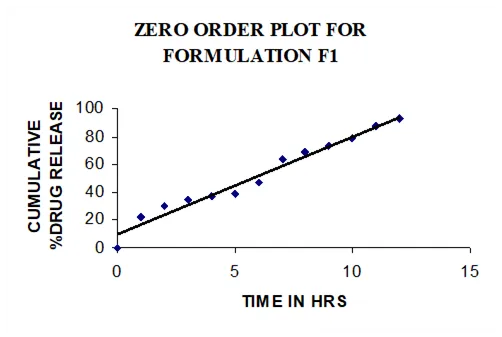
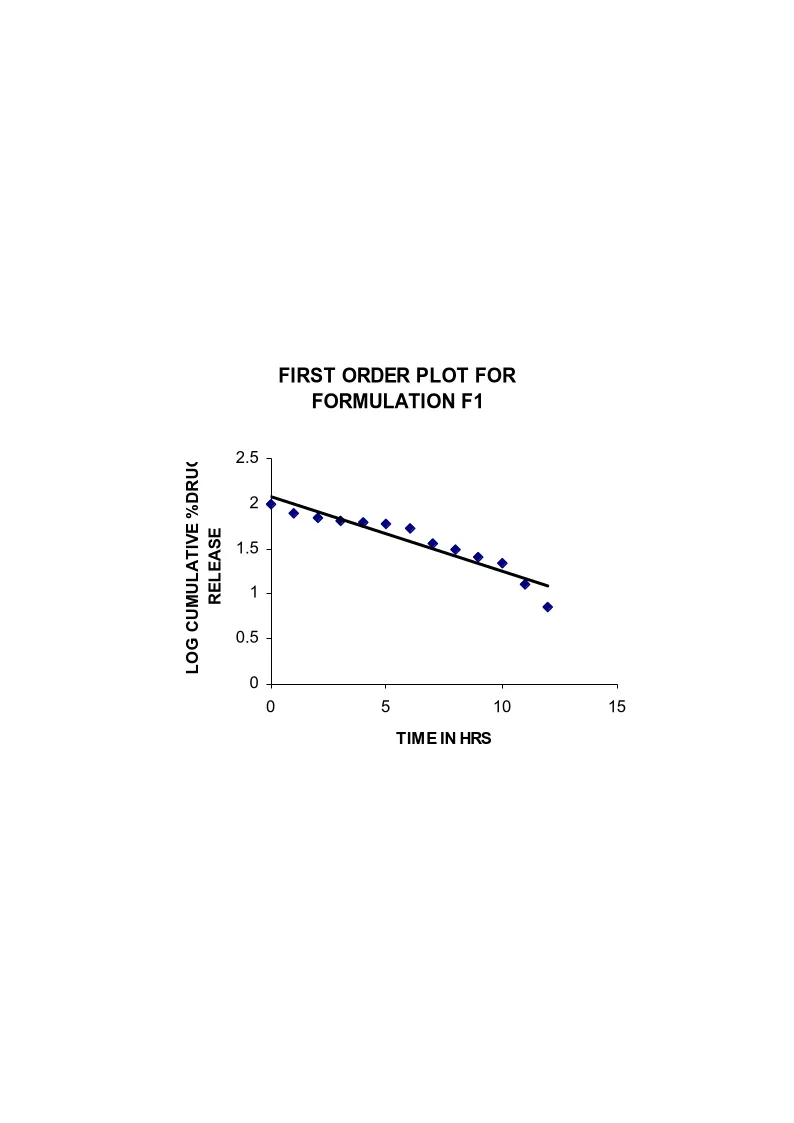
| F1 | 11.3036 | 0.99079 | 0.44296 | 0.832653 | 0.9804 | 0.66007 | 0.99194 |
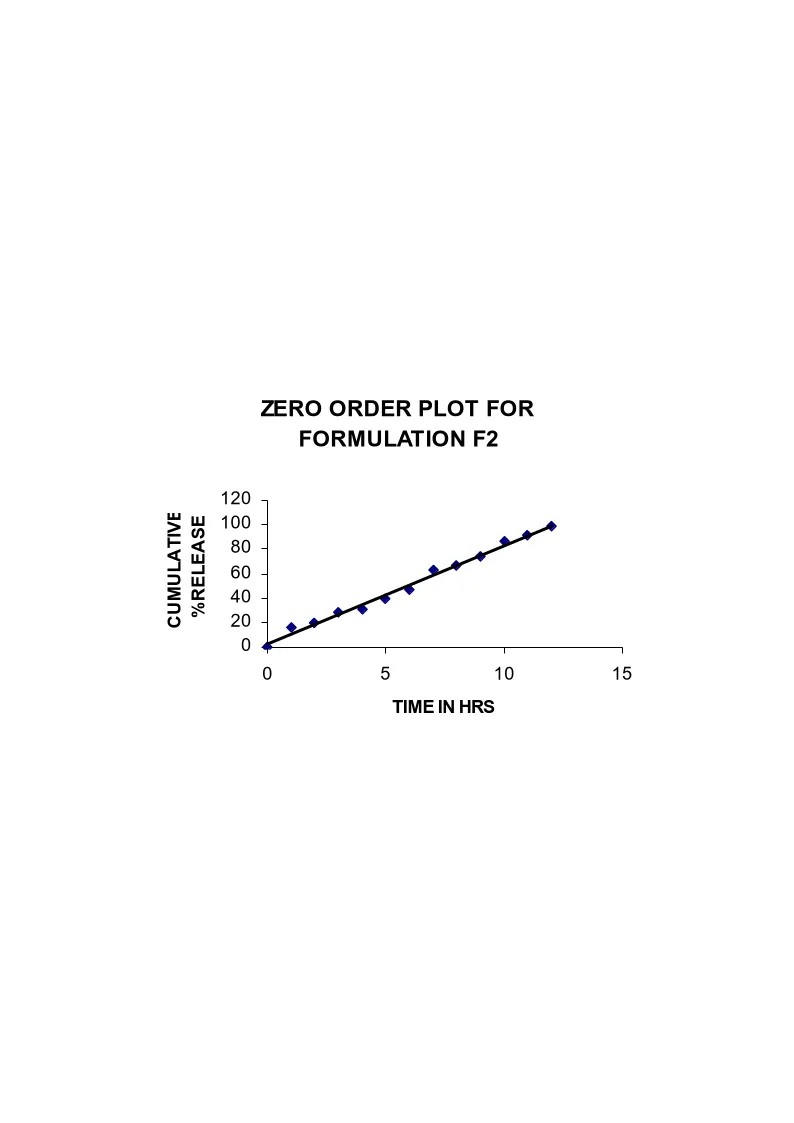
| F2 | 9.17987 | 0.99571 | 0.369 | 0.766278 | 0.96207 | 0.76813 | 0.99052 |
| F3 | 8.44584 | 0.99561 | 0.1635 | 0.947604 | 0.95609 | 0.8558 | 0.9958 |
| F4 | 7.67705 | 0.99746 | 0.21105 | 0.895399 | 0.95477 | 0.85626 | 0.99093 |
| F5 | 10.323 | 0.99688 | 0.38107 | 0.801977 | 0.96315 | 0.82223 | 0.9961 |
| F6 | 8.6549 | 0.99617 | 0.31972 | 0.817707 | 0.95783 | 0.84842 | 0.99494 |
K0- Zero order rate constant K1- First order rate constant
r – Coefficient of Correlation n- diffusional exponent
DISCUSSION
In the present work efforts have been made to develop mucoadhesive tablets of lamivudine using direct compression technique involving mucoadhesive polymers like Carbopol, various cellulose ethers having different degree of solubility and swellability, such as Hydroxy propyl methyl cellulose and xanthan gum. Magnesium stearate was included as anti adherent.
The FTIR spectral analysis showed that there was no appearance or disappearance of any characteristic peak, which confirms the absence of chemical interaction between drug and polymers.
The blend physical characteristics were studied. The angles of repose of all formulation blends F1 to F6were in the range 31º36' ± 0.825 to 34º35' ± 0.459. The bulk density, tapped density, Corr’s index and Hausner ratio were found in the range of 0.317-0.433gm/cc, 0.43-0.52gm/cc, 13.33-17.18 and 1.15-1.2 respectively. It reveals that all the formulation blends were having good flow characteristics and flow rates.
Thickness of all formulations F1-F6were in the range of 3.20 ± 0.142 to 3.50 ± 0.147 mm. Hardness of all formulations F1-F8 were in the range of 5.2 ± 0.447 to 5.8 ± 0.447 kg/sq.cm. Percentage friability of all formulations F1 to F8 was in the range of 0.353 to 0.467 %.
The Percentage weight variation for of all formulations F1 to F8 was in the range of 1.3 to 4.7%. Percentage of drug content for all formulations F1 to F8 was in the range of 96.1 ± 1.31 to 99.4 ± 1.52 %.
Water absorption
Swelling index was high 1.397 ± 0.0166 for F6 formulation, which having all polymers in high levels and low 1.119 ± 0.0346 for F1 formulation, which was having all polymers in low levels. Surface pH of all the formulations was in the range of 6.6 ± 0.17 to 7.2 ± 0.10.
Bioadhesion
The term bioadhesion is related to the ability of some synthetic biological macromolecules and hydrocolloids adhere to biological tissues. During the process of bioadhesion between materials, the surface energy of the system is decreased and a new interface is formed by destroying the two free surfaces. Many hydrophilic polymers Carbopol of forming hydrogen bonds have shown good adhesion properties. The property of polymer is closely associated with bioadhesion because polymer swelling depending up on the water imbibitions which in turn increases the diffusion and interpenetration of macromolecules. The mucoadhesive strength of all the formulations F1 to F8 was found to be in the range of 8.8 ± 0.16gms to 16.0 ± 0.12gms.
CONCLUSION
Mucoadhesion is a topic of current interest in the design of drug delivery systems. Mucoadhesive drug delivery systems are delivery systems which become adhesive on hydration to the mucin layer of a mucosal tissue. These systems prolong the residence time of the dosage form at the site of application or absorption and facilitate an intimate contact of the dosage form with the underlying absorption surface and thus contribute to improved bioavailability and better therapeutic performance of drugs.
In the present work mucoadhesive tablets of lamivudine were formulated employing Carbopol, Hpmc and xanthan gum as polymer materials with other common additives in tablets and the tablets were evaluated for drug release and in vitro Mucoadhesive properties. Oral controlled release formulations of lamivudine were designed and were evaluated. The following conclusions are drawn from the results obtained.
All the batches of lamivudine tablets prepared employing CARBOPOL, HPMC and XANTHAN GUM were of good quality with regard to weight varation, hardness, friability ,water absorption studies, surface pH, drug content, invitro drug release. All the formulations exhibited anomalous (non-ficikan transport) diffusion mechanism and follow zero order kinetic. The formulation F6 (CP -15mg, HPMC -40mg, and Mag.Ste-20mg) was selected as optimized formulation based on t90% value of 10.67 hrs with 99.74 ± 0.06% of drug release at 12th hr and had good bioadhesion strength. The mucoadhesive tablets of lamivudine may be a good way to bypass the extensive hepatic first-pass metabolism and to improve the bioavailability of lamivudine through mucosa.
REFERENCES




Sathyaraj. A., E. Gopinath, K. Lousion, S. Monesh, Formulation and Development of Mucoadhesive Tablets of Lamivudine Using Direct Compression Technique, Int. J. of Pharm. Sci., 2026, Vol 4, Issue 11, 2555-2569. https://doi.org/10.5281/zenodo.24300844
 10.5281/zenodo.24300844