

We use cookies to ensure our website works properly and to personalise your experience. Cookies policy
Department of pharmacy practice, Indira Gandhi Institute of Pharmaceutical Sciences, perumbavoor.
The increasing interest in plant-based cosmetic preparations has encouraged the development of herbal skincare products containing naturally derived bioactive constituents. Facial skin is continuously exposed to environmental pollutants and external factors that may affect its physiological condition and overall appearance. The accumulation of impurities, excess sebum, and dead skin cells can contribute to changes in skin texture. Face packs are widely used cosmetic preparations that help cleanse the skin, remove surface impurities, absorb excess oil, and improve facial appearance. The present study aimed to formulate and evaluate a polyherbal face pack using Artocarpus heterophyllus (jackfruit) leaves and Glycyrrhiza glabra (liquorice) roots as the principal herbal ingredients. These plants contain phytoconstituents such as flavonoids, phenolic compounds, saponins, and terpenoids, which are associated with antioxidant and antimicrobial properties. Preliminary phytochemical screening was carried out to identify the major bioactive constituents. Three different formulations (F1, F2, and F3) were developed using varying proportions of kaolin and Fuller's earth along with suitable excipients. The prepared formulations were evaluated for organoleptic characteristics, pH, spreadability, bulk density, tapped density, angle of repose, and moisture content. Furthermore, antioxidant activity was assessed using the DPPH free-radical scavenging assay, while antibacterial activity was investigated against Staphylococcus aureus. The study highlights the potential of combining these herbal ingredients for the development of effective polyherbal cosmetic face pack preparations.
Cosmetics are products primarily used for cleansing, beautifying, enhancing attractiveness, and modifying or improving the appearance of the skin. In Ayurveda, the application of herbal preparations to the face is traditionally known as “Mukha Lepa”. It is a topical therapeutic practice in which herbal pastes are applied to the facial skin to help manage various skin concerns, such as acne, pimples, scars, blemishes, and hyperpigmentation [1]. The skin is the largest organ of the human body and serves as an important indicator of an individual's overall health. It is composed of various biological components, including proteins, amino acids, lipids, carbohydrates, and other essential substances that contribute to its structure and function. Adequate and balanced nutrition plays a vital role in maintaining skin health, supporting its normal functions, and promoting a clear, smooth, and healthy appearance [2]. A face pack is a topical preparation with a smooth consistency, generally formulated using powdered ingredients and applied to the facial skin for cosmetic and skincare purposes. An appropriately formulated herbal face pack may help nourish the skin by supplying beneficial plant-derived constituents. Depending on its formulation, it may also support skin hydration, cleansing, and overall skin health. An effective herbal face pack should contain beneficial natural ingredients that help nourish the skin and maintain its overall health. The formulation should be selected based on its suitability for the skin type and individual skincare requirements. Different skin types require different herbal formulations to achieve desirable skincare effects. Depending on the difference in ingredients, the preparations may help improve skin texture, promote smoothness, and maintain a healthy-looking complexion [3]. Herbal face packs are considered cost-effective alternatives to certain synthetic cosmetic preparations. They are formulated using naturally derived ingredients and are commonly preferred for skincare applications. Their suitability and safety depend on the ingredients used, their quality, and the formulation.
The present study focuses on the formulation and evaluation of a herbal face pack intended to promote healthy, radiant-looking skin. The formulation incorporates jackfruit leaves (Artocarpus heterophyllus) and liquorice root (Glycyrrhiza glabra) as the principal herbal ingredients, along with suitable excipients such as Multani mitti, kaolin clay, and chickpea powder (Cicer arietinum). The prepared formulation is intended for topical application and will be evaluated for its physicochemical properties and cosmetic suitability [4].
POSITIVE ASPECT OF APPLYING FACE PACK:
Herbal face packs offer several potential benefits in skincare due to the presence of naturally derived ingredients. Different formulations can be selected according to individual skin types and specific concerns, including acne, pigmentation, dryness, and visible signs of ageing. The major positive aspects of using herbal face packs are described below.
1. Deep Cleansing: Face packs help remove accumulated dirt, surface impurities, and excess sebum from the skin. This cleansing action may help maintain skin hygiene and reduce the likelihood of pore blockage.
2. Hydration and Moisturization: Face packs containing ingredients such as honey, aloe vera, and yoghurt may help improve skin hydration, maintain moisture balance, and leave the skin feeling soft and supple.
3. Improvement in Skin Texture: Certain face pack ingredients help remove dead skin cells from the skin's surface, thereby improving skin texture and promoting a smoother appearance.
4. Skin Brightening: Herbal ingredients such as turmeric and sandalwood are traditionally used in cosmetic preparations to improve skin appearance. Depending on their composition, suitable formulations may help improve the appearance of uneven skin tone and pigmentation.
5. Antioxidant and Anti-ageing Properties: Some medicinal plants contain antioxidant compounds that help protect against oxidative stress. These properties may contribute to maintaining skin health and reducing the visible appearance of premature ageing.
6. Relaxation and Refreshment: The application of a face pack provides a soothing and refreshing experience. It can also promote relaxation and encourage regular skincare practices.
7. Naturally Derived Ingredients: Herbal face packs are formulated using plant-based substances and other naturally derived materials. They may serve as an alternative to certain conventional cosmetic preparations, although their safety depends on the quality, concentration, and suitability of the ingredients.
8. Targeted Skincare Benefits: Different herbal ingredients possess different properties and can be selected according to particular skin requirements. Depending on the formulation, face packs may help address concerns such as acne-prone skin, dryness, uneven pigmentation, and skin irritation [5].
ADVANTAGES:
DISADVANTAGES:
REVIEW OF LITERATURE:
AIM AND OBJECTIVES:
AIM:
To formulate and evaluate herbal face pack in three different formulations containing jackfruit leaves and liquorice root as the major herbal ingredients, with the objective of developing a safe, stable, and effective natural cosmetic formulation that promotes skin nourishment and improves its texture, appearance, and overall health.
OBJECTIVES:
PLAN OF WORK:
A. Preliminary Research and Literature Survey
B. Collection and Authentication of Plant Materials
C. Processing of Plant Materials
D. Extraction for phytochemical screening
E. Formulation Development
F. Evaluation of Herbal Face Pack
G. Documentation and Reporting
RESULTS AND DISCUSSION
SUMMARY AND CONCLUSION
MATERIALS AND METHOD:
MATERIALS:
1. JACKFRUIT LEAVES (Artocarpus heterophyllus lam)
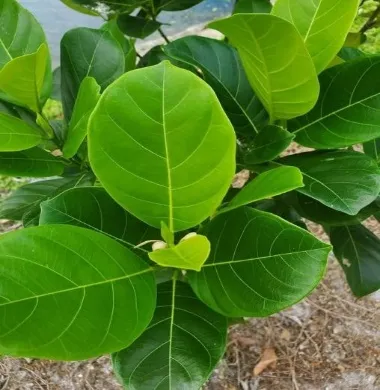
Figure 01: Artocarpus heterophyllus lam
Synonym: Artocarpus integrifolia, Artocarpus integrifolius, Artocarpus jaca
Biological source: Artocarpus heterophyllus is the ripe fruit, bark, leaves of jackfruit tree belongs to
the family moraceae
Family: Moraceae
Jackfruit (Artocarpus heterophyllus) is a large evergreen tree belonging to the family Moraceae, generally growing 8–25 metres in height. It has a broad crown, strong trunk, and simple, alternate, dark green, leathery leaves that are oval or elliptical in shape. It is a fast-growing tropical tree widely cultivated in India and other Southeast Asian countries, including Sri Lanka, Malaysia, Thailand, Indonesia, and the Philippines. It is also found in parts of Africa, Brazil, Australia, and the Caribbean. Jackfruit contains various phytoconstituents, such as flavonoids, morin, artocarpin, artocarpesin, tannins, β-sitosterol, cycloartenol, and other phenolic compounds. It is reported to possess several pharmacological properties, including antioxidant, anti-inflammatory, antibacterial, antifungal, anthelmintic, and immunomodulatory activities [6,7].
2.LIQUORICE (glycyrrhiza glabra)
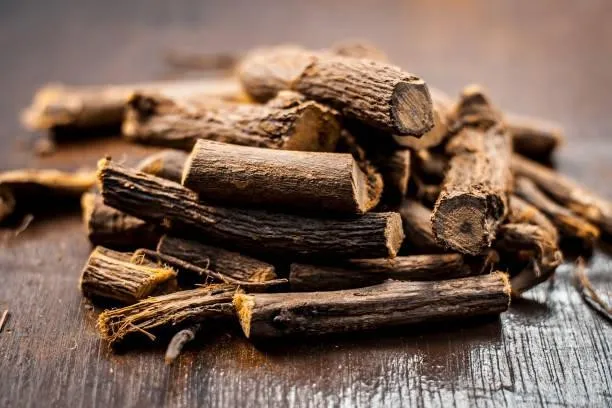
Figure 2: Glycyrrhiza glabra
Synonym: Mulethi, Yashtimadhu, Athimathuram, Aslussiesa
Biological source: Glycyrrhiza glabra is the dried, peeled or unpeeled roots, stolons and subterranean stems belongs to the family Fabaceae
Family: Fabaceae (Leguminosae)
Liquorice (Glycyrrhiza glabra) is a perennial herb belonging to the family Fabaceae, growing approximately 0.7–2 metres in height. It possesses a deep root system with underground rhizomes and horizontal stolons. The roots are brownish-green to dark brown, while the leaves consist of 9–17 pairs of leaflets. The flowers are small and purple-blue, and the fruits are flat, elliptical or linear pods. Liquorice is widely cultivated for its medicinal properties and is native to the Mediterranean region and parts of southwestern and central Asia. It grows in temperate climatic conditions at elevations ranging from sea level to approximately 1200 metres. The plant contains several important phytoconstituents, including glycyrrhizin, liquiritin, isoliquiritin, liquiritigenin, coumarins, polysaccharides, sterols, and sugars. It is reported to possess various pharmacological activities, including antioxidant, anti-inflammatory, antibacterial, antimalarial, antitussive, expectorant, antihyperglycemic, and immunostimulatory properties [8].
OTHER EXCIPIENTS:
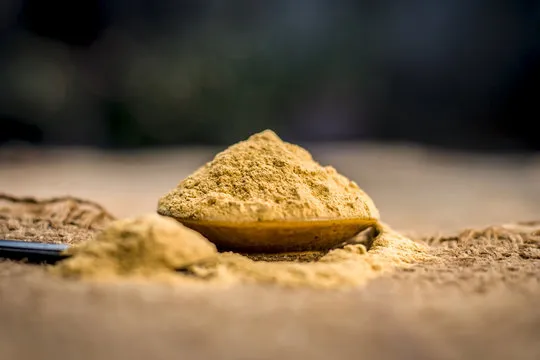
Multani mitti (fuller's earth): Multani mitti (Fuller’s Earth) is commonly used in skincare preparations due to its oil-absorbing and cleansing properties. It helps remove surface impurities and dead skin cells, while absorbing excess sebum and dirt from the skin. Its soothing properties may help calm minor skin irritation and improve the overall appearance of the skin. It is particularly suitable for oily skin and may leave the skin feeling clean, refreshed, and smooth. Regular use in an appropriately formulated face pack may also help improve skin texture and enhance its natural radiance [9].
Fig no. 3 fuller’s earth
Cicer arietinum powder (Gram Flour): Gram flour, commonly known as Besan, is a natural ingredient prepared by grinding dried chickpeas (Cicer arietinum). It has been traditionally used in skincare and haircare preparations because of its cleansing and exfoliating properties. It helps remove dirt, excess oil, and dead skin cells, leaving the skin feeling clean and smooth. Gram flour is also commonly used in face packs to reduce the appearance of tanning and control excess oil on the skin. Its cleansing action may help keep the skin fresh and improve its overall appearance. Therefore, it is a popular ingredient in herbal face pack formulations [9].
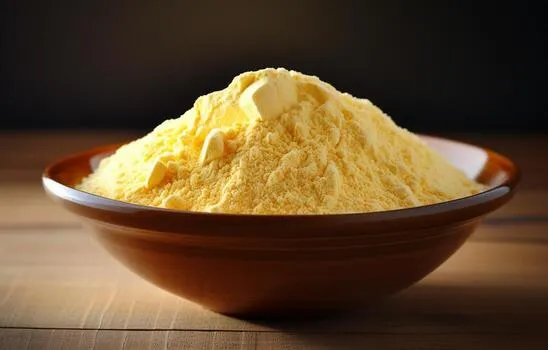
Fig no. 4 gram flour
kaolin clay: Kaolin, commonly known as China clay, is a naturally occurring mineral widely used in cosmetic and skincare formulations. It has oil-absorbing properties that may help reduce excess surface oil and remove dirt and impurities during cleansing. Due to its mild cleansing action, it is commonly included in formulations intended for oily skin. Kaolin may also help improve the skin's feel and appearance by leaving it clean, soft, and smooth [10].
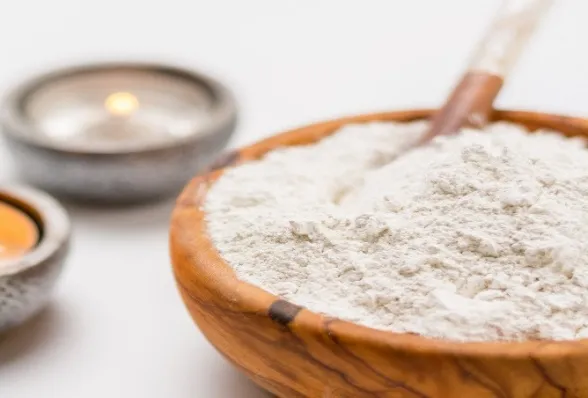
Fig no. 5 kaolin clay
COLLECTION AND AUTHENTICATION OF PLANT MATERIALS
The jackfruit leaves, and liquorice roots were collected from cherukunnam, and Ernakulam premises and authentified as Artocarpus heterophyllus lam, Glycyrrhiza glabra by Dr. Justin R Nayagam, Professor and Head of the Department of Botany, Union Christian College, Aluva, Ernakulam, Kerala.
PREPARATION OF PLANT EXTRACT FOR PHYTOCHEMICAL SCREENING:
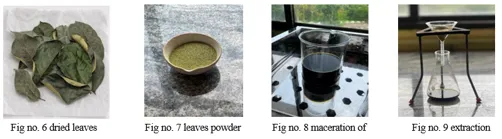
Jackfruit leaves: Fresh leaves of Artocarpus heterophyllus Lam. (25 g) were collected and cleaned thoroughly by rinsing three times with double-distilled water to remove adhering contaminants. The washed leaves were subsequently immersed in 250 mL of ethanol and allowed to undergo maceration for 72 hours. After completion of the extraction period, the mixture was passed through Whatman No. 1 filter paper to obtain a clear filtrate. The collected extract was transferred into a porcelain evaporating dish and concentrated by heating in a water bath to facilitate solvent removal. The concentrated extract was then retained for further experimental investigations and formulation development [11,12].
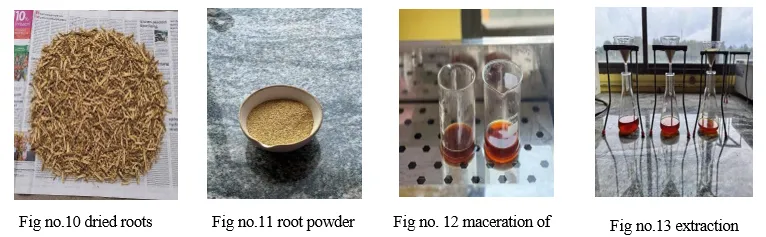
Liquorice roots: Powdered liquorice root (35 g) was placed in a beaker containing 350 mL of ethanol and covered with aluminium foil. The mixture was macerated for four days with gentle shaking every 24 hours. After extraction, the solution was filtered to remove the plant residue, and the filtrate was concentrated under controlled temperature conditions to obtain the crude extract[13,14].
FORMULATION OF FACE PACK
The collected jackfruit leaves were washed thoroughly under running water to eliminate dust and other unwanted particles. The cleaned leaves were drained and shade-dried in a well-ventilated environment until all moisture had been removed. The dried leaves were pulverized using a grinder, and the resulting powder was passed through a fine sieve to obtain a consistent texture. All the ingredients were then weighed separately for the formulation. The weighed ingredients were transferred into separate, clean, dry mortar. The herbal powders were initially blended together, after which gram flour, fullers earth and kaolin were incorporated gradually with continuous mixing. Each blend was mixed thoroughly until the ingredients were evenly distributed and a fine, uniform powder was obtained. The prepared mixtures were sieved again, if necessary, to remove any remaining aggregates. Finally, the finished face-pack powders were packed separately in clean, dry, airtight containers [15].
| Sl.no | Ingredients | property | F1 | F2 | F3 |
|---|---|---|---|---|---|
| 1. | Artocarpus heterophyllus lam | Antioxidant | 2.5 gm | 2.5 gm | 2.5 gm |
| 2. | Glycyrrhiza glabra | Antibacterial | 2 gm | 2 gm | 2 gm |
| 3. | Fullers earth | Absorbent | 6 gm | 9 gm | 11 gm |
| 4. | kaolin | Cleansing | 11 gm | 8 gm | 6 gm |
| 5. | Cicer arientinum powder |
Exfoliating | 3 gm | 3 gm | 3 gm |
Table no.01 formulation table
EVALUATION OF FACE PACK:
1.Organoleptic Evaluation:
The prepared face pack was examined for colour, appearance, odour, and texture. Colour and appearance were assessed visually, while texture was evaluated by touch. Odour was assessed.
2.pH Determination:
The pH of a 10% (w/v) aqueous dispersion of the formulation was measured using a digital pH meter calibrated with standard buffer solutions.
3.Angle of Repose:
The powder was allowed to flow through a funnel to form a heap. Its height and radius were measured, and the angle of repose was calculated using:
θ = tan-1 (h/r)
where, θ = Angle of repose, h = height of the cone, r = radius of base
4.Tapped Density:
A known quantity of powder was placed in a graduated cylinder and tapped until a constant volume was obtained. volume is calculated using:
Tapped Density=Weight of powder / Final tapped volume
5.Bulk Density:
Bulk density was determined by transferring a known weight of powder into a graduated cylinder and recording its initial volume. It was calculated using the formula:
Bulk density= weight of powder / bulk volume
6.Spreadability:
Required amount of face pack was placed between two glass slides, and a 50 g weight was applied for 1 minute. The spread diameter was measured, and the test was repeated three times.
S=(M*L)/T
Were, S= Spreadability, M=Weight placed on the slide, L=Diameter of circle in cm
7.Moisture Content (Loss on Drying):
Approximately 5 g of the powdered sample was placed in a hot air oven and maintained at 105°C until a constant weight was achieved. The moisture content was determined by measuring the difference between the initial and final weights of the sample and expressing the weight reduction as a percentage of the initial weight [16].
LOD = Initial weight-final volume/ initial weight x 100
8.Antioxidant Assay:
Antioxidant activity was evaluated using the DPPH method. Different sample concentrations (10–50 µg/mL) were mixed with DPPH solution and incubated in the dark for 30 minutes. Absorbance was measured at 517 nm using a UV-Visible spectrophotometer, and percentage radical scavenging activity and IC₅₀ were calculated [17].
% Scavenging = [(A₅₁₇ control − A₅₁₇ sample) / A₅₁₇ control] × 100
IC50 = C1+ (50 -I2) * (C2-C1) / I2-I1
9.Antibacterial Assay:
Antibacterial activity against Staphylococcus aureus was evaluated using the broth dilution method. Different extract concentrations (25, 50, 75, and 100 mg/mL) were prepared in 1% DMSO, inoculated with the test organism, and incubated at 37°C for 24 hours. Bacterial growth was assessed by observing turbidity, and the MIC was determined [18].
RESULT AND DISCUSSION
PHYSICAL APPEARANCE:
The prepared face pack formulations (F1, F2 and F3) were evaluated visually for their colour, odour, appearance and texture.
| Sl.no | Parameter | F1 | F2 | F3 |
|---|---|---|---|---|
| 1. | Colour | Off-white colour | Pale yellowish cream colour | Beige colour |
| 2. | Odour | pleasant | pleasant | pleasant |
| 3. | Texture | fine | fine | fine |
| 4. | Appearance | smooth powder | Smooth powder | Smooth powder |
Table no. 02 physical appearance
Among the formulations, F1 showed a smooth, uniform and satisfactory physical appearance, indicating better physical characteristics compared with F2 and F3.
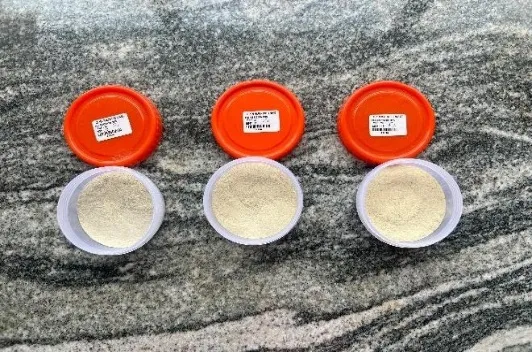
Fig no. 14 formulation of F1, F2, F3
PH MEASUREMENT:
The pH of the three formulations (F1, F2, F3) was determined by using the calibrated pH meter.
| Sl.no | Formulation | pH |
|---|---|---|
| 1. | F1 | 6.14 |
| 2. | F2 | 6.20 |
| 3. | F3 | 6.23 |
Table no. 03 pH
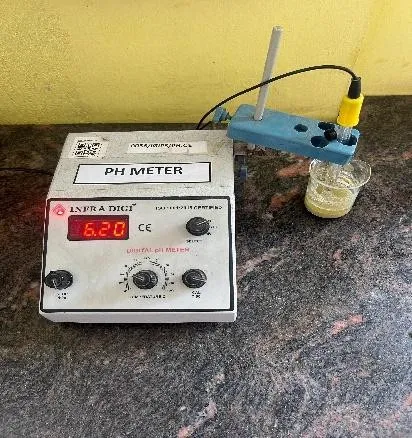
Fig no.15 pH
Based on the evaluation, all three formulations (F1, F2, and F3) showed pH values within the generally acceptable range for facial face pack preparations. Among them, F1 showed a suitable pH value, indicating that it is appropriate for application on the skin.
ANGLE OF REPOSE:
| Sl.no | Formulation | Angle of repose |
|---|---|---|
| 1. | F1 | 48.10 |
| 2. | F2 | 43.50 |
| 3. | F3 | 43.50 |
Table no. 04 angle of repose
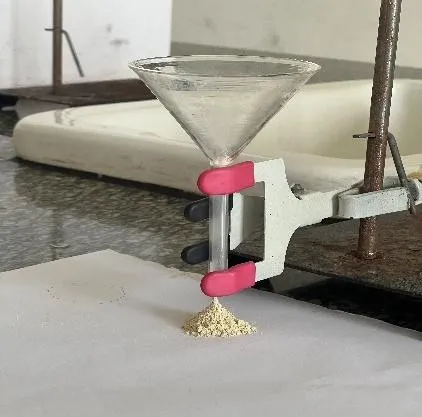
Figure 16: Angle of Repose
SPREADABILITY:
| Sl.no | Formulation | Spreadability (gcm/sec) |
|---|---|---|
| 1. | F1 | 0.10 |
| 2. | F2 | 0.9 |
| 3. | F3 | 0.9 |
Table no.05 spreadability
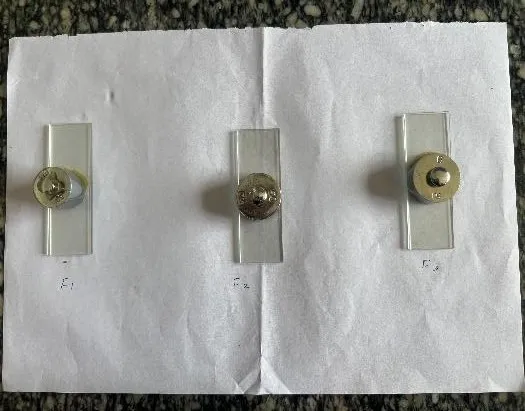
Fig no 17 spreadability
BULK DENSITY:
| Sl.no | Formulation | Bulk density |
|---|---|---|
| 1. | F1 | 49 |
| 2. | F2 | 48 |
| 3. | F3 | 49 |
Table no. 06 bulk density
MOISTURE CONTENT:
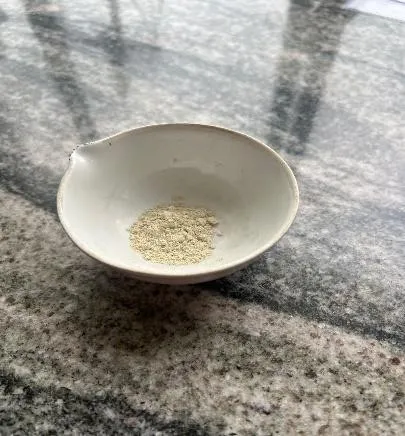
Table no. 07 moisture content
| Sl.no | Formulation | Moisture content |
|---|---|---|
| 1. | F1 | 0.15 |
| 2. | F2 | 0.13 |
| 3. | F3 | 0.14 |
Fig no. 18 moisture content
TAPPED DENSITY:
| Sl.no | Formulation | Tapped density |
|---|---|---|
| 1. | F1 | 0.69 g/ml |
| 2. | F2 | 0.64 g/ml |
| 3. | F3 | 0.62 g/ml |
Table no. 08 tapped density
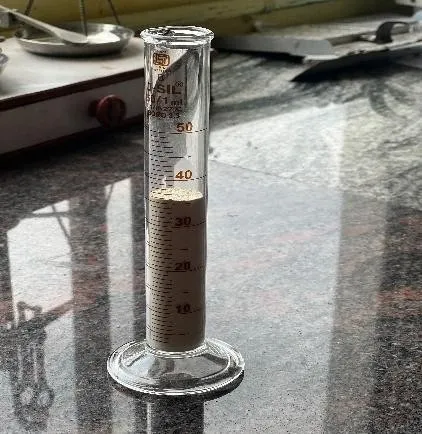
Fig no.19 tapped density
ANTIOXIDANT ACTIVITY BY DPPH ASSAY:
Table 09: Antioxidant Activity
| Sl.no | IC50 value (ppm) | Category Antioxidant activity |
|---|---|---|
| 1. | <50 | Very strong |
| 2. | 50-100 | Strong |
| 3. | 100-150 | Moderate |
| 4. | 150-200 | Weak |
The antioxidant activity of the prepared face pack formulation was evaluated by the DPPH (2,2-diphenyl-1-picrylhydrazyl) free-radical scavenging assay. The absorbance was measured at 517 nm, and the percentage inhibition was calculated.
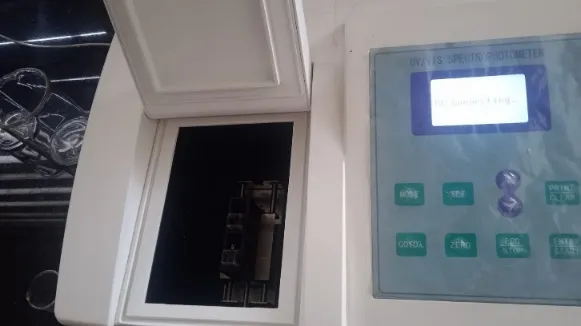
Figure 10: Antioxidant Study of F1
The antioxidant activity of peel off mask (F2) was found to be 22.14 ppm.
Result: The antioxidant activity of the peel-off mask was found to be very strong.
ANTI BACTERIAL ASSAY:
The F1 sample exhibited mm of inhibition against staphylococcus aureus. Thus, the result shows great anti-bacterial activity.
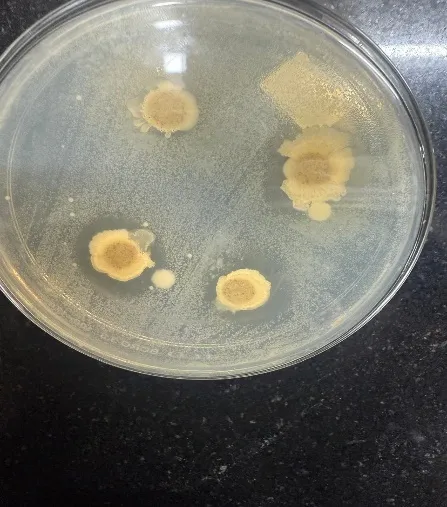
Figure 11: Zone of Inhibition of staphylococcus aureus
| Zone of inhibition of F1 staphylococcus aureus against in mm |
|---|
| 16 mm +/-0.82 |
Table no.12 antibacterial assay
SUMMARY AND CONCLUSION
The present study was carried out to formulate and evaluate a polyherbal face pack incorporating Artocarpus heterophyllus (Jackfruit leaves) and Glycyrrhiza glabra (Liquorice roots) as the major herbal ingredients. The main objective was to develop a herbal cosmetic preparation using naturally derived ingredients and to evaluate its physicochemical properties, antioxidant potential, and antibacterial activity.
The selected plant materials were collected, authenticated, and processed appropriately. Ethanolic extracts of jackfruit leaves and liquorice roots were prepared by maceration and used for further investigations. Three different formulations, namely F1, F2, and F3, were developed using varying proportions of Fuller's earth and kaolin, along with gram flour and the selected herbal ingredients.
The prepared formulations were evaluated for various physicochemical parameters, including organoleptic characteristics, pH, angle of repose, spreadability, bulk density, tapped density, and moisture content. The organoleptic evaluation revealed that all three formulations exhibited a pleasant odour, fine texture, and smooth powder appearance. Among the three formulations, F1 showed satisfactory physical appearance and suitable physicochemical characteristics.
The antioxidant activity of the prepared formulation was evaluated using the DPPH free-radical scavenging assay. Furthermore, the antibacterial evaluation against Staphylococcus aureus demonstrated antibacterial activity in the F1 formulation, suggesting the potential biological activity of the selected herbal ingredients. The findings of the present study indicate that the combination of Artocarpus heterophyllus and Glycyrrhiza glabra can be explored as a promising ingredient combination for the development of polyherbal cosmetic preparations.
In conclusion, the study provides a preliminary scientific basis for the development of a natural polyherbal face pack using jackfruit leaves and liquorice roots. The incorporation of these herbal ingredients may offer an alternative approach to plant-based cosmetic formulation development. However, further investigations, including stability studies, skin irritation testing, microbial evaluation with quantitative measurements, and dermatological studies, are required to establish the safety, stability, and effectiveness of the developed formulation for topical application.
REFERENCES


Aisha Shabana M. S., Shaba Binsi C., Arjun Sreekumar, Megha Manoj, Saranya P. S., Dr. J. Nandhakumar, Dr. Sreekanth S., Athira J. Nair, Kaithavalappil, Formulation and Evaluation of Poly Herbal Facepack, Int. J. of Pharm. Sci., 2026, Vol 4, Issue 11, 2439-2451. https://doi.org/10.5281/zenodo.24276829
 10.5281/zenodo.24276829