

We use cookies to ensure our website works properly and to personalise your experience. Cookies policy
1Department of chemistry Abhinav education society collage of pharmacy narhe pune
2student of Bachelor of pharmacy Abhinav education society collage of pharmacy narhe pune
Herbal shampoo is a natural hair care preparation made by using herbs and plant extracts for cleaning and nourishing the hair. It helps in removing dirt, excess oil, dandruff, and other impurities from the scalp without causing harmful effects. Herbal shampoos contain natural ingredients like shikakai, amla, reetha, neem, hibiscus, and aloe vera, which provide benefits such as hair growth promotion, scalp protection, conditioning, and strengthening of hair roots. Compared to synthetic shampoos, herbal shampoos are safer, eco-friendly, and produce fewer side effects because they contain less harmful chemicals. They are suitable for regular use and help maintain healthy, shiny, and smooth hair naturally. The main aim of herbal shampoo formulation is to provide effective cleansing action along with medicinal and cosmetic benefits for overall hair care.
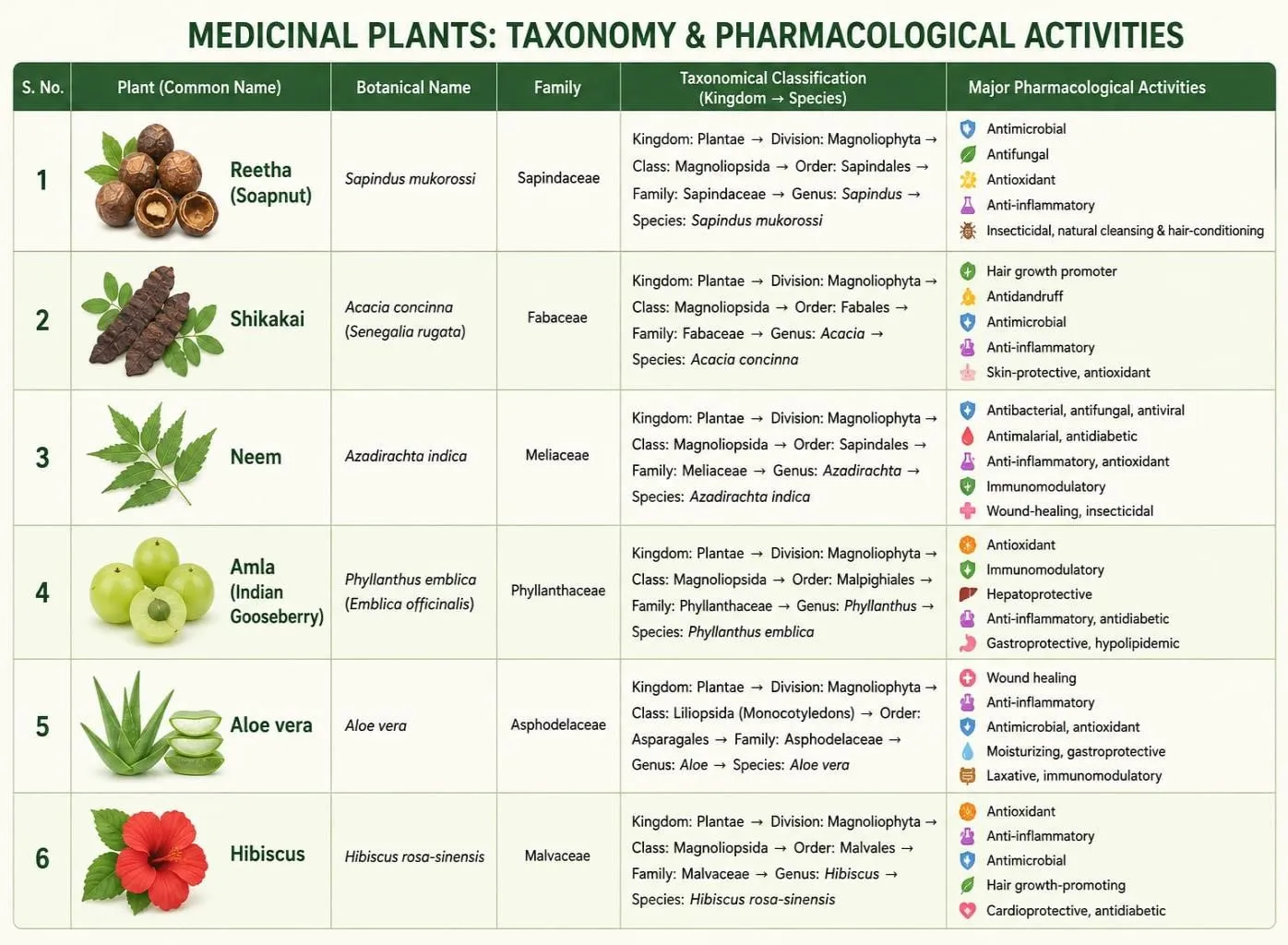
Herbal shampoo is a natural hair care product formulated using plant-based ingredients and herbal extracts. Unlike conventional shampoos that often contain synthetic chemicals such as sulfates, parabens, and artificial fragrances, herbal shampoos utilize the therapeutic properties of medicinal plants to cleanse and nourish the hair and scalp. Since ancient times, herbs have been used in traditional systems of medicine for maintaining healthy hair and preventing various scalp disorders. Hair is an important part of human appearance and personality. Environmental pollution, stress, improper diet, and excessive use of chemical-based hair products can lead to problems such as dandruff, hair fall, dryness, itching, and premature greying. Herbal shampoos offer a safer and more eco-friendly alternative by providing effective cleansing while minimizing damage to the hair structure. They help maintain the natural oil balance of the scalp and improve overall hair health. Various medicinal plants such as Shikakai (Acacia concinna), Reetha (Sapindus mukorossi), Amla (Phyllanthus emblica), Hibiscus (Hibiscus rosa-sinensis), Neem (Azadirachta indica), and Aloe vera are commonly used in herbal shampoo formulations. These herbs possess cleansing, conditioning, antimicrobial, antioxidant, and hair-strengthening properties. The natural saponins present in Shikakai and Reetha act as cleansing agents, while Amla and Hibiscus nourish the hair and promote growth. The increasing awareness of the harmful effects of synthetic chemicals and the growing demand for natural cosmetic products have led to a significant rise in the popularity of herbal shampoos. Herbal formulations are generally biodegradable, less toxic, and suitable for long-term use. They are considered safe for most hair types and help in maintaining healthy, shiny, and manageable hair. Therefore, the formulation and evaluation of herbal shampoo have become an important area cleansing, conditioning, and protection to the hair without causing adverse . shampoo is a natural hair cleansing preparation made by using herbal drugs and plant extracts. It is used to clean the hair and scalp without causing harmful side effects that are commonly associated with synthetic shampoos. Herbal shampoos contain ingredients obtained from medicinal plants such as Shikakai, Amla, Reetha, neem, hibiscus, aloe vera, bhringraj, and many other herbs known for their beneficial effects on hair. Hair is one of the most important parts of the human body and plays a major role in personal appearance and confidence. Due to pollution, stress, unhealthy lifestyle, excessive use of chemicals, and poor nutrition, many people suffer from hair problems such as dandruff, hair fall, dryness, split ends, and premature greying. Synthetic shampoos available in the market often contain chemicals like sulfates, parabens, and artificial fragrances which may damage the hair after long-term use. Because of these problems, the demand for herbal and natural cosmetic products has increased rapidly. Herbal shampoos are prepared by combining various herbal ingredients that possess cleansing, conditioning, antimicrobial, anti-dandruff, and nourishing properties. These shampoos help in maintaining healthy hair growth, improving scalp condition, and providing natural shine and softness to the hair. Unlike synthetic shampoos, herbal shampoos are considered safer, ecofriendly, biodegradable, and less irritating to the scalp. The use of herbs for hair care has been practiced since ancient times in traditional systems of medicine such as Ayurveda. In Ayurveda, herbs like shikakai, amla, and reetha are widely recommended for maintaining healthy and strong hair. These herbs are rich in natural nutrients, vitamins, antioxidants, and saponins which help to cleanse the scalp gently and strengthen hair roots naturally. Nowadays, herbal shampoos have become highly popular in the cosmetic and pharmaceutical industries because consumers prefer products that are natural, safe, and free from harmful chemicals. Herbal shampoos are suitable for regular use and can be formulated for different hair types such as dry hair, oily hair, damaged hair, and dandruff-prone hair. Therefore, herbal shampoo can be considered an effective and natural alternative to synthetic shampoos for maintaining healthy, clean, soft, and attractive hair.
Hair anatomy:
Hair is a keratinized structure that grows from hair follicles present in the skin. It consists of two main parts: the hair shaft and the hair root.
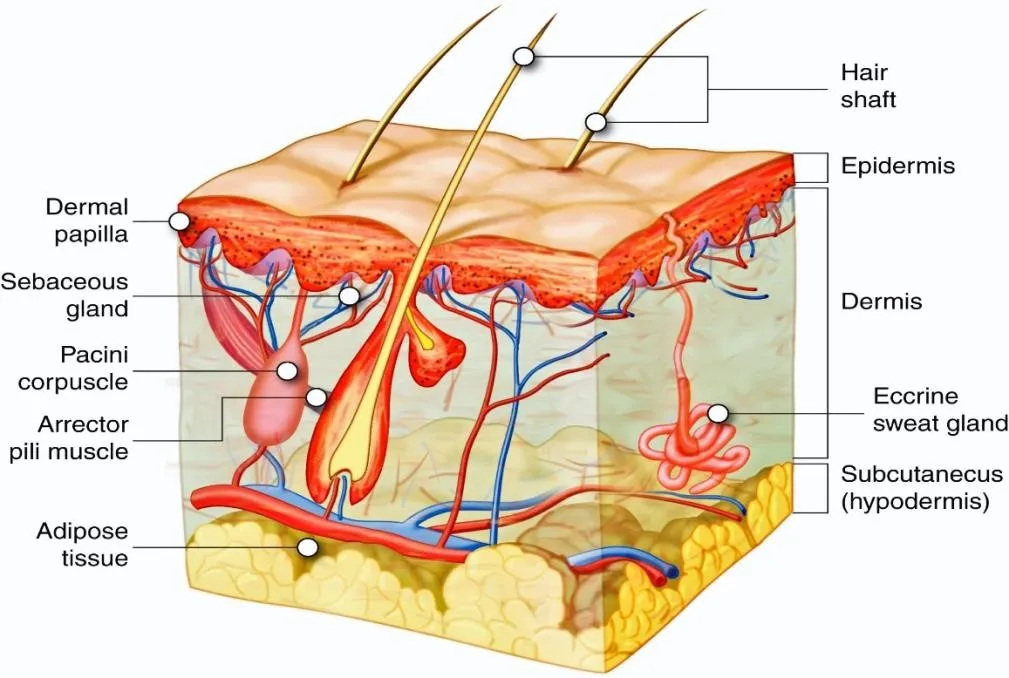
Fig number :01
The hair shaft is the visible part of the hair that extends above the surface of the skin. It is composed of dead, keratinized cells and does not contain blood vessels or nerves. The hair shaft plays an important role in protecting the scalp and contributing to an individual’s appearance. It is mainly made up of a protein called keratin, which provides strength, elasticity, and durability to the hair.
The hair shaft consists of three layers:
Cuticle – the outer protective layer.
Cortex – the middle layer responsible for strength, color, and texture.
Hair follicles are small, tube-like structures present in the skin that produce and support the growth of hair. They originate from the epidermis and extend deep into the dermis layer of the skin. Each hair follicle contains a hair root, sebaceous (oil) gland, and associated blood vessels that provide nutrients necessary for hair growth. Hair follicles undergo a continuous cycle of growth, regression, and rest, which regulates hair production. They play an important role in hair growth, scalp health, and protection of the skin. The condition and function of hair follicles directly influence the thickness, strength, and overall health of hair.
Hair growth cycle:
The hair growth cycle is the natural sequence of stages through which each hair follicle passes during hair production and shedding.

Fig number :02
1.Anagen Phase (Growth Phase)
Hair follicle actively grows and produces new hair.
This is the longest phase, lasting about 2–7 years.
2.Catagen Phase (Transition Phase)
Hair growth stops and the hair follicle shrinks.
3.Telogen Phase (Resting Phase)
Hair remains in the follicle without growing.
After this phase, the old hair sheds and a new hair begins to grow.
Current hair problems and treatment:
1Hair Fall (Alopecia)
Problem: Excessive shedding of hair.
Treatment: Balanced diet, minoxidil, hair growth supplements, stress management.
2.Dandruff
Problem: Flaking and itching of the scalp.
Treatment: Anti-dandruff shampoos containing ketoconazole, zinc pyrithione, or herbal ingredients.
3.Dry and Damaged Hair
Problem: Rough, brittle hair due to chemical treatments or heat styling.
Treatment: Hair conditioners, hair oils, protein masks, and reducing heat exposure.
4.Split Ends
Problem: Hair shaft splitting at the ends.
Treatment: Regular trimming and use of moisturizing products.
5.Premature Greying
Problem: Early loss of hair pigment.
Treatment: Nutritional support, antioxidant-rich diet, and hair coloring if desired.
6.Scalp Infections
Problem: Fungal or bacterial infections causing irritation and hair loss.
Treatment: Antifungal or antibacterial medications prescribed by a healthcare professional.
7Oily Scalp
Problem: Excess sebum production leading to greasy hair.
Treatment: Regular cleansing with mild shampoo and proper scalp hygiene.
8.Hair Thinning
Problem: Reduced hair density.
Treatment: Minoxidil, nutritional supplements, and treatment of underlying causes.
9.Frizzy Hair
Problem: Unmanageable and rough hair texture
Herbal shampoo:
Herbal shampoo is a hair care product prepared using natural plant-based ingredients such as herbs, leaves, fruits, roots, and extracts. It is designed to cleanse the hair and scalp while maintaining their natural health. Unlike synthetic shampoos, herbal shampoos contain fewer harsh chemicals and are generally considered safer and more eco-friendly. Herbal shampoos help remove dirt, excess oil, and dandruff from the scalp while nourishing the hair roots. Common ingredients used in herbal shampoos include shikakai, amla, reetha, neem, hibiscus, aloe vera, and bhringraj. These herbs provide various benefits such as promoting hair growth, reducing hair fall, preventing dandruff, and improving hair texture.
Types of Herbal shampoo :
1.Neem Herbal Shampoo
2.Amla Herbal Shampoo
3.Shikakai Herbal Shampoo
4.Aloe Vera Herbal Shampoo
5.Hibiscus Herbal Shampoo
6.Reetha (Soapnut) Herbal Shampoo
7.Bhringraj Herbal Shampoo
8.Tulsi Herbal Shampoo
9.Rosemary Herbal Shampoo
10.Ayurvedic Mixed Herbal Shampoo
Function of herbal shampoo:
Cleanses hair and scalp.
Removes dirt, dust, and excess oil.
Controls dandruff.
Promotes healthy hair growth.
Benefits of herbal shampoo :
Cleanses hair and scalp naturally.
Reduces dandruff and scalp irritation.
Promotes healthy hair growth.
Strengthens hair roots.
Helps control hair fall.
Advantages of herbal shampoo:
1Herbal shampoos contain plant-based ingredients like aloe vera, neem, hibiscus, amla, shikakai, and reetha, which are generally gentler on the hair and scalp.
2.Fewer Harsh Chemicals
They usually have little or no sulfates, parabens, or synthetic fragrances, reducing the risk of scalp irritation and hair damage.
3.Good for Sensitive Scalp
Because of their mild formulation, herbal shampoos are often suitable for people with dandruff, itching, dryness, or allergies
4Strengthens Hair Naturally
Herbs such as amla and bhringraj may help nourish hair roots, reduce hair fall, and improve hair strength.
5.Helps Maintain Natural Oils
Herbal shampoos clean the scalp without stripping away too much natural oil, helping hair stay soft and healthydvantages of herbal shampoo:
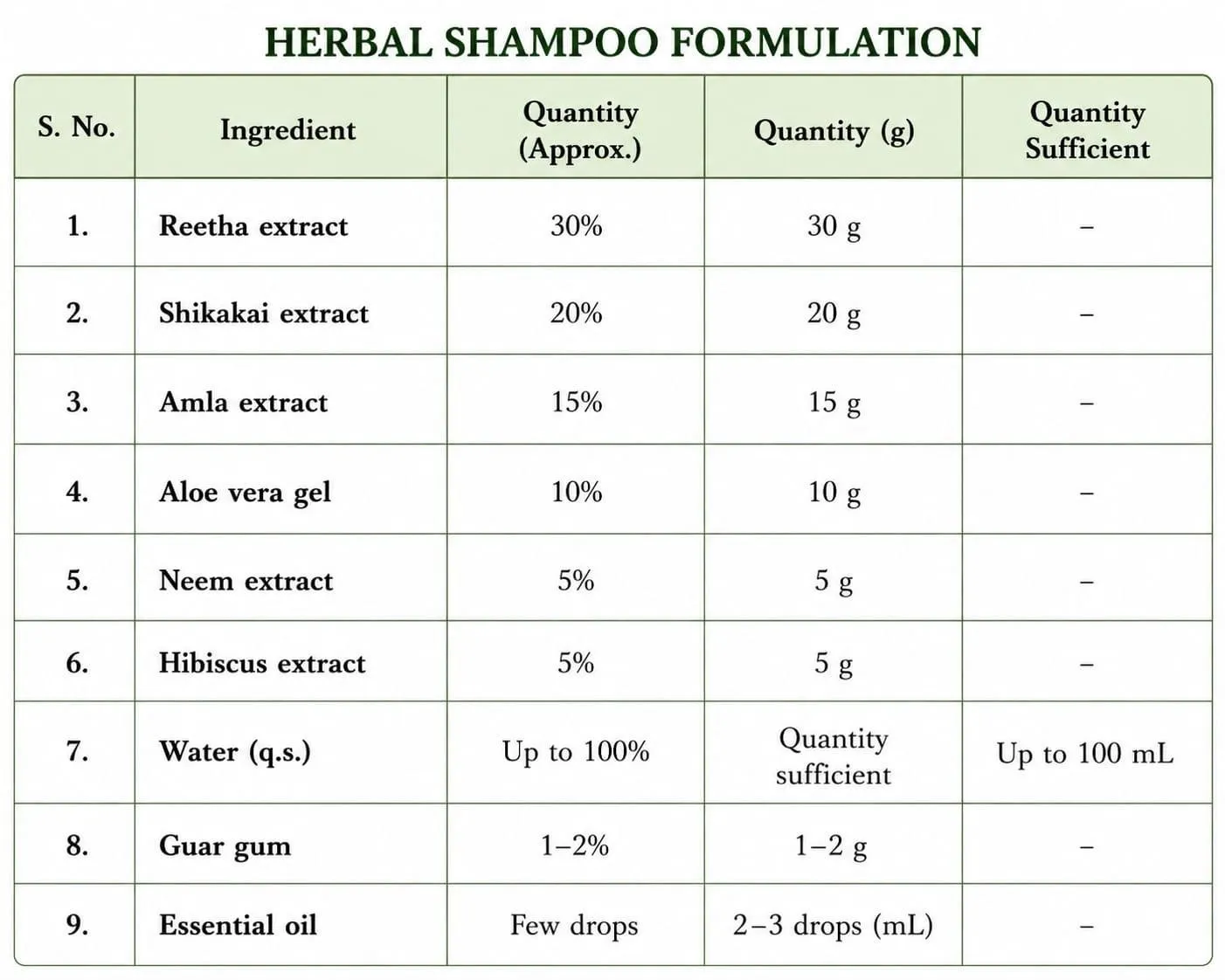
Formulation table
Formulation method :
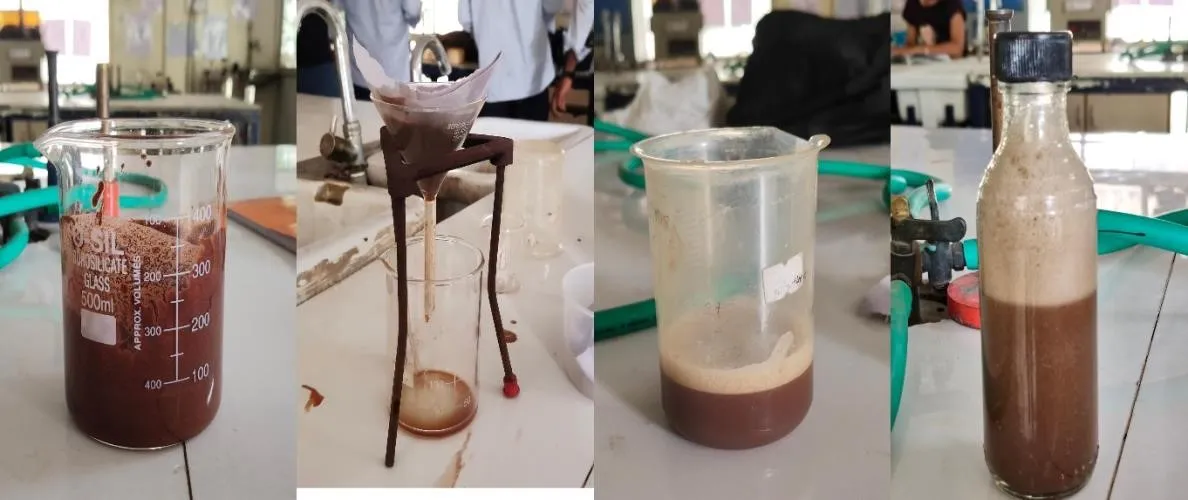
Fig number:04formulation method
Aim : To formulate Evaluate herbal shampoo using in shikakai Objective:
1.To promote healthy hair growth.
2.To cleanse the scalp naturally.
3.To reduce dandruff and scalp irritation.
4.To strengthen hair roots.
5.To prevent hair fall and hair breakage.
6.To maintain the natural shine and softness of hair.
7.To act as a natural conditioning agent.
8.To provide antimicrobial and antioxidant benefits for scalp health.
Material and Methods:
Selection of collection of sample:
Healthy and mature fruits (pods) of Shikakai are selected.
Samples should be free from pests, diseases, and physical damage.
The fruits are collected during the appropriate harvesting season when fully matured.
Collected samples are cleaned to remove dust, dirt, and foreign materials.
The samples are shade-dried and stored in airtight containers until further use herbal shampoo
Preparation of Extract:
Collect and clean the dried shikakai pods.
Dry the material completely and grind it into a coarse powder.
Weigh the required quantity of shikakai powder.
Soak the powder in distilled water (or ethanol) for 24 hours.
Heat the mixture gently for 30–60 minutes to enhance extraction.
Filter the extract using muslin cloth or Whatman filter paper.
Concentrate the filtrate by evaporation on a water bath.
Store the obtained shikakai extract in an airtight container for further use.
Procedure:
Collect and clean herbal ingredients.
Dry and powder the herbs.
Boil the herbal powder in water for 20–30 minutes.
Filter the extract using muslin cloth/filter paper.
Add shampoo base and stir well.
Add thickening agent and mix uniformly.
Add fragrance/preservative if required.
Adjust pH to 5.5–7.
Fill the shampoo into clean bottles.Label and store in a cool, dry place
Evaluation of test :
Visual Assement :
(1) PH determined:
Aim: To determine the pH of the prepared herbal shampoo.
Procedure:
Take 10 mL of herbal shampoo.
Dilute it with 90 mL of distilled water (10% solution).
Stir the solution thoroughly.
Calibrate the pH meter using standard buffer solutions.
Immerse the electrode in the shampoo solution.
Record the pH value displayed on the pH meter.
Observation:
The pH of the prepared herbal shampoo was found to be 5.5–7.0, which is suitable for hair and scalp.
Result:
The formulated herbal shampoo showed an acceptable pH range and was safe for regular use.

Fig number : 05 ph determination
(2) Solid content percentage:
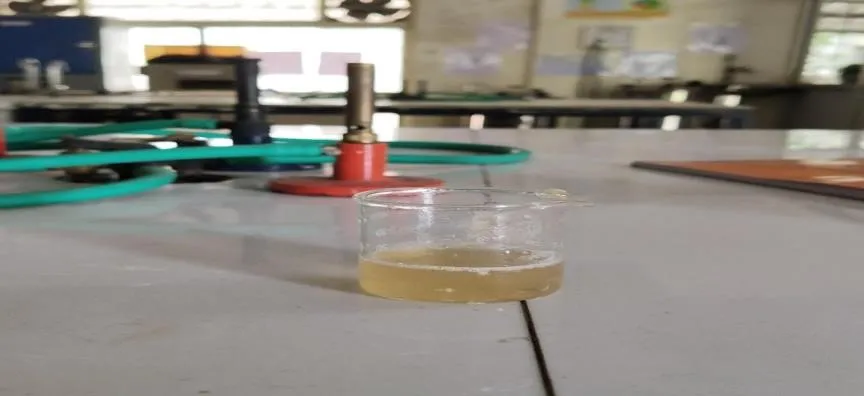
Fig number:06 solid content determination
Procedure (Short):
Weigh an empty evaporating dish.
Add a known quantity of shampoo (e.g., 4 g) and weigh.
Dry the sample in a hot air oven until constnt weight is obtained.
Weigh the dried residue.
Calculate the solid content percentage using the formula
(3)Foam stability :
Foam stability is the ability of the foam produced by a shampoo to remain intact and not collapse for a certain period of time.
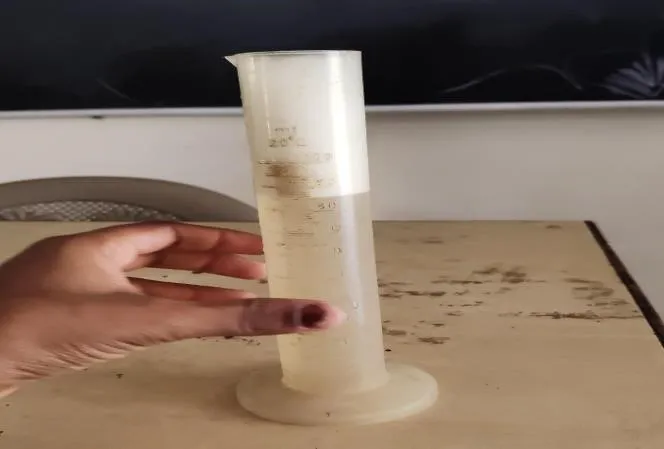
Fig number: 07 foam stability
(4) Skin irritation test :
skin irritation test is performed to evaluate the safety of a herbal shampoo and determine whether it causes any irritation, redness, itching, swelling, or allergic reactions on the skin. A small amount of the shampoo is applied to a patch of skin, usually on the forearm or behind the ear, and observed for 24–48 hours. If no signs of irritation or discomfort are observed, the formulation is considered safe for topical use.

Fig number: 08 skin irritation test
(5) Washability
Washability refers to how well a material, fabric, paint, or product can withstand washing without losing its appearance, performance, or structure.
Examples:
Textiles/clothing: resistance to shrinking, fading, or damage after laundering.
. Paints/coatings: ability to be cleaned or scrubbed without peeling or losing color.
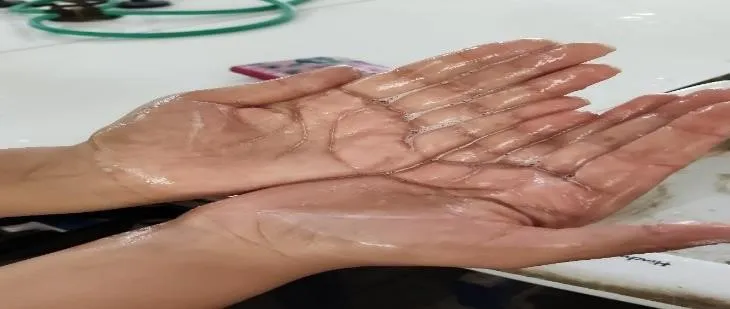
Fig Number:09 washability test
(6) Stability studies :
The stability studies was carried out of prepared shampoo standards room’ temperature of 25- 30 °C for 4 week
Evaluation test and Result :
1.visual Assement:
2.PH :5.6
3 . Solid content percentage:10%
4.foam stability:
The 20 ml foam and stable for more than 5
5.skin irritation test:
No irritation
6.washability :
Easily washable
7.stability studies :
The stability study was carried out for the prepared shampoo standard
Room temperature of 25-30°C for 4 weeks
CONCLUSION:
Herbal shampoo is a natural hair cleansing formulation prepared from herbal ingredients such as shikakai, amla, reetha, and other medicinal plants. These ingredients help to clean the hair and scalp effectively while providing nourishment and reducing the harmful effects associated with synthetic chemicals. Herbal shampoos are generally mild, safe, and suitable for regular use. The formulated herbal shampoo showed satisfactory results in various evaluation parameters such as pH, foam stability, washability, and solid content. The results indicate that the shampoo possesses good cleansing ability and is effective in maintaining healthy hair and scalp conditions. Therefore, herbal shampoo can be considered a safe, economical, and eco-friendly alternative to conventional shampoos.
DISSCUSION
The herbal shampoo was successfully formulated using Shikakai extract and other natural ingredients. Herbal shampoos are preferred because they contain plant-based constituents that help cleanse the hair and scalp gently while minimizing the side effects associated with synthetic chemicals. The formulation was designed to provide effective cleansing, good foaming ability, and improved hair manageability. Various evaluation parameters were carried out to assess the quality of the formulated shampoo. The pH of the shampoo was found to be within the acceptable range for scalp application, indicating its suitability for regular use. Foam stability and washability tests showed satisfactory performance, demonstrating that the shampoo can effectively remove dirt and oil from the hair. The solid content percentage was also within the desired limits, contributing to the product's consistency and ease of application. The skin irritation test indicated that the formulation was non-irritant and safe for topical use. The overall results suggest that the herbal shampoo possesses good physicochemical properties and provides effective hair care benefits. herbalshampoo can be considered a safe, economical, and eco-friendly alternative to commercially available herbal shampoo
REFERENCES
https://doi.org/10.22159/ajpcr.2018.v11s4.31713.
(2022). Formulation and evaluation of polyherbal shampoo containing different herbal extract. Research Journal of Topical and Cosmetic Sciences, 13(2), 87–91. https://doi.org/10.52711/2321-5844.2022.00014.
https://doi.org/10.22159/ajpcr.2018.v11s4.31713.
(2022). Formulation and evaluation of polyherbal shampoo containing different herbal extract. Research Journal of Topical and Cosmetic Sciences, 13(2), 87–91. https://doi.org/10.52711/2321-5844.2022.00014.






Varsharani Patil*, Mrunali Patil, Sakshi Jagtap, kirti Andewad, Sanket kamble, kedar kale, Formulation and evaluation herbal shampoo, Int. J. of Pharm. Sci., 2026, Vol 4, Issue 6, 4859-4869. https://doi.org/10.5281/zenodo.20757317
 10.5281/zenodo.20757317