

We use cookies to ensure our website works properly and to personalise your experience. Cookies policy
Department of pharmaceutics, Dr. Gurachar Nargund College of pharmacy Muradi Koppal.
The increasing prevalence of antibiotic resistance has necessitated the exploration of alternative antimicrobial agents. This study focuses on the formulation and evaluation of a polyherbal cream combining Turmeric (Curcuma Longa), and garlic (Allium sativum), both recognized for their potent antimicrobial properties. The herbal cream was formulated using suitable excipients includingbees wax, stearic acid, emulsifying wax, liquid paraffin, methyal paraben, gylcerine and rose oil to enhance its stability and efficacy. The formulation was prepared by emulsification technique and evaluated for various physicochemical parameters including physical appearance, pH, viscosity, spreadability, washability, consistency, and homogeneity. The prepared cream exhibited a smooth texture, vibrant yellow color, pleasant odor, and non-greasy consistency with good homogeneity. The pH of the formulation was found to be 5.4, which is compatible with normal skin pH. The viscosity was observed to be 15000 cps to 12000cP at12 rpm 30 rpm, indicating suitable consistency for topical application. The spreadability value was satisfactory, demonstrating ease of application and uniform distribution on the skin. The cream also showed good washability and no greasiness. The study concluded that the formulated herbal cream is stable, safe, and effective for topical use.
The skin is the largest organ of the human body and acts as an important protective barrier against physical, chemical, and biological challenges from the external environment. In addition to providing mechanical protection, the skin contributes to thermoregulation, prevention of excessive water loss, immune Defence, and maintenance of physiological homeostasis. Although the intact skin provides an effective barrier against microorganisms, disruption of skin integrity through cuts, abrasions, burns, wounds, inflammation, or other injuries can facilitate the colonization and multiplication of pathogenic microorganisms. Microbial contamination of damaged skin may interfere with normal tissue repair and can contribute to prolonged inflammation, delayed wound healing, and development of localized infections. Therefore, antimicrobial agents incorporated into suitable topical dosage forms have considerable importance in maintaining skin health and reducing microbial burden1.
1.1 Basic structure and function skin
The epidermis is the outer layer, it provides the first barrier against the environment and contains cells that help with protection and pigmentation. The dermis lies beneath it and contains collagen, elastin, blood vessels, nerves, glands, and hair follicles, giving skin strength, flexibility, sensation, and support for sweat and oil production.
The hypodermis is the deeper layer that connects skin to underlying tissues and stores fat for protection and insulation.1
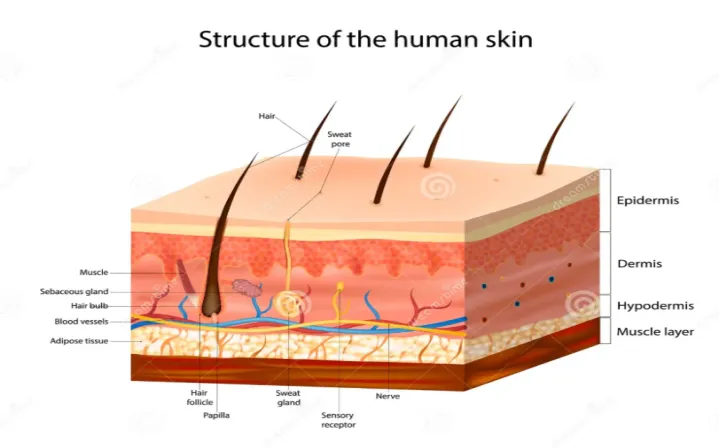
Figure: 1 Structure of Human Skin
FUNCTIONS OF SKIN:
Skin performs the following functions:
A) Protection: An anatomical barrier from pathogens and damage between the internal and external environment in bodily defence, Langerhans cells in the skin are part of the adaptive immune system.
B) Sensation: Contains a variety of nerve endings that react to heat and cold, touch, pressure, vibration, and tissue injury, see somatosensory system and haptics.
C) Heat regulation: The skin contains a blood supply far greater than its requirements which allows precise control of energy loss by radiation, convection and conduction. Dilated blood vessels increase perfusion and heat loss, while constricted vessels greatly reduce cutaneous blood flow and conserve heat.
D) Control of evaporation: The skin provides a relatively dry and semi-impermeable barrier to fluid loss. Loss of this function contributes to the massive fluid loss in burns.
E) Aesthetics and communication: Others see our skin and can assess our mood, physical state and attractiveness.
F) Storage and synthesis: Acts as a storage centre for lipids and water, as well as a means of synthesis of vitamin D by action of UV on certain parts of the skin2.
G) Water resistance: The skin acts as a water resistant barrier so essential nutrients aren't washed out of the body2.
COMMON SKIN PROBLEM:
Acne is a very common inflammatory condition caused by clogged follicles with oil, dead skin cells, and bacteria.
Inflammation can also appear as redness, swelling, itching, or irritation in conditions such as eczema-like skin disorders. Dryness occurs when the skin barrier loses moisture, leading to tightness, flaking, and increased vulnerability to irritation or infection. Skin infections can happen when the barrier is weakened, making it easier for microbes to enter and multiply2.
Causes of skin infection:
Fungal infection: Body chemistry and lifestyle can increase the risk of fungal infection. For example, you may experience multiple bouts of athlete’s foot if you’rerunner or if you sweat a lot. Fungi often grow in warm, moist environment. Wearing sweaty or wet clothes is a risk factor for skin infection
The increasing interest in plant-derived medicines has encouraged researchers to investigate medicinal plants as potential sources of biologically active compounds. Natural products have historically provided a valuable source of therapeutic agents, and medicinal plants contain diverse phytoconstituents such as polyphenols, flavonoids, terpenoids, alkaloids, tannins, glycosides, and organosulfur compounds. These constituents may possess antibacterial, antifungal, antioxidant, anti-inflammatory, and wound-healing properties. Consequently, herbal topical preparations are being investigated as potential alternatives or complementary approaches to conventional antimicrobial preparations2.
1.2 CREAM:
Creams are the topical preparations which can be applied on the skin. Creams are defined as “viscous liquid or semi-solid emulsions of either the oil-in-water or water-in-oil type” dosage forms which consistency varies by oil and water. Creams are used for cosmetic purposes such as cleansing, beautifying, improving appearances, protective or for therapeutic function.
These topical formulations are used for the localized effect for the delivery of the drug into the underlying layer of the skin or the mucous membrane. These products are designed to be used topically for the better site-specific delivery of the drug into the skin for skin disorders
Creams are considered as a pharmaceutical product as they are prepared based on techniques developed in the pharmaceutical industry, unmedicated and medicated creams are highly used for the treatment of various skin conditions or dermatoses. Creams can be ayurvedic, herbal or allopathic which are used by people according to their needs for their skin conditions.
TYPES OF CREAMS:
They are divided into two types:
CLASSIFICATION OF CREAMS:
All the skin creams can be classified on different basis:
1. According to function, e.g. cleansing, foundation, massage, etc.
2.According to characteristics properties, e.g. cold creams, vanishing creams, etc.
3.According to the nature or type of emulsion:
4. Make-up cream (o/w emulsion): a) Vanishing creams. b) Foundation creams.
5. Cleansing cream, Cleansing milk, Cleansing lotion (w/o emulsion)
6. All-purpose cream and general creams.
7. Night cream and massage creams.
8. Skin protective cream.
9. Hand and body creams.
10. Winter cream (w/o emulsion): a) Cold cream or moisturizing creams.
These creams are used more nowadays than before. These creams are somewhat oily but non-greasy type and can spread on the skin easily. This creams also used for antimicrobial and antifungal activity. And protective creams for prevention or alleviation of sunburns or for the treatment of roughened skin area3.
APPLICATIONS OF HERBAL CREAMS:
ADVANTAGES:
DISADVANTAGES:
1.3 TURMERIC
Among medicinal plants, turmeric (Curcuma longa Linn.) has attracted considerable scientific attention because of its diverse pharmacological activities. Turmeric belongs to the family Zingiberaceae and its rhizome has been traditionally used in Indian and other Asian systems of medicine. The major biologically active constituents of turmeric are curcuminoids, including curcumin, demethoxycurcumin, and bisdemethoxycurcumin. Curcumin is regarded as the principal bioactive polyphenolic constituent and is responsible for much of the characteristic yellow colour of turmeric. In addition to curcuminoids, turmeric contains volatile oils and other phytoconstituents that may contribute to its biological activities4.
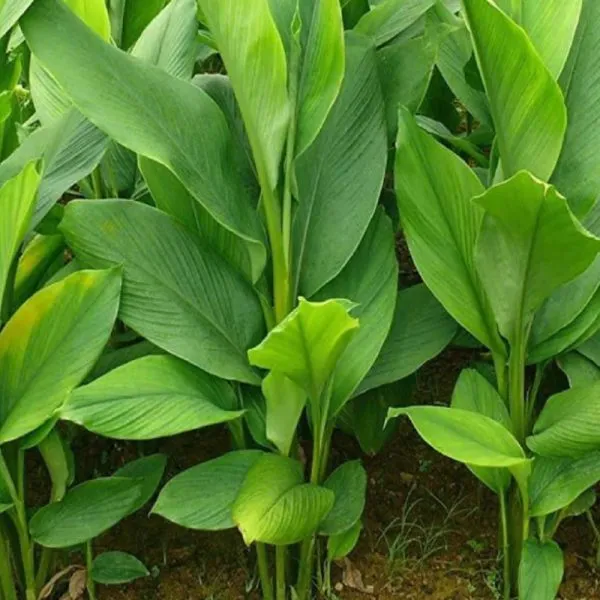
Figure: 2 Plant of Turmeric
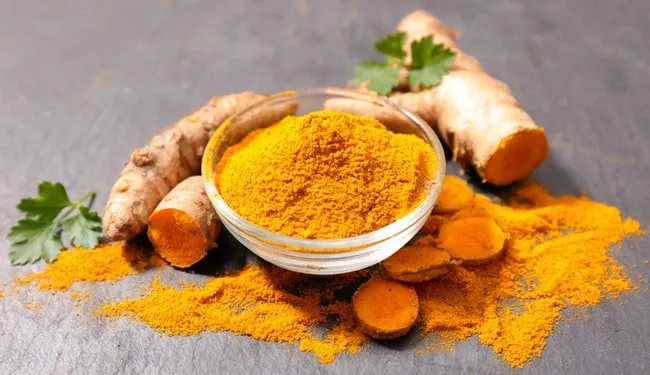
Figure: 3 Turmeric Powder
Curcumin has been extensively investigated for its antimicrobial, antioxidant, anti-inflammatory, and wound-healing properties. Its antimicrobial activity has been reported against several bacterial and fungal organisms, although the degree of activity varies considerably depending on the microorganism, strain, concentration, and experimental conditions. Studies indicate that curcumin may interfere with microbial cellular processes and membrane integrity, thereby contributing to inhibition of microbial growth. Importantly, its antimicrobial activity should not be considered uniformly broad-spectrum, because susceptibility can vary among different microorganisms and clinical isolates.
The potential role of turmeric in wound management is particularly relevant to topical formulations. Wound healing is a complex biological process involving overlapping phases of hemostasis, inflammation, proliferation, and tissue remodeling. Excessive inflammation, oxidative stress, and microbial contamination can negatively affect this process. Curcumin has been investigated for its ability to modulate inflammatory and oxidative pathways while supporting processes associated with tissue repair. Reviews of curcumin-based delivery systems have therefore explored topical preparations such as hydrogels, films, nanoparticles, nanofibers, and other systems designed to improve its local delivery.
However, despite its promising biological properties, curcumin presents certain pharmaceutical challenges. It has poor water solubility and limited bioavailability, which can restrict its effective delivery. The development of an appropriate topical dosage form can help provide the active constituents directly at the site of application and may overcome some limitations associated with systemic administration. A semisolid formulation can also provide prolonged contact with the skin and facilitate convenient application5.
1.4 GARLIC:
Another medicinal plant of considerable importance is garlic (Allium sativum Linn.), belonging to the family Amaryllidaceae. Garlic has been used traditionally as both a food ingredient and medicinal plant. Its biological activities are associated largely with sulfur-containing compounds, including alliin, allicin, ajoene, diallylsulfides, and related organosulfur compounds. Garlic has been investigated for antibacterial, antifungal, antioxidant, anti-inflammatory, and other pharmacological properties.
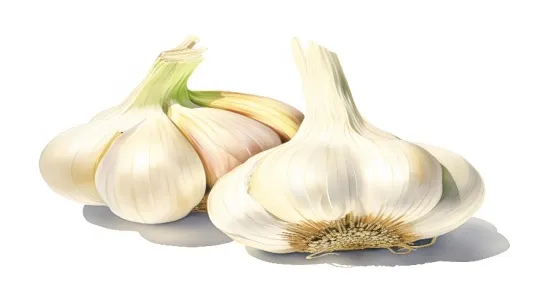
Figure: 4 Garlic
The most important antimicrobial constituent associated with freshly crushed garlic is allicin (diallylthiosulfinate). Allicin is not present in substantial amounts in intact garlic tissue; rather, it is rapidly generated when garlic tissue is damaged. The enzyme alliinasecatalyzes the conversion of alliin into allicin following disruption of the garlic cells. Allicin is chemically reactive and can interact with thiol-containing groups in proteins and cellular components of microorganisms. These interactions can interfere with essential microbial enzymes and metabolic pathways and contribute to antimicrobial activity.
Garlic-derived preparations have demonstrated activity against a variety of microorganisms, including both Gram-positive and Gram-negative bacteria, as well as certain fungi. Reported susceptible organisms include Staphylococcus aureus, Escherichia coli, Pseudomonas aeruginosa, Streptococcus species, Salmonella species, and others. Allicin has also been investigated against antibiotic-resistant organisms, including methicillin-resistant Staphylococcus aureus (MRSA). Nevertheless, antimicrobial activity can differ depending on the garlic preparation, extraction method, concentration, stability of active constituents, and test organism.6
The combination of TURMERIC AND GARLIC provides an interesting basis for the development of a polyherbal antimicrobial formulation. The concept of polyherbal therapy is based on combining medicinal plants containing multiple bioactive constituents, potentially providing complementary pharmacological effects. In the proposed formulation, curcuminoids and other turmeric constituents can contribute antimicrobial, antioxidant, and anti-inflammatory activities, whereas garlic-derived organosulfur compounds, particularly allicin, can contribute additional antimicrobial activity. Thus, combining the two herbs may provide a broader pharmacological rationale than relying on a single plant extract. However, any claim of synergistic antimicrobial activity should be experimentally established rather than assumed.
The choice of a cream as the dosage form is also important. Creams are semisolid topical preparations designed to facilitate application of active ingredients to the skin. They generally provide good spreadability, ease of application, acceptable cosmetic characteristics, and intimate contact with the skin surface. Depending on the type of cream and excipients used, the formulation can provide appropriate drug/extract incorporation, improve residence time at the application site, and support controlled or prolonged release of active constituents. The incorporation of suitable excipients such as emulsifying wax, beeswax, oils, humectants, preservatives, and purified water can help achieve the desired consistency, stability, spreadability, and skin feel.
A polyherbal cream containing turmeric and garlic therefore represents an interesting approach for investigating the topical application of plant-derived antimicrobial agents. The formulation can be designed to deliver the herbal constituents directly to the skin while minimizing the need for systemic administration. Same research has also explored topical formulations containing Curcuma longa for antimicrobial and wound-healing applications, supporting the scientific rationale for further investigation of turmeric-based semisolid preparations.
Nevertheless, formulation of a polyherbal cream requires careful consideration of several factors. Plant extracts may vary in their phytochemical composition depending on geographical origin, cultivation conditions, extraction method, storage conditions, and processing. In addition, compounds such as allicin can be chemically unstable, making extraction, incorporation, storage, and formulation conditions important considerations. The interaction between herbal constituents and formulation excipients can also influence physical stability, release characteristics, antimicrobial activity, and shelf life.
Therefore, the development of a turmeric and garlic polyherbal antimicrobial cream should involve systematic formulation and evaluation. The prepared cream can be evaluated for appearance, colour, odor, homogeneity, pH, viscosity, spreadability, extrudability, washability, phase separation.Antimicrobial efficacy may be investigated against selected microorganisms using appropriate microbiological methods such as agar diffusion or other validated antimicrobial susceptibility techniques7.
2.0 MATERIALS AND METHODS
2.1EXTRACTION
Extraction is the first step to separate the desired natural constituents from the crude materials.
A) EXTRACTION OF GARLIC BY MACERATION PROCESS
50gm was weighed and crushed with the help mortar pestle.The Crushed garlic was exposed to environment for 10 to 15 minutes so, that there is conversion of alliin to allicin by enzyme allinase. Then 25mlSesameoil was poured in crushed garlic and mixed with help of stirrer. Then the container was wrapped with aluminum foil and kept for 7 days occasionally shaking macerate. After 7 days, the oil was separated from crushed garlic by filtration by using cloth. The crushed garlic was placed in the piece of cloths and oil traces were removed by applying pressure. The concentrated part is also removed along with oil so, as to obtain a clear oil macerate.(8)
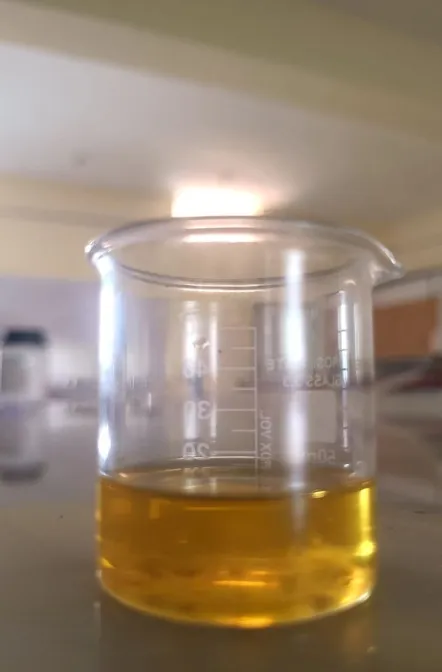
Figure: 5 Extracted Garlic Oil
2.2)CHEMICAL TEST FOR GARLIC
Table: 1 Chemical Test Garlic(9)
| TEST | INFARENCE | RESULT |
|---|---|---|
| Sodium nitroprusside test Take about 1-2ml of garlic extract in a test tube ,and add few drop of sodium nitroprusside solution mix well observe the colour |
Development of a Purple /Violet colour indicates the presence of sulfur –containing compound such as Allicin. | Presence ofAllicin |
| Ninhydrin Test Take about 1-2ml of garlic extract in a test tube, add few drops of ninhydrin reagent, heat gently in a water bath for a few minuts allow it cool and observe. |
Purple / Blue colour indicates the presence of amino acid containing compound such as Alliin | Presence ofAlliin |
B)MACERATION PROCESS OF TURMERIC
The maceration involves mixing turmeric powder with a solvent like Ethanol, (1:10)
Take 30gm of turmeric powder in a 500ml beaker, then add 300ml of ethanol then stand for a weak and shaking occasionally. The mixture is strained through cheese cloth to separate the liquid extract which can be concentrated through evaporation if needed. This process extract Curcuminoids from turmeric.10
Figure: 6.Turmeric & Ethanolmixture FigNo: 7.Turmeric Extract
2.3) CHEMICAL TEST FOR TURMERIC
Table: 2 Chemical Test for Turmeric(11)
| TEST | INFERENCE | RESULT |
|---|---|---|
| Alkaling reagent test Take 1-2ml turmeric extract + add few drop of 10% NaoH. Mix |
Red / Reddish – Brown colour | Curcuminoid presence |
| Dragendorff’s test Take 1-2ml of turmeric extract then add dragendorff’s reagent |
Orange precipitate | Alkaloids presence |
2.4) FORMULATION OF POLYHERBAL CREAM
Table: 3 Formulation of Polyherbal Cream
| COMPONENTS | F1 | F2 | F3 | F4 |
|---|---|---|---|---|
| TURMERIC | 1% | 1% | 1% | 1% |
| GARLIC | 1% | 1% | 1% | 1% |
| BEES WAX | 2% | 4% | 2% | 3% |
| STEARIC ACID | 3% | 3% | 5% | 4% |
| EMULSIFYING WAX | 8% | 6% | 10% | 8% |
| LIQUID PARAFFIN | 8% | 10% | 8% | 12% |
| METHYL PARABEN | 0.05% | 0.05% | 0.05% | 0.05% |
| GYLCERINE | 5% | 8% | 5% | 10% |
| ROSE OIL | 0.01% | 0.01% | 0.01% | 0.01% |
| WATER | QS | QS | QS | QS |
PROCEDURE:
Oil phase:-
Water phase:
2.5)EVALUATION OF CREAM
1. Physical evaluation
2. Physicochemical evaluation
• Physical evaluation:
• Colour:
The colour of the herbal cream depends on the ingredients used. If the color changes after a few days, it may indicate oxidation of the ingredients. This herbal cream formulation has a vibrant yellow colour.
• State:
The state of the herbal cream depends on the proportion of its phases. A good herbal cream should be stable and consistent. This particular herbal cream is semi-solid.
• Consistency:
The cream should be smooth and homogeneous without visible clumping. Consistency was evaluated by manually rubbing a small amount of cream on the skin. This herbal cream is smooth and leaves a uniform layer on the skin.
• Odor:
The Odor of the cream was found to be pleasant.
• Washability:
The Washability test was conducted by applying a small amount of cream to the hand and then rinsing it with tap water. All four formulation were found to be easily washable.
• Greasiness:
This test is basically used to check nature of cream either oily or grease. According to results we can say that all formulations are Non greasy.
• Physiochemical evaluation:
Physicochemical parameters were determined, including the determination of pH, viscosity and spreadability, washability, Phase separation.
The pH value of freshly formulated cream was determined using a digital pH meter at room temperature (13)
• Viscosity:
The viscosity of the formulation was determined at room temperature using Brookfield Viscometer equipped with spindle No.3 at 12RPM and 30RPM. Taking care that the spindle did not touch the bottom of the beaker. The readings were recorded(14)
• Spreadability:
The spreadability was expressed in terms of time in seconds taken by two slides to slip off from the cream, placed in between the slides, under certain load. Lesser the time taken for separation of the two slides better the spreadability.Two sets of glass slides of standard dimension were taken. Then one slide of suitable dimension was taken and the cream formulation was placed on that slide. Then other slide was placed on the top of the formulation. Then a weight or certain load was placed on the upper slide so that the cream between the two slides was pressed uniformly to form a thin layer. Then the weight was removed and excess of formulation adhering to the slides was scrapped off. The upper slide was allowed to slip off freely by the force of weight tied to it. The time taken by the upper slide to slip off was noted.(15)
3.0 RESULT AND DISCUSSION
3.1 Physical Evaluation:
The prepared formulation was evaluated for color, odor, and consistency. The color of the cream was observed visually and appeared faint yellow. The odor of the cream was pleasant. The cream state was also examined visually and found to be semisolid in nature. The formulation’s consistency was assessed by manually rubbing it on the hand, revealing a smooth texture. Results are listed in table 4.
Table 4: Results of Physical Evaluation
| Physical Evaluation |
F1 | F2 | F3 | F4 |
|---|---|---|---|---|
| Parameters | Observations | |||
| Colour | Yellow | Yellow | Yellow | Yellow |
| Odour | Pleasant | Pleasant | Pleasant | Pleasant |
| State | Semisolid | Semisolid | Semisolid | Semisolid |
| Appearance | Smooth and creamy | Smooth and creamy | Smooth and creamy | Smooth and creamy |
| Texture | Non-greasy | Non-greasy | Non-greasy | Non-greasy |
| Homogeneity | Uniform | Uniform | Uniform | Uniform |
Figure: 8 Formulations of Polyhedral Cream
| F1 | F2 |
|---|---|
| F3 | F4 |
3.2) Physicochemical Test
• pH determination :-
The pH of the cream was measured with a pH meter. The pH of all the formulations was ranging to neutral. Results are listed in table no. 5
Table 5: pH Determination
| SI.No | Formulation | Results |
|---|---|---|
| 1 | F1 | 5.42 |
| 2 | F2 | 5.52 |
| 3 | F3 | 5.72 |
| 4 | F4 | 5.46 |
Normal pH range
The pH of formulated herbal creams was found to be in the range of 5.42 -5.72. F1, F3 and F4 were within the generally accepted pH range of 4.5-6.5 for topical herbal creams. All formulations pH was found closest to the natural acidic pH of the skin and results was found satisfactory.
• Spreadability Test :-
Table 6: Spreadability Test
| SI No | Formulation | Time | Result |
|---|---|---|---|
| 1 | F1 | 1.1 | 3.35 |
| 2 | F2 | 1.3 | 3.91 |
| 3 | F3 | 1.2 | 4.58 |
| 4 | F4 | 1.3 | 4.51 |
The spreadability of the formulated herbal creams was found to be in the range of 3.35-4.58. Among all the formulations, F3 showed the highest spreadability (4.58) with a relatively short spreading time of 1.2 seconds. Therefore, F3 was considered the better formulation based on spreadability, as it can be easily and uniformly applied over the skin.
• Viscosity Determination :
Table 7: Viscosity Determination
| SI. No | Formulation | 12rpm | 30 RPM |
|---|---|---|---|
| 1 | F1 | 15000 | 5246 |
| 2 | F2 | 12723 | 4285 |
| 3 | F3 | 12806 | 4141 |
| 4 | F4 | 12728 | 4286 |
The viscosity was found in the range of indicating good consistency and suitable viscosity for topical application.
The formulation exhibit non-newtonian, shear thinning pseudoplastic behavior, This is conformed a decrease in apparent viscosity from 15000 to 12000 cps as the spindle rotational speed increases from 12 rpm to 30 rpm.
• Washability test :
Table 8: Washability Test
| SI.No | Formulation | Results |
|---|---|---|
| 1 | F1 | Washable |
| 2 | F2 | Washable |
| 3 | F3 | Washable |
| 4 | F4 | Washable |
The washability test showed that all the formulation (F1,F2,F3 and F4) were easily washable with water. This indicates that the prepared herbal creams can be readily
Removed from the skin after application and do not leave excessive residue. Therefore, all four formulations showed satisfactory results.
• Greasiness :
Table: 9 Greasiness
| SI.No | Formulation | Results |
|---|---|---|
| 1 | F1 | Non-greasy |
| 2 | F2 | Non-greasy |
| 3 | F3 | Non-greasy |
| 4 | F4 | Non-greasy |
The Greasiness test showed that all the formulated herbal creams (F1,F2,F3 and F4) were non- greasy. This indicates that the formulation have a pleasant texture and do not leave an excessive oily are greasy residue on the skin. Therefore, all four formulation showed satisfactory result with respect to greasiness.
• Phase separation:
Table: 10 Phase Separation
| SI.No | Formulation | Results |
|---|---|---|
| 1 | F1 | No Phase separation observed |
| 2 | F2 | No Phase separation observed |
| 3 | F3 | No Phase separation observed |
| 4 | F4 | No Phase separation observed |
The phase separation test showed that no phase separation was observed in any of the formulated herbal creams (F1, F2, F3 and F4). This indicates that all the formulations were physically stable and maintained good emulsion stability during the observation period. Therefore, all four formulations showed satisfactory results with respect to phase separation.
4.0 SUMMAY AND CONCLUSION
The present study successfully formulated a polyherbal cream incorporating Turmeric (Curcuma Longa) and garlic (Allium sativum), both of which are renowned for their robust antimicrobial activities. The choice of these herbal ingredients is not only grounded in their traditional uses but also supported by scientific literature. Both Turmeric and garlic possess a multitude of bioactive compounds that contribute to their antimicrobial effectiveness, making them suitable candidates for a topical formulation aimed at managing skin infections and improving overall skin health.
The maceration process utilized for the extraction of active constituents allowed for the retention of essential properties of Turmeric and garlic, which were then integrated into the cream formulation with carefully selected excipients.
The herbal cream was formulated using suitable excipients includingbees wax, stearic acid, emulsifying wax, liquid paraffin, methyal paraben, gylcerine and rose oil to enhance its stability and efficacy. The formulation was prepared by emulsification technique and evaluated for various physicochemical parameters including physical appearance, pH, viscosity, spreadability, washability, consistency, and homogeneity.
The cream's smooth texture, vibrant yellow color, and pleasant aroma reaffirmed the expected quality of a formulation enriched with natural ingredients.
The pH level of 5.4 indicates compatibility with human skin, suggesting that the product should minimize potential irritations upon application. Moreover, the viscosity measurements ranging between 15000 cps and 12000 cps indicate that the cream possesses a suitable thickness for topical use, facilitating ease of application without compromising spreadability.
Spreadability of F3 was notably superior, with a spreadability value of 4.58 g cm/sec.This finding highlights F3's potential for ease of use, while other formulations (F1, F2, and F4) also showed promising characteristics, suggesting that these ingredients could enhance the application experience of topical creams. A satisfactory results of spreadability enhances user experience, allowing for uniform distribution upon application to the skin surface.
Good washability, coupled with the cream's non-greasy feel, addresses common complaints associated with many topical products while contributing to patient satisfaction. Such attributes are essential for improving compliance, particularly in populations needing consistent application for effective management of skin conditions. Furthermore, the overall stability of the formulated cream, assessed through its continuous homogeneity and physical characteristics, confirms its potential as a reliable therapeutic agent in dermatological applications. The findings of this study underscore the viability of utilizing herbal extracts in contemporary pharmaceutical formulations, thus aligning with the growing trend towards natural remedies in the face of declining effectiveness of synthetic antibiotics.
Future work should investigate the diffusion study and clinical efficacy of this polyherbal cream through controlled trials, assessing its performance against release and specific skin pathogens and its potential for promoting faster healing processes. Additionally, further phytochemical analyses could elucidate the distinct mechanisms by which these herbal compounds exert their antimicrobial effects. In summary, the developed polyherbal cream represents a significant advancement in the field of alternative antimicrobial therapies, bringing together traditional herbal medicine and modern formulation science. This study not only advances the understanding of herbal synergies but also paves the way for future innovations in therapeutic creams designed to combat rising microbial resistance, offering a promising alternative for safe and effective skin care solutions. The integration of natural products holds substantial potential, not merely in treating infections but also in fostering a holistic approach toward skin health.
REFERENCES


Manjunath Halkeri, Naveen Kumar, Raddi Krishnaraj, V. Bharathkumar, Ajeya Kumar, Aneel, Formulation and Evaluation of a Phytotherapeutic Antimicrobial Cream Utilizing Curcuma Longa and Allium Sativum, Int. J. of Pharm. Sci., 2026, Vol 4, Issue 10, 4468-4481. https://doi.org/10.5281/zenodo.23727275
 10.5281/zenodo.23727275
Severity: 8192
Message: substr(): Passing null to parameter #1 ($string) of type string is deprecated
Filename: frontend/article.php
Line Number: 890