

We use cookies to ensure our website works properly and to personalise your experience. Cookies policy
1,2,3,4,5 Department of Pharmaceutics, AISSMS College of Pharmacy, Pune, Maharashtra, India
6 Department of Pharmacognosy, AISSMS College of Pharmacy, Pune, Maharashtra, India
Herbal cosmetics have gained a significant importance due to their safety, efficacy and ecofriendly nature. A herbal face scrub helps in cleansing and improving the health of the skin by using Natural or kitchen waste. The common problems synthetic face scrubs faces are: Skin irritation, Allergic reactions, pH imbalance, etc. So as an alternative we made Herbal Face Scrub from kitchen waste. The main active ingredients used are Lemon peel powder, Groundnut shell powder, etc. This formulation is used as an over-the-counter product. The Evaluation of this formulation involves parameters like , chemical tests, dissolution test, flow properties, skin irritation, moisture content , total ash value , water soluble extractive value and alcohol soluble extractive value . The microbial study perform does not showed any microbial growth. The Stability study showed excellent shelf life of the product without major changes in physical appearance, pH, viscosity ,spreadability indicating good formulation and potential shelf life. The formulation showed acceptable appearance, a pleasant odor and appearance with gritty granules of groundnut shell powder . This study suggests that herbal face scrub could be safer, more affordable, and eco-friendly option compared to conventional product. This herbal face scrub was prepared by adding the active ingredients from kitchen waste, followed by mixing them with binders and other additives to obtain a uniform formulation. In future the efficacy of the formulation can be improved by working on it.
Skin is the largest organ of the body which covers external surface to provide protection against the environment. Skin serve as a initial barrier for pathogen, UV, chemicals and mechanical injury. It releases sebum from sebaceous gland to protect the skin from environment. Skin is continuously exposed to dust, pollution, excessive oil and microorganism which leads to formation of dead skin. Due to this acne, skin dullness, hyperpigmentation and uneven skin tone occurs. Exfoliation is thus very important as it helps to slough off dead cells to have healthy skin. Artificial scrubs that are present in the market could be full of chemicals and harmful for the environment too. There is a need for a herbal face scrub that would not only be beneficial for one’s skin but would also help protect the environment.”
The demand for natural & sustainable products is rising due to environmental awareness within the cosmetic industry. Due to this growing demand for natural skincare, there has been exploration of eco-friendly alternatives to chemical cosmetics. India generates over 350–370 million tons of agricultural waste annually, in which 30–40% roots & vegetables are wasted. Lemon peel, fenugreek, groundnut shell powder, and papaya peel powders are rich in antioxidants, provide exfoliation, and help to promote zero waste & green innovation. A herbal face scrub was formulated by combining waste powders with Aloe-Vera gel, Carbopol, preservatives, and water, etc.
The base of the face scrub (i.e., Aloe vera gel) provides superior spreadability, lightweight feel, and better skin hydration compared to cream or oil scrubs. The groundnut shell powder used for exfoliation purpose helps in removal of dead skin and promotes natural skin without irritation. By using kitchen waste and agro-industrial waste products we move towards sustainable innovation in the cosmetic industry and awareness about environment and waste utilization.
Benefits of Scrub :
1. Exfoliation: Optimized formulation helps in removal of dead skin by exfoliating external skin surface. Which helps skin to look fresh, healthy and bright.
2. Unclogged skin pores: The skin produces sebum which when blocked with dirt particles leads to formation of black heads and white heads. The face scrub helps to remove excess oil, trapped impurities and remove the dirt.
3. Skin rejuvenation: Daily use of face scrub helps to replace the damage skin with fresh, healthy and improves overall appearance of the skin.
4. Improves blood circulation: By gentle rubbing of the scrub helps in improving blood circulation by supplying more oxygen.
5. Eco friendly and cost effective: The scrub utilizes natural ingredients reducing environmental pollution and usage of this ingredients makes it economical and affordable.
Formulation table-
|
Ingredients |
Quantity(F3) |
Function |
|
1. Lemon peel powder |
5 gm |
Antimicrobial, Vitamin C |
|
2. Papaya peel powder |
2gm |
Strong exfoliation, oil control |
|
3. Groundnut shell powder |
3 gm |
Skin brightening, anti-acne, hydration |
|
4. Aloe vera gel |
25gm |
Base, Hydrating agent |
|
5. Fenugreek Powder |
1gm |
Anti-acne, antibacterial |
|
6. Carbopol |
1 gm |
Thickening agent |
|
7. Sodium benzoate |
0.5 gm |
Preservative |
|
8. Potassium sorbate |
0.5gm |
Preservative |
|
9. Decyl glycoside |
10gm |
Foaming Agent |
|
10. Perfume |
qs |
Fragrance |
|
qs |
Base |
|
Total |
100 mL |
- |
METHOD OF PREPARATION :
Preparation of extract
A. Preparation of lemon peel powder extract: Lemon powder was taken 50gm with 250 ml distilled water and heated for 2 hours with continuous stirring and then filtrate using muslin cloth.
B. Preparation of papaya peel powder extract: Papaya powder was taken 25gm with 250 ml distilled water and heated for 2 hours with continuous stirring and then filtrate using muslin cloth.
C. Preparation of fenugreek seed powder: Fenugreek seeds were taken and grind in mixer and sieved to obtain fine powder and then powder with 25 gm in 250 ml distilled water and heated for 2 hours with continuous stirring and then filtrate using muslin cloth.
D. Preparation of ground nut shell powder: Ground nut was taken to obtain the shell and shell were grind in mixer to obtain the fine powder .
E. Preparation of aloe vera gel: Fresh aloe leaves were collected and remove the gel. Gel was grinded using homogenizer.
F. Preparation of Carbopol base: Required quantity of Carbopol 940 taken and mixed with quantity sufficient distilled water to form gel.
G. Usage of sodium benzoate and potassium sorbate: 0.5gm each of sodium benzoate and potassium sorbate were taken for preservative purpose.
H. Usage of decyl glucoside: decyl glucoside15 gm was used as foaming agent.
I. Usage of perfume: perfume of qs was used for fragrance purpose.
FORMULATION TABLE :
|
Ingredient |
F1 |
F2 |
F3 |
Role |
|
Lemon peel extract |
5gm |
5gm |
5gm |
Anti microbial |
|
Papaya peel extract |
1gm |
1gm |
1gm |
Anti acne |
|
Ground nut shell extract |
3gm |
3gm |
3gm |
Exfoliation |
|
Fenugreek seed extract |
1 gm |
1gm |
1gm |
Antibacterial |
|
Beetroot peel extract |
1.5gm |
1.5gm |
- |
Natural exfoliation |
|
Centella asiatica |
5 gm |
5gm |
- |
Anti acne |
|
Carbopol 940 |
2.0 gm |
1.5 gm |
1.5 gm |
Thickening agent |
|
Aloe vera |
25gm |
20gm |
15gm |
Base\binder |
|
Sodium benzoate |
1.5gm |
1.5gm |
1gm |
preservative |
|
Potassium sorbate |
1.5gm |
1.5gm |
1gm |
preservative |
|
Decyl glucoside |
15 gm |
15gm |
15gm |
Foaming agent |
|
water |
qs |
qs |
qs |
vehicle |
|
Perfume |
qs |
qs |
qs |
fragrance |
SELECTION OF F3 OVER F1 AND F2 :
Among the 3 formulation f3 was selected as optimized formulation because centella asiatica and beetroot were removed from the other two formulation.
Reasons for their removal :
A. Centella asiatica during formulation affects physical stability of cosmetic preparation because presence of active phytoconstituent such as flavonoids and triterpenoids.
B. During storage beetroot extract caused color instability and unpleasant odor development and the dark color of beetroot lead to unaesthetic appearance.
Preparation of Formulation:
STEP 1: Lemon peel extract + papaya peel extract + fenugreek seed extract were added and triturate in mortar pestle.
STEP 2: Carbopol 940 gel was added for thickening of the formulation.
STEP 3: Aloe vera gel was added as a base and to bind it.
STEP 4: Sodium benzoate and Potassium sorbate were added as preservative .
STEP 5: Decyl glycoside was added as a foaming agent.
STEP 6: Water and Perfume were added as qs upto 100ml.
EVALUATION PARAMETER:
PHYSICAL PROPERTIES –
Key physical properties of ingredient powder bulk density, tapped density, angle of repose , moisture content ,ash value ,water soluble extractive value, alcohol soluble extract value, chemical test, microbial study, diffusion study and stability study.
1. BULK DENSITY AND TAPPED DENSITY
This apparent volume is bulk density. After that tapped the cylinder 100 times to plane surface. We get the tapped density. By this bulk and tapped density. we calculate Hausner ratio and compressibility of powder.
1. Lemon Peel Powder
Bulk density = 0.34
Tapped density = 0.37
Hausner ratio = 1.08
Carr’s index = 8.1%
Result = Within limit .
2. Papaya Peel Powder
Bulk density = 0.555
Tapped density = 1
Hausner ratio = 1.81
Carr’s index = 0.45%
Result = Within limit
3. Ground Nut Shell Powder
Bulk density = 0.270
Tapped density = 0.333
Hausner ratio = 1.22
Carr’s index = 18.1%
Result = Within limit
4. Fenugreek Seeds Powder
Bulk density = 0.48
Tapped density = 0.66
Hausner ratio = 1.375
Carr’s index = 27.27%
Result = Within limit
Bulk density helps in determining the the storage and packaging of the product.
Tapped density helps in evaluating the compressibility.
Hausner ratio helps in determining the flowability of powder.
Carr’s index signifies the compressibility and flow characteristics of powder.
Angle of Repose
Lemon peel powder = 29.7°
Papaya peel powder = 23°
Fenugreek seed powder = 31.6°
Ground nut shell powder = 34°
Angle of repose helps in determining the powders useful and efficient in manufacturing process.
2. MOISTURE CONTENT
The sample was weighed into a moisture cup and was dried in an hot air Oven at at 60° to a constant weight and moisture content was calculated as:
= 17.5%
Inference: This falls within acceptable range for semisolid herbal formulation.
3. TOTAL ASH VALUE
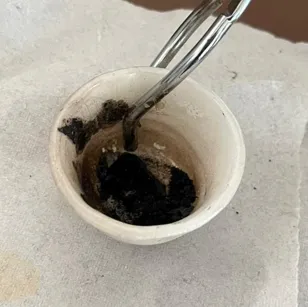
In total ash value determination the sample was ignited by placing in a tared crucible and was placed in muffle furnace providing continuous heat until ash was formed. It was calculated as follows:
= 7.89% w/w
Inference: this falls within limit which indicates low inorganic impurities and confirms purity and good quality.
4. WATER SOLUBLE EXTRACTIVE VALUE
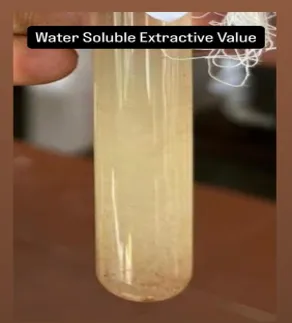
5 g of accurately weighed powdered drug was macerated with 100 mL of water in a closed flask for 24 hours. The solution was filtered quickly. Afterward, 25 mL of the filtrate was evaporated to dryness in a flat-bottomed dish until a constant weight was achieved. Water soluble extractive value percent was determined by using the formula below.
Water soluble extract value( %w/w) = 2.8%
Inference : This value confirms appreciable amount of active water soluble constituent.
5. ALCOHOL SOLUBLE EXTRACTIVE VALUE
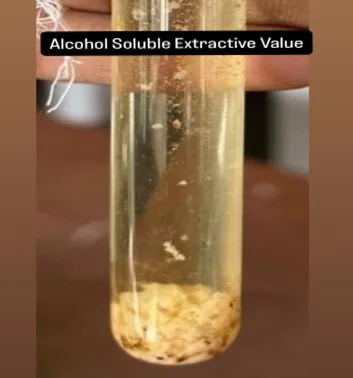
5 grams of powdered sample accurately weighed was macerated using 100 milliliters of alcohol in a closed flask. The process took place for 24 hours, with shaking occurring frequently during the first six hours while standing for 18 hours occurred subsequently. The mixture was filtered quickly to prevent solvent loss. Approximately 25 ml of the filtrate was evaporated and dried in flat dish until constant weight was obtained.
Alcohol Soluble Extractive Value = 4%
Inference: This value indicates presence of alcohol soluble phytoconstituents which contributes skin protective properties.
CHEMICAL TEST :
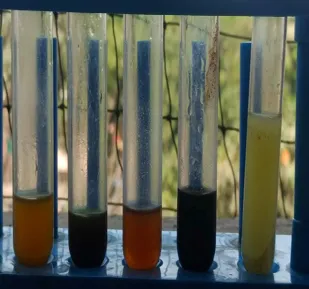
1. TEST FOR LEMON PEEL EXTRACT:
|
TEST |
INFERENCE |
|
1. Wagner’s test |
Alkaloid is present |
|
2. Ferric Chloride test |
Tannins present |
|
3. Foam test |
Saponins present |
|
4. Shinoda test |
Flavonoids present |
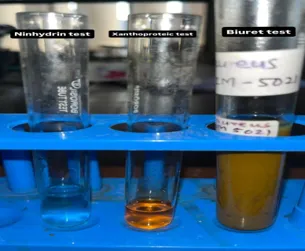
2. TEST FOR PAPAYA PEEL EXTRACT:
|
TEST |
INFERENCE |
|
1. Ninhydrin test |
Amino acids present |
|
2. Xanthoproteic test |
Aromatic amino acids present |
|
3. Biuret test |
Presence of proteins confirmed |
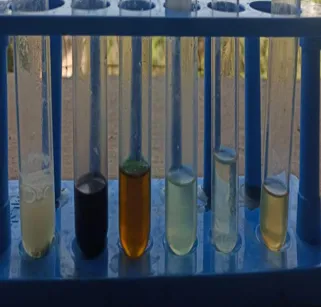
3. TEST FOR FENUGREEK SEED EXTRACT:
|
TEST |
INFERENCE |
|
1. Shinoda test |
Flavonoids present |
|
2. Ferric Chloride test |
Tannins present |
|
3. Bromine water test |
Unsaturated compounds present |
ANTIMICROBIAL STUDY:
Procedure:
Result:
Table 1. Zone of inhibition of F1 and standard against Staphylococcus aureus
|
Sr. No |
Sample Name |
Zone of Inhibition (mm) |
|
1. |
Control |
NA |
|
2. |
Standard (Streptomycin) |
20.50 |
|
3. |
F1 |
17.43 |
Conclusion:
The present study was performed to study in vitro antimicrobial activity of the test bacterial sample(F1) against staphylococcus aureus using zone of inhibition method. The result showed that streptomycin exhibited zone of inhibition of 20.50 mm indicating strong antibacterial activity. The test solution exhibited zone of inhibition of 17.43mm which indicates good antimicrobial potential. Though the activity showed by the F1 is slightly lower than the the standard. Therefore it can be stated that the formulation posses antibacterial properties and may serve as promising formulation for future cosmetic industry.
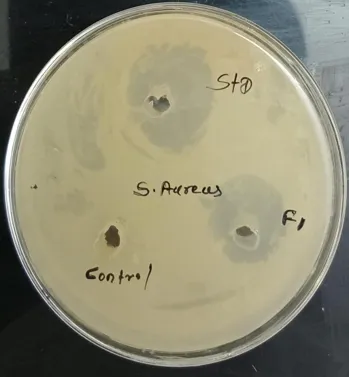
Fig.1 F1 against Staphylococcus aureus
DIFFUSION STUDY:
Methodology – Diffusion study of the herbal face scrub
The in-vitro diffusion study of the developed herbal face scrub was conducted by using Franz diffusion cell apparatus. A hydrophilic nylon membrane filter paper (0.45 µm, 47 mm) was employed as diffusion membrane.
This membrane was made ready for the experiment by hydrating it with appropriate diffusion media. Phosphate buffer solution was added to the receptor compartment and stirred at controlled temperature. An exact amount of the formulation of the herbal face scrub was loaded in the donor compartment.
The samples were collected from the receptor side at regular intervals of time, i.e., 0, 30, 60, 120, and 150 min. An equivalent amount of fresh medium was added to compensate for the volume loss. These samples were then send for analysis using UV-visible spectrophotometry.
OBSERVATION TABLE: l
|
TIME |
ABSORBANCE |
|
0 min |
0.0109 |
|
30 min |
0.0160 |
|
60 min |
0.0552 |
|
120 min |
0.0252 |
|
150 min |
0.0082 |
RESULTS AND DISCUSSION:
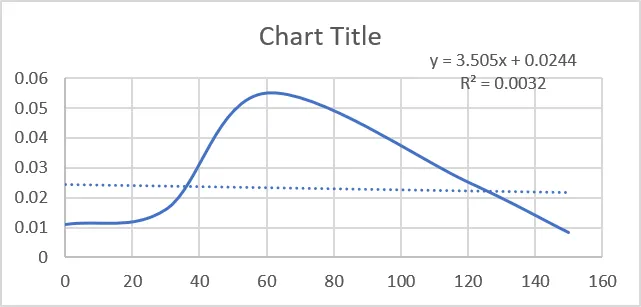
In-vitro diffusion results of the herbal face scrub revealed gradual diffusion of active principles through the nylon membrane with the passage of time. The absorbance values were slowly increased from 0 minutes to 60 minutes, stating that there was slow release of the active principles from the preparation. The maximum absorbance value was obtained at 60 minutes (0.0552).
The absorbance values began to decrease at 120 min and 150 min, leading to the formation of a bell curve for the diffusion process. This decrease in absorbance after the maximum release may be due to the decrease in the concentration gradient as well as the availability of diffusing substances in the donor phase.
Based on the above observations, it can be concluded that the prepared herbal face scrub formulation showed acceptable diffusion properties and controlled drug release behavior.
Stability Studies:
Stability studies were conducted for a period of two months under:
The optimized formulation F3 was periodically evaluated for:
a. Physical appearance :
There is no significant change in an colour, odour, texture and phase separation of the product which has placed in accelerated stability chamber for stability study
b. pH Stability :
The optimized formulation maintained an acceptable range of pH throughout the study, which shows good stability and compatibility.
c. Viscosity Stability :
The formulation shows consistency throughout the time and this suggest it has stable rheological properties.
d. Microbial stability :
The formulation shows stable during the study it indicate the there is no microbial growth under an accelerated stability study.
Evaluation Parameters:
|
SR.NO |
PARAMETERS |
OBSERVATION |
|
1 |
Color |
Yellowish |
|
2 |
Odor |
Soft balsamic |
|
3 |
Consistency |
Good |
|
4 |
PH |
6.36 |
|
5 |
Viscosity |
1450 cp |
|
6 |
Spreadibility |
16.6 g.cm/sec |
|
7 |
Washability |
Easily Washable |
|
8 |
Grittiness |
Small gritty particles |
|
9 |
Extrudability |
Easily Extruded |
|
10 |
Patch test |
Non - Allergic |
|
11 |
Irritability |
Non-Irritant |
Spreadability:-
Small quantity of sample placed on a glass slide then another slide is placed above it. A weight was placed on it. The time required for gel to spread and area was measured.
S= m* L/t
=16.6 g.cm/sec.
Inference : The formulation showed excellent spreadability which indicates easy application and uniform distribution on the face.
CONCLUSION:
The herbal facial scrub developed using agro-industrial and domestic wastes like powdered lemon peel, papaya peel, fenugreek seeds, and groundnut shells met the physicochemical and assessment parameters. The product possessed good spreadability, appropriate moisture content, desirable pH, satisfactory cleansing and exfoliation ability, and stability over the experiment period. The use of natural waste materials is not only an environmentally friendly and economically viable substitute for synthetic scrubs but also serves as a means of utilizing waste materials sustainably. The herbs used in the formulation have properties such as exfoliation, cleansing of the skin, antioxidant action, and skin nourishment. The herbal facial scrub developed can thus be considered a safe and effective cosmetic product for skincare purposes.
REFERENCES




Tushar Morankar, Virendra Zine, Yashodeep Adagale, Aniket Shinde, Archit Joshi, Tejaswini Koshti, Formulation and Evaluation of a Sustainable Herbal Face Scrub Utilising Agro-Industrial and Kitchen Waste, Int. J. of Pharm. Sci., 2026, Vol 4, Issue 7, 4352-4362. https://doi.org/10.5281/zenodo.21483793
 10.5281/zenodo.21483793