

We use cookies to ensure our website works properly and to personalise your experience. Cookies policy
1Dr. kolpe Institute of pharmacy, Kolpewadi
2Assit. Prof. of Dr. kolpe Institute of pharmacy, Kolpewadi
A shaving cream is an essential cosmetic that softens hair and prepares the skin for a comfortable shave. Unfortunately, some existing brands include harmful substances that may irritate the skin, dry it, and even cause razor burn, which is a big problem for those having a sensitive skin type. To solve the mentioned challenges, there is a great need for a more convenient and safer formulation. Activated charcoal is Well Known for its excellent adsorbent and cleansing properties. These substances effectively clean pores by removing dirt, extra oil, and other impurities from the skin. Therefore, in this project, it was decided to create a shaving cream containing activated charcoal to improve both shaving and skin cleansing. To obtain a good-quality cosmetic product, it was necessary to use certain ingredients, such as emulsifiers, surfactants, humectants, and activated charcoal, to prepare it. The resulting shaving cream underwent optimization and testing for certain characteristics like pH, spreading capacity, foaming potential, stability, and skin tolerance. The Formulated shaving cream showed a nice consistency, acceptable foamability, and easy spreadability on the skin. Moreover, this product allowed for more effective skin cleansing and decreased irritation.
The shaving cream is a cosmetic preparation available in the form of creams, foams, or gels. It is apply to the skin surface to soften hair softening and provide smooth shaving. The principal uses of the product are moisture provision and skin softening, protection of the blade from direct contact with the skin, and reduction of irritation, cuts, and razor burn. shaving creams are also formulated with ingredients that soothe skin irritation and provide antimicrobial protection. Modern shaving products are composed of surfactants, emollients, humectants, and stabilizers and have different forms such as aerosols, foams, gels, and creams. [1, 2] The shaving process is one of the most popular grooming procedures during which people shave off facial hair growing at an angle of 30-60 degrees. Proper preparation is essential for effective shaving since the lack of proper lubricant use and poor technique can lead to irritation, razor burn, and cuts. Shaving products are primarily classified into three types: wet shaving preparations (cream, gel, and foam), dry shaving preparations (electric razors), and after-shave products. [1, 2] Although shaving creams are widely used, many commercially available formulations contain chemicals such as parabens, alcohol, and some surfactants that may irritate the skin and cause harm to people who have sensitive skins. The desire to develop alternative, safer ingredients has been on the increase lately. [2] Activated charcoal is unique due to the high number of micropores on its surface. Due to its ability to absorb impurities from the skin, including excess oils and dirt, it becomes quite useful in the cosmetics industry. Some benefits of incorporating activated charcoal into shaving creams are cleansing the skin of impurities and improving the shaving experience. [3] Therefore, the present study focuses on the formulation, optimization, and evaluation of an activated charcoal-based shaving cream to achieve enhanced cleansing and smooth shaving performance. The developed formulation is expected to provide better skin compatibility and overall user satisfaction compared to conventional shaving creams.
1.1 History Of Shaving Cream:
Shaving creams have evolved a lot over the years. The oldest preparation process in connection with shaving dates back to about 3000 BC, where people were using mixtures of animal fat and alkali in order to soften up their facial hair. Until the early 20th century, the use of shaving sticks and blocks made of hard soap was quite common. Barbasol, one of the first products resembling modern-day shaving creams, was invented by Frank Shields in 1919 and helped do away with the use of shaving brushes. Pressurized shaving creams started appearing on the market much later, namely in 1949. The first one was named Rise. [3]
1.2 Properties Of Shaving Preparations
1.3 Qualities Of An Ideal Shaving Cream
Examples include creams like cold creams, vanishing creams, foundation creams, lotions, and solutions that are used to keep the skin moisturized and soft.
Examples include shampoos, face cleansers, body cleansers, hand cleansers, and soaps that are utilized for removing dirt, oil, and other contaminants from the body.
Such preparations are used for beautifying purposes and include lipsticks, rouge, eyeliner, nail polish, and other cosmetic products.
These are examples of sprays, sticks, and mouthwashes that are effective in controlling body odor and sweat.
These include products like sunscreens, creams, and powders that protect the skin against environmental elements.
Examples of preparations for enjoyment include bathing salts, powders, oils, and milks. [6]
Shaving creams may be classified on the basis of their mode of use, formulation properties, and packing methods. Each classification is created to address unique consumer needs and requirements.
1) Based on Mode of Use:
a) Brush-Type Shaving Cream:
Otherwise known as foaming shaving cream, this variety uses a shaving brush to create lather. It is typically a soap base and comprises stearic acid neutralized with potassium hydroxide or sodium hydroxide. It produces a rich and long-lasting lather, which makes the beard soft and lubricates the skin.
Examples: Purana Masala, Godrej Deluxe Lather Shaving Cream.
b) Brushless Shaving Cream:
Unlike the first type, this variety does not need a shaving brush since it is directly applied to the face. It has more surfactants, oils, and humectants, which form a thin and lubricating film and not a thick lather.
Examples: Nivea Men Sensitive Shaving Cream.
2) Based on Packaging Form:
a) Tube:
These are the regular semi-solid cream forms packed in a tube. These need to be lathered by hand or brush and are cost-effective and popular in the household.
b) Aerosol Shaving Foam:
These foams are packed using compressed air along with propellants like butane or propane. These are dispensed as pre-lathered forms, which make them easy and clean to use.
Example: Gillette Foamy, Park Avenue Shaving Foam. [7]
c) Shaving Gel:
These are clear gel forms that either create foam when applied or remain in gel form and are very good at hydrating the skin while shaving.
Example: Gillette Fusion Hydra Gel.
d) Hard Cream:
These can either be solid or semi-solid creams packed in their packaging along with a shaving brush. These consist of saturated fatty acid and lather well.
Example: Tabac Original Shaving Soap. [8]
Advantages: -
Disadvantages: -
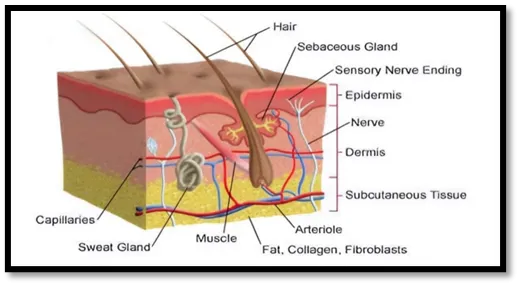
Fig 1: Anatomy of skin [9]
Human skin is an external layer of the body that protects the body from external environmental stimuli, such as physical injury, exposure to UV rays, and infectious agents. It is also responsible for carrying out tasks like sensory responses, thermoregulation, and preventing dehydration. Skin formation is a result of the differentiation of ectodermal and mesodermal tissues. This tissue contains specialized appendages like hair follicles, nails, and glands. The hair follicles and glands develop as extensions from the epidermis into the dermis. [9]
Hair is a simple structure made of a tough protein called keratin. It plays important roles such as protection, thermoregulation, and social appearance.
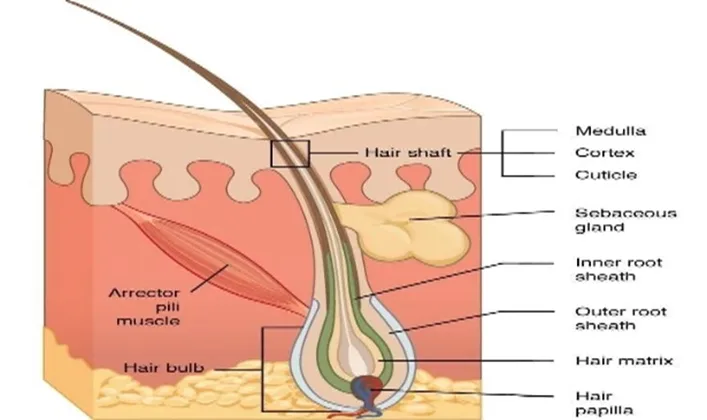
Fig 2: Anatomy of Hair [10]
Hair arises from the hair follicle, which is embedded in the skin. The base of the follicle, called the hair bulb, contains actively dividing cells that form the hair shaft. Blood vessels supply nutrients to these cells and influence hair growth. Hair consists of two main parts: the hair follicle and the hair shaft. The follicle is responsible for hair growth and undergoes continuous growth and resting phases known as the hair cycle. The hair shaft is the visible part above the skin and is composed of keratinized cells. [9, 10]
Activated charcoal helps adsorb fat, dark spots, and pollutants that stick to our skin, making it a popular ingredient in skin-lightening creams. You’ll also find it in facial cleansers, pore strips, carbonated face masks, and soaps. Many cosmetic and pharmaceutical companies say that products with charcoal can help treat adult acne, cuts, minor infections, itchy scalps, and seborrheic dermatitis. Some dermatologists think that since activated charcoal has successfully been used to remove poisons from the stomach by binding to them and flushing them out, it might also help bind with dead skin and bacteria while attracting excess oil on skin exposed to environmental toxins. This can lead to clearer and healthier skin after rinsing. Moreover, its antibacterial and antifungal qualities can be useful for treating conditions like psoriasis and eczema. Additionally, activated charcoal effectively removes dandruff and dirt from the scalp, making it a great addition to shampoos. Various toothpastes and mouthwashes also include charcoal and claim to whiten teeth due to its abrasive properties that help clear away stains. [11]
Activated charcoal works by adsorption, where impurities, dirt, excess oil, and toxins present on the skin surface bind to its porous structure. Due to its high surface area, it effectively traps these substances and removes them from the skin. In shaving cream, activated charcoal helps in deep cleansing of pores, removal of excess sebum, and improvement of skin texture. This action reduces the chances of irritation and provides a smoother and cleaner surface for shaving. [11, 12]
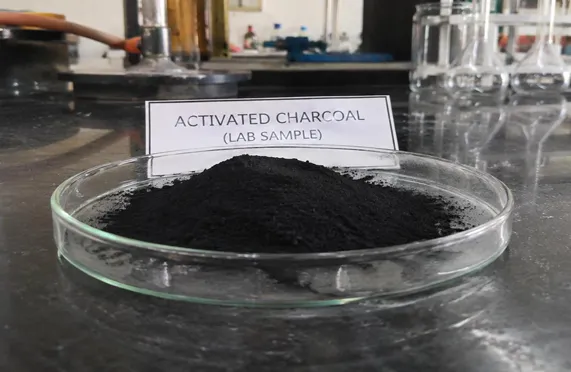
Figure 3 : Activated Charcoal in Granular Form
Uses:
Creams are products you put on your skin. They can be thick mixtures of water and oil, or they might be runny liquids, depending on the types of oil and water used. You can classify creams as either oil-in-water (o/w) or water-in-oil (w/o) emulsions. The term "cream" has usually referred to these thick formulations, like vanishing cream, which is oil-in-water, or cold cream, which is water-in-oil. [13]
Optimization of shaving cream formulation is important to improve product performance, stability, and user acceptability. The formulation should provide proper foam formation , smooth spreadability, adequate lubrication, and good skin feel after shaving. [13]
Important Parameters in Optimization of Shaving Cream:
Charcoal is a fine black powder created by burning materials like wood, coconut shells, peat, and olive pits in an environment with low oxygen. This process forms tiny pores and greatly increases its surface area, which can be over 3000 square meters per gram. These pores can trap or absorb chemicals, allowing charcoal to remove bacteria and impurities from the skin, help with acne, soothe insect bites, reduce pore size, and address various skin issues. [14]
These two ingredients are often used as emulsifiers and thickeners in creams, lotions, and other beauty products. [14]
Table 1: Ingredients and their role
|
Ingredients |
Role |
|
Stearic acid |
Emulsifier |
|
KOH |
Saponification agent |
|
Glycerin |
Humectant |
|
Liquid paraffin |
Emollient |
|
Activated charcoal |
Adsorption and Cleansing |
|
Menthol |
Cooling and refreshing sensation |
|
Surfectants |
Sodium lauryl Sulfate |
|
Water |
Vehicle |
Table 2: Formulation Batches of Activated Charcoal Shaving Cream (20g)
|
Ingredients |
F1 |
F2 |
F3 |
|
Stearic acid |
8g |
8g |
8g |
|
Liquid paraffin |
1g |
1g |
1g |
|
KOH |
0.8g |
0.8g |
0.8g |
|
Glycerin |
2ml |
2ml |
2ml |
|
Methyl paraben |
0.1g |
0.1g |
0.5g |
|
Activated charcoal |
0.1g |
0.2g |
0.4g |
|
Rose water |
8g |
7.9g |
7.8g |
|
Menthol |
q.s. |
q.s. |
q.s. |
|
Surfectant |
0.1g |
0.2g |
0.4g |
|
Water |
q.s. |
q.s. |
q.s. |
Accurately weigh stearic acid and Liquid paraffin in a beaker. Heat the mixture on a water bath at 70–75°C until completely melted.
Dissolve potassium hydroxide (KOH) in a small quantity of distilled water. Warm the solution gently to maintain the same temperature as the oil phase.
Add the KOH solution slowly into the melted oil phase with continuous stirring. Maintain the temperature and stir until a homogeneous soap base is formed.
Add glycerin to the mixture and stir continuously to obtain a smooth consistency.
Disperse activated charcoal (0.5–2%) in a small quantity of water to avoid lump formation. Add this dispersion to the main mixture with continuous stirring.
Allow the mixture to cool below 40°C and then add menthol (q.s.) Mix thoroughly.
Add distilled water to make up the final volume up to 20g. Stir well to obtain a uniform and smooth shaving cream. [15]
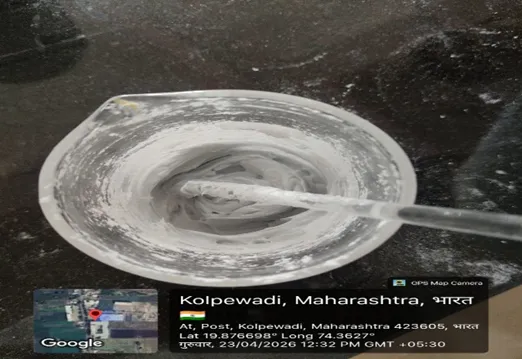
Fig 4: Activated Charcoal Shaving Cream
A small quantity of shaving cream was mixed with water in a measuring cylinder and shaken vigorously for a few minutes. The volume of foam produced was measured and recorded.
About 1 g of the formulation was dissolved in 9 ml of distilled water, and the pH was measured using pH paper. The pH of the shaving cream was measured using a digital pH meter, and the observed values are presented in Table 3. The pH of prepared formulation was found to be within the acceptable range for shaving preparations, indicating that the formulation is suitable for topical application and is less likely to cause skin irritation. [16, 17]
Table 3: pH of Shaving Cream
|
Formulation Batch |
Observed pH |
|
F1 |
7.2 |
|
F2 |
7.5 |
|
F3 |
7.8 |
The applied shaving cream was washed with normal water to evaluate the ease of removal from the skin surface.
A small amount of the sample was placed between two glass slides, and a weight of 100 g was applied for 5 minutes. Spreadability was calculated using the formula:
S = (m × l) / t
Where,
m = weight applied (g)
l = length moved on the glass slide (cm)
t = time taken (sec)
The viscosity of the formulation was determined using a viscometer to evaluate its thickness and ease of application. [16]
The formulation was evaluated for uniformity by visual inspection and by touch. A small quantity of cream was pressed between the thumb and index finger to check for consistency and absence of lumps. [17]
A 1 cm² area was marked on the dorsal surface of the hand. The formulation was applied to this area and observed for any signs of irritation, redness (erythema), or swelling (edema) over a period of 24 hours. [17]
CONCLUSION
The activated charcoal shaving cream was successfully formulated using suitable ingredients and a standard preparation method. The prepared formulation showed good consistency, spreadability, and stability. The Shaving cream exhibited satisfactory foaming ability and cleansing properties, which are essential for effective shaving. The presence of activated charcoal enhanced the formulation by providing adsorption of impurities and excess oil from the skin surface. The inclusion of glycerin contributed to a moisturizing effect, while menthol provided a cooling sensation, improving user comfort during and after shaving. The pH of the formulation was found to be within an acceptable range, indicating that the product is safe for skin application. Overall, the formulated shaving cream satisfied the required evaluation parameters and can be considered a promising and effective cosmetic preparation. Further studies can be carried out to improve and optimize the formulation.
The prepared activated charcoal shaving cream was evaluated for its physicochemical properties and performance characteristics. The cream obtained was smooth, homogeneous, and black in color due to the presence of activated charcoal. It showed good consistency and spreadability, making it easy to apply on the skin.
Table 4: Evaluation Parameters of Activated Charcoal Shaving Cream
|
Parameters |
F1 |
F2 |
F3 |
|
Colour |
Black |
Black |
Black |
|
Appearance |
Smooth |
Smooth |
Smooth |
|
Homogeneity |
Good |
Good |
Good |
|
pH |
7.2 |
7.5 |
7.8 |
|
Spreadability |
Good |
Excellent |
Good |
|
Foamability |
Good |
Excellent |
Good |
|
Irritation Test |
No irritation |
NO irritation |
Slight irritation |
|
Washability |
Good |
Excellent |
Good |
The pH of the formulation was found to be within the acceptable range (approximately 7–10), which is suitable for shaving preparations and does not cause skin irritation. The formulation exhibited good foaming ability and foam stability, which are essential properties of shaving cream. The presence of stearic acid and potassium hydroxide contributed to the formation of a stable lather. The cream showed good cleansing properties due to activated charcoal, which helps in adsorption of dirt, oil, and impurities from the skin surface. The addition of glycerin provided a moisturizing effect, preventing dryness of the skin after shaving. Menthol imparted a cooling and refreshing sensation.
No phase separation or instability was observed during the study period, indicating that the formulation was physically stable. Overall, the formulated shaving cream showed satisfactory results and can be considered suitable for cosmetic use.
REFERENCES

Ghare Kiran*, Pavale Vishal, Thorat Aditya, Ghongate Vaibhav, Formulation And Evaluation of Activated Charcoal Shaving Cream, Int. J. of Pharm. Sci., 2026, Vol 4, Issue 5, 7169-7178. https://doi.org/10.5281/zenodo.20404963
 10.5281/zenodo.20404963