

We use cookies to ensure our website works properly and to personalise your experience. Cookies policy
Shivajirao S. Jondhle College of Pharmacy, Asangaon, India.
Skin aging is a multifactorial biological process influenced by intrinsic factors such as chronological aging and extrinsic factors such as ultraviolet radiation, pollution, and oxidative stress. These processes lead to collagen degradation, reduced elasticity, dryness, fine lines, and wrinkles. The present study aimed to formulate and evaluate a stable, effective, and cosmetically acceptable anti-aging serum incorporating natural and synthetic antioxidants with proven dermatological benefits. Ferulic acid was extracted, isolated, and identified from Alternanthera sessilis and used as the primary antioxidant agent in combination with L-ascorbic acid, humectants, emollients, and suitable excipients to enhance skin penetration and hydration. The serum was prepared using Carbopol-940 as gelling agents and evaluated for physicochemical parameters including color, odor, texture, homogeneity, pH, viscosity, stability, antioxidant activity, and skin irritation. UV spectrophotometric analysis confirmed the presence and concentration of ferulic acid. The formulation showed significant antioxidant activity with a maximum inhibition of 60% and an IC?? value of 12.5 µg/ml. Stability studies under room and refrigerated conditions demonstrated acceptable stability, and no skin irritation was observed after 24 hours of application. The optimized formulation exhibited desirable pH, good spreadability, homogeneity, and cosmetic elegance. The study concludes that the formulated anti-aging serum possesses effective antioxidant potential, good stability, and is safe for topical application, making it a promising formulation for reducing signs of skin aging.
The skin serves as an essential protective layer that guards the body's internal organs from harmful outside elements. It is made up of three primary layers. The outermost layer, called the epidermis, is composed of a type of tissue known as stratified squamous epithelium, which mainly consists of keratinocytes and other specialized cells such as dendritic cells, including Merkel cells, Langerhans cells, and melanocytes. The middle layer, known as the dermis, contains blood vessels, nerve endings, and hair follicles. The innermost layer, called the subcutaneous tissue, is made up of fat cells and connective tissue. The skin plays a vital role in maintaining the body’s general health and proper functioning. The process of skin aging is complex and is affected by both internal and external factors, which lead to a slow decline in the skin's structure and function. Intrinsic skin aging is marked by features such as smooth, pale, and dry skin, reduced elasticity, and the appearance of fine wrinkles, which are usually noticeable as a person gets older [1]. Antioxidants play a crucial role in combating skin aging by neutralizing free radicals that damage skin cells. They’re naturally occurring compounds that help prevent oxidative stress, reduce signs of aging (fine lines, wrinkles), and improve UV damaged skin. Plant-based antioxidants like flavonoids are commonly used in topical preparations due to their potent antioxidant properties. Serum formulations are particularly effective due to their high concentration of active ingredients. Some benefits of antioxidants in skincare include: Protecting skin from environmental stressors, Inhancing skin elasticity, Reducing inflammation The synthesis of anti-aging serum from plant extract has been studied in the past. Thus This review offers an update on skin. Anatomy, a brief synopsis of skin aging that covers both intrinsic and extrinsic aging, and a list of various anti-aging herbs. It also explores an overview of serum, different kinds of serums used in skincare routines to prevent ageing, and essential components found in antiaging face serum.[2]
ANATOMY OF SKIN: STRUCTURE OF SKIN :
1. Epidermis: The epidermis, the outermost skin layer, has varying thickness:0.5 mm (eyelid), 1.5 mm (palms and soles) It’s primarily composed of: Melanocytes (produce melanin), Keratinocytes (produce keratin). These cells form a stratified squamous epithelial layer, providing a protective barrier against external factors. [3]
2. Dermis: The dermis is a crucial layer of skin, comprising: Elastic and fibrous tissue, Located between epidermis and subcutaneous tissue composed of Ground substance, Fibers (collagen, elastin, Cells (fibroblasts). Fibroblasts produce collagen and elastin, essential for skin elasticity and strength. Collagen makes Up to 30% of dermal volume, 75% of dry weight. The dermis plays a vital role in skin structure and function.[4]
3. Hypodermis: The hypodermis, also known as the subcutaneous layer, is the innermost layer of skin. Its key functions include: Providing insulation and protection, Serving as an energy reserve (through adipocytes). Allowing skin mobility by gliding over underlying structures. The hypodermis is primarily composed of Adipocytes (fat cells), Fibrous connective tissue Lobules of adipocyte.
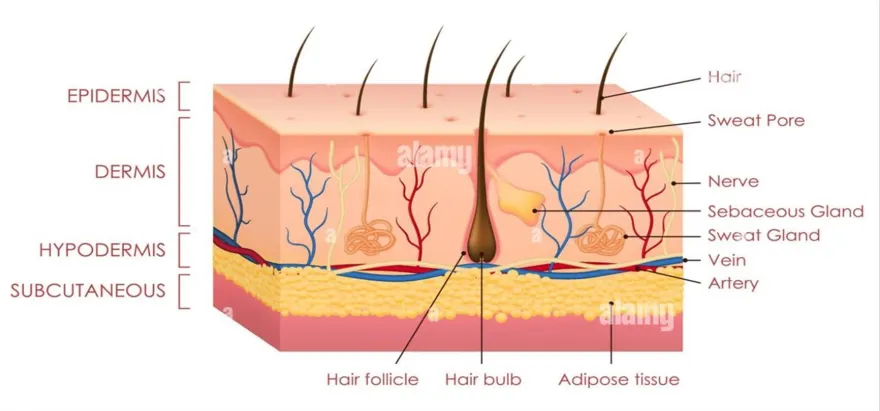
Fig.1 Structure of Skin
OVERVIEW ON SKIN AGING
Aging skin is characterized by various signs, including: Wrinkles, Uneven pigmentation, Darkening, Thinning, Sagging, Roughening. These changes can be attributed to either intrinsic (internal) or extrinsic (external) factors. Theories suggest that DNA damage and repair processes contribute to aging, leading to: Epigenetic changes, Cell senescence, Loss of cell function, Genomic abnormalities. Extrinsic aging is driven by environmental factors like: UV radiation, Pollution, Reactive oxygen species production. Intrinsic aging is linked to: Programmed aging, Cellular senescence, Endogenous oxidative stress, Cellular damage. [5]
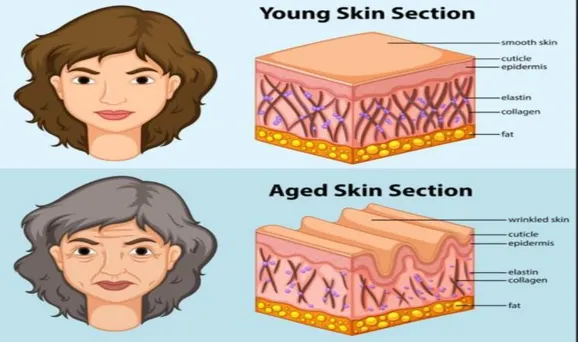
Fig.2 Difference between young Skin and Aged Skin
INTRINSIC SKIN AGING
It is a chronologically-driven physiological transformation process. Essentially, intrinsic skin aging is a condition that only appears in old age and is symbolized by smooth, unblemished, pale, dry, less elastic skin that has fine wrinkles. Intrinsic aging is characterized by a decline in dermal fibroblast count, which lowers the synthesis of collagen and elastin, especially types I and III collagen, and results in skin thinning, wrinkles, and loss of elasticity. Skin aging is partly caused by increased expression of matrix metalloproteinases (MMPs), which break down collagen and elastin in the dermal skin layer. Antioxidants such as resveratrol and iso orientin can reduce its expression both intrinsic and extrinsic variables can contribute to skin aging. [6]
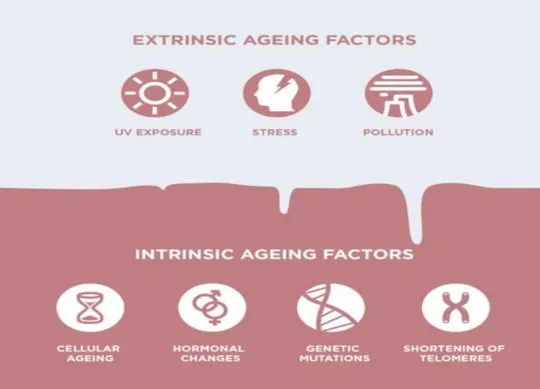
Fig.3 Intrinsic factor responsible for skin aging
EXTRINSIC SKIN AGING
Low-grade chronic UVR exposure is Responsible for over 80% of the aging process of Facial skin, while exposure can also result in Sunburn, tanning, inflammation, and damage to Dermal connective tissue. Extrinsically aged skin, Primarily from UVR rays, has sallow complexion with uneven pigmentation, rough texture, coarse Wrinkles, and decreased skin elasticity. Accelerated skin aging can be caused independently by long-term exposure to UV Radiation and cigarette smoking. ROS produced by UV exposure lead to harmful oxidative stress. Because 02 can take electrons, it produces extremely reactive chemical compounds known as ROS. Reactive oxygen species (ROS) are produced when the skin is exposed to photoaging stimuli. These ROS subsequently stimulate dermal enzymes Such as collagenase and elastase. These enzymes Speed up premature skin aging by breaking down Elastin and collagen, respectively. Signs of this Process include deep furrows or severe atrophy, Wrinkles, freckles, sallowness, laxity, and a leathery Appearance.
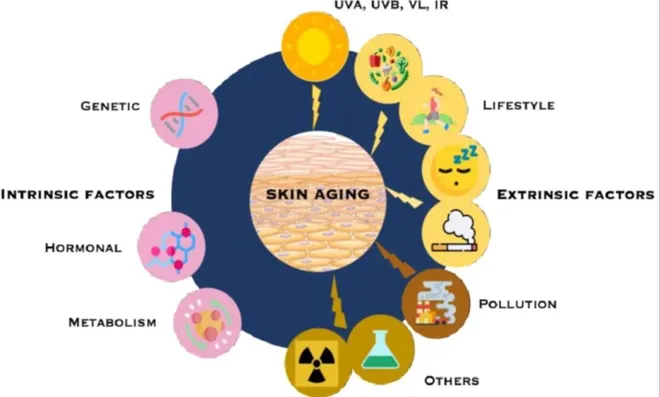
Fig.4 Extrinsic factor responsible for skin aging
FUNCTION OF SKIN :
FACE SERUM :
Face serums are formulated to deliver a high concentration of active ingredients without unnecessary additives. Their thinner consistency and absence of heavy oils enhance absorption and penetration, making them effective for nourishing and layering on the skin. The focus on essential ingredients without emulsifiers ensures optimal delivery of active agents, such as vitamins or botanical extracts.
ADVANTAGES OF ANTI-AGING SERUM:
1. Keep skin moisturized
2. Help remove skin blemishes
3. Anti-aging benefits and protect against wrinkles [11]
AIM OF PROJECT:
To formulate and evaluate a stable, effective, and cosmetically acceptable anti-aging serum containing selected active ingredients that reduce signs of skin aging such as wrinkles, fine lines, dryness, and loss of elasticity.
NEED OF THE PROJECT:
Degradation of collagen and elastin Increased oxidative stress due to free radicals Reduced skin hydration Loss of skin firmness and glow Formation of wrinkles and fine lines.
OBJECTIVE OF PROJECT :
DRUG PROFILE :
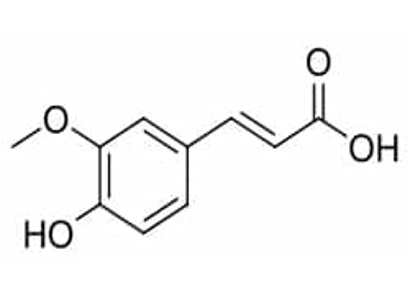
Fig.5 Ferulic acid
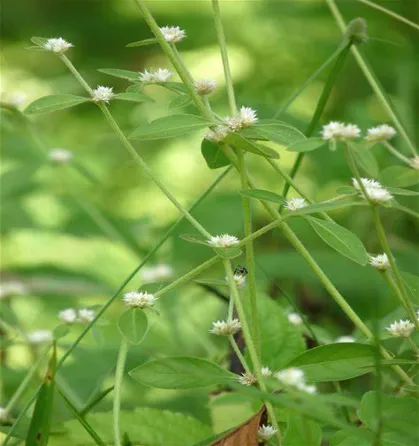
Fig. 6 Alternanthera sessilis
Table.1 Drug profile [12]
|
SOURCE OF FERULIC ACID |
Alternenthra sessilis plant |
|
SYNONYMS |
In marathi = Matsyakshi , In tamil= poonanganni |
|
CHHEMICAL CONSTITUENTS |
|
|
GEOGRAPHICAL SOURCE
|
Asia, Australia, and the Americas. In India (south india- tamil nadu, Andhra Pradhesh, kerala) including Maharashtra. |
|
USES |
Antioxidant, anti-inflammatory, hepatoprotective, and nutritional properties. |
LITERATURE REVIEW :
1. (Graf, 1992) Antioxidant Activity: Ferulic acid is a naturally occurring phenolic compound that exhibits strong antioxidant activity by scavenging reactive oxygen species (ROS) and preventing oxidative damage to lipids, proteins, and DNA. This property makes it highly useful in topical formulations aimed at protecting the skin from environmental stress.
2. (Lin et al., 2005) Synergistic Effect with Vitamin C: Ferulic acid enhances the antioxidant capacity of Vitamin C and Vitamin E when used in combination. This synergistic effect significantly increases the photoprotective potential of the formulation compared to individual antioxidants.
3. (Pinnell et al., 2001): Stabilization of Vitamin C: L-ascorbic acid is highly unstable and degrades rapidly when exposed to light, heat, and oxygen. Ferulic acid stabilizes Vitamin C by reducing its oxidation, thereby improving formulation stability and shelf life.
4. (Murray et al., 2008): Photoprotective Effect: Topical application of ferulic acid combined with Vitamin C reduces UV-induced erythema, inflammation, and cellular damage. This combination has been shown to significantly improve protection against UV radiation.
5. (Briganti and Picardo, 2003): Anti-aging Properties: Oxidative stress contributes to premature skin aging, including wrinkles and loss of elasticity. Antioxidants such as ferulic acid and Vitamin C reduce these effects by protecting skin structures and improving skin appearance.
6. (Pullar et al., 2017): Collagen Synthesis: Vitamin C plays a key role in collagen synthesis by acting as a cofactor in hydroxylation reactions, while ferulic acid protects collagen fibers from oxidative degradation.
7. (Cavalcanti et al., 2020): Anti-inflammatory Activity: Ferulic acid exhibits anti-inflammatory effects by inhibiting inflammatory mediators, reducing redness and irritation in the skin.
8. (Saija et al., 1999): Skin Brightening Effect: Ferulic acid inhibits tyrosinase activity, which reduces melanin synthesis and leads to improved skin tone and reduction in hyperpigmentation.
9. (Das and Wong, 2020): Formulation Challenges: Ferulic acid has limited solubility and stability in aqueous systems. Advanced formulation strategies such as nanoencapsulation and emulsions improve its stability and skin delivery.
10. (Telang, 2013): Evaluation Parameter pH: The pH of Vitamin C serum plays a critical role in stability and penetration. Optimal pH (2.5–3.5) enhances absorption and effectiveness.
11. (Patil et al., 2020): Evaluation Parameter: Drug Content: Quantitative analysis of ferulic acid in formulations is commonly performed using RP-HPLC methods to ensure accuracy, precision, and consistency.
12. (Mancuso et al., 2021): Evaluation Parameter; In-vitro Release: In-vitro diffusion studies demonstrate controlled release of ferulic acid from optimized formulations, improving bioavailability.
13. (Pinnell et al., 2001): Stability Studies: Accelerated stability studies show that ferulic acid improves the stability of Vitamin C formulations under various storage conditions.
14. (Liu et al., 2026): Clinical Evaluation: Clinical studies report improvements in skin hydration, reduction in erythema, and enhanced skin texture following the use of ferulic acid and Vitamin C formulations.
15. (Marcato et al., 2020): Safety and Efficacy: Ferulic acid-based serums are generally safe, non-irritating, and suitable for long-term use in dermatological applications .
PLAN OF WORK :
Aim, need and objective
Selection of ingredients and their roles Extraction, isolation, Purification and Identification of Alternenthra sessilis plant
Formulation and development
Evaluation
Result and Conclusion
MATERIAL AND METHODOLOGY :
Table 2. Master Formula
|
SR.NO |
INGREDIENTS |
F1 |
F2 |
F3 |
F4 |
F5 |
ROLES |
|
1 |
Ferulic acid |
0.12g |
0.12g |
0.12g |
0.12g |
0.12g |
Antioxidant |
|
2 |
L-ascorbic acid |
3.0g |
3.6g |
4.5g |
3.6g |
3.0g |
Antioxidant |
|
3 |
Propylene glycol |
4ml |
5ml |
6ml |
5ml |
4ml |
Solvent |
|
4 |
Glycerin |
3ml |
2.5ml |
2ml |
3.5ml |
4ml |
Humectant |
|
5 |
Sorbitol |
1g |
1g |
1.5g |
1g |
0.5g |
Moisturizer |
|
6 |
Almond oil |
0.5ml |
0.5ml |
0.7ml |
0.3ml |
0.5ml |
Emollient |
|
7 |
Tween 20 |
0.6ml |
0.7ml |
0.8ml |
0.5ml |
0.6ml |
Emulsifier |
|
8 |
Carbopol 940 |
0.15g |
0.20g |
0.25g |
0.10g |
0.15g |
Polymer |
|
9 |
Triethanolamine |
Q.S. |
Q.S. |
Q.S. |
Q.S. |
Q.S. |
PH adjust |
|
10 |
Sodium Benzoate |
0.15g |
0.15g |
0.15g |
0.15g |
0.15g |
Preservative |
|
11 |
Disodium EDTA |
0.03g |
0.03g |
0.03g |
0.03g |
0.03g |
Chelating Agent |
|
12 |
Purified Water |
Q.S. |
Q.S. |
Q.S. |
Q.S. |
Q.S. |
Vehicle |
Preparation of Alternenthra sessilis plant leaf extract :
Method of extraction: Maceration
Take 100g of Matsyakshi leaf powder
↓
after 2 to 3 hour we get powder extract
↓
Transfer the drug to the round bottom flask
↓
extract to the 80% of the ethanol for 48 hours
↓
Filter and Concentrate using rotary evaporator
↓
After 2 to 3 hours we get powder extract
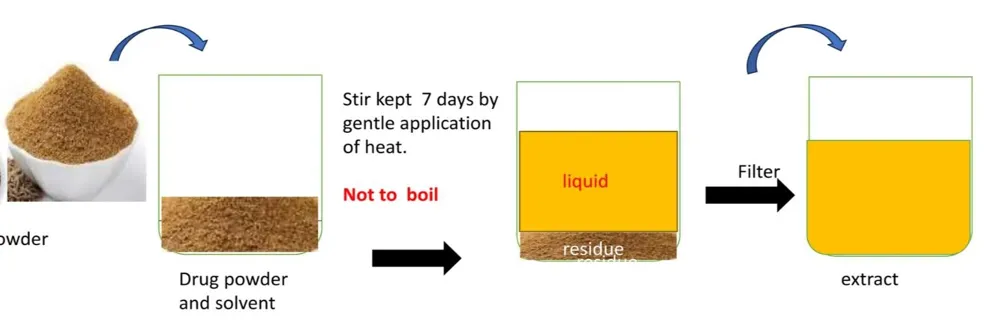
Fig.7 Extraction of ferulic acid from Alternenthra sessilis plant by Maceration
Isolation and purification of ferulic acid :
Procedure :
Dissolve extract in distilled water
Add 2N NaOH
Heat at 60–80°C for 1–2 hours
↓
Cool solution
Add HCl dropwise until pH = 2–3
Result: Ferulic acid precipitates out
↓
Transfer mixture to separatory funnel
Extract with ethyl acetate (3×)
Collect organic layer
Contains: Ferulic acid
↓
Evaporate ethyl acetate using rotary evaporator
Obtain semi-solid crude ferulic acid
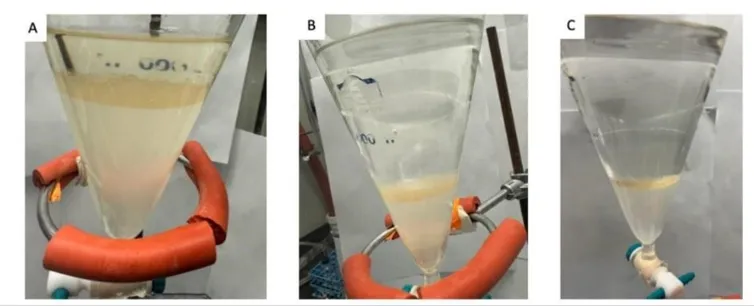
Fig.8 Isolation of ferulic acid
Purification:
Method A: Recrystallization
Dissolve in hot ethanol
Cool slowly → yellow crystals form
↓
Method B: Column Chromatography
Stationary phase: Silica gel
Mobile phase: Hexane: Ethyl acetate (gradient) [16]
Identification :
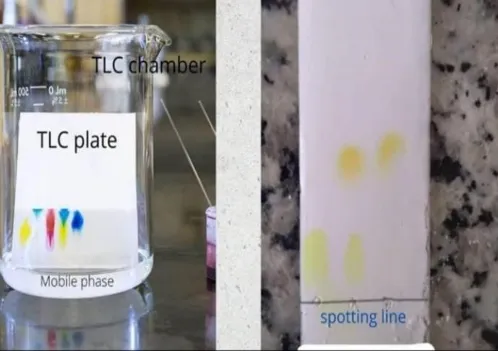
Fig.9 TLC Analysis
RF Value = 0.42
Procedure for Anti-aging Serum :
Preparation of gel phase (A)
Disperse Carbopol 940 in purified water and allow hydration for 20-30 minutes
↓
Preparation of antioxidant phase (B)
Dissolve a gel phase in water
Dissolve ascorbic acid in a small amount of water
↓
Preparation of humectant phase (C)
Propylene glycol, glycerin, and sorbitol were stirred.
↓
Preparation of oil phase(D)
mixed almond oil with tween20
↓
Combine phases:
Add phase C to phase A
Add phase B to phase slowly
Add phase D with continuous stirring
↓
Add preservative:
Dissolve sodium benzoate and EDTA, mix well, and then
↓
Add pH adjuster:
Measure the pH
Add triethanolamine dropwise until pH 5-6
↓
Make the final volume:
Add purified water and mix thoroughly [16]
Anti-aging serum :
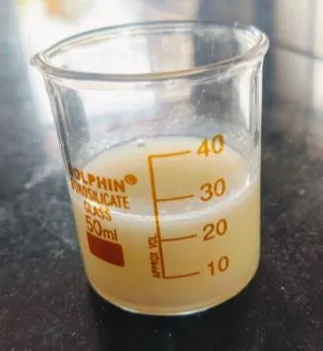
Fig.10 After mixing all the phases
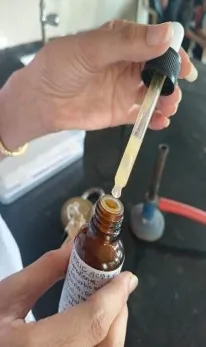
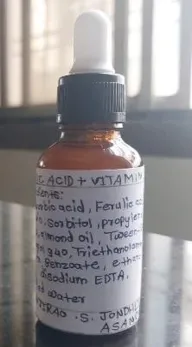
Fig.11 Anti-aging serum
Formulation Trials :
|
FORMULATION |
PROCEDURE |
RESULTS |
|
F1 |
Same Procedure with ethanol |
Unstable |
|
F2
|
Same Procedure but replace ethanol |
Stable |
|
F3 |
Same as F2 |
Stable |
|
F4 |
Same as F2 |
Stable |
|
F5 |
Same as F2 |
Stable |
|
FORMULATION |
PROCEDURE |
RESULTS |
|
F1 |
Used Mechanical stirrer |
Visible fine particle |
|
F2 |
Used electric Stirrer |
Uniform Mixture |
|
F3 |
Same as F2 |
Uniform Mixture |
|
F4 |
Same as F2 |
Uniform Mixture |
|
F5 |
Same as F2 |
Uniform Mixture |
F1: Rejected due to unstable in room temperature
F2: Reject due to acidic pH
F3: Reject due to improper mixing
F4: Reject because, it was causing irritation
F5: Stability, pH, homogeneity, no irritation
UV spectroscopy test ferulic acid :
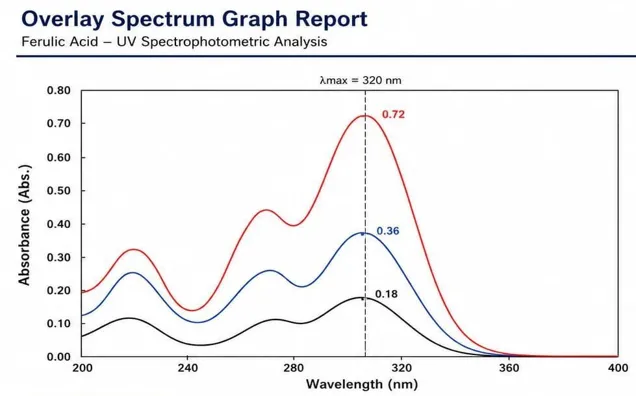
Fig. Test ferulic Acid UV Graph
Observation table :
Table.4 Test ferulic acid UV observation
|
SR.NO |
CONC. (ug/ml) |
ABSORBANCE (320nm) |
|
1 |
5 |
0.18 |
|
2 |
10 |
0.36 |
|
3 |
15 |
0.54 |
|
4 |
20 |
0.72 |
Actual conc. Test ferulic acid = 14ug/ml
Take 0.12g ferulic acid
EVALUATION PARAMETER FOR PREPARED ANTI-AGING SERUM
|
PARAMETER |
F1 |
F2 |
F3 |
F4 |
F5 |
|
Colour |
Brown |
Dark Yellow |
Yellow |
Yellow |
Pale Yellow |
|
Odour |
Rancid |
Rancid |
Pungent |
Floral |
Floral |
|
Ph |
5 |
4 |
5 |
4 |
5 |
|
Consistency |
Hard |
oily |
Runny |
Thick |
Smooth |
|
Appearance |
Dull |
Dull |
Faded |
Glossy |
Lustrous |
|
Spreadability |
Moderate |
Moderate |
Good |
Good |
Excellent |
|
Homogenity |
Non-Homogenous |
Non-Homogenous |
Homogenous |
Homogenous |
Homogenous |
|
Irritation |
Irritation |
Irritation |
No Irritation |
No Irritation |
No Irritation |
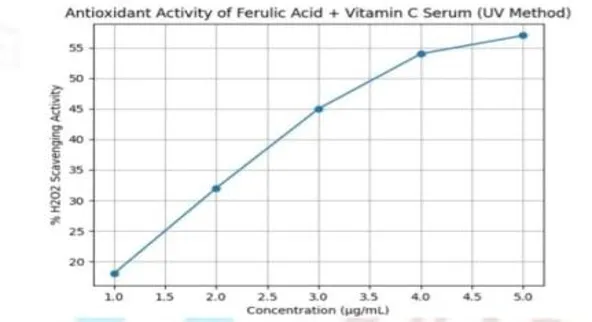
Fig.13 Graph of anti-oxidant activity
Observation table:
|
SR.NO |
CONCENTRATION (ug/ml) |
ABSORBANCE (230nm) |
% OF SCAVENGING |
|
1 |
8 |
0.400 |
38% |
|
2 |
10 |
0.355 |
45% |
|
3 |
12 |
0.325 |
50% |
|
4 |
14 |
0.292 |
55% |
|
5 |
16 |
0.275 |
58% |
|
6 |
18 |
0.260 |
60% |
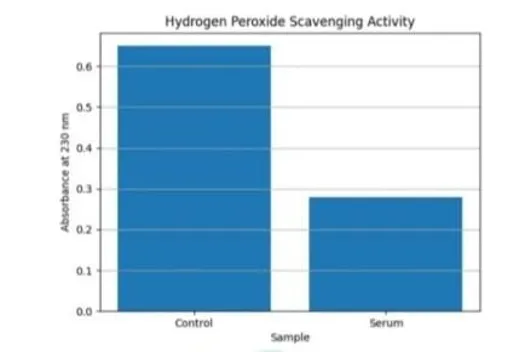
Fig.14 Scavenging activity graph
Observation Table :
|
SAMPLE |
ABSORBANCE AT (230nm) |
|
Control H2O2 |
0.650 |
|
Serum = H2O2 |
0.292 |
Result : Maximum anti-oxidant activity = 60%
|
SR.NO. |
FORMULATION |
PH |
|
1 |
F1 |
5 |
|
2 |
F2 |
4 |
|
3 |
F3 |
5 |
|
4 |
F4 |
4 |
|
5 |
F5 |
5 |
|
FORMULATION |
ROOM TEMPERATURE |
COOL TEMPERATURE |
|
F1 |
Unstable |
Stable 1-7℉ |
|
F2 |
Stable |
Stable 1-7℉ |
|
F3 |
Stable |
Stable 1-7℉ |
|
F4 |
Stable |
Stable 1-7℉ |
|
F5 |
Stable |
Stable 1-7℉ |
RESULT :
|
EVALUATION PARAMETER |
F1 |
F2 |
F3 |
F4 |
F5 (Selected Batch) |
|
Colour |
Brown |
Dark Yellow |
Yellow |
Yellow |
Pale Yellow |
|
Odour |
Rancid |
Rancid |
Pungent |
Floral |
Floral |
|
PH |
5 |
4 |
5 |
4 |
5 |
|
Consistency |
Hard |
oily |
Runny |
Thick |
Smooth |
|
Appearance |
Dull |
Dull |
Faded |
Glossy |
Lustrous |
|
Spreadability |
Moderate |
Moderate |
Good |
Good |
Excellent |
|
Homogenicity |
Non-Homogenous |
Non-Homogenous |
Homogenous |
Homogenous |
Homogenous |
|
Skin Irritation |
Irritation |
Irritation |
No Irritation |
No Irritation |
No Irritation |
|
Stability |
Unstable |
Acidic PH |
Improper Mixing |
Caused irritation |
Stable |
|
Antioxidant activity (Max inhibition) |
-----
|
------ |
---- |
---- |
---- |
|
IC 50 value |
---- |
----- |
-----
|
---- |
---- |
|
Overall Acceptability |
Rejected |
Rejected |
Rejected |
Rejected |
Accepted |
CONCLUSION
The present study successfully formulated and evaluated an anti-aging serum incorporating ferulic acid extracted from Alternanthera sessilis with L-ascorbic acid and suitable excipients. Among all the trial batches, F5 was found to be the optimized formulation exhibiting desirable physicochemical properties, excellent spreadability, good homogeneity, suitable pH, stability, and absence of skin irritation. The formulation demonstrated significant antioxidant activity with 60% inhibition and an IC₅₀ value of 12.5 µg/ml, confirming the effectiveness of the antioxidant combination. Stability studies under different conditions showed acceptable stability of the serum. Thus, the developed anti-aging serum is stable, safe, cosmetically elegant, and effective for topical application and shows promising potential in reducing signs of skin aging.
REFERENCES

Swapnil Pradhan, Kalyani Patil, Neha Patil, Raj Patil, Gauri Bhamare, Snehalta Mali, Formulation and Evaluation of Anti-Aging Serum using Ferulic Acid from Matsyakshi Plant, Int. J. of Pharm. Sci., 2026, Vol 4, Issue 8, 2590-2604. https://doi.org/10.5281/zenodo.21972325
 10.5281/zenodo.21972325