

We use cookies to ensure our website works properly and to personalise your experience. Cookies policy
Swami Vivekanand College of Pharmacy, Udgir.
A face pack is a soft powder or paste that is applied on the face. It is one of the oldest and most effective ways to clean and care for the skin. In Ayurveda, many types of face packs are described that help to nourish, heal, clean, tighten, and protect the skin from infections. Herbal face packs are affordable and usually do not cause side effects, making them a good option for natural skin care.This study focuses on the preparation and benefits of a moringa face pack. Moringa leaves contain important nutrients like antioxidants and vitamins A, C, and E. These help to reduce acne, protect the skin from damage, and keep it healthy. A moringa face pack can deeply nourish the skin, improve skin tone, and reduce signs of aging. The study also shows that moringa can be a natural alternative to chemical-based face packs. A moringa face pack works as a complete skin care solution. It cleans the skin, keeps it moisturized, and improves skin texture. It helps reduce pimples, fights skin damage, and gives a natural glow. It is very useful for brightening the skin, preventing aging, and providing deep nourishment without harmful chemicals. Other natural ingredients used in herbal face packs include Multani-mitti, neem, turmeric powder, and aloe vera.
Glowing and healthy skin plays a vital role in personal grooming, and a large number of people regularly use cosmetic products to enhance their skin appearance. However, many commercially available face packs contain synthetic chemicals, artificial coloring agents, and preservatives that may lead to skin irritation, dryness, allergic reactions, and other adverse effects, especially on prolonged or repeated use.[1]
Herbal face packs formulated with natural ingredients are considered safer, cost-effective, and more compatible with different skin types. Natural herbal components help in deep cleansing of the skin, removal of dead skin cells, improvement of blood circulation, and enhancement of the natural skin glow without causing harmful side effects.[2]
Hence, there is a need to formulate and scientifically evaluate a herbal face pack that is safe, stable, and effective for achieving glowing skin.[3]
In this article, a herbal face pack is prepared to naturally whiten, lighten, and brighten the skin for both men and women. This face pack has natural skin-lightening properties and can be easily made at home. It contains natural ingredients that are rich in important vitamins needed for healthy and glowing skin. These natural substances are beneficial for the skin in many ways. Herbal face packs are simple to use and help improve blood circulation in the face, which makes the skin look fresh unlively A good herbal face pack should provide essential nutrients to the skin and should be in the form of a smooth, free-flowing powder that is easy to apply. [4]
A face pack is applied on the face for external use. It should go deep into the skin layers to provide important nutrients. Different skin types need different types of face packs. Nowadays, separate face packs are available for oily, normal, and dry skin. Face packs help to improve skin fairness and smoothness. They also reduce wrinkles, pimples, acne, and dark circles. Marks and spots on the skin can be reduced by using fine powders of natural ingredients like neem, moringa, rose petals, and aloe vera. [5]
Herbal face packs are widely used today because they have many advantages over chemical- based products. They are non-toxic, do not cause allergies, and are not habit-forming. They are completely natural and usually have a longer shelf life without added preservatives. They are also easy to prepare and can be stored for a long time. This research focuses on the preparation and evaluation of a herbal face pack for glowing skin using natural ingredients such as moringa-oliefera, Multani-mitti, turmeric, neem, aloe vera powder, and gram flour rose (powder). These ingredients provide essential nutrients for the skin. Multani-mitti is especially rich in magnesium chloride, which is helpful for skin care. [6]
2. IDEAL CHARACTERISTICS OF A FACE PACK:
• It should be safe to use and free from harmful effects.
• It should not irritate or harm the skin.
• It should remain stable in its composition and quality.
• The ingredients should be properly and uniformly mixed.
• It should have a very fine texture without any rough particles.
• It should help in cleaning dirt, oil, and impurities from the skin.
• It should be easy to make into a smooth paste for application.
• It should have a nice and pleasant fragrance.
• It should be easy to wash off after use.
3. REVIEW OF LITERATURE:
1. Larry E. Millikan et al. (2001) Herbal cosmetics gained importance due to increased awareness of the harmful effects of synthetic products. Natural formulations were preferred because they were safe, economical, and skin-friendly. Previous studies reported that herbal ingredients showed antimicrobial, antioxidant, anti-inflammatory, and anti-aging properties. Ayurvedic formulations such as Mukha Lepa were used for skin cleansing and rejuvenation. Studies also showed that herbal face packs were effective, non-irritant, and safe for cosmetic use.
2. Rani SR et al. (2008) Herbal cosmetics were widely used due to their safety, non-toxic nature, and minimal side effects. Previous studies reported that herbal face packs prepared using natural ingredients such as Multani-mitti, turmeric, sandalwood, and orange peel improved skin glow, reduced acne, and enhanced skin texture. Earlier researchers concluded that herbal formulations showed good physicochemical properties, antimicrobial activity, stability, and were free from skin irritation, making them suitable for cosmetic use.
3. Himaja N et al. (2015) Previous studies reported that herbal face packs formulated using natural ingredients were safe, non-toxic, and effective for improving skin glow. Researchers found that such formulations showed acceptable physicochemical properties, good stability, antimicrobial activity, and no skin irritation. Herbal cosmetics were therefore considered suitable alternatives to synthetic products for regular skincare use.
4. Rani S et al. (2015) Previous studies reported that herbal face packs formulated using natural ingredients such as Multani-mitti, turmeric, sandalwood, saffron, orange peel, and banana peel were safe and effective skincare use.
5. Maske et al. (2019) developed and evaluated a herbal face pack to enhance skin glow using natural ingredients. The study highlights that herbal cosmetics have been used since ancient times due to their safety and minimal side effects compared to chemical products. The formulation included ingredients like multani mitti, turmeric, sandalwood, saffron, milk powder, rice flour, orange peel, and banana peel, which help in cleansing, improving blood circulation, reducing acne and pigmentation, and enhancing skin appearance. The face pack was prepared by drying, powdering, sieving, and mixing all ingredients uniformly.
6. Panhotra T et al. (2021) Previous studies reported that herbal face packs prepared from plant-based ingredients such as Moringa oleifera, turmeric, sandalwood, and multani mitti were safe and effective for skincare. Researchers found that these formulations exhibited antioxidant, antimicrobial, anti-inflammatory, and moisturizing properties. Earlier evaluations also confirmed good physicochemical stability and absence of skin irritation, supporting their suitability for cosmetic.
7. Agusriani A et al. (2024) Studies show that facial skin requires proper care using safe and effective products. Facial masks are commonly used to cleanse, moisturize, and improve skin health. Recently, natural or organic masks have become popular because they contain fewer harmful chemicals and reduce the risk of irritation. Plants like Moringa oleifera and Curcuma longa (turmeric) are rich in
antioxidants, vitamins, and anti-inflammatory compounds. These natural ingredients help in improving skin moisture, reducing acne, and protecting the skin from damage caused by free radicals. Previous research indicates that formulations containing moringa and turmeric show good antioxidant activity and moisturizing effects, making them suitable for use in herbal facial masks.
4. NEED OF STUDY:
a. Rising Demand for Herbal Cosmetics:
With increasing awareness about the side effects of synthetic cosmetics, there is a growing preference for plant-based formulations. Moringa oleifera is widely recognized for its natural, safe, and multifunctional cosmetic benefits, making it an ideal candidate for herbal skincare formulations. (7)
b. Rich Phytochemical Composition:
Moringa oleifera contains bioactive constituents such as:
• Flavonoids
• Phenolic acids
• Vitamins (A, C, E)
• Minerals
These compounds contribute to:
• Antioxidant activity
• Anti-aging effects
• Skin nourishment
Such properties are essential for achieving healthy and glowing skin. (8)
c. Antioxidant and Anti-aging Potential:
Oxidative stress is a major cause of dull and aging skin. The high antioxidant content in moringa helps:
• Neutralize free radicals
• Reduce wrinkles and fine lines
• Improve skin textureThus, studying its formulation ensures optimal delivery of these benefits. (9)
d. Moisturizing and Skin Repair Properties:
Moringa oil is rich in oleic acid and helps:
• Maintain skin hydration
• Restore damaged skin barrier
• Promote smooth and radiant skin
Proper formulation enhances stability and penetration into the skin. (10)
e. Antimicrobial and Anti-inflammatory Effects:
Moringa exhibits antimicrobial properties that help:
• Prevent acne and infections
• Reduce inflammation
• Soothe irritated skin
Evaluation studies ensure its efficacy and safety in topical applications. (11)
f. Need for Standardization and Evaluation:
Despite its benefits, herbal formulations require:
• Stability testing
• pH determination
• Spreadability and consistency evaluation
• Safety and irritation studies
Scientific evaluation ensures reproducibility, quality, and effectiveness of moringa-based skincare products. (12)
g. Economic and Sustainable Value:
Moringa is:
• Easily available in tropical regions (including India)
• Cost-effective
• Environmentally sustainable
This makes it highly suitable for large-scale cosmetic applications. (13)
5. AIM AND OBJECTIVES:
Aim:
To develop and assess a herbal face pack incorporating Moringa oleifera as the primary ingredient, with the objective of producing a safe, stable, and effective natural cosmetic formulation that enhances skin health and overall appearance.
Objectives:
• To make a herbal face pack using natural ingredients like moringa, turmeric, Multani-mitti, neem, aloe vera, gram flour, and rose powder.
• To check the quality of the face pack by studying: Color, smell, and texture pH, moisture, and ash content Flow and density properties
• To make sure the face pack is safe by performing a skin irritation test.
• To study how stable the face pack is when stored at different temperatures.
• To see how effective the face pack is in improving skin problems like acne, dullness, and pigmentation.
• To encourage the use of herbal products as they are safer than chemical-based cosmetics.
6. PLAN OF WORK
a. Preliminary Research & Literature Survey:
i) Synthesis of Information: Analyze existing scholarly works regarding botanical cosmetics and face pack compositions.
ii) Pharmacological Mapping: Investigate the bioactive properties of key ingredients like Moringa oleifera, neem, turmeric, and aloe vera.
iii) Methodological Review: Assess historical formulation techniques to build a robust scientific foundation for the study. (14)
b. Sourcing and Botanical Processing:
i) Procurement & Identification: Collect plant specimens and ensure botanical authentication of crude materials to maintain integrity.
ii) Refinement: Clean and dry materials (utilizing shade or cabinet drying) to remove moisture while preserving active phytochemicals. (15)
c. Micronation of Plant Materials:
i) Desiccation: Ensure materials are thoroughly dried under controlled conditions for 4–6 days.
ii) Processing: Grind the dried matter into a fine consistency and pass it through a #100 mesh sieve to guarantee a uniform particle size suitable for topical application. (16)
d. Formulation and Batch Design:
i) Precision Compounding: Utilize digital balances for accurate measurement and implement the geometric dilution method for homogeneous blending.
ii) Optimization: Develop multiple experimental batches (B1, B2, B3) with varying ingredient ratios to identify the most effective concentration. (17)
e. Comprehensive Evaluation Protocols:
To ensure product safety and efficacy:
i) Organoleptic Properties: Assessment of sensory attributes (color, aroma, and texture).
ii) Physicochemical Analysis: Determination of pH levels.
iii) Safety Profile: Conduct a 25-30 min skin irritancy test to monitor for adverse reactions like erythema or edema. (18)
f. Comparative Data Interpretation
i) Statistical Analysis: Contrast the performance data across all batches.
ii) Selection: Identify the physical and stability results. (19)
g. Documentation and Reporting
i) Synthesis: Finalize findings and validate the safety and cosmetic benefits of the herbal pack.
ii) Final Submission: Compile all data and conclusions into a formal thesis or technical report. (20)
7. MATERIAL AND METHODOLOGY:
a. MATERIAL:
The required herbal ingredients such as:
i) Moringa-Oleifera
ii) Curcuma Longa iii)Multani-Mitti
iv) Aloe Vera (powder)
v) Rose (Petals)
vi) Neem
i) Moringa oleifera:
Synonym: Drumstick
Biological Source: Moringa oleifera Linn.
Family: Moringaceae
Moringa oleifera is rich in nutrients that are beneficial for the skin. It contains vitamins A, C, and E, which help in maintaining healthy skin. Vitamin A supports collagen formation, while vitamin C helps reduce signs of aging. Vitamin E has anti-inflammatory properties. Moringa also contains flavonoids and phenolic compounds, which provide strong antioxidant activity and help remove harmful free radicals. It protects the skin from environmental damage and harmful UV rays. Additionally, it helps in preventing acne, reducing pimples, dark spots, blemishes, and blackheads, and promotes clear and healthy skin.
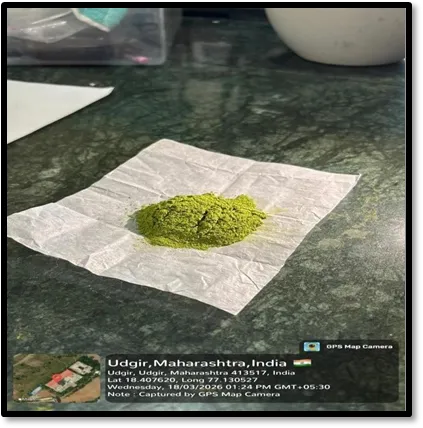
Fig No.1 Moringa Oleifera
ii) Curcuma longa
Synonym: Haldi, Turmeric, Indian saffron, etc.
Biological Source: Fresh & Dried rhizomes of Curcuma Longa Linn.
Family: Zingiberaceae
Turmeric shows strong anti-allergic, antiseptic, and anti-inflammatory effects. It helps in improving dull and uneven skin tone, reduces pigmentation, and delays aging signs such as wrinkles. It also helps to maintain skin elasticity.
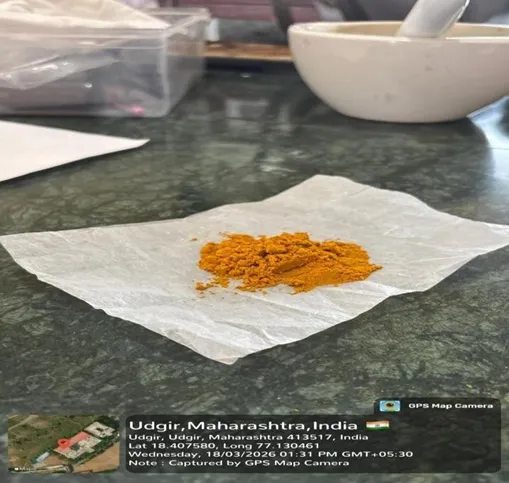
Fig No.2 Curcuma Longa
iii) Aloe vera:
Synonyms: - Kumari, Aloe, Barbados Aloe
Biological Source: Dried Latex Obtained from Leaves of Aloe Vera (L.) Burm.f.”
Family: Liliaceae
Aloe vera has soothing and moisturizing properties. It helps in reducing inflammation,
prevents skin damage, and keeps the skin soft and hydrated. It also has anti-aging effects and promotes healthy, glowing skin.
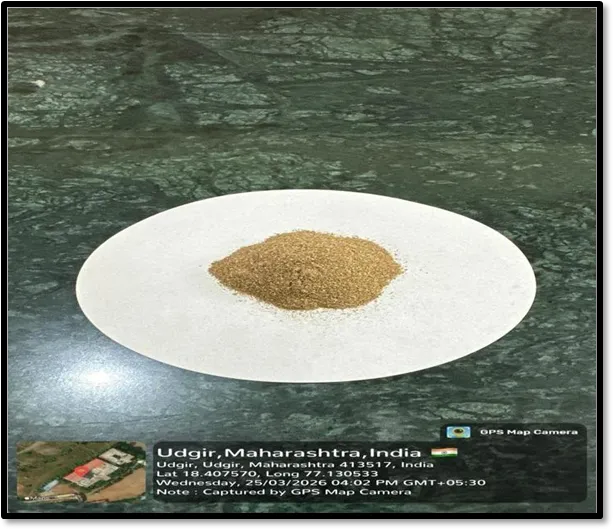
Fig No.3 Aloe Vera
iv) Multani-Mitti:
Synonym: Fuller’s Earth, Bentonite Clay, Mud from Multan.
Biological Source: Sedimentary Clay Deposits.
Family: Kaolinite/Montmorillonite (Clay Minerals).
Multani Mitti is used for skin and hair (Cosmetic) and it gives Therapeutic and Cooling, Industrial and Traditional Use.
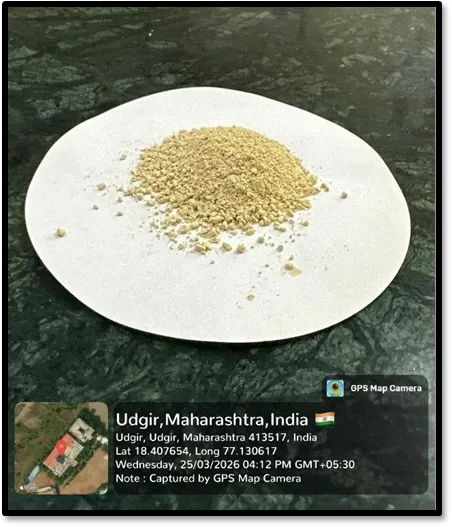
FigNo.4Multani-Mitti
v) Rose (Powder):
Synonym: Gulab, Rosa.
Biological Sources: Fresh and dried petals of Rosa damascene Mill.
Family: Rosaceae
Rose petals are used in perfumery, cosmetics, food flavoring, and for soothing and cooling purposes.
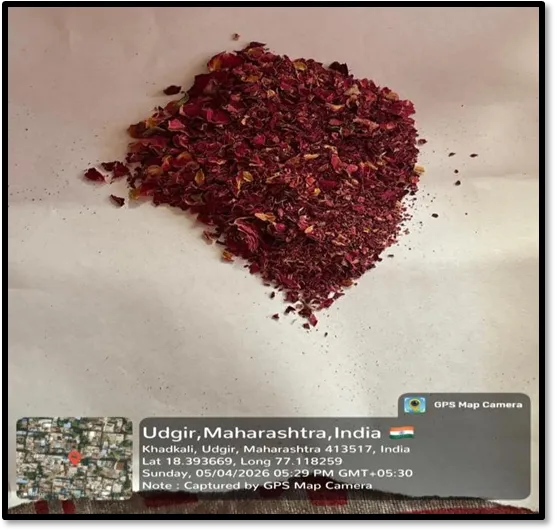
Fig No.5 Rose Powder
vi) Neem:
Synonym: Nimba or Arishta, Margosa Tree, Indian Lilac. Biological source: Dried leaves of Azadirachta indica A. Juss. Family: Meliaceae.
Neem is powerful because it contains Azadirachtin, a natural compound that acts against bacteria, fungi, and insects. (21)
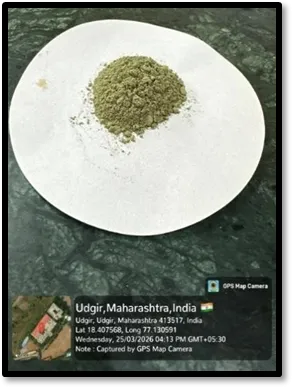
Fig No.6 Neem
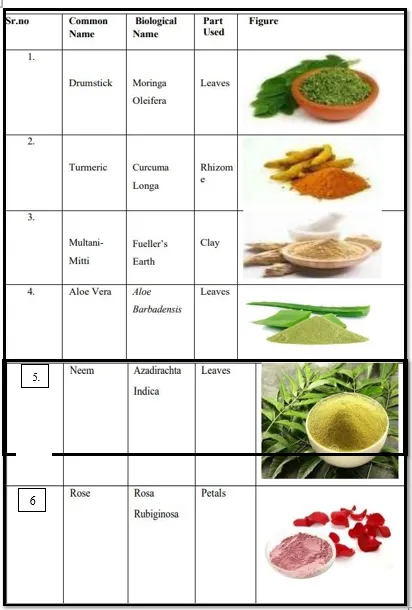
Table No.1 (22)
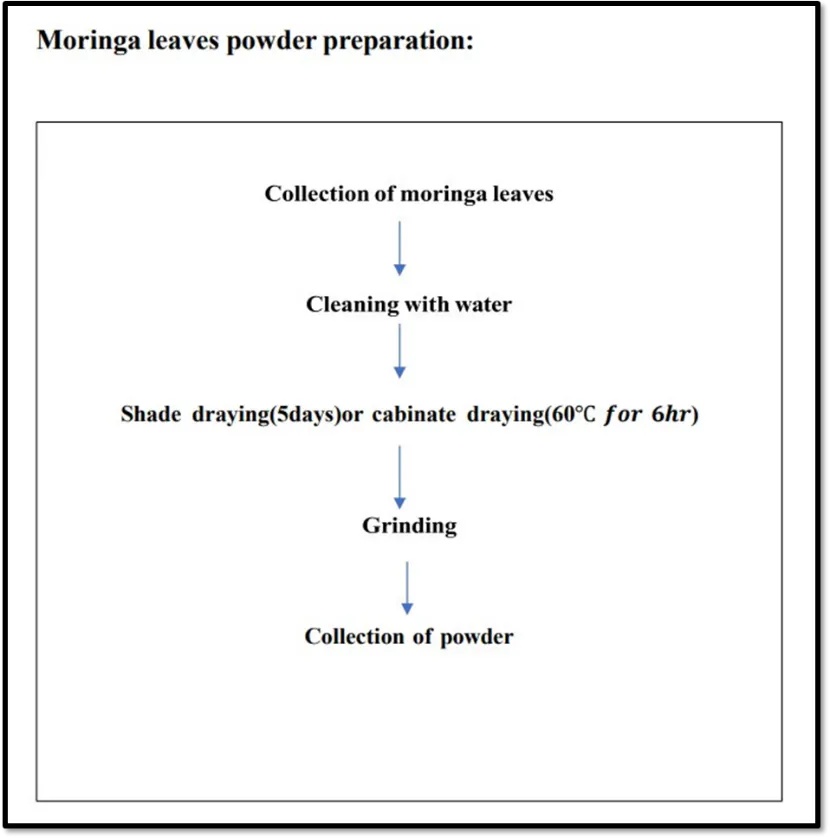
b. METHOD OF PREPARATION:
Fresh leaves of Moringa oleifera (drumstick), multani-mitti, turmeric, Aloe vera, Neem and Rose petals were collected.
Table No.2(22)
ii) EQUIPMENTS:
• Digital Balance
• Sieve - 100
• Mortar and Pestle
• Dryer
• Grinder
iii) Steps involved in formulation of facepack:
• Drying:
All plant materials were washed (if required) and dried under shade to remove moisture while preserving active constituents.
• Powdering:
The dried materials were ground separately into fine powder using a grinder.
• Sieving:
The powders were passed through a #120 sieve to obtain uniform particle size
• Weighing:
Each ingredient was accurately weighed according to the required formulation ratio.
• Mixing:
All powders were mixed uniformly using the geometric dilution method to ensure even distribution of ingredients.
• Packaging:
The prepared herbal face pack powder was transferred into an airtight container.
• Labelling and storage:
The container was properly labelled and stored in a cool, dry place for further use and evaluation. (23,24)
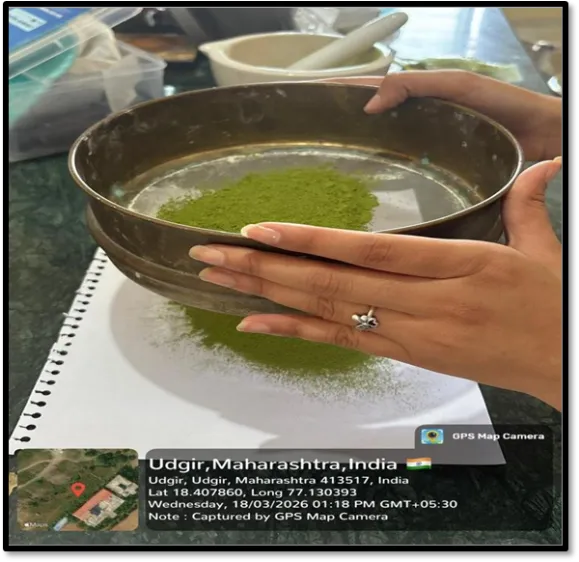
Fig No.7 Sieving
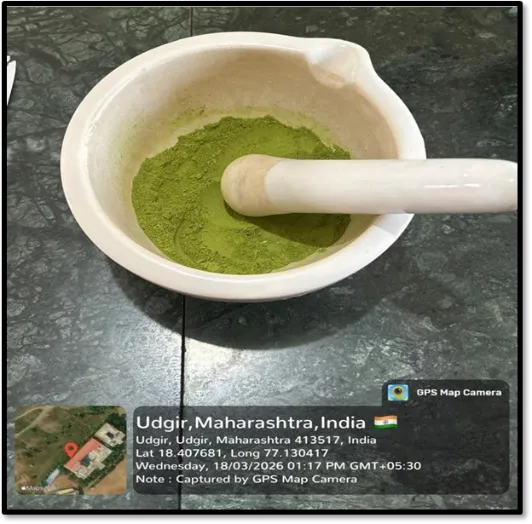
Fig No.8 Trituration
a. Procedure for Application of Moringa oleifera Herbal Face Pack
• Face cleaning:
Wash the face thoroughly with water or a mild cleanser to remove dirt and oil. Pat dry with a clean towel.
• Preparation of paste:
Take a required amount of the herbal face pack powder in a bowl. Add sufficient water, rose water, or milk to make a smooth paste. (25)
b. Application of herbal face pack
Apply the paste evenly on the face and neck using clean fingers or a brush. Avoid the eye and lip area.
• Drying time:
Leave the face pack on the skin for about 15–20 minutes or until it dries completely.
• Washing:
Rinse the face gently with lukewarm water by rubbing in circular motion to remove the pack.
• Drying and moisturizing:
Pat the skin dry with a soft towel and apply a light moisturizer if needed. (26)
Table No.3
Formulations Of Herbal Face Pack:
|
Sr. No |
Ingredient |
Quantity For (12.5 gm) |
||
|
S1 |
S2 |
S3 |
||
|
1 |
Moringa |
3.75 gm |
3.25 gm |
2.5 gm |
|
2 |
Turmeric |
1.25 gm |
1.5 gm |
1.5 gm |
|
3 |
Multani-Mitti |
2.5 gm |
2.5 gm |
2.5 gm |
|
4 |
Aloe Vera |
1.25 gm |
1.5 gm |
1.5 gm |
|
5 |
Gram Flour |
1.25 gm |
1.25 gm |
1.5 gm |
|
6 |
Neem |
1.25 gm |
1.25 gm |
1.5 gm |
|
7 |
Rose |
1.25 gm |
1.25 gm |
1.5 gm |
8. EVALUATION
A. Physio-chemical Evaluation:
i) Organoleptic Evaluation
ii) Physicochemical Evaluation
iii) Additional Evaluation
i) Organoleptic Evaluation
This evaluation is done using sense organs:
a. Color: The formulation will be observed visually (e.g., light brown or greenish).
Odor: The formulation will be observed visually (e.g., light brown or greenish).
b. Appearance/Nature: It will be determined if the powder is coarse or free-flowing.
c. Texture: The powder will be evaluated for any rough feeling when touched.
d. Feel: This will be checked by applying a small amount to the skin to identify if the sensation is soft or gritty. This test helps in quick identification and acceptance of the product.
ii) Physicochemical Evaluation
These tests help to determine chemical composition and stability:
a) pH Determination-
Measured using pH meter. Important for skin compatibility (should be near skin pH ~5.5–7). This parameter ensures quality, purity and safety of the formulation. (26,27)
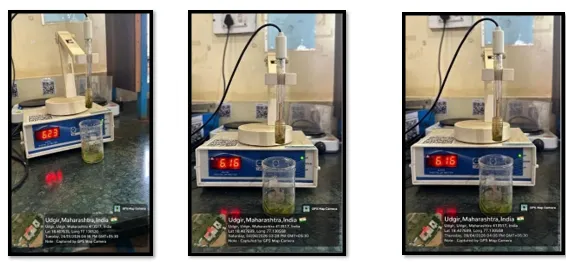
Fig No. 9: Sample 1 Fig No.10: Sample 2 Fig No.11: Sample 3
iii) Additional Evaluation
a) Irritability Test
Prior to the irritancy test, carefully wash the hands. Then, apply the prepared face packs to the specified area on the left-hand dorsal surface, and note the time. Check for irritancy. if any, at regular intervals up to 20 minutes and report any findings. Mark the area [1 cm square] when determining the back surface of the left hand, a prepared amount of face pack was applied to the designated area, and irritation, redness, swelling were observed over time, which were checked at regular intervals. up to 20 Minutes and notified.
• Applied on small skin area to check for allergic reactions.
• Observation for redness, swelling, irritation.
• To evaluate the quality, safety, and effectiveness of the formulation.
• To determine the formulation’s quality, safety profile, and overall performance.
• To analyze the quality standards, safety aspects, and functional efficiency of the product. (27)
b) Washability
• Determines how easily the face pack can be removed from skin.
• To determine how easily the applied face pack can be washed off from the skin without leaving residues or causing irritation.
• After application, wait 20 minutes for the substance to dry fully, then wash away the residue. (28)
RESULT AND DISCUSSION:
Following evaluation parameter were performed to ensure of prepared face pack.
Table No. 4
Organoleptic Parameters:
|
Sr No. |
Parameter |
Sample 1 |
Sample 2 |
Sample 3 |
|
1 |
Colour |
Greenish |
Greenish |
Greenish |
|
2 |
Odour |
Earthy/grassy |
Earthy/grassy |
Earthy/grassy |
|
3 |
Texture |
Slightly Rough |
Slightly Rough |
Slightly Rough |
|
4 |
Smoothness |
Rough |
Rough |
Rough |
Table No.5
Physicochemical Evaluation:
|
Sr No. |
Parameter |
Sample 1 |
Sample 2 |
Sample 3 |
|
1 |
pH |
6.23 |
6.16 |
5.90 |
Table No.6
Irritancy Test:
|
Sr No. |
Parameter |
Sample 1 |
Sample 2 |
Sample 3 |
|
1 |
Irritation |
No |
No |
No |
|
2 |
Redness |
No |
No |
No |
|
3 |
Swelling |
No |
No |
No |
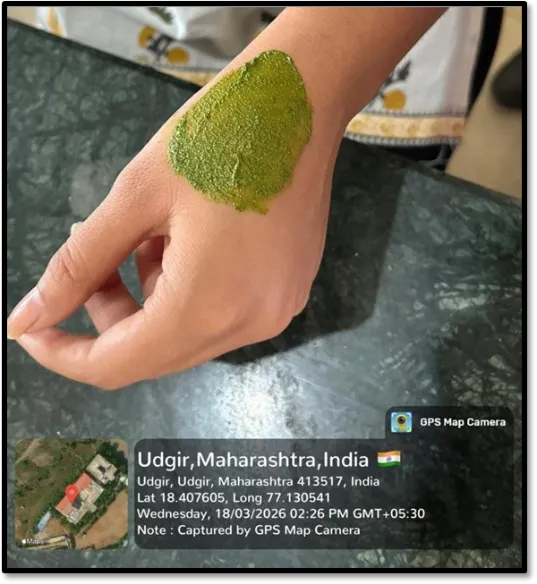
Fig No.12: Irritancy Test
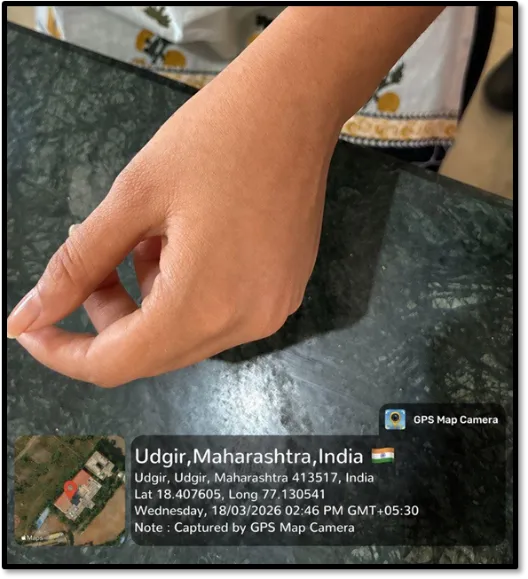
Fig No.13: Washability Test
Table No 7
Stability Study:
|
Sr No. |
Parameter |
Sample 1 |
Sample 2 |
Sample 3 |
|
1 |
Colour |
Green |
Green |
Green |
|
2 |
Odour |
Earthy/grassy |
Earthy/grassy |
Earthy/grassy |
|
3 |
pH |
6.23 |
6.16 |
5.90 |
|
4 |
Texture |
Slightly Rough |
Slightly Rough |
Slightly Rough |
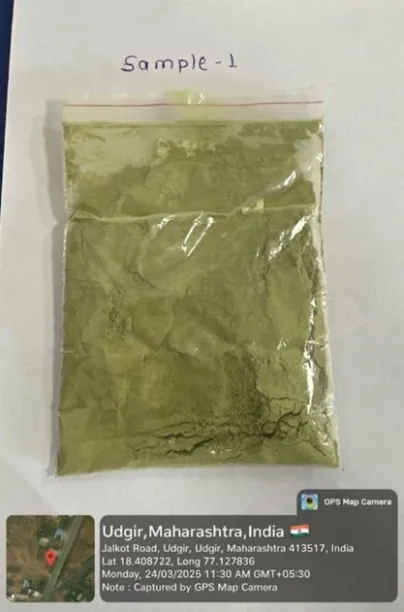
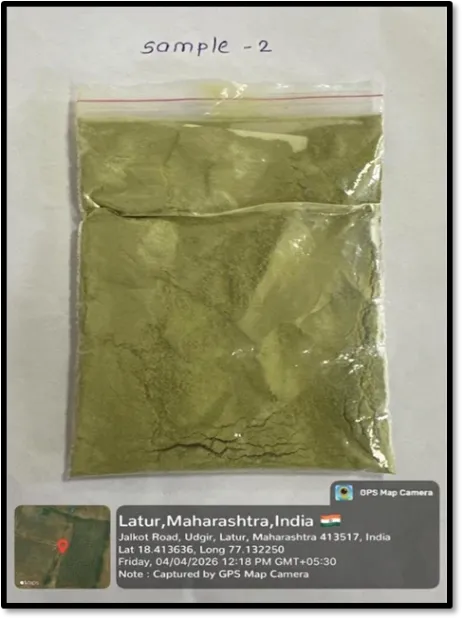
Fig No.14: Sample 1 Fig No. 15: Sample 2
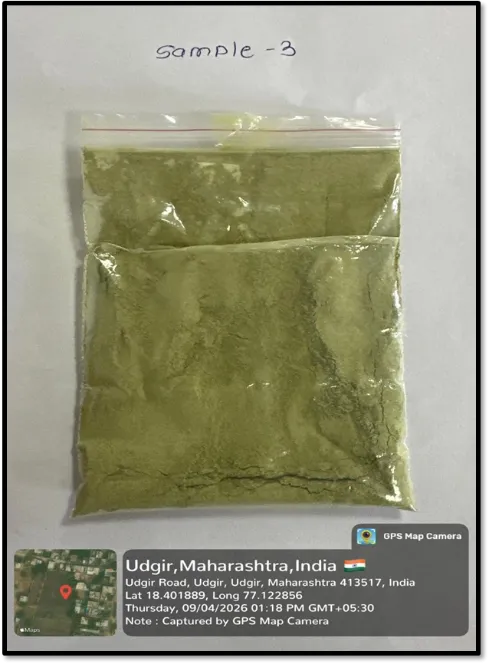
Fig No.16: Sample 3
CONCLUSION
Natural medicines are widely accepted due to the perception that they are safer and associated with minimal side effects. As a result, the global demand for herbal formulations continues to increase. In the present scenario, there is a growing need for effective skin treatments that do not cause adverse effects. Herbal ingredients offer a promising approach for developing safe and eco-friendly cosmetic products.
The formulated herbal face pack containing ingredients such as Multani-mitti, turmeric, neem leaves, gram flour, and rose powder, represents an effective and sustainable solution for skin care. The formulation was found to be physically and Physico-chemically stable, meeting the standards required for cosmetic applications.
The formulated Moringa-based herbal face pack represents a viable, sustainable, and effective alternative to synthetic skincare. By utilizing standardized botanical ingredients, the study demonstrated that it is possible to achieve skin brightening and anti-aging benefits without the risk of chemical toxicity. The product is physically stable, safe for regular use, and economically accessible, particularly in tropical regions where Moringa is abundant. Future research could focus on long-term clinical trials to quantify the reduction in hyperpigmentation and fine lines.
REFERENCES
Int J PharmTech Res. 2010;2(1):632–639.
Sharma P, et al. Evaluation of cosmetic preparations: A review. Int J Pharm Sci Res. 2018;9(9):3525–3532
Int J PharmTech Res. 2010;2(1):632–639.

Swami Om, Swami Pratiksha, Wakude Raman, Zargar Fahair Shabbir, Digvijay Kendre, Ganesh Tolsarwad, Sumit Patil, Formulation And Evaluation of Herbal Face Pack for Glowing Skin, Int. J. of Pharm. Sci., 2026, Vol 4, Issue 7, 2748-2762, https://doi.org/10.5281/zenodo.21350023
 10.5281/zenodo.21350023