

We use cookies to ensure our website works properly and to personalise your experience. Cookies policy
KJEI’S Trinity college of Pharmacy, Pune
Premature hair greying is a common cosmetic and psychological concern associated with oxidative stress, melanocyte dysfunction, and reduced melanin synthesis. The present study aimed to formulate and evaluate a herbal hair serum containing Phyllanthus emblica (Amla), Murraya koenigii (Curry Leaves), Eclipta alba (Bhringraj), and Mangifera indica (Mango Seed) in a sesame oil base. Herbal extracts were prepared using a double-boiler extraction technique and incorporated into an oil-based serum. The formulation was evaluated for phytochemical constituents, physicochemical properties, pH, viscosity, spreadability, skin irritation potential, microbial load, acid value, peroxide value, UV spectroscopic profile, and antioxidant activity. Phytochemical screening confirmed the presence of alkaloids, tannins, phenolics, and saponins. The optimized formulation exhibited acceptable pH (5.7), viscosity (1000 cps), good spreadability, absence of skin irritation, acceptable microbial limits (?1×10³ CFU/mL), acid value of 2.24 mg KOH/g, and peroxide value of 8 meq O?/kg oil. DPPH antioxidant assay demonstrated concentration-dependent free radical scavenging activity with an IC50 value of 58.3 µg/mL. The findings suggest that the developed herbal hair serum possesses promising antioxidant and scalp-protective properties that may contribute to delaying premature hair greying.
Hair is an important component of human appearance and contributes significantly to self-esteem and psychological well-being. Hair pigmentation is determined by melanin synthesized by melanocytes present within hair follicles. Melanin production and transfer to keratinocytes during the anagen phase of the hair growth cycle are responsible for maintaining natural hair color. However, various intrinsic and extrinsic factors may impair melanocyte function, resulting in progressive loss of pigmentation and the appearance of grey hair, a condition known as canities. Premature hair greying has become increasingly prevalent among young individuals and is influenced by genetic, nutritional, environmental, and lifestyle factors [1].
Hair greying results from the gradual reduction of melanin production within hair follicles due to melanocyte dysfunction and oxidative stress. Excess accumulation of reactive oxygen species (ROS), particularly hydrogen peroxide, causes oxidative damage to melanocytes and inhibits tyrosinase activity, a key enzyme involved in melanin biosynthesis. Consequently, melanin production decreases, leading to progressive depigmentation of hair shafts. In addition to oxidative stress, factors such as smoking, nutritional deficiencies, hormonal disturbances, autoimmune disorders, and psychological stress have been implicated in the pathogenesis of premature hair greying [2,3].
Currently available treatment options for hair greying are largely cosmetic and primarily involve the use of synthetic hair dyes and colorants. Although these products effectively mask grey hair, they do not address the underlying biological causes of melanocyte dysfunction. Moreover, prolonged use of synthetic hair colorants containing chemicals such as para-phenylenediamine (PPD), ammonia, resorcinol, and hydrogen peroxide has been associated with adverse effects including scalp irritation, allergic dermatitis, hair shaft damage, and potential long-term toxicity [4,5]. These limitations have stimulated growing interest in the development of natural and safer alternatives for the prevention and management of premature hair greying.
Medicinal plants represent a rich source of bioactive phytoconstituents possessing antioxidant, anti-inflammatory, and melanocyte-protective properties. Natural antioxidants can neutralize free radicals, reduce oxidative stress, and preserve melanocyte viability, thereby potentially delaying hair depigmentation. Herbal formulations are generally considered safer and more biocompatible than synthetic products and have been widely utilized in traditional systems of medicine for maintaining hair health [6].
Phyllanthus emblica (Amla) is widely recognized for its potent antioxidant activity and is rich in vitamin C, tannins, gallic acid, ellagic acid, and polyphenols. These constituents contribute to free radical scavenging and protection of hair follicles from oxidative damage. Traditionally, Amla has been used to strengthen hair roots, improve scalp health, and delay premature hair greying [7].
Murraya koenigii (Curry Leaves) contains biologically active carbazole alkaloids such as mahanimbine, girinimbine, and koenimbine, which exhibit antioxidant and anti-inflammatory activities. Curry leaves have long been used in traditional hair care preparations for improving hair texture, reducing hair loss, and maintaining natural hair pigmentation [8].
Eclipta alba (Bhringraj) is an important medicinal herb extensively used in Ayurvedic formulations for hair growth promotion and prevention of hair greying. The plant contains wedelolactone, demethylwedelolactone, flavonoids, and other phytoconstituents that exhibit antioxidant and protective effects on hair follicles [9].
Mangifera indica (Mango Seed) is a rich source of mangiferin, flavonoids, tannins, and polyphenolic compounds. Mangiferin possesses potent antioxidant activity and has been reported to protect biological tissues from oxidative damage. The presence of these phytoconstituents may contribute to preservation of melanocyte function and maintenance of healthy hair pigmentation [10].
Hair serums have emerged as effective cosmetic delivery systems capable of providing direct application of active ingredients to the scalp and hair shaft. Compared with conventional oils, hair serums offer improved spreadability, cosmetic acceptability, and ease of application. Incorporation of herbal extracts into serum formulations may enhance delivery of bioactive phytoconstituents while providing antioxidant and scalp-protective benefits [11].
Therefore, the present study was undertaken to formulate and evaluate a herbal hair serum containing Phyllanthus emblica, Murraya koenigii, Eclipta alba, and Mangifera indica. The developed formulation was evaluated for physicochemical properties, phytochemical constituents, microbial quality, stability parameters, and antioxidant activity to investigate its potential in the prevention and management of premature hair greying [12].
2. MATERIALS AND METHODS
2.1 Materials[12,13,14]
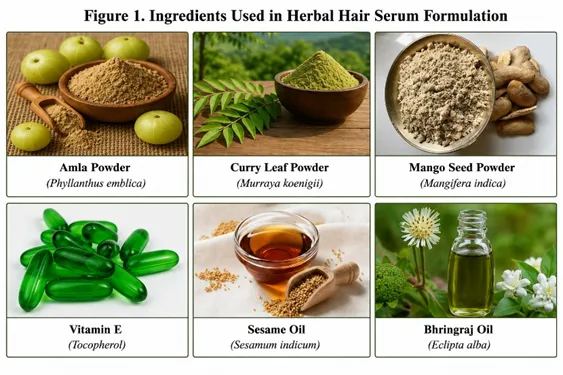
• Sesame oil
• Phyllanthus emblica powder
• Murraya koenigii powder
• Mangifera indica seed powder
• Eclipta alba powder
• Vitamin E oil
• Rosemary oil
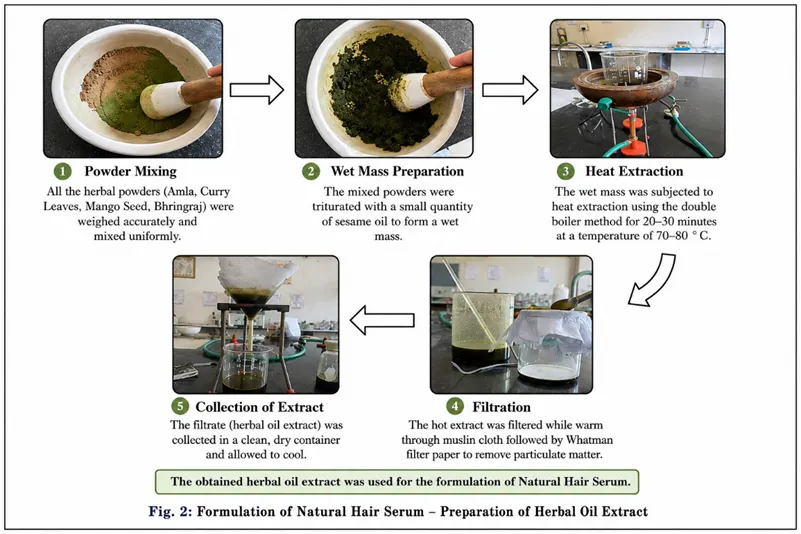
2.2 Preparation of Herbal Extracts
The powdered herbal materials were separately mixed with sesame oil and subjected to double-boiler extraction for 20–30 min. The extracts were filtered through muslin cloth followed by filter paper and stored in airtight containers.
2.3 Formulation of Hair Serum[15,16,17]
|
Ingredient |
Quantity |
|
Sesame Oil |
68.3 mL |
|
Amla oil |
10 ml |
|
Curry Leaves Powder |
10 g |
|
Mango Seed Powder |
5 g |
|
Bhringraj oil |
5 ml |
|
Vitamin E Oil |
1 mL |
|
Rosemary Oil |
0.7 mL |
2.4 Evaluation Parameters
Phytochemical Screening[18,19,20]
Phytochemical screening was carried out to identify the presence of various bioactive constituents in the herbal extracts of Murraya koenigii and Mangifera indica. The extracts were subjected to qualitative chemical tests for alkaloids, tannins, phenolic compounds, and saponins. For alkaloid detection, Dragendorff's reagent was added to the extract and the formation of an orange-red precipitate indicated the presence of alkaloids. Ferric chloride test was performed for tannins, where a greenish-black coloration confirmed their presence. Lead acetate test was used for phenolic compounds, producing a white precipitate. Saponins were detected using the foam test, in which persistent froth formation indicated a positive result. Phytochemical screening helps establish the therapeutic potential of herbal ingredients and confirms the presence of antioxidant and melanogenic compounds responsible for anti-greying activity.
Organoleptic Evaluation[21]
Organoleptic evaluation was performed to assess the physical appearance and sensory characteristics of the formulated hair serum. The formulation was visually inspected for color, odor, appearance, homogeneity, and texture. The serum exhibited a light brown to greenish color due to the presence of herbal extracts. It possessed a characteristic herbal odor and showed a smooth, homogeneous, and oily appearance without any phase separation. Organoleptic properties are important quality control parameters that influence patient acceptance, product elegance, and stability during storage.
pH Determination[22]
The pH of the hair serum was determined using a calibrated digital pH meter. Approximately 1 mL of serum was dispersed in distilled water and the electrode of the pH meter was immersed in the sample. The pH was recorded after stabilization of the reading. Maintaining an appropriate pH is essential to ensure scalp compatibility and minimize irritation. Hair and scalp typically possess a slightly acidic pH ranging from 4.5 to 6.0. The formulated serum exhibited a pH within the acceptable range, indicating its suitability for topical application and maintenance of scalp health.
Viscosity Measurement[23]
Viscosity of the hair serum was measured using a Brookfield Viscometer. The formulation was placed in the sample chamber and analyzed at a predetermined spindle speed and temperature. Viscosity reflects the flow characteristics of the formulation and determines ease of application on the scalp and hair. An ideal serum should possess moderate viscosity to ensure proper spreading without dripping. The obtained viscosity values indicated that the formulation had suitable consistency and could be easily applied and retained on the scalp surface.
Spreadability Study[23]
Spreadability was evaluated to determine the ease with which the serum spreads upon application. A fixed amount of formulation was placed between two glass slides and a known weight was applied. The time required for the upper slide to move a certain distance was recorded. Spreadability was calculated using the equation:
Where:
S = Spreadability
M = Weight tied to upper slide (g)
L = Length moved by slide (cm)
T = Time taken (sec)
Good spreadability ensures uniform distribution of active ingredients over the scalp and improves therapeutic efficacy and patient compliance.
Skin Irritation Test
The skin irritation test was performed to evaluate the safety of the developed formulation. A small quantity of serum was applied on a marked area of the inner forearm or dorsal skin surface and left undisturbed for 24 hours. The test site was observed periodically for signs of redness, itching, edema, inflammation, or allergic reactions. The absence of any adverse reactions indicated that the formulation was non-irritant and safe for topical application. Skin irritation studies are essential to establish dermatological compatibility of cosmetic and herbal formulations.
Microbial Load Determination[24]
Microbial evaluation was carried out by determining the Total Viable Count (TVC) present in the formulation. One milliliter of serum was serially diluted with sterile distilled water and inoculated onto nutrient agar plates. The plates were incubated at 30–37°C for 24–48 hours. Following incubation, the number of colonies formed was counted and expressed as Colony Forming Units (CFU/mL).

Microbial testing ensures microbiological safety and verifies that the formulation is free from harmful contamination during preparation and storage.
Acid Value Determination[25]
Acid value was determined to evaluate the extent of hydrolytic degradation and free fatty acid content present in the oil-based serum. A known quantity of serum was dissolved in a suitable solvent mixture and titrated against standardized potassium hydroxide (KOH) solution using phenolphthalein as an indicator. The acid value was calculated using the equation:
Where:
V = Volume of KOH used (mL)
N = Normality of KOH
W = Weight of sample (g)
56.1 = Molecular weight of KOH
A lower acid value indicates better quality and stability of oils present in the formulation.
Peroxide Value Determination
Peroxide value was measured to assess oxidative rancidity of the serum. The formulation was treated with acetic acid and potassium iodide solution. The liberated iodine was titrated with standard sodium thiosulfate solution using starch indicator. Peroxide value was calculated using:

Where:
S = Volume of sodium thiosulfate for sample
B = Volume of sodium thiosulfate for blank
N = Normality of sodium thiosulfate
W = Weight of sample
Peroxide value indicates the extent of lipid oxidation and helps determine the oxidative stability of the serum during storage.
UV Spectroscopic Characterization
UV-Visible spectroscopic analysis was carried out using a UV-1800 spectrophotometer. The serum sample was appropriately diluted and scanned over a wavelength range of 200–800 nm. The absorbance spectrum was recorded and characteristic peaks were identified. UV spectroscopy provides information regarding the presence of bioactive phytoconstituents such as polyphenols, flavonoids, tannins, and antioxidant compounds. The observed absorption peaks confirmed the presence of active herbal constituents within the formulation.[26]
DPPH Antioxidant Activity
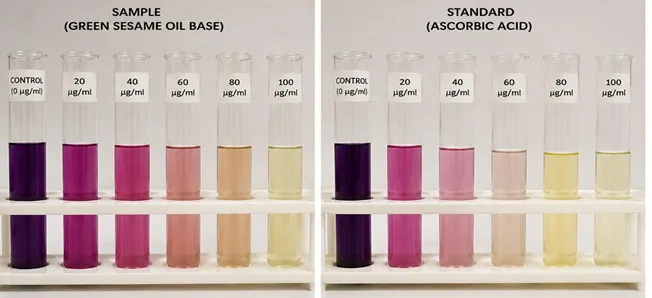
The antioxidant potential of the hair serum was evaluated using the DPPH (2,2-Diphenyl-1-picrylhydrazyl) free radical scavenging assay. Different concentrations of the formulation were mixed with DPPH solution and incubated in the dark for 30 minutes. The reduction in absorbance was measured at 517 nm using a UV spectrophotometer. Antioxidant activity was calculated as percentage inhibition:
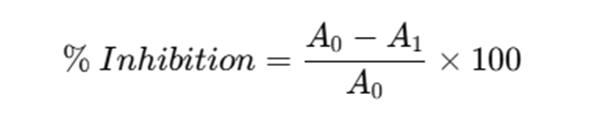
Where:
(A_0) = Absorbance of control
(A_1) = Absorbance of sample
The IC₅₀ value, representing the concentration required to inhibit 50% of DPPH radicals, was calculated. A lower IC₅₀ value indicates stronger antioxidant activity. The antioxidant property of the serum is primarily attributed to phytoconstituents such as vitamin C, mangiferin, wedelolactone, carbazole alkaloids, sesamol, and tocopherols, which help neutralize reactive oxygen species and protect melanocytes from oxidative damage associated with premature hair greying.[27]
3. RESULTS AND DISCUSSION
3.1 Phytochemical Screening
Phytochemical screening of the herbal extracts revealed the presence of several important bioactive constituents, including alkaloids, tannins, phenolic compounds, and saponins. The presence of these phytoconstituents confirms the successful extraction of active compounds from Phyllanthus emblica, Murraya koenigii, Eclipta alba, and Mangifera indica. Alkaloids are known to possess antioxidant and anti-inflammatory activities, while tannins and phenolic compounds exhibit strong free radical scavenging properties. Saponins contribute to cleansing, antimicrobial, and scalp-conditioning effects. The presence of these phytochemicals is particularly significant because oxidative stress is considered one of the major causes of premature hair greying. Therefore, the antioxidant-rich composition of the developed serum may help protect melanocytes from oxidative damage and support maintenance of natural hair pigmentation.[28]
3.2 Organoleptic Evaluation
The formulated herbal hair serum was evaluated for its organoleptic characteristics including color, odor, appearance, texture, and homogeneity. The serum exhibited a light brown to greenish-brown color due to the incorporation of herbal extracts. It possessed a pleasant characteristic herbal odor contributed by the phytoconstituents and rosemary oil. Visual examination showed that the formulation was smooth, homogeneous, and free from phase separation, precipitation, or grittiness. The serum demonstrated good cosmetic elegance and was easily spreadable over the scalp surface. The absence of any visible instability indicated proper compatibility among formulation ingredients and suggested good physical stability of the developed serum.[29]
3.3 pH Determination
The pH of the optimized herbal hair serum was found to be 5.7 ± 0.12. This value falls within the physiological pH range of the scalp and hair, which generally lies between 4.5 and 6.0. Maintaining an appropriate pH is essential for preserving the integrity of the scalp barrier, minimizing irritation, and preventing microbial growth. Hair products with excessively alkaline pH can cause cuticle damage, hair roughness, and scalp dryness, whereas acidic formulations help maintain cuticle smoothness and hair shine. The observed pH indicates that the developed formulation is suitable for topical application and is unlikely to cause scalp irritation or discomfort upon prolonged use.[30]
3.4 Viscosity Measurement
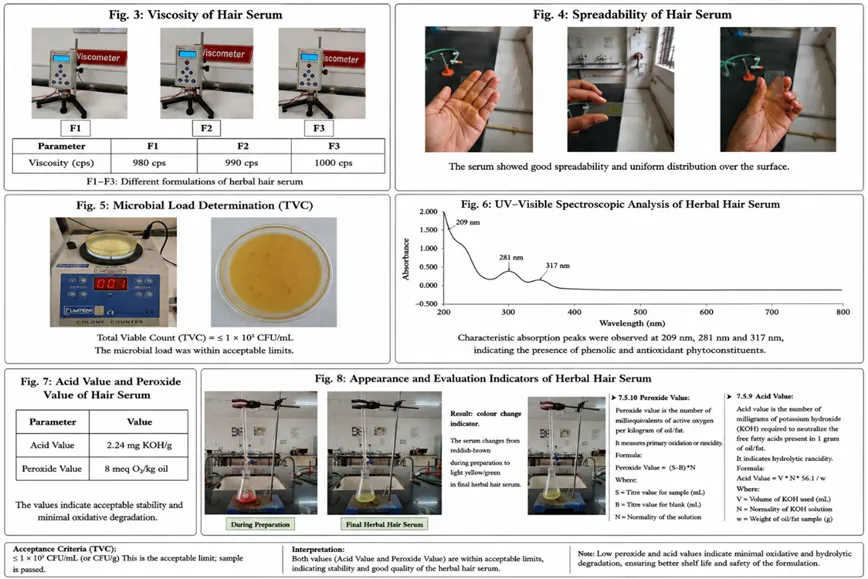
The viscosity of the developed serum was found to range between 980 and 1000 cps. The obtained viscosity values indicate that the formulation possesses suitable rheological characteristics for topical application. An ideal hair serum should exhibit moderate viscosity, allowing easy pouring, spreading, and retention on the scalp without excessive dripping. The observed viscosity provided an appropriate balance between fluidity and residence time. Furthermore, the presence of herbal extracts and sesame oil contributed to the desirable consistency of the formulation. The optimized viscosity ensures uniform application of active ingredients and enhances patient acceptability and convenience during regular use.[31]
3.5 Spreadability Study
Spreadability studies demonstrated that the serum spread easily and uniformly across the application surface with minimal resistance. Good spreadability is a desirable characteristic for topical formulations because it ensures efficient distribution of active ingredients over the scalp and hair strands. The optimized formulation exhibited satisfactory spreading behavior due to its balanced viscosity and oil composition. Easy spreadability enhances contact between the active phytoconstituents and scalp tissues, thereby improving their therapeutic effectiveness. In addition, improved spreadability contributes to user convenience and promotes better consumer acceptance of the product.[32]
3.6 Skin Irritation Test
The safety of the developed formulation was evaluated through skin irritation studies. The serum was applied to a designated area of skin and observed for signs of erythema, edema, itching, redness, inflammation, or allergic reactions over the observation period. No visible signs of irritation or adverse reactions were observed in any of the test subjects. The irritation score was recorded as zero, indicating excellent dermatological compatibility. The absence of irritation can be attributed to the use of natural herbal ingredients and maintenance of scalp-compatible pH. These findings suggest that the developed serum is safe for routine topical application and may be suitable for individuals with sensitive scalp conditions.[33]
3.7 Microbial Load Determination
Microbiological evaluation revealed that the total viable microbial count of the formulation remained within acceptable pharmacopeial limits (≤1 × 10³ CFU/mL). The low microbial load indicates good hygienic manufacturing practices and adequate preservation of the formulation. Herbal formulations are often susceptible to microbial contamination because plant extracts can serve as nutrient sources for microorganisms. However, the observed microbial count demonstrates that the preparation process and formulation composition effectively controlled microbial growth. Compliance with microbiological standards is essential for ensuring product safety, stability, and shelf life.[34]
3.8 Acid Value Determination
The acid value of the optimized formulation was found to be 2.24 mg KOH/g. Acid value represents the amount of free fatty acids present in the oil phase and serves as an indicator of hydrolytic degradation. Lower acid values indicate better quality oils and minimal decomposition during formulation preparation and storage. The obtained acid value suggests that the sesame oil and other lipid components remained stable and experienced negligible hydrolysis. This finding confirms the good quality and stability of the oil-based serum formulation and indicates its suitability for long-term storage.[35]
3.9 Peroxide Value Determination
The peroxide value of the developed serum was determined to be 8 meq O₂/kg oil. Peroxide value is an important indicator of oxidative rancidity and reflects the extent of lipid oxidation occurring within the formulation.[36] Values below acceptable limits indicate good oxidative stability of the oil phase. The relatively low peroxide value observed in the present study suggests minimal oxidation of sesame oil and herbal constituents during formulation preparation. The presence of natural antioxidants such as vitamin E, polyphenols, mangiferin, and vitamin C may have contributed to protection against oxidative degradation. These results support the stability and quality of the developed formulation.
3.10 UV Spectroscopic Analysis
UV-Visible spectroscopic analysis revealed characteristic absorption peaks at 209 nm, 281 nm, and 317 nm. These absorption bands are indicative of the presence of various phenolic compounds, flavonoids, tannins, and other antioxidant phytoconstituents present in the herbal extracts.[37] The peak observed around 281 nm is commonly associated with aromatic phenolic compounds, while the absorption near 317 nm suggests the presence of conjugated polyphenolic structures. The UV spectral profile confirms successful incorporation of bioactive phytochemicals into the serum and provides indirect evidence of its antioxidant potential. These phytoconstituents may contribute significantly to protection against oxidative stress-induced hair follicle damage.[38]
3.11 DPPH Antioxidant Activity
The antioxidant activity of the herbal hair serum was evaluated using the DPPH free radical scavenging assay. The formulation demonstrated concentration-dependent antioxidant activity, with increasing concentrations producing progressively greater free radical inhibition. The IC₅₀ value of the developed serum was found to be 58.3 µg/mL, whereas the standard antioxidant ascorbic acid exhibited an IC₅₀ value of 36.7 µg/mL. Although the antioxidant activity of the serum was lower than that of pure ascorbic acid, it demonstrated substantial free radical scavenging capacity. The antioxidant effect can be attributed to the synergistic action of vitamin C, polyphenols, mangiferin, wedelolactone, carbazole alkaloids, sesamol, and tocopherols present in the formulation. These compounds help neutralize reactive oxygen species and reduce oxidative stress, which is considered a major factor responsible for melanocyte dysfunction and premature hair greying. Therefore, the strong antioxidant activity observed in this study supports the potential use of the herbal hair serum in protecting hair follicles and delaying the progression of premature canities.[39]
|
Concentration (µg/mL) |
Green Sesame Oil Base (% Inhibition) |
Standard Ascorbic Acid (% Inhibition) |
|
20 |
21.4 ± 0.8 |
32.6 ± 0.5 |
|
40 |
35.7 ± 1.1 |
48.3 ± 0.7 |
|
60 |
49.8 ± 0.9 |
63.5 ± 0.6 |
|
80 |
62.4 ± 1.0 |
77.2 ± 0.8 |
|
100 |
74.6 ± 1.2 |
89.1 ± 0.5 |
CONCLUSION
The developed herbal hair serum containing Phyllanthus emblica, Murraya koenigii, Eclipta alba, and Mangifera indica demonstrated satisfactory physicochemical characteristics, safety, stability, and significant antioxidant activity. The formulation may help protect melanocytes from oxidative damage and support hair pigmentation. Further in vivo and clinical studies are recommended to validate its effectiveness in preventing or delaying premature hair greying.[40]
Conflict of Interest
The authors declare no conflict of interest.
Acknowledgement
The authors express sincere gratitude to KJEI's Trinity College of Pharmacy, Pune, for providing laboratory facilities and support for carrying out this research work.
REFERENCES

Ankita Hajgude, Snehal Gore, Abhishek Jadhav, Aaditya Ghorpade, Saloni Jadhav, Renuka Sawale Formulation and Evaluation of Herbal Hair Serum for Prevention of Premature Hair Greying, Int. J. of Pharm. Sci., 2026, Vol 4, Issue 6, 4176-4187, https://doi.org/10.5281/zenodo.20730479
 10.5281/zenodo.20730479