View Article

Abstract

Lip balm is a cosmetic preparation intended to protect, moisturize, and improve the appearance of lips. Environmental factors such as sunlight, pollution, cold weather, and dehydration often cause dryness, cracking, and pigmentation of lips. Herbal lip balms prepared using natural ingredients have gained considerable attention due to their safety, effectiveness, and minimal side effects compared with synthetic products. The present study aimed to formulate and evaluate a herbal lip balm using natural ingredients such as beeswax, cocoa butter, coconut oil, almond oil, aloe vera extract, beetroot extract, vitamin E, and rose oil. Various evaluation parameters including appearance, pH, spreadability, melting point, stability, skin irritation, and moisturizing effect were assessed. The developed formulation exhibited satisfactory physical characteristics, good stability, pleasant appearance, and excellent moisturizing properties. The study concludes that herbal lip balm can serve as a safe and effective alternative to commercially available synthetic lip care products.

Keywords

Herbal Lip Balm, Beeswax, Aloe Vera, Beetroot Extract, Natural Cosmetics, Moisturizer, Lip Care.

Introduction

× Popup Image

The lips are among the most sensitive parts of the human body because they lack sebaceous glands and possess a thin epithelial layer. As a result, they are highly susceptible to dehydration, dryness, cracking, and environmental damage. Lip balms are topical formulations applied to lips to prevent moisture loss and provide protection against adverse climatic conditions.Herbal cosmetics have become increasingly popular because consumers prefer products containing natural ingredients. Herbal lip balms contain plant-derived oils, waxes, extracts, and antioxidants that nourish and protect lips without causing harmful effects associated with synthetic chemicals.The use of herbal ingredients such as aloe vera, coconut oil, almond oil, beetroot extract, and beeswax offers multiple benefits including hydration, antioxidant protection, healing of cracked lips, and natural coloration.

In recent years, the global demand for herbal and natural cosmetic products has increased significantly due to growing consumer awareness regarding the potential adverse effects of synthetic chemicals. The cosmetic industry has witnessed a paradigm shift towards the development of products derived from natural sources that offer both therapeutic and aesthetic benefits. Herbal cosmetics are generally considered safer, biocompatible, environmentally friendly, and suitable for long-term use compared to conventional cosmetic products. Lip balm is one of the most widely used cosmetic preparations intended to maintain lip hydration and protect the lips from environmental stressors such as ultraviolet radiation, cold weather, low humidity, pollution, and wind exposure. Continuous exposure to these factors can result in lip dryness, fissures, inflammation, and premature aging. Therefore, an effective lip care product is essential for maintaining healthy lips and enhancing their appearance.

Conventional lip balms frequently contain synthetic ingredients such as petroleum jelly, artificial colorants, synthetic fragrances, parabens, and preservatives. Although these substances may provide immediate moisturization and improved product stability, prolonged use may lead to irritation, allergic reactions, lip sensitization, and consumer concerns regarding safety. Consequently, there is increasing interest in replacing synthetic components with naturally derived alternatives that possess moisturizing, antioxidant, antimicrobial, and healing properties.

Natural ingredients such as beeswax, cocoa butter, coconut oil, almond oil, aloe vera extract, and beetroot extract have been extensively investigated for their beneficial effects on skin and lip health. Beeswax acts as a natural occlusive agent that forms a protective barrier against moisture loss, whereas cocoa butter and plant oils provide emollient and nourishing effects. Aloe vera is known for its soothing, wound-healing, and anti-inflammatory properties, while beetroot extract serves as a natural colorant rich in bioactive compounds and antioxidants. Vitamin E contributes to product stability and protects tissues from oxidative stress.
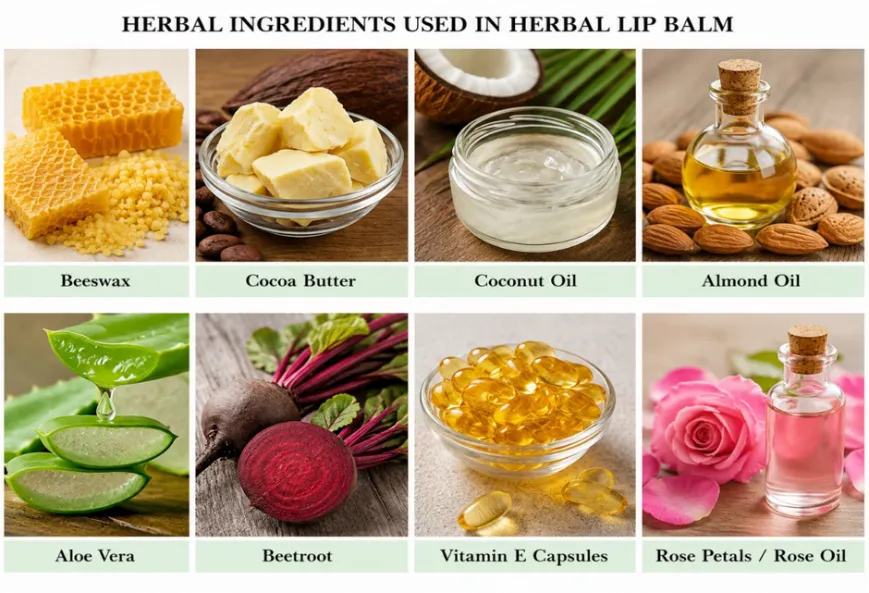
Figure 1. Herbal ingredients used in the formulation of herbal lip balm

AIM

To formulate and evaluate a herbal lip balm using natural ingredients for moisturizing, protecting, and improving the appearance of lips.

OBJECTIVES

  • To prepare herbal lip balm using natural ingredients.
  • To evaluate physical and chemical characteristics.
  • To determine stability and safety of formulation.
  • To assess moisturizing and protective effects.
  • To develop an economical and effective herbal cosmetic product.

NEED OF HERBAL LIP BALM

Lips are continuously exposed to environmental stress. Frequent use of synthetic lip care products may lead to irritation and allergic reactions. Herbal lip balms offer:

  • Natural moisturization.
  • Protection against dryness.
  • Healing of cracked lips.
  • Safe long-term use.
  • Reduced risk of adverse effects.

ADVANTAGES OF HERBAL LIP BALM

  1. Natural Composition: Herbal lip balms are prepared using natural ingredients such as beeswax, plant oils, herbal extracts, and natural colorants, making them safer than synthetic products.
  2. Provides Deep Moisturization:  Natural oils like coconut oil and almond oil help retain moisture, preventing dryness and chapping of lips.
  3. Prevents Cracked Lips:  The emollient properties of herbal ingredients help repair damaged lip tissues and reduce lip cracking.
  4. Free from Harmful Chemicals: Herbal lip balms generally do not contain parabens, artificial colors, synthetic fragrances, or petroleum-based substances.
  5. Rich in Antioxidants: Ingredients such as vitamin E, aloe vera, and beetroot extract contain antioxidants that protect lips from oxidative damage caused by environmental pollutants.
  6. Soothes Irritated Lips: Herbal ingredients possess anti-inflammatory properties that help reduce irritation, redness, and discomfort.
  7. Promotes Healing: Aloe vera and vitamin E accelerate the healing of dry, rough, and damaged lips.
  8. Provides Natural Color: Natural colorants like beetroot extract impart a pleasant tint without the use of synthetic dyes.
  9. Long-Lasting Protection: Beeswax forms a protective barrier on the lips, reducing moisture loss and protecting against environmental stress.
  10. Suitable for Sensitive Skin:  Due to the absence of harsh chemicals, herbal lip balms are generally suitable for individuals with sensitive skin.
  11. Environment-Friendly : Herbal formulations are biodegradable and often produced using sustainable natural resources.

INGREDIENTS USED AND THEIR ROLE

Sr. No.

Ingredient

Quantity (% w/w)

Role in Formulation

1

Beeswax

20%

Base material and hardening agent; provides structure and consistency to the lip balm

2

Cocoa Butter

15%

Emollient and moisturizer; prevents dryness and improves smoothness

3

Coconut Oil

25%

Hydrating and nourishing agent; enhances lip softness

4

Almond Oil

15%

Softening agent; rich in vitamins and essential fatty acids

5

Aloe Vera Extract

10%

Healing and soothing agent; helps repair dry and damaged lips

6

Beetroot Extract

5%

Natural colorant; imparts a pleasant pink tint and antioxidant benefits

7

Vitamin E

2%

Antioxidant; protects lips from oxidative damage and improves product stability

8

Rose Oil

1%

Natural fragrance; provides a pleasant aroma and soothing effect

9

Preservative

q.s. (Quantity sufficient)

Enhances microbial stability and extends shelf life

DESCRIPTION OF INGREDIENTS

Beeswax

Beeswax is a natural wax produced by honey bees. It provides consistency, firmness, and protective barrier properties to lip balm formulations. In lip balm formulations, beeswax serves as a structuring agent that provides the desired hardness, consistency, and stability to the product. It forms a protective occlusive layer on the surface of the lips, thereby reducing transepidermal water loss and helping to maintain lip hydration for extended periods. This protective barrier also shields the lips from harsh environmental conditions such as wind, cold weather, and low humidity.

Cocoa Butter

Cocoa butter is a natural fat extracted from cocoa beans. It acts as an excellent moisturizer and protects lips against moisture loss. Cocoa butter is a natural vegetable fat obtained from the roasted seeds of Theobroma cacao (cocoa bean). It is widely utilized in pharmaceutical, cosmetic, and skincare formulations due to its excellent moisturizing, emollient, and skin-conditioning properties. Cocoa butter possesses a pale yellow color, characteristic chocolate aroma, and a melting point close to human body temperature, which makes it particularly suitable for lip care and topical preparations.

Coconut Oil

Coconut oil contains fatty acids that deeply nourish and hydrate lips. It possesses antimicrobial and antioxidant properties. Coconut oil is a natural edible oil extracted from the kernel of mature coconuts of Cocos nucifera. It is one of the most commonly used ingredients in cosmetic and pharmaceutical formulations due to its excellent moisturizing, nourishing, and protective properties. Coconut oil is rich in medium-chain fatty acids, particularly lauric acid, capric acid, caprylic acid, and myristic acid, which contribute to its therapeutic and cosmetic benefits.

Almond Oil

Almond oil is rich in vitamins A and E and helps soften and condition lips. Almond oil is a natural vegetable oil obtained from the kernels of Prunus dulcis (sweet almond). It is widely used in cosmetic, pharmaceutical, and skincare products because of its exceptional moisturizing, nourishing, and skin-conditioning properties. Almond oil is rich in essential fatty acids, vitamins, minerals, and antioxidants that contribute significantly to maintaining healthy skin and lips.

Aloe Vera Extract

Aloe vera provides soothing, anti-inflammatory, and wound-healing properties that help repair damaged lips. Aloe vera is a succulent medicinal plant belonging to the family Asphodelaceae and is scientifically known as Aloe barbadensis Miller. It has been extensively used in traditional and modern medicine due to its remarkable moisturizing, soothing, healing, and anti-inflammatory properties.

Beetroot Extract

Beetroot extract acts as a natural coloring agent and contributes antioxidant activity. Beetroot extract is obtained from the roots of Beta vulgaris, a nutrient-rich plant belonging to the family Amaranthaceae. It is widely recognized for its vibrant red-purple color and high content of bioactive compounds, making it a valuable ingredient in cosmetic and pharmaceutical formulations. Beetroot is a rich source of betalains, flavonoids, phenolic compounds, vitamins, minerals, and antioxidants that contribute to its therapeutic and cosmetic properties.

Vitamin E

Vitamin E protects lip tissues from oxidative damage and enhances product stability. Vitamin E is a fat-soluble vitamin widely used in pharmaceutical, cosmetic, and skincare formulations because of its potent antioxidant and skin-protective properties. The most biologically active form of Vitamin E is α-tocopherol, which plays a crucial role in protecting cell membranes from oxidative damage caused by free radicals. Due to its excellent stability-enhancing and moisturizing properties, Vitamin E is considered an important ingredient in herbal lip balm formulations

Rose Oil

Rose oil imparts pleasant fragrance and provides soothing effects. Rose oil is a highly valued essential oil obtained from the petals of Rosa damascena and other species of the genus Rosa. It is widely used in cosmetic, pharmaceutical, and aromatherapy products because of its pleasant fragrance, skin-conditioning properties, and therapeutic benefits. Rose oil contains various bioactive compounds such as citronellol, geraniol, nerol, phenylethyl alcohol, and flavonoids, which contribute to its distinctive aroma and beneficial effects on the skin

MATERIALS AND METHODS

Materials

Beeswax, cocoa butter, coconut oil, almond oil, aloe vera extract, beetroot extract,vitamin E, rose oil, preservative, glass beaker, weighing balance, water bath, spatula, lip balm containers.

Method of Preparation

Raw Materials

Weighing

Melting of Beeswax & Cocoa Butter

Addition of Oils

Addition of Extracts

Mixing

Pouring into Containers

Cooling & Solidification

Finished Lip Balm

Figure 2. Flow chart showing preparation of herbal lip balm.

Ingredients

F1 (% w/w)

F2 (% w/w)

F3 (% w/w)

Beeswax

18

20

22

Cocoa Butter

15

15

15

Coconut Oil

28

25

22

Almond Oil

15

15

15

Aloe Vera Extract

10

10

10

Beetroot Extract

5

5

5

Vitamin E

2

2

2

Rose Oil

1

1

1

Preservative

q.s.

q.s.

q.s.

Total

100

100

100


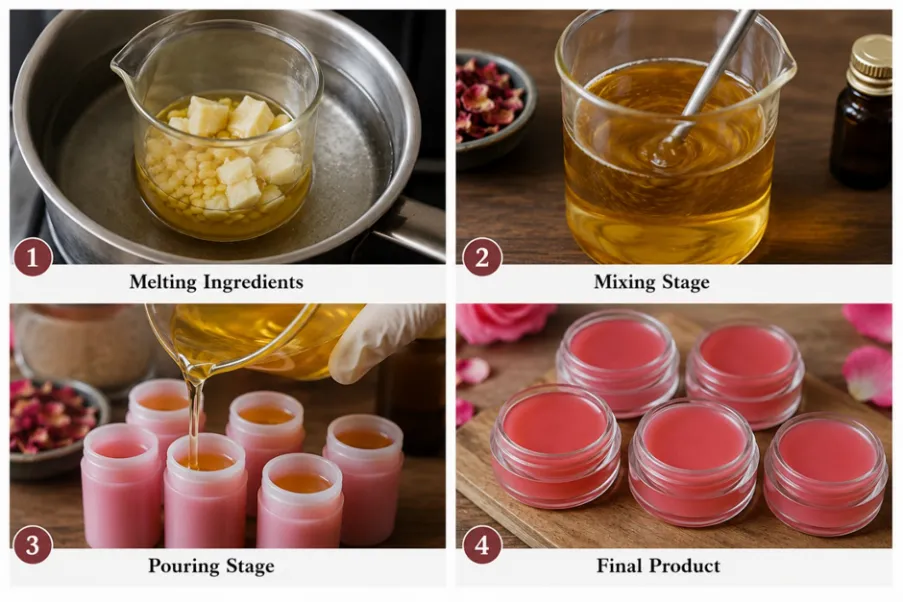
Figure 3. Various stages involved in herbal lip balm preparation.

EVALUATION PARAMETERS

  1. Organoleptic Evaluation

The prepared formulation was evaluated for color, odor, texture, and appearance.

Table 2. Organoleptic Evaluation of Herbal Lip Balm

Parameter

Observation

Colour

Light Pink to Dark Pink

Odour

Pleasant Rose Aroma

Appearance

Smooth and Uniform

Texture

Soft and Non-Gritty

Consistency

Semi-Solid

Glossiness

Moderate

Homogeneity

Good

Surface Defects

Absent

  1. pH Determination

The pH was determined using digital pH meter and found suitable for lip application.

  1. Melting Point

The melting point was measured to ensure product stability under normal conditions.

  1. Spreadability

The ease of application on lips was evaluated.
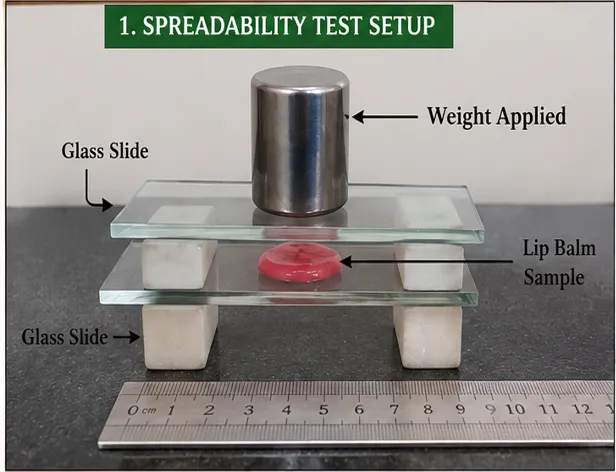
Figure 4  Spreadability Test Setup

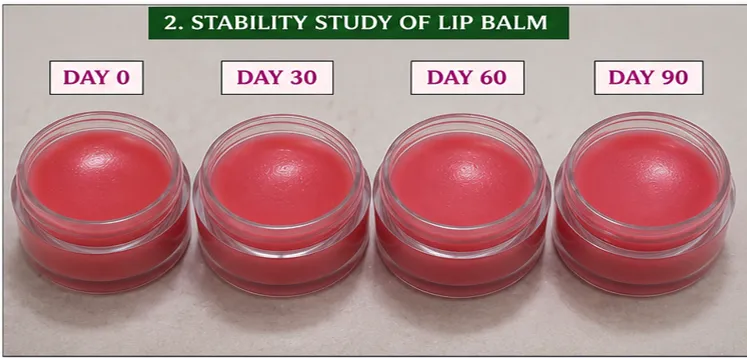
  1. Stability Study

The formulation was stored at room temperature and accelerated conditions for three months.

Table 4. Stability Study Results

Parameter

Day 0

Day 30

Day 60

Day 90

Colour

Pink

Pink

Pink

Pink

Odour

Pleasant

Pleasant

Pleasant

Pleasant

Texture

Smooth

Smooth

Smooth

Smooth

pH

6.5

6.5

6.4

6.4

Appearance

Good

Good

Good

Good

Stability

Stable

Stable

Stable

Stable

Figure 5 Stability Study

  1. Skin Irritation Test

Patch test was performed to determine irritation potential.

  1. Moisturizing Effect

The moisturizing ability was evaluated by observing reduction in lip dryness.

10. RESULTS AND DISCUSSION

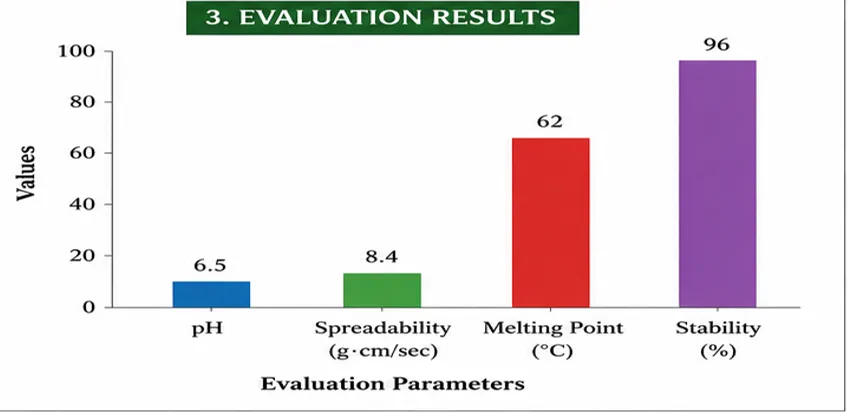
The prepared herbal lip balm exhibited smooth texture, uniform color, pleasant fragrance, and good consistency. The pH was found compatible with lip tissues. The formulation showed excellent spreadability and remained stable during storage. No irritation or adverse reactions were observed. Beetroot extract imparted attractive natural color while aloe vera and oils improved moisturization.

Table 5. Comparison of Prepared Herbal Lip Balm with Marketed Lip Balm

Parameter

Prepared Herbal Lip Balm

Marketed Lip Balm

Ingredients

Natural

Synthetic + Natural

Artificial Colour

Absent

Present

Preservatives

Minimal

Moderate

Moisturization

Excellent

Good

Skin Irritation

Nil

Mild in Sensitive Skin

Cost Effectiveness

High

Moderate

Environmental Impact

Eco-Friendly

Moderate

Consumer Acceptability

Excellent

Good

Figure 6 Evaluation Result

CONCLUSION

The present study successfully formulated and evaluated a herbal lip balm using natural ingredients. The formulation demonstrated good stability, spreadability, moisturizing effect, and user acceptability. Herbal lip balm offers a safe, economical, and effective alternative to synthetic lip care products. The prepared formulation can be further developed for commercial application and large-scale production.

ACKNOWLEDGEMENT

The authors express sincere gratitude to the Department of Pharmaceutics and all faculty members for their valuable guidance and support throughout the research work.

REFERENCES

  1. Mishra I, Singh R, Rao CMP, Tanniru R. Formulation and evaluation of a polyherbal lip balm. J Clin Res Med Health Sci. 2025;11:1-8.
  2. Narkhede SB, Desai H, Singh P, Patel K. Formulation and evaluation of herbal lip balm enriched with A2 cow ghee. Res J Pharmacogn Phytochem. 2026;18(1):1-7.
  3. Daharia A, Sahu M, Verma P. Development and physicochemical characterization of a polyherbal lip balm. Int J Pharm Health Drug Ther. 2026;3(4):1-9.
  4. Shinde NN, Kanwate CG, Solunke NG, Shiral AS. A review on formulation and evaluation of herbal lip balm. Int J Res Appl Sci Eng Technol. 2025;13(3):2812-2819.
  5. Terse P, Mane S, Patil T, Ruke S, Mane G. Natural protection: The benefits of herbal lip balm for healthier lips. Res J Top Cosmet Sci. 2025;16(2):111-116.
  6. Che Radzi N, Ahmad Kamarul AD. Formulation and evaluation of natural lip balm: Exploring the synergistic benefits of beetroot and Kaempferia galanga Linn. Malays J Chem Eng Technol. 2025;8(2):1-12.
  7. Ibrahim MMZ, Ingle KI, Mahmood MA, Ahmed J. Preparation and evaluation of herbal lip balm. Int J Innov Res Technol. 2026;12(12):5717-5725.
  8. Reddy VS. Formulation and evaluation of lip balm: An ideal decorative cosmetic for lips. Asian J Pharm. 2024;18(3):1-8.
  9. Valvi SV, Tompe V. Herbal ingredients for lip moisturization: A concise review. Int J Pharm Res Dev. 2025;7(2):704-707.
  10. Borase SB, Patil AP, Patil DP, Patil GP. Formulation and evaluation of herbal lip balm. Res J Top Cosmet Sci. 2026;17(1):1-7.
  11. Kapoor VP. Herbal cosmetics for skin and hair care. Nat Prod Radiance. 2020;19(4):306-314.
  12. Barel AO, Paye M, Maibach HI. Handbook of Cosmetic Science and Technology. 5th ed. Boca Raton: CRC Press; 2022.
  13. Draelos ZD. Cosmetic Dermatology: Products and Procedures. 3rd ed. Hoboken: Wiley-Blackwell; 2021.
  14. Ali A, Akhtar N, Khan BA. Evaluation of natural cosmetic formulations containing herbal ingredients. J Cosmet Dermatol. 2021;20(5):1450-1458.
  15. Singh P, Sharma S. Herbal products in cosmetic science: Recent advances and applications. Int J Cosmet Sci. 2021;43(6):561-572.
  16. Patel D, Shah P. Natural waxes and oils in cosmetic formulations. J Pharm Innov. 2022;17(2):120-129.
  17. Sharma R, Gupta V. Evaluation methods for herbal cosmetic products. Int J Pharm Sci Rev Res. 2022;74(1):45-52.
  18. Kaur G, Arora S. Stability assessment of herbal cosmetic preparations. J Drug Deliv Ther. 2023;13(4):87-95.
  19. Deshmukh R, Patil P. Aloe vera and its applications in cosmetic formulations. Int J Herb Med. 2023;11(3):55-63.
  20. Chavan M, Patil S. Beetroot extract as a natural coloring agent in cosmetics. J Pharmacogn Phytochem. 2023;12(5):101-108.
  21. Khan A, Hussain I. Role of vitamin E in dermatological and cosmetic formulations. Dermatol Ther. 2022;35(8):e15624.
  22. Gupta P, Sharma A. Coconut oil as a multifunctional ingredient in skin care products. Cosmet Toiletries. 2022;137(6):22-29.
  23. Jain N, Gupta R. Beeswax: Pharmaceutical and cosmetic applications. Int J Pharm Sci Res. 2021;12(8):4201-4208.
  24. Thomas J, Wilson P. Cocoa butter and its role in topical formulations. J Cosmet Sci. 2021;72(4):185-193.
  25. Kumar A, Verma N. Almond oil: Composition, therapeutic properties and cosmetic applications. Int J Pharm Sci Rev Res. 2020;65(2):78-84.
  26. Saha P, Roy D. Rose oil and its applications in personal care products. J Essent Oil Res. 2021;33(5):421-430.
  27. World Health Organization. WHO guidelines on quality control methods for medicinal plant materials. Geneva: WHO; 2021.
  28. United States Pharmacopeia. USP-NF General Chapters for topical and cosmetic formulations. Rockville: USP Convention; 2024.
  29. Indian Pharmacopoeia Commission. Indian Pharmacopoeia. Ghaziabad: IPC; 2022.
  30. Sharma V, Gupta K. Consumer preference toward herbal cosmetic products. Int J Market Res. 2023;65(2):156-168.
  31. Rao P, Kumar M. Antioxidants in herbal cosmetic formulations. J Pharm Bioallied Sci. 2022;14(3):215-223.
  32. Verma S, Singh H. Advances in natural cosmetic product development. J Cosmet Dermatol. 2024;23(1):12-20.
  33. Khandelwal KR. Practical Pharmacognosy: Techniques and Experiments. 31st ed. Pune: Nirali Prakashan; 2021.
  34. Kokate CK, Purohit AP, Gokhale SB. Pharmacognosy. 58th ed. Pune: Nirali Prakashan; 2022.
  35. Lachman L, Lieberman HA, Kanig JL. The Theory and Practice of Industrial Pharmacy. 5th ed. New Delhi: CBS Publishers; 2021.
  36. Ansel HC. Pharmaceutical Dosage Forms and Drug Delivery Systems. 12th ed. Philadelphia: Wolters Kluwer; 2022.
  37. Aulton ME, Taylor K. Aulton's Pharmaceutics: The Design and Manufacture of Medicines. 6th ed. London: Elsevier; 2022.
  38. Sinko PJ. Martin's Physical Pharmacy and Pharmaceutical Sciences. 7th ed. Philadelphia: Lippincott Williams & Wilkins; 2023.
  39. Remington JP. Remington: The Science and Practice of Pharmacy. 24th ed. Philadelphia: Pharmaceutical Press; 2021.

Reference

  1. Mishra I, Singh R, Rao CMP, Tanniru R. Formulation and evaluation of a polyherbal lip balm. J Clin Res Med Health Sci. 2025;11:1-8.
  2. Narkhede SB, Desai H, Singh P, Patel K. Formulation and evaluation of herbal lip balm enriched with A2 cow ghee. Res J Pharmacogn Phytochem. 2026;18(1):1-7.
  3. Daharia A, Sahu M, Verma P. Development and physicochemical characterization of a polyherbal lip balm. Int J Pharm Health Drug Ther. 2026;3(4):1-9.
  4. Shinde NN, Kanwate CG, Solunke NG, Shiral AS. A review on formulation and evaluation of herbal lip balm. Int J Res Appl Sci Eng Technol. 2025;13(3):2812-2819.
  5. Terse P, Mane S, Patil T, Ruke S, Mane G. Natural protection: The benefits of herbal lip balm for healthier lips. Res J Top Cosmet Sci. 2025;16(2):111-116.
  6. Che Radzi N, Ahmad Kamarul AD. Formulation and evaluation of natural lip balm: Exploring the synergistic benefits of beetroot and Kaempferia galanga Linn. Malays J Chem Eng Technol. 2025;8(2):1-12.
  7. Ibrahim MMZ, Ingle KI, Mahmood MA, Ahmed J. Preparation and evaluation of herbal lip balm. Int J Innov Res Technol. 2026;12(12):5717-5725.
  8. Reddy VS. Formulation and evaluation of lip balm: An ideal decorative cosmetic for lips. Asian J Pharm. 2024;18(3):1-8.
  9. Valvi SV, Tompe V. Herbal ingredients for lip moisturization: A concise review. Int J Pharm Res Dev. 2025;7(2):704-707.
  10. Borase SB, Patil AP, Patil DP, Patil GP. Formulation and evaluation of herbal lip balm. Res J Top Cosmet Sci. 2026;17(1):1-7.
  11. Kapoor VP. Herbal cosmetics for skin and hair care. Nat Prod Radiance. 2020;19(4):306-314.
  12. Barel AO, Paye M, Maibach HI. Handbook of Cosmetic Science and Technology. 5th ed. Boca Raton: CRC Press; 2022.
  13. Draelos ZD. Cosmetic Dermatology: Products and Procedures. 3rd ed. Hoboken: Wiley-Blackwell; 2021.
  14. Ali A, Akhtar N, Khan BA. Evaluation of natural cosmetic formulations containing herbal ingredients. J Cosmet Dermatol. 2021;20(5):1450-1458.
  15. Singh P, Sharma S. Herbal products in cosmetic science: Recent advances and applications. Int J Cosmet Sci. 2021;43(6):561-572.
  16. Patel D, Shah P. Natural waxes and oils in cosmetic formulations. J Pharm Innov. 2022;17(2):120-129.
  17. Sharma R, Gupta V. Evaluation methods for herbal cosmetic products. Int J Pharm Sci Rev Res. 2022;74(1):45-52.
  18. Kaur G, Arora S. Stability assessment of herbal cosmetic preparations. J Drug Deliv Ther. 2023;13(4):87-95.
  19. Deshmukh R, Patil P. Aloe vera and its applications in cosmetic formulations. Int J Herb Med. 2023;11(3):55-63.
  20. Chavan M, Patil S. Beetroot extract as a natural coloring agent in cosmetics. J Pharmacogn Phytochem. 2023;12(5):101-108.
  21. Khan A, Hussain I. Role of vitamin E in dermatological and cosmetic formulations. Dermatol Ther. 2022;35(8):e15624.
  22. Gupta P, Sharma A. Coconut oil as a multifunctional ingredient in skin care products. Cosmet Toiletries. 2022;137(6):22-29.
  23. Jain N, Gupta R. Beeswax: Pharmaceutical and cosmetic applications. Int J Pharm Sci Res. 2021;12(8):4201-4208.
  24. Thomas J, Wilson P. Cocoa butter and its role in topical formulations. J Cosmet Sci. 2021;72(4):185-193.
  25. Kumar A, Verma N. Almond oil: Composition, therapeutic properties and cosmetic applications. Int J Pharm Sci Rev Res. 2020;65(2):78-84.
  26. Saha P, Roy D. Rose oil and its applications in personal care products. J Essent Oil Res. 2021;33(5):421-430.
  27. World Health Organization. WHO guidelines on quality control methods for medicinal plant materials. Geneva: WHO; 2021.
  28. United States Pharmacopeia. USP-NF General Chapters for topical and cosmetic formulations. Rockville: USP Convention; 2024.
  29. Indian Pharmacopoeia Commission. Indian Pharmacopoeia. Ghaziabad: IPC; 2022.
  30. Sharma V, Gupta K. Consumer preference toward herbal cosmetic products. Int J Market Res. 2023;65(2):156-168.
  31. Rao P, Kumar M. Antioxidants in herbal cosmetic formulations. J Pharm Bioallied Sci. 2022;14(3):215-223.
  32. Verma S, Singh H. Advances in natural cosmetic product development. J Cosmet Dermatol. 2024;23(1):12-20.
  33. Khandelwal KR. Practical Pharmacognosy: Techniques and Experiments. 31st ed. Pune: Nirali Prakashan; 2021.
  34. Kokate CK, Purohit AP, Gokhale SB. Pharmacognosy. 58th ed. Pune: Nirali Prakashan; 2022.
  35. Lachman L, Lieberman HA, Kanig JL. The Theory and Practice of Industrial Pharmacy. 5th ed. New Delhi: CBS Publishers; 2021.
  36. Ansel HC. Pharmaceutical Dosage Forms and Drug Delivery Systems. 12th ed. Philadelphia: Wolters Kluwer; 2022.
  37. Aulton ME, Taylor K. Aulton's Pharmaceutics: The Design and Manufacture of Medicines. 6th ed. London: Elsevier; 2022.
  38. Sinko PJ. Martin's Physical Pharmacy and Pharmaceutical Sciences. 7th ed. Philadelphia: Lippincott Williams & Wilkins; 2023.
  39. Remington JP. Remington: The Science and Practice of Pharmacy. 24th ed. Philadelphia: Pharmaceutical Press; 2021.

Photo
Nirbhavane Monali
Corresponding author

Dr. Kolpe Institute of Pharmacy, Kolpewadi

Photo
Ghongate Vaibhav
Co-author

Dr. Kolpe Institute of Pharmacy, Kolpewadi

Photo
Bodke Puja
Co-author

Dr. Kolpe Institute of Pharmacy, Kolpewadi

Photo
Sirsat Shital
Co-author

Dr. Kolpe Institute of Pharmacy, Kolpewadi

Photo
Dr. Asish Kumar Patil
Co-author

Dr. Kolpe Institute of Pharmacy, Kolpewadi

Ghongate Vaibhav, Nirbhavane Monali, Bodke Puja, Sirsat Shital, Dr. Asish Kumar Patil, Formulation and Evaluation of Herbal Lip Balm, Int. J. of Pharm. Sci., 2026, Vol 4, Issue 7, 497-506. https://doi.org/10.5281/zenodo.21154637

More related articles
Antioxidant and Antineoplastic Activities of Scute...
Kavita Narayan Gaisamudre (Sarwade), Riya Yadav, Neha, Jalaniy Ve...
Oroxylin A-Loaded Zwitterionic Mesoporous Silica N...
Mehetre Rutuja, Dr. Usha Jain, Dr. Nitin Jain, Dr. Vijay Jadhav, ...
Phytochemical Investigation &Anthelminthic Potenti...
P. Karunakar, S K Chandini, P. Sruthi, P. Neelima, G. Harsha Vard...
Formulation and Evaluation of Anti-Bacterial Herbal Soap by using Moringa oleife...
Umesh Pawar, Dr. Y. R. Girbhane, Dr. Vilas Sawale, Vaishanavi Kalam, Anuja Chavan, Nikita Dhage, San...
Antioxidant Activity of Hydro-Alcoholic Root Extract of Clitoria ternatea Linn. ...
Debananda Champpatisingh, Prasanta Kumar Biswal, Rakesh Kumar Pani, Priti Murmu, Dr. Ranjit Mohapatr...
Related Articles
Formulation And Evaluation of Thyme Oil Nanoemulgel for Antimicrobial Activity...
Avinash Shinde, Vyankatesh Atigidad, Tejas Patil, Nikita Chandane, Dr. U. Jirole, Dhanashree Jirole...
Comparative Evaluation of traditional herbal combinations in the management of u...
Harshali Khairnar, Sunil Mahajan, Durgesh Pagar, Jubershah Fakir, Kajal Pansare, Chandrashekhar Pati...
Formulation and evaluation of a biherbal gel containing Terminalia arjuna and Mu...
Amitesh Pratap Singh, Saumya Srivastava, Dr. Prakash Deep, Abhisekh koiri...
Antioxidant and Antineoplastic Activities of Scutellaria baicalensis: Phytochemi...
Kavita Narayan Gaisamudre (Sarwade), Riya Yadav, Neha, Jalaniy Venkateshwaran, Prakash Pralhad Sarwa...
More related articles
Antioxidant and Antineoplastic Activities of Scutellaria baicalensis: Phytochemi...
Kavita Narayan Gaisamudre (Sarwade), Riya Yadav, Neha, Jalaniy Venkateshwaran, Prakash Pralhad Sarwa...
Oroxylin A-Loaded Zwitterionic Mesoporous Silica Nanoparticles: A Promising Plat...
Mehetre Rutuja, Dr. Usha Jain, Dr. Nitin Jain, Dr. Vijay Jadhav, Dr. Sachin Aglave...
Phytochemical Investigation &Anthelminthic Potential of Manila Tamarind...
P. Karunakar, S K Chandini, P. Sruthi, P. Neelima, G. Harsha Vardhan, B. Gnanasri...
Antioxidant and Antineoplastic Activities of Scutellaria baicalensis: Phytochemi...
Kavita Narayan Gaisamudre (Sarwade), Riya Yadav, Neha, Jalaniy Venkateshwaran, Prakash Pralhad Sarwa...
Oroxylin A-Loaded Zwitterionic Mesoporous Silica Nanoparticles: A Promising Plat...
Mehetre Rutuja, Dr. Usha Jain, Dr. Nitin Jain, Dr. Vijay Jadhav, Dr. Sachin Aglave...
Phytochemical Investigation &Anthelminthic Potential of Manila Tamarind...
P. Karunakar, S K Chandini, P. Sruthi, P. Neelima, G. Harsha Vardhan, B. Gnanasri...