

We use cookies to ensure our website works properly and to personalise your experience. Cookies policy
Samarth Institute of Pharmacy, Belhe, Pune, Maharashtra, India.
Herbal lipstick formulation and assessment entail creating natural and plant-based ingredients in a cosmetic product. A summary of the procedures and factors that go into making a lipstick of this kind is given in this abstract, along with the techniques used to judge the product's quality. The equations. These components may include colors, plant oils, waxes, and hydrating herbal extracts.The process of creating herbal lipstick starts with choosing appropriate herbal ingredients that are well-known for their nourishing, color-enhancing, and healthful qualities. Since ancient times, natural pigments or colorants have been in unimaginable demand in cosmetics. Consumer demand for herbal products has increased, including herbal tablets, paste, lotions, lipsticks, and more.
The genus Opuntia within the family Cactaceae is home to the cactus pear tree. containing almost 300 kinds that humans use. But only a small number of cactus plants can be grown for their fruits. Due to its hardiness and capacity to endure intense temperatures and scarce water supplies, cacti pears can grow in environments where few other plants can. The tree can reach a height of 5 meters, and its step is separated into several green, flattened leaf pads known as cladodes or nopalitos that are coated in a dull Orange blossoms on cactus pears give way to prickly, oval-shaped fruits that ripen from January to March and vary in hue, ranging from yellow to purple and crimson.
Importance Of Natural Ingredients in Cometics: -
Taking care of your skin is crucial since it is the most visible indicator of your overall health. These days, many choose herbal cosmetics more than a synthetic one because they're in better health, contain have no harmful side effects, provide the body with nutrition, and include no artificial additives. Herbal cosmetics have several advantages over synthetic ones, including being safe to use, kind to the body, naturally occurring, affordable, available in a range of products, free of adverse effects, and not being tested on animals..(Ref: Samia Ansari.et.al.9 June 2022)
Objectives Of The Review: -
The study's objective is to produce herbal lipstick that includes castor oil and an aqueous extract of prickly pear fruit. This herbal lipstick's primary goal is to give lips hydration, suppleness, and wetness. Additionally, the lipstick's color is entirely natural. But this herbal lipstick's primary function is to give the lips anti-inflammatory and antioxidant benefits. to examine how lipsticks made from cactus are made, identified, and assessed. (Priyanshi Jain et al. Ijppr. Human, 2023; Vol. 27 (4): 92-103.)
Structure Of Lips: -
The organs of speech, suction, and comprehension are the lips. The epidermis, superficial fascia, orbicularis muscle, and the inserted surrounding muscles (mucous membrane and areolar tissue) make up this structure. The dry, crimson mucous membrane that has vascular papillae, covers the lip margins, and is continuous with the skin and contact with the corpuscles. Along a median line, the superioris and inferioris folds are formed inside the mucosal membrane and reflect off the upper and lower lip gums. . (Piyush .R.Joshi et al.June 2024)
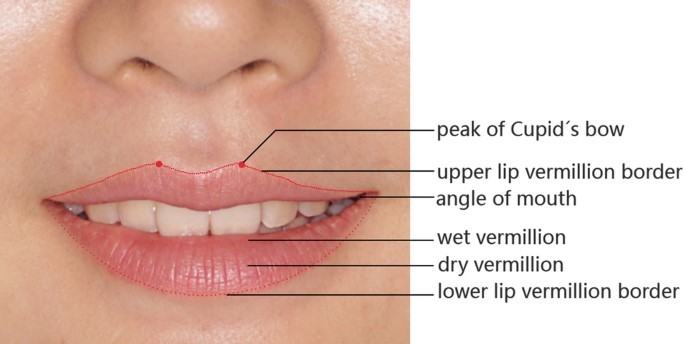
Fig 1:- Anatomy of Lips (Zhiyong Li et.al. 23 October 2021)
MATERIAL AND METHOD
Selection of Ingredients
Bases: Manufacturers of cosmetics use wax, a key class of chemicals, for both adornment and personal hygiene. They are extensively employed as thickeners or emulsifiers in the culinary, cosmetic, and pharmaceutical industries, despite being predominantly used in candles.. (Ref:R.K.Sahu.et.al. 26 Nov 2014)
Oils: There are physical differences between oils and fats. At room temperature, the latter is frequently solid, and both Chemically speaking, oils and fats are made up of glycerol esters. The fatty acids and glycerol is another name of triglycerides. (Ref: R .K. Sahu .et. al. 26 Nov 2014)
Additional functional Ingredients:-
Pigments: There are two methods for coloring lips: first, using a dye solution that can penetrate the outer layer of the skin around the lips to stain the skin; and second, adding a colored layer to the lips to hide any rough spots and create the illusion of smoothness.
Antioxidant: Compounds Antioxidants Found in Pickly Pear fruits contain a variety of antioxidant compounds that are beneficialfor lip care, including vitamins E and C, betacarotene, lutein, zeaxanthin, quercetin, kaempferol, ferulic acidsinapic acid, and betalains. (Ref: R.K. Sahu .et. al. 26 Nov 2014)
Processing Method:-
Mixing and Melting: Because waxes are solid, cannot get melted at room temperature, the next step involves melting and mixing. Be combined with additional chemicals to facilitate this procedure, as the wax has liquefied. Usually, it can be combined.The pigment was melted with oil till the base More ingredients are added to make a combination. consistent final product.
Forming: The real process of moulding is where the melted lipstick is The mix is put directly into a metal or plastic mould, even though It's hot, hardening is healthy. additionally then a little pressure is applied to dislodge it fromthe mole.
Flaming :- The melted lipstick is used in the actual molding process. The mixture is put into a plastic or metal container mold. Hardening remains healthy despite the heat. Additionally, to remove it from the mole, a small amount of pressure is given. (Ref: M. D. Dhanaraju .et. al. 26 Nov 2014)
Stability of cactus extract in formulation:-
Test of Solubility-
Characterizing the solvent selectivity of lipsticks solubility studies can indicate the polarity of the component. In several test tubes, A small amount of sample lipstick was mixed with petroleum ether, methanol, ethanol, and chloroform as part of the procedure outlined by Mara and Lahoti (2015), and the solubility was warranted.Additionally,other studies employed this methodoly. Ethanol and chloroform might dissolve the lipstick Castor oil containing lipstick is owing to the hydroxyl group in ricinoleic acid soluble in alenbol and has a restricted solubility in petroleum solvents. However, no study has examined the importazlce of a lipstick formulation's solubility.
Skin Irritation Test: In some research, human models were used to test lipsticks for skin irritation. For example, Panda et al. (2018) used human subjects as animal models in their study. The skin (lip) was covered with the prepared lipstick.For ten minutes, all sensations, including itching, irritation, and redness, were noted.
PH parameter: This allowed restrictions on the products that can be used on the lips safely are defined by The safe pH range and the pH stability profile for lipsticks .The solubility of substances is influenced by the pH level, which canimpact a product's physical and microbiological stability.An excessively high pH level can harm the skin's protective layer.The typical pill size for healthy lips is 4.7 The pli of prepared lipstickos was measured using a potentiometric approach with a p?i meter equipment .(Ref.Nurul Aqilah Binti Azreen Redzal et.al2022)
Achieving the right texture and colour:
Texture -
By putting to skin and visually inspecting, the color and texture of formulated and marketed herbal lipsticks were determined.
Colour:-Applying with a brush or another tool lip colors are applications of cosmetics to the lipstick ,add color, texture, and/or shine. Lip paint ingredients allow for controlled and accurate application of color to the lips.(Ref. Kaveri N Aher et.al 15-07-2024)
Identification Of Active Components: -
Bioactive compounds in cactus extract-
Phenolic compound-
As their name implies, they have multiple phenolic groups present in their chemical structures, which can be linked to more or less complex chemical groups that are typically high molecular weight.
Fatty acid-
Total lipids isolated from cactus cladodes and analyzed chromatographically reveal that the total fatty acid content is contributed by 13.87, 11.16, 34.87, and 32.83%, respectively.
Vitamins-
A fruit known as a cactus pear is produced by the Opuntia ficus indica, which has a fleshy bay (pulp) covered with prickly peel (skin) and packed with seeds.
Analytical Technique-
Chromatography for identification of bioactive compound-
HPLC chromatography technique-
Role of active component in lipstick-
Anti-tumor effect
The majority of current research indicates that the fruit extract from cactus pears (i)suppresses tumor growth in the ovarian cancer model in nude mice vivo and stops the growth of cervical, ovarian, and bladder cancer cell lines in vitro. Based on cancer cells cultured in vitro, these investigations showed that inhibition was dose-based (1, 5, 10, and 25?ctus pear extract) and time-based (1, 3 or 5 days of therapy).
Anti-inflammatory -
Several investigations have suggested that the genus. Park and colleagues listed that the principle actively reduces inflammation is beta-sitosterol. the extract of the stem .(Ref. Jean M Feugang et.al. 26-05-2014).
Evaluation Of Cactus Lipstick:-
Melting point-
The capillary tube method was used to evaluate the melting point of formed lipstick.
Solubility test-
The herbal lipstick mixture was diluted in a variety of solvents to test its solubility.
PH parameter-
The pH of the herbal lipstick formulation was determined using a pH meter.
Aging stability-
For one hour, the product was kept at 40 ºC. Numerous factors were noted, including bleeding, surface crystallization, and application ease.
Skin irritation test-
Applying a product to the skin and waiting 10 minutes is it's done.
Perfume stability-
The herbal lipstick's formulation was proven to record aroma after 30 days.(Ref. Vijay V Shewale et.al 15-07-2024)
Sustainability And Environmental Impact:-
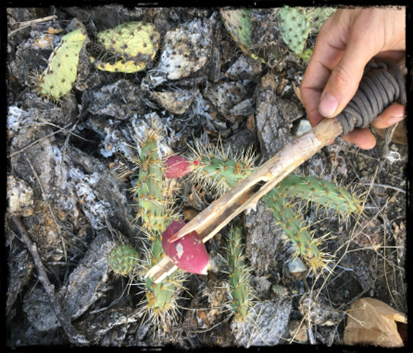
Fig 2 :-Cactus Fruit (ref adopted from www.returntonature.us)
Sources:-
In many arid regions, including much of India, cacti exhibit remarkable adaptability to difficult agroclimatic conditions, and they frequently flourish in areas where no other crops can.
Gathering:-
Cactusindica typically flowers once a year, but reports have indicated that it canblossom twice a year in nations like Italy(English, 1999).Numerous elements are crucial.When determining if the fruit is suitable forgathering.
Among these are the following:
• Fruits that arrive at their destinationsize based on thediversity is being fostered.
• Contents of soluble solids above 12° Brix. .(Ref Flores.c et.al 1995)
Biodegradability and Safety –
Environmental impact of natural vs. synthetic cosmetic ingredient-
Natural Substances
Formulation Table:-
Table 1:- Formulation of herbal lipstick
|
Sr. no. |
Ingredient |
Quantity taken |
Uses |
|
1 |
Castor oil |
2.75 gm |
Humectant |
|
2 |
Carnuba wax |
0.54 gm |
Thickner |
|
3 |
Lanolin |
0.5 gm |
Shining agent |
|
4 |
Bees wax |
2.0 gm |
Emulsifier |
|
5 |
Parrafin |
0.3 gm |
Softener |
|
6 |
Cetyl alcohol |
0.2 gm |
Thickner |
|
7 |
Hard wax |
0.85 gm |
Hardner |
|
8 |
Cactus powder |
2.5 gm |
Coloring agent, Self antioxidant |
|
9 |
Tween 20 |
0.25 gm |
Emulsifier
|
CONCLUSION: -
Customers can be secure and beneficial effect of herbal lipsticks following extensive clinical examinations. In contrast to other cosmetics, Using natural cosmetics is e. artificial coloring substances that have the potential to trigger allergic responses are carcinogenic. The capacity to want the appropriate makeup for You rely on precise ingredient understanding, body Customer perception, individual needs, and Prakriti assessment regarding the product and the reference product. superiority oversight of the efficacy and security of herbal cosmetics products is the most important factor. Thus, excellent Herbal cosmetics need to undergo control testing. The research indicates that there was some variation in the preparation technique for lipsticks, suggesting that the "moulding method" be applied as a general technique. The review's conclusions have several significant ramifications for the future approach, which calls for comprehensive research and clinical trials to evaluate the effectiveness of and created a safety profile for lipstick formulation. A top priority for policy ought to thus was up to prepare for the creation of particular recommendations for the formation and lipstick characteristics.
Conflict Of Interest:-
The authors declare that they have no conflict of interest with the research work of any other authors cited in this
manuscript
ACKNOWLEDGMENT: -
We would like to express our sincere gratitude to Shubham Gadge sir for their valuable support and guidance throughout the preparation of this review. Special thanks to my colleagues for their insightful comments, suggestions, and expertise, which significantly enhanced the quality of this manuscript.Special appreciation is also due to Samarth institute of pharmacy, for providing the necessary resources and support throughout this process andfinally, we thank our families and colleagues for their patienceand encouragement during this research.
REFERENCES


Kashish Patel*, Sayali Chede, Monika Badhekar, Shubham Gadge, Formulation and Evaluation of Herbal Lipstick, Int. J. of Pharm. Sci., 2025, Vol 3, Issue 2, 1059-1065. https://doi.org/10.5281/zenodo.14870980
 10.5281/zenodo.14870980