

We use cookies to ensure our website works properly and to personalise your experience. Cookies policy
Kasturi Shikshan Sanstha College of Pharmacy, Shikrapur, Pune-412208.
Lipstick is the cosmetic used to colour the lips. It enhances the appearance of the lips. Lipstick is used for the purpose to improve appearance, look attractive and protection of lips for many types damaging UV rays etc. Herbal Lipstick is a cosmetic product containing pigments, oils, fragrance, preservatives, colors, texture and protection to the lips. It has become an almost universal constituent of ladies’ handbags. Moist lips, dry lips, shiny lips, smooth lips, all are simple matters of cosmetic application Herbal lipsticks are gainingpopularity because natural cosmetics are safe. In market hundreds of shades of colors are available to satisfy the demand by the women’s in form like liquid as well as stick on lips. Herbal lipsticks having minimum side effects. It contains natural ingredients or nutrients it is safe to use that keep lips healthy. Lipstick containing synthetic colorants which are made up of harmful chemicals and it is very harmful for our skin. Continuous use for long time of synthetic colours may cause serious health problems like skin discoloration, lip cancer, skin irritation, etc .lipstick demonstrate many types of negative effect like- allergy, nausea, dermatitis, and drying of the lips and more serve/used even fatal. So, the demand of the cosmetics containing herbal ingredients increased universally because it is safe. This review paper is about the overview on herbal lipstick which includes advantages , anatomy of lips , ideal characters , formulation defects and evaluation. Herbal cosmetics are gaining popularity due to their natural origin, safety, and minimal side effects compared to synthetic cosmetic products. Herbal lipstick is one of the widely used cosmetic preparations formulated using natural ingredients such as plant pigments, oils, waxes, and antioxidants. The present study focuses on the formulation and evaluation of herbal lipstick using herbal ingredients like beetroot extract, hibiscus powder, coconut oil, castor oil, beeswax, and vitamin E. The objective of the study was to prepare a stable, safe, and effective herbal lipstick with good appearance, smooth texture, acceptable pH, and satisfactory stability. Different formulations of herbal lipstick were prepared by varying the concentration of waxes and oils. The prepared lipsticks were evaluated for several parameters including color, melting point, breaking point, spreadability, surface anomalies, pH, perfume stability, skin irritation, and stability studies. The results showed that the formulated herbal lipstick possessed good moisturizing property, smooth application, attractive color, and stability without causing irritation or adverse effects on the skin.
HERBAL LIPSTICKS: The word herbal is a symbol of safety in contrast to the synthetic one which has adverse effects on human health. Herbal preparations viz., herbal tablets, herbal tonics, herbal paste, herbal shampoo, herbal sindhur, herbal contraceptives and herbal lipstick has become popular among the consumer herbal medicines represent the fastest growing segment to heal the various ailments. Cosmetic means any article intended to be sprayed poured rubbed or sprinkled on, or introduced into or any parts for cleansing, beautifying, promoting attractiveness or altering the appearances. Cosmetics are the substance use to alter of appearance or fragrance of human body. Lipstick are most widely used cosmetic added in the make up to enhance the beauty of lips. A good lipstick should have persuading characteristics and be acceptable to consumer, such as having a suitable texture and antioxidant properties. Bases, oils, emollient and colorant are among the variety of components that contribute to properties of fine lipstick. Texture, melting point and hardness of lipstick are the dominant characteristics that are modified by varying the ratio of component that are used in the formulation.[1] Colorant or pigment are the component that play an important role in the lipstick formulation as it determines the aesthetic value of lipstick. Colorant can be from synthetic and natural sources. Synthetic colors are manufactured chemically. The synthetic dyes that contribute the color to the lipstick are dangerous to human on consumption and may cause adverse effect such as allergy, dermatitis, skin discoloration, drying of lips, etc. In some cases they can be carcinogenic and even fatal. This limitation thus leads the use of natural colorants in production of lipstick. Natural colors are extracted from natural sources such as plants, insects, and algae. [2] Cosmetic word is obtained from the Greek word “kosmetikos” which means the power, arrange and skill in decorating.[3] Herbal cosmetics are the cosmetics in which one or more herbal ingredients are used to form base.[3;4] Phytochemicals are the substances which present in the herbal cosmetics. This influences the functions of the skin and provides necessary nutrients for healthy glowing skin or hair.[5] . Many colors and types of lipstick exist. Now a day’s the demand of herbal cosmetics in the world market are growing and are inevitable gifts of nature. There are a wide range of herbal cosmetic products to satisfy the needs of women for beautifying purpose. In contrast to the synthetic one the herbal cosmetics are safe on human health.[6]. Natural colours are extracted from natural sources such as plants, insects, algae.[2] Many colors and types of lipstick exist. Some lipsticks are also lip balms, to add both color and hydration[7;8]. However, current lip care products not only emphasize aesthetic value but also preferably have added medicinal value to the lip of consumers. This led to the emergence in the market of medicated lipsticks with active medicinal ingredients. The medicated lipsticks may provide protection against infections of bacteria due to the presence of an active medicinal ingredient in the formulation. This function adds on to the existing role of lipsticks, which provide moisture and emollient action to prevent cracking and chapping of the lips[9]. Recently, the use of herbs in the production of cosmeceuticals products for personal care has been on the rise [12] . Herbal cosmetics, also known as natural cosmetics, are the modern trend which encircles both health and beauty care [13]
Cosmetics are preparations applied to the human body for the purpose of cleansing, beautifying, promoting attractiveness, or altering appearance without affecting the body's structure or function. The word "cosmetics" is derived from the Greek word kosmetikos, meaning "skilled in decorating." The global cosmetics industry is one of the fastest-growing sectors, valued at over USD 380 billion in 2022 and projected to grow at a CAGR of approximately 5% through 2030.
DEFINATION: Lipstick is a cosmetic product containing pigments, oils, waxes, and emollients that applies color and texture to the lips. It is most widely used cosmetic item by the women to give an attractive colour and appearance to the lips. There are many varieties of lipstick. Lippy is a common British word for lipstick. These are usually manufactured as moulded sticks and consists of colouring pigmentdissolved in fatty base containing wax[2]
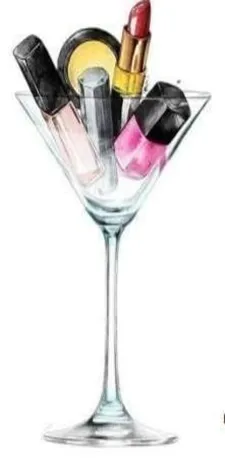
FIG-1.1 LIPSTICK
The medicated lipsticks may provide protection against infections of bacteria due to the presence of an active medicinal ingredient in the formulation of lipstick. This function adds on to the moisture & emollient to the lipstick. Recently, The use of herbs in production of cosmeceuticals products for personal care has been rise. Natural lipsticks are free from synthetic chemicals reduces side effects. On the same occasions, regular usage of synthetic products contain ingredient such as petroleum, lead & phthalates may harmful to consumers. These products may cause lip irritation, dry & chapped lips can leads health problems such as allergies, asthma and cancer[4].
The concept of herbal lipstick is rooted in the ancient Ayurvedic and Unani traditions of using plant-based preparations for cosmetic purposes. Ingredients such as beeswax, castor oil, turmeric, hibiscus, beetroot, rose, saffron, almond oil, and Vitamin E have been used for centuries in traditional lip care preparations across Indian and other world cultures.
Natural Colourants Used in Herbal Lipstick
The choice of natural colourant is the most critical aspect of herbal lipstick formulation. Some widely investigated natural colourants include:
• Natural Colourant
• Plant Source
• Pigment
• Colour Beetroot powder
• Beta vulgaris L.
• Betanin (betalain)
• Red-pink
• Hibiscus extract
• Hibiscus rosa-sinensis
• Anthocyanins
• Deep red
• Pomegranate rind
• Punica granatum
• Ellagic acid, tannins
Base Ingredients of Lipstick
The base of a lipstick formulation typically consists of several components, each serving a specific function:
Waxes
Waxes provide structural rigidity to the lipstick stick and influence the melting pointand hardness. Common waxes used include beeswax, carnauba wax, candelilla wax (a plant-based) alternative to beeswax suitable for vegan formulations), ozokerite wax, and paraffin wax.
Natural waxes such as beeswax and carnauba wax are preferred in herbal formulations.
Oils and Fats
Oils and fats are used to provide emolliency, spreadability, and moisturization. They also serveas solvents for oil-soluble colorants and active ingredients. Commonly used oils include castor oil, olive oil, jojoba oil, coconut oil, sweet almond oil, and vitamin E oil. Castor oil is particularly popular in lipstick formulations due to its high viscosity and ability to impart gloss.
Emollients and Softeners
Emollients improve the feel and skin-conditioning properties of the lipstick. Lanolin, shea butter, and cocoa butter are natural emollients frequently used in herbal lipstick formulations.
Preservatives
Preservatives prevent microbial contamination and extend the shelf life of the formulation. Natural preservatives such as vitamin E (tocopherol), rosemary extract, and grapefruit seed extract are preferred in herbal formulations.
Fragrance/Flavor
Natural essential oils such as rose oil, jasmine oil, peppermint oil, and vanilla extract are used to impart pleasant fragrance or flavor to the lipstick
Conventional vs Herbal Lipstick
Conventional lipsticks often contain a wide range of synthetic chemicals including parabens, petroleum derivatives, synthetic dyes, heavy metals (such as lead, cadmium and chromium), and artificial fragrances. These synthetic ingredients, while effective in achieving desired cosmetic properties, may pose health risks upon prolonged use. Heavy metals in lipsticks are of particular concern due to their potential neurotoxic and carcinogenic effects —considering that a significant amount of lipstick is inadvertently ingested daily by users.
Herbal lipsticks, on the other hand, are formulated using natural ingredients including plant derived waxes, vegetable oils, natural pigments from fruits and vegetables, essential oils, and herbal extracts. These formulations are generally considered safer, biocompatible, and environmentally friendly. Moreover, many natural ingredients used in herbal lipstick formulations also offer added skin benefits such as antioxidant activity, anti-inflammatory
Desirable Properties of a Good Lipstick
* Should possess adequate hardness and not break during normal use
* Should melt at a temperature slightly above body temperature (37°C)
* Should impart a pleasant, desirable color to the lips
* Should be non-toxic, non-irritant, and safe for use on the lips
* Should have good adhesion and not migrate from the lips
* Should possess moisturizing and protective properties
* Should be stable during storage and resist rancidity
* Should have an acceptable fragrance or flavor
Significance of the Study
The present study aims to formulate and evaluate a herbal lipstick using natural ingredients as colorants and base excipients. The use of natural ingredients ensures that the formulated lipstick is free from harmful synthetic chemicals, making it safer for consumer use. Furthermore, the study evaluates the physicochemical properties of the formulated lipstick to confirm its quality, stability, and suitability as a cosmetic product.
This research contributes to the growing body of knowledge on herbal cosmetics and provides a scientific basis for the formulation of natural lip care products. It also demonstrates the viability of replacing synthetic ingredients with natural alternatives without compromising on the quality and performance of the final product. on the quality and performance of the product.
Health Concerns with Conventional Lipsticks
Several studies have reported the presence of heavy metals such as lead, cadmium, chromium, and aluminum in commercial lipstick brands. Given that a significant portion of lipstick is inadvertently ingested during daily use, exposure to these toxic metals is a genuine health concern. Synthetic colorants used in conventional lipsticks have also been associated with allergic reactions, contact dermatitis, and, in some cases, carcinogenicity with chronic exposure.
Parabens, commonly used as preservatives in cosmetics, have been associated with endocrine disruption and potential links to breast cancer. Petroleum-derived ingredients suchas paraffin oil and ozokerite may be contaminated with polycyclic aromatic hydrocarbons (PAHs), which are known carcinogens. (PAHs), which are known carcinogens. .
Environmental and Ethical Considerations
There is a growing consumer awareness about the environmental impact of cosmetic products. Synthetic chemicals used in conventional cosmetics may not be biodegradable and can persistin the environment, contributing to pollution. Furthermore, the cruelty-free and vegan movement has created a demand for cosmetic products free from animal-derived ingredients and animal testing.
Herbal lipstick formulations address these concerns by utilizing plant-derived ingredients that are biodegradable, sustainably sourced, and generally cruelty-free. The development of herbal lipsticks thus aligns with global sustainability goals and ethical consumeris
Gap in Research
While there are a number of publications on herbal lipstick formulations, systematic evaluation using multiple natural colorants and comprehensive physicochemical and biological evaluation is still limited. There is a need for standardized formulation protocols and evaluation methods that can serve as a basis for large-scale production of herbal lipsticks.
The present work is therefore undertaken to formulate an herbal lipstick using natural colorants (primarily beetroot extract) and plant-based excipients, and to evaluate it comprehensively using established physicochemical parameters. This will contribute to the growing database of herbal cosmetic formulations and provide a foundation for future commercial development of safe, effective, and sustainable lip care products diagram shows different categories of cosmetics used for personal care and beauty enhancement.
Importance of Formulation and Evaluation of Herbal Lipstick
Herbal lipstick is an important cosmetic product prepared by using natural ingredients such as plant extracts, oils, waxes, and natural coloring agents. The formulation and evaluation of herbal lipstick are important in research because they help in developing safe, effective, and eco-friendly cosmetic products.
Importance of Formulation of Herbal Lipstick
1.Use of Natural Ingredients
Herbal lipsticks are prepared from natural materials like beeswax, cocoa butter, aloe vera, castor oil, and natural pigments. These ingredients are safer for the skin and reduce harmful effects caused by synthetic chemicals.
2.Reduced Side Effects
Synthetic lipsticks may cause allergies, dryness, irritation, or darkening of lips. Herbal formulations minimize these side effects because they contain mild and skin-friendly ingredients.
3.Moisturizing and Nourishing Effect
Natural oils and herbal extracts help to moisturize, soften, and protect the lips from dryness and cracking
4.Consumer Demand for Herbal Products
Nowadays, people prefer herbal and organic cosmetics because they are considered safer and environmentally friendly. Research on herbal lipstick helps meet this growing market demand.
5.Eco-Friendly and Biodegradable
Herbal cosmetics are less harmful to the environment because natural ingredients are biodegradable and produce less chemical pollution6.
Innovation in Cosmetic Science
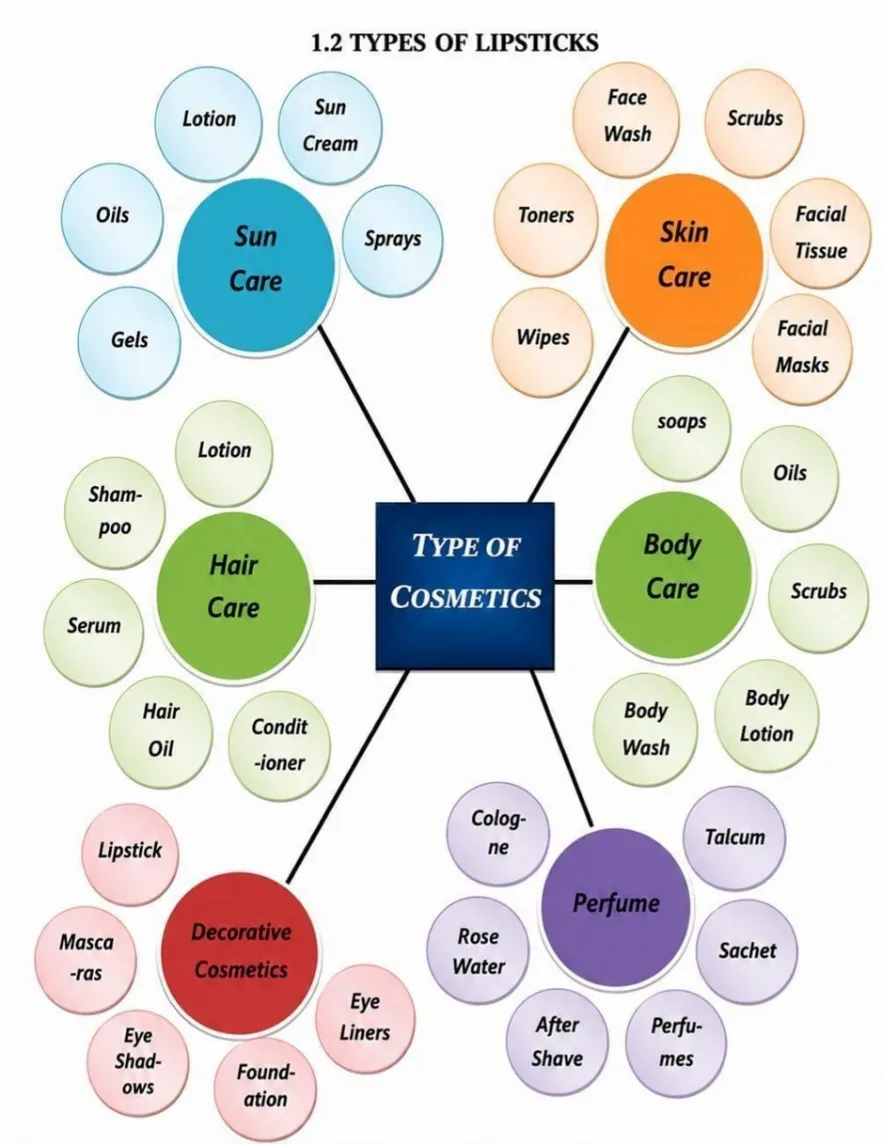
1. Sun Care Cosmetics
Definition
Sun care cosmetics are products used to protect the skin from harmful ultraviolet (UV) rays of the sun.
Examples
Sunscreen lotion
Sun cream
Sun protection sprays
Sun gels
Sun oils
2. Skin Care Cosmetics
Definition
Skin care cosmetics help cleanse, nourish, moisturize, and improve skin health.
Examples
Face wash
Scrubs
Toners
Wipes
Facial masks
Facial tissues
3. Hair Care Cosmetics
Definition Hair care cosmetics are products used to clean, nourish, style, and protect hair.
Examples
Shampoo
Conditioner
Hair oil
Hair serum
Hair lotion
4. Body Care Cosmetics
Definition
Body care cosmetics are products used for cleaning, moisturizing, and protecting the body skin.
Examples
Soaps
Body wash
Body lotion
Body oils
Body scrubs
5. Decorative Cosmetics (Makeup Cosmetics
Definition
Decorative cosmetics are products used to enhance beauty and appearance.
Examples
Lipstick
Foundation
Mascara
Eye shadow
Eye liner
Rose water
Talcum powder
6. Perfumes and Fragrance Cosmetics
Definition
These cosmetics are used to provide pleasant fragrance and freshness.
Examples
Perfumes
Cologne
Rose water
Talcum powder
Ideal Properties of Herbal Lipsticks
1.Smooth and easy to apply
2.Pleasant smell and appearance
3.Non-toxic and safe to use
4.Non-irritating to lips
5.Long lasting color
6.Soft and smooth texture
7.Good moisturizing property
8.Stable at room temperature
9.Free from grittiness
10.Easy to remove
11.Skin-compatible PH.
12. Firm yet smooth texture
13.Good molding ability
DEFECTS IN LIPSTICK
1.Sweating
Oil droplets appear on lipstick surface due to excess oil or high temperature.
2. Blooming
White crystal layer forms on surface because of improper cooling or wax crystallization. 3.
Bleeding
Lipstick color spreads outside lip line due to excess oil and low wax content. 4. Cratering
Small holes form on surface because of trapped air bubbles during molding.
5. Mushy Lipstick
Lipstick becomes too soft due to excess oils or low melting wax.
6. Hardening
Lipstick becomes hard and difficult to apply because of excess wax.
7. Rancidity
Bad smell develops due to oxidation of oils and fats.
8. Breaking
Lipstick breaks easily because of poor formulation or low strength.
9. Texture & Consistency Defects
Grittiness – Poorly ground herbal powders (like beetroot or turmeric) leave a sandy, rough texture on the lips
Brittleness – Low wax content or improper ratio causes the stick to crack or break easily
Sweating/Bleeding – Excess oil seeps out onto the surface, causing a greasy film or color migration
Soft/Mushy texture – Insufficient wax or high oil content makes the lipstick too soft to hold its shape, especially in warm temperatures
Advantages of Natural (Herbal) Lipsticks
1.Safe and Non-Toxic
Herbal lipsticks are prepared from natural ingredients and contain fewer harmful chemicals such as lead, parabens, and synthetic dyes.
2.Reduced Side Effects
They are less likely to cause irritation, allergy, dryness, or darkening of lips compared
Synthetic lipsticks.
3.Moisturizing Effect
Natural oils, waxes, and butters help to keep lips soft, smooth, and hydrated.
4.Nourishes the Lips
Ingredients like aloe vera, beetroot, cocoa butter, and vitamin E provide nutrition and improve lip health. 5.Eco-Friendly
Herbal lipsticks are biodegradable and environmentally friendly because they use plant-based materials.
Disadvantages of Natural (Herbal) Lipsticks
1.Short Shelf Life
Herbal lipsticks may spoil faster because they contain natural ingredients and fewer synthetic preservatives.
2.Lower Color Stability
Natural pigments may fade over time and may not provide long-lasting color.
3.Limited Shade Range
Herbal lipsticks usually have fewer color options compared to synthetic lipsticks.
4.Less Staying Power
They may need frequent reapplication because they do not stay on the lips for a long
time .
Historical Background of Lipstick
The use of lip colour dates back approximately 5,000 years to ancient Mesopotamia, where women crushed gemstones to decorate their lips. Ancient Egyptians used red ochre mixed with wax and animal fat as a lip colourant. In ancient Greece and Rome, lip colour was a symbol of social status and theatrical identity.
The modern lipstick in its familiar retractable metal tube form was introduced in the early 20th century. Guerlain produced one of the first commercially available lipsticks in 1884, and Maurice Levy patented the iconic metal tube in 1915. Throughout the 20th century, lipstick formulation evolved rapidly with the introduction of synthetic dyes, petroleum-derived waxes, silicone oils, and long-wear polymers.
The 21st century has witnessed a significant paradigm shift — driven by growing consumer awareness of ingredient safety, environmental consciousness, and the global "clean beauty" movement — toward natural, organic, and herbal cosmetic formulations.
Ancient Origins (3000+ BCE)
The story of lip color begins in ancient Mesopotamia, where Sumerian women crushed gemstones and applied them to their lips. Queen Schub-ad of Ur (~2500 BCE) was buried with a lip cosmetic made from white lead and crushed red rocks.
In ancient Egypt, both men and women wore lip color as a symbol of social status. Cleopatra famously used a pigment made from crushed carmine beetles mixed with beeswax and fish scales, producing a rich red hue.
Greece & Rome
Ancient Greeks used lip color to signal social class — prostitutes were actually required by law to wear it. Romans made lip paint from wine dregs, flowers, and ochre. Men also wore it as a sign of status.
The Catholic Church largely condemned cosmetics as sinful and associated with witchcraft, causing lip color to fall out of fashion in much of Europe — though it persisted in the Arab world and Asia.
2.LITERATURE OF REVIEW
1.Nuha Rasheed, Syed Abdul Rahman, Samreen Hafsa et. al (2022):- The present work was designed on basis of different approaches of guided study on herbal lipstick. The list of ingredients was made. Then the literature review was done. The materials were collected and method of preparation was studied and the identification tests for coloring matter was performed of various herbal lipsticks were formulated. The prepared formulations were evaluated for various properties and results were tabulated.
2.Richa Kothari, et. al (2017) :- Study concluded that herbal lipstick can be successfully formulated using different natural ingredients such as white bees wax, butter , Castrol oil, coconut oil, olive oil, Vanilla & rose essence, Cinnamon bark extract , turmeric powder, cocoa powder and lemon will be better option for synthetic coloring agents which may arise different side effects.
3.Priya Patel et. al (2020) :- Formulation and evaluation of herbal lipsticks was carried out to formulate a lipstick using herbal ingredients with an act of courage to minimize the side effects as produced by the available synthetic ones.From the result obtained in the present investigation showed that the herbal formulation is a better option with minimal side effects, though detailed clinical trials may be required to access the formulation for better efficacy. None of the formulations has produced any skin irritation.
4.Mona Patel and Ojash Patel et. Al (2021):- The present work has been a tremendous boost in the use of cosmetics by women. However, the hazards caused by these chemicals have come into the limelight very recently. Consumers can take safe and effective advantage of herbal lipsticks after thorough clinical trials. Compared to other beauty products, natural cosmetics are safe to use.
5.Hole pundlik et. al (2020):- The present work aimed to formulate herbal lipsticks by using various natural ingredients like concentrated juice of pomegranate seeds, dried ginger powder, lemon juice, coconut oil, beeswax, paraffin wax, strawberry essence, vanilla essence, and so on. The formulated herbal lipsticks was evaluated and various parameter such as colour,
melting point , breaking point, force of application, PH, skin irritation test, aging stability, were determined and reported.
6. Deweck A.C. (1981) studied the phenomenon of lipstick sweating in Cosmetics and Toiletries (Volume 96, Issue 1), describing the conditions under which lipsticks can exude oils and lose their structural integrity. This study provided important insights into the formulation challenges of lipstick stability, particularly in relation to wax-oil ratios.
7. Nanda S., Nanda A., and Khar R.K. (2007) in their comprehensive text 'Cosmetic
Technology' (Birla Publications, New Delhi) provided detailed information on the formulation, manufacturing, and evaluation of various cosmetic products including lipsticks. The text remains a standard reference in the field of cosmetic science.
8. Harry R.G. and Wilkinson J.B. in 'Harry's Cosmeticology' (6th edition, 1973) provided foundational knowledge on cosmetic formulation principles that continue to inform modern cosmetic science. The text provided detailed descriptions of lipstick ingredients, formulation techniques, and evaluation methods.
9.Mitsui T. in 'New Cosmetic Science' (Elsevier, 1997) offered a comprehensive and updated overview of cosmetic formulation science, covering both conventional and natural cosmetic ingredients, their properties, and applications.
10.Bennet W. in 'Cosmetic Formulary' (Chemical Publishing Company, New York, 1983) provided a detailed compilation of cosmetic formulations including lipstick bases, which served as an important reference for the selection of base ingredients in herbal lipstick development
11.Nadkarni A.K. in 'Indian Materia Medica' (Popular Prakashan, Mumbai, 1975) provided extensive documentation of Indian medicinal and cosmetically significant plants, including their chemical composition and applications, serving as an authoritative reference for the selection of natural ingred .
3.NEED OF WORK
1. To reduce the harmful effects caused by synthetic and chemical-based lipsticks.
2.To develop a safe and natural cosmetic product using herbal ingredients.
3.To avoid side effects such as allergy, irritation, dryness, and lip pigmentation.
4.To provide nourishment, moisturization, and protection to the lips.
5.To increase the use of eco-friendly and biodegradable cosmetic products.
6.To utilize natural colorants, oils, waxes, and herbal extracts in lipstick formulation.
7.To meet the increasing consumer demand for herbal and organic cosmetics.
8.To prepare an economical and easily acceptable cosmetic product.
9.To evaluate important parameters like color, pH, stability, spreadability, melting point .
10.To ensure the quality, safety, effectiveness, and stability of herbal lipstick formulations.
11.To promote the use of herbal cosmetics in the cosmetic and pharmaceutical industries.
12.To develop a lipstick with better therapeutic and cosmetic benefits using natural resources.
13.To reduce the use of harmful synthetic chemicals in cosmetic products.
14.To prepare a safer alternative to conventional lipsticks.
15.To minimize side effects such as itching, irritation, allergies, and dryness.
16.To protect lips from environmental damage and dehydration.
17.To provide natural nourishment and moisturization to the lips.
18.To improve the health and softness of lips through herbal ingredients.
19.To utilize medicinal properties of herbs in cosmetic formulations.
20.To encourage the use of natural colorants instead of artificial dyes.
21.To reduce the risk of toxicity caused by heavy metals present in synthetic lipsticks.
22.To develop eco-friendly and biodegradable cosmetic products.
23.To satisfy the growing demand for herbal and organic cosmetics.
24.To formulate a lipstick with better compatibility for sensitive skin.
25.To increase consumer awareness regarding safe cosmetic products.
26.To prepare cost-effective herbal cosmetic formulations.
27.To enhance the therapeutic value along with cosmetic appearance.
28.To improve the stability and quality of herbal lipstick formulations.
29.To study the physicochemical properties of herbal lipstick.
30.To evaluate parameters like pH, melting point, hardness, spreadability, and stability.
31.To ensure product safety and effectiveness before marketing.
32.To promote research and innovation in herbal cosmetic technology.
33.To encourage the use of renewable natural resources in cosmetics.
34.To reduce environmental pollution caused by synthetic cosmetic waste.
35.To increase acceptance of herbal products in the cosmetic industry.
4. AIM AND OBJECTIVES
AIM:
The present work was designed on basis of different approaches of guided study on herbal lipstick. Aim to formulate herbal lipsticks by using natural ingredient using beet root powder. The materials were collected and method of preparation was studied and the identification tests for coloring matter was performed of various herbal lipsticks were formulated. The prepared formulations were evaluated for various properties and results were tabulated.
OBJECTIVES:
1.To formulate a herbal lipstick using natural ingredients.
2.To provide safe and effective cosmetic application with minimum side effects.
3. To improve lip appearance, smoothness, and moisturization.
4.To avoid harmful chemicals present in synthetic lipsticks.
5. To evaluate physical properties such as color, texture, hardness, and spreadability.
6. To study stability, pH, melting point, and skin irritation of the formulation.
7.To develop an eco-friendly and cost-effective herbal cosmetic product.
8. To determine product performance
9.Including ease of application, consistency, and retention on lips.
10.To compare herbal lipstick with synthetic lipstic 11.In terms of safety, quality, and consumer acceptability.
12. To provide protections to lip from uv rays.
13. By checking irritation or allergic reactions on skin.
14. To apply colour and texture to lips.
15.To provide hydration.
16. To promote beauty.
17.To improve safety, stability, and quality of the lipstick formulation.
18. To evaluate physical properties such as color, texture, spreadability, melting point, and pH.
• PLAN OF WORK
1. Selection Of Herb’s
2. Literature Review
3. Drug Excipient and Authentication
4. Preparation Of Herbal Lipstick
5. Evaluation Test: Force Of Application
Skin Irritation Test
Surface Anomalies
Perfumes Stability
6. Compiling Of Dat
5.METHOD AND PREPARATION
DRUG AND EXCIPIENT PROFILE
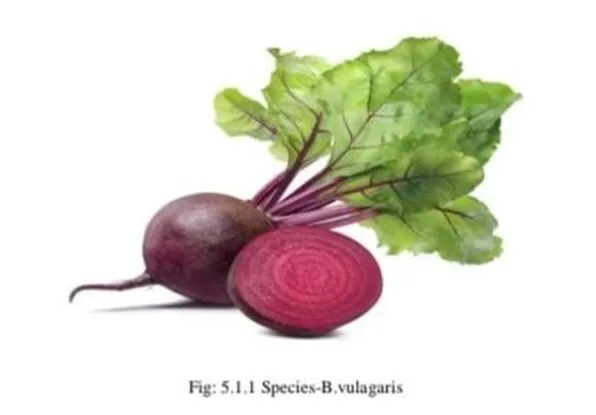
5.1 The Lipsticks Prepared By Natural Colouring BETA VULGARIS ROOT :
Beta vulgaris (beet) is a plant which is included in Batoidea subfamily in the
Amaranthaceae family. Kingdom- plantae Ordercaryophyllales
Chemistry of pigment-
*The color of red/purple beetroot is due to a variety of Betalain pigments, unlike most other red plants, such as red cabbage, which contain anthocyanin pigments.
* The composition of different beta lain pigments can vary, resulting in strains of beetroot which are yellow or other colors in addition to the familiar deep red Some of the betalains in beets are betanin, isobetanin, probetanin, and neobetanin (the red to violet ones are known collectively as betacyanin.
*Other pigments contained in beet are indicaxathin and vulgaxanthins (yellow to orange pigments known as betaxanthins).
*Indicaxanthin has been shown as a powerful protective antioxidant for thalassemia
|
Name |
Model |
|
Weighing balance |
Shimadzu corporation Japan |
|
PH meter |
Elico |
|
Electric water bath |
Poly science Ltd |
|
Melting point apparatus |
Esico |
|
NAME |
Specification |
|
Bees wax |
SD Fine |
|
Carnauba Wax |
SD Fine |
|
White soap paraffin |
SD Fine |
|
Castor oil |
SD Fine |
|
Coconut oil |
SD Fine |
|
Almond oil |
Dabur India |
|
Olive oil |
Sengee Biochem |
|
Essential oil |
Grasee International |
|
Rose essence |
Jamson |
|
Vanilla essence |
Jamson |
|
Strawberry essence |
Jamson |
Formulation table :
|
Sr.no |
Ingredients |
Quantity (%w/w) |
Role |
|
1 |
Beeswax |
12% |
Provides hardness and shape to lipstick |
|
2 |
Carnauba wax |
4% |
Increases melting point and strength |
|
3 |
Cocoa butter |
8% |
Acts as emollient and moisturizer |
|
4 |
Castor oil |
35% |
Provides gloss and smooth application |
|
5 |
Coconut oil |
20% |
Softens and nourishes lips |
|
6 |
Almond oil |
5% |
Moisturizes and prevents dryness |
|
7 |
Aloe vera gel |
3% |
Soothes and heals lips |
|
8 |
Beetroot powder |
5% |
Natural coloring agent |
|
9 |
Hibiscus powder |
4% |
Gives natural red-pink shade |
|
10 |
Rose petal powder |
2% |
Provide color and pleasant fragrance |
|
11 |
Vitamin E |
1% |
Antioxidant and preservative |
|
12 |
Strawberry flavor |
1% |
Provide pleasant odor and taste |
|
13 |
Rose essence |
0.5% |
Enhances fragrance |
|
Total |
|
100% |
|
METHOD OF EXTRACTION
Lycopene extraction from tomatoes
1. Benzene Extraction Method:
We made the paste separately of tomato. In the laboratory 100 gm of paste is weigh in 250 ml beaker. Then warm the paste and add about 30 ml of warm (400°C) benzene to it. Stir well and decant the benzene layer. Again add 30 ml warm benzene, stir and decant the benzene. This has been done about 5 times. Then distil off benzene and we got residue of lycopene. Recystallized residue by ether and weighed. Repeat the steps with another sample of tomato and record the observation. Identification test of the isolated lycopene were performed using chemical tests and by microscopic study, identification of chemical structure was done using visible spectrophotometer.
2. Methanol Extraction Method
50 gm tomato paste was dehydrated by adding 65 ml of methanol. This mixture was immediately shaken
vigorously to prevent the formulation of hard lumps. After 2 hr, the thick suspension was filtered; the dark red cake was shaken for another 15 min with 75 ml mixture of equal volume of methanol and carbon tetrachloride and separated by filtration. The carbon tetrachloride phase was evaporated and the residue was diluted with about 2 ml of benzene. Using a dropper, 1 ml of boiling methanol was added in portion, then crystal of crude lycopene were appeared immediately and the crystallization was completed by keeping the liquid at room temperature and ice bath, respectively, The crystals were washed 10 times using benzene and boiling methanol.
BEET ROOT EXTRACTION:
Beetroot:
Peel the beetroot and cut it into uniform-sized fine slices. Spread it over a butter paper, cover with a fine mesh and allow it to shade dry for a day. If there is any moisture left dry in it in an oven. Take the dried beetroot and grind it into a fine powder. Pass the powdered material through a fine sieve. Check for any grainy particles. Sieve it again if required. Weight the amount of powder and pack it.
POMEGRANATE EXTRACTION:
A sweet ripen red color pomegranate is taken and its seeds are removed. The seed are taken into mortar pestle then it juice is extracted by grinding the seed into the mortar pestle. The mixture was poured into a fine muslin cloth and was squeezed to separate the juice from the seeds. The juice was collected from the beaker and stored for further use.
CARROT JUICE EXCTRACTION:
Fresh carrots are taken and their upper layer is removed by the help of peeler. The peeled carrot is grated evenly then the mixture was poured into a fine muslin cloth and was squeezed to separate the juice from the seeds. The juice was collected from the beaker and stored for the further use.
Method of formulation of lipstick:
Formulation 1- method of preparation:
The herbal lipsticks were formulated as per general method of lipstick formulation. In this formulation beeswax and carnauba wax were melted in a beaker at 70°C on a water bath with decreasing order of their melting point. Similarly white soft paraffin and castor oil were taken in another beaker and melted at 70°c on a water bath in decreasing order of their melting point. The colored pigment was added to the oil phase until homogenous mixture was obtained. Then it was added to the wax phase at the same temperature. The mixture was cooled at 40°c and vanilla essence was added. The molten mixture was poured into lipstick moulds. Upon solidification it was separated from the moulds and fitted in the lipstick case.
MATERIALS & METHODS
Method of Formulation
Step 1:
Preparation of Pigment
Dry and powder the herbal material.
Extract natural color using suitable solvent if required.
Step 2: Preparation of Base
Melt beeswax and other waxes using water bath.
Add oils slowly with continuous stirring.
Step 3: Mixing
Add herbal pigment and mix uniformly.
Add flavor and vitamin E.
Step 4: Moulding
Pour molten mixture into lipstick mould.
Allow to cool and solidify.
Step 5: Packaging
Remove lipstick carefully and place into lipstick container
1. Preparation Study
Method of Preparation of Herbal Lipstick
The herbal lipstick can be prepared by the fusion method.
Steps :
1.Collection of Ingredients
Collect all herbal and cosmetic ingredients such as beeswax, oils, colorants, preservatives, perfumes, and antioxidants.
2.Weighing
Accurately weigh all ingredients according to the formulation table.
3.Melting of Base
Melt waxes like beeswax, carnauba wax, and paraffin wax in descending order of melting point using a water bath.
4.Preparation of Pigment Mixture
Mix herbal colorants (beetroot powder, hibiscus powder, turmeric, etc.) with castor oil to obtain a smooth paste.
5.Mixing
Add the pigment mixture into the molten wax base with continuous stirring.
Addition of Other Ingredients
Add oils, flavoring agents, preservatives, antioxidants, and perfumes.
Pouring into Moulds
Pour the molten mixture into lipstick moulds carefully.
6.Cooling
Allow the moulds to cool at room temperature or place them in a refrigerator for proper setting. Removal from Moulds
Remove the solidified lipsticks carefully from the moulds.
7.Flaming
Pass the lipstick surface briefly through flame to obtain a glossy finish.
8.Packaging and Storage
Pack the lipstick in suitable containers and store in a cool, dry place.
• Flow Chart of Preparation
Collection of ingredients
↓
Drying and grinding of herbal materials
↓
Preparation of herbal extract
↓
Melting of waxes
↓
Addition of oils
↓
Addition of herbal extract and additives
↓
Mixing uniformly
↓
Pouring into molds
↓
Cooling and solidification
↓
Packaging and storage
Formulation Study of Herbal Lipsticks
The formulation study of herbal lipstick involves the selection and combination of natural ingredients to prepare a safe, stable, and effective lipstick. Herbal lipsticks are prepared by using natural waxes, oils, pigments, and herbal extracts instead of synthetic chemicals. Different formulations are developed by changing the concentration of ingredients to obtain suitable color, smoothness, hardness, and stability.
In the formulation process, beeswax, carnauba wax, and paraffin wax are mainly used as base materials to provide hardness and shape to the lipstick. Natural oils such as castor oil, coconut oil, olive oil, and almond oil are added to provide moisture, smooth application, and shine. Herbal coloring agents like beetroot powder, hibiscus powder, turmeric, cocoa powder, or natural pigments are used to give attractive color to the lipstick. Antioxidants and preservatives such as vitamin E may also be added to improve stability and shelf life.
The ingredients are weighed accurately and melted according to their melting point. The melted mixture is stirred continuously to obtain a uniform blend. Natural colorants and flavoring agents are then added carefully. The prepared mixture is poured into lipstick molds and allowed to cool at room temperature or in a refrigerator until solidification occurs. Different formulations are evaluated to select the best formulation based on physical appearance, texture, spreadability, melting point, stability, and user acceptability.
The main aim of formulation study is to develop a herbal lipstick that is safe, non-toxic, smooth in application, stable during storage, and acceptable to consumers.
Evaluation Study
Evaluation Parameters of Herbal Lipstick
1. Organoleptic Evaluation
Examine color, odor, appearance, and texture visually.
2. Melting Point Test
Determine melting point using capillary tube method.
Ideal melting point should be between 60–65°C.
3. pH Determination
Measure pH using pH paper or pH meter.
Lipstick should be near neutral pH.
4. Breaking Point Test
Measure the force required to break the lipstick.
Indicates strength and hardness.
5. Force of Application
Check ease of application on skin or paper surface.
6. Surface Anomalies
Observe for crystal formation, fungal growth, or sweating.
7. Spreadability Test
Apply lipstick on glass slide or skin to check smooth spreading.
8. Stability Study
Store lipstick at different temperatures and observe changes in color, odor, and texture.
9. Skin Irritation Test
Apply on skin and observe for redness or irritation.
10. Perfume Stability
Check retention of fragrance during storage.
11. Solubility Test
Determine solubility in different solvent
12. Aging Stability
MATERIALS
A)Waxes B) Oil C) Colour D) Preservatives E) Fragrance F)Antioxidants
A) Waxes:
The gloss & hardness are generally depends on characteristics & quantity of waxes Best characteristic is obtained by using mixture of waxes of different m.p& adjusting the final m.p. by incorporating a sufficient amount of high m.p. wax. Example. Beeswax B) Oil oil mixture is required to blend properly with the waxes to provide a suitable film on the applied lip skin. Also acts as solvent in some formulation. Acts as dispersing agent for insoluble pigments. The ideal mixture of oil should produce the product, easily spread & produce a thin film with good covering power. Examples:olive
C )COLOUR
Different natural colour are used in lipsticks like Beet root juice extract.
D) PRESERVATIVES:
Preservatives is Used to prevent microbial growth Example: vanilla essence higher conc. of preservative can cause burning sensation or allergic reactionE)
E)FRAGRANCE :
Fragrance is Essential component of lipstick Used to mask bad odor of fatty or wax Used to impart attractive flavor Conc. 2-4% Qualities for selection: Free from irritating effect Free from disagreeable taste Stable & compatible with other things. eg. Vanilla essence.
F)ANTIOXIDANTS:
Beetroot also contains a considerable amount of polyphenols and phenolic ,a small quantity of vitamin E,which have been proved with the great anti oxidant ability .
Packaging, Storage & Stability
1. Photostability Testing
Natural pigments are prone to photodegradation; photostability testing under UV light ensures that color and ingredient integrity are maintained during storage.
2.Thermal Stability Testing
Lipsticks are stored at elevated temperatures (40°C, 45°C) to evaluate melting behavior, texture changes, and color stability under warm climate conditions.
3.Freeze-Thaw Cycling
Repeated freeze-thaw cycles are performed to test whether the formulation develops phase separation, crystallization, or texture changes under extreme temperature fluctuations.
4.Packaging Material Compatibility
The herbal lipstick formulation is tested for compatibility with its packaging material (metal tube, plastic case) to ensure no migration or chemical reaction occurs.
4.Shelf Life Determination.
EVALUATION OF LIPSTICKS
It is very essential to maintain a uniform standard for herbal lipstick, keeping this view in mindthe formulated herbal lipsticks was evaluated on the parameters such as melting point, breaking point, thixotropy character, force of application, surface anomalies etc.
The formulation and evaluation of herbal lipsticks was aimed to formulate a lipstick using herbal ingredients.According to literature survey of previous investigation of these herbal plant it may be minimize the side effects as produced by the available synthetic ones.
Different natural ingredients were used for formulating natural lipsticks that contain coloring agent which is a natural obtained from Punica granatum and the effect of different natural ingredients on different evaluation parameters in the formulation have been investigated.
7. FUTURE PERSPECTIVE
1.Improvement in Evaluation Methods
Evaluation of herbal lipstick will become more advanced through: Stability testing Microbial testing pH testing
Melting point determination
Spreadability testing
Skin irritation studies
Consumer acceptability studies
Modern instruments can help in accurate quality control and standardization.
2.Use of Medicinal Herbs
Future herbal lipsticks may include herbs with therapeutic benefits such as:
Aloe vera for moisturization
Turmeric for healing
Neem for antimicrobial activity
Vitamin E for antioxidant effect
Rose and beetroot for natural color
These ingredients can provide both cosmetic and medicinal benefits.
3.Eco-Friendly and Sustainable Products
Herbal cosmetics support environmental sustainability.
Future packaging may use:
Biodegradable materials
Recyclable containers
Plastic-free packaging
4.Commercial and Industrial Opportunities Herbal lipstick has strong market potential in:
Cosmetic industries
Ayurvedic product companies
Startups and small businesses
Increasing online marketing and social media promotion will boost sales.
CONCLUSIONS
Now a days, cosmetics contain artificial and chemical ingredients that are expensive and may cause several side effects. Herbal cosmetics provide natural and eco-friendly alternatives. Herbal lipsticks prepared from natural plant extracts help rejuvenate and refresh the skin. The present study was carried out to formulate a herbal lipstick using herbal ingredients. From the study, it was concluded that the formulated herbal lipstick was better and showed minimal or no side effects. Evaluation studies also proved that the herbal lipstick containing natural dye was more satisfactory than marketed formulations
The present research work on the formulation and evaluation of herbal lipstick concluded that herbal ingredients can be successfully used to prepare a safe, stable, and effective cosmetic product. The formulated herbal lipstick showed good color, smooth texture, satisfactory spreadability, and acceptable appearance without causing irritation or harmful effects on the skin. Evaluation parameters such as melting point, pH, stability, perfume stability, breaking point, and surface anomalies were found to be within acceptable limits.
The use of natural ingredients provides additional benefits such as moisturizing, nourishment, and reduced side effects compared to synthetic lipsticks. Therefore, herbal lipstick can be considered a promising alternative to commercial chemical-based lipsticks due to its safety, eco-friendly nature, and consumer acceptability. Further studies can be carried out to improve shade variety, long-term stability, and shelf life of the product. The study on formulation and evaluation of herbal lipstick demonstrated that natural herbal ingredients can be effectively incorporated into lipstick preparation with good cosmetic. properties. The formulated lipstick exhibited desirable characteristics such as smooth application, attractive color, good consistency, stability, and non-irritant nature. Evaluationtests confirmed that the product met standard quality parameters and remained stable during storage conditions.
RESULT:-
TABLE 1:- Pre-formulation study of ingredients
|
Sr. |
Ingredients |
Parameter evaluated |
Observation /result |
|
1 |
Beeswax |
Appearance |
Yellowish solid wax |
|
2 |
Carnauba wax |
Melting point |
80-85 C |
|
3 |
Cocoa Butter |
Texture |
Smooth and soft |
|
4 |
Castor oil |
Solubility |
Miscible with oils |
|
5 |
Coconut Oil |
Odor |
Pleasant characteristic odor |
|
6 |
Beetroot powder |
Color |
Dark red color |
|
7 |
Hibiscus powder |
Compatibility |
Compatible with base |
|
8 |
Rose petal powder |
Appearance |
Fine pink powder |
|
9 |
Aloe vera gel |
Ph |
6.5 |
|
10 |
Vitamin E |
stability |
Stable antioxidant |
Result :-
All ingredients showed acceptable physical characteristics and good compatibility with each other. No incompatibility or instability was observed during pre-formulation studies.
TABLE 2:- Formulation Result (Observation of Prepared Formulation)
|
Formulation code |
Color |
Texture |
Odor |
Appearance |
Overall Result |
|
F1 |
Light pink |
Smooth |
Pleasant |
Good |
Acceptable |
|
F2 |
Pink |
Smooth |
Pleasant |
Glossy |
Acceptable |
|
F3 |
Dark pink |
Slightly hard |
Pleasant |
Good |
Acceptable |
|
F4 |
Reddish pink |
Smooth |
Pleasant |
Glossy |
Good |
|
F5 |
Bright red |
Very smooth |
Pleasant |
Excellent |
Best formulation |
|
F6 |
Red |
Hard |
Pleasant |
Good |
Acceptable |
|
F7 |
Pinkish red |
smooth |
Pleasant |
Good |
Acceptable |
|
F8 |
Light red |
smooth |
Pleasant |
Glossy |
Good |
|
F9 |
Dark red |
Slightly hard |
Pleasant |
Good |
Acceptable |
|
F10 |
Reddish pink |
smooth |
Pleasant |
Excellent |
Good |
TABLE 3:- Evaluation Parameters of Hebal lipstick
|
Sr No. |
Evaluation test |
Observation /Result |
|
1 |
Color |
Attractive reddish shade |
|
2 |
Odor |
Plesent |
|
3 |
Appearance |
Smooth and glossy |
|
4 |
pH |
6.2-6.8 |
|
5 |
Melting point |
58-65C |
|
6 |
Breaking point |
Good mechanical strength |
|
7 |
Spreadability |
Smooth application |
|
8 |
Surface anomalies |
No defects observed |
|
9 |
Skin irritation test |
No irritation |
|
10 |
Stability study |
Stable at room temperature |
|
11 |
Aging stability |
No sweating or bleeding |
|
12 |
Washability |
Easily washable |
Final Result :-
The herbal lipstick formulations prepared using natural ingredients showed satisfactory results in all evaluation parameters. The formulations were smooth, stable, non-irritant, and aesthetically acceptable. Among all formulations, F5 was found to be the optimized formulation due to its excellent texture, color, stability, and application properties.
REFERENCES
Published in World Journal of Pharmaceutical Research.
44
Published in World Journal of Pharmaceutical Research.
44

Vaibhav Narwade, Shivani Kharat, Prachi Pisal, Dr. Vijaykumar Kale, Dr. Mahesh Thakare, Formulation And Evaluation of Herbal Lipstick, Int. J. of Pharm. Sci., 2026, Vol 4, Issue 6, 4635-4658, https://doi.org/10.5281/zenodo.20748050
 10.5281/zenodo.20748050