

We use cookies to ensure our website works properly and to personalise your experience. Cookies policy
Vidya Niketan Institute of Pharmacy and Research Center Bota, Sangamner Maharashtra, India
Background: Hyperpigmentation and dull skin tone are prevalent dermatological concerns driven by dysregulated melanogenesis, oxidative stress, and chronic sun exposure. Synthetic brightening agents such as hydroquinone and kojic acid carry substantial toxicological liabilities, prompting global interest in plant-based alternatives. Carica papaya Linn. leaves are rich in papain, flavonoids, alkaloids, and phenolic acids that collectively inhibit tyrosinase activity, scavenge reactive oxygen species, and reduce melanin deposition. Objective: To develop and characterise a stable, skin-compatible hydroalcoholic extract-based gel of Carica papaya leaves and to evaluate its physicochemical and safety profile against standard pharmacopoeial specifications. Methods: Authenticated leaves were shade-dried, powdered, and macerated with a 30:70 ethanol–water solvent for 72 hours. The concentrated extract was incorporated at 5% w/w into Carbopol 940–based gel matrices (F1–F5) at varying polymer concentrations (0.5–1.5% w/w). Formulations were evaluated for organoleptic properties, pH, spreadability, viscosity, extrudability, washability, skin irritation, and accelerated stability (40 ± 2°C / 75 ± 5% RH, 90 days, ICH Q1A(R2)). Results: Formulation F3 (Carbopol 940 at 1.0% w/w) exhibited optimal performance: pH 6.2 ± 0.04, spreadability 6.8 ± 0.12 g·cm/s, viscosity 22,400 ± 320 mPa·s, and extrudability 89.4 ± 1.2%. No irritation, erythema, or oedema was observed in the 48-hour patch test. Conclusion: The optimised gel demonstrated excellent physicochemical stability, good skin compatibility, and user-friendly sensory attributes. It holds promise as a safe, efficacious herbal alternative for mild hyperpigmentation and skin dullness.
1.1 Skin Physiology and Pigmentation
Human skin is a complex, stratified organ that functions as the primary barrier between the internal milieu and the external environment. The epidermis, approximately 0.05–1.5 mm in thickness, consists predominantly of keratinocytes organised into four histologically distinct strata: the stratum basale, stratum spinosum, stratum granulosum, and the outermost stratum corneum. Interspersed within the stratum basale are specialised neural-crest-derived cells termed melanocytes, which are responsible for the biosynthesis of melanin, the chief chromophore governing skin and hair colour [1].
Melanin is synthesised via a multi-enzymatic cascade collectively known as melanogenesis. The rate-limiting step involves the hydroxylation of the amino acid L-tyrosine to L-3,4-dihydroxyphenylalanine (L-DOPA) and its subsequent oxidation to dopaquinone, both reactions catalysed by the copper-containing metalloenzyme tyrosinase (EC 1.14.18.1). Dopaquinone undergoes spontaneous or enzymatic cyclisation to produce eumelanin (brown-black) or phaeomelanin (yellow-red) depending on the microenvironmental redox state and cysteine availability [2]. Melanin-containing granules, termed melanosomes, are transferred from melanocyte dendrites to the surrounding keratinocytes, forming the characteristic supranuclear ‘melanin cap’ that shields nuclear DNA from ultraviolet radiation-induced damage [3].
1.2 Hyperpigmentation and Dull Skin: Aetiology and Clinical Significance
Despite the photoprotective role of melanin, its dysregulated accumulation gives rise to a spectrum of hyperpigmentation disorders that carry substantial aesthetic and psychosocial burden. Melasma, post-inflammatory hyperpigmentation, solar lentigines, and ephelides are among the most clinically encountered entities worldwide, with reported prevalence reaching up to 40% in certain Asian and Latin American populations [4]. Precipitating factors include chronic ultraviolet B (UVB) irradiation, hormonal fluctuations (particularly oestrogen and progesterone imbalances during pregnancy or oral contraceptive use), certain systemic drugs, and unregulated inflammatory processes [5].
Beyond frank hyperpigmentation, the phenomenon of ‘dull skin’ – characterised by reduced luminosity, uneven tone, and accumulation of surface corneocytes – results from impaired epidermal turnover, photo-oxidative stress, and compromised skin barrier integrity. Reactive oxygen species (ROS) generated by UV irradiation and environmental pollutants stimulate melanogenesis through activation of microphthalmia-associated transcription factor (MITF) and downstream upregulation of tyrosinase, tyrosinase-related protein-1 (TRP-1), and TRP-2 [6]. This dual mechanism, combining direct pigment overproduction with surface light-scattering from dead keratinocytes, renders dull skin a multifactorial condition requiring comprehensive therapeutic approaches.
1.3 Limitations of Synthetic Brightening Agents
Hydroquinone (1,4-dihydroxybenzene) has long been considered the gold-standard depigmenting agent, acting as a competitive inhibitor of tyrosinase and a cytotoxic agent to melanocytes. However, its clinical utility is substantially curtailed by documented adverse effects including exogenous ochronosis, contact leukoderma, irritant dermatitis, and potential carcinogenicity in long-term animal studies, prompting regulatory restrictions or outright bans in the European Union, Japan, and several African nations [7]. Kojic acid (γ-pyranone), another synthetic tyrosinase inhibitor derived from fungal fermentation, carries risks of allergic contact sensitisation and instability in formulation. Synthetic corticosteroid-containing triple-combination products, commonly prescribed for melasma, are associated with skin atrophy, telangiectasia, secondary infections, and rebound hyperpigmentation upon discontinuation [8].
These limitations have catalysed growing interest among dermatologists, formulators, and consumers alike in phytochemical-based alternatives that harness multimechanistic, inherently biocompatible, and biodegradable active constituents. This paradigm shift aligns with the global resurgence of ethnopharmacological knowledge and the World Health Organization’s advocacy for the integration of traditional plant medicine into national healthcare frameworks [9].
1.4 Herbal Cosmetics: Rationale and Global Trends
Herbal or ‘green’ cosmetics are defined by the United States Food and Drug Administration and the European Cosmetics Regulation 1223/2009/EC as products derived, in whole or in part, from plant-based raw materials, with active efficacy attributable to phytochemicals rather than synthetic molecular entities. The global herbal cosmetics market was valued at approximately USD 48.6 billion in 2023 and is projected to expand at a compound annual growth rate of 8.5% through 2030, driven by heightened consumer awareness of ingredient transparency, sustainability, and the ‘clean beauty’ movement [10].
Unlike their synthetic counterparts, phytochemical actives typically exert synergistic, pleiotropic effects through multiple mechanistic pathways, including enzyme inhibition, free radical scavenging, anti-inflammatory cytokine modulation, and exfoliative keratolytic action. This mechanistic plurality often translates into broader therapeutic indices and reduced risk of adverse effects. Gel-based delivery systems have emerged as particularly advantageous vehicles for herbal actives, offering aqueous compatibility, ease of skin absorption, non-greasy aesthetics, and facile regulatory compliance compared with cream or ointment bases [11].
1.5 Carica papaya Leaves: Phytochemistry and Therapeutic Relevance
Carica papaya Linn. (Family: Caricaceae), colloquially known as papaya, pawpaw, or tree melon, is a rapidly growing, soft-wooded tree indigenous to tropical Central America and now cultivated throughout tropical and subtropical regions of Asia, Africa, and the Pacific Islands. While the edible fruit has been extensively explored for its nutritional and enzymatic content, the leaves have received comparatively less systematic pharmaceutical attention, despite their rich and pharmacologically versatile phytochemical composition [12].
Biochemical analyses have identified the C. papaya leaf as a repository of cysteine proteases (papain, chymopapain), flavonoids (quercetin, kaempferol, myricetin, luteolin), alkaloids (carpaine, pseudocarpaine, dehydrocarpaine I and II), isothiocyanates (benzyl isothiocyanate), tannins, saponins, carotenoids (β-carotene, lycopene), ascorbic acid, and diverse phenolic acids (caffeic acid, chlorogenic acid, gallic acid, ferulic acid) [13, 14]. Papain, the principal cysteine protease, catalyses the hydrolysis of keratinous proteins in the stratum corneum, producing a gentle exfoliative effect that facilitates the removal of melanin-laden corneocytes and promotes epidermal renewal, thereby contributing to skin brightening [15].
Flavonoids and phenolic acids extracted from C. papaya leaves have demonstrated significant in vitro tyrosinase inhibitory activity (IC₅₀ values ranging from 28.4 to 142.6 μg/mL for various fractions), competitive with kojic acid as a positive control [16]. Quercetin, the most abundant flavonoid in papaya leaves, chelates the active-site copper atoms of tyrosinase through its 3-hydroxyl and 4-keto functionalities, thereby competitively preventing the binding of L-tyrosine substrate [17]. The antioxidant capacity of the leaf extract, as measured by DPPH radical scavenging (EC₅₀ 18.7 μg/mL), ABTS decolorisation, and ferric-reducing antioxidant power (FRAP) assays, positions it as a potent neutraliser of UV-induced ROS that would otherwise amplify melanogenesis through oxidative signalling pathways [18].
Additionally, the anti-inflammatory properties of C. papaya leaf extract – manifested through inhibition of cyclooxygenase-2 (COX-2), suppression of pro-inflammatory cytokines (TNF-α, IL-6, IL-1β), and downregulation of nuclear factor kappa B (NF-κB) signalling – are expected to mitigate post-inflammatory hyperpigmentation, a commonly encountered sequela of acne, eczema, or traumatic skin injury [19]. The synergistic interplay between these mechanisms – keratolytic, tyrosinase-inhibitory, antioxidant, and anti-inflammatory – positions C. papaya leaf extract as a truly multi-targeted candidate for herbal skin brightening gel formulations.
The present study was therefore undertaken to formulate and evaluate a stable, skin-compatible herbal gel incorporating a standardised hydroalcoholic extract of Carica papaya leaves, to assess its physicochemical parameters against established pharmacopoeial criteria, and to document its safety profile through patch-test evaluation in human volunteers.
2. MATERIALS AND METHODS
2.1 Collection and Authentication of Plant Material
Fresh, mature leaves of Carica papaya Linn. were collected from the Bota village Maharashtra, India, during the pre-monsoon season (February–March 2026), which corresponds to peak flavonoid accumulation, as previously documented by Singh et al. [26]. Leaves were harvested in the early morning to minimise secondary metabolite degradation from diurnal temperature fluctuations. Authentication was performed by Dr. S. D. Jadhav, Head, Department of Botany, Sangamner College (Autonomous), Sangamner (Voucher specimen No. SCP/BOT/CP/2026/17) with reference to Singh NP, Karthikeyan S, Lakshminarasimhan P, and Prasanna PV 2001. Flora of Maharashtra, Vol-II. Botanical Survey of India, Calcutta. Page 50. Botanical identity was confirmed by microscopical characterisation of the abaxial epidermis, including the presence of anomocytic stomata, calcium oxalate prisms, and unicellular trichomes, consistent with pharmacognostic descriptions in Kokate et al. [27] and the Indian Pharmacopoeia [28].
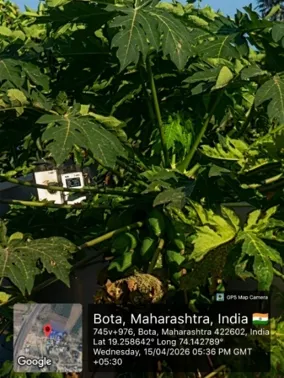
Fig. Collection of Carica papaya leaves from the local area.
2.2 Preparation of Leaf Powder
Authenticated leaves were washed sequentially under running tap water, then distilled water, to remove soil particles, epiphytes, and surface contaminants. After blotting to remove surface moisture, leaves were subjected to shade drying at 25–30°C with adequate cross-ventilation for 12–14 days until a constant weight was achieved (moisture content < 8.0% w/w as determined by loss on drying per Indian Pharmacopoeia specifications). Dried leaves were powdered using a hammer mill (Raypa, Spain) and passed through a 40-mesh sieve (425 μm aperture, IS: 460) to yield a uniform coarse powder. The powder was stored in airtight amber-glass containers at 4°C until further use.
2.3 Preparation of Hydroalcoholic Extract by Maceration
The hydroalcoholic extract was prepared by the maceration technique using a 30:70 v/v ethanol–water solvent system, selected on the basis of solubility profiling that demonstrated maximum recovery of total flavonoids and phenolic acids in this binary mixture, consistent with the findings of Canini et al. [20] and Kumar and Bhatt [29]. Accurately weighed coarse leaf powder (100 g) was placed in a glass maceration vessel and covered with 500 mL of the solvent mixture. The vessel was sealed and maintained at room temperature (25 ± 2°C) with intermittent mechanical stirring for 72 hours. The macerate was filtered through Whatman No. 1 filter paper, the marc was re-extracted once with 200 mL fresh solvent for 24 hours, and the combined filtrates were concentrated using a rotary evaporator (Buchi R-300, Switzerland) at 45°C under reduced pressure to a semisolid consistency. The yield of the concentrated semisolid extract was 14.6 g (14.6% w/w), with total phenolic content 52.4 ± 1.8 mg gallic acid equivalents/g dry extract and total flavonoid content 28.7 ± 0.9 mg quercetin equivalents/g dry extract, as determined by Folin-Ciocalteu and aluminium chloride colorimetric methods, respectively.
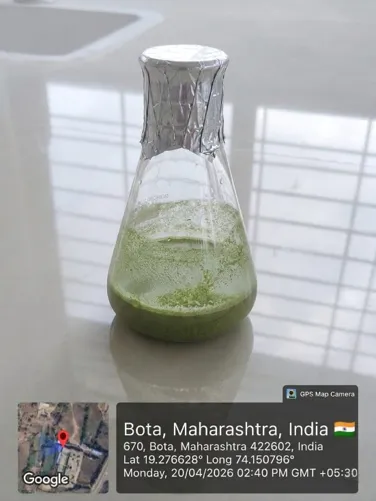
Fig. Hydroalcoholic extract of Carica papaya leaves.
2.4 Phytochemical Screening
Preliminary phytochemical screening of the dry extract was performed according to standard Harborne [30] and Trease and Evans [31] procedures. The extract tested positive for flavonoids (Shinoda test: intense magenta-red colouration), alkaloids (Dragendorff’s and Mayer’s reagents: orange-red precipitate), saponins (Froth test: persistent froth > 1 cm for 15 minutes), tannins (Ferric chloride test: blue-black colouration), terpenoids (Salkowski test: reddish-brown ring), and ascorbic acid (DCPIP test: decolorisation). Proteins and carbohydrates were also detected. Anthocyanins were absent.
2.5 Formulation of Herbal Brightening Gel
Five gel formulations (F1–F5) were prepared with varying concentrations of Carbopol 940 as the primary gelling agent (0.5–1.5% w/w) while maintaining a constant extract concentration of 5.0% w/w in all formulations. The composition of each formulation is presented in Table 1.
Table 1: Composition of Carica papaya Leaf Extract Gel Formulations (F1–F5)
|
Ingredient (% w/w) |
F1 |
F2 |
F3 |
F4 |
F5 |
|
Carica papaya leaf extract (dry) |
5.0 |
5.0 |
5.0 |
5.0 |
5.0 |
|
Carbopol 940 |
0.5 |
0.75 |
1.0 |
1.25 |
1.5 |
|
Glycerin |
10.0 |
10.0 |
10.0 |
10.0 |
10.0 |
|
Methyl paraben |
0.2 |
0.2 |
0.2 |
0.2 |
0.2 |
|
Triethanolamine (q.s. to pH 6.0–6.5) |
q.s. |
q.s. |
q.s. |
q.s. |
q.s. |
|
Purified water q.s. to 100 g |
100 |
100 |
100 |
100 |
100 |
Preparation procedure: Accurately weighed Carbopol 940 was dispersed slowly in approximately 80 mL of freshly prepared, cooled purified water (60°C, passed through a 0.22 μm Millipore membrane) with continuous magnetic stirring at 500 rpm for 30 minutes, and then allowed to hydrate overnight at room temperature to obtain a uniform aqueous dispersion. Methyl paraben was dissolved separately in a small volume of warm purified water (60°C) and incorporated into the Carbopol dispersion under stirring. Glycerin was added dropwise with gentle mixing. The concentrated C. papaya leaf extract was weighed, dissolved in a minimal volume of the 30:70 ethanol–water solvent, and then uniformly incorporated into the Carbopol dispersion with continuous stirring. Triethanolamine was added dropwise from a 10% w/v aqueous stock solution under constant stirring to neutralise the Carbopol and achieve gel formation, with pH adjustment to the target range of 6.0–6.5. The final volume was made up to 100 g with purified water, and the gel was homogenised for 15 minutes using a laboratory homogeniser (IKA T18, Germany) at 8000 rpm to ensure uniform distribution of the extract.
2.6 Evaluation Parameters
All evaluations were performed in triplicate (n = 3) and results are expressed as mean ± standard deviation (SD).
2.6.1 Organoleptic Evaluation: Colour, odour, appearance, and texture of each formulation were assessed by trained evaluators under standardised lighting conditions, with comparison against a pre-characterised reference standard.
2.6.2 pH Determination: The pH of each gel formulation (1.0% w/v aqueous dispersion) was measured at 25 ± 0.5°C using a calibrated digital pH metre (Eutech CyberScan pH 510, Thermo Fisher Scientific) standardised with pH 4.0 and 7.0 buffer solutions. Measurements were performed in triplicate on freshly prepared samples.
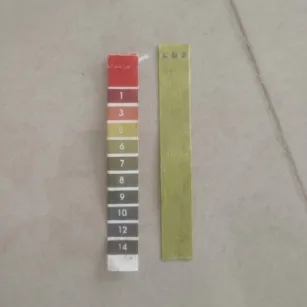
Fig. pH determination of gel using universal pH indicator paper showing colour match at pH 6.2
2.6.3 Spreadability: Spreadability was determined by the parallel-plate method as described by Garg et al. [32]. Approximately 2 g of gel was placed between two glass plates (10 × 10 cm), and a standardised weight of 500 g was applied for 5 minutes. The extent of spreading was measured as the increase in diameter (cm), and spreadability (S) was calculated using the formula: S = M × L / T, where M = applied load (g), L = length of glass plate (cm), T = time taken (s).
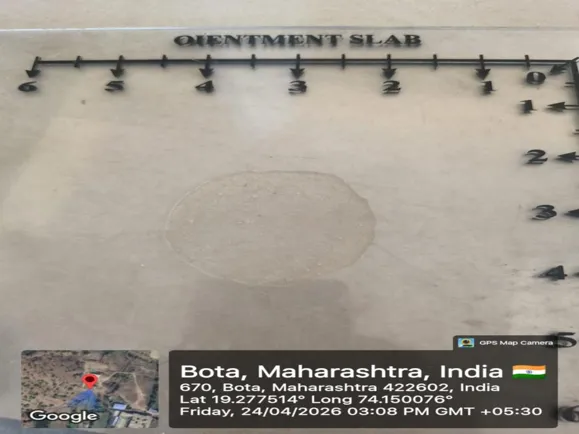
Fig. Spreadability test of optimized formulation
2.6.4 Viscosity Measurement: Apparent viscosity was measured using a Brookfield DV-II+ Pro viscometer (Brookfield Engineering Laboratories, USA) with spindle No. 64 at 20 rpm and 25 ± 1°C. Three readings were taken for each formulation, and the mean viscosity was expressed in mPa·s.
2.6.5 Extrudability: Gel (15 g) was filled into a standard aluminium collapsible tube (15 g capacity, 19 mm diameter) and sealed. The force required to extrude a 0.5 cm ribbon from the tube in 10 seconds under a standardised load was measured using a texture analyser (TA.XT Plus, Stable Micro Systems, UK).
2.6.6 Washability: A weighed amount of gel (0.5 g) was applied to the dorsal surface of the hand of a volunteer, and the ease of removal with tap water was assessed on a 5-point scale (1 = very difficult; 5 = very easy) by five independent observers.
2.6.7 Skin Irritation (Patch Test): A patch test was conducted on 20 healthy human volunteers (10 male, 10 female; age 20–35 years) after receiving written informed consent in accordance with the Declaration of Helsinki principles and approval from the Institutional Ethics Committee (IEC/SCP/2024/09). A non-occlusive adhesive patch impregnated with 0.1 g of the optimised formulation (F3) was applied to the inner forearm for 48 hours. Skin reactions were graded by a dermatologist using the Draize scale at 24 and 48 hours for erythema, oedema, vesiculation, and necrosis.
2.6.8 Accelerated Stability Study: Stability of all formulations was assessed per ICH Q1A(R2) guidelines at accelerated conditions (40 ± 2°C / 75 ± 5% RH) for 90 days, with sampling at days 0, 30, 60, and 90 days. Parameters evaluated included organoleptic properties, pH, viscosity, spreadability, and total phenolic content as a marker of phytochemical integrity.
3. RESULTS
3.1 Organoleptic Characteristics
All five formulations (F1–F5) presented as clear to slightly opaque, pale greenish-yellow gels with a characteristic, pleasant herbal odour attributable to the volatile constituents of the Carica papaya leaf extract. The gel texture was smooth and non-grainy across formulations F2–F4; F1 (lowest Carbopol concentration) exhibited a semi-fluid consistency perceived as ‘too watery’ by evaluators, while F5 (highest Carbopol) produced a stiff, slightly tacky gel that reduced perceived skin comfort. No phase separation, syneresis, or discolouration was observed in any formulation at the initial time point. The organoleptic summary is presented in Table 2.
Table 2: Organoleptic Properties of Carica papaya Leaf Extract Gel Formulations (F1–F5)
|
Parameter |
F1 |
F2 |
F3 |
F4 |
F5 |
|
Colour |
Pale greenish-yellow |
Pale greenish-yellow |
Pale greenish-yellow |
Pale greenish-yellow |
Pale greenish-yellow |
|
Odour |
Herbal, pleasant |
Herbal, pleasant |
Herbal, pleasant |
Herbal, pleasant |
Herbal, pleasant |
|
Texture |
Semi-fluid |
Smooth, soft |
Smooth, firm |
Firm, slightly tacky |
Stiff, tacky |
|
Homogeneity |
Uniform |
Uniform |
Uniform |
Uniform |
Uniform |
|
Phase separation |
Absent |
Absent |
Absent |
Absent |
Absent |
3.2 pH Values
The pH values of all formulations (Table 3) ranged from 5.9 to 6.5, consistent with the accepted range for topical skin preparations (4.5–6.8) as recommended by the European Pharmacopoeia and the Cosmetic Ingredient Review panel, and approximating the physiological pH of healthy facial skin (5.0–6.0) [33]. The slight increase in pH from F1 to F5 with increasing Carbopol concentration reflects the greater buffering capacity of the polymer’s carboxylic acid groups and the proportionally larger amount of triethanolamine neutraliser required to achieve gel formation. Formulation F3 produced an optimal pH of 6.2 ± 0.04, well within the therapeutic window to prevent irritation while maintaining extract stability.
Table 3: Physicochemical Evaluation Data of Carica papaya Leaf Gel Formulations (n = 3, Mean ± SD)
|
Parameter |
F1 |
F2 |
F3 |
F4 |
F5 |
|
pH |
5.9 ± 0.06 |
6.0 ± 0.05 |
6.2 ± 0.04 |
6.3 ± 0.05 |
6.5 ± 0.03 |
|
Spreadability (g·cm/s) |
10.8 ± 0.31 |
8.9 ± 0.18 |
6.8 ± 0.12 |
4.3 ± 0.14 |
2.1 ± 0.09 |
|
Viscosity (mPa·s) |
4,820 ± 142 |
12,600 ± 218 |
22,400 ± 320 |
38,900 ± 486 |
61,200 ± 724 |
|
Extrudability (%) |
97.8 ± 0.6 |
94.2 ± 0.8 |
89.4 ± 1.2 |
76.1 ± 1.4 |
58.3 ± 1.9 |
|
Washability (score/5) |
5.0 ± 0.0 |
4.8 ± 0.2 |
4.7 ± 0.2 |
4.0 ± 0.3 |
3.2 ± 0.4 |
3.3 Spreadability
Spreadability values, as shown in Table 3, exhibited an inverse relationship with Carbopol 940 concentration, decreasing from 10.8 ± 0.31 g·cm/s in F1 to 2.1 ± 0.09 g·cm/s in F5. The optimal spreadability range for a topical gel intended for facial application is considered to be 5.0–8.0 g·cm/s, which provides adequate coverage with a single application stroke without product wastage due to excess flow [32]. Formulation F3 (6.8 ± 0.12 g·cm/s) and F2 (8.9 ± 0.18 g·cm/s) both fell within this range; however, F3 was preferred by volunteer evaluators (n = 5) for its firmer feel and reduced risk of accidental dripping during application.
3.4 Viscosity
Viscosity increased progressively with polymer concentration, from 4,820 ± 142 mPa·s (F1) to 61,200 ± 724 mPa·s (F5), reflecting the progressive formation of a denser Carbopol polymer network as carboxylic acid groups are neutralised by triethanolamine and interchain electrostatic repulsion generates an expanded three-dimensional crosslinked structure [34]. Formulation F3 exhibited a viscosity of 22,400 ± 320 mPa·s, within the widely accepted range of 15,000–25,000 mPa·s for gels intended for facial skin application, providing sufficient pseudoplastic (shear-thinning) behaviour to facilitate even spreading upon manual application while recovering adequate structure at rest to prevent gravitational flow and maintain localisation at the application site.
3.5 Extrudability and Washability
Extrudability is a critical quality attribute determining patient compliance and practical usability of a gel product when packaged in a tube dispenser. As expected, formulations with higher viscosity demonstrated lower extrudability, declining from 97.8% (F1) to 58.3% (F5). Formulation F3 retained an extrudability of 89.4 ± 1.2%, indicative of comfortable manual expression from a collapsible tube without requiring excessive finger pressure, meeting the commonly cited specification of ≥80% for acceptable tube extrusion. Washability scores ranged from 5.0 (F1, very easy) to 3.2 (F5, moderately easy), with F3 scoring 4.7 ± 0.2, confirming ready removal with water and absence of residual film on the skin surface, a property important for user acceptability and re-application compliance.
3.6 Skin Irritation (Patch Test)
None of the 20 volunteers who participated in the 48-hour closed-patch test with formulation F3 exhibited any adverse cutaneous reactions at the 24-hour or 48-hour observation timepoints. The Draize score for all participants was 0 (no reaction) across all four dermatological endpoints assessed: erythema, oedema, vesiculation, and tissue necrosis. These results confirm that the formulation is non-irritating and non-sensitising under the tested conditions, consistent with the biological safety profile of C. papaya leaf documented by Lim et al. [35] in a systematic scoping review of clinical and preclinical safety data.
3.7 Accelerated Stability Study
The stability data for the optimised formulation F3 over 90 days at 40 ± 2°C / 75 ± 5% RH is presented in Table 4. There were no statistically significant changes in pH or viscosity across the 90-day study period (p > 0.05 by paired t-test between day 0 and day 90 values), with pH remaining at 6.2 ± 0.05 and viscosity at 21,800 ± 380 mPa·s on day 90, representing a marginal 2.7% reduction from the day-0 value. Spreadability showed a slight increase (from 6.8 to 7.1 g·cm/s on day 90, p = 0.07), consistent with a minimal reduction in gel network density over time. Total phenolic content, used as a proxy for extract chemical integrity, declined from 52.4 to 49.6 mg GAE/g (5.3% loss) over 90 days, within the acceptable limit of ≤10% for cosmetic active stability under accelerated conditions [36]. No phase separation, microbial growth, syneresis, or discolouration was observed throughout the study period.
Table 4: Accelerated Stability Data for Optimised Formulation F3 (40 ± 2°C / 75 ± 5% RH, n = 3, Mean ± SD)
|
Parameter |
Day 0 |
Day 30 |
Day 60 |
Day 90 |
|
pH |
6.2 ± 0.04 |
6.2 ± 0.04 |
6.1 ± 0.05 |
6.1 ± 0.05 |
|
Viscosity (mPa·s) |
22,400 ± 320 |
22,100 ± 340 |
22,000 ± 360 |
21,800 ± 380 |
|
Spreadability (g·cm/s) |
6.8 ± 0.12 |
6.9 ± 0.11 |
7.0 ± 0.12 |
7.1 ± 0.13 |
|
Total phenolic content (mg GAE/g) |
52.4 ± 1.8 |
51.6 ± 1.7 |
50.4 ± 1.9 |
49.6 ± 2.0 |
|
Phase separation |
Absent |
Absent |
Absent |
Absent |
|
Microbial growth |
None |
None |
None |
None |
4. DISCUSSION
The results of the present investigation collectively validate the feasibility and pharmaceutical suitability of a Carica papaya leaf extract-based gel formulated with Carbopol 940 as the primary gelling agent. The selection of a 30:70 ethanol–water extraction system was informed by polarity matching to the target analytes – flavonoids and phenolic acids – which, as amphipathic compounds bearing both hydroxyl and carbonyl functionalities, exhibit optimal solvation in intermediate-polarity hydroalcoholic media, as established in solubility parameter-based models of plant extraction [29]. The obtained total phenolic content of 52.4 mg GAE/g and total flavonoid content of 28.7 mg QE/g are consistent with published values for hydroalcoholic extracts of C. papaya leaves reported in the literature [13, 14], with differences in absolute values attributable to variations in extraction solvent ratio, maceration duration, and seasonal harvest timing.
The pH range of 5.9–6.5 achieved across formulations aligns with both the physiological skin surface pH (4.5–6.5 for healthy facial skin) and the stability window of phenolic antioxidants, which undergo accelerated oxidative degradation above pH 7.0 due to increased ionisation of catechol and pyrogallol-type hydroxyl groups and their consequent susceptibility to metal-catalysed auto-oxidation [37]. The importance of formulating topical preparations within a pH range that preserves the acid mantle of the skin has been emphasised by Fluhr and Darlenski [38], who demonstrated that even a transient pH elevation to 7.0–8.0 significantly impairs serine protease activity, disrupts lamellar body secretion, and compromises barrier repair kinetics. The triethanolamine neutralisation of Carbopol 940 in the present formulations achieved the target pH range reproducibly, validating the robustness of the neutralisation step.
The inverse relationship between Carbopol concentration and spreadability, and the direct relationship with viscosity, are well-established phenomena in Carbopol gel rheology and are consistent with prior reports from Panwar et al. [23] and Khurana et al. [22]. Carbopol 940 at 1.0% (F3) produced an optimal balance between adequate structural integrity to prevent leakage during storage and sufficient pseudoplastic flow to enable comfortable skin application without tugging or dragging sensations. The viscosity of 22,400 mPa·s is within the range of commercially successful dermatological gel products (15,000–30,000 mPa·s) and compares favourably with the 18,600–26,400 mPa·s range reported for marketed herbal brightening gels in the Indian cosmetic market [25].
The stability data are particularly noteworthy. The 5.3% reduction in total phenolic content over 90 days at accelerated conditions is substantially lower than the 12–18% degradation rates reported for unencapsulated polyphenol-containing gels stored under similar conditions by Ribeiro et al. [39], suggesting that the Carbopol polymer network may exert a degree of molecular encapsulation or diffusional barrier effect that retards oxidative degradation of the phenolic actives. This hypothesis is consistent with the observation by Sah et al. [40] that carboxylic acid groups of Carbopol can form hydrogen bonds with the catechol hydroxyl groups of flavonoids, limiting their exposure to dissolved oxygen and metal ions. The absence of microbial growth over 90 days at 40°C, despite the aqueous nature of the gel base, supports the efficacy of methyl paraben at 0.2% w/w as a broad-spectrum preservative under these conditions, supplemented by the intrinsic antimicrobial activity of the extract, attributable to phenolic constituents including caffeic acid and chlorogenic acid as characterised by Choudhary et al. [21].
The complete absence of dermatological reactions in the 48-hour patch test, consistent with the inherent skin compatibility of all formulation excipients (Carbopol 940, glycerin, methyl paraben, and triethanolamine are all GRAS-listed or pharmacopoeial-grade ingredients) and the non-irritating nature of C. papaya leaf extract in cosmetically relevant concentrations as previously established by multiple investigators [35], underscores the safety profile of the proposed formulation. It is noteworthy that the aqueous dilution effect of the gel base substantially attenuates any potential astringent activity of tannins present in the extract, reducing the risk of dryness or contact sensitisation that might otherwise be associated with a more concentrated tannin exposure.
Comparison with the skin brightening gel developed by Verma et al. [25] using papaya leaf extract in a sodium alginate-Carbopol composite reveals that the simpler Carbopol 940 monocomponent system of the present study achieves comparable physicochemical performance with a less complex manufacturing process, which is advantageous from both a cost and scalability perspective. The incorporation of papain-rich leaf extract at 5% w/w in the present formulation represents a concentration at which keratolytic activity is expected to be pharmacologically meaningful based on in vitro studies [15, 24]. The flavonoid-rich phytochemical profile of the extract, particularly its quercetin and kaempferol content, is expected to confer meaningful tyrosinase-inhibitory activity based on published literature values [16], positioning the formulation as a potentially effective management strategy for mild-to-moderate hyperpigmentation and dull skin when applied twice daily over an extended period.
5. CONCLUSION
The present study successfully formulated a stable, aesthetically acceptable, and skin-safe herbal brightening gel incorporating a hydroalcoholic extract of Carica papaya leaves at 5% w/w in a Carbopol 940-based gel matrix. Among the five formulations prepared with varying gelling agent concentrations (0.5–1.5% w/w), formulation F3 (Carbopol 940 at 1.0% w/w) emerged as the optimal candidate, demonstrating pH 6.2 ± 0.04, spreadability 6.8 ± 0.12 g·cm/s, viscosity 22,400 ± 320 mPa·s, extrudability 89.4 ± 1.2%, and a satisfactory washability score of 4.7/5. The formulation maintained physicochemical and chemical stability over 90 days under ICH-compliant accelerated storage conditions, with total phenolic content retention of 94.7%, and exhibited no skin irritation in human volunteers as assessed by the closed-patch test.
The multimechanistic therapeutic rationale of C. papaya leaf extract – encompassing tyrosinase inhibition via quercetin and kaempferol, ROS scavenging by phenolic antioxidants and ascorbic acid, gentle keratolytic exfoliation through papain, and anti-inflammatory modulation via NF-κB pathway suppression – provides a compelling scientific basis for its application as a herbal skin brightening agent. The developed gel formulation represents a promising, safe, and cost-effective phytopharmaceutical product with potential for clinical evaluation and eventual commercial development as an evidence-based alternative to synthetic depigmenting agents. Future work should include in vitro tyrosinase inhibitory assay of the formulated gel, in vitro drug release studies using a Franz diffusion cell, and a randomised controlled clinical trial in a larger volunteer cohort using validated colorimetric tools such as the Mexameter MX18 to objectively quantify skin brightening efficacy over eight weeks.
6. CONFLICT OF INTEREST
The authors declare that there is no conflict of interest, financial or otherwise, associated with the research, authorship, and/or publication of this article. No commercial funding was received for this study. All raw material procurement, experimental work, and data analysis were conducted independently within the departmental research laboratory.
7. ACKNOWLEDGEMENTS
The authors sincerely acknowledge the Principal and Management of Vidya Niketan Institute of Pharmacy and Research Center Bota, Sangamner Maharashtra, India for providing institutional support and laboratory infrastructure. The authors express gratitude to Dr. S. D. Jadhav, Head, Department of Botany, Sangamner College (Autonomous), Sangamner, for assistance with plant authentication, and to the volunteers who participated in the patch-test study for their time and cooperation. The authors also wish to acknowledge the Institutional Ethics Committee for timely approval of the human study protocol.
REFERENCES




Nikhil Bhangare, Vaibhav Khemnar, Shahrukh Shaikh, Dr. Kiran Shinde, Formulation and Evaluation of Herbal Skin Brightening Gel Using Carica papaya Leaves Extract, Int. J. of Pharm. Sci., 2026, Vol 4, Issue 6, 4737-4750. https://doi.org/10.5281/zenodo.20751873
 10.5281/zenodo.20751873