

We use cookies to ensure our website works properly and to personalise your experience. Cookies policy
Usha Dwarkadas Pathrikar Institute Of Pharmacy (Dongargaon Kawad), Phulambri, Chhatrapati Sambhajingar-431111.
Herbal sunscreen formulations are gaining importance due to their safety, biocompatibility, and reduced side effects compared to synthetic sunscreens. The present study on the formulation and evaluation of a herbal sunscreen cream using Bitter Gourd extract as the main active ingredient. Bitter gourd possesses antioxidant, anti-inflammatory, and photoprotective properties because of the presence of flavonoids, phenolic compounds, vitamins, and other bioactive constituents that help protect the skin from harmful ultraviolet (UV) radiation.(22)Bitter gourd extract was prepared and incorporated into a topical cream base using suitable excipients. The formulated herbal sunscreen was evaluated for various physicochemical parameters including appearance, pH, viscosity, spreadability, washability, homogeneity, stability, irritancy, and Sun Protection Factor (SPF). The formulation showed good consistency, acceptable pH suitable for skin application, smooth texture, and satisfactory spreadability.Stability studies indicated that the preparation remained stable under different storage conditions without significant changes in color, odor, or phase separation
Sunscreen is a topical preparation applied to the skin to protect it from the harmful effects of ultraviolet (UV) radiation present in sunlight. Continuous exposure to UV rays can cause various skin problems such as sunburn, premature aging,
pigmentation, wrinkles, dehydration, and skin cancer. Sunscreens help reduce these harmful
effects by absorbing, reflecting, or scattering ultraviolet radiation before it penetrates the skin.
Ultraviolet radiation is mainly divided into UVA and UVB rays. UVA rays penetrate deeply into the skin and are responsible for premature aging, wrinkles, and long-term skin damage, whereas UVB rays affect the outer layer of the skin and mainly cause sunburn and redness. Prolonged exposure to both UVA and UVB rays increases the risk of skin disorders and skin cancer. Therefore, the use of sunscreen has become an essential part of daily skin care.(2)
# Sunscreens are generally classified into two types:
a. Chemical Sunscreens – absorb UV radiation and convert it into heat.
b. Physical or Mineral Sunscreens – reflect and scatter UV rays from the skin surface.
1.1. Advantages of Herbal Sunscreen
• Made from natural plant-based ingredients.
• Generally causes fewer skin irritations and allergic reactions.
• Contains natural antioxidants that help protect the skin from free radical damage.
• Environmentally friendly and biodegradable.
• May provide additional skin benefits such as moisturizing, anti-inflammatory, and anti-aging effects.
• Free from many synthetic chemicals and preservatives.
• Suitable for sensitive skin when properly formulated.(2)
1.2. Disadvantages of Chemical Sunscreen
• May cause skin irritation, redness, or allergic reactions in some individuals.
• Contains synthetic chemicals that can be absorbed through the skin.
• Some formulations may produce a greasy feeling on the skin.
• Not always suitable for individuals with highly sensitive skin (4)
2. Plant Profile :
2.1. Bitter Gourd :
Bitter Gourd, also known as bitter melon or karela, is a tropical medicinal vegetable belonging to the Cucurbitaceae family.(21)
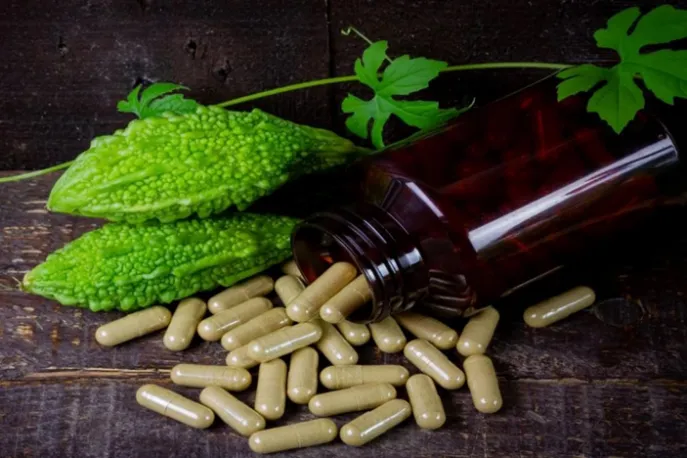
Figure No.1 Bitter Gourd.
• Plant Profile : Bitter Gourd.
• Scientific Name : Momordica charantia
• Common Names : Bitter Gourd , Bitter Melon.
• Family : Cucurbitaceae.
• Uses of Bitter Gourd :
a. Helps reduce skin damage caused by UV rays
b. Helps reduce pigmentation and tanning
2.2. Aloe Vera Gel :
Aloe vera gel is the transparent gel extracted from the inner leaf of Aloe vera, commonly used for its moisturizing, soothing, and healing effects on the skin. (19)
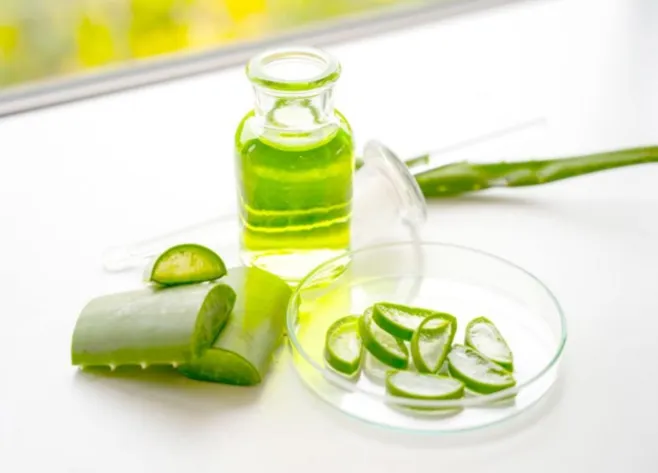
Figure No.2 Aloe Vera Gel.
• Plant Profile : Aloe Vera Gel.
• Scientific Name : Aloe Barbadians Miller.
• Common Names : Ghritkumari , Indian Aloe
• Family : Liliaceae.
• Uses of Aloe Vera :
a. Used in moisturizers and creams
b. Helps reduce skin irritation and dryness
2.3. Vitamin E :
Vitamin E is a fat-soluble vitamin and natural antioxidant that helps protect body cells from damage caused by free radicals. It supports healthy skin, hair, immune function, and wound healing.(16 ,18)
• Plant profile : Vitamin e.
• Scientific Name : Tocopherol.
• Common Names : Alpha-Tocopherol
• Family : Tocopherols and tocotrienols.
• Chemical Formula : C29H50O2
• Uses of Vitamin E :
a. Prevents premature aging
b. Reduces wrinkles and fine lines.
• Structure:
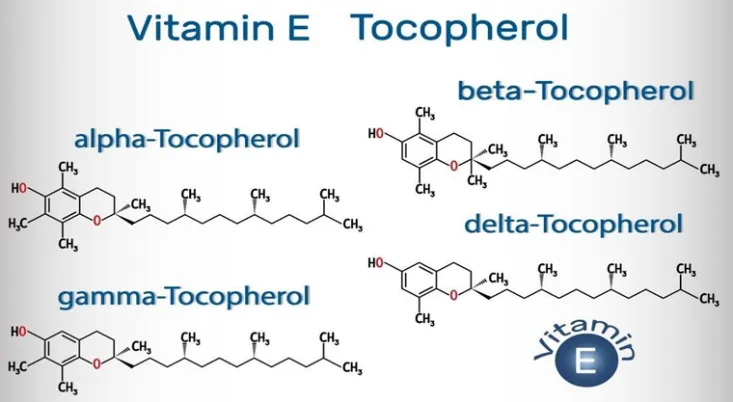
Figure No.3 Vitamin E.
2.4. Lavender Oil :
Lavender Oil is a natural essential oil obtained from the flowers of the lavender plant. It is widely used in herbal, cosmetic, and pharmaceutical preparations because of its pleasant fragrance, calming effect, and therapeutic properties. (11)
• Plant Profile : Lavender Oil.
• Scientific Name : Lavandula angustifolia
• Common Names :English Lavender , Lavender Essential Oil
• Family : Lamiaceae
• Uses of Lavender Oil :
a. Used in creams, lotions, and perfumes
b. Provides soothing and calming effect on skin.
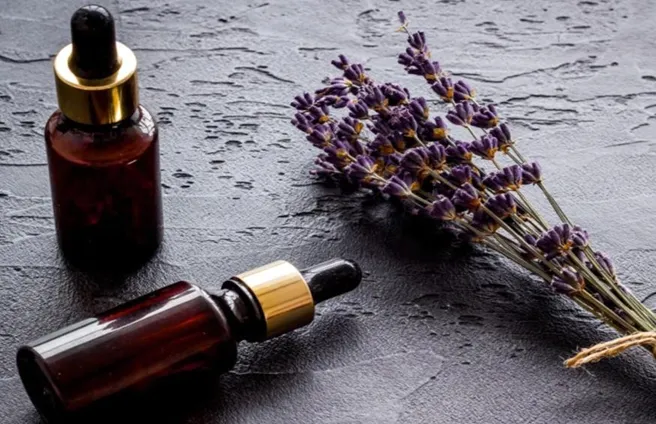
Figure No.4 Lavender Oil.
2.5. Carnauba Wax :
Carnauba Wax is a natural hard wax obtained from the leaves of the Brazilian palm tree. It is yellowish-brown in color and is widely used in cosmetic, pharmaceutical, food, and polishing products.(13)
• Plant Profile : Carnauba Wax.
• Scientific Name : Copernicia prunifera
• Common Names : Brazil Wax , Palm Wax
• Family : Aceraceae
• Uses of Carnauba Wax : Used in lipsticks, creams, and lotions
2.6. Rosemary :
Rosemary is a medicinal aromatic herb known for its antioxidant, antimicrobial, and anti-inflammatory properties and is commonly used in herbal and cosmetic preparations. (20)
• Plant Profile : Rosemary .
• Scientific Name : Rosmarinus officinalis.
• Common Names : Garden Rosemary.
• Family: Lamiacae
• Uses of Rosemary :
a. Helps protect skin from UV damage
b. Improves skin tone and texture
2.7. Almond Oil :
Almond Oil is a pale yellow fixed oil obtained from the seeds of sweet almond . It is rich in vitamins, fatty acids, and antioxidants, making it widely used in cosmetic, pharmaceutical, and herbal preparations.(14)
• Plant Profile : Almond Oil.
• Scientific Name : Prunus Amygdalus.
• Common Names : Badam Oil.
• Family : Rosaceae.
• Uses of Almond Oil :
a. Moisturizes and softens the skin
b. Helps reduce dryness and irritation
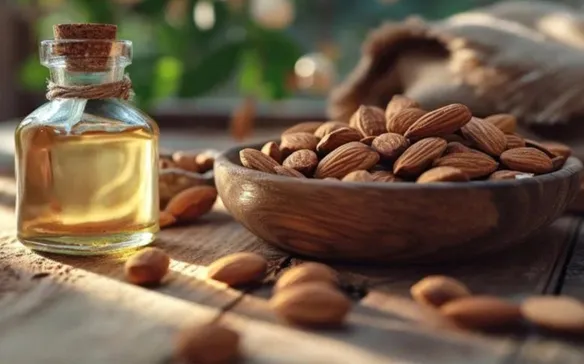
Figure No.5 Almond Oil.
2.8. Nut Grass :
Nut Grass, scientifically known as Cyperus rotundus is a perennial medicinal herb belonging to the Cyperaceae family. The plant contains essential oils, flavonoids, and other bioactive compounds that possess antioxidant, anti-inflammatory, and skin-soothing properties.(8)
• Plant Profile : Nut Grass.
• Scientific Name : Cyperus rotundus
• Common Names : Purple Nutsedge , Mustika
• Family : Cyperaceae
• Uses of Nut Grass :
a. Helps soothe irritated skin
b. Prevents oxidative skin damage.
3. Methodology :
3.1. FORMULATION AND EVALUATION OF HERBAL SUNSCREEN USING BITTER GOURD
3.2. Aim
To formulate and evaluate a herbal sunscreen cream using bitter gourd extract for protection against harmful UV radiation.
3.3. Introduction
Herbal sunscreens are cosmetic preparations containing natural plant ingredients that protect the skin from ultraviolet (UV) rays. Herbal formulations are preferred because they are safer, less irritating, biodegradable, and possess antioxidant properties.
Bitter Gourd (Momordica Charania) is a medicinal plant rich in antioxidants, flavonoids, phenolic compounds, vitamins, and bioactive constituents. These compounds help reduce oxidative stress and may provide natural photoprotective activity against UV damage.(12)
# The herbal sunscreen cream prepared using bitter gourd extract can help:
• Protect skin from UV radiation
• Reduce sunburn and tanning
• Provide antioxidant activity
• Maintain skin hydration
3.4. Apparatus Required :
a. Beaker
b. Measuring cylinder
c. Water bath
d. Magnetic stirrer
e. Thermometer
f. Glass rod
g. Weighing balance
h. pH meter
3.5. Material Used :
Table No.1 Formulation Used
|
Sr. No |
Ingredients |
Category/Function |
Quantity taken |
|
1. |
Bitter Gourd Extract |
Active herbal ingredient/Photoprotective agent |
3 ml |
|
2. |
Aloe Vera Gel |
Moisturizer and soothing agent |
5 ml. |
|
3. |
Vitamin E |
Antioxiant |
1 ml |
|
4. |
Carnauba Wax |
Thickening and stabilizing agent |
2g |
|
5. |
Lavender Oil |
Fragrance and soothing agent |
0.5 ml |
|
6. |
Almond Oil |
Emollient and moisturizer |
4 ml |
|
7. |
Distilled Water |
Vehicle / Base |
q.s. to 30 mL |
|
8. |
Nut Grass Oil |
Antioxidant and anti-inflammatory agent |
1 mL |
|
9. |
Rosemary Extract |
Antioxidant and preservative enhancer |
1.5 mL |
3.6. Procedure / Preparation of herbal Sunscreen Cream :
Preparation of Bitter Gourd Extract :
Collection of plant part For the preparation of herbal sunscreen, various plant materials were collected , Example: Bitter gourd extract-Aloe Vera, Water, Vitamin E capsules, carhauba wax, almond oil, lavender oil Rosmery extract.[4][5]
a. Fistly collect the bitter gourd fruit and prepared their extract
In prepration of bitter gourd extraction wash fresh bitter gourd, slice and deseed them, then blend the juice the sliced gourd, stain to collect pure extract for enhanced stability a short boiling or soaking step can be used.
b. Then mix the aloe vera gel, carhauba wax and vitamin E,mix it sitr until it uniform. And blend with chosen essential oil with lavender for until uniform dispersion
c. Then, combine oil phase and aqueous phase slowly while stirring to using mechanical stiral.
d. The add in this bitter gourd extract gradually with continued mixing if using preservatives dissolve them into warmed carnauba wax (50-60 temp).
e. Then the finally adjust the valume and Ph with (idal skin Ph: 5-6 0). Conduct the spf test evalution of the product with standard.[4]
3.6.1. Preparation of Sunscreen Cream Steps :
a. Bitter gourd extraction
b. aqueous phase
c. oil phase
d. emulsification
e. Integration
f. final adjustment
3.7. Evaluation :
3.7.1. Physical Evaluation
• Appearance and Colour: Check for uniform colour and smooth, creamy texture without lumps.
• Odor: Should be pleasant or herbal; no rancid or off smell.
• Consistency: The cream should spread easily without being too thick or too runny.
• PH: Measure pH using a pH meter or pH strip; ideally between 5.5–6.5 for skin compatibility.(6)
3.7.2. Spreadability
Place a small amount of cream between two glass slides and measure the area covered under a certain weight. A good sunscreen cream should spread easily.
3.7.3. Homogeneity
Examine the cream under a microscope or visually for uniform distribution of herbal extracts and oils; no phase separation should occur.
3.7.4. Stability
• Centrifugation test: Spin the cream at 3000 rpm for 15–20 minutes; check for separation.
• Storage test: Store samples at room temperature, refrigeration, and elevated temperature (40°C) for 1–3 months; observe changes in color, odor, or texture.
3.7.5. Sun Protection Factor (SPF) Evaluation
Use in vitro UV spectrophotometric method or a laboratory SPF testing kit to determine SPF value. Compare with standard sunscreen values to ensure adequate UV protection.
3.7.6. Microbial Evaluation
Test for microbial contamination using standard microbiological methods to ensure safety.(3)
RESULT
The herbal sunscreen cream containing bitter gourd extract was successfully formulated and evaluated. The formulation showed good spreadability, acceptable pH, stability, and satisfactory sunscreen activity.
CONCLUSION
The study concludes that bitter gourd extract can be effectively used in herbal sunscreen formulations due to its antioxidant and photoprotective properties. The prepared formulation was stable, safe, and suitable for topical application.
REFERENCES

Virag Patni, Sakshi Gaikwad, Sukanya Bolkar, Sachin Thaware, Dr. Yuvraj Girbane, Formulation And Evaluation of Herbal Sunscreen Using Bitter Gourd, Int. J. of Pharm. Sci., 2026, Vol 4, Issue 7, 1639-1645, https://doi.org/10.5281/zenodo.21264123
 10.5281/zenodo.21264123