

We use cookies to ensure our website works properly and to personalise your experience. Cookies policy
1Department of Chemistry, Abhinav Education Society’s College of Pharmacy Narhe, Pune
2Student of Bachelor of Pharmacy, Abhinav Education Society’s College of Pharmacy Narhe, Pune
Oral hygiene is important for maintaining healthy teeth and gums. Herbal oral care products are widely used because they are natural, economical, and have fewer side effects compared to synthetic products. The present study was carried out to formulate and evaluate banana peel based herbal tooth powder using banana peel as the main active ingredient. Banana peel contains minerals, antioxidants, and bioactive compounds that help in cleaning and polishing teeth. The tooth powder was prepared using banana peel powder along with neem powder, clove powder, mint powder, calcium carbonate, and sodium bicarbonate.2 The prepared formulation was evaluated for organoleptic properties, pH, moisture content, flow property, abrasiveness, microbial limit test, and stability studies. The results showed satisfactory physicochemical properties, acceptable microbial load, good stability, and effective cleaning action. The study concluded that banana peel can be used as a safe, eco-friendly, economical, and effective ingredient in herbal tooth powder formulation for oral hygiene maintenance.7
Oral hygiene is an important part of human health and well-being. Healthy teeth and gums are necessary not only for proper chewing and speaking but also for maintaining overall health. Poor oral hygiene can lead to various dental problems such as dental caries, plaque formation, gingivitis, periodontal diseases, bad breath, and tooth sensitivity. These oral diseases are commonly caused by bacterial growth, accumulation of food particles, poor brushing habits, and unhealthy dietary practices.9 To maintain oral hygiene, different oral care products such as toothpaste, tooth powder, mouthwash, and dental floss are commonly used. Among these, tooth powder is one of the oldest traditional oral cleansing preparations. Tooth powder has been used since ancient times in Ayurvedic and traditional medicine systems for cleaning teeth and strengthening gums. Traditional herbal tooth powders were prepared using medicinal herbs, salts, charcoal, and plant materials possessing antimicrobial and cleansing properties. In modern times, many commercial oral care products contain synthetic chemicals, detergents, artificial colors, preservatives, and flavoring agents. Although these products are effective, prolonged use of chemical-based formulations may produce certain side effects such as mouth irritation, tooth sensitivity, enamel damage, and allergic reactions in some individuals. Due to increasing awareness regarding natural healthcare products, people are now shifting towards herbal and natural oral care formulations.15] Herbal tooth powders are becoming increasingly popular because they contain natural ingredients with fewer side effects. Herbal formulations provide antimicrobial, anti-inflammatory, antioxidant, and cleansing actions that help maintain oral hygiene naturally. Herbal products are also economical, eco-friendly, and easily accepted by consumers. Banana peel is one of the agricultural waste materials generally discarded after consumption of banana fruit. However, banana peel contains several important nutrients and bioactive compounds useful for pharmaceutical and cosmetic applications. Banana peel contains potassium, magnesium, calcium, phosphorus, polyphenols, flavonoids, antioxidants, and dietary fibers. These constituents contribute to cleansing action, antimicrobial activity, and maintenance of oral health. Research studies have shown that banana peel possesses antibacterial and antioxidant properties. Banana peel also helps in removing stains from teeth naturally due to the presence of minerals and mild abrasive components. Therefore, banana peel can be considered a valuable natural ingredient for herbal oral care formulations.[25] The utilization of banana peel in tooth powder formulation not only provides oral health benefits but also helps in the effective utilization of agricultural waste materials. This approach supports eco-friendly and sustainable product development. Banana peel is easily available, low cost, biodegradable, and suitable for incorporation into herbal formulations. In the present project, an attempt was made to formulate and evaluate herbal tooth powder using banana peel powder as a novel herbal ingredient. Along with banana peel, other herbal ingredients such as neem powder, clove powder, peppermint oil, calcium carbonate, baking soda, and sodium chloride were incorporated to improve cleansing action, antimicrobial activity, flavor, and overall acceptability of the formulation.[4] Neem is widely known for its antimicrobial and anti-inflammatory properties and is commonly used in oral care products. Clove contains eugenol, which acts as an analgesic and antiseptic agent useful in relieving toothache and preventing microbial growth. Peppermint oil provides a cooling sensation and refreshing effect. Calcium carbonate acts as a mild abrasive and polishing agent, while baking soda helps neutralize acidity and remove stains from teeth. The prepared herbal tooth powder was evaluated for various pharmaceutical parameters such as organoleptic properties, pH, particle size distribution, flow properties, moisture content, abrasiveness, cleaning ability, foamability, microbial limit test, and stability studies. These evaluation tests help determine the quality, safety, effectiveness, and stability of the prepared formulation. The present study mainly focuses on developing a safe, effective, economical, and eco-friendly herbal oral care product using banana peel powder. The project also highlights the importance of converting agricultural waste into valuable pharmaceutical products. Herbal tooth powder prepared using banana peel may provide natural oral care benefits with reduced side effects compared to synthetic formulations.[18]
Why Herbal Tooth Powder?
Herbal tooth powder was selected for the present study because herbal oral care products are considered safer, natural, and more economical compared to synthetic formulations. Since ancient times, herbal tooth powders have been used in Ayurvedic and traditional systems of medicine for maintaining oral hygiene and preventing dental problems. Nowadays, many commercial toothpastes and tooth powders contain synthetic chemicals, detergents, preservatives, artificial colors, and flavoring agents. Continuous use of such chemical-based products may sometimes produce side effects such as mouth irritation, tooth sensitivity, gum inflammation, enamel damage, and allergic reactions. Due to increasing awareness regarding natural healthcare products, people are now shifting towards herbal formulations. Herbal tooth powders contain medicinal plant materials possessing antimicrobial, anti-inflammatory, antioxidant, and cleansing properties. These natural ingredients help reduce plaque formation, control bacterial growth, strengthen gums, freshen breath, and maintain oral hygiene naturally. Herbal products are generally considered safer for long-term use because they contain fewer harsh chemicals. Another important reason for selecting herbal tooth powder is its economical and eco-friendly nature. Herbal ingredients are easily available, biodegradable, and less harmful to the environment. Herbal formulations also have better patient acceptance because they are associated with traditional medicine and natural healthcare practices. The use of herbal tooth powder also supports the growing demand for natural and sustainable oral care products. Therefore, herbal tooth powder was selected in the present study to develop a safe, effective, economical, and eco-friendly oral care formulation using natural ingredients.
Why Banana Peel Was Selected?
Banana peel was selected as the main ingredient in the present herbal tooth powder formulation because of its medicinal value, nutritional composition, easy availability, and eco-friendly nature. Banana peel is generally considered agricultural waste and is discarded after consumption of banana fruit. However, scientific studies have shown that banana peel contains several beneficial compounds useful for oral care and pharmaceutical applications. The peel contains important minerals such as potassium, calcium, magnesium, and phosphorus which help in maintaining healthy teeth and gums. Calcium and magnesium are important for strengthening tooth enamel and improving oral health. Banana peel also contains polyphenols, flavonoids, and antioxidants that provide protective action against harmful free radicals and support oral tissue health. Another important reason for selecting banana peel is its natural antimicrobial property. Banana peel contains bioactive compounds that help reduce the growth of oral microorganisms responsible for plaque formation, bad breath, and dental caries. This makes banana peel a suitable natural ingredient for herbal oral care products. Banana peel also possesses mild cleansing and stain-removing properties. The natural minerals and fibrous content present in the peel help remove surface stains and maintain clean teeth without causing excessive abrasion. Therefore, it can act as a natural cleaning agent in tooth powder formulations. The selection of banana peel also supports environmental sustainability. Large amounts of banana peels are generated as waste every day, leading to disposal problems and environmental pollution. Utilizing banana peel in pharmaceutical preparations helps in effective waste management and promotes eco-friendly product development.[32] In addition, banana peel is economical, easily available, biodegradable, and simple to process into powder form. It can be dried, powdered, and incorporated into formulations without complicated processing methods. Due to these advantages, banana peel was selected as a novel and valuable ingredient for the preparation of herbal tooth powder.
Aim Of Project
To formulate and evaluate herbal tooth powder using banana peel powder as a novel natural ingredient for maintaining oral hygiene and promoting eco-friendly oral care.
Objectives Of Project
Novelty Of Project
The novelty of the present project is mainly based on the utilization of banana peel powder as an innovative herbal ingredient in the formulation of herbal tooth powder. Banana peel is commonly discarded as waste material after consumption of banana fruit and is generally considered to have no major use in daily life. However, scientific studies have shown that banana peel contains several important minerals, antioxidants, and biologically active compounds which possess beneficial properties for oral health and pharmaceutical applications. The present project focuses on converting agricultural waste material into a useful herbal oral care product. This approach provides both pharmaceutical and environmental importance. Instead of discarding banana peel as waste, it was processed, dried, powdered, and utilized in the preparation of herbal tooth powder. This effective utilization of waste material makes the project unique and environmentally sustainable. Another novel aspect of the project is the incorporation of banana peel as a natural cleansing and antimicrobial agent in oral care formulation. Banana peel contains potassium, calcium, magnesium, polyphenols, flavonoids, antioxidants, and dietary fibers which contribute to cleansing action, reduction of microbial growth, and maintenance of oral hygiene. The presence of these natural constituents provides additional therapeutic value to the formulation. The project also combines banana peel powder with other herbal ingredients such as neem powder, clove powder, peppermint oil, baking soda, and calcium carbonate to prepare a multifunctional herbal tooth powder. Neem provides antimicrobial and anti-inflammatory action, clove acts as an analgesic and antiseptic agent, peppermint oil improves freshness and flavor, while calcium carbonate and baking soda contribute cleansing and polishing action. The combination of these ingredients produces a herbal oral care product with multiple beneficial properties.[26]
The novelty of the formulation also lies in its eco-friendly and sustainable nature. Large quantities of banana peel waste are generated daily, leading to disposal problems and environmental pollution. Utilization of banana peel in pharmaceutical and cosmetic formulations helps reduce agricultural waste and promotes sustainable healthcare product development. This approach supports the concept of waste-to-value conversion and green pharmacy. Another important innovative aspect of the project is the development of an economical herbal oral care product. Banana peel is inexpensive, easily available, biodegradable, and simple to process into powder form. Therefore, the prepared herbal tooth powder can be manufactured at low cost while maintaining effectiveness and safety. This makes the formulation suitable for both rural and urban populations.[14] The project also addresses the increasing demand for natural and herbal healthcare products. Nowadays, consumers are becoming more aware of the side effects associated with synthetic chemicals present in commercial oral care products. Many synthetic products contain detergents, artificial preservatives, artificial colors, and chemical additives that may cause irritation, sensitivity, and long-term oral problems in some individuals. The present herbal formulation provides a safer alternative using natural ingredients with fewer side effects. The prepared herbal tooth powder was evaluated for several pharmaceutical parameters such as pH, particle size distribution, flow properties, abrasiveness, foamability, cleaning ability, moisture content, microbial limit test, and stability studies. The satisfactory evaluation results further support the potential use of banana peel powder in oral care products. Thus, the novelty of the project lies in the successful incorporation of banana peel powder as a natural, economical, eco-friendly, and multifunctional herbal ingredient in tooth powder formulation. The project highlights innovation in herbal formulation development, agricultural waste utilization, sustainable healthcare practices, and development of safer natural oral care products.[7]
Pharmacognostic Account Of Herbs
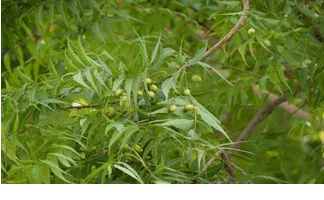
Fig.no .1
▪ Common Name: Neem, Indian Lilac
▪ Botanical Name: Azadirachta indica
▪ Family: Meliaceae
▪ Biological Source: Neem consists of the dried leaves, bark, seeds, and other parts of Azadirachta indica, a medium to large evergreen tree widely found in India and other tropical regions.
▪ Chemical Composition: Neem contains a variety of biologically active compounds, mainly:
o Azadirachtin (major active constituent)
o Nimbin and Nimbidin
o Nimbosterol
o Flavonoids
o Tannins
o Essential oils
o Glycosides
▪ Uses: Acts as a natural antibacterial and antifungal agent Widely used in oral care products like tooth powders and toothpastes. Helps in reducing plaque and gum infections. Used in the treatmenof skin disorders Show anti-inflammatory and antiseptic properties. Also used as a blood purifier in traditional medicine.
[32]
➢ CLOVE:
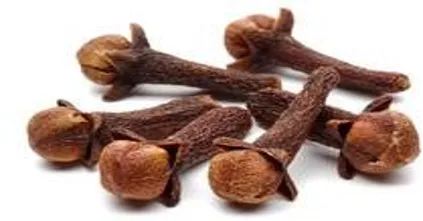
Fig.no .2
▪ Common Name: Clove
▪ Botanical Name: Syzygium aromaticum
▪ Family: Myrtaceae
▪ Biological Source: Clove consists of the dried, unopened flower buds of Syzygium aromaticum, an evergreen tree native to tropical regions such as Indonesia and cultivated in many parts of the world.
▪ Macroscopic Characters:
o Shape: Nail-like (bud with a long stalk and a rounded head)
o Size: About 1–2 cm in length
o Color: Dark brown to reddish-brown
o Odor: Strong, aromatic, and characteristic
o Taste: Pungent and slightly sweet o Texture: Hard externally, slightly oily when pressed
▪ Chemical Composition: Clove contains several active constituents, mainly: Eugenol (major component responsible for aroma and medicinal action)
o Eugenyl acetate
o Caryophyllene
o Tannins
o Flavonoids
o Volatile (essential) oils
▪ Uses:
o Widely used in oral care products like tooth powders and toothpastes.
o Acts as a natural analgesic (relieves toothache).
o Shows antibacterial and antiseptic properties[7].
➢ ROCK SALT:
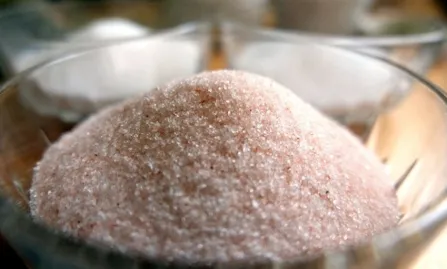
Fig.no .3
▪ Common Name: Rock Salt, Sendha Namak.
▪ Chemical Name: Nature Sodium Chloride (NaCl) – natural mineral salt
▪ Family: Not applicable (it is a mineral, not a plant drug)
▪ Biological Source: Rock salt is obtained from natural mineral deposits formed by the evaporation of ancient seawater. It is mined from salt rocks and purified before use.
▪ Macroscopic Characters
o Appearance: Crystalline solid
o Color: Colorless or white; sometimes pinkish due to mineral impurities
o Shape: Irregular crystals or granules
o Odor: Odorless
o Taste: Salty o Texture: Hard and brittle
▪ Chemical Composition: Mainly Sodium Chloride (NaCl). May contain small amounts of minerals such as:
o Calcium o Potassium
o Magnesium o Iron (responsible for pink color in some samples)
▪ Uses:
o Acts as a mild abrasive in tooth powders for cleaning teeth
o Helps in removing plaque and stains
o Provides a fresh and clean feeling in the mouth
o Shows mild antimicrobial activity
o Used in traditional remedies for gum strengthening
o Also used as a flavoring and preservative agent
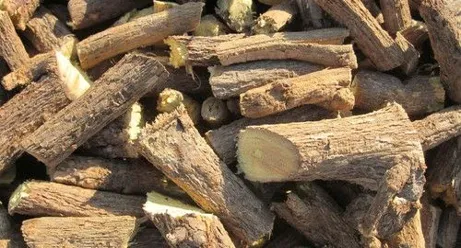
Fig.no .4
▪ Common Name: Mulethi, Licorice
▪ Botanical Name: Glycyrrhiza glabra
▪ Family: Fabaceae
▪ Biological Source: Mulethi consists of the dried roots and stolon’s of Glycyrrhiza glabra, a perennial herb widely cultivated in parts of Asia and Europe.
▪ Macroscopic Characters
o Form: Cylindrical roots and pieces
o Color: Yellowish-brown externally, pale yellow internally
o Odor: Faint and characteristic
o Taste: Sweet (due to glycyrrhizin)
o Texture: Fibrous and tough o Surface: Longitudinally wrinkled
▪ Chemical Composition: Major constituents present in mulethi include: Glycyrrhizin (main active compound responsible for sweetness)
o Liquiritin
o Flavonoids
o Saponins
o Sugars o Starch
▪ Uses:
o Acts as a demulcent, soothing oral mucosa
o Helps in reducing inflammation of gums
o Shows antimicrobial activity
o Used in tooth powders for improving taste
o Useful in treating mouth ulcers and throat irritation
➢ MINT
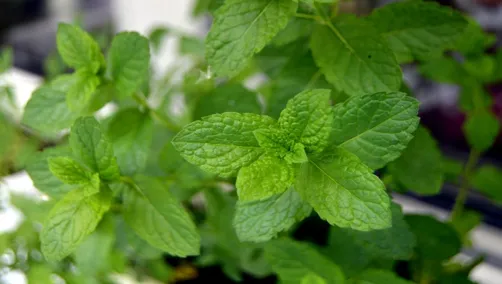
Fig.no .5
▪ Common Name: Mint,
▪ Botanical Name: Mentha piperita (Peppermint) / Mentha spicata (Spearmint)
▪ Family: Lamiaceae
▪ Biological Source: Mint consists of the fresh or dried leaves and flowering tops of species of Mentha, mainly Mentha piperita or Mentha spicata, which are aromatic herbs widely cultivated in many regions.
▪ Macroscopic Characters
o Leaves: Green in color, simple, opposite arrangement
o Shape: Oval to lance-shaped with serrated margins
o Odor: Strong, refreshing, and characteristic
o Taste: Cool and slightly pungent
o Surface: Smooth with visible veins
o Texture: Soft and slightly hairy
▪ Chemical Composition: Mint contains several important constituents, mainly: Menthol (major active compound responsible for cooling effect)
o Menthone
o Methyl acetate
o Flavonoids
o Tannins
o Volatile (essential) oils
o These compounds give mint its characteristic aroma and medicinal properties.
▪ Uses: o Provides a cooling and refreshing effect in oral cavity [25]

Orange peel contains several important constituents, mainly: Limonene (major volatile oil component responsible for the citrus aroma).
Hesperidin: A key flavonoid glycoside with antioxidant properties.
Naringin: A bitter compound.
Vitamin C (Ascorbic acid): Present in the peel.
Volatile (essential) oils: Rich in terpenes.
Pectin: Found in the white inner layer (albedo).
These compounds give orange peel its characteristic aroma, bitterness, and medicinal properties.
Uses
Used as a flavoring agent in culinary preparations and beverages.
Widely used in skincare products for its brightening and antioxidant properteis
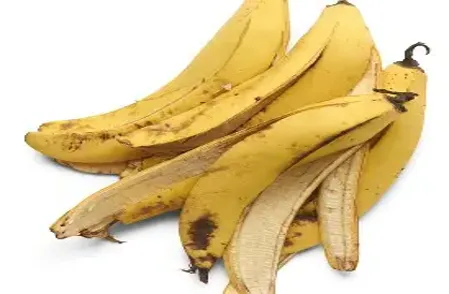
Fig no. 7
• Common Name: Banana peel, Kela chalka
• Botanical Name: Musa acuminata / Musa paradisiaca
• Family: Musaceae
• Biological Source: Banana peel consists of the outer protective epidermal layer of the fresh or dried ripe/unripe fruits of Musa acuminata or Musa paradisiaca, belonging to the family Musaceae.
• Macroscopic Characters
o Color: Bright yellow (when ripe) or Green (when unripe)
o Shape: Long, fibrous, stripped pieces with irregular or tapered ends
o Odor: Characteristic, mild, fruity odor
o Taste: Slightly sweet to astringent and bland
o Surface: Smooth on the outer surface (exocarp) with dark brown or black spots upon ripening, and highly fibrous/spongy on the inner surface (mesocarp).
o Texture: Soft, leathery, and thick
• Chemical Composition:
Banana peel contains several important bioactive and nutritional constituents, mainly: Carbohydrates and Dietary fibers (major compounds responsible for structural properties).
o Menthone (Note: Standard banana constituents include Phenolic compounds / Gallocatechin)
o Tannins
o Flavonoids
o Carotenoids (mainly Lutein)
o Potassium and Essential Minerals
o Volatile organic oils
o These compounds give banana peel its characteristic aroma and nutritional/medicinal properties.
• Uses:
o Provides antioxidant and anti-inflammatory effects.
o Widely used in herbal cosmetics, skin care formulations, and tooth powders / mouth fresheners.
Phytochemical Tests of Banana Peel Powder
|
Test |
Test to be Perform |
Observation |
Result |
|
Alkaloids Test |
Addition of Mayer’s reagent |
Cream precipitate formed |
Present |
|
Flavonoids Test |
Addition of Sodium hydroxide solution |
Yellow coloration observed |
Present |
|
Tannins Test |
Addition of Ferric chloride solution |
Blue-black coloration observed |
Present |
|
Saponins Test |
Foam test by shaking with water |
Persistent foam formed |
Present |
|
Glycosides Test |
Addition of glacial acetic acid and sulfuric acid |
Brown ring observed |
Present |
|
Phenolic Compounds Test |
Addition of Ferric chloride solution |
Dark coloration observed |
Present |
|
Carbohydrates Test |
Molisch test performed |
Violet ring formed |
Present |
|
Proteins Test |
Addition of Biuret reagent |
Violet coloration observed |
Present |
|
Terpenoids Test |
Addition of chloroform and sulfuric acid |
Reddish-brown coloration observed |
Present |
Material And Method
|
Sr. No. |
Ingredients |
Quantity (%) |
Function |
|
1 |
Banana peel powder |
5 g |
Natural cleansing agent |
|
2 |
Neem powder |
3 g |
Antibacterial agent |
|
3 |
Tulsi powder |
3 g |
Antioxidant and antimicrobial agent |
|
4 |
Liquorice powder |
3g |
Soothing and anti-inflammatory agent |
|
5 |
Clove powder |
2g |
Analgesic and antiseptic agent |
|
6 |
Orange peel powder |
4g |
Flavoring and whitening agent |
|
7 |
Peppermint powder |
2g |
Cooling and breath freshening agent |
|
8 |
Activated charcoal |
2g |
Natural whitening and stain removal agent |
|
9 |
Rock salt |
1g |
Cleansing and strengthening agent |
Role Of Ingredients
Banana Peel Powder
Banana peel powder acts as a natural cleansing agent. It contains potassium, calcium, magnesium, antioxidants, and bioactive compounds which help maintain oral hygiene and remove stains from teeth.
Clove Powder
Clove powder contains eugenol which possesses analgesic, antiseptic, and antimicrobial properties. It helps reduce toothache and prevents microbial growth.
Liquorice Powder
Liquorice powder possesses soothing, anti-inflammatory, and antimicrobial properties. It helps maintain healthy gums and reduces oral irritation.[5]
Neem PowderNeem powder is well known for its antibacterial and anti-inflammatory action. It helps reduce plaque formation and supports healthy gums.[16]
Tulsi Powder
Tulsi possesses antimicrobial and antioxidant properties. It helps reduce bad breath and protects the oral cavity from infections.
Orange Peel Powder
Orange peel powder contains vitamin C and natural essential oils which help freshen breath and remove stains from teeth.[8],[23],[29],[32]
Collection Of Banana Peel
Fresh banana peels were collected from ripe and healthy bananas obtained from the local market. The collected peels were carefully selected to avoid spoiled, damaged, or infected peels. The peels were washed thoroughly with distilled water to remove dirt, dust, and other foreign particles present on the surface. After washing, the banana peels were cut into small pieces using a clean stainless-steel knife. The small pieces were spread uniformly on clean trays for drying. The collected banana peels were protected from contamination during the collection and handling process. The collected material was used for further drying and powder preparation.
Collection And Preparation of Ingredients
Preparation Of Banana Peel Powder
The collected banana peels were dried under sunlight for several days or dried in a hot air oven at about 50°C until complete removal of moisture was achieved. Proper drying was necessary to prevent microbial growth and improve shelf life. After complete drying, the peels became crisp and brittle. The dried banana peels were then powdered using a mixer grinder to obtain fine powder. The obtained powder was passed through sieve no. 80 to obtain uniform particle size. The prepared banana peel powder was collected and stored in clean, dry, airtight containers to protect it from moisture and contamination. The powder was preserved at room temperature until used for formulation of herbal tooth powder.
2. ORANGE PEEL POWDER
Collection
Fresh orange peels were collected from ripe oranges obtained from the local market.
Preparation
The collected orange peels were washed properly with distilled water and cut into small pieces. The peels were dried under sunlight or in hot air oven until complete moisture removal occurred. The dried peels were powdered using mixer grinder and sieved through sieve no. 80 to obtain fine powder. The prepared powder was stored in airtight container for further use.
3. NEEM POWDER
Collection
Fresh neem leaves were collected from healthy neem plants.
Preparation
The collected neem leaves were washed thoroughly with distilled water to remove dirt and impurities. The leaves were dried under shade for several days until complete drying occurred. The dried leaves were powdered using mixer grinder and sieved through sieve no. 80 to obtain fine powder. The prepared neem powder was stored in airtight container.
4. Tulsi Powder
Collection
Fresh tulsi leaves were collected from healthy tulsi plants.
Preparation
The collected tulsi leaves were washed properly with distilled water and dried under shade until complete moisture removal occurred. The dried leaves were powdered using mixer grinder and passed through sieve no. 80 to obtain uniform particle size. The powder was stored in airtight container.
5. Liquorice Powder
Collection
Liquorice roots were collected from herbal raw material supplier.
Preparation
The collected liquorice roots were cleaned, dried, and powdered using mixer grinder. The obtained powder was sieved through sieve no. 80 to obtain fine powder and stored in airtight container.
6. Clove Powder
Collection
Dried cloves were collected from local herbal market.
Preparation
The cloves were cleaned properly and powdered using mixer grinder. The powder was passed through sieve no. 80 to obtain uniform particle size and stored in airtight container.
7. Peppermint Powder
Collection
Fresh peppermint leaves were collected from herbal garden.
Preparation
The peppermint leaves were washed thoroughly with distilled water and dried under shade until complete drying occurred. The dried leaves were powdered using mixer grinder and sieved through sieve no. 80. The prepared powder was stored in airtight container.
8. Activated Charcoal
Collection
Activated charcoal was procured from pharmaceutical supplier.
Preparation
The activated charcoal was finely powdered and passed through sieve no. 80 before use in formulation.
9. Rock Salt
Collection
Rock salt was obtained from local market.
Preparation
The rock salt was powdered using mortar and pestle and passed through sieve no. 80 to obtain fine powder suitable for formulation.Top of Form
Bottom of Form
preparation Of Herbal Tooth Powder
Evalution Tests Of Herbal Tooth Powder
The Herbal tooth powder was prepared and evaluated in parameters like organoleptic, physic-chemical, rheological evaluation and anti-microbial activity.
❖ Organoleptic Evaluation:
|
Sr.no |
Parameters |
Result |
|
1 |
Colour |
Yellowish green |
|
2 |
Odour |
Characteristics |
|
3 |
Taste |
Bitter |
|
4 |
Appearance |
Powder |
Physic-chemical Evaluation:
The herbal tooth powder was analyzed for its physical and chemical properties to assess parameters such as pH, moisture content. These tests were carried out to determine the level of inorganic substances present in the formulation.
pH: pH was observed by pH meter. In 100 ml of beaker 5gm of tooth powder was placed. Allow the 10ml of boiled and then cool water. Stir vigorously to make a suspension and measured the pH .
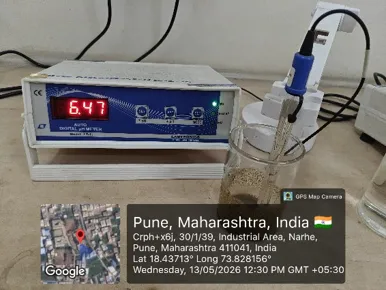
Fig no.9
Moisture Content
Principle
Excess moisture may promote microbial growth and instability.
Procedure
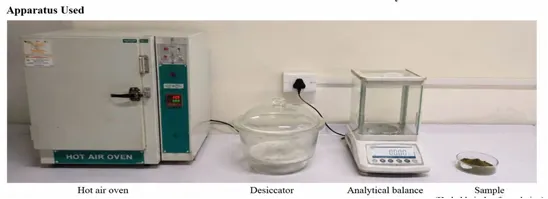
The formulation was dried at 105°C and moisture loss was calculated.
Result
Moisture content = 1.64
CONCLUSION
The moisture content was within acceptable limits.
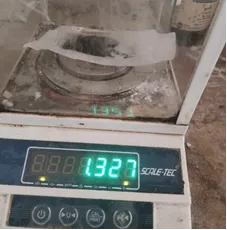
Final weight of sample (after drying) = 2.557g
Moisture content(%) = (Initial weight – Final weight / Initial weight) × 100
= (2.600 - 2.557 / 2.600) × 100 = 1.64%
Moisture content of herbal tooth powder formulation = 1.64%
|
Sr no |
Parameters |
Result |
|
1 |
Ph |
6.8 |
|
2 |
Moisture content |
1.64 |
Particle Size Determination
The prepared herbal tooth powder was evaluated by sieve analysis using standard sieve No. 80. The powder was mechanically shaken for 10 minutes and the retained material was observed. It was found that almost all particles passed through sieve No. 80, indicating a uniform and very fine powder texture suitable for oral application. The formulation showed smooth consistency without gritty particles.
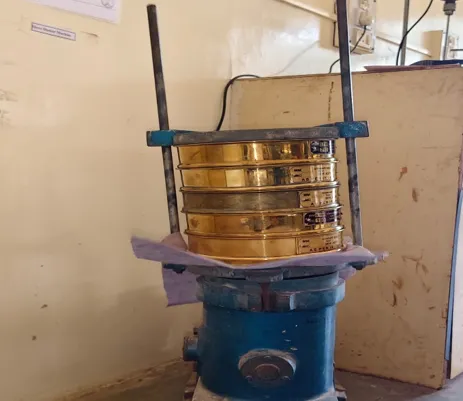
Fig no.11
RESULT:
The prepared herbal tooth powder successfully passed through sieve No. 80, indicating a fine particle size distribution with uniform powder characteristics. Approximately 98.5% of the powder passed through sieve No. 80, confirming good fineness and suitability for dental use
Observation Table:
|
Parameter |
Observation |
|
Sieve Number |
#80 |
|
Time of Sieving |
10 min |
|
Powder Passed |
98.5% |
|
Powder Retained |
1.5% |
|
Texture |
Fine and Smooth |
|
Result |
Passed |
Rheological Evaluation:
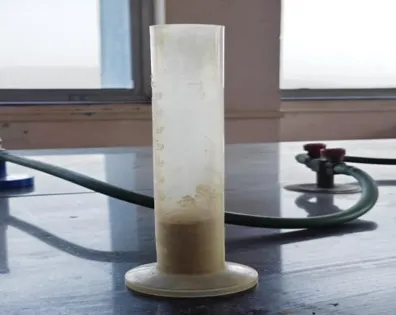
Bulk density, foaming test, angle of repose was done and calculated. Bulk Density:
Bulk density is defined as the ratio of the mass of an untapped powder sample to its volume, including the spaces between the particles (inter-particulate voids). It is expressed in g/ml[8].
Bulk Density = Mass of powder / Bulk volume (untapped)
Tapped Density
Principle: - Tapped density is the ratio of the mass of a powder to the volume occupied by the powder after it has been mechanically tapped for a fixed number of times. It indicates the packing ability and flow properties of the powder.[30]
Procedure:-
1. Tap cylinder 100 times.
2. Note final volume.
Result: - Tapped density = Mass / Tapped volume
= 10 / 16 = 0.625
Discussion: - Hence, the tapped density was found to be 0.625 the tapped density indicated good packing property of the powder.
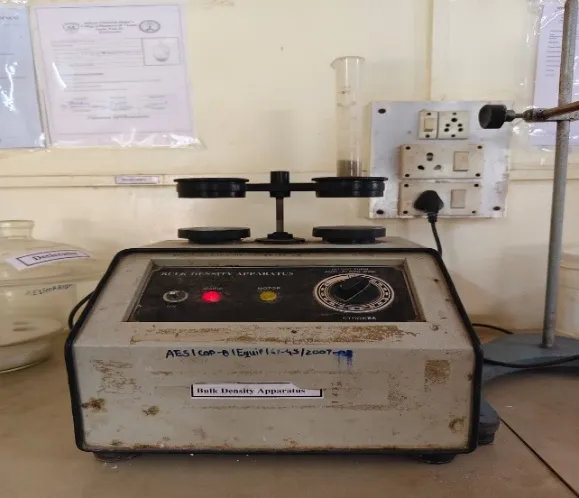
Fig 13. Tapped density tester
Foam Test
The foaming ability of the formulation was evaluated by adding 2 g of tooth powder to water in a measuring cylinder. The initial volume was recorded as V₁. The mixture was then shaken ten times, and the final volume was noted to assess the foam formation.[5]
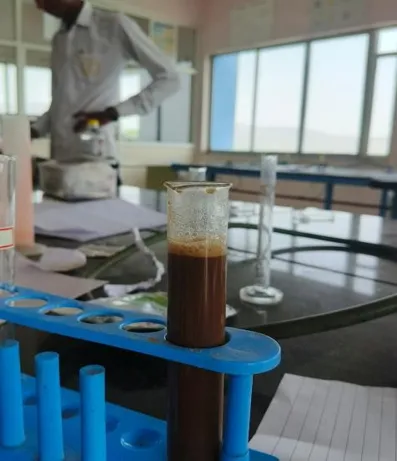
Fig no.14 Foam Test
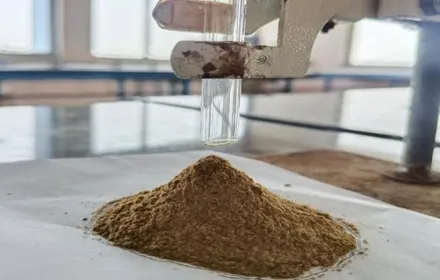
Angle of repose:
A funnel was securely mounted using a clamp, and a sheet of graph paper was placed beneath it. The vertical distance between the tip of the funnel and the graph paper was measured. About 10 g of the powder sample was accurately weighed and transferred into the funnel while closing its outlet with a thumb. Once released, the powder flowed down onto the graph paper, forming a conical heap. The flow was allowed to continue until the apex of the cone just touched the end of the funnel stem. [6]
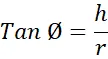
The angle of repose was then calculated using the formula:
Tan Ø=hr
Antimicrobial Activity Test
Principle
The antimicrobial evaluation test is performed to determine the ability of the herbal hair dye formulation to inhibit the growth of microorganisms such as bacteria and fungi. Herbal ingredients like henna, manjishta, amla, neem, and indigo may possess natural antimicrobial properties.[22]
Method: Agar Well Diffusion Method
Materials Required
Procedure
|
Sr no |
Parameters |
Result |
|
|
Bulk density |
25gm/ml |
|
|
Tap Density |
0.625 |
|
|
Foam |
Present |
|
|
Angle of repose |
39.8 |
Observation Table:-
|
Microorganism |
Zone of Inhibition (mm) |
Result |
|
Staphylococcus aureus |
14mm |
Moderate activity |
|
Escherichia coli |
12mm |
Moderate activity |
|
Candida albicans |
10mm |
Mild antifungal activity |
Result:-
The herbal tooth powder formulation showed antimicrobial activity against tested microorganisms by producing clear zones of inhibition. The presence of herbal ingredients contributed to antibacterial and antifungal effects.
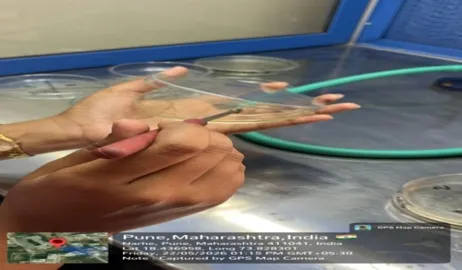
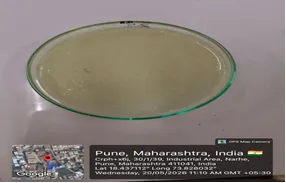
Fig no.16
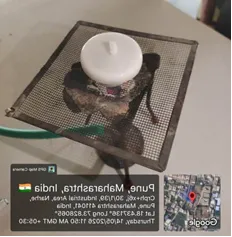
Ash Value
Empty Crucible = 25g
Crucible +sample =30g
Crucible + ash = 25.5g
Sample Weight = 30-25 = 5 g
Ash weight = 25.5 – 25 = 0.5g
Ash value
Ash Vale=weight ofAsh-weight of sample taken ×100

=(0.5 g/ 5.0g ) x 100
= 10%
Stability Study of Herbal Tooth Powder (30 Days)
Storage Condition: 25 ± 2°C and 60 ± 5% Relative Humidity
|
Parameter |
Initial Day |
Day 30 |
|
Appearance |
Fine powder |
No change |
|
Color |
Light brown |
No change |
|
Odor |
Characteristic |
No change |
|
Texture |
Smooth |
Smooth |
|
pH (10% w/v dispersion) |
7.1 |
7.0 |
|
Flow Property |
Good |
Good |
|
Particle Size |
Passed through #80 sieve |
Passed through #80 sieve |
|
Microbial Growth |
Absent |
Absent |
Result
The herbal tooth powder formulation was stored under ambient conditions for 30 days. No significant changes were observed in appearance, color, odor, texture, pH, flow property, particle size distribution, or microbial quality throughout the study period. The formulation remained stable under the specified storage conditions.
CONCLUSION
The prepared herbal tooth powder containing banana peel powder demonstrated satisfactory physical and microbiological stability during the 30-day study period. The formulation was found to be stable and suitable for storage under normal environmental conditions.[21],[30],[23][1]
RESULTS
|
Sr no |
Evaluation |
Result |
|
|
Colour |
Yellowish green |
|
|
Odour |
Characteristics |
|
|
Taste |
Bitter |
|
|
Texture |
Fine |
|
|
Particle size Determination |
Passed |
|
|
Ph |
6.8 |
|
|
Bulk Density |
25gm/ml |
|
|
Tap Density |
0.625gm/ml |
|
|
Angle Of Repose |
39.8 |
|
|
Moisture Content |
1.64 |
|
|
Ash Value |
10% |
|
|
Stability Study |
Stable |
CONCLUSION
The present study successfully formulated and evaluated a herbal tooth powder using banana peel powder as a novel natural ingredient. The prepared formulation contained various herbal ingredients such as banana peel powder, neem powder, tulsi powder, liquorice powder, clove powder, orange peel powder, peppermint powder, activated charcoal, and rock salt, which collectively contributed to cleansing, antimicrobial, antioxidant, soothing, whitening, and breath-freshening properties. Banana peel, which is generally discarded as agricultural waste, was effectively utilized in the formulation of herbal tooth powder. The study highlighted the pharmaceutical importance of banana peel due to the presence of minerals, antioxidants, flavonoids, tannins, and other bioactive compounds beneficial for oral health. The phytochemical screening confirmed the presence of important phytoconstituents responsible for antimicrobial and therapeutic activities. The prepared herbal tooth powder was evaluated for various parameters such as organoleptic properties, spreadability, ash value, angle of repose, stability, and phytochemical characteristics. The formulation showed satisfactory appearance, acceptable flow properties, good spreadability, and suitable ash values indicating good quality and purity. Stability studies also demonstrated that the formulation remained physically stable during storage conditions without significant changes in color, odor, texture, or appearance. The incorporation of activated charcoal and orange peel powder enhanced the stain-removing and whitening property of the formulation, while peppermint powder improved freshness and patient acceptability. Neem, tulsi, and clove contributed antimicrobial and anti-inflammatory activities which help in maintaining oral hygiene and preventing dental problems. The prepared formulation was found to be economical, eco-friendly, biodegradable, and based on natural ingredients. The project also promoted the concept of utilization of agricultural waste materials for pharmaceutical applications and supported sustainable healthcare product development. Overall, the present study concluded that banana peel powder can be effectively used as a novel herbal ingredient in tooth powder formulation. The prepared herbal tooth powder exhibited satisfactory pharmaceutical properties and has potential for use as a safe, natural, and effective oral care product for maintaining oral hygiene and promoting dental health.
REFERENCES


Varsharani Patil1, Datta Avchar*, Formulation and Evaluation of Herbal Toothpowder used for Banna Peel [Musa acuminata], Int. J. of Pharm. Sci., 2026, Vol 4, Issue 6, 4010-4030. https://doi.org/10.5281/zenodo.20727074
 10.5281/zenodo.20727074