

We use cookies to ensure our website works properly and to personalise your experience. Cookies policy
Dr Kolpe institute of pharmacy Kolpewadi.
Tinospora cordifolia is an Ayurvedic herb known for its many health benefits. It is a plant that attracts much attention due to its medicinal properties. Tinospora cordifolia is widely used in the Indian system of medicine for its ability to boost immunity and treat fever, inflammation, and liver disease. The candy which is available in the market have many health effects by adding unnecessary nutrients. The research and development of this product ensures that no chemical preservatives are added and the products are effective and safe to eat. These two sweets are often combined with giloy extract and stevia to develop a product that is considered one of the best food products and also contributes to the product ratio for other sweets that can be used with supplementary food today. Desserts are a good source of energy, carbohydrates, protein, fat, fiber, total sugar and vitamin C. The end product is complete control of the food supply. Due to its nutritional value, this product is especially recommended for people with diabetes
Diabetes mellitus is a chronic metabolic disorder characterized by elevated blood glucose levels resulting from impaired insulin secretion, action, or both. It is a major global health concern, affecting millions of people worldwide and contributing to severe complications such as cardiovascular diseases, neuropathy, nephropathy and retinopathy. Conventional treatment methods rely on oral hypoglycemic agents and insulin therapy, which often come with adverse effects and limitations in long-term efficacy. As a result, there is a growing interest in natural remedies, particularly medicinal plants, for their potential role in diabetes management. Among various herbal remedies, Tinospora cordifolia (Giloy) has been extensively studied for its antidiabetic activity. Traditionally used in Ayurveda, this plant possesses a range of pharmacological properties, including antioxidant, immunomodulatory and hypoglycemic effects. The bioactive compounds present in T. cordifolia, such as alkaloids, flavonoids and glycosides, contribute to its ability to enhance insulin secretion, improve glucose uptake and regulate carbohydrate metabolism. Several studies have demonstrated the efficacy of T. cordifolia in lowering blood glucose levels in diabetic models, making it a promising candidate for herbal-based antidiabetic formulations.[1]
Candy is a semisolid pharmaceutical preparation .candy is delicate, delicious, treat that we all love. Herbal products have lesser side effects than synthetic one. It is a popular product consumed by children, Young and elderly alike. The major ingredient is sugar make it instant source of energy, mostly blended With variety of flavours and multi-medicinal herbs.[2]
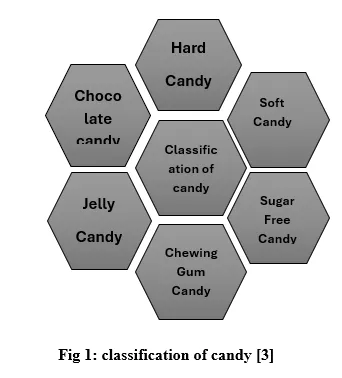
Fig 1: classification of candy [3]
1. Herbal candies are safe medication.
2. It has good efficacy with low side effects.
3. It promotes efficient delivery system.
4. It provide unit dosage form.
5. Herbal candies enhances patient compliance.
1. It should have safe dosage regimen.
2. All ingredient should have compatibility to each other.
3. It should have proper stability profile.
4. It should be uniform in weight and drug content
Aim
To formulate and evaluate a sugar-free antidiabetic candy containing giloy leaf extract for providing a convenient, palatable, and potentially effective herbal dosage form for diabetic patients.
Objectives
LITERATURE REVIEW
|
Author & Review |
Study Focus |
Key findings |
Conclusion |
|
Gawai K., Rathod H., Deshmukh S. (2025) |
Formulation and evaluation of Giloy lozenges for antidiabetic activity |
Giloy-based lozenges showed acceptable physical properties and potential antidiabetic effects due to the presence of bioactive phytoconstituents. |
Giloy can be effectively formulated into patient-friendly dosage forms for diabetes management. |
|
Gupta A., Gupta P., Bajpai G. (2024) |
Pharmacological paradigms of Tinospora cordifolia (Giloy) |
Reported antidiabetic, antioxidant, anti-inflammatory, immunomodulatory, and hepatoprotective activities of Giloy. |
Giloy is a promising medicinal herb with multiple therapeutic applications, especially in diabetes. |
|
Phad S.H. et al. (2024) |
Formulation and evaluation of herbal candy |
Herbal candy showed good organoleptic properties, stability, and patient acceptability. |
Herbal candies can serve as effective alternative dosage forms for delivering medicinal herbs. |
|
Singh A. (2024) |
Medicinal applications of Tinospora cordifolia |
Identified various phytochemicals responsible for antidiabetic and antioxidant activities. |
Giloy possesses significant therapeutic potential for chronic diseases including diabetes. |
|
Panwar R. et al. (2023) |
Review on Tinospora cordifolia and its medicinal uses |
Discussed phytochemical constituents such as alkaloids, glycosides, and diterpenoids contributing to therapeutic effects. |
Scientific evidence supports the traditional use of Giloy in healthcare. |
|
Bisht A., Gusain S., Patil S.M. (2023) |
Multipurpose uses of Giloy |
Highlighted antidiabetic, antimicrobial, antipyretic, and immune-boosting properties of Giloy. |
Giloy is a versatile medicinal plant with broad pharmacological applications. |
|
Danahy A. (2021) |
Nutritional benefits, advantages, and limitations of Giloy |
Summarized available evidence regarding Giloy's health benefits, including blood glucose regulation and immune support. |
Giloy may be beneficial when used appropriately, but further clinical studies are required. |
|
Singh R. (2020) |
Phytochemistry and pharmacological activity of Giloy |
Reported the presence of alkaloids, glycosides, steroids, and polysaccharides responsible for therapeutic effects. |
The phytochemical richness of Giloy contributes to its medicinal value and antidiabetic potential. |
|
Siddiqui S. et al. (2025) |
Use of Tinospora cordifolia in food industry and value-added products |
Demonstrated the potential incorporation of Giloy into functional foods and nutraceutical products. |
Giloy can be utilized in innovative food formulations such as sugar-free candies. |
|
IJFMR (2024) |
Herbal formulations for therapeutic applications |
Discussed the development of herbal dosage forms with improved patient compliance and therapeutic efficacy. |
Novel herbal formulations can improve acceptance and effectiveness of plant-based therapies. |
Previous research studies with citations
1. Formulation And Evaluation of Giloy Lozenges for Antidiabetic Activity Kapil Gawai Harishkumar Rathod Dr. Swati Deshmukh Shraddha Institute of Pharmacy, Washim-444505 Volume 03 | Issue 05 | Article Id IJPS/250305296[1]
2. International Journal for Multidisciplinary Research (IJFMR)E-ISSN: 2582-2160 Website: www.ijfmr.com Email: editor@ijfmr.com IJFMR240322368 Volume 6, Issue 3, May-June 2024 1[2]
3. A Research on Formulation and Evaluation of Herbal Candy Phad S. H1 Khemnar S.,Bhagwat S., Gite A.,Dange S, Tagad A., Rokade V. Ashvin College of Pharmacy, Manchi Hill, Ashvi Bk., Sangamner, Ahmednagar, 413714. India. Volume 6, Issue 3, May-June 2024[3]
4. National Library of Medicine National Center for Biotechnology Information Heliyon 2024 Feb 15;10(4):e26125. doi: 10.1016/j.heliyon.2024.e26125 Tinospora cordifolia (Giloy): An insight on the multifarious pharmacological paradigms of a most promising medicinal ayurvedic herb Abhishek Gupta , Priyanka Gupta , Gunjan Bajpai .[4]
5. INTERNATIONAL JOURNAL OF PHARMACY AND PHARMACEUTICAL RESEARCH Human Journals Review Article August 2020 Vol.:19, Issue:1 All rights are reserved by Ratnesh Singh A Review Article on Phytochemistry and Pharmacological Activity of Tinospora cordifolia (Giloy) www.ijppr.humanjournals.com [5]
6. Research Gate Medicinal importance of Tinospora cordifolia (Willd.) Miers and its possible use in food industry for value addition October 2025 DOI:10.1007/s44187-025-00652-8 License CC BY 4.0 Authors: Saleem Siddiqui, Sadhana Jadaun, R. Anusha ,Naveen Kumar [6]
7. What Is Giloy? Nutrients, Benefits, Downsides, and More Medically reviewed by Amy Richter, MS, RD — Written by Anne Danahy, MS, RDN on July 9, 2021 [7]
8. International journal of pharmacognasy and life science Website -
www.pharmacognosyjournal.com IJPLS 2023; 4(2):12-20 Received - 12-04-2023 Accepted-15-05-2023 Ritika Panwar, Anchal Raj Suchitra Thapa, Amisha Solanki, Surbhi Mandola, Naveen Gauraw. Department of Biotechnology school of Basic and Applied Science Shri Guru Ram Raj university, Patel Nagar Dehradun, Uttarakhand, India [8]
9. Research journal of pharmalognosy and phytochemistry 16 (2), 107-111, 2024 Arjun singh. Department of medicine, sidney kimmel medical, collage, Thomas Jefferson University, Philadelphia, PA 19107, United States website- riponline.org [9]
10. WORLD JOURNAL OF PHARMACEUTICAL AND MEDICAL RESEARCH www.wjpmr.com MULTIPURPOSE USES OF GILOY Aman Bisht*, Surendra Gusain and S. M. Patil Shree Dev Bhoomi Institute of Education Science and Technology Dehradun, Uttarakhand, India. Vol 9, Issue 6, 2023. │ ISO 9001:2015 Certified Journal [10]
Selection and authentication of giloy leave
Collection and washing of plant material
Drying (shade drying) of giloy leaves
Powdering of dried material
Preparation of aqueous extract
Filtration and concentration of extract
Selection of candy base ingredients (sweeting agent, preservatives, binder, acidulant)
Formulation of Giloy candy by mixing Giloy extract with base
Evaluation of candy (pH, ash content, moisture content, organoleptic testing and stability)
Packaging and labeling of final product
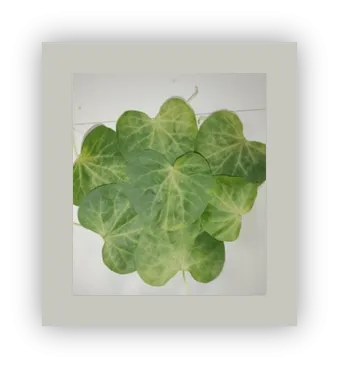
Fig 2: Giloy leaf
Tinospora cordifolia contains diverse phytochemicals, including alkaloids, phytosterols, glycosides, tinosporide, and various other phytochemicals.
Tinospora, a large deciduous, glabrous perennial plant, is extensively spread throughout India, especially in the tropical parts up to 1.2 km above sea level. It is found in neighboring countries such as China, Sri Lanka, Bangladesh, Pakistan, and Burma. Tinospora plants are mostly grown in warm climates. Tinospora prefers medium-black or red soil for its cultivation. It can also be successfully grown in a large variety of soils, ranging from sandy to clay loam. However, the soil should be well drained with sufficient moisture and rich with organic matter for its growth.
T. cordifolia is commonly known as the Guduchi, Giloy, Amrita, and heart-leaved moonseed plant. It is supposed to be the ambrosia of God Indra, considered a holy liquid. Another species of Tinospora, T. crispa, a small herb, locally known as Faridbel, is a woody, lofty and entirely glabrous climber. This widely grows herb is found in temperate as well as tropical region of India. Third species, T. sinensis/malabarica also known as Malabar gulbel, have giant deciduous climber, shining light colored stem, long orbicular-cordate leaves larger than T. cordifolia, dioecious flowers, and aerial roots from branches [4]
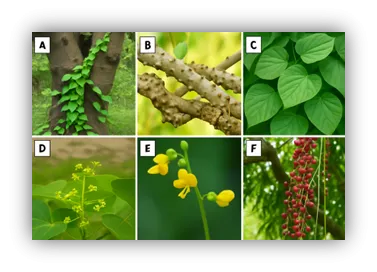
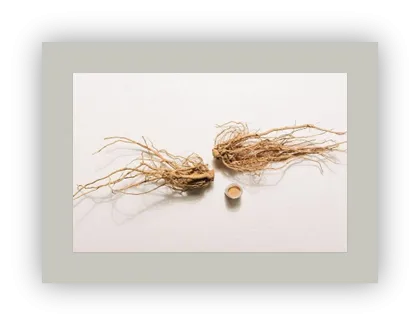
Fig 3: Morphology of giloy plant [6] Fig 4: Morphology of giloy plant [7]
TC is a huge deciduous, extensively spreading climbing shrub within several coiling branches. Many parts of TC have the following type of morphology.
The stem of this plant is rather succulent with long, filiform, fleshy, and climbing in nature. Aerial roots arise from the branches. The bark is creamy white followed by grey in colour and deeply left spirally.
The Arial roots of TC are present, these aerial roots are characterized by tetra to penta-arch primary structure. The cortex of the root is divided into the outer thick walled and inner parenchymatous zone
Leaves of this plant are simple, alternate, ex- Lamina is ovate, 10-20 cm long, 7 nerved, and deeply cordate at the base and membranous.
Flowers are unisexual, racemes, greenish yellow it appears when the plant is leafless. Male flowers are clustered and female flowers exist in a solitary inflorescence. Sepals are 6 in 2 series of 3 each. Outer ones are smaller than the inner sepals. Petals are also 6, smaller than sepals, free and membranous. Flowering occurs from March to June.
They are orange-red in colour, fleshy, aggregate, and ovoid, smooth, drupelets on a thick stalk with subterminal style scars. Fruits develop during winter.
The curved seed has been reported in this species. Hence this family is named as a moonseed family. The seeds are curved in shape, the embryo also turned in to curve shape automatically. Moreover, the endocarp is variously ornamented and provides important taxonomic characters.[5]
An herb called Giloy has anti-inflammatory, allergy, and Anti-histaminic properties. It helps in the treatment of Asthma, allergies, and skin diseases like eczema & Psoriasis. Additionally, it works well to treat flu, colds, And fever.[10]
-Giloy is utilized to improve or support invulnerability”. It contains several cancer prevention agents that battle Free extremists, keep your cells solid, and dispose of Sicknesses.[10]
Giloy is particularly helpful in treating bowel-related conditions and enhancing digestion.
For best effects, combine Giloy powder with some amla, or use it in combination with jaggery to relieve constipation[10]
Giloy is likewise a hypoglycaemic specialist which helps to treat via sugar. Interceding its enemy of diabetic potential has been accounted for through moderating oxidative pressure (operating system), advancing insulin emission, and restraining gluconeogenesis and glycogenolysis, consequently managing blood glucose.[10]
In old texts of ayurvedic science, Tinospora powder alongside dry ginger powder is demonstrated to be powerful in the treatment of joint inflammation.
The dose of ginger is to be decreased if the individual has corrosiveness issues[10]
In the last two decades, T. cordifolia has been subjected to extensive scientific investigations with pharmacological importance all over the world. There are innumerable reports available for the use of Tinospora plant as anti-diabetic, anti-Inflammatory, antioxidant, immunomodulatory, anticancer, anti-microbial, anti-allergic, and many others Due to phytochemical substances present in T. cordifolia plant, such as alkaloids, phenolics, diterpenoid, glycosides, aliphatic compounds, and steroids, their pharmacological activities potentially target different diseases. Most of the pharmacological studies are based on plants’ crude extracts and biologically active compounds. In this section, we have highlighted the diverse pharmacological activities of T. cordifolia.[11]
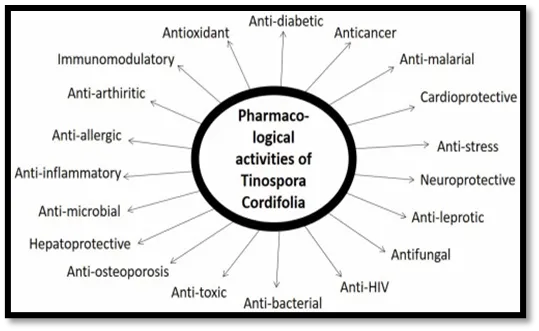
Fig 5: Pharmacological activities of giloy plant
Anti-diabetic studies
Table 1: Anti-diabetic potential of T. cordifolia
|
Extract/isolated compounds |
Animal model/Cell line/Human patient |
Therapeutic outcome
|
|
Methanol
Isoquinoline alkaloid rich fraction
Hydoalcoholic (70% ethanol, 30% water)
Aqueous, Alcoholic
Aqueous and Alcoholic
Aqueous
Hexane, ethyl acetate, methanol
Aqueous
Aqueous
Ethyl acetate, dichloromethane, chloroform and hexane extracts
Aqueous extracted saponarin
Aqueous
Berberine
Aqueous, Alcoholic
Ethanolic
Alcoholic
Aqueous
Alcoholic and aqueous
Aqueous
Aqueous
Aqueous
Aqueous
Aqueous, alcoholic, chloroform
Aqueous
Aqueous
Ethanolic
Alcoholic, aqueous |
Normal and alloxan rats
Normal and glucose-loaded Wistar rats
High fat diet fed and streptozotocin-Sprague-Dawley rats
Streptozotocin-albino rats
streptozotocin diabetic albino rats
Streptozotocin rats
Streptozotocin-rats
Alloxan induced diabetic rats
High-fructose diet induced diabetic Wistar rats
Normal and glucose-loaded Wistar rats
Maltose-fed rats
Alloxan-rats
Clinical trial
Streptozotocin-albino rats
Alloxan-rats
Alloxan-rats
Alloxan-rats
Streptozotocin- mice
Streptozotocin-mice
Alloxan-rats
Alloxan-rats
Alloxan-rats
Normal and alloxan induced diabetes in rabbits
Adrenaline induced hyperglycemia in rabbits
Alloxan-rats and rabbits
Fasted albino rats
Fasted albino rats |
Increases in body weight and protein, hepatic enzyme hexokinase activity increased, glucose-6-phosphatase and significant decrease in fructose 1, 6-biphosphatase [12]
Insulin-mimicking and insulin-releasing effect in vitro and in vivo [13].
Inhibit gluconeogenesis and glycogenolysis and promote insulin secretion [14].
Increasing hepatic glycogen synthase and decreasing glycogen phosphorylase activity [15].
Increase in serum insulin levels or regeneration of pancreatic ẞ cells [16].
Significant reduction in blood and urine glucose [17].
To decrease glycosylated hemoglobin level, reduce glucokinase and increased glucose-6-phosphatase activity, and to improve insulin secretagogue effect, insulin and C-peptide levels which shows ẞ-cells regeneration capacity of extracts [18].
Significant decreases in blood glucose, glycosylated hemoglobin, urea, cholesterol, and increases in protein and glycogen, extract with nontoxic and well tolerated [26].
Improve glucose and lipid metabolism [27,28].
Reduce increased postprandial glucose level by inhibiting salivary and pancreatic amylase [29].
Showed saponarin (apigenin-6-C-glucosyl-7-O-glucoside) with competitive inhibition on activities of alpha-glucosidase and sucrase of different origins [43].
Normalized the antioxidant status of heart, brain, liver and kidney, restores the antioxidant defense [44,45].
Decrease plasma glucose and serum lipid concentrations [46].
Modulate renal tissue morphology and ameliorate activity of key gluconeogenic enzymes and to improve renal functions [47].
Reduce glucose level in blood [48].
Reduce glucose level in blood and urine [49].
Reduce glucose level in serum [50].
Amelioration of diabetic neuropathy and gastropathy [51].
Reduce plasma glucose concentration by increasing glucose metabolism [52].
Increases in body weight, total hemoglobin and hepatic hexokinase; decreases in hepatic glucose-6-phosphatase, serum acid phosphatase, alkaline phosphatase, and lactate dehydrogenase [30].
Showed effect similar to 1 IU/kg of insulin [31].
Reduction in serum and tissue cholesterol, phospholipids and free fatty acids [32].
Action similar to glibenclamide and insulin [33].
Significantly inhibit hyperglycemia [34].
Regulates glucose metabolism [35].
Reduce glucose level in blood [36].
Reduce blood glucose in fasting by increasing glucose uptake and inhibition of peripheral glucose release [37]. |
Material and equipment
Fresh leaves of fresh giloy plant were collected from rural area of Kolpewadi, Ahilyanagar District
Table 2: Material with their role
|
Sr.no |
Ingredient |
Function |
|
1 |
Giloy extract |
API (Antidiabetic activity) |
|
2 |
Gum acacia |
Binder/ stabilizer |
|
3 |
Citric acid |
Flavoring agent |
|
4 |
Stevia |
Sugar substituent |
|
5 |
Water |
Vehicle |
Table 3: Working formula
|
Sr.no |
Ingredient |
F1 |
F2 |
F3 |
F4 |
|
1 |
Giloy extract |
0.1ml |
0.3ml |
0.5ml |
0.7ml |
|
2 |
Gum acacia |
500mg |
1gm |
1.5gm |
2gm |
|
3 |
Citric acid |
0.2ml |
0.3ml |
0.4ml |
0.5ml |
|
4 |
Stevia |
10gm |
20gm |
30gm |
40gm |
|
5 |
Water |
q.s |
q.s |
q.s |
q.s |
Table 4 : Required equipments
|
Sr.no |
Equipment |
|
|
1 |
Weighing balance |
|
|
2 |
Beaker |
|
|
3 |
Soxhlet apparatus |
|
|
4 |
Conical flask |
|
|
5 |
Measuring cylinder |
|
|
6 |
Funnel |
|
|
7 |
Mold |
|
|
8 |
Test tube |
|
|
9 |
Test tube holder |
|
|
10 |
Test tube stand |
|
|
11 |
Spatula |
|
METHODOLOGY OF PREPARATION OF CANDY
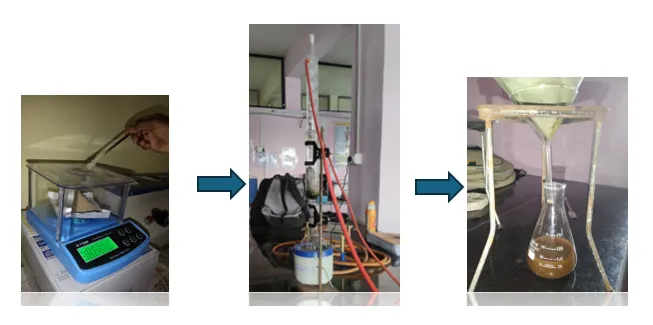
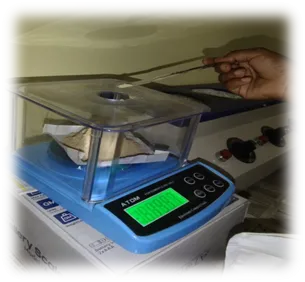
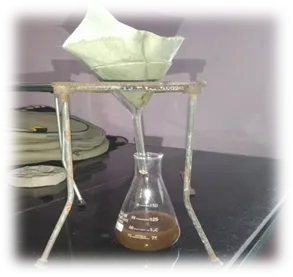
Fig 7: Weighing a sample Fig 8: Filteration of concentrated extract
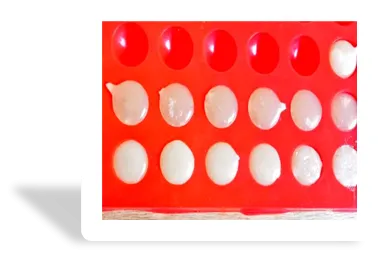
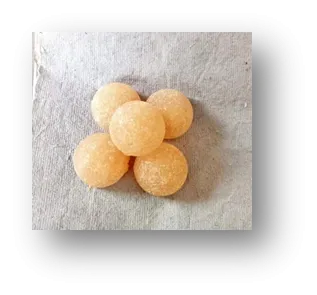
Fig 9: Molding of sample solution Fig 10: Formulation of candy
1.Colour: The giloy candy is whitish creamy in colour.
2. Odour: It possesses Mild herbal odor
3. Consistensy: It has hard consistency from inside and outside
4. Taste: It has sweet taste firstly then it gives sour and little bit bitter taste latter on.
5. Texture: It has hard texture
6. Apperance: hard and uniform
Evaluated for stability, generally in the acidic range (5-6) to prevent bacterial growth.
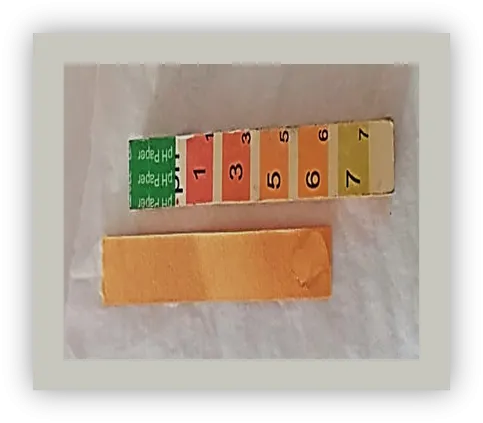
Fig 11: pH determination
Measures inorganic residues, ensuring purity (usually 1.2-1.5%).
Determine moisture using hot air oven method. No moisture content in formulation it ensure the shelf life of candy.
Table 5: Alkaloid tests for Giloy extract
|
Test |
Procedure |
Observation |
Interference |
|
Mayer’s Test |
Take 1 mL test solution. Add few drops of Mayer’s reagent. (Potassium mercuric iodide solution) |
Cream precipitate |
Presence of alkaloids confirmed. |
|
Wagner’s Test |
Take 1 mL test solution. Add few drops of Wagner’s Reagent (Iodine-potassium iodide solution)
|
Reddish-brown precipitate |
Presence of alkaloids confirmed. |
|
Hager’s Test |
Take 1 mL test solution. Add few drops of Hager’s Reagent (Saturated picric acid solution) |
Yellow precipitate |
Presence of alkaloids confirmed. |
|
Picric acid Test |
Take 1 mL test solution. Add few drops of Picric acid reagent (Saturated picric acid solution) |
Yellow precipitate |
Presence of alkaloids confirmed. |
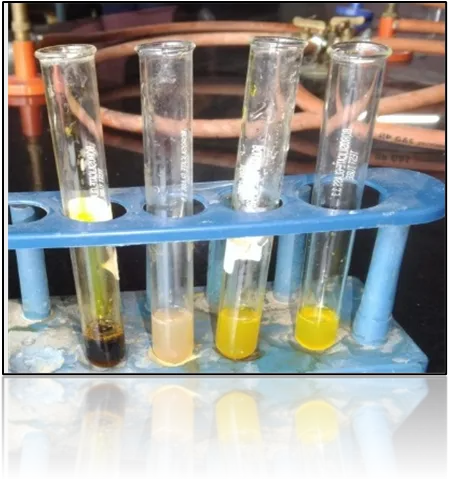
Table 6: Stability determination
|
Time |
Temprature |
Observation |
Stability |
|||
|
|
|
F1 |
F2 |
F3 |
F4 |
|
|
1 Week |
250 C |
No change |
No change |
No change |
No change |
Stable |
|
|
350 C |
No change |
No change |
No change |
No change |
Stable |
|
2 Week |
250 C |
No change |
No change |
No change |
No change |
Stable |
|
|
350 C |
change |
No change |
No change |
No change |
F1 unstable |
|
3 Week |
250 C |
change |
No change |
No change |
No change |
F1 unstable |
|
|
350 C |
change |
change |
No change |
Change |
F1,F2,F4 unstable |
|
4 Week |
250 C |
change |
change |
No change |
No change |
F1,F2, unstable |
|
|
350 C |
change |
change |
No change |
Change |
F1,F2,F4 unstable |
After the stability testing the F3 was stable than the F1, F2, and F4
RESULT AND DISCUSSION
The evaluation of the Giloy candy revealed that all four formulations showed acceptable organoleptic and physical characteristics, making them suitable for oral administration. Each batch displayed good consistency in appearance, taste, and shape, indicating uniform formulation.Stability test confirmed the giloy candy was stable and suitable to use without microbial contamination.. Alkaloid test show the active herbal components, essential for therapeutic efficacy. The pH levels were within the acceptable range for oral use,. Overall, the results indicated that the candy were pharmaceutically acceptable and potentially effective for antidiabetic application.
|
Sr. no |
Parameter |
Formula |
|||
|
1 |
Organoleptic evaluation |
F1 |
F2 |
F3 |
F4 |
|
whitish creamy |
whitish creamy |
whitish creamy |
whitish creamy |
|
|
Mild herbal odor |
Mild herbal odor |
Mild herbal odor |
Mild herbal odor |
|
|
Sweet and little bitter |
Sweet and little bitter |
Sweet and little bitter |
Sweet and little bitter |
|
|
Round |
Round |
Round |
Round |
|
|
hard and uniform |
hard and uniform |
hard and uniform |
hard and uniform |
|
|
2 |
pH |
5-6 |
5-6 |
5-6 |
5-6 |
|
3 |
Consistancy |
Hard |
Hard |
Hard |
Hard |
|
4 |
Ash content |
1.2-1.5% |
1.2-1.5% |
1.2-1.5% |
1.2-1.5% |
|
5 |
Moisture content |
Yes |
NO |
Yes |
No |
|
6 |
Stability |
Less stable |
Less stable |
Highly stable |
Less stable |
FUTURE PERSPECTIVE
India's medicinal plants are diverse. Despite possessing many bioactive components and being medicinal, giloy has received little scientific study. Giloy stem's potential antidiabetic and other benefits are becoming more understood, although the mechanisms are still unclear. Commercially accessible synthetic antidiabetic medicines are used to treat diabetes. These pharmaceuticals include sulphonylureas (glibenclamide), biguanides (metformin), thiazolidinediones (pioglitazone), alpha-glucosidase
CONCLUSION
This study demonstrates the potential of Tinospora cordifolia (Giloy) as a viable herbal agent for antidiabetic therapy when formulated intosugar free candy. By adopting a user-friendly dosage form, the research moves toward improving long-term treatment adherence in diabetic patients who may prefer alternatives to traditional tablets or injections. The sugar free candy not only serve as a novel drug delivery system but also highlight the role of natural plant-based medicine in modern pharmaceutical design. Furthermore, the study opens avenues for Integrating such herbal dosage forms into preventive healthcare systems. However, the findings must be supplemented with advanced pharmacokinetic analysis, bioavailability testing, and clinical validation before widespread application. As interest in natural therapies grows, formulations like Giloy sugar free candy could become important adjuncts or alternatives to synthetic antidiabetic drugs.
REFERENCES
International Journal for Research Trends and Innovation (www.ijrti.org) A review on Extraction methods and Formulation Process of Tinospora Cordifolia (giloy tablet) Prof. Ankita Bankhele,2Vaibhav Kakde, 3Prapti Kamble, 4Akash Bharade, 5Prasad Khaire, 6Dr. Rajesh Oswal 2022 IJRTI | Volume 7, Issue 8 | ISSN: 2456-3315

Chavan Sonali, Chavan Sakshi, Thakare Aparna, Aher Sakshi, Dabhade Shrushti, Formulation And Evaluation of Sugar Free Antidiabetic Candy from Giloy Leaf Extract, Int. J. of Pharm. Sci., 2026, Vol 4, Issue 6, 677-694, https://doi.org/10.5281/zenodo.20525927
 10.5281/zenodo.20525927