

We use cookies to ensure our website works properly and to personalise your experience. Cookies policy
JES's S.N.D.College Of Pharmacy ,Babhulgaon.
This study focused on the development and evaluation of a herbal emulgel for topical anti-inflammatory application using Moringa oleifera seed extract incorporated into Shata Dhauta Ghrita. Emulgel, a combination of emulsion and gel, enhances drug penetration and provides better stability for both hydrophilic and hydrophobic components. Three formulations ( F1,F2 and F3 ) were prepared using varying concentrations of Moringa oleifera extract, cucumber extract, and lemongrass oil. All formulations were evaluated for physicochemical parameters such as appearance, pH, viscosity, spreadability, homogenicity, washability, drug content, and stability. Results showed that all formulations were suitable for topical use. Among them, F3 exhibited superior performance with high drug content (98%), ideal viscosity, excellent spreadability and good stability without phase separation. The pH was within a skin- friendly range, indicating compatibility. Overall, the developed emulgel demonstrated promising anti-inflammatory properties, but further clinical studies are recommended to confirm its therapeutic efficacy and safety.
Traditional medicines have a significant impact on global health care. Approximately 75% of the global population relies on plant extracts for health care.[1] In order to eradicate the source of cell harm, remove damaged tissue, and start the healing process, inflammation is a defensive reaction involving host cells, blood vessels, and proteins.[2] The ancients identified five cardinal indications of inflammation based on visual observation: redness (rubor), swelling (tumor), heat (calor; solely applicable to the body’s extremities), pain (dolor), and loss of function (function laesa). Celsus in ancient Rome (30-38 B. C.) called the first four of these indications, while Galen (130-200 A. D.) named the final one.[3] When tissue is damaged by physical trauma, harmful chemicals, or microbiological organisms, inflammation is a natural and defensive reaction. [4]
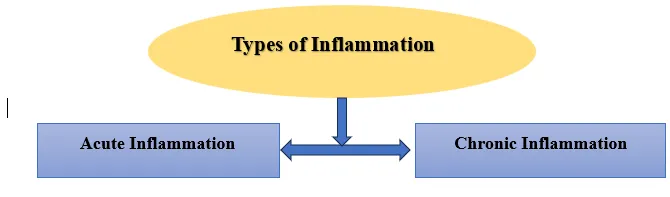
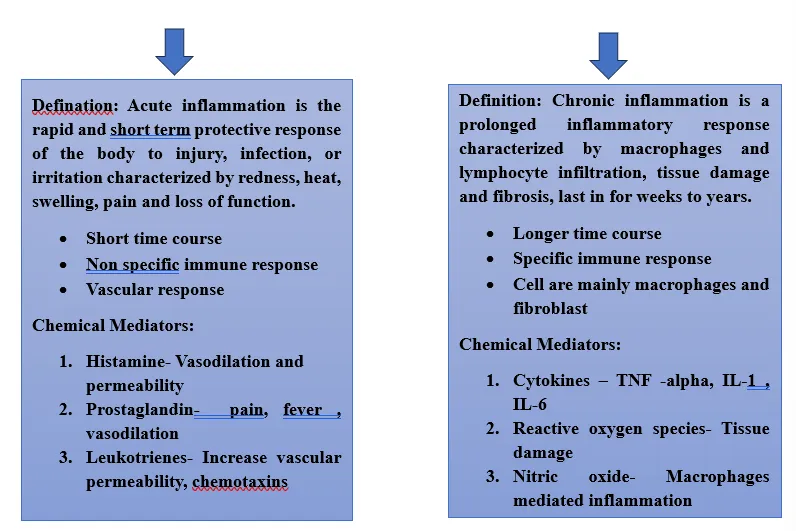
Figure No 1 : Acute VS Chronic Inflammation
Herbal topical gel formulation important because they offer localized therapeutic action, better patient compliance, and fewer systemic side effects than oral dose forms, herbal topical gel formulations are significant. Gels have several benefits, including improved skin penetration, quick drug release, ease of spreading, and non-greasy nature. Because herbal extract contain bioactive phytoconstituents such flavonoids, tannins, and alkaloids, adding them to topical gels improve their efficacy in treating inflammation, wound healing, burns, acne, and arthritis. Herbal gels are also generally seen as safer, more affordable, and more acceptable for long- term use.[5] Emulgel is a dual controlled drug delivery technology that overcome the drawbacks of traditional topical formulations by incorporating an emulsion (O/W or W/O) into a gel foundation. Emulgel is a new topical drug delivery method that combines the benefits of gels and emulsions, making it particularly useful for delivering both hydrophilic and hydrophobic medications through the skin.[6][7] Traditional topical formulations, such creams and ointments, have restricted drug release, a greasy texture, and poor anti- inflammatory medication penetration. When used topically, many anti- inflammatory drug are less effective because they are poorly soluble in water. By combining the anti- inflammatory medication in an emulsion system distributed throughout a gel base, Emulgel overcomes these drawbacks and improves skin penetration, prolongs local activity, and minimizes systemic adverse effects, making it an excellent choice for treating localized inflammation.[8]
MATERIALS AND METHODS :
Shata Dhauta Ghrita
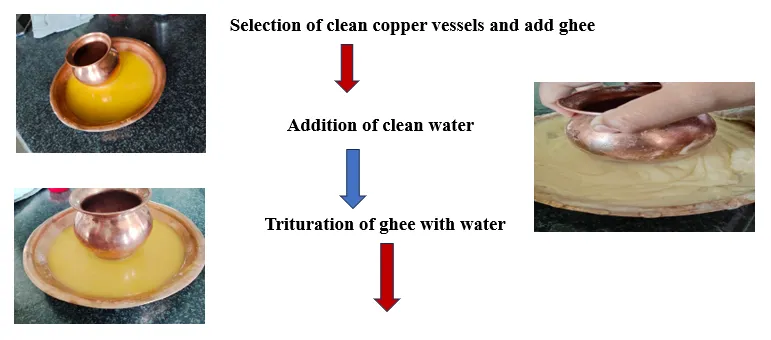
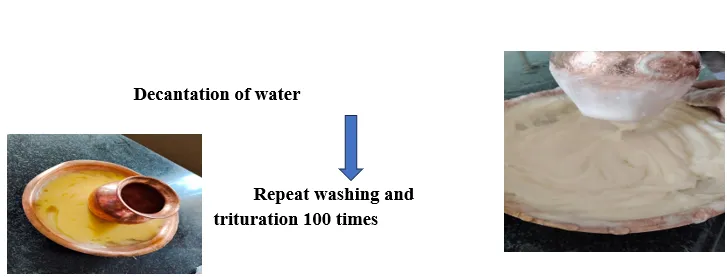
Ayurveda values ghee for improving intellect, digestion, and body balance, treating various disorders, and supporting modern topical formulations.[9] Shata Dhauta Ghrita is an Ayurvedic preparation made by washing cow ghee 100 times with purified water while chanting Vedic mantras. This process produces an odorless, butter-like, silky cream that can penetrate all seven layers of the skin without clogging pores.[10] Handmade Shata Dhauta Ghrita is an emollient that heals damaged skin by deeply nourishing all tissue layers and is effective for burns, wounds, scars, blemishes, burning sensations, and herpes.[11]
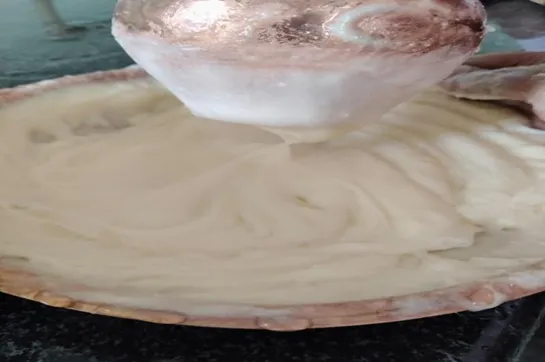
Figure No 2 : Shata Dhauta Ghrita
Moringa Oleifera Seeds
Moringa oleifera Lam. is a species of the genus Moringa (family Moringaceae) It is widely grown in India, Pakistan, Afghanistan, Bangladesh, Africa, and Latin America.[12]
They bacteria Staphylococcus aureus and Pseudomonas aeruginosa, which infect the skin, are effectively treated with moringa seeds.[13]In Binga District, Zimbabwe, the Tonga people use root powder mixed with milk as an aphrodisiac and traditional remedy. It is believed to help treat asthma, gout, rheumatism, enlarged spleen or liver, digestive gas, stomach disorders, and to relieve ear and tooth pain.[14][15]
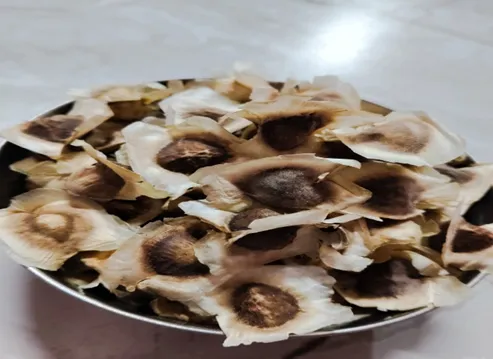
Figure No 3 : Moringa Oleifera seeds
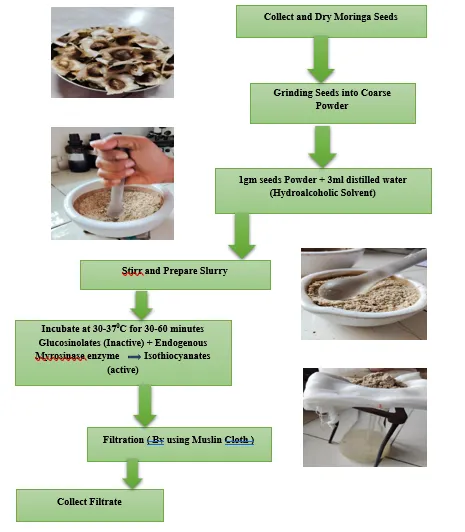
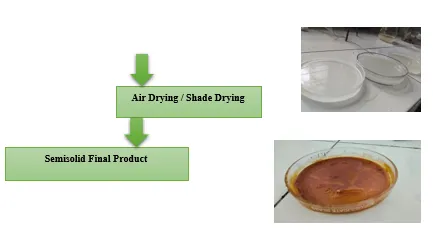
Preparation of Extract :
Cucumber Gel Extract :
Typically, Cucumis sativus L. (C. sativus) is served as a dessert or appetizer.
They are also linked to calming, emollient, cooling, and therapeutic properties. Above all, it is discovered that they have a broad range of activities, including antioxidant.[16][17].
Three unripe cucumbers were washed, dried, and separated into peel and pulp. Each portion was blended with PBS (1:3), incubated at 370 C for 8 h, filtered, and centrifuged to obtain the supernatant. The extracts were spay-dried using 5% maltodextrin, and aqueous extracts were prepared similarly using deionized water. Phytochemical screening was performed to identify tannins, flavonoids, alkaloids, saponins, and steroids.[18][19]
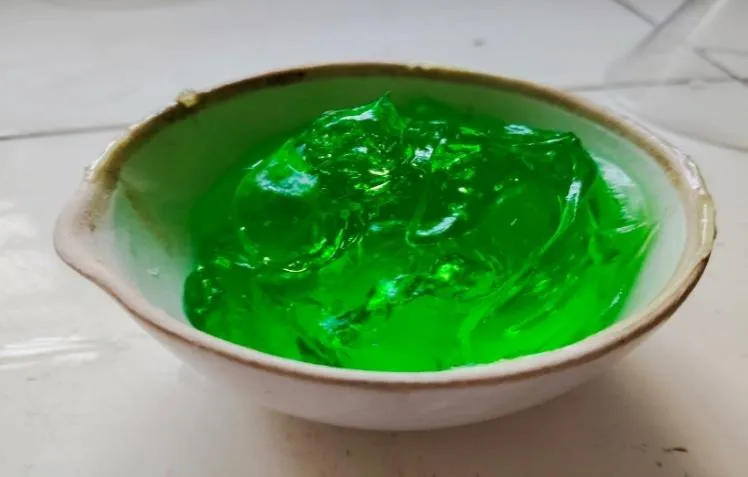
Figure No 4 : Cucumber Gel
Lemongrass Oil :
Lemon grass, or Cymbopogon citratus (DC.) Stapf (Poaceae family), is one of the primary aromatic and therapeutic plants grown in Algeria. It is a perennial tropical grass with thin, long leaves [20]
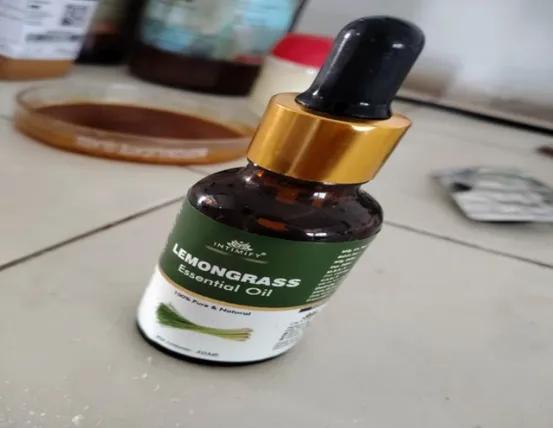
Figure No 5 : Lemongrass Oil
The stalks and leaves of lemongrass were separated, allowed to air dry, and then cut into 4–8 mm pieces. Every extraction used a constant mass of 200 g. Using a Clevenger-type device and distilled water, essential oils were extracted individually by hydro-distillation. Dichloromethane was used to extract the oil, which was then dried over anhydrous sodium sulfate. For additional analysis, the recovered oils were kept at 4–6 °C in the dark.[21]
Formulation of Emulgel :
Master Formula :
Table No 1 : Batch wise Ingredients
|
Ingredient |
F1 |
F2 |
F3 |
|
Shata Dhauta Ghrita |
5gm |
5gm |
5gm |
|
Moringa Oleifera seeds extract |
1gm |
2gm |
3gm |
|
Cucumber extract |
1.5gm |
1.5gm |
1.5gm |
|
Lemongrass oil |
0.3ml |
0.3ml |
0.4ml |
|
Hydroxy methyl propyl cellulose |
2gm |
3gm |
2.5gm |
|
Liquid Paraffin |
3gm |
3gm |
3gm |
|
Vit. E Acetate |
0.5gm |
0.5gm |
0.5gm |
|
Span 80 |
0.4gm |
0.3gm |
0.5gm |
|
Tween 80 |
1.2gm |
1.4gm |
1.5gm |
|
Methyl Paraben |
0.15gm |
0.15gm |
0.15gm |
|
Propyl Paraben |
0.05gm |
0.05gm |
0.05gm |
|
Polyethylene Glycol |
2gm |
3gm |
4gm |
|
Purified Water |
q.s |
q.s |
q.s |
Optimized Formula :
Table No 2 : Optimized Formula Ingredients
|
Sr No. |
Ingredients |
Quantity |
Category |
|
1. |
Shata Dhauta Ghrita |
5gm |
Anti-inflammatory base |
|
2. |
Moringa oleifera seeds extract |
3gm |
Active herbal drug ( Anti-inflammatory) |
|
3. |
Cucumber Extract |
1.5gm |
Skin Soothing Agent |
|
4. |
Lemongrass oil |
0.3ml |
Anti-inflammatory/ Fragrance |
|
5. |
HPMC |
2.5gm |
Gelling agent |
|
6. |
Liquid Paraffin |
3ml |
Oil phase |
|
7. |
Vit.E Acetate |
0.5gm |
Antioxidant |
|
8. |
Span 80 |
0.5gm |
Emulsifying agent |
|
9. |
Tween 80 |
1.5gm |
Co- emulsifier |
|
10. |
Methyl Paraben |
0.15gm |
Preservative |
|
11. |
Propyl Paraben |
0.05gm |
Preservative |
|
12. |
Propylene Glycol |
4gm |
Co- Solvent |
|
13. |
Purified Water |
q.s |
Aqueous Phase |
Preparation of Emulgel :
This creates the emulsion's aqueous phase. Alcohols and water are often utilized agents.[22] HPMC was dispersed in hot, purified water (70°C) to create the gel in formulas F1, F2, and F3. The gel was then chilled for 15 minutes . [23][24]
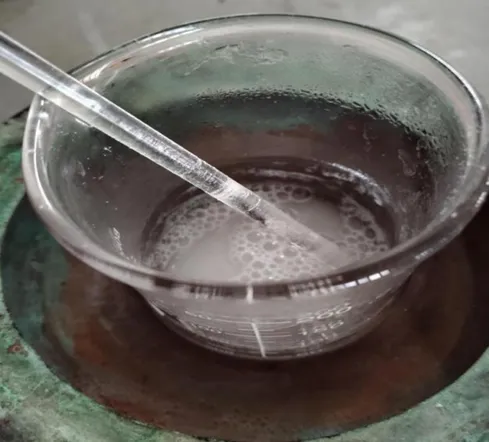
Figure No 6 : HPMC Gel base
Tween 80 was dissolved in purified water to create the aqueous phase of the emulsion, whereas span 60 was dissolved in light liquid paraffin to create the oil phase. Moringa oleifera seed extract was dissolved in ethanol, and methyl and propyl parabens were dissolved in propylene glycol before being combined with the aqueous phase. The oily and aqueous phases were heated independently to 70°C. [23][24]
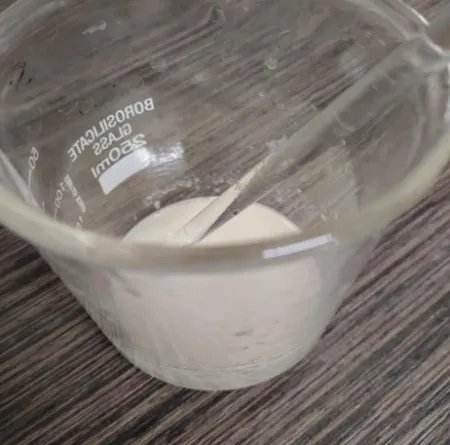
Figure No 7 : Oil Phase
A mechanical shaker was used to continuously swirl various polymer concentrations in distilled water at a moderate speed in order to prepare the gel bases. Triethanolamine (TEA) was used to bring the pH of each formulation down to 6–6.5. [25]
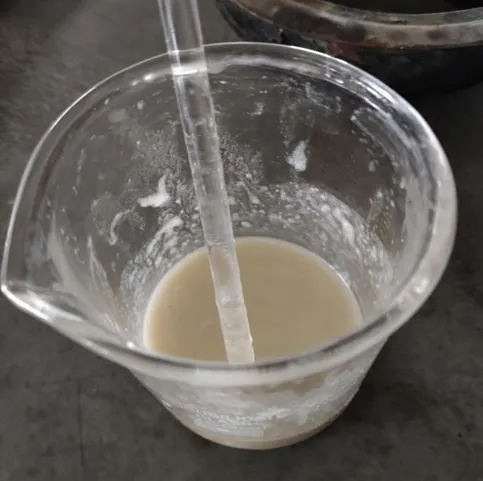
Figure No 8 : Gel Preparation
The obtained emulsion was mixed with the gel with gentle Stirring to obtain the emulgel.[25]
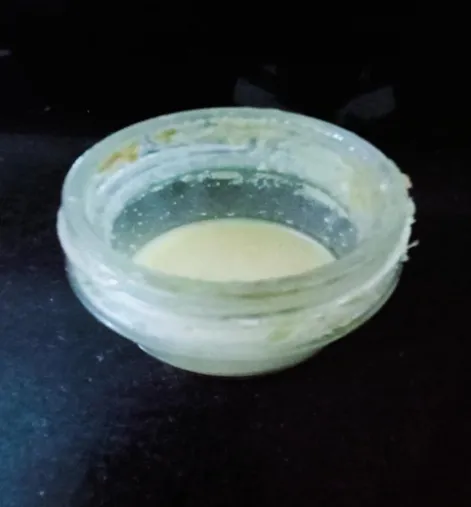
Figure No 9 : Gel Formulation
Evaluation of Herbal Emulgel
Visual inspection was used to assess the physical appearance, noting color, homogeneity, uniformity, and phase separation.[26]
1.Organoleptic properties
Colour :- Pale yellow to Off white (Uniform Appearance and No Visible Discoloration)
Odour :- Characteristics Pleasant Ghee Odour
Appearance :- Semi solid Consistency Smooth and Glossy Surface No visible particle
Texture:- smooth Soft on touch
Consistency :- Semi solid At room Temperature
Homogenicity :- Appears Uniform No visible particle
Stability Test : For 35 days at room temperature, the final formulations were assessed for their physicochemical stability criteria, including pH, appearance, odor, homogenicity, Spreadability, Phase Separation and washability.[27]
Dye test : Take small amount of emulgel on a clean glass slide. Add few drops of suitable dye, Mix gently with a glass rod and Observe under microscope/ eye.[28]
Ease of removal test : Apply small quantity of emulgel on skin. Allow it to remain for fixed time (5-10 min), Wash area with tap water. Observe whether formulation remove easily or leaves residue.[28]
Viscosity Test : Transfer emulgel into Viscometer beaker by using Brookfield Viscometer and by using suitable spindle at specific rpm. Then record viscosity reading in cps.[29]
Spreadability Test : Spreadability of the prepared emulgel was determined to evaluate the ease of application on the skin. A known quantity of the formulation was placed between two clean glass slides. A definite weight was placed over the upper slide to form a uniform thin layer. The time required for the upper slide to move a specified distance under the influence of the applied weight was recorded.[30]
Pharmacological Screening :
In-vitro Anti-inflammatory Activity of Shata Dhauta Ghrita and Moringa oleifera seed extract herbal emulgel by Protein denaturation method
Materials:
Protein Source- Egg albumin/ Bovine albumin Test Sample- Herbal emulgel (Shata Dhauta Ghrita and Moringa oleifera seed extract) Standard Drug- Diclofenac sodium Phosphate Buffer (pH 6.4-6.8) Distilled water Water bath, Centrifuge
Procedure:
% Inhibition = (Wc-Wt)/Wc x 100
Where : Wc = Weight of control Wt= Weight of test
% Inhibition = 2.34-0.40/2.34 x 100
1.94/2.34 x 100 = 82.9 %
The herbal emulgel containing Shata Dhauta Ghrita and Moringa oleifera seed extract showed 82.9 % inhibition of protein denaturation, indicating strong anti- inflammatory activity.[31][32][33]
Evaluation Parameters :
Table No 3 : Evaluation Parameters of Formulation
|
Sr No. |
Parameters |
F1 |
F2 |
F3 |
Observation |
|
1 |
Appearance |
Smooth, Slightly thin |
Thick, Uniform |
Smooth, Semi- solid |
F3 has best Appearance |
|
2 |
Color |
Light green |
Green |
Light Green |
All acceptable |
|
3 |
Consistency |
Semi-liquid |
Very thick |
Smooth gel |
F3 has best consistency |
|
4 |
Homogenicity |
Good |
Very good |
Best |
F3 has best Homogenicity |
|
5 |
pH |
6.2 |
6.5 |
6.3 |
All are Skin Friendly |
|
6 |
Viscosity (cP) |
4200 |
6800 |
5500 |
F3 has Optimum Viscosity |
|
7 |
Spreadability |
Moderate |
Poor |
Easily Spread |
F3 has easy spreadability |
|
8 |
Washability |
Good |
Moderate |
Good |
F3 was easily washable |
|
9 |
Drug content (%) |
91% |
95% |
98% |
F3 has high drug content and more activity |
|
10 |
Skin irritation |
No irritation |
Slightly redness |
No irritation |
F1 and F3 was suitable |
|
11 |
Stability (Room temp) |
Stable |
Stable |
Stable |
All are Stable |
|
12 |
Phase Separation |
Slight |
None |
none |
F2 and F3 has no phase separation |
FUTURE SCOPE :
The current study demonstrates a novel method for topical anti-inflammatory use by mixing Shata-Dhauta Ghrita with Moringa oleifera extract in an emulgel system. This innovative composition provides a special fusion of contemporary medicine delivery methods with traditional Ayurvedic principles. To further improve medication penetration, targeted administration, and therapeutic efficacy, future research can investigate the creation of sophisticated carriers such phytosomal systems or nanoemulgels. Furthermore, adding additional synergistic herbal extracts could increase the formulation's overall effectiveness.
To confirm its safety and efficacy in human use, more research incorporating in vivo tests and clinical trials is necessary. The bioactive substances causing the observed activity can be identified and standardized using sophisticated analytical techniques. Sustainable development may also take into account stability improvement through the use of natural preservatives and environmentally friendly packaging. Additionally, this formulation has the potential to be expanded into cosmeceutical applications, such as skin healing and anti-aging products, creating new opportunities for herbal therapies innovation and commercialization.
CONCLUSION
An emulgel combining Shata-Dhauta Ghrita and Moringa oleifera extract for topical application was successfully created and assessed in this study. Good consistency, stability, and compatibility for skin application were demonstrated by the produced formulation's satisfactory physicochemical qualities. An innovative and successful method of anti-inflammatory treatment is provided by combining a classic Ayurvedic basis with a botanical extract. The formulation appears to have promising anti-inflammatory potential, which could be helpful in the treatment of a number of skin-related disorders, according to the observed results. All things considered, the study is in favor of combining herbal components with contemporary formulation methods to create topical medication delivery systems that are both safe and efficient. With better patient compliance and fewer adverse effects, the emulgel may be a viable substitute for traditional synthetic formulations. To establish its clinical efficacy and investigate its entire therapeutic potential, more research is advised. An emulgel of Shata-Dhauta Ghrita and Moringa oleifera extract with acceptable physicochemical characteristics that may be used topically was effectively created by the study. The mixture showed encouraging anti-inflammatory capabilities, suggesting that it could be used to control skin inflammation. All things considered, it is a novel, safe, and efficient herbal substitute; nonetheless, additional research is needed for clinical confirmation.
RESULT & DISCUSSION
The physicochemical properties of Shata-Dhauta Ghrita and Moringa oleifera extract emulgel were good. It was discovered that the preparation had a uniform distribution of the ingredients since it was smooth, homogenious, and grittiness-free. The formulation pH was within an acceptable range for topical administration, indicating good skin compatibility. Appropriate application ease was demonstrated by the spreadability test, which is crucial for patient compliance. Furthermore, during the research period, the formulation showed good stability with no phase separation or notable appearance changes.
The synergistic impact of Moringa oleifera extract and Shata-Dhauta Ghrita is demonstrated by the reported anti-inflammatory action. The findings imply that the topical distribution of herbal components is successfully improved by the emulgel formulation. All things considered, the results validates this formulation’s applicability as a possible herbal substitute for the treatment of inflammatory skin disorders. It advised that more research be done to confirm these findings by clinical and in vivo assessments.
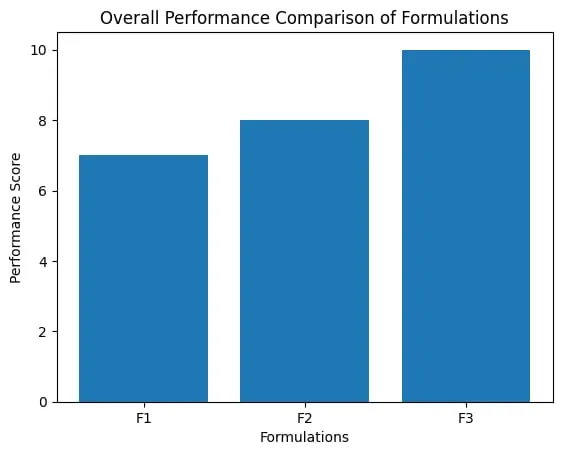
Figure No 10 : Overall Performance Comparison of Formulations
Shata-Dhauta Ghrita and Moringa oleifera extract emulgel demonstrated acceptable physicochemical characteristics, such as spreadability, homogeneity, and consistency. It was discovered that there was no phase separation or noticeable appearance changes in the formulation. Skin compatibility was indicated by the pH being within an appropriate range for topical use. Additionally, the formulation showed significant anti-inflammatory efficacy, indicating that it might be useful as a topical herbal therapy.
REFERENCES

Kavita Sharma, Gauri Paithankar, Snehal Mate , Formulation And Evaluation of the Anti- inflammatory Potential of Shata Dhauta Ghrita enriched Moringa Oleifera Seed Emulgel for Topical Application, Int. J. of Pharm. Sci., 2026, Vol 4, Issue 5, 7533-7544, https://doi.org/10.5281/zenodo.20423306
 10.5281/zenodo.20423306