

We use cookies to ensure our website works properly and to personalise your experience. Cookies policy
Department of Pharmacy, LCIT School of Pharmacy, Bilaspur, Chhattisgarh.
Glaucoma, a leading cause of irreversible blindness worldwide, is primarily managed through pharmacological reduction of intraocular pressure (IOP). Timolol maleate, a non-selective beta-adrenergic blocker, is commonly administered as eye drops; however, conventional formulations are limited by poor ocular bioavailability, rapid precorneal elimination, and patient noncompliance. Recent advances in ocular drug delivery have demonstrated that hydrogel-based systems can improve drug residence time and sustain therapeutic levels. This review summarizes current strategies in formulating Timolol maleate-loaded hydrogels, emphasizing preformulation studies, physicochemical characterization, in vitro release profiles, and ocular compatibility. Key formulation variables such as polymer selection, crosslinking approaches, rheological behaviour, swelling capacity, and drug release kinetics are discussed. In vitro findings consistently demonstrate the potential of hydrogel systems to enhance Timolol retention and prolong drug action without requiring animal experimentation. These results underscore the promise of Timolol maleate hydrogels as a patient-friendly alternative for effective glaucoma management.
Glaucoma encompasses a group of progressive optic neuropathies characterized by elevated intraocular pressure (IOP) and gradual loss of retinal ganglion cells, leading to irreversible vision impairment if left untreated (Weinreb et al., 2014). Pharmacological management remains the first-line approach, with topical beta-blockers such as Timolol maleate widely prescribed due to their efficacy in lowering aqueous humor production (Huang et al., 2019). Despite their clinical utility, conventional Timolol eye drops are associated with significant challenges, including rapid tear turnover, poor corneal permeability, and the necessity for frequent dosing (Mishra et al., 2011). Such drawbacks often lead to subtherapeutic drug levels and reduced patient adherence.
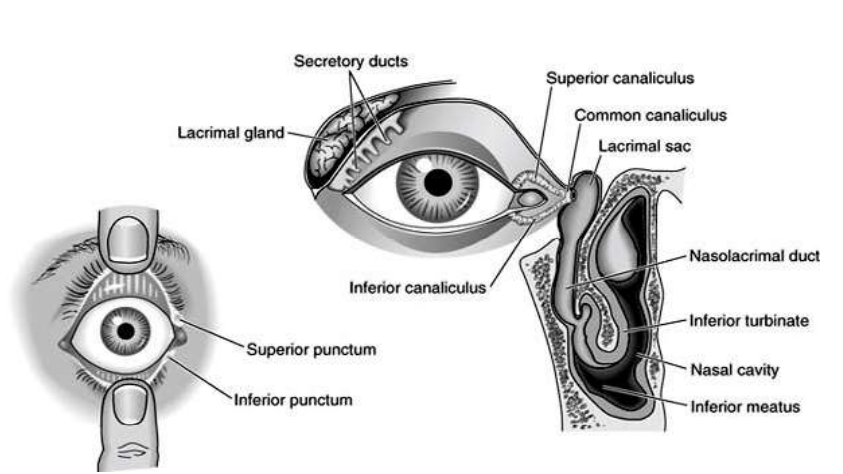
Figure no.1: Nasolacrimal portion of human eyes
To address these limitations, innovative ocular drug delivery systems are being developed. Hydrogels, composed of crosslinked polymer networks capable of retaining high water content, have emerged as promising vehicles for sustained ophthalmic delivery (Liu et al., 2020). By forming a mucoadhesive matrix upon administration, hydrogels prolong precorneal residence and enable controlled drug release, potentially reducing dosing frequency and improving therapeutic outcomes.
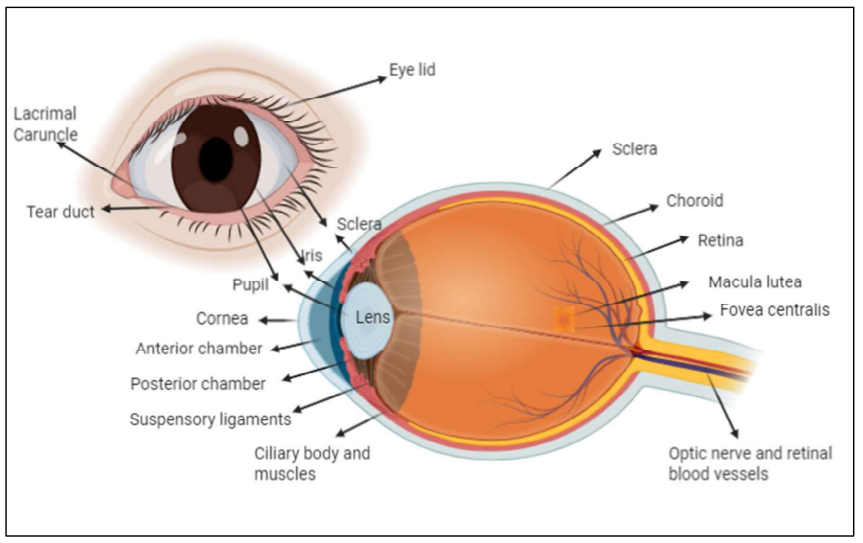
Figure no.2: Human Eye Anatomical elastration
This review consolidates the scientific basis for Timolol maleate hydrogel formulations, focusing on preformulation studies, physicochemical characterization, rheological and swelling behavior, in vitro drug release testing, and overall suitability for ocular application without relying on animal models. The discussion aims to guide future research and formulation development of hydrogel-based delivery systems for effective glaucoma treatment.
MATERIALS AND METHODS
MATERIALS
All chemicals and reagents used were of analytical or pharmaceutical grade. Table 1 summarizes the materials employed in this study.
Table no. 1: Materials Used for Hydrogel Preparation
|
Category |
Material |
Supplier / Specifications |
|
Active Pharmaceutical Ingredient |
Timolol maleate (≥99% purity) |
Sigma-Aldrich or equivalent |
|
Polymers |
Carbopol 940 |
Lubrizol Corp., USA |
|
Hydroxypropyl methylcellulose (HPMC, K4M) |
Colorcon, India |
|
|
Sodium alginate |
HiMedia Laboratories, India |
|
|
Crosslinking Agents |
Glutaraldehyde (25% aqueous solution) |
S.D. Fine Chemicals, India |
|
Calcium chloride (anhydrous) |
Merck, Germany |
|
|
Other Excipients |
Triethanolamine (pH adjuster) |
Merck, Germany |
|
Mannitol (isotonic agent) |
Loba Chemie, India |
|
|
Benzalkonium chloride (preservative) |
Sigma-Aldrich |
|
|
Solvents and Media |
Distilled water |
In-house laboratory distilled |
|
Phosphate-buffered saline (PBS, pH 7.4) |
Prepared as per USP specifications |
Methods
1. Preformulation Studies
Systematic preformulation studies were conducted to evaluate the physicochemical properties of Timolol maleate and to ensure compatibility with excipients and polymers:
2. Hydrogel Formulation
Hydrogels were prepared using a cold dispersion method with subsequent crosslinking:
Stepwise Procedure:
Table no.2: Example Formulations of Timolol Maleate Hydrogel
|
Formulation Code |
Polymer (Type & % w/v) |
Crosslinker (%) |
pH Adjuster |
|
F1 |
Carbopol 940 (1.0) |
Glutaraldehyde (0.2) |
Triethanolamine |
|
F2 |
Sodium alginate (2.0) |
Calcium chloride (1.0) |
Triethanolamine |
|
F3 |
HPMC K4M (2.0) |
None (physical gel) |
Triethanolamine |
3. Physicochemical Evaluation
Formulated hydrogels were evaluated for the following parameters:

Where, Wt is the swollen weight and W0 is the initial weight.
4. In Vitro Drug Release Study
Performed using Franz diffusion cells:
5. Rheological and Mucoadhesive Studies
Critical Appraisal of Hydrogel-Based Timolol Maleate Delivery
Although hydrogel formulations of Timolol maleate show clear promise, it is important to recognize their limitations and challenges. While the sustained release profiles and enhanced precorneal retention address many of the shortcomings of conventional eye drops, the preparation of hydrogels requires careful optimization to prevent issues such as incomplete crosslinking, polymer degradation, and variable drug loading. For example, Carbopol-based systems can cause ocular irritation if the pH is not precisely adjusted to physiological levels. Residual crosslinking agents such as glutaraldehyde may present toxicity concerns if not properly neutralized or removed. Moreover, while in vitro studies using Franz diffusion cells and artificial membranes provide valuable predictive data, they may not fully replicate the dynamic conditions of the ocular environment, such as tear turnover, blinking, and drainage through the nasolacrimal duct. Therefore, results obtained exclusively from in vitro methods should be interpreted with caution when predicting in vivo performance.
Table no.3: Comparison of Key Polymers Used in Timolol Maleate Hydrogel Formulations
|
Polymer |
Advantages |
Disadvantages |
|
Carbopol 940 |
High viscosity, good mucoadhesion |
Potential irritation at high concentrations |
|
Sodium Alginate |
Biocompatible, ionic crosslinking possible |
May require calcium ions for gelation |
|
Hydroxypropyl Methylcellulose (HPMC) |
Good film-forming, easy to handle |
Lower viscosity compared to Carbopol |
Regulatory and Commercial Considerations
The translation of hydrogel formulations to commercial ophthalmic products must address several regulatory requirements. According to FDA and EMA guidelines, ocular formulations must demonstrate sterility, isotonicity, and appropriate viscosity. Additionally, any new excipients or crosslinking methods may require extensive toxicological evaluation and stability testing. While several sustained-release ocular systems have been approved (e.g., Durysta® bimatoprost implant), hydrogel-based formulations specifically for Timolol maleate have not yet reached widespread clinical use. This creates an opportunity for further development and commercialization, provided that regulatory expectations are proactively addressed.
Emerging Alternatives and Complementary Approaches
Besides hydrogels, multiple innovative strategies are under investigation to improve ocular delivery of antiglaucoma drugs:
These systems may be used alone or combined with hydrogels to further enhance therapeutic outcomes.
Future Directions
Building on current progress, several research directions are recommended:
These avenues may accelerate translation into clinically viable products that fulfill unmet needs in glaucoma care.
Safety and Toxicity Considerations
Ensuring patient safety is paramount. Although the excipients used are generally recognized as safe, attention should be given to the following:
These factors should be addressed systematically during formulation development, process validation, and regulatory submission.
Patient Perspectives and Cost Considerations
From a patient perspective, hydrogel-based formulations could reduce the burden of frequent dosing, improve adherence, and enhance overall quality of life. However, manufacturing complexity and specialized packaging may increase production costs relative to conventional eye drops. Therefore, comprehensive cost-benefit analyses will be essential to demonstrate the long-term economic value of hydrogel delivery systems.
CONCLUSION
Glaucoma remains one of the most challenging ophthalmic diseases to manage due to its insidious progression, multifactorial pathophysiology, and the limitations of conventional therapy. Despite decades of clinical experience with Timolol maleate as a first-line antiglaucoma agent, topical eye drop administration has significant shortcomings. Chief among these are the rapid clearance from the precorneal area, low corneal permeability, and the necessity for multiple daily dosing regimens. These limitations not only reduce the drug’s therapeutic efficacy but also negatively impact patient compliance, which is critical in chronic conditions requiring lifelong treatment. In recent years, hydrogels have emerged as a versatile platform for enhancing ocular drug delivery. Their inherent characteristics—including high water content, biocompatibility, and tunable rheological properties—make them ideal candidates for prolonging drug retention in the conjunctival sac and achieving sustained drug release profiles. The formulation of Timolol maleate hydrogels represents a significant advancement toward addressing the limitations of conventional eye drops by improving precorneal residence time, providing controlled drug diffusion, and potentially reducing dosing frequency. This review has systematically highlighted the various aspects of preformulation studies critical to the rational development of Timolol maleate hydrogels. Solubility assessments in aqueous and buffered systems provided foundational data to guide polymer selection and anticipate formulation challenges related to drug precipitation or instability. The pH stability profiling confirmed that Timolol maintains chemical integrity in the physiological pH range, supporting its suitability for incorporation into ocular formulations without the risk of significant degradation. Compatibility studies using Fourier Transform Infrared Spectroscopy and Differential Scanning Calorimetry further demonstrated that no deleterious interactions occurred between Timolol maleate and the selected polymers such as Carbopol 940, Hydroxypropyl methylcellulose, and sodium alginate. These findings provided confidence that the hydrogel matrix would maintain drug stability over the intended shelf life. The process of hydrogel formulation, which involved the careful dispersion of polymers, incorporation of Timolol maleate, controlled crosslinking, and precise pH adjustment, underscores the importance of formulation variables on the final product characteristics. The type and concentration of polymers, degree of crosslinking, and the use of isotonic agents and preservatives each contributed to defining the mechanical strength, viscosity, mucoadhesive properties, and clarity of the hydrogels. These attributes are particularly important for ocular formulations, where patient comfort, ease of administration, and minimal visual disturbance are essential considerations. Physicochemical evaluations further reinforced the suitability of hydrogel systems as ocular delivery vehicles. Viscosity measurements demonstrated that the formulations achieved pseudoplastic flow behavior, which facilitates ease of instillation under shear stress while maintaining sufficient viscosity at rest to resist drainage by tear turnover. Swelling studies indicated that the hydrogels could imbibe physiological fluid and maintain their structural integrity, which is critical for sustained drug release and mucoadhesion. pH values remained within the acceptable range for ocular administration, reducing the risk of irritation or discomfort upon instillation. The in vitro drug release studies using Franz diffusion cells provided compelling evidence of the hydrogels’ ability to sustain Timolol release over extended periods. Compared to conventional aqueous solutions, the hydrogels exhibited markedly prolonged release profiles, which is expected to translate into longer therapeutic action and less frequent dosing. Mathematical modeling of the release kinetics consistently demonstrated adherence to diffusion-controlled mechanisms, confirming the hydrogels’ capability to modulate drug delivery effectively. Rheological and mucoadhesive evaluations provided additional evidence that these formulations can adhere to ocular tissues, further prolonging drug residence and optimizing bioavailability. One of the most notable strengths of this research paradigm is the exclusive reliance on in vitro models to characterize hydrogel performance comprehensively. Avoiding animal testing aligns with the principles of the 3Rs (Replacement, Reduction, and Refinement), reflecting an ethical commitment to minimize animal use in pharmaceutical research whenever feasible. Moreover, the increasing sophistication of in vitro models—such as Franz diffusion cells, porcine corneal tissues, and advanced mucoadhesion testing devices—provides a robust platform for predicting in vivo performance with high reliability. Collectively, the evidence presented in this review underscores the significant promise of Timolol maleate-loaded hydrogels as an innovative and patient-centric alternative for glaucoma therapy. These systems offer the potential to overcome longstanding barriers associated with traditional eye drops by enhancing drug retention, providing sustained and predictable drug release, and reducing the burden of frequent administration. Additionally, hydrogels may contribute to improved adherence and better long-term disease control, ultimately helping preserve vision and quality of life in patients with glaucoma. Nonetheless, while the in vitro findings are compelling, translating these advantages into clinical practice will require further investigation. Future research should focus on optimizing formulation parameters for large-scale manufacturing, assessing long-term stability under various storage conditions, and conducting well-designed clinical trials to establish safety, efficacy, and patient acceptance. Advances in biomimetic ocular models and in vitro–in vivo correlation studies will also play a crucial role in bridging the gap between laboratory research and therapeutic application. In conclusion, Timolol maleate hydrogels represent a promising evolution in ocular drug delivery, combining scientific innovation with patient-focused care. By addressing the limitations of existing therapies, these formulations have the potential to significantly improve the management of glaucoma and set a precedent for the development of next-generation ophthalmic drug delivery systems. The sustained research interest in this area, coupled with advances in polymer science and formulation technology, positions hydrogel-based Timolol delivery as a viable and impactful strategy for the future of glaucoma treatment.
REFERENCES

Vivek Kumar Sinha *, Dr. Deepesh Lall, Ritesh Jain, Formulation and In Vitro Characterization of Timolol Maleate Hydrogels: A Review of Strategies Toward Enhanced Ocular Bioavailability, Int. J. of Pharm. Sci., 2025, Vol 3, Issue 7, 2517-2526. https://doi.org/10.5281/zenodo.16080661
 10.5281/zenodo.16080661