

We use cookies to ensure our website works properly and to personalise your experience. Cookies policy
Department of Pharmaceutics, Centre for pharmaceutical sciences, UCESTH, JNTUH.
Posaconazole is a broad-spectrum triazole antifungal drug whose clinical performance is limited by poor aqueous solubility and low oral bioavailability. This study aimed to develop and evaluate a chitosan-coated posaconazole nanoemulsion to enhance its physicochemical properties, sustain drug release, and improve antifungal activity against Candida albicans. Based on solubility studies, Capmul MCM NF, Tween 80, and Transcutol P were selected as the oil, surfactant, and co-surfactant, respectively. Pseudo-ternary phase diagrams identified the Smix ratio of 2:1 as the optimized formulation. The nanoemulsion was coated with chitosan and characterized for droplet size, polydispersity index, zeta potential, drug content, entrapment efficiency, FTIR compatibility, and stability. The optimized formulation exhibited nanosized droplets, acceptable PDI, good physical stability, and high entrapment efficiency. In vitro drug release demonstrated sustained release from the chitosan-coated nanoemulsion compared with the uncoated formulation, and kinetic analysis indicated the best fit to the Higuchi diffusion model. Antifungal evaluation showed enhanced activity of the chitosan-coated nanoemulsion against Candida albicans, with a larger zone of inhibition than the pure drug and plain nanoemulsion. These findings suggest that chitosan-coated nanoemulsion is a promising delivery system for improving the therapeutic performance of posaconazole
Fungal infections have become a major global health concern, particularly among immunocompromised individuals such as patients with HIV/AIDS, cancer, diabetes, and organ transplant recipients. Opportunistic fungal pathogens, including Candida albicans1-4, are responsible for a wide range of infections that may progress from superficial diseases to life-threatening systemic infections. Despite the availability of several antifungal agents5-6, successful treatment remains challenging because of poor drug solubility, inadequate bioavailability, frequent dosing requirements, and the emergence of antifungal resistance.
Posaconazole is a second-generation triazole antifungal with broad-spectrum activity against Candida, Aspergillus, and Mucorales species. It exerts its antifungal effect by inhibiting lanosterol 14α-demethylase, an enzyme involved in ergosterol biosynthesis, leading to disruption of the fungal cell membrane. However, posaconazole is classified as a BCS Class II drug, exhibiting low aqueous solubility and high permeability. Its poor dissolution rate results in variable oral absorption and inconsistent therapeutic outcomes, limiting its clinical effectiveness7-9.
Nanoemulsion technology has emerged as an efficient drug delivery strategy for improving the performance of poorly water-soluble drugs. Nanoemulsions are thermodynamically stable dispersions with droplet sizes generally ranging from 20 to 200 nm10-11. Their large interfacial surface area enhances drug solubilization, dissolution, and absorption while improving formulation stability and reducing dose variability. The selection of suitable oils, surfactants, and co-surfactants is essential for obtaining a stable nanoemulsion with desirable physicochemical characteristics.
To further improve the performance of nanoemulsions, surface modification with chitosan has gained considerable attention. Chitosan is a biodegradable, biocompatible, and mucoadhesive cationic polymer that forms a protective coating around nanoemulsion droplets through electrostatic interactions. This coating enhances physical stability, prolongs residence time at the absorption site, improves epithelial permeation, minimizes premature drug leakage, and provides controlled drug release. In addition, chitosan possesses inherent antimicrobial properties that may enhance the antifungal efficacy of the incorporated drug12-20.
Therefore, the present study was undertaken to formulate and evaluate a chitosan-coated posaconazole nanoemulsion with the aim of improving solubility, physicochemical stability, sustained drug release, and antifungal activity against Candida albicans. This approach may provide an effective and promising platform for enhancing the therapeutic performance of posaconazole.
2.MATERIALS AND METHODS
2.1. Materials
Posaconazole (Hetero Drugs Ltd.) as the active pharmaceutical ingredient (API), Methanol (SLS Chemicals) was used as the analytical solvent, Transcutol HP (Gattefossé India) served as the co-surfactant, while Tween 80 (Oxford Laboratory, Mumbai) was employed as the surfactant to facilitate nanoemulsion formation. Capmul MCM NF (Gattefossé India) was selected as the oil phase because of its high drug solubilization capacity. Chitosan (SRL Chemicals) was used as the polymer for coating the nanoemulsion to enhance stability, mucoadhesion, and sustained drug release & enhanced antifungal activity.
2.2. Methodology
2.2.1. Melting Point Determination:
A small quantity of posaconazole was filled into a sealed capillary tube and placed in a melting point apparatus. The temperature was gradually increased, and the temperatures at which the drug first started to melt and completely melted were recorded. The melting point was determined using the capillary tube method.
2.2.2. Construction of Standard Calibration Curve of Posaconazole by UV–Visible Spectrophotometry
A stock solution of posaconazole (100 µg/mL) was prepared by dissolving 10 mg of drug in methanol and making the volume up to 100 mL. Working solutions of 2–10 µg/mL were prepared by suitable dilution. The solutions were scanned from 200–400 nm using methanol as blank to determine λmax. Absorbance was subsequently measured at the selected wavelength, and a calibration curve was obtained by plotting absorbance against concentration.
The obtained calibration curve showed a linear relationship between absorbance and concentration in accordance with Beer–Lambert's law, confirming the suitability of the method for the quantitative estimation of Posaconazole.
2.2.3. Solubility studies of Posaconazole in various oils, surfactants & co-surfactants
The solubility of posaconazole was screened in different oils, surfactants, and co-surfactants. Excess drug was added to 1 g of each excipient and mixed for 5 min using a cyclomixer, followed by equilibration for 72 h in a shaking incubator. Samples were centrifuged at 3000 rpm for 15 min, and the supernatants were appropriately diluted with methanol and analyzed spectrophotometrically10. Drug concentrations were calculated from the calibration curve, and suitable excipients were selected based on their solubilization capacity.
2.2.4. Construction of Pseudo-ternary Phase Diagram
Aqueous titration was employed to identify the nanoemulsion region and optimize formulation composition. Smix systems containing surfactant and co-surfactant at 1:1, 2:1, and 3:1 ratios were prepared. The selected oil and Smix were combined at ratios ranging from 1:9 to 9:1, followed by gradual addition of water with intermittent vortex mixing. The resulting systems were visually assessed for clarity and phase separation, and the compositions were plotted using TriPlot software to identify the nanoemulsion region.
2.2.5. Formulation of Posaconazole Nanoemulsion
The optimized nanoemulsion was prepared by aqueous titration using Capmul MCM NF, Tween 80, and Transcutol P as the oil, surfactant, and co-surfactant, respectively. The aqueous phase containing potassium chloride, polyvinyl alcohol, and sodium benzoate was added gradually to the oil phase under continuous mixing. The resulting formulation was homogenized for 30 min to obtain a uniform nanoemulsion.
Preparation of Chitosan-Coated Posaconazole Nanoemulsion
A 0.2% w/v chitosan solution was prepared in 1% v/v acetic acid and adjusted to pH 5.0–5.5 using 0.1 N sodium hydroxide. The solution was added slowly to the optimized nanoemulsion under gentle stirring to facilitate surface coating of the droplets. The formulation was subsequently probe-sonicated for 2–5 min to improve uniformity and minimize aggregation. The final chitosan-coated nanoemulsion was stored in amber glass containers at 4 ± 2°C until further characterization.
2.3. Characterization of Posaconazole and Chitosan-Coated Posaconazole Nanoemulsion10-11
2.3.1. Thermodynamic Stability Studies
The stability of the formulations was evaluated by centrifugation and freeze–thaw cycle tests to assess their physical stability under stress conditions.
Centrifugation Test
The optimized nanoemulsion was centrifuged at 3500 rpm for 30 minutes and examined for phase separation, creaming, or cracking. Formulations showing no visible separation were considered physically stable.
Freeze–Thaw Cycle
The formulation was subjected to five freeze–thaw cycles between −20°C and 25°C over 48 hours. Samples were observed for any signs of phase separation or precipitation after each cycle.
2.3.2. Droplet Size, PDI and Zeta Potential
Droplet size, polydispersity index (PDI), and zeta potential were determined using a Malvern Zetasizer Nano ZS90 based on dynamic light scattering. These parameters were used to evaluate particle size distribution, uniformity, and stability of the nanoemulsion.
2.3.3. Drug–Excipient Compatibility by FTIR
Fourier Transform Infrared (FTIR) spectroscopy was performed to evaluate the compatibility between Posaconazole and the selected excipients. The spectra of the pure drug and optimized formulation were compared to detect any possible chemical interactions.
2.3.4. Percentage Drug Content
Drug content was determined by diluting a known quantity of the formulation with a suitable solvent and measuring the absorbance at 262 nm using a UV–Visible spectrophotometer. The drug content was calculated from the calibration curve.
% Drug Content = (Amount of drug present / Initial drug load) × 100
2.3.5. Entrapment Efficiency
The nanoemulsion was centrifuged at 5000 rpm for 30 minutes to separate the free drug. The supernatant was analyzed at 262 nm, and entrapment efficiency was calculated.
% Entrapment Efficiency = [(Total drug − Free drug) / Total drug] × 100
2.3.6. Percentage Transmittance
The formulation was diluted with distilled water, and the percentage transmittance was measured at 600–650 nm using a UV–Visible spectrophotometer.
% Transmittance = 10⁻ᴬ × 100 (A= Absorbance)
2.3.7. In Vitro Drug Release Study
Drug release from pure Posaconazole, nanoemulsion, and chitosan-coated nanoemulsion was evaluated using a Franz diffusion cell with an egg membrane. The receptor compartment contained phosphate buffer (pH 5.5) with 1% Tween 80 maintained at 37 ± 0.5°C under continuous stirring. Samples were withdrawn at predetermined intervals, replaced with fresh medium, and analyzed at 262 nm. The cumulative percentage drug release was calculated and plotted against time.
2.3.8. Drug Release Kinetic Studies
The in vitro release data were fitted to zero-order, first-order, Higuchi, and Korsmeyer–Peppas kinetic models. The regression coefficient (R²) was calculated for each model, and the model with the highest R² value was considered to best describe the drug release mechanism. The release exponent (n) obtained from the Korsmeyer–Peppas model was used to determine the type of drug release mechanism.
2.3.9. Antifungal Activity
The antifungal activity of pure Posaconazole, Posaconazole nanoemulsion, and chitosan-coated Posaconazole nanoemulsion against Candida albicans was evaluated by the agar well diffusion method. Sabouraud Dextrose Agar plates were inoculated with the fungal suspension, and wells were filled with 100 µL of each formulation. After diffusion for 30–60 minutes, the plates were incubated at 28–30°C for 24–48 hours. The antifungal activity was determined by measuring the zone of inhibition (mm) around each well.
3.RESULTS AND DISCUSSIONS
3.1. Melting Point Determination:
The melting point of Posaconazole was determined by the capillary method to confirm its identity and purity. The observed melting point was 171.6 ± 3°C, which is within the reported reference range of 170–172°C. This close agreement with the standard value indicates that the drug sample was pure and free from significant impurities or degradation. The result confirms the suitability of Posaconazole for further formulation and characterization studies.
3.2. Determination of absorption maxima by UV Spectroscopy
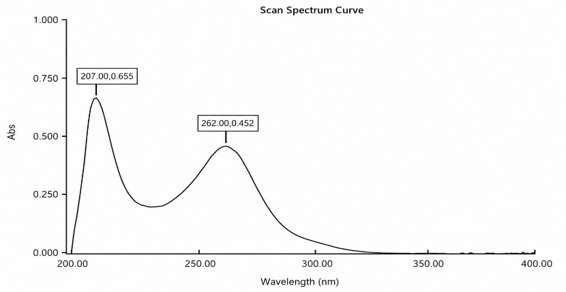
Figure 1 : UV spectrum of Posaconazole
Discussion: The maximum wavelength of Posaconazole was observed at 262 nm, which coincides with the findings.
3.3. Preparation of calibration curve of Posaconazole in Methanol
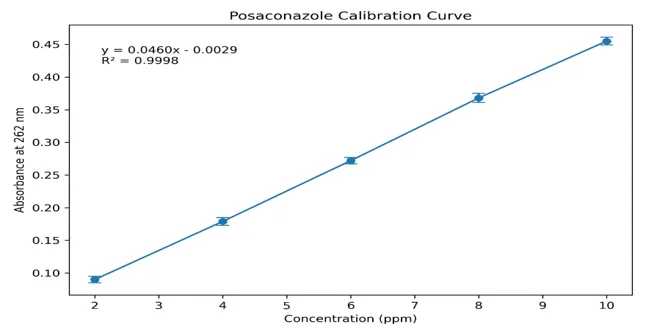
Figure 2: Calibration curve of Posaconazole(n=3)
Discussion: The calibration curve showed good linearity over the concentration range of 2–10 µg/mL, confirming the suitability of the UV spectrophotometric method for quantitative analysis. The graph displaying the standard curve of Posaconazole indicated a regression equation of y = 0.0460x-0.0029 and an R2 value of 0.9998, demonstrating excellent linearity.
3.4. Solubility studies of Posaconazole in various oils, surfactants and co-surfactants
|
Excipients |
Solubility of Posaconazole(mg/ml)±SD(n=3) |
|
OILS |
|
|
Capmul MCM NF |
7.3 ± 0.4 |
|
Oleic acid |
6.2± 0.3 |
|
Liquid paraffin |
4.5 ± 0.7 |
|
SURFACTANTS |
|
|
Tween 80 |
8.4 ± 1.4 |
|
Tween 20 |
5.0 ± 1.2 |
|
Cremophore EL |
3.7 ± 1.1 |
|
CO-SURFACTANTS |
|
|
Transcutol P |
8.0 ± 1.5 |
|
PEG 400 |
5.7± 1.6 |
|
PEG 200 |
3.1 ± 0.9 |
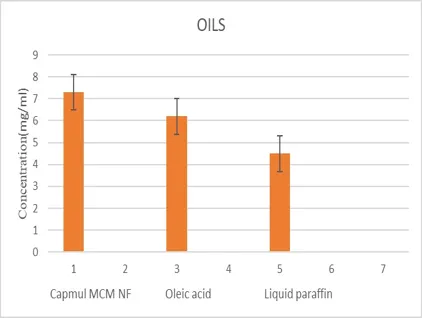
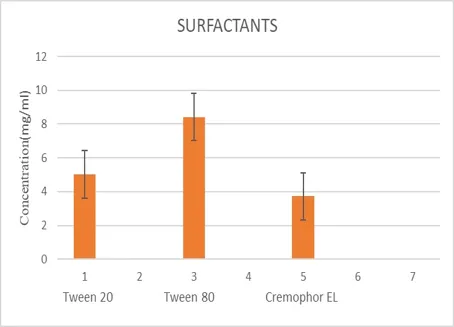
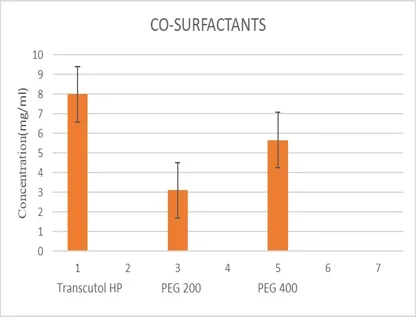
Figure 3 : Solubility of Posaconazole in Oils, Surfactants & Co-Surfactants
Discussion: Among the tested excipients, Capmul MCM NF, Tween 80, and Transcutol P demonstrated the highest solubilizing capacity for posaconazole. These excipients were therefore selected for nanoemulsion formulation.
3.5. Pseudoternary phase diagram by aqueous titration method
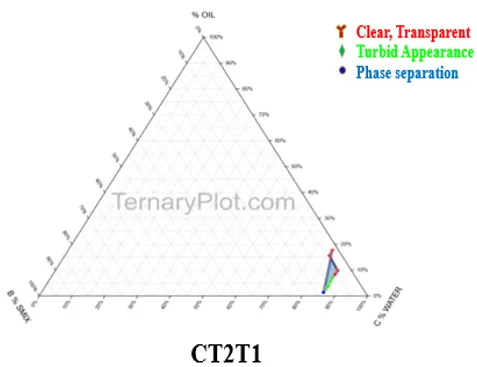
Figure 4 : Percentage composition of Oil & Surfactant+Co-Surfactant upon titration with water
Discussion : Pseudo-ternary phase diagrams prepared with different Smix ratios such as 1:1, 2:1, & 3:1. Among that 2:1 (Tween 80:Transcutol P) ratio produced the largest nanoemulsion region, indicating superior emulsification efficiency and formulation stability.
3.6. Formulation of Posaconazole Nanoemulsion
|
Formulation(mg) |
CT1T1 |
CT2T1 |
CT3T1 |
|
Posaconazole |
15 |
15 |
15 |
|
Capmul MCM NF |
192 |
192 |
192 |
|
Tween 80 |
864 |
1152 |
1296 |
|
Transcutol HP |
864 |
576 |
430 |
|
Water |
8000 |
8000 |
8000 |
Formulation of Chitosan Coated-Posaconazole Nanoemulsion
0.2% of Chitosan is prepared in acetic acid and added in the ratio of 1:1 to the above formulated posaconazole Nanoemulsion.
3.7. Characterization of Posaconazole & Chitosan Coated-Posaconazole Nanoemulsion
3.7.1. Thermodynamic stability studies
|
Formulation |
CENTRIFUGATION (3500 rpm for 30 min) |
FREEZE THAW CYCLE(-20 °C & +25°C )
|
||
|
Posaconazole Nanoemulsion |
Chitosan coated Posaconazole Nanoemulsion |
Posaconazole Nanoemulsion |
Chitosan coated Posaconazole Nanoemulsion |
|
|
CT1T1(1:9) |
PASS |
PASS |
PASS |
PASS |
|
CT2T1(1:9) |
PASS |
PASS |
PASS |
PASS |
|
CT3T1(1:9) |
PASS |
PASS |
PASS |
PASS |
Discussion: The prepared nanoemulsions successfully passed centrifugation and freeze–thaw studies without phase separation, creaming, or drug precipitation, demonstrating excellent physical stability.
3.7.2. Size and Zeta potential measurements
|
Formulation |
Droplet size(nm) |
Zeta potential(mV) |
PDI |
|
CT1T1(1:9) |
228.4 |
-18.6 |
0.412 |
|
CT2T1(1:9) |
142.6 |
-23.1 |
0.218 |
|
CT3T1(1:9) |
189.8 |
-20.4 |
0.367 |
|
CT2T1-CNE |
180.6 |
+32.4 |
0.210 |
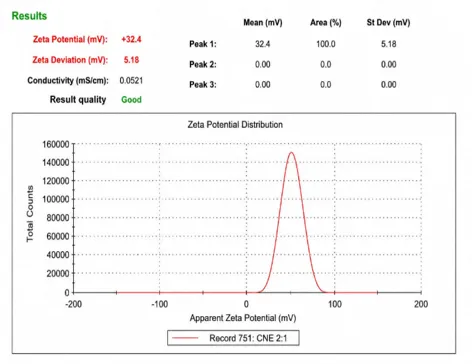
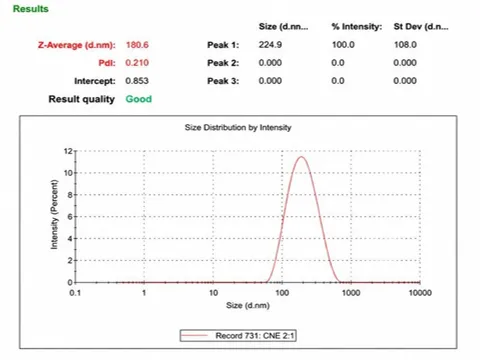
Figure 5: Droplet size of CT2T1-CNE (1:9) Figure 6: Zeta potential of CT2T1-CNE(1:9)
Discussion: The optimized nanoemulsion (2:1) exhibited nanosized droplets with a low polydispersity index, indicating a uniform size distribution. Chitosan coating increased particle size and shifted the zeta potential towards positive values, confirming successful surface coating and improved formulation stability.
3.7.3. Drug excipient studies by Fourier transform infrared Spectroscopy (FTIR)
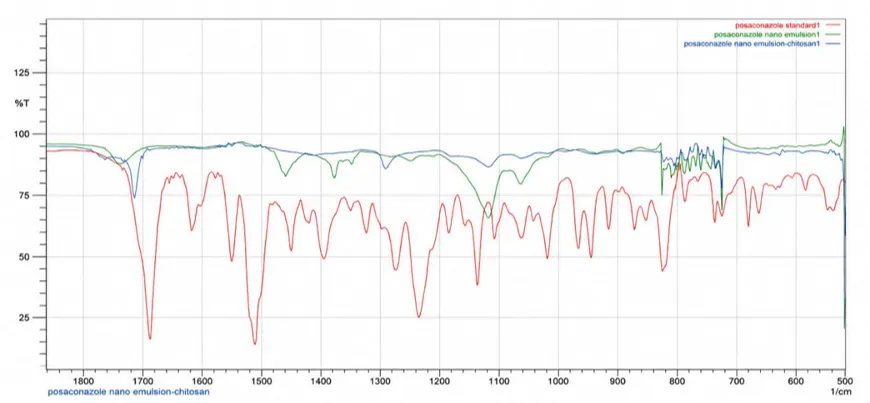
Figure 7: Comparative FTIR spectra of pure posaconazole, posaconazole nanoemulsion, and chitosan-coated nanoemulsion
Discussion: The FTIR spectra of pure posaconazole, posaconazole nanoemulsion, and chitosan-coated nanoemulsion confirmed the presence of the characteristic functional groups of the drug. Minor peak shifts and reduced intensities indicated successful drug encapsulation and chitosan coating without any significant chemical interaction, demonstrating the compatibility and stability of the formulation.
3.7.4. % Drug Content(n=3)
|
Formulation |
Posaconazole Nanoemulsion |
Chitosan coated Posaconazole Nanomulsion |
|
CT1T1(1:9) |
95.3%±0.6 |
94.7%±0.7 |
|
CT2T1(1:9) |
98.7%±0.3 |
98.1%±0.4 |
|
CT3T1(1:9) |
97.6%±0.4 |
97.3%±0.5 |
3.7.5. % Entrapment Efficiency(n=3)
|
Formulation |
Posaconazole Nanoemulsion |
Chitosan coated Posaconazole Nanomulsion |
|
CT1T1(1:9) |
82.4%±0.8 |
86.7%±0.7 |
|
CT2T1(1:9) |
91.3%±0.5 |
95.8%±0.4 |
|
CT3T1(1:9) |
88.6%±0.6 |
92.4%±0.5 |
3.7.6. % Transmittance(n=3)
|
Formulation |
Posaconazole Nanoemulsion |
Chitosan coated Posaconazole Nanomulsion |
|
CT1T1(1:9) |
98.86%±0.18 |
98.18%±0.22 |
|
CT2T1(1:9) |
99.31%±0.12 |
98.86%±0.15 |
|
CT3T1(1:9) |
99.08%±0.14 |
98.40%±0.19 |
Discussion: The developed formulations exhibited high drug content (94.7–98.7%), indicating uniform incorporation of posaconazole into the nanoemulsion system. The chitosan-coated nanoemulsions showed higher entrapment efficiency (86.7–95.8%) than the uncoated nanoemulsions, confirming improved drug encapsulation after chitosan coating. All formulations demonstrated excellent transmittance values (>98%), indicating the formation of clear and homogeneous nanoemulsions. Among all formulations, CT2T1 (1:9) showed the best overall performance with the highest drug content, entrapment efficiency, and transmittance, making it the optimized formulation for further studies.
3.7.7. In vitro drug release studies
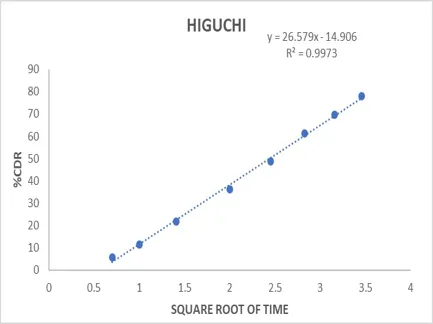
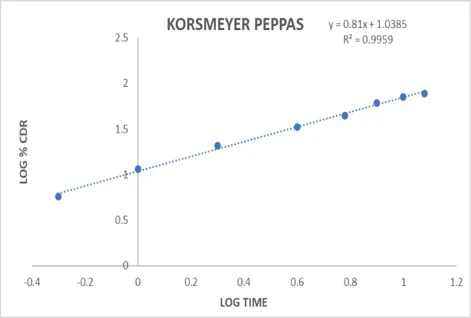
Figure 8: Comparative dissolution profile
Discussion: The in vitro drug release study demonstrated distinct release patterns for pure posaconazole, posaconazole nanoemulsion, and chitosan-coated posaconazole nanoemulsion. The nanoemulsion exhibited the highest drug release, reaching 98.3% within 12 hours, owing to its nanosized droplets, increased surface area, and improved drug solubility, which enhanced drug diffusion. In contrast, pure posaconazole showed a slower release profile (79.7%) because of its poor aqueous solubility. The chitosan-coated nanoemulsion provided a sustained release pattern, achieving 78.0% drug release over 12 hours. The polymer coating acted as a diffusion barrier, slowing drug release while maintaining a controlled and continuous release profile. Overall, the findings indicate that nanoemulsion significantly improves the dissolution of posaconazole, whereas chitosan coating effectively prolongs drug release, making it a promising system for sustained drug delivery.
3.7.8. Drug Release Kinetic Studies
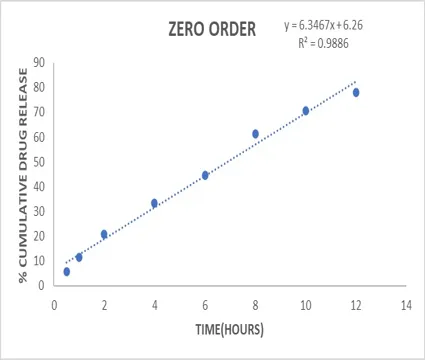
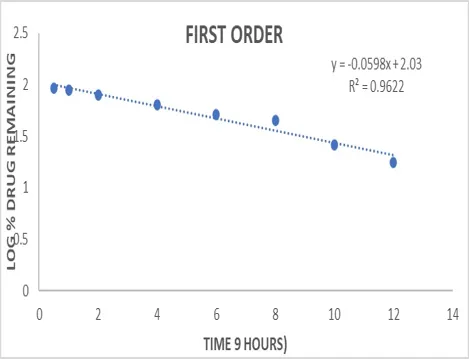
Figure 9 : Drug Release Kinetic Model Analysis of Chitosan-Coated Posaconazole Nanoemulsion
Discussion: The zero-order model showed good linearity (R² = 0.9886), indicating that the formulation released posaconazole at a nearly constant rate over the study period. The first-order model exhibited a lower correlation (R² = 0.9622), suggesting that drug release was not predominantly dependent on the concentration of the remaining drug.
Among all the models, the Higuchi model showed the highest correlation coefficient (R² = 0.9973), demonstrating that drug release was mainly controlled by diffusion through the hydrated chitosan matrix. This finding confirms the ability of the chitosan coating to regulate drug diffusion and provide sustained drug release.
The Korsmeyer–Peppas model also showed excellent linearity (R² = 0.9959) with a release exponent (n) of 0.81. This value indicates anomalous (non-Fickian) transport, where drug release occurs through a combination of diffusion and polymer relaxation. Overall, the kinetic analysis confirms that the optimized chitosan-coated nanoemulsion provides a controlled and sustained release of posaconazole, with diffusion being the predominant release mechanism.
3.7.9. Determination & Comparision of Antifungal activity of Pure drug, Posaconazole Nanoemulsion & Chitosan coated Posaconazole Nanoemulsion against Candida albicans
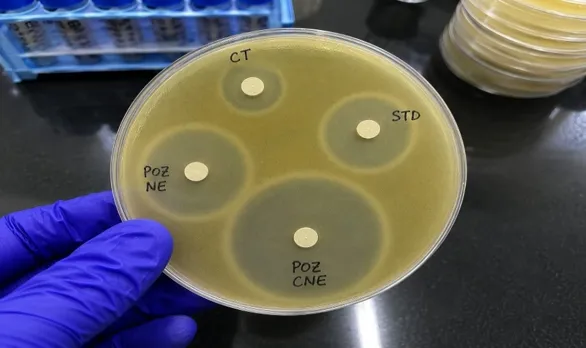
Figure 10 : Comparative Antifungal Activity against Candida albicans
The antifungal activity of pure chitosan (CT), standard posaconazole (STD), posaconazole nanoemulsion (POZ-NE), and chitosan-coated posaconazole nanoemulsion (POZ-CNE) was evaluated against Candida albicans using the agar well diffusion method. The zone of inhibition was measured after incubation to compare the antifungal efficacy of the different formulations.
Comparative Zone of Inhibition against Candia albicans
|
Sample |
Zone of Inhibition(mm) |
|
Chitosan(CT) |
13mm |
|
Standard Posaconazole(STD) |
27mm |
|
Posaconazole Nanoemulsion(POZ NE) |
33mm |
|
Chitosan-Coated Posaconazole Nanoemulsion(POZ CNE) |
42mm |
Discussion: The antifungal activity of pure chitosan, standard posaconazole, posaconazole nanoemulsion (POZ-NE), and chitosan-coated posaconazole nanoemulsion (POZ-CNE) was evaluated by the agar well diffusion method. Among all the formulations, POZ-CNE exhibited the largest zone of inhibition (42 mm), followed by POZ-NE (33 mm), standard posaconazole (27 mm), and chitosan (13 mm). These findings indicate that the chitosan-coated nanoemulsion possessed the highest antifungal activity against Candida albicans.
The improved antifungal effect of POZ-CNE may be attributed to enhanced solubility of posaconazole, uniform nanosized droplets, sustained drug release, and the mucoadhesive nature of chitosan. In addition, the positive charge of chitosan promotes stronger interaction with the negatively charged fungal cell membrane, facilitating greater drug penetration and inhibition of fungal growth. The enhanced activity of POZ-NE compared with the standard drug also suggests that nanoemulsion formulation improves drug availability. Overall, the results confirm that chitosan coating significantly enhances the antifungal efficacy of posaconazole nanoemulsion against Candida albicans.
CONCLUSION
The developed chitosan-coated posaconazole nanoemulsion was successfully formulated using Capmul MCM NF, Tween 80, and Transcutol P based on solubility studies. FTIR analysis confirmed drug–excipient compatibility without significant interactions. The optimized formulation exhibited desirable droplet size, low PDI, suitable zeta potential, high entrapment efficiency, and good physical stability.
The chitosan-coated nanoemulsion showed sustained drug release compared with the plain nanoemulsion, with release kinetics best fitting the Higuchi model, indicating diffusion-controlled release. It also exhibited greater antifungal activity against Candida albicans than the pure drug and uncoated nanoemulsion. Overall, the formulation improved solubility, stability, sustained drug release, and antifungal efficacy, indicating its potential as an effective drug delivery system for posaconazole.
REFERENCES



Rakshitha Burra, Dr. K. Anie Vijetha, Dr. M. Sunitha Reddy, Formulation And Invitro Evaluation of Chitosan-Coated Posaconazole Nanoemulsion for Enhanced Microbiological Antifungal Activity Against Candida Albicans, Int. J. of Pharm. Sci., 2026, Vol 4, Issue 8, 2967-2980, https://doi.org/10.5281/zenodo.22027096
 10.5281/zenodo.22027096