

We use cookies to ensure our website works properly and to personalise your experience. Cookies policy
Department of Pharmaceutics, College of Pharmacy, Madurai Medical College, Madurai-20. Affiliated to The Tamilnadu Dr M.G.R Medical University, Chennai-32, Tamilnadu India.
Lamotrigine is a poorly water-soluble antiseizure drug whose dissolution may limit the performance of conventional oral dosage forms. The present study aimed to formulate and evaluate lamotrigine orodispersible films (ODFs) containing a hydroxypropyl-?-cyclodextrin (HP?CD) inclusion complex to improve aqueous solubility and support rapid disintegration. A lamotrigine–HP?CD complex was prepared in an approximately 1:1 molar ratio by co-evaporation. Nine formulations (F1–F9) were prepared by solvent casting using HPMC E5 as film-forming polymer, sodium starch glycolate (SSG) as superdisintegrant and PEG 400 as plasticizer. The saturation solubility of lamotrigine increased from 0.1833 to 0.8265 mg/mL after HP?CD complexation, corresponding to a 4.51-fold enhancement. FT-IR spectral changes were consistent with alteration of the drug microenvironment after complexation without evidence of major chemical incompatibility. Prepared films showed mean weights of 240.81–261.61 mg, thickness of 0.18–0.23 mm, folding endurance of 81–145 folds, surface pH of 6.57–6.66, drug content of 96.891–99.467%, and disintegration times of 28–40 s. F6 showed 99.467% drug content, 28 s disintegration and 98.90% cumulative release at 13 min. Its release data best fitted the First-order model (R² = 0.9316). The corresponding ODF prepared without HP?CD released 82.27% at 13 min. These findings support HP?CD complexation combined with an optimized HPMC E5–SSG–PEG 400 film matrix as a promising strategy for a rapidly disintegrating lamotrigine ODF; further stability, palatability, ex-vivo, pharmacokinetic and in-vivo studies are required.
Orodispersible films are thin polymeric dosage forms designed to disintegrate rapidly in the oral cavity, generally without the need for water. Their small size, ease of handling and rapid hydration makes them relevant to patient-centered oral drug delivery, particularly when swallowing conventional tablets or capsules is difficult [1–4]. HPMC-based films are widely investigated because they can form clear, flexible matrices, while superdisintegrants and plasticizers can be used to modulate hydration, mechanical performance and disintegration [2,3,5].
Lamotrigine is an antiseizure drug used in the management of epilepsy. Its poor aqueous solubility can present a formulation challenge when rapid dissolution is desired. Cyclodextrins, including hydroxypropyl-β-cyclodextrin (HPβCD), are established complexing agents that can improve the apparent aqueous solubility and dissolution of poorly soluble drugs by accommodating hydrophobic regions of guest molecules within a relatively hydrophobic cavity while retaining a hydrophilic external surface [6–9]. Previous studies have reported the use of cyclodextrin complexation and oral thin-film approaches for lamotrigine [6,8–10].
For older adults, difficulty in swallowing can reduce the convenience of conventional solid oral dosage forms. An ODF that hydrates and disintegrates rapidly may therefore offer a practical administration advantage; however, patient acceptability, palatability, clinical performance and bioavailability require direct investigation before such benefits can be established [5].
The objective of the present study was to formulate and evaluate lamotrigine ODFs incorporating a lamotrigine–HPβCD inclusion complex. The study assessed preformulation characteristics, aqueous solubility enhancement, FT-IR compatibility, film physicochemical properties, in-vitro disintegration, dissolution, release kinetics and the dissolution difference between optimized F6 and a lamotrigine ODF prepared without HPβCD.
2.1 Materials
Lamotrigine was obtained from SM Pharma & Chemicals. HPβCD was obtained from Central Drug House. HPMC E5 was supplied by Apex Laboratories Private Limited, Chennai. Sodium starch glycolate (SSG), PEG 400, mannitol and citric acid were obtained from the suppliers listed in Table 1. Analytical work employed a Shimadzu UV–Visible double-beam spectrophotometer and a Shimadzu FT-IR spectrophotometer; dissolution and disintegration studies were performed using Lab India and Inlab Equipments instruments, respectively.
Table 1. Materials used for preparation of lamotrigine orodispersible films
|
Material |
Function/category |
Source |
|
Lamotrigine |
Active pharmaceutical ingredient |
SM Pharma & Chemicals |
|
Hydroxypropyl-β-cyclodextrin (HPβCD) |
Solubilizer/complexing agent |
Central Drug House |
|
HPMC E5 |
Film-forming agent |
Apex Laboratories Pvt. Ltd., Chennai |
|
Sodium starch glycolate (SSG) |
Superdisintegrant |
Sisco Research Laboratories |
|
PEG 400 |
Plasticizer |
Universal Scientific Appliances, Madurai |
|
Mannitol |
Sweetener/mouth-feel agent |
Universal Scientific Appliances, Madurai |
|
Citric acid |
Saliva-stimulating/pH-modifying agent |
Universal Scientific Appliances, Madurai |
2.2 Preformulation and UV–Visible analysis
Lamotrigine was visually evaluated for appearance, colour, odour and powder characteristics. The melting point was determined using a digital melting/boiling point apparatus. For determination of λmax, a 10 µg/mL lamotrigine solution in phosphate buffer pH 6.8 was scanned from 200 to 400 nm, and the wavelength of maximum absorption was recorded. A calibration curve was prepared over 2–10 µg/mL by measuring absorbance at 307.8 nm against phosphate buffer pH 6.8 as blank [11,12].
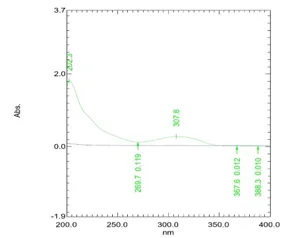
Figure 1. UV spectrum of lamotrigine in phosphate buffer pH 6.8 showing λmax at 307.8 nm.
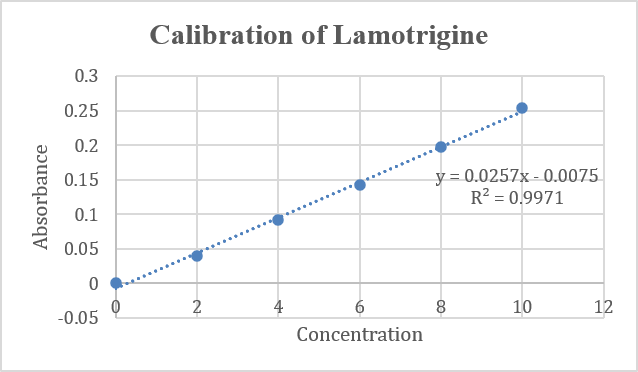
Figure 2. Calibration curve of lamotrigine in phosphate buffer pH 6.8.
2.3 Preparation of lamotrigine–HPβCD inclusion complex
Lamotrigine and HPβCD were used in an approximately 1:1 molar ratio. For a 25 mg lamotrigine equivalent, approximately 115.2 mg HPβCD was used. Lamotrigine was dissolved in a minimum sufficient quantity of methanol with sonication, after which HPβCD was added gradually under continuous stirring. The mixture was stirred to promote intimate contact and the solvent was evaporated at approximately 45–50 °C. The dried mass was pulverized, passed through sieve No. 80 and stored in a tightly closed container or desiccator until use [6,8,9].
2.4 Saturation solubility study
For the pure-drug study, 25 mg lamotrigine was added to 10 mL distilled water. For the complexed system, an amount of the prepared lamotrigine–HPβCD complex equivalent to 25 mg lamotrigine was dispersed in 10 mL distilled water. Samples were agitated on a rotary flask shaker at 30 rpm for 24 h at room temperature, then centrifuged and membrane-filtered. Clear filtrates were suitably diluted and analysed spectrophotometrically using the water-based calibration equation. The solubility enhancement ratio was calculated as the solubility in the presence of HPβCD divided by the solubility of pure lamotrigine [8,9,13].
2.5 FT-IR compatibility study
FT-IR spectra were recorded over approximately 4000–400 cm⁻¹ using the KBr pellet method for (i) pure lamotrigine, (ii) the lamotrigine–HPβCD inclusion complex and (iii) a physical mixture of lamotrigine, HPβCD and HPMC E5. Spectra were compared for shifts, broadening, masking, intensity changes, appearance of new bands or disappearance of characteristic drug bands [8,9].
2.6 Formulation of lamotrigine ODFs
Nine formulations (F1–F9) were prepared by solvent casting. Each 3 × 3 cm film was designed to contain 25 mg lamotrigine. The amounts of lamotrigine, HPβCD, mannitol and citric acid were kept constant, while HPMC E5, SSG and PEG 400 were varied as shown in Table 2. HPMC E5 was hydrated in purified water. The lamotrigine–HPβCD complex was dispersed separately, followed by mannitol and citric acid. SSG and PEG 400 were incorporated with continuous stirring, after which the drug-containing phase was combined with the hydrated polymer solution. The final dispersion was deaerated, cast on a clean levelled Petri dish, dried, peeled and cut into uniform units [10,14,16,17,18].
Table 2. Composition per 3 × 3 cm lamotrigine orodispersible film equivalent
|
Ingredient (mg) |
F1 |
F2 |
F3 |
F4 |
F5 |
F6 |
F7 |
F8 |
F9 |
|
Lamotrigine |
25 |
25 |
25 |
25 |
25 |
25 |
25 |
25 |
25 |
|
HPβCD |
115.2 |
115.2 |
115.2 |
115.2 |
115.2 |
115.2 |
115.2 |
115.2 |
115.2 |
|
HPMC E5 |
61.3 |
61.3 |
61.3 |
64.7 |
64.7 |
64.7 |
68 |
68 |
68 |
|
SSG |
6 |
8 |
10 |
6 |
8 |
10 |
6 |
8 |
10 |
|
PEG 400 |
5.81 |
5.81 |
5.81 |
10.81 |
10.81 |
10.81 |
15.81 |
15.81 |
15.81 |
|
Mannitol |
20 |
20 |
20 |
20 |
20 |
20 |
20 |
20 |
20 |
|
Citric acid |
8 |
8 |
8 |
8 |
8 |
8 |
8 |
8 |
8 |
|
Purified water |
q.s. |
q.s. |
q.s. |
q.s. |
q.s. |
q.s. |
q.s. |
q.s. |
q.s. |
2.7 Evaluation of ODFs
Prepared films were visually examined for colour, transparency, surface texture, flexibility, film-forming capacity, peelability and visible defects. Weight variation was determined using individual 3 × 3 cm films (n = 3). Thickness was measured at multiple film locations with a calibrated vernier caliper. Folding endurance was recorded as the number of repeated folds at the same position before breakage or visible failure. Surface pH was measured after moistening the film with approximately 1 mL distilled water and allowing hydration for about 60 s. Drug content was determined after extraction of one 3 × 3 cm film in phosphate buffer pH 6.8, followed by suitable dilution and UV analysis at 307.8 nm [19,20,21].
2.8 In-vitro disintegration
A 3 × 3 cm film was placed in a USP disintegration apparatus containing 900 mL phosphate buffer pH 6.8 maintained at 37 ± 0.5 °C. The basket was operated at 30 cycles/min, and the time required for the film to begin breaking and fully disperse was recorded [22,23,24,25].
2.9 In-vitro dissolution and release kinetics
Dissolution was studied using a USP Type I basket apparatus containing 900 mL phosphate buffer pH 6.8 at 37 ± 0.5 °C and 50 rpm. Each film contained 25 mg lamotrigine. Samples (1 mL) were withdrawn at 1, 3, 5, 7, 10 and 13 min, immediately replaced with an equal volume of pre-warmed medium, filtered, diluted as required and analysed at 307.8 nm. Cumulative percentage drug release was calculated from the calibration curve [26,27].
Release data were fitted to Zero-order, First-order, Higuchi and Hixson–Crowell models. The model with the highest coefficient of determination (R²) was considered the best mathematical description of release behaviour. F6 was selected for detailed kinetic interpretation and was additionally compared with a control ODF containing an equivalent dose of lamotrigine but no HPβCD under identical dissolution conditions [28,29].
3.1 Preformulation and analytical characterization
Lamotrigine appeared as a white to off-white crystalline, odourless powder with poor water solubility. Its melting point was approximately 217.2 °C, consistent with the reported range of approximately 216–218 °C in the thesis source. UV scanning in phosphate buffer pH 6.8 showed a λmax of 307.8 nm. The calibration curve was linear over 2–10 µg/mL, with the regression equation y = 0.0257x − 0.0075 and R² = 0.9971, supporting its use for quantitative estimation in the formulation and dissolution studies.
3.2 Solubility enhancement by HPβCD
Pure lamotrigine showed a saturation solubility of 0.1833 mg/mL (0.7157 mM) in distilled water. The lamotrigine–HPβCD system showed 0.8265 mg/mL (3.2274 mM), corresponding to a 4.51-fold enhancement. The result is consistent with the established role of hydroxypropyl cyclodextrins in increasing the apparent aqueous solubility of poorly soluble guest molecules through inclusion complexation.
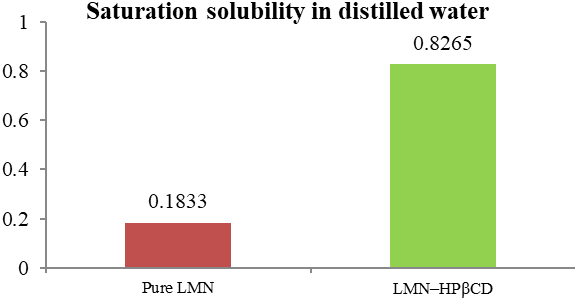
Figure 3. Saturation solubility of pure lamotrigine and the lamotrigine–HPβCD system.
3.3 FT-IR characterization and compatibility
Pure lamotrigine exhibited characteristic bands at approximately 3451, 3322 and 3215 cm⁻¹ for amino-associated N–H stretching; 1621 cm⁻¹ for C=N/triazine ring vibration; 1557, 1492 and 1433 cm⁻¹ for aromatic/ring vibrations; 1143 and 1110 cm⁻¹ for C–N stretching; and approximately 793 cm⁻¹ for aromatic C–H out-of-plane bending. In the lamotrigine–HPβCD complex, a broad intense band at approximately 3398 cm⁻¹ was associated primarily with HPβCD O–H stretching and overlapped the lamotrigine N–H region. The lamotrigine band at 1621 cm⁻¹ shifted slightly to approximately 1626 cm⁻¹, while bands around 1555 and 1434 cm⁻¹ were retained. Prominent bands at approximately 1156, 1082 and 1033 cm⁻¹ reflected the HPβCD carbohydrate framework. Broadening, masking and minor peak shifts are consistent with an altered molecular environment after complexation; importantly, no major new band indicating covalent bond formation or chemical degradation was observed.
The physical mixture retained the principal characteristic lamotrigine bands, with expected overlap from HPβCD and HPMC E5, supporting compatibility of the selected formulation components.
Figure 4. FT-IR spectra of pure lamotrigine, lamotrigine–HPβCD inclusion complex and the physical mixture.
Table 3. Selected FT-IR bands relevant to complex formation and compatibility
|
Sample / peak (cm⁻¹) |
Assignment |
Interpretation |
|
Pure LMN: 3451, 3322, 3215 |
N–H stretching |
Characteristic amino-group bands |
|
Pure LMN: 1621 |
C=N / triazine ring vibration |
Characteristic drug band |
|
LMN–HPβCD: 3398 |
O–H stretching with N–H overlap |
Broad HPβCD band; drug N–H region masked |
|
LMN–HPβCD: 1626 |
C=N / aromatic ring vibration |
Slight shift from pure drug (1621 cm⁻¹) |
|
LMN–HPβCD: 1156, 1082, 1033 |
C–O–C / C–O stretching |
Characteristic HPβCD framework |
|
Physical mixture: 3320 and 1620–1625 |
N–H; C=N/aromatic vibration |
Principal lamotrigine bands retained |
|
Physical mixture: 1150–1160, 1080–1110 |
C–O–C/C–O and overlapping C–N |
Expected polymer/cyclodextrin contributions |
3.4 Film formation and physical appearance
All nine formulations formed transparent films. F1–F3 showed good film-forming capacity and smooth surfaces. F4–F6 showed very good to excellent film formation with smooth, flexible films and good peelability; F6 was described as smooth, uniform and flexible with excellent film-forming capacity. F8 and F9 were tackier, and F9 was more difficult to peel cleanly. The appearance profile indicates that increasing polymer/plasticizer levels improved flexibility but excessive plasticization or solid content could adversely affect handling.
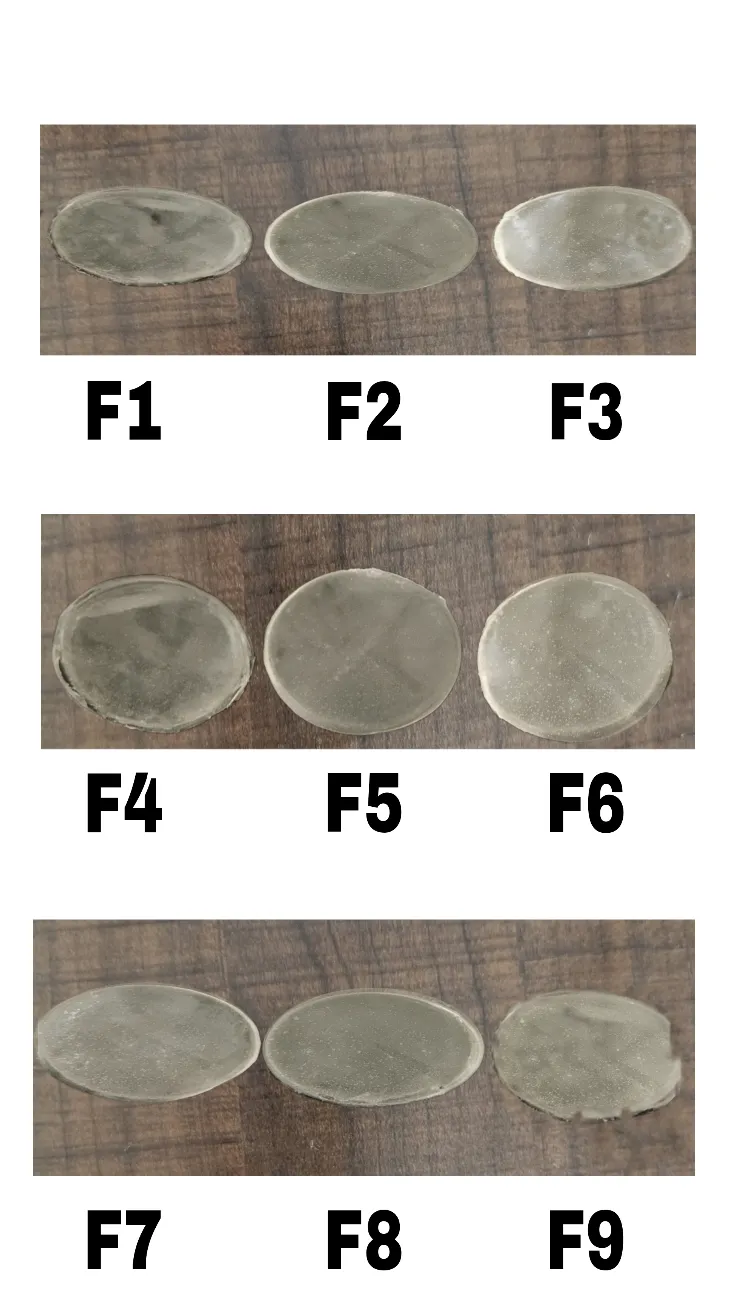
Figure 5. Physical appearance of lamotrigine orodispersible film formulations F1–F9.
3.5 Physicochemical evaluation of F1–F9
The mean film weight increased from 240.81 ± 3.9 mg (F1) to 261.61 ± 5.3 mg (F9), consistent with increasing total solid content. Thickness similarly increased from 0.18 ± 0.01 to 0.23 ± 0.02 mm. Folding endurance rose from 81 to 145 folds, suggesting increasing flexibility with higher HPMC E5 and PEG 400 levels. Surface pH remained narrowly distributed between 6.57 and 6.66, indicating near-neutral film surfaces. Drug content ranged from 96.891% to 99.467%; F6 showed the highest measured value (99.467%).
Table 4. Physicochemical evaluation of lamotrigine ODFs
|
Code |
Weight (mg) ± SD |
Thickness (mm) ± SD |
Folding endurance |
Surface pH |
Drug content (%) |
Disintegration (s) |
|
F1 |
240.81 ± 3.9 |
0.18 ± 0.01 |
81 |
6.58 |
97.427 |
39 |
|
F2 |
242.81 ± 4.2 |
0.19 ± 0.01 |
88 |
6.61 |
96.891 |
35 |
|
F3 |
244.81 ± 3.8 |
0.19 ± 0.02 |
95 |
6.64 |
97.668 |
31 |
|
F4 |
249.21 ± 4.5 |
0.20 ± 0.01 |
113 |
6.59 |
98.095 |
36 |
|
F5 |
251.21 ± 4.1 |
0.20 ± 0.02 |
120 |
6.66 |
99.362 |
31 |
|
F6 |
254.21 ± 5.1 |
0.21 ± 0.02 |
126 |
6.62 |
99.467 |
28 |
|
F7 |
257.61 ± 4.8 |
0.22 ± 0.02 |
132 |
6.6 |
98.387 |
40 |
|
F8 |
259.61 ± 4.6 |
0.22 ± 0.01 |
139 |
6.57 |
97.763 |
34 |
|
F9 |
261.61 ± 5.3 |
0.23 ± 0.02 |
145 |
6.65 |
98.426 |
33 |
3.6 In-vitro disintegration
Disintegration times ranged from 28 s (F6) to 40 s (F7). Within F1–F3, increasing SSG from 6 to 10 mg reduced disintegration from 39 to 31 s within F4–F6, the same increase reduced disintegration from 36 to 28 s. This trend is consistent with the water-uptake and swelling function of SSG. F7–F9 contained the highest HPMC E5 and PEG 400 levels; F7 showed the longest disintegration time (40 s), while increasing SSG reduced the time to 34 and 33 s in F8 and F9. The data suggest that rapid disintegration depended on the balance between superdisintegrant-driven hydration and the cohesiveness of the polymer–plasticizer matrix rather than on any single excipient alone.
3.7 In-vitro dissolution of F1–F9
All formulations showed progressive drug release over 13 min. Cumulative release at 13 min ranged from 86.28% (F1) to 98.90% (F6). Within each HPMC/PEG grouping, increasing SSG was associated with higher terminal release. F6 combined 64.7 mg HPMC E5, 10 mg SSG and 10.81 mg PEG 400, and produced the highest 13-min release with the shortest disintegration time. F7–F9, which contained higher HPMC E5 and PEG 400 levels, showed 93.29–96.23% release at 13 min, suggesting that the more cohesive matrix could partially offset the disintegration-promoting effect of SSG.
Table 5. Cumulative percentage drug release from lamotrigine ODFs
|
Time (min) |
F1 |
F2 |
F3 |
F4 |
F5 |
F6 |
F7 |
F8 |
F9 |
|
0 |
0.00 |
0.00 |
0.00 |
0.00 |
0.00 |
0.00 |
0.00 |
0.00 |
0.00 |
|
1 |
35.79 |
37.20 |
40.00 |
41.40 |
42.80 |
45.61 |
42.80 |
44.21 |
45.61 |
|
3 |
63.84 |
68.05 |
72.25 |
77.86 |
82.07 |
86.28 |
79.27 |
82.07 |
83.47 |
|
5 |
70.85 |
75.06 |
77.86 |
82.07 |
84.87 |
87.68 |
82.07 |
83.47 |
84.87 |
|
7 |
75.06 |
77.86 |
80.67 |
84.87 |
86.28 |
89.08 |
83.47 |
85.03 |
87.68 |
|
10 |
82.07 |
84.87 |
87.68 |
90.48 |
93.29 |
96.09 |
87.68 |
89.68 |
91.89 |
|
13 |
86.28 |
89.08 |
91.89 |
94.69 |
96.09 |
98.90 |
93.29 |
93.96 |
96.23 |
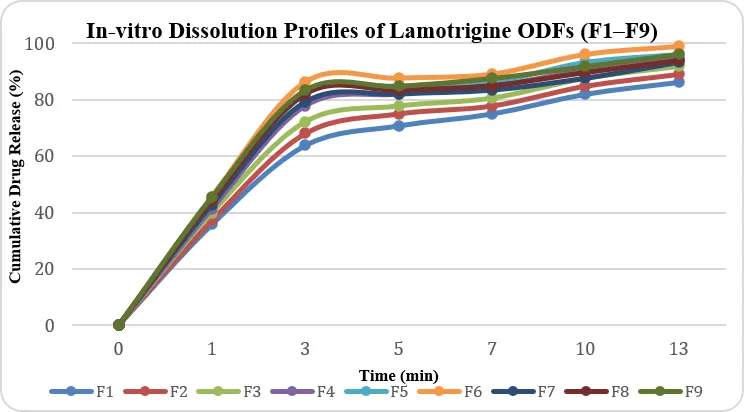
Figure 6. In-vitro dissolution profiles of F1–F9; F6 is emphasized as the optimized formulation.
3.8 Selection of optimized formulation F6
F6 was selected as the optimized formulation based on its combined physicochemical and performance profile rather than on a single parameter. It had a mean weight of 254.21 ± 5.1 mg, thickness of 0.21 ± 0.02 mm, folding endurance of 126 folds, surface pH of 6.62, drug content of 99.467%, disintegration time of 28 s and 98.90% cumulative release at 13 min. This combination provided adequate film integrity while retaining rapid hydration, disintegration and drug release.
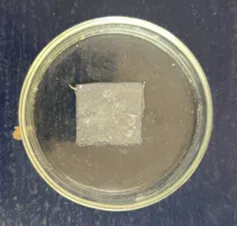
Figure 7. Representative optimized lamotrigine orodispersible film (F6).
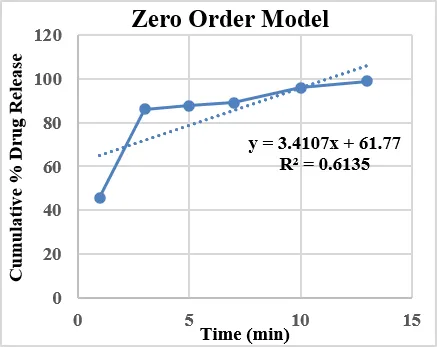
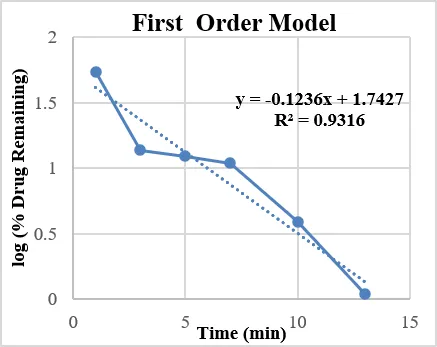
3.9 Drug-release kinetics of F6
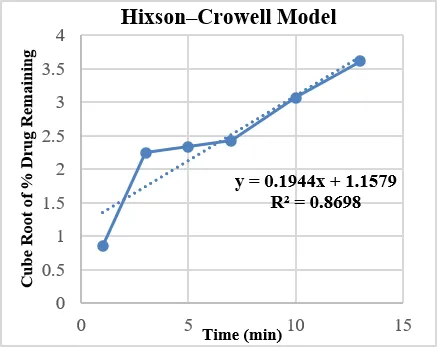
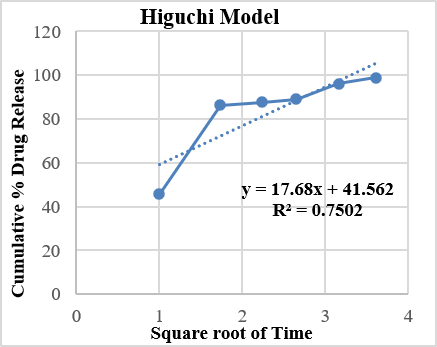
Among the four evaluated linear kinetic models, First-order kinetics provided the highest fit for F6 (R² = 0.9316), followed by Hixson–Crowell (R² = 0.8698), Higuchi (R² = 0.7502) and Zero-order (R² = 0.6135). The First-order slope was −0.1236 with intercept 1.7427. The source thesis reports a first-order release constant of K₁ = 0.2847 min⁻¹. The higher First-order fit indicates concentration-dependent release, while the Hixson–Crowell and Higuchi fits suggest additional contributions from matrix hydration, surface erosion and diffusion.
Table 6. In-vitro release kinetic parameters of optimized F6
|
Kinetic model |
Slope |
Intercept |
R² |
Linear equation |
Interpretation |
|
Zero order |
3.4107 |
61.7703 |
0.6135 |
y = 3.4107x + 61.7703 |
Concentration-independent |
|
First order |
−0.1236 |
1.7427 |
0.9316 |
y = −0.1236x + 1.7427 |
Concentration-dependent |
|
Higuchi |
17.6796 |
41.5627 |
0.7502 |
y = 17.6796x + 41.5627 |
Diffusion contribution |
|
Hixson–Crowell |
0.1944 |
1.1579 |
0.8698 |
y = 0.1944x + 1.1579 |
Surface erosion/geometry contribution |
3.10 Comparison of F6 with lamotrigine ODF without HPβCD
The effect of HPβCD was further examined by comparing optimized F6 with a lamotrigine ODF prepared without HPβCD. F6 released 45.61% at 1 min and 96.09% at 10 min, compared with 15.12% and 78.93%, respectively, for the control. At 13 min, F6 reached 98.90% release, whereas the control reached 82.27%. The faster profile is consistent with the 4.51-fold increase in measured saturation solubility after HPβCD complexation, together with rapid disintegration of the optimized film matrix.
Table 7. Comparative dissolution of optimized F6 and lamotrigine ODF without HPβCD
|
Time (min) |
F6 with HPβCD (%) |
ODF without HPβCD (%) |
|
0 |
0.00 |
0.00 |
|
1 |
45.61 |
15.12 |
|
3 |
86.28 |
46.71 |
|
5 |
87.68 |
64.32 |
|
7 |
89.08 |
73.17 |
|
10 |
96.09 |
78.93 |
|
13 |
98.90 |
82.27 |
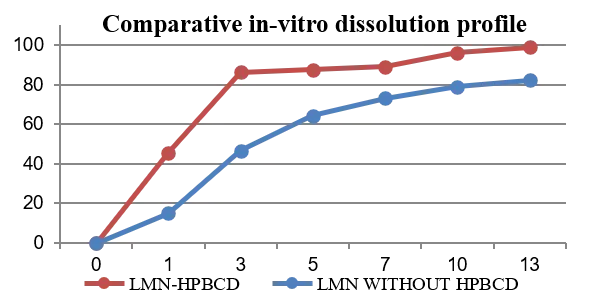
Figure 8. Comparative dissolution profiles of optimized F6 and lamotrigine ODF without HPβCD
4. CONCLUSION
Lamotrigine ODFs were successfully prepared by solvent casting using an HPβCD inclusion-complex approach. Complexation increased measured saturation solubility from 0.1833 to 0.8265 mg/mL (4.51-fold). FT-IR findings were consistent with interaction/inclusion of lamotrigine within the cyclodextrin environment without evidence of major chemical incompatibility. All nine formulations showed acceptable film formation, near-neutral surface pH, satisfactory drug content, rapid disintegration and substantial drug release. F6 provided the most favorable overall balance, with 99.467% drug content, 28 s disintegration and 98.90% release within 13 min. First-order kinetics showed the highest correlation for F6 (R² = 0.9316). The faster dissolution of F6 relative to an ODF prepared without HPβCD further supports the contribution of cyclodextrin complexation to dissolution enhancement. The formulation therefore represents a promising rapidly disintegrating oral-film platform; however, stability studies, taste and palatability evaluation, ex-vivo permeation, pharmacokinetic assessment and appropriate in-vivo studies are needed before conclusions regarding clinical performance or geriatric acceptability can be made.
5. LIMITATIONS AND FUTURE WORK
The study was limited to in-vitro formulation and performance testing. The source dataset did not report long-term or accelerated stability, taste-masking/palatability, tensile strength, moisture uptake, ex-vivo permeation, pharmacokinetic/bioavailability, in-vivo efficacy, or patient acceptability testing. No inferential statistical comparison between formulations was reported. Future work should address these points and should directly evaluate usability and acceptability in the intended older-adult population before the geriatric application is clinically inferred.
6. DECLARATIONS
Acknowledgement: The author gratefully acknowledges the Department of Pharmaceutics, College of Pharmacy, Madurai Medical College, Madurai, for providing the necessary facilities and laboratory support to carry out this research work. The author also expresses sincere gratitude to Dr. C. Pandian, M.Pharm., Ph.D., for his valuable guidance, supervision, encouragement, and support throughout the study.
Funding: This research received no external funding or financial support from any public, commercial, or not-for-profit funding agency.
Conflict of interest: The authors declare that there are no conflicts of interest related to this research work.
Ethics approval: Not applicable, no human participants, patient data, or clinical investigations were involved; therefore, institutional clinical ethics approval was not required.
Author contributions: M. Gunaseelan carried out the formulation work, experiments, data analysis, and preparation of the manuscript. Dr. C. Pandian supervised the research, provided guidance, and reviewed the manuscript.
REFERENCES

Pandian C, Gunaseelan M, Gowtham A, Praveen Kumar D, Pooja B, Formulation Development and Evaluation of Lamotrigine Orodispersible Film for Geriatric Application, Int. J. of Pharm. Sci., 2026, Vol 4, Issue 9, 3473-3486, https://doi.org/10.5281/zenodo.23010073
 10.5281/zenodo.23010073