

We use cookies to ensure our website works properly and to personalise your experience. Cookies policy
P. Wadhwani College of Pharmacy, Yavatmal, Maharahshtra
The present study focused on the formulation and evaluation of a herbal compact powder using rice starch as the primary natural ingredient. The formulation was developed using rice starch, sandalwood powder, nutmeg extract, magnesium stearate, glycerol, almond oil, rose water, and other herbal ingredients to obtain a safe, smooth, and skin-friendly cosmetic product. The prepared compact powder was evaluated for various parameters including appearance, shade test, spreadability, homogeneity, skin irritation, pay-off test, and pressure test. The formulation exhibited good spreadability, smooth texture, satisfactory adhesion, and effective oil absorption properties. The pH of the formulation was found within the skin-compatible range (5.0–7.0), and no irritation or adverse reactions were observed during evaluation studies. The developed herbal compact powder showed good stability, cosmetic acceptability, and consumer-friendly characteristics. Thus, rice starch-based herbal compact powder can be considered a safe, economical, and eco-friendly alternative to conventional cosmetic powders.
In recent years, the cosmetic industry has witnessed a substantial shift toward the development of natural, herbal, and sustainable products. Consumers are increasingly preferring plant-based cosmetic formulations due to their perceived safety, eco-friendliness, biocompatibility, and reduced risk of adverse skin reactions compared to synthetic products. This growing inclination toward “green beauty” has encouraged researchers and cosmetic manufacturers to explore naturally derived ingredients that can provide both functional and therapeutic benefits.
Cosmetics are widely used to enhance physical appearance, improve skin texture, and maintain overall skin health. Among various cosmetic products, compact powder is one of the most commonly used facial formulations because of its ability to absorb excess oil, reduce facial shine, provide an even skin tone, and impart a smooth matte finish. Conventional compact powders, however, often contain synthetic fillers, preservatives, talc, and artificial additives that may lead to skin irritation, allergic reactions, pore blockage, or long-term dermatological concerns in sensitive individuals. Therefore, there is an increasing need to develop safer and naturally derived alternatives with improved skin compatibility.
Rice starch, obtained from the grains of Oryza sativa, has emerged as a promising natural ingredient in cosmetic formulations. It is a fine, white, gluten-free polysaccharide mainly composed of amylose and amylopectin. Rice starch has been used traditionally in skincare preparations due to its excellent absorbent, soothing, softening, and mattifying properties. Because of its lightweight texture and hypoallergenic nature, it is considered suitable for all skin types, including sensitive and reactive skin.
In cosmetic applications, rice starch acts as a natural absorbent that effectively controls excess sebum and moisture, thereby reducing skin shine and providing a long-lasting matte appearance. Its silky texture enhances the spreadability and sensory characteristics of formulations, while its soothing nature helps reduce irritation and redness. These multifunctional properties make rice starch a valuable ingredient in products such as face powders, baby powders, dry shampoos, and skincare formulations.
The present study focuses on the formulation and evaluation of a herbal compact powder using rice starch as the primary base material. In this formulation, rice starch serves as a natural substitute for synthetic cosmetic powders and is combined with other skin-friendly herbal ingredients to develop a product that not only improves appearance but also nourishes and protects the skin. The incorporation of eco-friendly and biodegradable ingredients into cosmetic formulations aligns with the increasing global demand for sustainable beauty products and clean-label cosmetics.
Furthermore, rice starch contributes significantly to the overall quality and performance of compact powder formulations through its excellent texturizing, absorbent, and mattifying effects. It improves product consistency, enhances skin feel, and provides a velvety finish without causing dryness or irritation. Due to these beneficial characteristics, rice starch-based compact powder represents a safer, economical, and environmentally sustainable alternative to conventional cosmetic products.
Thus, the development of herbal compact powder containing rice starch reflects an innovative approach toward the preparation of natural cosmetic formulations with improved safety, functionality, and consumer acceptability.
MATERIALS AND METHOD:
Rice Starch
Rice starch, also known as Oryza starch, rice powder, Oryza sativa starch, or Amylum oryzae, belongs to the family Poaceae (Gramineae). It is obtained from the grains of Oryza sativa and is widely utilized in cosmetic, pharmaceutical, and food industries because of its excellent absorbent and soothing properties. Chemically, rice starch primarily contains amylose and amylopectin along with small amounts of proteins, lipids, moisture, and minerals. Due to its fine particle size and soft texture, rice starch provides a smooth and silky feel when applied to the skin. In compact powder formulations, it acts as a natural absorbent that helps in controlling excess oil and imparting a mattifying effect to the skin. Additionally, it is used as a binder and diluent in pharmaceutical tablet formulations. Its mild and hypoallergenic nature makes it highly suitable for sensitive skin preparations and herbal cosmetic products.
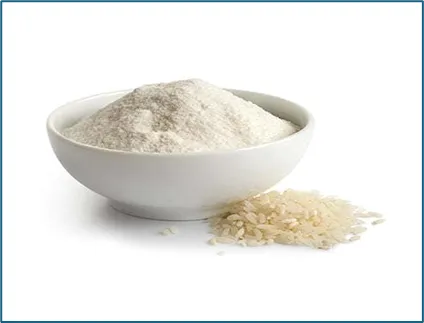
Fig. No. 1: Rice Starch
Sandalwood Powder
Sandalwood powder, commonly known as Santalum album or true sandalwood, is obtained from the heartwood, stems, and roots of Santalum album Linn., belonging to the family Santalaceae. It is widely distributed and cultivated in Southern India, where it is highly valued for its medicinal and cosmetic properties. Sandalwood contains more than 90% sesquiterpenic alcohols, mainly alpha-santalol and beta-santalol, which are responsible for its characteristic aroma and therapeutic activities. In cosmetic formulations, sandalwood powder is extensively used for improving skin elasticity, evening out skin tone, and promoting skin brightening. It also possesses anti-inflammatory properties that help in reducing blemishes, soothing skin irritation, and treating acne. Because of these beneficial effects, sandalwood powder is considered an important herbal ingredient in skincare and cosmetic preparations.
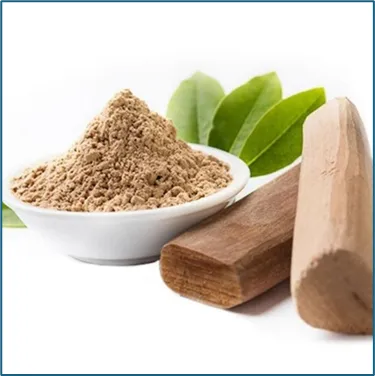
Fig. No. 2: Sandalwood Powder
Nutmeg Powder
Nutmeg powder, also known as Myristica or Nux Moschata, is obtained from the dried kernels of the seeds of Myristica fragrans Houtt., which belongs to the family Myristicaceae. Nutmeg is indigenous to the Malacca Islands and is widely cultivated in Indonesia, Caribbean islands, and other tropical regions. In India, it is mainly cultivated in Kerala and Tamil Nadu. Chemically, nutmeg contains 5–15% volatile oil along with lignin, stearin, and gum. The major active constituents present in nutmeg are sabinene, 4-terpinol, and myristicin. Nutmeg possesses significant cosmetic and therapeutic properties due to its antioxidant, antimicrobial, and anti-inflammatory activities. In herbal cosmetic formulations, it is commonly used to improve skin appearance, reduce acne and blemishes, and provide a rejuvenating effect to the skin. Its pleasant aroma and skin-enhancing properties make it a valuable ingredient in compact powder and other skincare products.
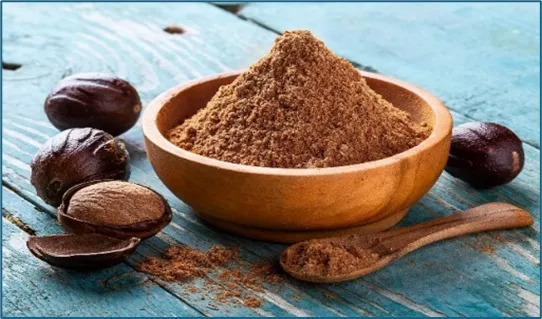
Fig. No. 3: Nutmeg
Nutmeg extraction:
Samples of Myristica fragrans (Nutmeg) were collected from store. The compact powder was prepared from Ethanolic extract of Myristica fragrans. 15 g of the powder seed of plant were extracted with 250 ml of ethanol solution by means Soxhlet extraction for 5-6 hrs. Remove extract from RBF and filtered through Whattman filter paper and filtrate was collected and evaporated at Rotary evaporator. Finally extract powder was collected.
List of ingredients:
|
Sr. No. |
Ingredient |
Quantity |
Uses |
|
1 |
Rice Starch |
3gm |
Adhesive agent |
|
2 |
Sandalwood powder |
2gm |
Anti-oxidant |
|
3 |
Nutmeg powder |
0.5gm |
Adhesive agent |
|
4 |
Magnesium stearate |
2gm |
Lubricating agent |
|
5 |
Glycerol |
1ml |
Binding agent |
|
6 |
Formaldehyde |
0.5ml |
Preservative |
|
7 |
Rose water |
q.s |
Vehicle |
|
8 |
Almond oil |
0.5ml |
Flavouring agent |
Chemicals: Rice starch, sandalwood powder, nutmeg powder, magnesium stearate, glycerol, almond oil, formaldehyde, rose water.
Glassware’s and Instruments: beaker, mortar pestle, stirrer, weighing balance, petri dish.
EXPERIMENTAL WORK:
Process Of Starch Extraction
1.Take two cups of rice and soak them in water for about 2 hours.
2.After soaking, grind the rice properly to obtain a smooth batter.
3.Filter the rice batter through a muslin cloth to separate the starch slurry.
4.Collect the slurry and spread it evenly in a flat dish or tray.
5.Allow the slurry to dry until it forms granules or a semi-solid mass.
6.Grind the dried granules again to obtain a fine and soft rice starch powder.
7.Store the prepared starch powder in a clean, dry container for further use
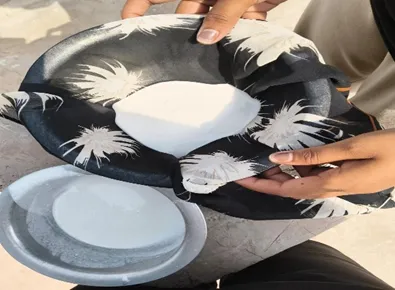
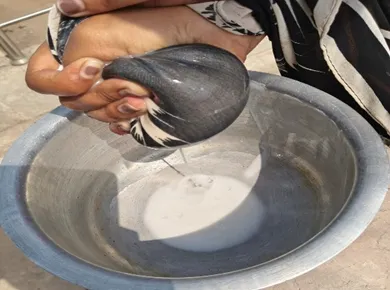
Fig. no 4 Starch Extraction
Formulation Process
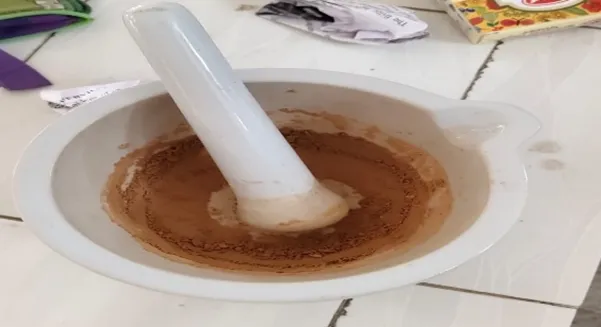
Fig no. 5 Trituration
EVALUATION TEST:
1. Shade Test:
In this test, the variations of color shade is determined and controlled. By spreading the powder sample on a white paper, it is carried out and the appearance is observed compared to the normal one. Another procedure involves adding powder and standard samples to the skin with the aid of puff and then comparing them. For the final product, the puff used to conduct this test is also used. The color assessment is carried out using artificial light.
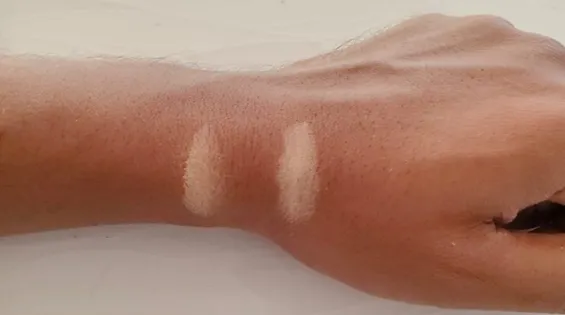
Fig. no: 6 Shade test
2. Pay-off Test:
This test is carried out to check the adhesive property of powders with the puff. This test is mainly carried out on compact powders.
3. Pressure Test:
Compaction Purpose in Compact powder, Pressure required. Uniform Pressure should be applied to avoid formulation of air pockets, which will lead to either breaking or cracking of compact powder. This is because Low Pressure will make the Compact powder soft, whereas high pressure will lead to formulation of hard cake.
4. Particle Size Determination:
With the help of microscope, sieve analysis or by utilizing other technique and instrument, particle size of powder is determined 5. Abrasive Character: Abrasive Character of Powder can be determined by, rubbing the powder on a smooth surface of the skin. Then with the Help of a microscope, the effect of powder is studied.
5. Water Resistance Test:
To determine the powder’s resistance to water. Apply the compact powder to a glass slide or human skin. Sprinkle water or immerse the sample for a specific time. Observe if the powder remains intact or gets washed off. Compare with a standard compact powder.
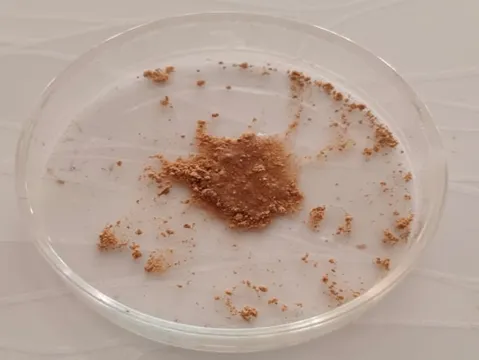
Fig. No.: 7 Water Resistance Test
6.Skin Irritation Test:
To check for irritation or allergic reactions on the skin Apply a small amount of compact powder on a patch of skin (forearm or behind the ear). Observe for any redness, itching, or inflammation over 24–48 hours. Compare results with a standard cosmetic formulation.
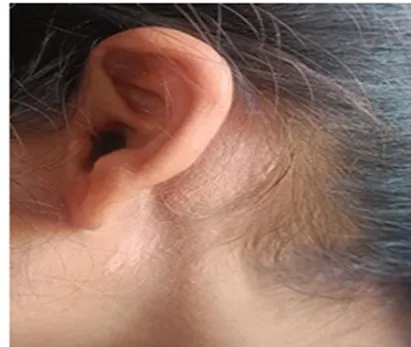
Fig. No.: 8 Skin Irritation Test
7. Bulk density:
Bulk Density is the ratio of a powder's given mass to its bulk volume. The appropriate quantity of powder is dried and filled into a 50 ml measuring cylinder with a maximum of 50 ml. Then, from a height of 1 inch at 2 second intervals, the cylinder is lowered onto a hard wood surface. Measure the volume of the powder. The powder is then measured. To get average values, this is repeated. The bulk density is determined using the formula given below.
Bulk Density = Mass/Volume
8.Adhesion Test:
To determine how well the powder adheres to the skin. Apply the powder to the skin.Rub lightly with a dry cotton pad.Check the amount of powder remaining on the skin.Compare with a commercial compact powder.
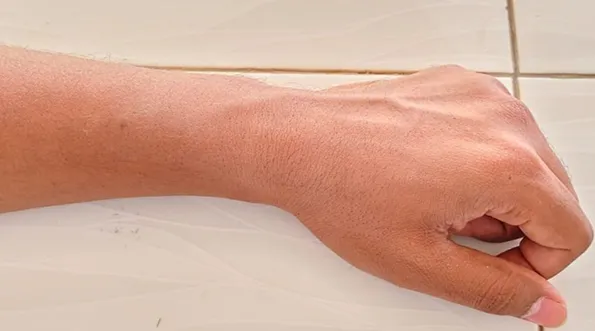
Fig no.: 9 Adhesion Test
9. Tapped density:
Clean with hot water in a crucible for 15 minutes and ignite at a temperature not exceeding 450 °C. In mg, the weight is subtracted from the total ash weight of this residue. Calculate the water-soluble ash content per g of air-dried material, in mg.
10.Spreadability Test:
To evaluate how easily the powder spreads on the skin. Apply a fixed amount of powder on a smooth glass plate or skin. Spread it using a standard applicator. Measure the spread diameter. Compare with the spread ability of a standard powder.

Fig no.: 10 Spreadability Test
RESULT AND DISCUSSION:
The result was found in compact powder PH was 5.0-7.0 and appearance was brownish, homogeneity was good and spread ability was smooth in compact powder.
Observation table:
|
Parameter |
Observation |
|
Appearance |
Brownish |
|
Spreadability |
Smooth |
|
pH |
5.0 to 7.0 |
|
Homogeneity |
Good |
Identification Test:
Identification test of Powder:
|
Sr. No. |
Physical properties & test |
Description |
|
1 |
Physical State |
Dry Solid Powder |
|
2 |
Color |
Natural nude |
|
3 |
Odor |
Mind and earthy |
|
4 |
Solubility |
Insoluble |
|
5 |
Melting Point |
Not specific |
Evaluation of final formulation:
Various tests for compact face powder were performed such as Shade test, Pay-off test, Pressure test, Breakage test, and Abrasive test and further evaluated.
|
Sr. No. |
Evaluation Test |
Observation |
|
1 |
Shade test |
Passed |
|
2 |
Pay-off test |
Passed |
|
3 |
Pressure test |
Passed |
|
4 |
Skin Irritation Test |
Passed |
|
5 |
Abrasive test |
Passed |
SUMMARY AND DISCUSSION:
Physical and Organoleptic Characteristics
The prepared herbal compact powder exhibited satisfactory physical and organoleptic properties, indicating the successful development of a stable and aesthetically acceptable cosmetic formulation. The powder possessed a uniform, fine, soft, and smooth texture with good compactness and compressibility. The prepared formulation spread evenly over the skin surface and produced a natural matte finish without forming rough patches or uneven layers. The compact powder also demonstrated acceptable color uniformity and a pleasant fragrance, which enhanced the overall sensory appeal of the product. During application, the formulation imparted a smooth and comfortable skin feel, thereby improving user acceptability and cosmetic elegance.
Sebum Control and Oil Absorption Capacity
One of the important functional characteristics of the developed compact powder was its effective oil absorption and sebum-controlling ability. The formulation showed excellent absorbent properties due to the presence of rice starch and other natural absorbent ingredients incorporated into the preparation. After topical application, the compact powder effectively minimized excess facial oil and reduced unwanted skin shine. The mattifying effect remained effective for approximately 6–8 hours, helping to maintain a fresh and non-greasy appearance for a prolonged period. These findings suggest that the formulation can be effectively used by individuals with oily and combination skin types for daily cosmetic purposes.
Skin Compatibility and pH Evaluation
The pH of the prepared compact powder formulation was found to be within the skin-compatible range of 4.5–6.5, which is considered suitable for topical cosmetic applications. Maintenance of an appropriate pH is essential in cosmetic formulations to avoid skin irritation, dryness, itching, and disruption of the normal skin barrier. The observed pH indicates that the prepared compact powder is mild, safe, and compatible with different skin types, including sensitive skin. No signs of redness, irritation, or discomfort were observed during application studies, confirming the skin-friendly nature of the formulation.
Stability Studies
Stability evaluation plays an important role in determining the shelf-life and quality maintenance of cosmetic formulations during storage. The prepared herbal compact powder was subjected to different storage conditions involving variations in temperature and humidity. Throughout the stability study period, no significant changes were observed in the formulation with respect to color, texture, odor, spreadability, appearance, or compactness. The powder retained its smooth consistency and cosmetic properties without any evidence of cracking, discoloration, microbial growth, or phase separation. These findings indicate that the developed formulation possesses good physical and chemical stability and can remain effective during normal storage conditions.
Microbiological Evaluation
Microbiological testing of the prepared compact powder confirmed that the formulation was within the permissible microbial limits recommended for cosmetic products. The formulation did not show any significant microbial contamination during the study period, demonstrating acceptable hygienic quality and safety for routine topical application. The incorporation of suitable ingredients and proper handling during formulation preparation contributed to maintaining microbial stability and product safety.
Spreadability and Adhesive Properties
The prepared compact powder exhibited good spreadability and appropriate adhesion to the skin surface after application. The formulation spread uniformly over the skin without producing clumping or uneven distribution. It adhered properly to the skin and remained intact for a longer duration with minimal powder loss, indicating satisfactory binding and compressing characteristics. These properties are highly desirable in compact powder formulations as they improve product performance, user convenience, and long-lasting cosmetic appearance.
User Acceptance and Sensory Evaluation
A preliminary user acceptance study was carried out to assess the cosmetic performance and consumer satisfaction associated with the prepared herbal compact powder. Most participants reported positive feedback regarding the texture, smoothness, oil-control efficiency, ease of application, and overall appearance produced by the formulation. Users experienced a comfortable and refreshing skin feel without any signs of dryness, itching, irritation, or redness. The pleasant fragrance and natural matte finish further contributed to the acceptability of the product. These observations indicate that the prepared formulation possesses good consumer compliance and cosmetic appeal.
Comparison with Commercial Compact Powders
The performance of the prepared herbal compact powder was compared with commercially available compact powder formulations. The developed formulation demonstrated comparable results in terms of smoothness, spreadability, oil absorption capacity, and skin compatibility. However, the herbal compact powder offered additional advantages due to the incorporation of natural and eco-friendly ingredients. Unlike many synthetic cosmetic products, the prepared formulation reduced dependence on artificial chemicals and provided a safer alternative with lower risk of skin irritation and adverse effects. This highlights the potential of herbal compact powders as sustainable and skin-friendly cosmetic products.
The formulated herbal compact powder demonstrated satisfactory overall performance and may serve as a suitable alternative to conventional talc-based cosmetic powders. The formulation successfully fulfilled important evaluation parameters including smooth texture, efficient oil absorption, good spreadability, proper adhesion, microbial safety, and formulation stability. The product was specifically designed using mild and skin-friendly ingredients to ensure suitability for various skin types and routine cosmetic use.
The optimized formulation consisted of rice starch, magnesium stearate, glycerol, almond oil, turmeric, formaldehyde, and rose water in suitable proportions. The combined action of these ingredients contributed significantly toward improving texture, enhancing oil absorption capacity, maintaining skin smoothness, and providing better overall cosmetic performance. Rice starch acted as the major absorbent and mattifying agent, while almond oil and glycerol helped maintain skin softness and hydration. Turmeric contributed additional herbal and skin-protective benefits, whereas rose water improved fragrance and skin freshness.
Based on the evaluation studies, the developed compact powder exhibited satisfactory appearance, color uniformity, smoothness, spreadability, and topical performance without causing irritation or discomfort. Therefore, the prepared formulation can be considered effective, stable, safe, and cosmetically acceptable for daily application. Further research may be carried out by incorporating additional herbal or bioactive ingredients to enhance the therapeutic, protective, and aesthetic properties of the formulation.
CONFLICT OF INTEREST:
None
REFERENCES

Pallavi Patange, Bhuvan Pawar, Vedant Palkandwar, Ajinkya Gulhane, Dr. M D Kitukale, Formulation of Herbal Compact Powder from Rice Starch, Int. J. of Pharm. Sci., 2026, Vol 4, Issue 5, 7141-7151. https://doi.org/10.5281/zenodo.20404830
 10.5281/zenodo.20404830