

We use cookies to ensure our website works properly and to personalise your experience. Cookies policy
Department of Pharmaceutics, Rani Chennamma College of Pharmacy, Belagavi-10, Karnataka, India
Excessive exposure to ultraviolet (UV) radiation is associated with erythema, photoaging, and skin malignancies, while prolonged use of synthetic sunscreens raises concerns regarding skin irritation and environmental toxicity. Hence, plant-based alternatives rich in antioxidant phytoconstituents offer a promising and safer approach to photoprotection. The present study aimed to develop, optimize, and evaluate herbal sunscreen spray incorporating Morinda citrifolia leaf extract. Fresh leaves of M. citrifolia were extracted using 95% ethanol, and preliminary phytochemical screening confirmed the presence of flavonoids, phenolic compounds, alkaloids, tannins, terpenoids, glycosides, and saponins. Four herbal sunscreen spray formulations (F1–F4) were prepared by altering the concentrations of the leaf extract and Tween 80. A 2² factorial experimental design was applied to evaluate its influence on sun protection factor (SPF), with statistical analysis performed using Design-Expert® software. All formulations exhibited acceptable physicochemical properties, including suitable pH (4.62–5.22), low viscosity (6.22–9.99 cP), optimal spray angle (<65°), good homogeneity. SPF determination using the UV-spectrophotometric method showed SPF values ranging from 32 to 43. Formulation F4 demonstrated the highest SPF (43) and was identified as the optimized formulation. ANOVA confirmed that extract concentration significantly influenced SPF (p < 0.05). The optimized formulation was further evaluated for antioxidant activity and stability, both of which yielded favourable outcomes. Comparative analysis with a marketed product revealed a higher SPF for the optimized formulation. Overall, the study demonstrated that Morinda citrifolia leaf extract can be effectively utilized to formulate a stable, and efficient herbal sunscreen spray.
Sunlight is composed of a broad spectrum of electromagnetic radiation, including ultraviolet (UV), visible, and infrared components. The ultraviolet region, ranging from 200 to 400 nm, is subdivided into UVA (320–400 nm), UVB (280–320 nm), and UVC (200–280 nm). While UVC radiation is largely filtered by the atmospheric ozone layer, UVA and UVB penetrate the Earth’s surface and exert significant biological effects on human skin. Limited exposure to UV radiation is beneficial for cutaneous vitamin D? synthesis; however, excessive or prolonged exposure results in erythema, premature skin aging, pigmentation disorders, immunological alterations, and an increased risk of skin cancer.2,3
The skin functions as the body’s primary protective interface against environmental stressors, including ultraviolet radiation. Chronic UV exposure induces oxidative stress, leading to degradation of collagen and elastin fibers, disruption of epidermal integrity, and DNA damage within skin cells. These pathological changes collectively contribute to photoaging and photocarcinogenesis, thereby emphasizing the need for effective photoprotective strategies.4,5,6
Topical sunscreens are widely used to protect the skin from UV-induced damage by absorbing, reflecting, or scattering ultraviolet radiation. Conventional sunscreen formulations predominantly rely on synthetic organic or inorganic UV filters. Despite their proven efficacy, long-term use of synthetic sunscreens has raised concerns related to skin irritation, allergic responses, hormonal interference, and adverse environmental effects, particularly coral reef toxicity. Consequently, there is growing interest in the development of safer, environmentally sustainable alternatives.7
Herbal sunscreens incorporate plant-derived extracts rich in polyphenols, flavonoids, and other antioxidant constituents that possess inherent UV-absorbing and free radical-neutralizing properties. Morinda citrifolia (Noni) is a medicinal plant known for its diverse phytochemical composition and wide range of pharmacological activities. Although various parts of the plant have been extensively studied, scientific evidence supporting the application of M. citrifolia leaf extract in topical sunscreen formulations, particularly in spray dosage forms, remains limited.8,9
Topical spray systems offer several advantages over conventional creams and lotions, including ease of application, uniform distribution, rapid drying, non-greasy texture, and improved patient compliance. Spray formulations are particularly suitable for covering large or difficult-to-reach skin areas. However, formulation and optimization of herbal sunscreen sprays remain underexplored.10,11
In this context, the present investigation was designed to formulate, optimize, and evaluate a herbal sunscreen spray containing Morinda citrifolia leaf extract. A systematic formulation approach using a 2² factorial design was employed to assess the influence of formulation variables on sun protection factor (SPF). The developed formulations were evaluated for physicochemical characteristics, antioxidant activity, SPF, stability, and comparative performance with a marketed sunscreen product.
MATERIALS AND METHODS:
Fresh leaves of Morinda citrifolia L. were collected from the campus of Rani Chennamma College of Pharmacy, Belagavi, Karnataka, India. Methyl paraben, propyl paraben, Tween 80, and propylene glycol (analytical grade) were procured from Burgoyne Burbidges, Bengaluru. All other chemicals and reagents used were of analytical grade.
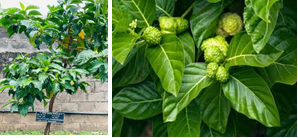
Figure 1: Morinda citrofolia
The plant material was taxonomically authenticated by Dr. Harsha Hegde, Scientist-F, Indian Council of Medical Research (ICMR), Belagavi, Karnataka, India.
Preparation of Morinda citrifolia Leaf Extract
The collected leaves were cleaned with distilled water, air-dried under shade, and finely chopped. About 500 g of the processed plant material was extracted by maceration in 95% ethanol for 72 h at room temperature with periodic mixing. Following filtration, the solvent was evaporated to obtain a concentrated extract, which was stored in a sealed container until further use (Fig 2).11,12
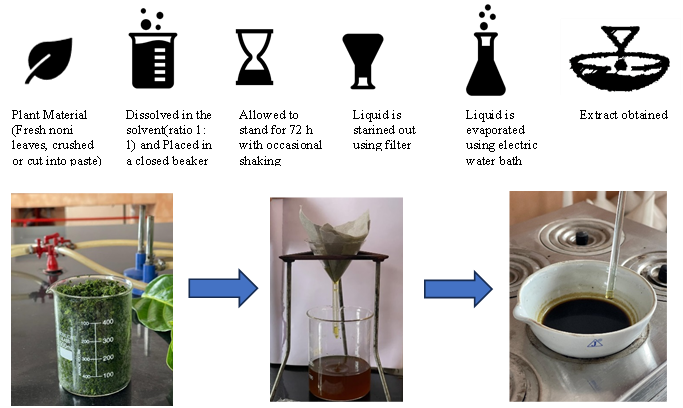
Figure 2: Preparation of M. citrifolia Leaf Extract
Phytochemical Screening
The ethanolic leaf extract was qualitatively analyzed for major phytochemical groups using established screening methods. Alkaloids were identified by Wagner’s and Dragendorff’s reagents; flavonoids by Shinoda and alkaline reagent tests; tannins and phenolic compounds by the ferric chloride test; saponins by the foam test; terpenoids by the Salkowski reaction; glycosides by the Keller–Killiani method; and steroids by the Liebermann–Burchard reaction.13
Experimental Design (Design of Experiments)
A two-level factorial experimental design (2²) was applied to investigate the influence of selected independent formulation parameters on the properties of the herbal sunscreen spray. Two variables were studied at two different levels, generating a total of four experimental formulations. The independent variables selected were:
Each factor was studied at a low (−1) and high (+1) level. The responses evaluated included sun protection factor (SPF). Design-Expert® software (version 13.0, Stat-Ease Inc., USA) was used for experimental design generation, data analysis, and model fitting.
The experimental results were statistically evaluated using analysis of variance (ANOVA) to assess the significance of the developed model as well as the contribution of individual formulation variables. Response surface and interaction plots were constructed to visualize the influence of formulation parameters on the responses and to determine the optimized formulation.15,16
Formulation of Herbal Sunscreen Spray
The M. citrifolia leaf extract was initially dissolved in distilled water to form Mixture A. In a separate step, methyl paraben and propyl paraben were dissolved in propylene glycol by heating at 70 °C with continuous stirring to obtain Mixture B. Mixture A was then gradually incorporated into Mixture B under constant agitation, after which Tween 80 was added. The formulation was subjected to sonication until a clear and uniform solution was achieved. Rose oil was incorporated as a flavoring agent, and the volume was made up with distilled water. The finished preparations were filled into appropriate spray containers.12,14
Table 1: Formulation Composition M. citrofolia Sunscreen Spray
|
Ingredient |
Role |
F1 |
F2 |
F3 |
F4 |
|
M. citrifolia leaf extract |
UV protection (antioxidant) |
1.5 g |
2.5 g |
1.5 g |
2.5 g |
|
Methyl paraben |
Preservative |
0.0167 g |
0.0167 g |
0.0167 g |
0.0167 g |
|
Propyl paraben |
Preservative |
0.003 g |
0.003 g |
0.003 g |
0.003 g |
|
Tween 80 |
Solubilizer |
0.5 g |
0.5 g |
1.5 g |
1.5 g |
|
Propylene glycol |
Humectant |
5 mL |
5 mL |
5 mL |
5 mL |
|
Rose oil |
Fragrance |
2–3 drops |
2–3 drops |
2–3 drops |
2–3 drops |
|
Distilled water |
Vehicle |
q.s. to 50 mL |
q.s. to 50 mL |
q.s. to 50 mL |
q.s. to 50 mL |
Evaluation of Sunscreen Spray
Organoleptic Properties: The prepared formulations were evaluated for colour and odour by visual inspection.12
pH Determination: The pH of the formulations was measured using a calibrated digital pH meter to ensure suitability for topical application (pH 4.5–6.5).13
Viscosity Measurement: Viscosity was determined using a digital rotational viscometer at room temperature.13
Spray Angle Measurement: The spray was actuated horizontally onto a white paper placed at a distance of 5 cm from the nozzle. The radius of the spray pattern was measured, and the spray angle (θ) was calculated using the formula:
θ=tan?-1(h/r)

Leakage Test
The filled containers were stored in an upright position for three days and weighed before and after storage to assess any leakage.14
Determination of Sun Protection Factor (SPF)
For SPF analysis, 1 mL of each formulation was diluted with 10 mL of ethanol. UV absorbance was measured using a UV–Visible spectrophotometer in the range of 290–320 nm at 5 nm intervals. SPF was calculated using the Mansur equation:
SPF=∑EE(λ)×I(λ)×Abs(λ)

where EE is the erythemal effect spectrum, I is the intensity of UV light, and Abs is the absorbance of the sample.
Antioxidant Activity
The free-radical scavenging potential of the diluted sunscreen formulation was evaluated using the 1,1-diphenyl2-picryl hydrazyl (DPPH) free radical scavenging assay (RSA). For preparation of the stock solution, 24 mg of DPPH was dissolved in 100 mL of methanol. The solution was filtered to obtain a clear working solution, which showed an absorbance of approximately 0.975 at 517 nm.For the assay, 3 mL of the DPPH working solution was mixed with 100 µL of the sunscreen formulation in a test tube. A control was prepared by replacing the formulation with 100 µL of methanol. The reaction mixtures were incubated in the dark for 30 minutes to allow completion of the reaction. Following incubation, absorbance was measured at 517 nm using a UV–visible spectrophotometer.The percentage of RSA was calculated using the equation:
DPPH scavenging activity (%) = [(Abs_control − Abs_test) / Abs_control] × 100,
where Abs represents absorbance. The IC?? value, defined as the concentration required to inhibit 50% of DPPH radicals, was determined. All experiments were performed in triplicate, and IC?? values were obtained by plotting mean percentage inhibition (± SD) against the corresponding concentrations of the formulation.17,18
Stability Studies
Stability studies were carried out according to ICH guidelines. The formulations were stored at room temperature (25 ± 2 °C / 60 ± 5 % RH) and accelerated conditions (40 ± 2 °C / 75 ± 5 % RH) for one month. Samples were periodically evaluated for changes in pH, viscosity, colour, odour, and homogeneity.
Comparative Study with Marketed Sunscreen Spray
A comparative evaluation was performed between the optimized herbal sunscreen spray formulation (F4) and a commercially available marketed sunscreen spray, Derm Ease Sun-Ease Sunscreen Spray, having a comparable SPF range. The marketed formulation was procured from a local pharmacy and used as received.Both the optimized formulation and the marketed product were evaluated under identical experimental conditions for selected physicochemical parameters, including pH, viscosity, and sun protection factor (SPF). The pH was determined using a calibrated digital pH meter, while viscosity was measured using a Brookfield viscometer. The SPF values were determined by the UV spectrophotometric method in the wavelength range of 290–320 nm, following the same procedure described for the prepared formulations.19
RESULT AND DISCUSSION
Collection, Authentication, and Extraction of Plant Material
The leaves of Morinda citrifolia (Noni) were collected from the campus of Rani Chennamma College of Pharmacy, Belagavi, Karnataka, India. The plant material was authenticated by Dr. Harsha Hegde, Scientist-F, ICMR–Belagavi (Accession No. RMRC-1937), confirming its taxonomical identity and suitability for further investigation. Ethanolic extraction of the dried leaves for 72 h yielded a concentrated extract, indicating efficient solubilization of bioactive phytoconstituents due to the polarity of ethanol.
Phytochemical Screening
Preliminary phytochemical analysis confirmed the presence of flavonoids, phenolic compounds, tannins, alkaloids, terpenoids, saponins, glycosides, and steroids in the ethanolic extract of Morinda citrifolia leaves. The predominance of flavonoids and phenolic constituents is particularly relevant, as these compounds are known to exhibit strong antioxidant activity and the ability to absorb ultraviolet radiation. Their presence supports the photoprotective efficacy observed in the formulated sunscreen sprays and provides a scientific basis for the selection of M. citrifolia leaf extract as a natural sunscreen ingredient.13,20
Formulation of Herbal Sunscreen Spray
Four sunscreen spray formulations (F1–F4) were developed using varying concentrations of noni leaf extract and surfactant, in accordance with the 2² factorial design. The presence of multiple UV-active phytoconstituents supported the development of a herbal sunscreen system without synthetic UV filters. All formulations were prepared as homogeneous liquids with acceptable spray characteristics, indicating suitability for topical spray delivery.
Table 2: Constraints for Formulation
|
Name |
Goal |
Lower Limit |
Upper Limit |
Lower Weight |
Upper Weight |
Importance |
|
A:Extract Conc |
in range |
1.5 |
2.5 |
1 |
1 |
3 |
|
B:Tween 80 |
in range |
0.5 |
1.5 |
1 |
1 |
3 |
|
SPF |
maximize |
32 |
43 |
1 |
1 |
3 |
Physicochemical Evaluation
Appearance
All formulations were visually appealing, exhibiting a uniform green colour and pleasant odour. The absence of turbidity or phase separation indicated good solubilization of the extract and excipients, which is essential for patient acceptability and product quality.
pH
The pH of formulations F1–F4 ranged from 4.62 to 5.22, which lies within the normal physiological skin pH range. This confirms that the formulations are unlikely to cause skin irritation upon topical application. Slight variations in pH were attributed to differences in extract concentration and surfactant levels.
Viscosity
Viscosity values ranged from 6.22 to 9.99 cP, indicating adequate fluidity for spray application. Lower viscosity ensured easy atomization, while sufficient consistency prevented leakage and dripping. Formulations containing higher surfactant levels (F2 and F4) exhibited slightly increased viscosity, which contributed to improved spray uniformity.
Spray Angle
The spray angle values (57.0°–63.43°) were within acceptable limits (<85°), ensuring wide surface coverage and uniform film formation on the skin. This confirms the suitability of the formulations for effective topical spray delivery.
Leak Test
All formulations passed the leak test with no detectable leakage or weight variation, indicating efficient pump sealing and container compatibility.
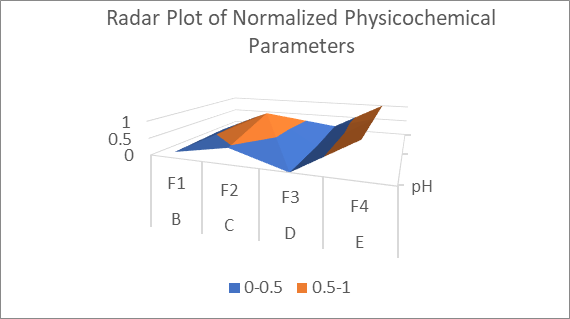
Figure 1: Radar plot of normalized spray angle, viscosity and ph values
The radar plot illustrates the comparative performance of sunscreen spray formulations F1–F4 based on normalized physicochemical parameters, namely pH, viscosity, and spray angle. Normalization was applied to enable direct comparison of parameters with different units.
Among all formulations, F4 exhibited the highest and most uniform values across all evaluated parameters, indicating an optimal balance between skin-compatible pH, suitable viscosity for sprayability, and an efficient spray angle for surface coverage. Formulations F1 and F3 showed comparatively lower normalized values, suggesting suboptimal performance in one or more parameters, while F2 demonstrated moderate improvement but lacked uniformity across all responses.
Antioxidant activity
The antioxidant potential of the formulation was evaluated using the DPPH free radical scavenging assay, which is based on the ability of antioxidant molecules to donate hydrogen atoms or electrons to neutralize stable free radicals. DPPH exhibits a strong absorption maximum at 517 nm due to its deep violet coloration. Upon interaction with antioxidant compounds, DPPH is reduced to its non-radical form, resulting in a decrease in absorbance accompanied by a visible color change from purple to yellow. The control solution exhibited an absorbance of 0.564 at 517 nm, corresponding to a radical scavenging activity of 42.41%. In contrast, the test formulation showed a lower absorbance value of 0.458 at the same wavelength, indicating enhanced reduction of DPPH radicals and a higher antioxidant activity of 58.68%. The increased scavenging efficiency of the test formulation may be attributed to the presence of flavonoids and phenolic constituents in Morinda citrifolia leaf extract, which are known to effectively counteract oxidative stress.
Sun Protection Factor (SPF) Determination
SPF evaluation demonstrated that all formulations provided effective UV-B protection, with SPF values ranging from 32 to 43 (Fig 5). A progressive increase in SPF was observed with increasing extract concentration, indicating enhanced UV absorption due to higher availability of phytoconstituents. Formulation F4 exhibited the highest SPF value (43), suggesting superior photoprotective performance. These findings confirm that bioactive compounds present in Morinda citrifolia leaf extract significantly contribute to UV protection and can function as natural alternatives to synthetic UV filters.
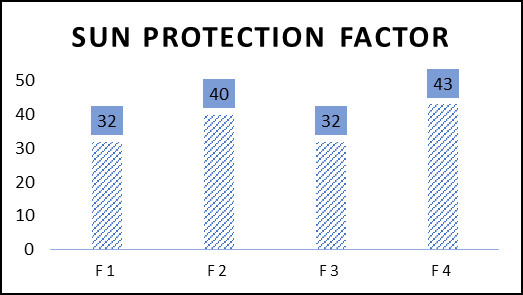
Figure 2: SPF of Formulations
Stability Studies
Stability studies conducted at room temperature and accelerated conditions (40 °C ± 2 °C / 75% RH ± 5% RH) for 30 days showed no significant changes in colour, odour, homogeneity, pH, or viscosity. Minor variations in pH and viscosity were within acceptable limits, indicating good formulation stability. These findings confirm that the developed sunscreen spray formulations are stable under normal and stressed storage conditions.23
Table 3: Stability Study
|
Conditions |
Parameters/Formulation Code |
Duration: 30 days |
|||
|
F1 |
F2 |
F3 |
F4 |
||
|
At room temperature |
Form |
Liquid |
Liquid |
Liquid |
Liquid |
|
Colour |
Green |
Green |
Green |
Green |
|
|
Odour |
Pleasant |
Pleasant |
Pleasant |
Pleasant |
|
|
pH |
4.73 |
4.90 |
4.62 |
5.22 |
|
|
Viscosity |
7.19 Cp |
9.79 Cp |
6.22 Cp |
9.99 Cp |
|
|
Homogenecity |
Homogeneous |
Homogeneous |
Homogeneous |
Homogeneous |
|
|
Accelerated Stability conditions (40°C±2°C/ 75%RH±5%RH) |
Form |
Liquid |
Liquid |
Liquid |
Liquid |
|
Colour |
Green |
Green |
Green |
Green |
|
|
Odour |
Pleasant |
Pleasant |
Pleasant |
Pleasant |
|
|
pH |
4.71 |
4.89 |
4.60 |
5.21 |
|
|
Viscosity |
7.10 Cp |
9.72 Cp |
6.0 Cp |
9.89 Cp |
|
|
Homogenecity |
Homogeneous |
Homogeneous |
Homogeneous |
Homogeneous |
|
Comparative Study with Marketed Sunscreen Spray
A comparative study was conducted between the optimized formulation (F4) of Noni leaf sunscreen spray and a commercially available marketed sunscreen spray (DERM EASE Sun-Ease sunscreen spray) with similar SPF range to evaluate their physicochemical properties and SPF efficacy.
Table 4: Comparison of F4 Vs. Marketed sunscreen formulation
|
Parameter |
Prepared formulation (F4) (Noni leaf sunscreen spray) |
Marketed product (DERM EASE Sun- Ease sunscreen spray) |
|
Active ingredient |
Noni leaf extract |
Octocrylene |
|
SPF value |
43 |
24 |
|
pH |
5.22 |
5.63 |
|
Viscosity |
9.99 Cp |
16.4 Cp |
Statistical Analysis and ANOVA of Factorial Design
The influence of selected formulation parameters on sun protection factor (SPF) was systematically investigated using a 2² factorial experimental design, and the experimental data were analysed by analysis of variance (ANOVA). The ANOVA results for the selected factorial model are listed in Table 5.
The model exhibited a high F-value of 40.11, indicating that the model was statistically significant. The corresponding p-value (0.0240) suggests that there is only a 2.40% probability that such a high F-value could occur due to random noise. This confirms the adequacy of the model in explaining the variation in SPF.
Among the studied factors, extract concentration (Factor A) was a significant model term (p < 0.05), demonstrating a pronounced influence on SPF. The positive contribution of extract concentration to SPF can be attributed to the increased presence of UV-absorbing phytoconstituents such as flavonoids and phenolic compounds in Morinda citrifolia leaf extract. These compounds are known to absorb UV radiation and mitigate UV-induced oxidative damage.
The relatively low residual sum of squares (4.50) compared to the model sum of squares (90.25) indicates minimal experimental error and good agreement between experimental and predicted values. The absence of significant lack-of-fit further confirms the suitability of the selected factorial model.
Table 5: ANOVA for 22 factorial model
|
Source |
Sum of Squares |
df |
Mean Square |
F-value |
p-value |
|
|
Model |
90.25 |
1 |
90.25 |
40.11 |
0.0240 |
significant |
|
A-Extract Conc |
90.25 |
1 |
90.25 |
40.11 |
0.0240 |
|
|
Residual |
4.50 |
2 |
2.25 |
|||
|
Cor Total |
94.75 |
3 |
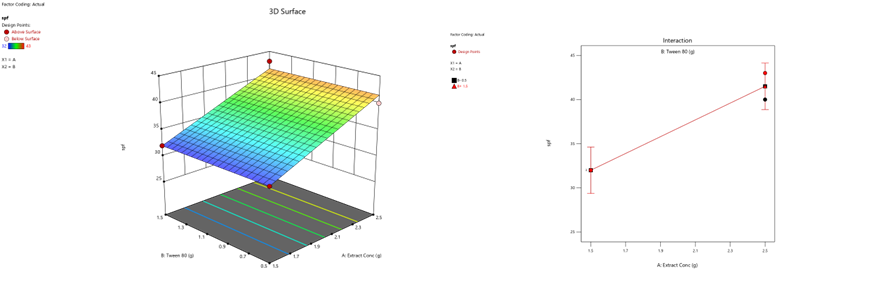
Figure 6: Response Surface Plot & Interaction Plot
The 3D response surface plot illustrates a clear positive effect of extract concentration on the response, with a progressive increase observed as the concentration increases. The smooth gradient and absence of curvature further support the linear nature of the model, consistent with the factorial design and ANOVA findings. Overall, the statistical and graphical analyses confirm that extract concentration is a critical factor influencing the response
Table 6: Fit Statistics
|
Std. Dev. |
1.50 |
R² |
0.9525 |
|
|
Mean |
36.75 |
Adjusted R² |
0.9288 |
|
|
C.V. % |
4.08 |
Predicted R² |
0.8100 |
|
|
Adeq Precision |
8.9567 |
The Predicted R² of 0.8100 is in reasonable agreement with the Adjusted R² of 0.9288; i.e. the difference is less than 0.2.
Adeq Precision measures the signal to noise ratio. A ratio greater than 4 is desirable. Here the ratio of 8.957 indicates an adequate signal.
CONCLUSION
The present research successfully focused on the formulation, optimization, and evaluation of herbal sunscreen spray using Morinda citrifolia (Noni) leaf extract as the active photoprotective agent. Four spray formulations (F1–F4) were developed by varying the concentration of Noni leaf extract and Tween 80 to obtain a stable, cosmetically acceptable, and effective sunscreen spray.
All formulations demonstrated satisfactory physicochemical characteristics, including appropriate pH (skin-compatible range), low viscosity suitable for spray delivery, uniform spray angle, absence of leakage, and good organoleptic properties. These results confirm the suitability of the selected excipients and the formulation approach for developing a topical spray dosage form.
Among all batches, formulation F4 was identified as the optimized formulation, as it contained a higher concentration of Noni leaf extract and surfactant, resulting in maximum SPF value 43 along with acceptable viscosity and spray characteristics.
The application of a 2² factorial design and ANOVA confirmed that extract concentration was a statistically significant factor influencing SPF (p < 0.05), validating the rational optimization of the formulation using Design of Experiments (DoE). Stability studies further indicated that the optimized formulation (F4) remained stable under both room temperature and accelerated conditions, with no significant changes in physical appearance, pH, viscosity, or homogeneity.
Overall study demonstrates that a stable and effective herbal sunscreen spray can be successfully formulated using Morinda citrifolia leaf extract, with formulation F4 showing optimal performance. The developed formulation has strong potential as a natural, safe, and better alternative to synthetic sunscreen sprays.
CONFLICT OF INTEREST
The authors declare that there are no conflicts of interest regarding this investigation.
ACKNOWLEDGMENTS
The authors gratefully acknowledge Rani Chennamma College of Pharmacy for providing the necessary infrastructure and facilities to conduct this research.
REFERENCES


R. Surve, N. Shivathaya, R. Sawant, A. Athani, A. Paragannavar, A. Soundalgekar, R. Kamagond, M. Chavan., Formulation Optimization and Evaluation of a Morinda citrifolia Leaf Extract–Based Herbal Sunscreen Spray Using a 2² Factorial Design, Int. J. of Pharm. Sci., 2026, Vol 4, Issue 3, 3894-3905, https://doi.org/10.5281/zenodo.19333899
 10.5281/zenodo.19333899