

We use cookies to ensure our website works properly and to personalise your experience. Cookies policy
Department of Pharmacology, Maratha Mandal’s College of Pharmacy Malmaruti Extension Belagavi, Karnataka, India.
Despite significant strides in the diagnosis and treatment of gastrointestinal disease, gastric ulcer has become a common condition that still carries a significant burden of morbidity worldwide. It is caused by an imbalance of aggressive factors like gastric acid, pepsin, Helicobacter pylori infection, NSAIDs, oxidative stress and inflammatory mediators and defensive factors like mucus secretion, bicarbonate production, prostaglandin synthesis and mucosal blood flow. Overt recognition of microbial, molecular and environmental contributors in gastric ulcer pathogenesis has evolved from a previous focus on stress and acid hypersecretion. The identification of H. pylori transformed the management of ulcers and brought about a significant drop in rates of recurrence with the use of eradication therapy. Modern therapies involve the use of proton-pump inhibitors, histamine H2 receptor antagonists, cytoprotective agents and combination antimicrobial therapies. But resistance to antibiotics and side effects of treatment, as well as recurrence of the illness are still big problems. By 2030, emerging innovations such as nanotechnology drug delivery systems, artificial intelligence diagnostics, microbiome modulation and regenerative medicine and personalized therapeutics are anticipated to change the face of gastric ulcer management. This review aims to present a summary of the evolution, pathogenesis, diagnosis therapy and future prospects in gastric ulcer disease.
Gastric ulcer is a frequent gastrointestinal disorder that involves the disruption of the gastric mucosal lining and extends into the muscularis mucosa. Although medical science has made significant progress, gastric ulcer remains a significant healthcare problem in the world because of its prevalence and possible complications such as bleeding, perforation and gastric outlet obstruction. Peptic ulcer disease is a common condition that impacts millions of people worldwide and is a significant health expense, hospitalisation and source of decreased quality of life, especially in elderly patients and those with more than one comorbidity. 1,2,3
The causes of gastric ulcer were an old belief that the main causes were stress, diet and excess of gastric acid. A significant discovery was made in 1984 when Marshall and Warren discovered Helicobacter pylori as an important cause of peptic ulcer disease. This finding changed the way ulcers were treated and paved the way for future drugs that could now eradicate the bacteria and thus prevent ulcers from returning. Further studies showed that H. pylori infection can cause a significant number of gastric ulcers and be associated with chronic gastritis, inflammation of the stomach's mucous membrane and gastric cancer. 1,5,6
The pathogenesis of gastric ulcer is now understood to be multifactorial, involving the imbalance between factors that damage the gastric mucosa, like gastric acid, pepsin, Helicobacter pylori infection, NSAID use, oxidative stress and inflammatory mediators and factors that protect the mucosa, such as mucous secretion and bicarbonate production, prostaglandin synthesis and adequate mucosal blood flow. This is disrupted and leads to progressive mucosal injury and to the formation of ulcers. 4,10
Gastric ulcer is rarely seen in many developed countries thanks to enhanced sanitation, acid suppressants and a successful gastric eradication program, but there are a number of challenges. Disease burden goes on to increase due to increased use of NSAIDs, antimicrobial resistance, ageing populations and changing lifestyles. In addition, effective therapeutic agents, although available, are not effective against recurrent disease and treatment failure in clinical practice. Recent developments in AI technology, molecular medicine, nanotechnology and microbiome research are making it possible to open new possibilities for better diagnosis and treatment. In the next few years, other AI-enabled endoscopy technologies, as well as targeted drug delivery systems and precision medicine methodologies should enhance diagnostic accuracy and therapeutic outcomes. Thus, the knowledge of past events and future innovations is crucial in maximizing gastric ulcer treatment by 2030.8,9
1.Historical evolution and current understanding of Gastric Ulcer
Gastric ulcer has experienced tremendous evolutionary changes over the last century. Early theories focused on psychological factors and dietary patterns and hypersecretion of gastric acid as the most important factors in the formation of ulcers. Until the advent of more effective pharmacological therapies, vagotomy and partial gastrectomy were frequently performed.
Helicobacter pylori was one of the most important advances in gastroenterology. Further research showed that H pylori infection causes inflammation, ulceration of the mucous membranes and inflammatory responses. Eradication therapy thereafter became an important part of treatment and prevention.5,6
Gastric ulcer remains one of the important health issues worldwide. The incidence of the disease has decreased in many developed countries, but the disease continues to be very common in developing areas where the prevalence of H. pylori infection is high. Elderly persons are especially susceptible due to higher use of NSAIDs and comorbidities in these patients.
Table 1: Major Risk Factors for Gastric Ulcer
[Figure - see the formatted PDF]
2.Pathogenisis and current management
Helicobacter pylori is the most extensively studied etiological factor related to gastric ulcer disease. The organism is equipped with several virulent factors which are responsible for its ability to colonize the stomach and trigger a chronic inflammatory process leading to ulcer development6.
Another major cause of gastric ulceration is NSAIDs. These drugs are prostaglandin inhibitors that decrease mucous production and decrease mucosal defence mechanisms. The risk of ulcer formation, bleeding and perforation is significantly higher on long-term NSAID therapy 7.
Oxidative stress and inflammation are also important contributors to disease mechanisms. Both an increase in ROS and a decrease in antioxidant capacity leads to cellular injury, lipid peroxidation, DNA damage and inflammatory responses in the gastric mucosa.
Normally, the gastric mucosa has several protective mechanisms to avoid damage from gastric acidic and digestive enzyme effects. These defence mechanisms comprise mucus and bicarbonate secretion and appropriate mucosal blood flow, as well as the regeneration of epithelial cells and prostaglandins-mediated cytoprotecting. If these protective mechanisms are compromised, such as by Helicobacter pylori infection, the use of NSAIDs, oxidative stress or other environmental factors, the gastric mucosal barrier can be damaged and ulcerated. The knowledge of the interplay between aggressive and protective has been essential in the evolution of current therapeutic approaches to improve mucosal protection and minimize acid-induced injury 4,10.
The diagnosis is still the gold standard of upper gastrointestinal endoscopy. Endoscopic examination allows direct visualization, assessment and collection of lesions, if needed. Several diagnostic tests are available for Helicobacter pylori detection including urea breath tests, stool antigen tests and histological examination.
The current treatment strategies involve trying to remove the factors that cause it and encouraging the healing of the mucosa. The proton pump inhibitors are effective acid suppressors and the first line of therapy. Antibiotic plus acid suppression significantly lowers the likelihood of ulcer recurrence and increases the chances of healing 4,5
3.Future Trends in Gastric Ulcer Management by 2030
Future trends in 2030 in the management of gastric ulcers. AI is poised to revolutionize the diagnosis and treatment of gastric ulcers.
AI systems for endoscopic diagnosis have shown high diagnostic accuracy in detecting and diagnosing lesions. Future systems are able to identify abnormalities of the mucosa and predict complications before they become clinically apparent 8.
Another hopeful development has been in the field of nanotechnology drug delivery systems. Nanocarriers can enhance drug stability and have the potential to prolong ulcer site residence time of therapeutic agents and enhance targeted delivery of therapeutic agents directly to ulcer sites. These technologies can improve treatment effectiveness and decrease the amount of systemic side effects 9.
By 2030, digital health technologies and telemedicine platforms are likely to be increasingly important in the treatment of gastric ulcers. Continuous monitoring of patients at risk of ulcer recurrence or complications may be possible through integration of wearable health-monitoring devices, electronic health records and AI-based predictive analytics. These technologies could enable timely intervention, enhance medication adherence and allow for improved remote management of patients, especially those in underserved and rural communities who may not have access to specialty gastroenterology care. Digital health solutions, coupled with tailored therapeutic approaches, could further improve the long-term clinical results and health care expenses of gastric ulcer disease 8.
The microbiome field is also influencing the study of gastric disease. Personalized microbiome modulation with probiotics, prebiotics and microbiota-directed interventions for balance/recovery and mucosal healing could be a future therapy.
Genetic and molecular profiling-based precision medicine approaches can enable the selection of the best treatment for each individual, maximizing a patient's benefit and reducing side effects. In a similar fashion, regenerative medicine and stem-cell based therapies hold promise for improving tissue repair as well as for the treatment of refractory ulcers.
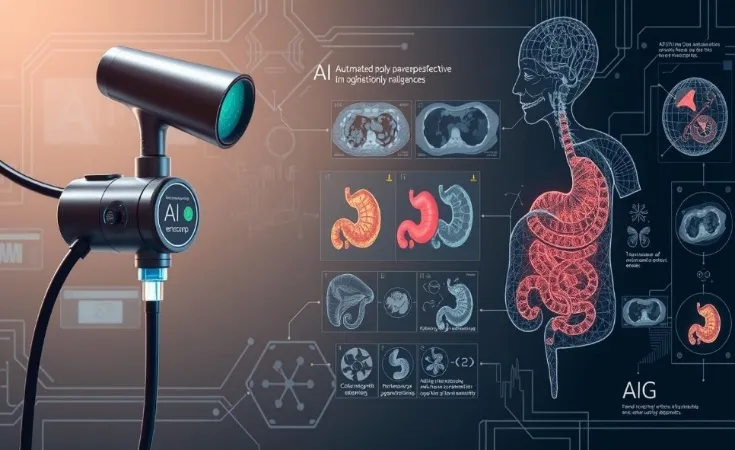
Figure 1: AI-Assisted Smart Endoscopy
Table 2: Current Management V/S Future Trends in Gastric Ulcer Care
[Figure - see the formatted PDF]
DISCUSSION
Management of gastric ulcers has changed significantly from the classical paradigm of acid hypersecretion to a multifactorial approach which encompasses Helicobacter pylori infection, NSAID-induced mucosal damage, oxidative stress and mucosal impairment. While current treatments, such as proton pump inhibitors and eradication therapy for H. pylori, have helped to improve healing rates, factors like antibiotic resistance, recurrence of the disease, and side effects from treatment persist in the long-term. New technologies such as AI systems for diagnosis, nanotechnology for targeted drug delivery, microbiome manipulation and precision medicine are emerging as potential avenues to increase the precision of diagnosis and improve the efficiency of treatment and personalized patient care. These advances could have a major impact on gastric ulcer prevention and treatment in the near future.
CONCLUSION
Although great advances have been made in the understanding of the pathogenesis and treatment of gastric ulcer, it continues to be an important gastrointestinal disorder. In recent decades, the knowledge of gastric ulcer disease has progressed from the initial theories of stress and hypersecretion of gastric acid to the present knowledge that encompasses Helicobacter pylori infection, NSAID-induced gastric mucosal damage, oxidative stress and inflammatory mediators and host-related factors 1,6. The identification of Helicobacter pylori marked a milestone in the field of gastroenterology and has dramatically changed the approach to the diagnosis, treatment and prevention of ulcer disease 1. By the same token, the use of proton pump inhibitors and successful eradication therapies has greatly decreased the incidence of ulcer recurrence, complications and surgery 4,5.
Although significant progress has been made, there remain a number of gastric ulcer management challenges to confront globally. The issue of antimicrobial resistance, the high rate of NSAID use, the growing aging of the population, recurrent disease and adverse effects of treatment, continue to be significant clinical concerns 3,5,7. In addition, differences in access to health care and diagnostic testing remain a source of variation in disease outcomes, especially in the developing world, where the presence of Helicobacter pylori infection is still high 2.
The next 10 years will see AI, nanotechnology, the microbiome and regenerative medicine and precision therapeutics transform the world. Artificial intelligence supported diagnostic systems can help better diagnosis, characterization and risk assessment, which can assist in better clinical decision-making 8. The development of nanotechnology-based drug delivery platforms could make it possible to achieve therapeutic efficacy with targeted and controlled drug delivery and reduce the systemic adverse effects 9. Further understanding of host–microbial interactions and new host–microbial prevention and therapeutic strategies are possible with advances in microbiome research.
Furthermore, precision medicine based on genetic and molecular analyses could enable selection of the most effective treatment strategy for each patient and regenerative medicine as well as stem-cell therapies provide potential avenues for improving mucosal healing and addressing refractory ulcers 10. In sum, these new technologies are believed to change the way gastric ulcer is managed from a “traditional” population-based model to a “predictive, preventive and personalized” model of care. These innovations could be a game-changer by 2030 in terms of diagnosis, treatment and long-term disease prevention, helping to alleviate the global burden of gastric ulcer disease and enhancing patient quality of life.
REFERENCES


Spoorti Malki, Dr. Vishnu Kangralkar, Sonali Shende, Snehal Ogale, Gastric Ulcer 2030: Insights from Yesterday, Today and Future Trends, Int. J. of Pharm. Sci., 2026, Vol 4, Issue 10, 4163-4167. https://doi.org/10.5281/zenodo.23685252
 10.5281/zenodo.23685252