

We use cookies to ensure our website works properly and to personalise your experience. Cookies policy
Department of Pharmaceutical Chemistry, Annasaheb Dange College of B Pharmacy, Ashta, Sangli
The increasing frequency of inflammatory skin disorders and the poor performance of conventional topical formulations have prompted the development of advanced drug delivery techniques that enhance therapeutic efficacy while lowering systemic exposure. Green nanostructured lipid carriers (G-NLCs) have attracted a lot of attention as efficient topical anti-inflammatory delivery systems because of their superior biocompatibility, prolonged drug release behaviour and enhanced penetration of both hydrophilic and lipophilic chemicals across the skin barrier. This work emphasizes recent developments in the formulation and therapeutic application of G-NLCs made using renewable, environmentally safe lipids and green processing techniques in accordance with green chemistry principles and evolving regulatory safety standards. Combining naturally occurring anti-inflammatory substances like curcumin, resveratrol, and other flavonoids with plant-based lipids has been the subject of new developments. In experimental tests, this has led to improved physicochemical stability, defense against oxidative degradation and higher anti-inflammatory activity. Examples of preparation technique advancements that have further reduced residual toxicity while permitting scale manufacturing are solvent-free, high-pressure homogenization and supercritical fluid technology. This work also examines key characterization characteristics, in vitro and in vivo anti-inflammatory activity and safety considerations of G-NLC formulations while addressing contemporary concerns with formulation consistency, industrial scale-up and regulatory approval. When combined G-NLCs offer a very effective and long-lasting topical anti-inflammatory treatment platform with promising future clinical translation prospects.
1.1Background
Among the most prevalent dermatological conditions worldwide include dermatitis, psoriasis, acne, and other inflammatory skin conditions. These disorders, which are caused by the complex network of inflammatory mediators in the skin, frequently manifest as redness, swelling, pain, and tissue damage. Topical medicine distribution is still the recommended therapeutic approach for managing such disorders because it offers localized treatment at the affected area, reduces systemic exposure and enhances patient adherence.[1] Despite these advantages, several anti-inflammatory agents particularly natural compounds and non-steroidal anti-inflammatory drugs (NSAIDs) have drawbacks that limit their clinical usefulness, including as poor water solubility, inadequate skin penetration and chemical instability. Therefore, developing biocompatible and sustainable nanocarrier systems that can enhance drug solubility, boost skin permeability and provide regulated release for effective topical therapy is gaining scientific attention. [2]
1.2 Nanostructured lipid carriers (NLCs)
To address the shortcomings of solid lipid nanoparticles (SLNs), a second generation of lipid-based nanocarriers called nanostructured lipid carriers (NLCs) was developed. Unlike SLNs, which are composed solely of solid lipids, NLCs are composed of a combination of liquid and solid lipids that form a slightly disordered crystalline matrix. By improving drug loading efficiency and lowering the risk of drug ejection during long-term storage, this structural modification enhances formulation stability.[3]NLCs offer a number of practical advantages for topical drug delivery. Their lipidic composition facilitates the solubilization of lipophilic and poorly water-soluble drugs, improving the integration of various active ingredients. Additionally, the tiny particle size and lipid compatibility promote better diffusion across the stratum corneum, the outermost layer of the skin, increasing dermal penetration and bioavailability.[4]Another important feature of NLCs is their ability to give regulated and sustained drug release, which reduces the frequency of doses and aids in maintaining therapeutic concentrations over an extended period of time. Furthermore, NLCs increase skin hydration and decrease transepidermal water loss by forming a thin occlusive lipid layer on the skin. In this hydrated state, the stratum corneum softens, facilitating easier drug penetration. All things considered, NLCs have developed into a versatile and successful topical administration technique that combines increased stability, biocompatibility and targeted action for improved therapeutic outcomes.
Advances of Nanostructured Lipid Carriers (NLCs)
Disadvantages of Nanostructured Lipid Carriers (NLCs)
Types of NLCs
Type I (Imperfect Matrix) NLCs
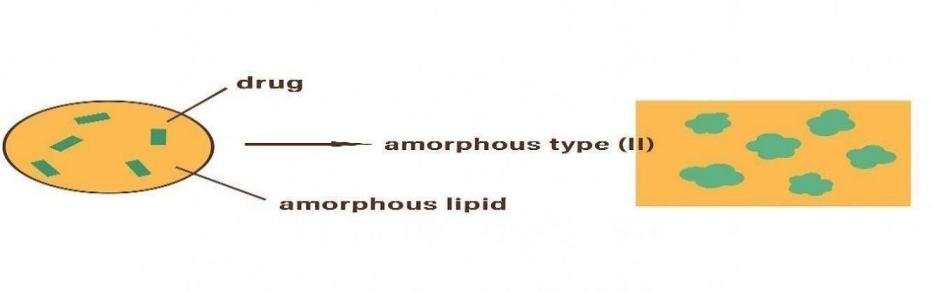

Fig:1 Imperfect Matrix
Type II (Multiple Type) NLCs
Type II NLCs feature a solid lipid core with structural defects because liquid lipids are incorporated into the crystalline matrix. These disturbances result in a disordered lipid structure that increases encapsulation efficiency and provides more space for medicinal molecules when compared to conventional Solid Lipid Nanoparticles (SLNs).[6]
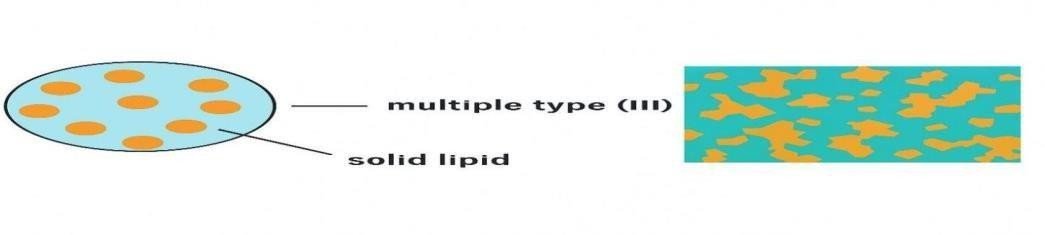
Fig:2 Multiple Type
Type III (Amorphous type) NLCs
Type III NLCs also known as hybrid NLCs, are complex formulations that mix lipid components with other materials such as polymers or surfactants. The polymeric and lipid matrix can be adjusted thanks to this hybrid structure, improving stability and controlling drug release. Research is being done on hybrid NLCs for application in targeted drug delivery and combination medicines, particularly in gene therapy and cancer treatment.[6]
Fig:3 Amorphous Type
1.3 The Concept of "Green" NLCs
Green Nanostructured Lipid Carriers (Green NLCs) are a cutting-edge method of sustainable nanotechnology that integrates ideas from green chemistry into the development of pharmaceutical formulations. Reducing waste, minimizing environmental dangers and promoting the use of safe, renewable and biodegradable substances throughout the production process are all key components of green chemistry.[5] In this sense, Green NLCs are made to meet stringent safety and therapeutic efficacy standards while minimizing their adverse effects on the environment.Unlike standard NLCs, which may depend on synthetic or potentially dangerous solvents, green NLCs are produced using ecologically friendly techniques such solvent-free, low-energy, or aqueous-based production procedures. This process eliminates the use of dangerous chemical solvents and reduces energy consumption during production. Additionally, naturally occurring lipids that are biodegradable and non-toxic, including vegetable oils, stearic acid or glyceryl behenate, are typically used in the formulation.[2]Biocompatible surfactants of natural origin, such as lecithin, saponins or polysorbates made from plant sources, are commonly utilized to stabilize the nanoparticles and ensure safety for long-term topical use. Green NLCs use sustainable ingredients and eco-friendly production processes to assist global environmental goals while also improving the overall biocompatibility and patient acceptability of nanocarrier-based formulations. As a result, they offer a promising foundation for modern, moral drug delivery systems.
1.4 Inflammatory process of Skin
Common indicators of an inflammatory response in the skin include pain, redness, edema, heat, and diminished function.[8,11] In order to identify and eliminate pathogens, remove damaged cells and clean the injured tissue to promote healing, inflammation is necessary.[12] Numerous chemical, mechanical, microbiological, autoimmune or allergic factors can trigger inflammatory responses in the skin.[7, 11] Numerous inflammatory pathways are explained in detail in the referenced research.
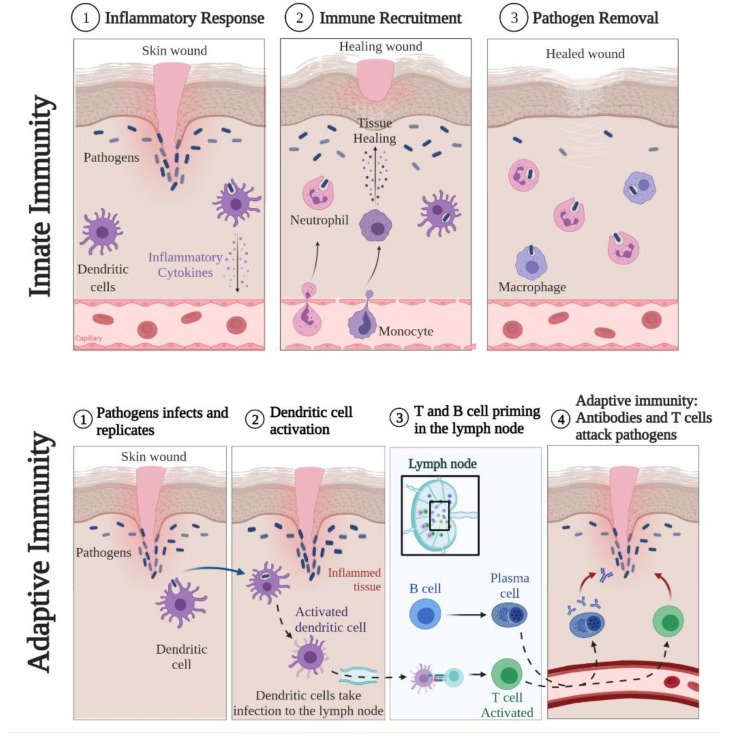
Fig:4 General Process of Inflammation
To create antiviral and anticancer defenses, CD8? cytotoxic T lymphocytes (CTLs) are then enlisted. In contrast, Th2 cells mainly respond to parasite infections by producing IL-4, IL-5, and IL-13, which attract basophils, eosinophils and mast cells to coordinate an antiparasitic immune response. Th17 cells are essential in bacterial and fungal infections because they produce IL-17, IL-21, and IL-22, which promote neutrophil recruitment and boost antibacterial and antifungal activities.[7]
In autoimmune skin inflammatory disorders such psoriasis, lupus and vitiligo, the Th1 and Th17 pathways are overactivated, resulting in an immunological attack on the body's own tissues. However, allergic skin reactions such allergic contact dermatitis, which typically follow exposure to chemical or environmental allergens, are mostly caused by Th2-mediated responses.[7,10]
After the initial threat has been removed, regulatory T cells (Tregs) decrease ongoing immune activity to prevent overreaction and maintain immunological homeostasis. A deficiency or dysfunction of these Tregs can lead to autoimmune or chronic skin disorders like psoriasiform dermatitis, urticaria, alopecia universalis and eczema.The transition from the inflammatory phase to the proliferative phase in a normal wound-healing process is marked by a drop in neutrophil levels, a shift in macrophage phenotype, and the beginning of collagen deposition and revascularization. However, when the inflammatory phase is dysregulated that is, when pro-inflammatory mediators are produced in excess the process turns pathogenic and results in chronic inflammatory illnesses. Disruptive interactions between fibroblasts and keratinocytes further limit normal tissue remodeling, resulting in chronic wounds with extended inflammation, low growth factor levels, decreased endothelial cell proliferation and poor re-epithelialization. [10,11,12]
Moreover, there are two ways that reactive oxygen species (ROS) cause inflammation. Under normal circumstances, ROS support both the defense against infections and the elimination of damaged tissue. However, when ROS generation exceeds the skin's antioxidant capacity, oxidative stress results, which destroys surrounding proteins, lipids and DNA and causes inflammation. An imbalance between ROS and antioxidants can result in oxidative stress, which can worsen two mechanisms:
(i) improper oxidation of host cell components, which sets off an immunological reaction; and
(ii) activation of redox-sensitive signaling pathways, such as NFκB, which increases pro-inflammatory mediators and prolongs tissue damage.
1.5 Anti-Inflammatory Agent Incorporated in Green NLCs
Many synthetic and natural anti-inflammatory agents have been successfully added to Nanostructured Lipid Carriers (NLCs) to increase their topical therapeutic efficacy. The incorporation of these compounds to Green NLCs promotes sustainable formulation methods and improves their skin penetration and physicochemical stability. Natural polyphenolic compounds like curcumin and hesperidin are widely known for their potent anti-inflammatory and antioxidant qualities. Nevertheless, their weak aqueous solubility, chemical instability and minimal skin penetration restrict their usefulness. Encapsulation within NLCs increases their therapeutic efficacy by improving their solubility, protecting them from oxidative degradation and promoting prolonged skin retention.[4] Essential oils and monoterpenes including thymol, carvacrol and eugenol exhibit similar antibacterial, antioxidant and anti-inflammatory qualities. However, these volatile compounds may cause irritation or rapid evaporation when applied directly to the skin. Incorporating these chemicals into NLCs enhances their topical safety and efficacy by stabilizing them, minimizing irritation and permitting controlled release.[5] Additionally, non-steroidal anti-inflammatory drugs (NSAIDs) including diclofenac and ibuprofen have demonstrated improved therapeutic outcomes when produced in NLC systems. The lipid matrix of NLCs promotes local drug accumulation in inflammatory tissues, reduces systemic exposure, and permits sustained drug release for a longer anti-inflammatory impact.[3] All things considered, Green NLCs offer a range of anti-inflammatory medications with an effective and eco-friendly delivery method.
1.6 Mechanism of Action in Topical Delivery
Through a number of interconnected pathways, nanostructured lipid carriers (NLCs) demonstrate improved therapeutic efficacy in topical applications:
1. Enhanced stability and solubilisation: Lipophilic medications that are poorly soluble in water are effectively integrated into the lipid matrix, improving their solubility and shielding them from deterioration.
2. Improved skin penetration and retention: Because NLCs' lipid makeup is similar to that of skin, they can better integrate with the stratum corneum and promote deeper medication penetration
3. Sustained and regulated release: NLCs enable the long-term, progressive release of bioactive chemicals that have been encapsulated, guaranteeing constant therapeutic concentrations at the target site.
4. Occlusive and moisturizing effect: NLCs increase medication absorption, decrease transepidermal water loss and improve skin hydration by creating a thin lipid layer on the skin's surface.[2]
1.7 Essential Oil Profile and Chemical Constituents
The Lamiaceae family, which has more than 220 genera and about 4000 species worldwide, includes the well-known genus Thymus (Thymus vulgaris L.). Native to the Mediterranean region, this fragrant plant has long been prized for its numerous applications in medicine, food and cosmetics. The word "thyme" comes from the Greek word thymos, which meaning "courage" or "vitality." Historical references that trace its therapeutic use back to Dioscorides' writings in the first century AD attest to its long history in traditional medicine and as a flavoring herb. The European Pharmacopoeia presently recognizes Thymus vulgaris and Thymus zygis dry leaves and flowers as official herbal materials (Ph. Eur. X).
These contain at least 12 mL/kg of essential oil with high levels of thymol (37–55%) and carvacrol (0.5–5.5%). T. vulgaris, a low-growing, perennial, evergreen subshrub with woody stems and tiny, fragrant leaves that can grow up to 40 cm in height, is the main source of volatile oil produced by steam distillation. The complex blend of monoterpenes and phenolic compounds that comprise the essential oil of thyme, which possesses potent antibacterial, antifungal, antioxidant and anti-inflammatory qualities, is mostly composed of thymol and carvacrol. Other components, such as p-cymene, α-pinene, linalool, borneol and 1,8-cineole, are responsible for its unique aroma and biological effects. The content of the oil is often influenced by seasonal, meteorological and geographic factors. Phytochemical investigations have also revealed a variety of secondary metabolites, including terpenoids, alkaloids, saponins, phenolic acids (rosmarinic, caffeic and ferulic acids) and flavonoids (apigenin, luteolin and thymonin). When combined, these substances enhance the herb's pharmacological potency. Thyme's high concentration of vitamins A, C and B6 as well as vital minerals including iron, potassium, calcium, magnesium, manganese and selenium are responsible for its antioxidant and immune-stimulating properties. Among the volatile components, borneol, geraniol, carvacrol and thymol stand out because of their biological significance. Thymol is a powerful antiseptic and antifungal agent and carvacrol has significant antibacterial and anti-inflammatory qualities. While geraniol has antimicrobial properties and offers a nice smell, borneol has analgesic and anti-inflammatory properties. Because of its complex and diverse phytochemical makeup, which finds extensive usage in the pharmaceutical, cosmetic, food preservation and aromatherapy industries, Thyme vulgaris is a very valuable medicinal and fragrant plant with both traditional and modern

therapeutic relevance.[17,18]
Fig:5 Thymus Vulgaris Plant
2. Methodology
To create NLCs, a variety of methods have been devised, including:
2.1 High Pressure Homogenization (HPH)
A popular method for creating lipid nanoparticles (SLNs), nanostructured lipid carriers (NLCs) and other nanoformulations is high-pressure homogenisation. It is essential for producing nanoparticles with a consistent size distribution and improved drug delivery capabilities. Larger particles are broken down into nanometer-sized ones by cavitation and strong shear stresses when the formulation is forced through a tight passage at extremely high pressure.[14]
Principle of High-Pressure Homogenization (HPH)
The principle of high-pressure homogenisation (HPH) involves applying extremely high pressure (up to 2000 bar or more) to force a nanoparticle dispersion through a narrow gap between two surfaces. This process employs mechanical forces such as shear, cavitation and turbulence to reduce large lipid droplets or emulsions into much smaller particles.
Advantages of High Pressure Homogenization (HPH)
Disadvantages of High-Pressure Homogenization (HPH)
2.2 High Shear Mixing and Ultrasonication
High-shear mixing and ultrasonication can be used to create and refine lipid nanoparticles (SLNs), nanostructured lipid carriers (NLCs) and other colloidal systems. By employing mechanical forces to divide larger particles into smaller, more uniform ones, both methods decrease particle size and enhance dispersion homogeneity. During ultrasonication, high-frequency sound waves (often between 20 kHz and 10 MHz) generate a lot of mechanical energy inside the dispersion, which helps to further reduce particle size. This technique is widely used to create lipid nanoparticles and nanosuspensions for use in pharmaceutical and cosmetic applications.
Principle of Ultrasonication
Ultrasonication is based on the phenomenon of acoustic cavitation. As ultrasonic vibrations pass through a liquid, tiny bubbles (cavities) form and burst, alternating zones of rarefaction and compression. Strong localized heat and shear forces created when these bubbles burst cause the particles in the formulation to break down into smaller, uniform sizes.
Advantages of Ultrasonication
Disadvantages of Ultrasonication
2.3 Microemulsion Technique
The microemulsion process is a low-energy technique for producing nanostructured lipid carriers (NLCs) and other lipid-based nanoparticles. It depends on the spontaneous formation of isotropic, thermodynamically stable mixtures of oil, water, surfactant and co-surfactant. Because it doesn't require strong mechanical forces like high-pressure homogenization or ultrasonication this method is ideal for heat-sensitive drugs and small-scale laboratory production. Microemulsions clear, stable colloidal systems are produced when a proper combination of an oil phase (lipid), aqueous phase (water), surfactants and co-surfactants is mixed under specific conditions. Droplet diameters typically range from 10 to 100 nm. NLC is made by first creating a hot microemulsion and then carefully stirring it into cold water, causing the lipid phase to precipitate and generate nanoparticles.
Procedures for Microemulsion Based NLC Production
1. Formulation of a hot microemulsion:
2. Dissolution in cold water:
3. Formation of NLCs:
As the lipid phase precipitates, nanostructured lipid carriers (NLCs) with both solid and liquid lipid domains are created.
2.4 Emulsification and Evaporation of Solvents
Solvent evaporation and emulsification is a tried-and-true technique for creating nanostructured lipid carriers (NLCs), especially for lipophilic medications. This method combines emulsification with solvent diffusion and evaporation to create nanoparticles with a consistent size distribution and improved drug encapsulation. An oil-in-water (O/W) emulsion is created by dissolving the lipid phase, which consists of both liquid and solid lipids, in an organic solvent. After that, an aqueous surfactant solution is combined with this emulsion. The lipids precipitate as the organic solvent evaporates, creating a homogenous NLC dispersion and stable nanoparticles.
Detailed Procedure for Emulsification and Solvent Evaporation
1. Getting the lipid phase ready:
2. Emulsification:
Using high-speed stirring or ultrasonication, the organic lipid solution is added to an aqueous surfactant solution (such as Tween 80 or Poloxamer 188) to create a pre-emulsion and an oil-in-water (O/W) system.
3. Solvent evaporation:
The organic solvent is gradually removed by stirring the emulsion at ambient temperature or slightly higher temperatures. The lipids precipitate as the solvent evaporates, creating a stable dispersion of nanostructured lipid carriers (NLCs).
4. Cleaning:
The NLCs are usually purified by centrifugation or filtration, which eliminates aggregated particles and unencapsulated medication.
3. Evaluation Parameter
Evaluation is essential to ensuring the stability, effectiveness, safety and therapeutic performance of nanostructured lipid carriers (NLCs). Comprehensive characterization improves formulations, clarifies the physicochemical and biological properties of NLCs and aids in the prediction of their behavior in vivo.
3.1 Polydispersity index (PDI) and particle size:
3.2 Surface charge or zeta potential:
3.3 Entrapment efficiency (EE%) and drug loading (DL%):
3.4 Thermal Analysis:
3.5 X-ray diffraction (XRD):
3.6 In vitro drug release studies:
3.7 Stability Studies
4. FUTURE PROSPECTS
Nanostructured lipid carriers (NLCs) have a bright future in topical anti-inflammatory therapy thanks to developments in smart delivery methods, green nanotechnology and personalised medicine. While stimuli-responsive NLCs can facilitate targeted and regulated medication release, the introduction of biodegradable, natural lipids will improve sustainability and biocompatibility. Optimising formulations for stability and efficacy will be made easier with the integration of AI-based design tools. Skin penetration and patient comfort may be further enhanced by combining NLCs with hydrogels or microneedles. All things considered, eco-friendly innovation and clinical validation will open the door for NLCs to play a significant role in topical anti-inflammatory treatments of the future.
5.DISCUSSION
Green nanostructured lipid carriers (G-NLCs) have emerged as a state-of-the-art and eco-friendly way to administer topical anti-inflammatory medications, effectively addressing the shortcomings of conventional formulations like low drug stability, poor skin penetration and frequent dosage requirements. The use of biodegradable, renewable lipids enhances biocompatibility and encourages ecologically responsible pharmaceutical research. Compared to first-generation lipid nanoparticles, G-NLCs have a higher drug loading capacity and improved formulation stability, which reduces drug ejection during storage and ensures consistent therapeutic efficacy. Their lipidic composition and nanoscale size promote close contact with the stratum corneum which enhances skin hydration, occlusion and controlled drug release in addition to improving dermal retention of both natural and synthetic anti-inflammatory medications. These characteristics are particularly beneficial for phytochemicals like curcumin, resveratrol and flavonoids that typically have poor solubility and rapid degradation. The addition of plant-derived lipids may increase the synergistic anti-inflammatory benefits while lowering irritation and cytotoxicity. Furthermore, the advent of green manufacturing technologies like solvent-free, high-pressure homogenization and supercritical fluid processing has reduced the need for organic solvents while increasing scalability. All things considered, G-NLCs offer a promising, eco-friendly platform for topical anti-inflammatory therapy; nevertheless, further quality-by-design optimization, clinical validation and regulatory harmonization are required for successful clinical application.
CONCLUSION
Green nanostructured lipid carriers (NLCs), a major advancement in topical anti-inflammatory medication delivery, provide a successful blend of environmental sustainability and therapeutic efficacy. These systems improve drug solubility and skin penetration by adding plant-derived bio-actives and natural biodegradable lipids. Their biocompatible and environmentally friendly design is in line with the increasing emphasis on green chemistry and sustainable pharmaceutical practices around the world. Green NLCs offer continuous and controlled medication release, which lowers the frequency of administration and increases patient compliance in addition to enhancing treatment effects. Increased stability and extended efficacy are guaranteed by their capacity to shield delicate bio-actives like curcumin, resveratrol or essential oils. The total carbon footprint of formulation development is also greatly decreased by using renewable resources and avoiding dangerous organic solvents.
REFERENCE


Ajay R. Mali*1, Sakshi B. Bhosale2, Shruti P. Ghodake3, Green Nanostructured Lipid Carriers: Emerging Platforms for Topical Anti-inflammatory Drug Delivery, Int. J. of Pharm. Sci., 2026, Vol 4, Issue 1, 2343-2356. https://doi.org/10.5281/zenodo.18340280
 10.5281/zenodo.18340280